Budapest University of Technology and EconomicsHungary
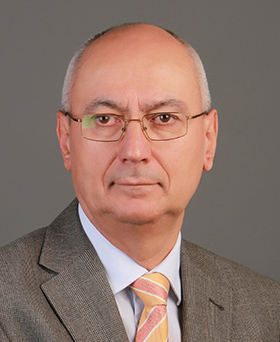
Dr. TÓTH Csaba is an Associate Professor at the Department of Highway and Railway Engineering, Budapest University of Technology and Economics (BME), Faculty of Civil Engineering. He teaches courses such as Highway and Railway Structures (BMEEOUVAI41) and Pavement Structures (BMEEOUVMU63), while previously teaching Pavement Analysis and Design (BMEEOUVDT81) and Project Management in Transportation (BMEEOUVMU-4). His research focuses on asphalt technology, pavement diagnostics, and sustainable road construction. Phone: +36 1 463 1154 Room: ÉL. ép / 206/E Research Interests: His work emphasizes non-destructive evaluation methods (e.g., Ground-Penetrating Radar), rheological modeling of asphalt binders, recycled asphalt pavement applications, and climate-adapted pavement design. Key methodologies include the Ramberg-Osgood model for dynamic modulus prediction and the virtual inertial point method for structural diagnostics. Scientific Contributions: Recent research trends highlight sustainable road rating systems, thermal stress analysis in asphalt pavements, and advanced diagnostic techniques for infrastructure monitoring. Scientific Awards: Magyar Felvételi Scholarship (#építő250)
Budapest University of Technology and EconomicsHungary
Tamás Lovas serves as Associate Professor at the Department of Photogrammetry and Geoinformatics, Faculty of Civil Engineering, Budapest University of Technology and Economics. He teaches advanced courses in Building Information Modeling, Laser Scanning, Remote Sensing, and Intelligent Transportation Systems while supervising diploma theses in Surveying and Geoinformatics Engineering. Education: 1994: High school graduation, Városmajor High School, Budapest 1999: Certified Surveyor and Geoinformatics Engineer, Budapest University of Technology, Faculty of Civil Engineering 2005: PhD (Earth Sciences), Budapest University of Technology and Economics, Faculty of Civil Engineering Research Interests: Dr. Lovas specializes in laser scanning technologies and geospatial data processing with emphasis on airborne and terrestrial point cloud analysis. His work bridges civil engineering applications and computational methods, particularly in infrastructure monitoring and digital representation. Processing, classification, and modeling of airborne laser scanned data Accuracy testing of terrestrial laser scanning Processing and modeling of terrestrial laser scanned data Comparative study of spatial data acquisition technologies His 2022-2025 publications demonstrate accelerating integration of artificial intelligence in point cloud processing, with significant contributions to road surface extraction, urban land cover classification, and BIM automation. Current research trends show strong focus on digital twin development for autonomous vehicles and infrastructure management. Scientific Awards: Republic Scholarship (1998-1999) Karlsruhe Chancellor's Scholarship (1999) ERASMUS scholarship (2000) Korányi Fellowship (2001-2002) János Bolyai Research Scholarship (2008-2011) OHV 1st place (2008) Dean's commendation for ERASMUS committee work (2014) For Students Award - Teaching Department (2017) Advising and Grants: Dr. Lovas mentors students through diploma theses and TDK research projects on topics including object survey with amateur sensors and hull modeling. His research funding includes the prestigious János Bolyai Research Scholarship and international fellowships supporting collaborations with institutions like The Ohio State University. Labs and Teams: As founding member and supervisory board member of the Hungarian BIM Association, he drives industry-academia collaboration. His leadership roles include Deputy Dean of Education at the Faculty of Civil Engineering and responsibility for English language training programs, facilitating international academic exchange.
Budapest University of Technology and EconomicsHungary
Professor Éva Eszter Lublóy is affiliated with the Budapest University of Technology and Economics (BME), specifically the Faculty of Civil Engineering and the Department of Structural Materials and Construction. Her research focuses on fire-resistant building materials, high-temperature behavior of concrete and steel, bond strength in reinforced concrete, and non-destructive testing methods like computer tomography. Research Interests: Fire resistance of structural materials High-temperature effects on concrete and steel Crack width and durability relationships CT imaging for material analysis Impact of supplementary additives on concrete properties Material microstructure and structural longevity
Budapest University of Technology and EconomicsHungary
Dr. Sólyom Sándor is an Assistant Professor at the Department of Construction Materials and Structural Engineering within the Faculty of Civil Engineering at Budapest University of Technology and Economics. His academic focus lies in advanced concrete technologies and structural engineering materials. Research Interests Fiber-Reinforced Polymer (FRP) Composites in Concrete Structures 3D Concrete Printing Fiber-Reinforced Concrete (FRC) Ultra High Performance Fiber-Reinforced Concrete (UHPFRC) Concrete Durability and Longevity Lightweight Concrete (LWAC, LWC) Applications Non-Destructive Testing Techniques for Concrete FRP Bonding Mechanics in Concrete Substrates
Budapest University of Technology and EconomicsHungary
Professor Majorosné Dr. Lublóy Éva Eszter is affiliated with the Department of Construction Materials and Technologies at the Faculty of Civil Engineering, Budapest University of Technology and Economics. She serves as the Director of the Knowledge Centre for Water Sciences and Disaster Prevention, focusing on advanced research in construction materials under extreme conditions. Her primary research interests include: Fire resistance of construction materials Behavior of concrete and steel under high temperatures Bond strength and structural integrity in reinforced concrete Non-destructive testing using computed tomography (CT) Relationship between crack width and material durability
Budapest University of Technology and EconomicsHungary
Dr. SOMOGYI József Árpád is an Associate Professor at the Department of Photogrammetry and Geoinformatics within the Faculty of Civil Engineering at Budapest University of Technology and Economics. He serves as the Faculty Coordinator for NEPTUN and is a member of the Informatics Faculty Committee. His research focuses on photogrammetry, geoinformatics, and artificial intelligence applications in civil engineering. Notable areas include autonomous vehicle mapping, laser scanning, UAV-based modeling, and point cloud processing. Scientific awards include the Magyar Felvételi Scholarship #építő250 . His work has been applied to transportation infrastructure, geological risk assessment, and historical building reconstruction.
Budapest University of Technology and EconomicsHungary
KOVÁCS Flórián is an Associate Professor at the Department of Structural Mechanics , Budapest University of Technology and Economics. His research spans structural engineering and interdisciplinary applications in biophysics, with a focus on deployable structures, spherical trusses, structural symmetry, and woven systems. Education : 1996 MSc in Civil Engineering (Technical University of Budapest), 2005 PhD (BME) Languages : Portuguese (advanced), English (intermediate), Russian (intermediate) Research Interests include deployable structures, structural symmetry, and bioimpedance-based agricultural monitoring. His interdisciplinary work bridges mechanics with plant physiology, using techniques like bioimpedance spectroscopy and finite element analysis. Recent publications (2025-2024) highlight dual expertise in structural mechanics and agricultural biophysics , covering topics from virus-inspired expandable polyhedra to nitrogen supply modeling in crops. Trends include computational modeling, soil-plant interactions, and symmetry analysis. Scientific Awards : TEMPUS scholarship (1997-1998) Teaching Experience includes Statics, Strength of Materials, Dynamics, and Finite Element Method lectures at BME. He has held positions from PhD student to Associate Professor since 1996, with additional roles at the Hungarian Academy of Sciences' Research Group for Computational Mechanics.
István Gyurcsek is a Lecturer at the Faculty of Engineering and Information Technology, University of Pécs since 2013. His roles include leading the Pollack Foundation for Higher Education Development , membership in the Academic Appeals and Credit Transfer Committee, and serving as a delegated responsible for electrical and ICT examinations via the Chamber of Industry and Commerce (BKIK/PBKIK) since 1999. He is actively involved in teaching, research on electromagnetic compatibility , power quality , and sensor networks , and international project execution. Education : M.Sc. in Electronics Engineering (1980), Dr. Univ. in Applied Physics (1986) Key Skills : Telecommunications systems, project management (PMP/PRINCE2), software architecture, EMC testing His research interests focus on electromagnetic compatibility , non-destructive testing , and smart grid technologies . Publications include textbooks on electrical measurements and peer-reviewed papers on EMC, ultrasonic noise, and moisture diagnostics in structures. Recent work emphasizes mathematical modeling of EMC testing and bioacoustic exposure to ultrasound. Scientific Awards : Golden Degree of Distinction for Inventors (1989) Pollack Mihály Medallion (2022) Lecturing Service Medallion (2023) He has contributed to 50+ publications and holds 5 patents in moisture detection, engine ignition, and process control systems. His work bridges applied physics , telecommunications , and educational innovation in engineering disciplines.
Budapest University of Technology and EconomicsHungary
Ferenc Réti is an Honorary University Professor and Honorary Associate Professor at the Department of Atomic Physics, Budapest University of Technology and Economics (BME). He specializes in materials science, surface phenomena, and gas sensor technologies. His research focuses on gas/solid interface phenomena, thermodynamics of surfaces, non-destructive material testing, and energetics. Key research areas include oxide semiconductor gas sensors and energy supply systems analysis. He has contributed to notable publications like Theoretical potential, real future in the Energy Supply (2007) and Subjective overview on oxide semiconductor gas sensors (2004). No scientific awards are explicitly listed in the provided texts. His professional activities include teaching courses such as Fundamentals of Materials Science and Chemistry for Electrical Engineers , alongside maintaining research collaborations in energy and sensor technologies.
Budapest University of Technology and EconomicsHungary
Majorosné Lublóy Éva Eszter is a Professor at the Department of Construction Materials and Technologies, School of Civil Engineering, Budapest University of Technology and Economics. She serves as Director of the Knowledge Centre for Water Sciences and Disaster Prevention. Built expertise in fire resistance and high-temperature behavior of construction materials Specializes in concrete durability, bond strength, and CT-based non-destructive testing Her research focuses on understanding crack width relationships with durability and applying computer tomography for material analysis. Recognized with the #építő250 scholarship, she has taught courses including Building Construction Methodology, Chemistry of Construction Materials, and Rheological properties of materials.
Budapest University of Technology and EconomicsHungary
BÖGÖLY Gyula is an Associate Professor affiliated with the Department of Engineering Geology and Geotechnics at the Budapest University of Technology and Economics, College of Engineering. His academic contributions focus on geotechnical engineering, rock mechanics, and numerical modeling, with a particular emphasis on stability analysis of rock slopes and masonry structures. Research Interests : Engineering geological characterization, mechanical degradation of aggregates, slope stability analysis using deterministic and probabilistic methods, application of UAV and FEM in structural geological mapping, and preservation of stone masonry arch bridges. Teaching : Courses include Engineering Geological and Geotechnical Project, Geodynamics, Rock Mechanics, and Tunneling. Publications : Recent works address joint network effects in rock slopes, empirical relations between aggregate degradation and strength parameters, UAV-based topographic modeling, and GSI determination for boreholes. Awards : Recipient of the #építő250 scholarship. Contact: bogoly.gyula@emk.bme.hu . Consultations held Thursday 12-14.
Budapest University of Technology and EconomicsHungary
Kristóf Csorba is an Associate Professor at the Department of Automation and Applied Informatics , Budapest University of Technology and Economics. His work bridges pattern recognition , machine learning , and image processing with applications in pharmaceutical process monitoring, swarm robotics, and embedded systems. He leads the Applied Mobile Research Group (AMORG) and develops smartphone-based sensor networks for tasks like object tracking and 3D mapping . Current research focuses on smart camera networks using Android smartphones Expertise in deep learning , 3D reconstruction , and real-time feedback control for industrial processes Collaborates on medical imaging (e.g., cardiac MRI analysis) and material science projects (e.g., void detection in solder joints) His publications highlight viscosity estimation via CNNs , Raman/NIR spectroscopy for dissolution prediction , and energy-efficient mobile computation . Co-author on 50+ works with over 13,962 reads and 395 citations. Key collaborators include Gábor Knyihár , Mohamed Azouz Mrad , and Hassan Charaf .
Budapest University of Technology and EconomicsHungary
Dr. KAPITÁNY Kristóf is an Associate Professor at the Department of Photogrammetry and Geoinformatics within the Faculty of Civil Engineering at Budapest University of Technology and Economics. His office is located in Room K. ép / I. em. 31/8, with consultation hours every Wednesday from 12:00-13:00. He teaches courses including Civil Engineering Informatics (BMEEOFTAT42) and Numerical Methods (BMEEOFTMK51, BMEEOAFMB51). His research centers on advanced imaging and computational techniques for civil engineering, with key focus areas: Object reconstruction from image series (CT/X-ray analysis of cerebral vasculature, concrete, asphalt, and artworks) Geospatial analysis of urban systems (e.g., bike-sharing networks) Material science applications (organic insulation via SEM, fiber-reinforced concrete) AI-driven efficiency in construction (algorithmic design, digital twins) Recent publications (2015-2024) demonstrate strong emphasis on computed tomography for material diagnostics, with growing exploration of AI strategies. Key domains include structural material degradation analysis, non-destructive testing, geospatial data processing, and heritage conservation, reflecting consistent innovation in imaging methodologies. Awards include the #építő250 Scholarship for academic merit. No information is currently available regarding student supervision, research grants, or laboratory affiliations.
Budapest University of Technology and EconomicsHungary
Dr. Fenyvesi Olivér is an Associate Professor at the Department of Construction Materials and Technologies, Faculty of Civil Engineering, Budapest University of Technology and Economics. His research focuses on early age deformation of concrete , fiber reinforced concrete , lightweight concrete , and built heritage protection . Teaches courses: Construction Materials I (BMEEOEMAT43), Construction Materials II (BMEEOEMAS41) Former courses: Building Materials 2 (BMEEOEMK601), Building Materials 3 (BMEEOEMS901), Industrial Practice (BMEEODHAS42) Research areas: concrete cracking, sustainable materials, thermal insulation from bio-resources His recent publications emphasize circular concrete design , lifecycle assessment , alkali-activated binders , and thermal properties of straw-based materials . Key trends include integrating recycled aggregates and waste industrial byproducts into construction materials to enhance sustainability and performance.
Budapest University of Technology and EconomicsHungary
Dr. Kollár Dénes serves as an Assistant Professor at the Department of Bridges and Structures within the Faculty of Civil Engineering at Budapest University of Technology and Economics (BME). His academic position focuses on structural engineering with specialization in bridge systems, steel structures, and advanced structural analysis methodologies. The department forms part of BME's historic engineering faculty, which has been central to Hungary's infrastructure development since 1782. His research portfolio demonstrates deep expertise in multiple critical domains of structural engineering: Bridge Engineering: Extensive work on the Széchenyi Chain Bridge rehabilitation, including corrosion assessment, risk analysis, and structural health monitoring of historical bridges Steel Structures: Investigation of residual stresses, distortions, and stability in welded connections, box sections, and corrugated web girders Advanced Monitoring: Development of deep learning-based systems for bridge weigh-in-motion and structural health assessment Corrosion & Failure Analysis: Probabilistic modeling of corrosion effects on steel components and structural reliability Welding Technology: Numerical simulation of welding processes and their impact on structural integrity Analysis of his 15 most recent publications (2022-2025) reveals a concentrated research trajectory centered on the Széchenyi Chain Bridge in Budapest, with 7 studies directly addressing its structural rehabilitation. Key methodological approaches integrate experimental measurements with numerical simulations, particularly in residual stress analysis of welded steel components. Emerging trends include the application of deep learning for structural monitoring systems (3 publications) and fire resistance studies of specialized steel girders. His work consistently bridges theoretical modeling with practical infrastructure challenges, emphasizing safety assessment of aging bridge systems. No scientific awards are documented in the available information sources. Academic advising activities and research grant details remain unspecified in current documentation. His departmental role involves direct contribution to structural engineering education at BME, though specific teaching responsibilities aren't detailed in the provided materials.