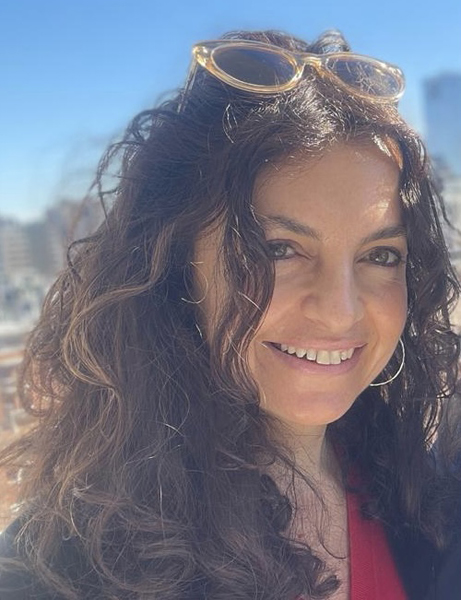
Elisa Riedo is a tenured Professor of Chemical and Biomolecular Engineering at New York University (NYU) Tandon School of Engineering, with joint appointments as Professor of Physics in NYU’s College of Arts and Science and as affiliated Professor of Mechanical Engineering at Tandon. She serves as Director of Faculty Development at NYU Tandon and has held prior tenured positions at Georgia Tech (2003–2015) and CUNY ASRC (2015–2018). Her academic career spans over two decades, with a Ph.D. in Physics from the University of Milano (2000) and postdoctoral work at EPFL. Her research focuses on nanotechnology , graphene and 2D materials , and thermal scanning probe lithography (tSPL) , with applications in biomedical diagnostics quantum electronics electromagnetic interference shielding mechanical reinforcement of materials She pioneered tSPL for sustainable nanofabrication and discovered diamene—a single-layer diamond structure from graphene under pressure. Her recent work involves transparent infrared electrodes using silver nanowires (2025) and self-organized graphene stacking domains for quantum technologies (2024). She has secured major grants from National Science Foundation , Department of Defense , and Army Research Office . Scientific honors include: 2023 NYU Tandon Excellence in Research Award 2013 American Physical Society Fellow 2005 CREA Innovation Award Membership in the Academy of Europe (2023) She contributes to editorial boards for journals like 2D Materials and Applications and advises companies such as Mirimus Inc. and SwissLitho AG .
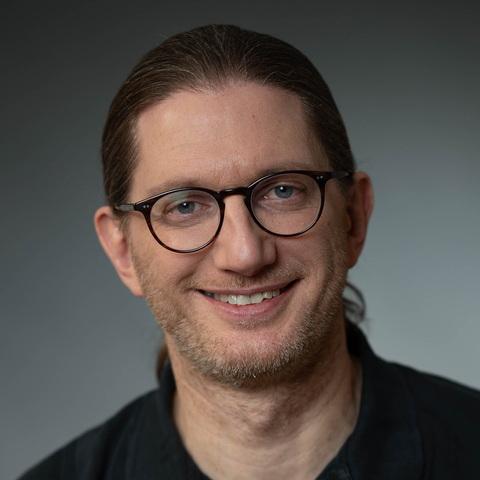
Markus Haltmeier is a Professor in the Department of Mathematics at the University of Innsbruck. His research focuses on inverse problems, image reconstruction, and deep learning with applications in medical imaging, photoacoustics, and computational mathematics. He leads a group dedicated to advancing theoretical and practical solutions for challenges in non-destructive testing and medical diagnostics. His work integrates mathematical analysis with machine learning, addressing issues such as high-resolution imaging in scattering media and automated segmentation of cardiac structures. Key research areas include regularization techniques for inverse problems, self-supervised learning approaches for limited data scenarios, and computational methods for photoacoustic tomography. His contributions span both theoretical developments (e.g., inversion formulas for Radon transforms) and applied solutions (e.g., algorithms for cylinder liner wear assessment and myocardial infarct segmentation). Publications highlight advancements in neural network-based regularization, 3D medical image synthesis, and unsupervised learning frameworks for segmentation and registration. His research emphasizes bridging the gap between mathematical theory and real-world applications in healthcare and engineering.
Prof. Ronald Blab is a distinguished academic at TU Wien's Faculty of Civil and Environmental Engineering, holding the position of Professor in the Institute of Transport Sciences. His research focuses on advanced road engineering topics, including pavement design, material science, and infrastructure management. He leads projects on performance-based design approaches and innovative testing methods for pavements, such as multi-directional Falling Weight Deflectometer (FWD) analyses. Notable contributions include work on bonded concrete overlays, unbound block pavement systems, and winter service infrastructure resilience. Blab has authored over 400 publications and supervised numerous theses, with recent work emphasizing sustainable materials and structural longevity under dynamic loads. He holds an honorary doctorate (Dr. h.c.) and has been pivotal in advancing Austrian engineering standards. His research integrates computational modelling, field testing, and lifecycle cost analysis for infrastructure solutions. Key projects include the implementation of lifecycle cost assessment (LCCA) in Austrian pavement design and the development of design catalogs for regional road networks. His academic leadership extends to lectures on winter maintenance strategies and the rebranding of TU Wien's Civil Engineering Faculty to emphasize environmental engineering.
Mathias Mehofer serves as a Lecturer at the Vienna Institute for Archaeological Science (VIAS), University of Vienna, specializing in archaeometallurgical research and teaching. His institutional affiliation is clearly established through his university email domain and published teaching assignments within the archaeology department. His research focuses on Archaeometallurgy and Bronze Age metal production , with particular emphasis on copper exchange networks across Europe and the Mediterranean. His work integrates experimental archaeology with advanced material analysis techniques including lead isotope studies and metallography. Key regional interests span the Balkans, Anatolia, Cyprus, and Alpine regions, examining metallurgical transitions from the Chalcolithic through Iron Age periods. Analysis of his 15 most recent publications reveals consistent methodological approaches combining fieldwork, laboratory analysis, and experimental replication. His research demonstrates strong specialization in Balkan metallurgical networks , Early Bronze Age Anatolian workshops , and non-destructive analytical techniques for museum artifacts. The publications show increasing focus on supra-regional exchange systems and technological transitions in metal production. Regarding academic supervision and funding, the available materials indicate active teaching responsibilities across multiple graduate-level courses but do not specify student supervision or grant details. His institutional profile suggests integration within VIAS research teams focused on material science applications in archaeology.
Michael Wimmer is a Full Professor at TU Wien, leading the Rendering and Modeling Group and directing the Center for Geometry and Computational Design. He holds a M.Sc. (1997) and Ph.D. (2001) from TU Wien. His research focuses on real-time rendering, procedural modeling, computational design, and point-based graphics. He has co-authored over 200 papers and the book *Real-Time Shadows*. He serves as Co-Editor-in-Chief of Computer Graphics Forum , chairs SIGGRAPH Asia 2025, and received the Eurographics Outstanding Technical Contributions Award (2023). Education: M.Sc. in Computer Science (1997), TU Wien Ph.D. in Computer Science (2001), TU Wien Research Interests: Real-time rendering and visualization Procedural modeling and computational design Point-based graphics and neural rendering Applications in computer games and urban environments Awards: Eurographics Outstanding Technical Contributions Award (2023) Wolfgang Straßer Award (Best Paper, 2022) Eurographics Fellow (2018) Outstanding Service Award (2012) Advising & Grants: Coordinator of the Special Research Programme Advanced Computational Design Key researcher at VRVis Research Center Labs & Teams: Rendering and Modeling Group Center for Geometry and Computational Design
University of Applied Sciences Upper AustriaAustria
Johann Kastner is a Professor at Upper Austria University of Applied Sciences, leading the Research Center Wels Computed Tomography R&D-Headquarters. He is affiliated with Centers of Excellence in Automotive/Mobility, Energy, and Smart Production. His research focuses on advanced materials characterization using X-ray computed tomography (X-CT), with applications in non-destructive testing, composite materials, and biomedical engineering. Key research areas include porosity analysis in carbon fiber reinforced polymers, phase contrast imaging, and additive manufacturing. He has led over 10 projects, including the EU-funded xCTing initiative (2021–2025) and the X-PRO project (2020–2024), emphasizing industrial CT applications and cross-virtuality data analysis. His work spans 335+ publications, with notable contributions to XCT-based defect detection, material microstructure analysis, and AI-driven image segmentation. Collaborations include COMET K Projects and FTI-Structurförderung grants. He has advised 2 PhD students and actively participates in international conferences and workshops. Laboratory facilities include state-of-the-art XCT systems for 3D microstructural analysis, Talbot-Lau grating interferometry, and augmented reality visualization tools for industrial applications.
University of Applied Sciences Upper AustriaAustria
Günther Mayr is a Professor at the University of Applied Sciences Wels, leading the Thermography and Non Destructive Testing Research Center. His research focuses on advanced thermal imaging techniques such as pulsed thermography and virtual wave concepts, applied to composite materials and automotive/mobility components. He has pioneered methods for defect detection in carbon fiber-reinforced plastics and fluid injection systems, emphasizing industrial quality assurance. Key projects include the EXCITE initiative for thermo-tomographic sensor technologies and the FLARE project integrating AI into non-destructive evaluation. He has collaborated internationally on topics like photothermal interface analysis and hybrid fiber metal laminate inspection. His work has earned the E. Grinzato Award (2018) for contributions to thermal NDE. Recent research highlights include 3D defect reconstruction in composites and efficient defect localization using virtual wave algorithms. He actively participates in conferences presenting innovations in thermal wave modeling and combined laser ultrasonics-thermography techniques.
Univ.Prof. Michael Wimmer is a Professor in the Department of Computer Graphics and Visualization at TU Wien's Faculty of Informatics. His research focuses on real-time rendering, point cloud processing, GPU computing, and computational design. He leads projects involving architectural visualization, thermal simulation, and integrative design frameworks combining 4D sketching with material modeling. His work bridges computer graphics with applications in architecture and engineering. ORCID: 0000-0002-9370-2663 Research Group: Network Lab Recent research emphasizes GPU-accelerated algorithms (e.g., LOD generation for 2 billion points), real-time rendering techniques, and deep learning approaches for surface reconstruction. Collaborations span thermal simulation with civil engineers and 4D design tools for architects. Notable contributions include: Developing PPSurf for detailed surface reconstruction using point convolutions Advancing Vulkan-based rendering pipelines in academic settings Integrating light polarization for HDR imaging His lab explores applications in architectural design metaphors, computational material assessment via GeoRadar, and thermal simulation using precomputed radiative transport. Students under his supervision focus on GPU optimization, 3D reconstruction, and VR ergonomics.
Peter Elbau is a Senior Lecturer (Privatdozent) in the Faculty of Mathematics at [University Name, if known]. His research focuses on mathematical imaging techniques, particularly in tomography and inverse problems, with applications in medical and biomedical imaging. He is actively involved in projects such as the "Tomography across the scales" initiative, aiming to develop quantitative imaging methods from molecular to astronomical scales. His primary research interests include the mathematical foundations of tomographic imaging, inverse scattering problems, and quantitative parameter reconstruction in optical coherence tomography (OCT) and photoacoustic imaging. He explores topics such as motion detection in diffraction tomography, curvature flows on surfaces, and the development of algorithms for medical diagnostics and material characterization. Elbau leads the research project "Tomography across the scales - Quantitative optical imaging from single molecules to stars," funded from 2018 to 2026. This project highlights his role in bridging fundamental mathematical research with practical applications in imaging technologies. His work often involves cross-disciplinary teams focusing on biomedical and material imaging challenges.
University of Natural Resources and Life Sciences ViennaAustria
Martin Riegler is a researcher at the Institute of Physics and Materials Science , part of the University of Natural Resources and Life Sciences, Vienna (BOKU). His work focuses on advanced material analysis and sustainable construction within the wood technology sector. Specializes in electrical resistivity measurements of wood Applies machine learning to wood machining acoustics Studies adhesive bondlines modified with carbon fillers Investigates moisture dynamics in wood Recent publications highlight his contributions to smart wood composites , non-invasive testing , and machine learning applications in wood processing. He has presented research at international conferences and collaborated with institutions like the Northern European Network for Wood Science and Engineering. Riegler's work intersects with Materials Science , Wood Technology , and Sustainable Engineering , particularly in optimizing particleboard production and wood moisture prediction . His research spans technical innovation and environmental stewardship in forestry applications.
University of Applied Sciences Upper AustriaAustria
Gerald Zauner is a Professor at FH Wels (University of Applied Sciences Wels) specializing in image processing, thermography, and non-destructive testing. His research primarily focuses on railway infrastructure, computer vision, and artificial intelligence applications in engineering contexts. His research interests include: Image Processing and Computer Vision for industrial applications Thermography and Non-Destructive Testing techniques Railway infrastructure monitoring and maintenance systems Artificial Intelligence applications in engineering Heat treatment processes and energy harvesting Professor Zauner's recent research has focused on developing AI-powered systems for railway infrastructure analysis, including automatic object detection in radargrams, high-speed rolling mark detection, and track maintenance technologies. His work bridges the gap between theoretical computer vision techniques and practical engineering applications, particularly in the railway sector. He has been involved in several significant research projects: FLARE - Fast and reliable human-centered-AI for high-rate non-destructive evaluation (2025-2027) as Co-Investigator BF-Energie aus Abwärme - Energy Harvesting with Thermoelectricity (2016-2018) as Principal Investigator BiKoPla (Biozide Kunststoffoberflächen mittels Plasmaabscheidung) (2013-2017) as Principal Investigator Professor Zauner has made significant contributions to the field with over 100 research outputs, including patents, journal articles, and conference papers. His work has been cited over 300 times, demonstrating its impact in the engineering and computer vision communities.
University of Applied Sciences Upper AustriaAustria
Katrin Mathmann is a Professor at the Feed and Food Innovation Research Department within the Center of Excellence in Food Technology and Nutrition at FH Wels - University of Applied Sciences. Her work focuses on sustainable food processing technologies, functional food ingredients, and IoT applications in the food industry. She holds a Dr.-Ing. (Engineering Doctorate) and has led/co-led multiple interdisciplinary research projects. Education: Engineering Doctorate (Dr.-Ing.) Her research interests include protein extraction from agricultural by-products, membrane filtration processes, anti-hyperglycemic compounds in sea buckthorn, and advanced imaging techniques for food structure analysis. She has published widely in food science and technology, with notable contributions to sunflower oil press cake valorization and IoT-enabled smart home applications for bakery product analysis. Mathmann has secured grants for projects such as the Sustainable Proteingewinnungsprozess (2021–2023) and FoodNetLab (2018–2020), focusing on circular economy and food value networks. She collaborates with industry partners to translate research into practical solutions for the food sector. Labs/Teams: Lead researcher in the Feed and Food Innovation Research team, contributing to FoodNetLab initiatives and IoT-driven food quality monitoring systems.
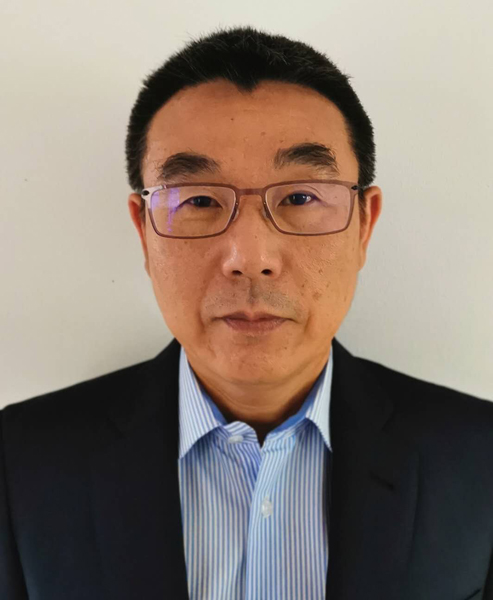
Shao Jian-Fu is an Exceptional class Professor of Civil Engineering at the University of Lille, France, a position he has held since 2010. He also serves as a Distinguished Professor of Geomechanics at Hohai University, China on a part-time basis. His academic career at the University of Lille has been progressive, having previously held positions as First class Professor (2001-2010), Second class Professor (1994-2001), and Associate Professor (1989-1994) of civil engineering. Professor Shao's educational background includes: 1992: Habilitation to supervise research (HDR) in Civil and Mechanical Engineering, University of Lille, France 1987: PhD in Civil Engineering, University of Lille, France 1984: Master in Solid Mechanics, University of Lille, France 1982: Bachelor in Hydraulic Engineering, China Agricultural University, China Professor Shao's research focuses on the mechanics of geomaterials and structures, with particular expertise in sequestration of CO2, thermo-hydromechanical and chemical coupling processes, and geological disposal of radioactive waste. His work spans multiple scales, from atomistic studies to field applications, and employs both experimental and computational approaches. He has made significant contributions to multi-scale modeling and the development of continuous and discontinuous numerical methods for geomechanical problems. His recent publications demonstrate a strong focus on phase-field modeling of cracking processes, constitutive modeling of heterogeneous and anisotropic materials, and the application of advanced computational techniques to geomechanical problems. His research has important applications in areas such as rainfall-induced landslides, radioactive waste disposal systems, and understanding the mechanical behavior of clayey rocks under various environmental conditions. Professor Shao has received numerous prestigious awards, including: 2023: Senior member of the Institut Universitaire de France (IUF) 2022: Chandrakant S. Desai Medal, IACMAG 2022: Maurice A. Biot Medal, ASCE 2021: Member of the European Academy of Sciences and Arts 2020: Member of the European Academy of Sciences 2019: Prize of Natural Science (2nd rank), Chinese Ministry of Education 2013: Prize of Science and Technology (2nd rank), Jiangsu Province, China 2012: Prize of Science and Technology (1st rank), The Chinese Association of Hydraulic Power 2011: Excellent contributions Award, IACMAG As a principal investigator, Professor Shao has led numerous significant research projects, including EU projects MAGIC and CEBAMA related to radioactive waste disposal, China State Key R&D projects on hydro-landslides, and various ANR and NSFC-funded projects. He has also served as an associate editor for several prestigious journals including the International Journal of Rock Mechanics and Mining Sciences and as a member of editorial boards for journals such as Computers and Geotechnics and International Journal of Plasticity. His extensive service includes reviewing for major funding agencies including the European Research Council, Swiss National Science Foundation, and Czech Science Foundation.
University of Natural Resources and Life Sciences ViennaAustria
Michael Sulyok is a prominent researcher at the Institute of Bioanalytics and Agro-Metabolomics, University of Natural Resources and Life Sciences, Vienna (BOKU), specializing in advanced analytical methods for food and feed safety. His work focuses on developing quantitative LC-MS/MS techniques capable of detecting over 1000 fungal metabolites and plant toxins at sub-μg/kg levels, leveraging one of the world's largest collections of fungal metabolite standards. He actively collaborates with international partners including Wageningen University and Nigerian research institutions. His core research interests include: Overcoming matrix effects in multi-toxin analysis Validation of high-throughput LC-MS/MS methods Climate change impacts on mycotoxin occurrence Infrared spectroscopy (NIR/MIR) for rapid on-field screening Diffusion patterns of toxins in mold-affected foods Emerging contaminants beyond EU-regulated mycotoxins Analysis of his 2025 publications reveals strong emphasis on real-time monitoring solutions, particularly portable infrared spectroscopy integrated into agricultural machinery for wheat quality assessment. His team is pioneering the use of CO2 sensors and 3D-printed modules for early contamination detection, while expanding multi-analyte coverage to plant-based alternatives and animal feeds under diverse environmental conditions. No scientific awards were documented in the provided materials. Sulyok supervises graduate theses at BOKU as indicated by his participation in Doc Day events, though specific student names were not disclosed. His research is supported by EU-funded consortia including FFoQSI and MycoKey, with extensive field work in Africa examining mycotoxin exposure in dairy cattle, maize, and infant foods. He leads a specialized team within BOKU's Tulln campus facility, utilizing cutting-edge mass spectrometers and chemometric approaches. The group maintains critical reference standards for fungal metabolites and is currently developing combine harvester-integrated NIR systems for wheat breeding, alongside investigating fungal metabolite profiles in aquaponics and novel matrices like vegan cheeses and moldy bread.
Jinsong Leng is a Full Professor and Director of both the International Center for Applied Mechanics and the Center of Smart Materials and Structures at Harbin Institute of Technology (HIT). His research focuses on smart materials, 4D printing, and advanced composites with applications in aerospace, biomedical engineering, and robotics. He has held leadership roles since 2004, including directing major research centers since 2007. His honors include membership in the Chinese Academy of Sciences (2021) and fellowships from AAAS (2018), RAeS (2013), and IOP (2011). His work bridges fundamental material science with practical innovations, such as deployable space structures and biodegradable medical devices. He collaborates globally, having held postdoctoral positions in the UK and Singapore before returning to HIT. Notable contributions include pioneering 4D-printed metamaterials and shape-memory polymer composites for space and biomedical uses. His labs focus on advancing smart materials for next-generation technologies, with a strong emphasis on interdisciplinary research.