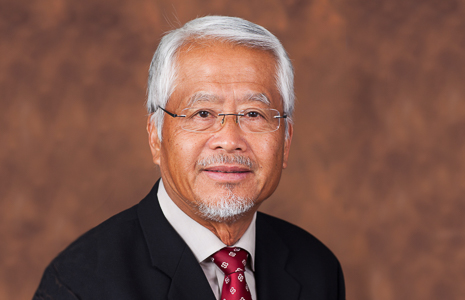
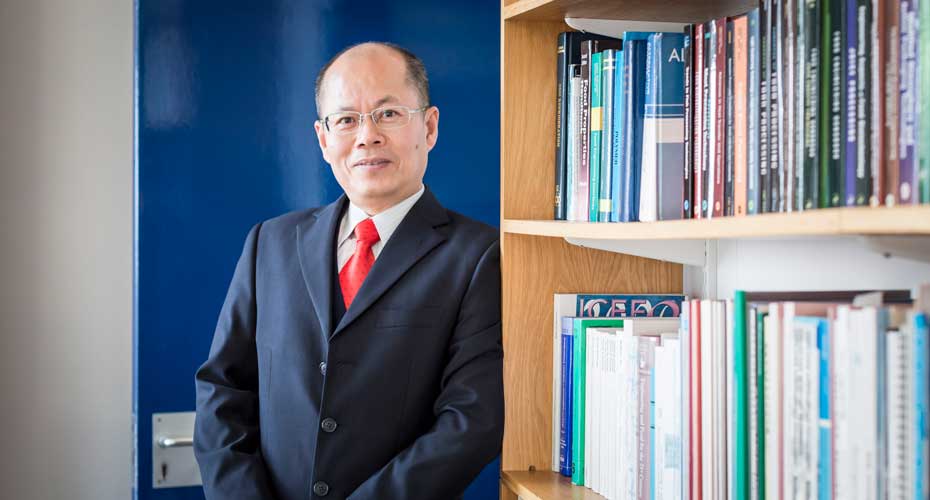
John Dalsgaard Sørensen is a Professor and Head of Research Group at the Department of the Built Environment, Aalborg University, within the Faculty of Engineering and Science. He leads the Risk, Resilience, Safety, and Sustainability of Systems Research Group and is affiliated with the Danish Centre for Risk and Safety Management. His research focuses on structural safety, wind turbine reliability, probabilistic design, and risk assessment of infrastructure systems. He has supervised 13 PhD students and contributed to over 600 publications. Key research areas include wind turbine structural integrity, fatigue analysis of offshore and onshore structures, probabilistic design standards (e.g., Eurocodes), and risk-based decision-making for infrastructure. He leads projects like Windscanner (remote sensing for wind measurements) and MANTIS (cyber-physical maintenance systems). Collaborations span academia and industry, addressing challenges in energy systems, civil infrastructure, and safety engineering. His work emphasizes practical applications of advanced modeling techniques, such as Bayesian networks and stochastic simulations, to enhance reliability and reduce operational costs. He is actively involved in standardization efforts for structural design and serves on boards like Energi- og MiljøData Fonden. Recent activities include presenting at international conferences and advising on media debates related to structural safety.
Dr Donya Hajializadeh is an Associate Professor of Structural Engineering at the University of Surrey's School of Sustainability, Civil and Environmental Engineering. She holds multiple professional qualifications including Chartered Engineer (CEng) and European Engineer (EUR ING), and is a Fellow of the Higher Education Academy (FHEA). Her roles include Director of Employability (since 2020), Deputy Coordinator of the Surrey/ICE Scholarship (since 2019), and IStructE Liaison Officer (since 2021). She is also affiliated with the Surrey Institute for People-Centred Artificial Intelligence (PAI). Her education includes a BEng (Hons), MEng, and PhD in relevant fields. Research focuses on structural health monitoring (SHM), machine learning applications in asset management, and deep learning for damage identification. Key areas include railway bridge dynamics, vibration analysis, and resilience assessment under seismic and environmental hazards. Current PhD students include Chia Sadik (Transport Infrastructure Failure Assessment) and Michael Millgate (Dynamic Characterisation of Tall RC Buildings). Teaching responsibilities include ENG1073 Fluid Mechanics and ENGM054 Earthquake Engineering. Research aligns with sustainable development goals, emphasizing infrastructure sustainability and carbon reduction strategies. Notable projects include rail bridge innovation recognized by the Chief Scientific Adviser Award and presentations on damage identification techniques to government officials. She contributes actively to interdisciplinary initiatives, integrating AI with civil engineering for smarter infrastructure solutions.
Devin K. Harris is a Professor and Chair of the Department of Civil and Environmental Engineering at the University of Virginia . His work focuses on large-scale infrastructure systems , combining image-based measurement techniques, simulation , visualization , and data analytics to advance structural health monitoring , smart cities , and digital twins . He also investigates reinforced/prestressed concrete behavior and innovative materials in civil infrastructure. Education : Ph.D., M.S., and B.S. in Civil Engineering from Virginia Tech (2007), Virginia Tech (2004), and University of Florida (1999). Research Interests Structures and Mechanics - Sustainable Infrastructure Systems Infrastructure Condition Assessment Structural Health Monitoring Smart Cities Digital Twins Applied Machine Learning Scientific Awards Delmar L. Bloem Distinguished Service Award (2021) IAspire Leadership Academy Fellow (2020–2022) ASCE Journal of Bridge Engineering Outstanding Reviewer (2013) UVA Teaching Resource Center Excellence in Diversity Fellowship (2012–2013) ACI Young Member Award for Professional Achievement (2011) Grants Principal Investigator for EAGER: Adaptive Digital Twinning: An Immersive Visualization Framework for Structural Cyber-Physical Systems (NSF #2136724) and Performance Characteristics of In-Service Bridges (Virginia Transportation Research Council, 2018–2020). Co-led NCHRP 23-16 on Machine Learning applications in transportation agencies. Labs & Teams Leads the Infrastructure Simulation, Sensing and Evaluation Lab (I-S2EE) , equipped with DIC systems , mobile GPR , thermal imaging , and cyber-physical simulation tools. Collaborates with the Omni-Reality & Cognition Lab for AR/VR integration in infrastructure evaluation.
Hamidreza Marvi is an Associate Professor in the School for Engineering of Matter, Transport and Energy at Arizona State University , with additional affiliations as a Senior Global Futures Scientist . His work bridges bio-inspired robotics , soft robotics , and mechanics of animal locomotion . Education : Ph.D. in Mechanical Engineering (Georgia Tech, 2013), M.S. in Biomedical Engineering (Sharif University, 2007), M.S. in Mechanical Engineering (Clemson, 2009), B.S. in Mechanical Engineering (Iran University of Science and Technology, 2004). Marvi’s research focuses on biological systems interacting with solid, granular, and fluidic environments , translating these insights into bio-inspired robotic systems for search-and-rescue, medical, and planetary exploration. His work has been featured in Science , PNAS , and popular media like the New York Times and BBC . Recent publications highlight trends in magnetic microrobotics , soft robot control , and locomotion in granular media , with applications in medical devices, underwater inspection, and space exploration. His BIRTH Lab develops programmable interfacial structures and adaptive locomotion systems. Scientific Awards : KEEN Professorship (2017), Peebles Award (2015), Sigma Xi Best Ph.D. Thesis (2014), TechSTAR Award (2012), Emerald Publishing Literati Network Award (2011). Marvi has supervised teams for NASA competitions, co-organized robotics workshops, and served as a reviewer for journals like Nature-Scientific Reports and conferences including IEEE-IROS. His teaching portfolio includes courses in system dynamics, robotic control, and applied projects .
Christoph Gehlen is Professor and Chair of Materials and Materials Testing in Civil Engineering at the Technical University of Munich (TUM), based at Franz-Langinger-Str. 10 in Munich. His research group focuses on advanced concrete technologies, materials science, and digital construction methods, with significant contributions to additive manufacturing in civil engineering through the Collaborative Research Center TRR 277. His research spans concrete technology, durability assessment, and sustainable construction practices. Key interests include corrosion mechanisms in reinforced concrete, non-destructive testing methodologies, and additive manufacturing techniques like Selective Paste Intrusion (SPI). Recent work emphasizes 3D concrete printing for structural applications, life cycle assessment of printed elements, and fundamental studies on material behavior under environmental stressors including carbonation, chloride exposure, and freeze-thaw cycles. Analysis of his 15 most recent publications (2024-2025) reveals dominant research trajectories in digital fabrication of concrete structures, particularly SPI-based additive manufacturing. His work integrates materials science with structural engineering to develop functionally graded components, assess sustainability metrics, and solve reinforcement integration challenges. Significant interdisciplinary efforts address durability issues through electrochemical monitoring, coda wave interferometry, and advanced imaging techniques for concrete microstructure characterization. Gehlen leads the Chair of Materials and Materials Testing in Civil Engineering at TUM, which operates advanced laboratories for concrete characterization including confocal laser scanning microscopy and virtual testing environments. His team actively participates in TRR 277 (Additive Manufacturing in Construction), developing fabrication-aware design methods and experimental validation protocols for novel construction technologies.
Paolo Riva is a Full Professor of Structural Engineering at the Department of Design and Technologies of the Faculty of Engineering, University of Bergamo. He has served as Dean of the Faculty of Engineering (2009-2012) and Director of the Department of Engineering at the same university since 2012. His expertise lies in seismic engineering and structural analysis of reinforced concrete structures. Professor Riva graduated in Civil Engineering from Politecnico di Milano in 1984 and earned his Ph.D. in Civil Engineering from the University of Waterloo, Canada in 1987. He began his academic career as a researcher at the University of Brescia (1991-2001), became Associate Professor there in 2001, and joined the University of Bergamo as Full Professor in 2005. His primary research interests focus on the seismic behavior of reinforced concrete structures, particularly structural walls and prefabricated structures. He also specializes in seismic retrofitting of historic buildings, nonlinear analysis of reinforced concrete structures, and fire behavior of reinforced concrete structures. His work bridges theoretical analysis with practical applications for enhancing structural safety in earthquake-prone regions. Professor Riva's recent publications demonstrate a strong focus on seismic damage assessment, structural retrofitting solutions, and sustainability in structural engineering. His research often addresses practical challenges in post-earthquake scenarios, including damage identification through advanced monitoring techniques and development of innovative retrofit strategies for existing structures. A notable trend is his increasing emphasis on integrating sustainability principles into seismic retrofitting practices. Seismic Reliability of Structures (WP3 - Reluis), 2022, 24 months Structural vulnerability models for natural hazards and industrial cascading effects, 2024, 33 months Sustainable Approaches For Earthquake Resistant_REhabilitation solutions for the BUILT environment, 2024, 15 months Professor Riva has directed all these research projects as Scientific Director. His expertise has been recognized through appointments to post-seismic emergency commissions following major earthquakes in Italy, where he provided critical guidance on intervention methods for seismic repairs and improvements for public and monumental buildings.
Professor Gareth Pierce is a leading academic at the University of Strathclyde, serving as Co-Director of the Centre for Ultrasonic Engineering and Academic Director of the UK Research Centre in Non-Destructive Evaluation (RCNDE). He specializes in robotics, autonomous systems, and non-destructive evaluation (NDT&E), with a focus on structural health monitoring (SHM) and advanced manufacturing. His work integrates robotics, AI, and ultrasonics to address challenges in aerospace, energy, and healthcare sectors. He holds a Spirit Aerosystems/Royal Academy of Engineering Research Chair and leads the £50M SEARCH (Sensor Enabled Automation, Robotics & Control Hub), which spans manufacturing and asset management applications. Education: BSc (Hons) in Pure and Applied Physics from the University of Manchester (1989), PhD in Fibre-Optic Interferometers for Laser-Generated Ultrasound from UMIST (1993). Additional qualifications include City & Guilds certifications in electrical installations and a PGDip in Psychological Wellbeing. Research Priorities Autonomous robotic inspection for manufacturing and asset management Integration of AI/machine learning with NDT&E systems In-process inspection for additive manufacturing and welding Ultrasonic and guided wave technologies for defect detection Key Achievements 2023 Anne Birt Award for NDT innovation Leadership roles in SRPe Robotics & UK HVM Catapult initiatives Over 270 research outputs, 86 projects, and a £50M research portfolio Teaching Course organiser for EE312 (Instrumentation & Microcontrollers) and contributes to advanced systems engineering education. Supervises student projects across engineering disciplines. Labs & Collaborations SEARCH Hub operates from Royal College R2.41 (manufacturing applications) and Technology Innovation Centre TIC 7.14 (asset management). Collaborates with global industry partners like Spirit Aerosystems and Högskolan Väst (Sweden).
Amit Morey is an Associate Professor in the Department of Poultry Science at Auburn University's College of Agriculture. His research focuses on food safety, poultry meat quality, and advanced sensing technologies. He leads projects involving biosensor development, microbial pathogen detection, and spoilage prediction using machine learning and spectral imaging. His work bridges laboratory innovations with industry applications, addressing challenges in poultry processing, packaging, and supply chain management. Education details are not explicitly listed, but his extensive publications suggest advanced training in food science, microbiology, and engineering. Research interests include antimicrobial biopolymer films, texture analysis of catfish and chicken fillets, and the application of functional ice in seafood preservation. He has pioneered methods for rapid Salmonella detection using microfluidics and fiber optics-based SERS sensors. Notable contributions include developing predictive models for spoilage using near-infrared spectroscopy and exploring cyclic temperature abuse impacts on poultry safety. His interdisciplinary approach integrates artificial intelligence with traditional food science techniques to enhance food safety and reduce waste. While no specific grants or awards are listed, his active publication record (over 100 papers from 2005–2025) indicates sustained research funding. He collaborates on projects addressing global food safety inequities, such as sensor-enabled decision support systems (SENS-D) for vulnerable communities. Lab activities include the Auburn Poultry Science Lab, focusing on meat quality assessment, microbial interventions, and smart packaging solutions. His work has direct industry impact, with applications in poultry processing plants and retail cold chain management.
Dr. Mohammad Naraghi is a Professor and Associate Department Head for Academics in the Department of Aerospace Engineering at Texas A&M University. He leads the Nanostuctured Materials Lab , focusing on advanced nanomaterials for aerospace applications. His work integrates material science principles to develop lightweight, high-performance materials for structural, energy storage, and smart textile systems. Education: Ph.D., Aerospace Engineering (2009), University of Illinois at Urbana-Champaign M.S., Civil Engineering (2004), Sharif University of Technology B.S., Civil Engineering (2004), Sharif University of Technology Research Interests: Graphitic carbon nanomaterials, bio-inspired composites, experimental nanomechanics, and polymer nanofiber processing. His lab explores multifunctional materials for aerospace applications, including self-healing polymers, structural batteries, and sustainable carbon fiber recycling. Publications: Dr. Naraghi has authored over 150 peer-reviewed articles, with recent work focusing on carbon nanomaterial synthesis, self-healing vitrimers, and all-electric aircraft sustainability . His studies bridge nanoscale mechanics and macroscale applications, emphasizing scalability and industrial relevance. Awards: Best Paper Award (2009) for nano viscoelastic composites research Roger A. Strehlow Memorial Award (2009) for outstanding research First Place in Sandia MEMS Design Competition (2007) Advising & Grants: Leads NSF-funded projects on sustainable materials and structural energy storage. Advises graduate students in aerospace and materials engineering. Collaborates with Sandia National Labs and industry partners on advanced composite development. Labs & Facilities: Directs the Nanostuctured Materials Lab, equipped with advanced nanomechanical testing systems, electrospinning setups, and characterization tools for nanoscale materials analysis.
Christoph Heinzl is a Professor of Cognitive Sensor Systems at the University of Passau since September 2022. He leads the Knowledge-based Image Processing research group at the Fraunhofer Development Center X-ray Technology (EZRT) . His academic background includes a PhD in Informatics and a Habilitation in 2022 , both from TU Wien . Research Focus: Scientific visualization, visual analytics, immersive analytics, virtual/augmented reality, machine learning, and X-ray computed tomography (XCT). Key Trends: Development of novel visualization techniques for complex volumetric data (e.g., dynamic volume lines, visual coherence frameworks), parameter space analysis, and cross-virtuality collaboration tools. Applications: Aerospace component inspection, defect analysis in composites (CFRP, GFRP), porosity quantification, and 4DCT time-series exploration.
Dr. Andy Nguyen is a Senior Lecturer in Structural Engineering at the University of Southern Queensland, within the School of Engineering. He is an active researcher and educator, specializing in the Structural Health Monitoring (SHM) of critical civil infrastructure such as bridges, buildings, and transport tunnels. Bachelor of Engineering (BEng), NUCE, 1999 Master of Engineering (MEng), NUCE, 2003 Doctor of Philosophy (PhD), Queensland University of Technology (QUT), 2014 Dr. Nguyen's research is at the forefront of integrating advanced technologies into civil engineering. His primary focus is on developing and deploying sophisticated SHM systems that utilize sensors, data analytics, and machine learning to provide real-time insights into the structural integrity of ageing infrastructure. His work aims to enable proactive maintenance, extend the lifespan of structures, and enhance public safety. He has successfully implemented monitoring systems on major bridges and high-rise buildings in Queensland and New South Wales, with systems capable of even detecting distant earthquake events. His research interests span Structural Health Monitoring, Machine Learning for Engineering, Damage Detection, Finite Element Model Updating, Sustainable Building Materials like bamboo, and the application of AI for automated condition assessment of transport infrastructure. The analysis of his recent publications reveals a strong and consistent research trajectory centered on the application of data-driven and AI methods to solve practical problems in civil infrastructure. His work frequently combines signal processing techniques (like Stockwell Transform) with deep learning models for tasks such as crack detection in concrete and pavement. He also conducts significant research on model updating for complex structures like cable-stayed and arch bridges, using vibration data and optimization algorithms. The integration of machine learning for overload classification and the development of cost-effective, automated monitoring systems are key trends in his recent output. Advanced Queensland Fellow (2024-2027) Dr. Nguyen is actively involved in research supervision and collaboration. He is currently supervising several postgraduate students on projects related to AI-powered condition assessment, bamboo as a sustainable building material, and railway track design. He receives research funding from the Queensland Government through his Advanced Queensland Fellowship. His research has direct practical applications, as evidenced by his public engagement, such as writing for The Conversation on safeguarding ageing bridges, and his work with the Australian Network of Structural Health Monitoring. Dr. Nguyen's work embodies the development of a next-generation 'Living' Laboratory for engineering education, where research, teaching, and real-world infrastructure monitoring are integrated. His current projects involve creating smart, automated fault detection systems and advancing 'digital twin'-based monitoring platforms for infrastructure.
Nan-Yao Su is a Professor at the University of Florida 's Department of Entomology and Nematology, based at the Fort Lauderdale Research and Education Center . Renowned as an authority on termites, his work focuses on termite biology, population ecology, and innovative control strategies. Established the Sentricon baiting system for termite population control, reducing global pesticide use by over 9,000 metric tons. Recipient of the Presidential Green Chemistry Challenge Award for environmentally sustainable pest management. Technical advisor to governments of New Zealand, China, and Vietnam on termite issues. Research Interests span termite foraging behaviors, microbe interactions within colonies, and development of novel termite control tools. His work bridges fundamental biology with practical area-wide management programs, funded by royalty income from the Sentricon system and USDA-ARS grants. Scientific Contributions include over 260 peer-reviewed publications, with key studies on Formosan subterranean termites' economic impact (e.g., $300M annual losses in New Orleans) and drywood termite dispersal mechanisms. His research has led to standardized identification keys for Florida termites and advanced detection methods like termite-sniffing dogs and chemical barriers. Publications reveal a focus on invasive termite species, chitin synthesis inhibitors, and eco-friendly pest management. Awards include: Presidential Green Chemistry Challenge Award (2019) Establishment of the Nan-Yao Su Award for Innovation in Entomology
Leijun Li, PhD, P.Eng., is a Professor in the Department of Chemical and Materials Engineering at the University of Alberta, where he also serves as Chair. With a career spanning institutions including Rensselaer Polytechnic Institute, University of Northern Iowa, and Utah State University, he specializes in physical metallurgy , welding metallurgy , and additive manufacturing . His research focuses on microstructure characterization, mechanical properties, and modeling of non-equilibrium phase transformations during welding and AM processes. Current affiliations: University of Alberta, American Welding Society, ASM International Research themes: Additive manufacturing of alloys, Corrosion science, Pipeline metallurgy, Phase transformations, Welding robotics He has received multiple AWS Hobart Awards (4 times) and Savage Awards (2 times) for his work on pipeline welding and metallurgy. His group has published extensively on topics including delta-ferrite retention in Grade 91 steel, inverse bainite transformations , and welding defect analysis . Recent projects include NSERC Alliance Missions Grant for rare earth mineral recovery and Alberta Innovates Ecosystem Program for advanced manufacturing. Key collaborators: Dr. Tom Lienert, Dr. Xiaoying Fang, Dr. P-Q Xu Labs: Rooms 2-158/3-133 (CME Building), Office 12th Floor DICE Building
Professor Da-Wen Sun is a globally recognized authority in food and biosystems engineering at the UCD School of Biosystems & Food Engineering , University College Dublin. His research focuses on enhancing food preservation through innovative technologies like ultrasound-assisted freezing to minimize nutrient loss and structural damage in frozen foods. Key contributions: Developed ultrasound freezing methods to reduce ice crystal damage Editor of seminal texts including Handbook of Frozen Food Processing Founded the journal Food and Bioprocess Technology His work bridges computational modeling (e.g., CFD simulations , machine learning ) with industrial applications, particularly in freezing, drying, and vacuum cooling. Recent studies explore terahertz imaging for pest detection, deep eutectic solvents for moisture control, and cold plasma for allergen reduction. Scientific awards include: Frozen Food Foundation Freezing Research Award (2013) - First non-US recipient CIGR Honorary President title (2016) for leadership in agricultural engineering He leads the UCD Food Refrigeration & Computerised Food Technology group , collaborating internationally on technologies like nanosensors and green cryoprotectants to advance sustainable food systems.
Robert Heinemann is a Senior Lecturer in the Department of Mechanical and Aerospace Engineering at the University of Manchester, affiliated with the School of MACE. His work focuses on advanced machining, tool condition monitoring, and sustainable manufacturing processes. He holds a PhD from the University of Manchester Institute of Science and Technology (2004) and has extensive research experience in drilling technology, carbon-based coatings, and environmental benign machining. Education: Diplom Ingenieur (Dipl.-Ing. FH) in Mechanical Engineering, University of Paderborn, Germany (1999) MSc in Electronic Engineering and Engineering Management, University of Paderborn/Bolton University (2001) PhD in Mechanical Engineering, University of Manchester Institute of Science and Technology (2004) Research interests include: Drilling and reaming technology for minimally invasive surgery Development of diamond-like carbon coatings for cutting tools Process and tool optimization for aerospace and biomedical applications Environmental sustainability in manufacturing design His research outputs emphasize adaptive drilling strategies, deep learning applications in process monitoring, and sustainable manufacturing practices aligned with UN SDGs. He leads the Laser Processing Research Centre (LPRC), focusing on laser-based machining innovations. Scientific achievements include a Leverhulme Trust Early Career Fellowship (2010) and contributions to over 40 peer-reviewed articles. He advises 9 postgraduate research students and collaborates on multi-disciplinary projects addressing industrial challenges in composites and precision engineering.