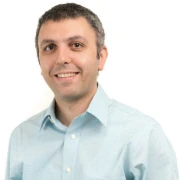
Dr Jonathan Scholey is a Senior Lecturer in Mechanical Engineering at Sheffield Hallam University's Department of Engineering and Mathematics, part of the College of Business, Technology and Engineering. He joined in 2017 after eight years as an engineering consultant at Atkins Ltd, focusing on nuclear industry mechanical systems design and substantiation. He holds a PhD in quantitative acoustic emission from the University of Bristol (2008) and an MEng in Aeronautical Engineering (2004). His research centers on acoustic emission techniques for structural health monitoring, including source location, delamination analysis, and composite material failure characterization. Teaching responsibilities span solid mechanics, dynamics, design, and engineering principles across undergraduate and postgraduate levels, including supervision of design/research projects and a MEng group project. Jonathan is a Chartered Engineer and IMechE Member, chairing the IMechE's Derbyshire and Nottinghamshire Area Committee. He actively promotes STEM through ambassador roles and local events. His work bridges academic research and industrial applications, emphasizing practical engineering solutions.
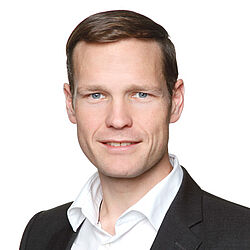
Tarek Rakha is an Associate Professor of Architecture and Director of the High Performance Building Lab (HPBL) at Georgia Tech's College of Design. He also serves as Co-founder and CEO of Lamarr.AI, a startup commercializing his research. His academic journey includes a Ph.D. in Building Technology from MIT (2015) and prior faculty roles at Syracuse University before joining Georgia Tech in 2019. Rakha's work focuses on sustainable design, urban modeling, and building performance simulation, with a strong emphasis on underserved communities. His research, totaling $4M+ in federal/state funding, explores aerial data robotics for building diagnostics, urban energy sensing, and thermal comfort modeling. Education Background: Ph.D. in Building Technology, MIT (2015) M.S. and B.S. in Architecture, Cairo University (2010, 2007) Research Interests: He pioneers interdisciplinary approaches combining AI, drones, and computational methods to address environmental challenges. Key areas include: - Thermal anomaly detection via capsule networks and YOLO models - Inclusive urban energy modeling with socioeconomic data integration - Climate-resilient native architectures and heritage preservation - Energy efficiency in healthcare environments and retrofit programs. Recent Projects: His work spans $7M+ in funded projects from NSF, DOE, ARPA-E, and corporate partners like Coca-Cola. Notable outputs include an open-source decarbonization framework and thermal comfort analysis tools for chemotherapy spaces. His drone-based envelope diagnostic systems have advanced non-destructive testing practices. Awards & Impact: Recognized nationally with IBPSA-USA's Emerging Contributor Award (2023). His teaching excellence earned the 2022 Class of 1934 Award at Georgia Tech. Mentored DOE Solar Decathlon Grand Winner (2022) and led award-winning design competitions (AIA/ACSA 2019). Lab & Outreach: The HPBL develops innovative solutions for energy-efficient urban systems. Rakha co-edited SimAUD conference proceedings as General Chair (2018) and Program Chair (2019). Public engagement includes active social media presence and LinkedIn networking.
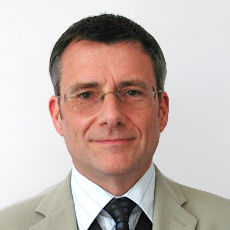
Marco Schaerf is a Full Professor at Sapienza University of Rome, Department of Computer, Control, and Management Engineering. He previously held roles as Associate Professor at the University of Cagliari (1992–1994) and Sapienza (1994–2000). He chairs the Engineering Information Area in Latina and serves on the editorial boards of Artificial Intelligence Journal and Journal of Artificial Intelligence Research . His research focuses on artificial intelligence, nonmonotonic reasoning, computational complexity, digital libraries, and bibliometrics. Notably, he received the 1997 AI*IA Award for Best Young Researcher in AI. Key projects include coordinating the European MAGICSTER project, FIRB 2001 ASTRO, and COFIN grants (2002/2004). He led Sapienza’s participation in Italy’s VQR research assessment program and contributed to digital library systems like the Sapienza Digital Library. His work bridges AI with cultural heritage, including AI-driven visitor experience analysis in museums. Research interests span AI applications, knowledge representation, and computational methods in cultural heritage. He has published over 60 papers in top journals, with recent work on scientometrics, anomaly detection in infrastructure, and weakly supervised semantic segmentation. His contributions to AI theory, robotics, and bibliometric analysis underscore his interdisciplinary impact.
Dr. Audun Oppedal Pedersen is an Associate Professor specializing in Acoustics and Ocean Technology at the University of Bergen's Department of Physics and Technology. His research focuses on acoustic wave propagation, ultrasonic transducer technology, and applications in industrial monitoring and marine biology. Dr. Pedersen has developed tomographic methods for pipeline corrosion monitoring using guided ultrasonic waves and advanced techniques for fisheries acoustics including salmon size estimation through target strength analysis. His work frequently employs finite element modeling (FEM) for transducer calibration and acoustic system optimization.
Dr. Berna Hascakir is a Professor in the Harold Vance Department of Petroleum Engineering at Texas A&M University's College of Engineering. She holds the Flotek Industries, Inc. Career Development Professorship and has secured over $3 million in research funding. Her expertise includes enhanced oil recovery and flow assurance, with extensive publication record. Education: PhD in Petroleum and Natural Gas Engineering (Middle East Technical University, 2008), MS in Environmental Technology (Dokuz Eylul University), BS in Environmental Engineering (Dokuz Eylul University). Research Interests: Focuses on thermal EOR methods including in-situ combustion and steam-assisted gravity drainage. Additional work in reservoir fluid characterization and produced water management. Diagnostic methods include advanced spectroscopy and microscopy techniques. Publication Trends: Articles demonstrate strong focus on experimental and computational methods for reservoir engineering, with recent work expanding into machine learning applications for tool condition monitoring and structural analysis. Awards: Distinguished Member, Society of Petroleum Engineers (2018) ADVANCE Administrative Fellow (2021-2022) Innovative Teaching Award, SPE (2015)
Sam Noynaert is an Associate Professor of Practice in Petroleum Engineering and Affiliated Faculty in Multidisciplinary Engineering at Texas A&M University's College of Engineering. He is part of the Harold Vance Department of Petroleum Engineering and holds an office in the Joe C. Richardson Building (RICH 501J). His educational background includes a Ph.D. in Petroleum Engineering from Texas A&M University (2013). His research focuses on advanced drilling technologies, including physics-based drilling performance optimization, geothermal drilling innovations, and solutions for unconventional reservoir challenges. Key interests include applied drilling research, horizontal/deviated drilling strategies, and mitigating drilling-related issues in complex formations. Education: Ph.D., Petroleum Engineering, Texas A&M University – 2013 Recent publications emphasize real-time drilling optimization, geothermal drilling advancements, and machine learning applications in formation identification. His work bridges theoretical models with practical drilling workflows, addressing both conventional and unconventional reservoir challenges. He has contributed to open-source drilling simulation consortia and collaborated on interdisciplinary projects involving metrology and non-destructive inspection. No scientific awards are explicitly listed in the provided text. His advising activities are not detailed here, though his research team likely engages with students and industry partners. He is affiliated with the Harold Vance Department, leveraging its resources for lab-scale drilling experiments and field-scale feasibility studies in geothermal systems.
Todd Michael is an Adjunct Professor at the University of California, San Diego, affiliated with the Scripps Institution of Oceanography and the Center for Marine Biotechnology and Biomedicine. His work bridges advanced computational methods with structural engineering challenges, particularly in infrastructure monitoring and material degradation analysis. Research interests include Structural Health Monitoring (SHM), Non-Destructive Evaluation (NDE), and the integration of Machine Learning and Bayesian Inference into engineering systems. He focuses on optimizing sensor networks, improving corrosion diagnostics for large structures like miter gates, and developing digital twin frameworks for predictive maintenance. Recent work emphasizes probabilistic modeling, anomaly detection under complex conditions, and the application of deep learning to civil and mechanical engineering problems. His articles highlight innovations in SHM strategies for bridges and aircraft components, sensor reliability under operational failures, and frameworks for cost-effective monitoring. He also explores automated crack detection in underwater environments and the use of physics-constrained neural networks to model structural dynamics accurately. Michael collaborates with interdisciplinary teams on projects involving smart infrastructure and AI-driven inspection technologies. While no formal awards are listed, his contributions reflect a strong focus on applied research with real-world engineering implications.
Professor Yu Shi is the Chair of Textiles Innovation & Smart Composite Materials at the School of Design, University of Leeds. His research focuses on smart textiles, wearable electronics, and smart composite materials for applications in aerospace, healthcare, and renewable energy. He leads the Smart Composite Materials Research Group and has secured over £10M in grants from Innovate UK, EU Horizon, and others. Key projects include Deloneliness (smart textiles to combat loneliness in older adults), Romain (robotic inspection of wind turbine blades), and Batman (wearable devices for wildlife monitoring). He holds fellowships from the Institute of Materials, Minerals and Mining (FIMMM), Chartered Engineer (CEng), and Fellow of the Higher Education Academy (FHEA). Education: PhD in Composite Materials (University of Sheffield, 2010–2013), followed by postdoctoral roles at the University of Sheffield, University of Exeter, and AFRC, University of Strathclyde. Became a lecturer at the University of Chester in 2015 and promoted to Professor in 2019 before joining Leeds in 2023. Research Interests: Smart textiles for healthcare (e.g., musculoskeletal monitoring), energy harvesting in composites, structural health monitoring, and sustainable materials. Projects integrate printed electronics and computational modelling for aerospace, automotive, and renewable energy sectors. Grants and Projects: Current funding includes EPSRC’s £1.5M Deloneliness project, EU Horizon’s €3M Romain project, and Leverhulme Trust’s £500k Batman initiative. Past projects include Innovate UK’s SmartBlade (£500k) and REMASTER (£260k). Awards: Best Poster Prize at Poweremes 2019 for work on smart composites. Active reviewer for composites journals and associate editor for advanced materials.
Hans Hertz is a Senior Professor at the Royal Institute of Technology (KTH), specializing in Bio-Opto-Nano Physics. He leads research in advanced X-ray imaging technologies, with a focus on nanoparticle design and biomedical applications. His work integrates phase-contrast imaging, X-ray fluorescence tomography, and cryo-microscopy to develop non-invasive diagnostic tools for cellular and tissue analysis. Key research interests include nanoparticle bioengineering, contrast agent development for XFCT (X-ray Fluorescence Computed Tomography), and the application of phase-contrast techniques for virtual histology and tumor margin assessment. He has pioneered liquid-jet X-ray sources and high-resolution tomography systems for preclinical imaging. His recent publications highlight advancements in nanoparticle biodistribution studies, cryo-soft X-ray microscopy for cellular imaging, and hybrid XFCT-MRI contrast agents. He also contributes to industrial quality inspections using phase-contrast X-ray imaging for non-destructive material analysis. Hans Hertz has been instrumental in developing imaging solutions for tumor resection guidance and has explored applications in ancient mummy studies, demonstrating the versatility of his techniques across biomedical and archaeological domains.
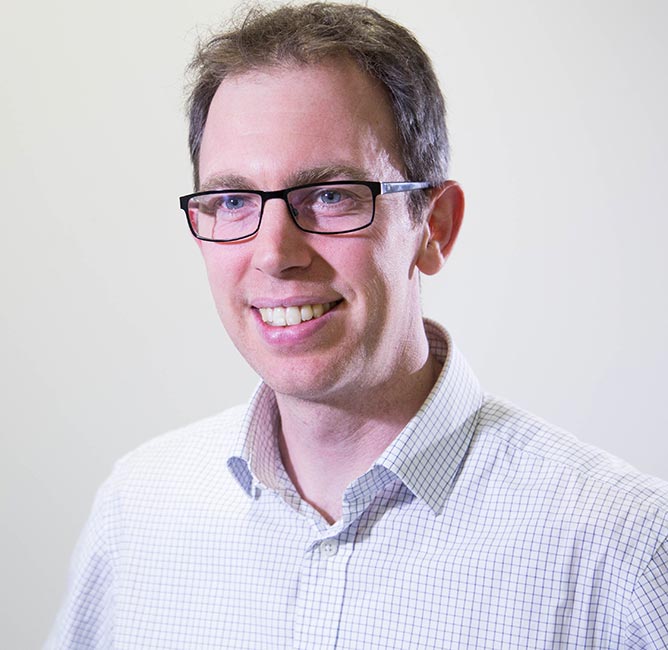
Ramsey Al Jebali is a Postdoctoral Fellow at the Centre for Space Sensors and Systems (CENSSS) , University of Oslo, Norway. He also serves as an Honorary Research Fellow at the University of Glasgow's Nuclear Physics Experimental Group since 2017. His primary research focuses on developing compact neutron detectors and gamma-ray spectrometers for space missions, emphasizing their durability in harsh space environments. Previously, he was a Detector Scientist at the European Spallation Source (ESS) in Sweden (2017–2023) and held postdoctoral roles at the University of Glasgow (2013–2017). He earned his PhD in Experimental Photonuclear Physics from the University of Glasgow (2013), M.Sc. in Space Mission Analysis and Design (2007), and B.Sc. in Nuclear Engineering (2003) from the University of Tripoli. His work bridges nuclear physics, space instrumentation, and detector technology. Research Interests : Compact neutron/gamma detectors, space instrumentation, radiation detection, photonuclear physics, and applications in planetary exploration and nuclear waste management. His projects often involve collaborations with institutions like IDEAS and the ESS, aiming to advance detector design for extreme environments. Recent Publications highlight advancements in detector calibration (e.g., GEANT4-based methods), muon tomography for nuclear waste analysis, and scintillator-based technologies. His work frequently appears in journals like Journal of Instrumentation and Nuclear Instruments and Methods . Labs/Teams : Active contributor to CENSSS and collaborations with ESS, focusing on detector development for space missions. His research emphasizes interdisciplinary applications of radiation detection technologies.
Dr. Amirali Khodadadian Gostar is a Senior Lecturer at the School of Engineering, RMIT University. His research focuses on machine learning, data analytics, multi-object tracking, sensor management, and data-driven manufacturing. He has contributed to advancements in autonomous systems, anomaly detection, and multi-agent coordination through projects like distributed information fusion for connected vehicles and geometrically-informed tracking algorithms. Research Interests : Image processing, sensor fusion, robotics, control systems, and industrial automation. Key Projects : Development of electronic pre-tension systems for seatbelts, AI-driven logistics optimization, and stereo vision systems for defect detection. Publications : Over 60 peer-reviewed articles in top journals/conferences such as IEEE Transactions on Intelligent Transportation Systems and ISA Transactions, focusing on tracking algorithms, anomaly detection, and multi-agent systems. His work bridges theoretical frameworks (e.g., random finite set theory) with practical applications in robotics, transportation, and manufacturing. He actively supervises PhD/Master's students on topics ranging from quantum AI in logistics to eye gaze tracking for visual attention modeling.
Prof. Christian U. Große is a full Professor at the Chair of Non-Destructive Testing (ZfP) at the Technical University of Munich (TUM), part of the TUM School of Engineering and Design and the Department of Materials Engineering. His research focuses on non-destructive testing (NDT) methods applied to civil engineering, materials science, and cultural heritage preservation. He leads the ZfP team, which develops innovative techniques such as air-coupled ultrasound and structural health monitoring systems. Education: Studied geophysics at Karlsruhe University, earned his doctorate and habilitation at Stuttgart University. Served as a visiting scholar at UC Berkeley (2005-2006). Joined TUM in 2010 with a joint appointment across civil, mechanical, and geo-environmental engineering faculties. Since 2011, he has held the full professorship at ZfP and manages the Center for Building Materials and Materials Testing (cbm). Research Interests: Develops NDT methods for infrastructure monitoring, lightweight materials (CFRP), biomedical applications, and archaeological projects like the ScanPyramids initiative in Egypt. Collaborates internationally, including with Cairo University and the National University of Oil and Gas in Ukraine on structural safety assessments. Publications: Over 150 peer-reviewed articles, including key works on ultrasonic imaging, pyramid corridor detection, and material characterization. Recent work focuses on AI-driven defect detection and cross-entropy optimization for Lamb wave analysis. Awards: Von Humboldt Prize (2025), Deutsches Museum Board membership (since 2018), Cairo University Award for pyramid research. Grants/Projects: Leads EU-funded BrückenCT, PROVILAS (laser scanner models), and TUM-CU cultural heritage preservation initiatives. Labs/Teams: Directs ZfP’s labs specializing in ultrasound, thermography, and industrial CT. Supervises a team of researchers including Benedikt Maier, Olga Popovych, and Ana Eugenia Menéndez Orellana.
Robert Skilton is a Visiting Professor of Practice at the University of Oxford's Oxford Robotics Institute, affiliated with the Department of Engineering Science. He holds a PhD from the University of Surrey and has extensive experience in robotics for extreme environments, particularly in nuclear and fusion settings. Previously, he served as Head of Robotics Research at the UK Atomic Energy Authority (UKAEA) and led national/international robotics programs. Education: BSc (2006) Computer Science, University of Reading; MSc (2011) Cybernetics, University of Reading; PhD (2023) Generative AI for Industrial Inspection, University of Surrey. Research focuses on robotics for extreme environments, including tele-operation, autonomous inspection, and nuclear decommissioning. Key interests include robot system agility, interoperability, and machine learning for decision-making. He leads projects like UK Fusion Robotics (EPSRC-funded) and Lasers4MaaS, alongside collaborations with institutions like Korea's tendon-driven inspection robotics initiative (IRIS). Recent articles emphasize fusion reactor structural integrity, radiation-resistant polymers, Fukushima Daiichi debris retrieval, and bilateral teleoperation performance. His work bridges robotics theory with practical nuclear energy challenges. Grants and projects include EPSRC funding, international fusion robotics collaborations, and development of the Generic Nuclear Robotics Architecture (GNRA). He advises on DPhil opportunities in robotics for fusion energy and nuclear decommissioning.
Prof. Frank Ellrich is a Professor of Communications Engineering, Digital Signal Processing, and Terahertz Technology at the Technical University of Bingen, Department 2 – Technology, Computer Science and Economics. He holds a Dr.-Ing. from TU Kaiserslautern and has extensive research experience at Fraunhofer Institutes (IPM and ITWM). His work focuses on terahertz spectroscopy for industrial applications like layer thickness measurement and non-destructive testing, with notable contributions to THz sensor systems and security technologies. He actively participates in SPIE Photonics West and has authored over 50 publications in optics, materials science, and engineering. Awards include the VDE Prize (2002) and the Fraunhofer Excellence Award (2013). Teaching responsibilities include courses on digital transmission, optical systems, and signal processing at both BA and MA levels. His research integrates advanced measurement techniques with industrial challenges, emphasizing practical applications in automotive, aerospace, and security sectors. Ellrich leads projects on THz-based substance identification and has pioneered interferometric methods for precision measurements. His work bridges fundamental physics with engineering solutions, addressing real-world problems in material analysis and quality control. Key achievements include development of fiber-coupled THz systems, vibration-compensated measurement setups, and real-time self-calibration methods. He collaborates internationally, presenting at conferences worldwide (e.g., IRMMW-THz, CLEO). His patents cover spectral logic for hazardous substance detection and interferometric THz techniques. Current focus areas include industrial automation of THz inspection and enhancing THz imaging resolution for complex environments.
Professor Peter Robery is a Visiting Professor in Forensic Engineering at the Department of Civil Engineering, School of Engineering, University of Birmingham. With over 33 years of experience in concrete technology, inspection, and repair, he brings significant industry expertise to academia. He teaches on the MSc in Advanced Structures and Design and the MEng Civil Engineering program, while also advising the School's Industrial Board and supervising postgraduate research. Education: PhD in Aggregate for concrete made from domestic incinerator ash, University of Leeds (1981) BSc (Hons) in Civil Engineering, University of Leeds (1977) Peter Robery's research focuses on forensic engineering, concrete durability, asset management, and structural rehabilitation . His work integrates industry practice with academic inquiry, emphasizing practical solutions for aging infrastructure and failure investigation. He has led research in non-destructive testing, microbial degradation of marine concrete, BIM in offsite construction, and nanotechnology applications in civil engineering. His recent publications (2006–2014) reflect a strong trend in infrastructure resilience, lifecycle management, and forensic analysis , with applications in international projects such as the Buncefield incident, Singapore MRT, and Dubai’s Jumeirah Lake Towers. The articles demonstrate expertise in both technical evaluation and policy-relevant engineering solutions. Scientific Awards and Honors: Fellow of the Royal Academy of Engineering (FREng, 2012) Fellow of the Institution of Civil Engineers (FICE, 2012) Fellow of the Concrete Society (FCS, 2011) Member of the Institute of Asset Management (MIAM, 2010) Peter has served as an external supervisor and examiner for PhD and EngD projects at multiple universities and currently provides strategic guidance through the School’s Industrial Board. He has also secured research collaborations and dissertation topics for MSc students. His industry engagement includes expert witness work in the Technology and Construction Court, arbitration, and public inquiries, often involving forensic investigation of concrete failures. He is actively involved in professional bodies, chairing the BSI committee on concrete repair and serving on the ICE Structures Expert Panel. His work bridges academia and industry, promoting best practices in concrete design, sustainability, and asset longevity.





/ramseya/al.jpg)