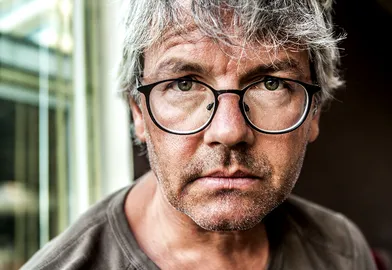
Nadia Slavila Larsen is a Professor at the Department of Mathematics, University of Oslo, specializing in analysis with a focus on operator algebras, quantum technology, and non-commutative dynamics. She actively contributes to interdisciplinary research bridging mathematics with quantum computing and many-body theory, collaborating with institutions like SINTEF. Fields of Interest: C*-algebras, Hecke C*-algebras, Non-commutative dynamical systems, Spectral theory, Mathematics for quantum technology Her recent work explores the interplay between non-commutative geometry, groupoids, and quantum computing frameworks. She has presented lectures on quantum information integration in academia and published articles on spectral triples and higher-dimensional digraphs. No scientific awards are explicitly mentioned in the provided data.
Alfonso Di Bartolo is a Researcher at the Department of Mathematics and Computer Science , University of Palermo. His work focuses on algebraic structures, particularly Lie and Leibniz algebras, algebraic groups, and number theory. He holds regular office hours on Thursdays from 3:00 PM to 5:00 PM in Studio 107, Via Archirafi 34, Palermo. Role: Researcher Department: Mathematics and Computer Science Contact: alfonso.dibartolo@unipa.it Office Hours: Thursdays 3:00 PM–5:00 PM His research spans topics like solvable/nilpotent algebras, biderivations, affine mappings, and p-adic integers. Publications highlight classifications of Lie algebras, transformations groups, and applications to number theory. No scientific awards or student advisement details are provided in the text.
Dr. Attila Andai is an Associate Professor at the Department of Geometry, Budapest University of Technology and Economics (BME). His academic career focuses on mathematical physics, particularly the differential geometry of finite-dimensional quantum state spaces and generalized uncertainty relations. Research areas include quantum mechanics, general relativity, functional analysis, and operator algebras Teaches Computational Methods in Physics and Vector Spaces in Physics for MSc students Research trends from his publications show expertise in: Quantum state space geometry Entanglement and separability probability Uncertainty principles with geometric interpretations Mathematical structures in Gödel-type universes His work combines abstract mathematical frameworks (tensor products, exterior algebras) with concrete applications in quantum information and relativistic physics.
Prof. Dr. Christian Karpfinger is a faculty member at the Technical University of Munich (TUM), working within the TUM School of Computation, Information and Technology (CIT) in the Department of Mathematics (M11). He is based in Garching bei München, Germany, with his office located in room MI 2.12.37. His research and teaching activities focus primarily on algebra, field theory, and mathematics education. Christian Karpfinger's research interests span multiple areas of algebra including: Valuation theory and field extensions Transcendental field extensions Near-fields and ordered algebraic structures Automorphism groups Cryptology and its algebraic foundations Mathematics education and textbook development His publication record demonstrates consistent contributions to algebraic theory, particularly in valuation extensions and field theory. Karpfinger's work shows a progression from foundational studies in transcendental extensions to more specialized work on near-fields and ordered structures. His research has practical applications in cryptology and theoretical mathematics. Christian Karpfinger is an active educator who has taught numerous mathematics courses at TUM, with a focus on linear algebra, algebra, and cryptology. He has authored or co-authored several influential mathematics textbooks that are widely used in German universities.
Bernhard Keller is a Professor in the Department of Mathematics at Paris City University (Université Paris Cité), affiliated with the Jussieu Institute of Mathematics - Paris Left Bank (IMJ-PRG). He maintains his office in the Sophie Germain Building in Paris. His primary research interests span cluster algebras, representation theory of quivers, homological algebra, category theory, and Lie algebras. His work has significantly contributed to the theoretical foundations of cluster algebras and their connections to representation theory. Professor Keller has supervised over 20 PhD students throughout his career, including notable mathematicians such as Gonçalo Tabuada, Claire Amiot, and Yann Palu. He currently supervises several doctoral candidates working in areas related to his research specialties. Among his professional recognitions, he served as a Senior member of the University Institute of France from 2010 to 2015 and is a Fellow of the AMS. He actively participates in the mathematical community through editorial work for numerous journals and organization of research seminars. Professor Keller co-organizes the Learning Seminar on Higher Category Theory and its Applications in Algebra and Geometry and participates in several research groups including GDR 2432 (Non-commutative algebra) and GDR TLAG (Lie theory). His research continues to influence developments in algebraic structures and their applications.
Jérémy Le Borgne is an Assistant Professor in the Department of Mathematics at ENS Rennes, where he has held faculty positions since 2012. He is a core member of IRMAR's Geometry and Effective Algebra Team, contributing to France's national mathematics research infrastructure through this CNRS-affiliated institute. His dual role encompasses advanced teaching from undergraduate to Agrégation levels and active research at the intersection of algebra, geometry, and computation. His educational foundation includes: ENS Cachan - Antenne de Bretagne (2005-2009) PhD in Mathematics, University of Rennes 1 (2009-2012), supervised by Xavier Caruso and David Lubicz Le Borgne's research pioneers computational approaches to arithmetic geometry, with seminal work on Ore polynomials enabling breakthroughs in Gabidulin code construction for error correction. His investigations into p-adic Galois representations bridge number theory and algorithm design, while recent studies of Hall bases for free Lie algebras reveal deep combinatorial structures applicable to differential equations. This tripartite focus creates synergies between theoretical mathematics and practical computation. Analysis of his 2010-2023 publications reveals consistent progression from foundational number theory (Ax-Sen-Tate theorem optimization) toward increasingly computational work, with 2022-2023 papers emphasizing algorithmic Lie algebra structures and nonlinear system expansions. His research demonstrates strong continuity in non-commutative algebra applications while expanding into new combinatorial territories. No formal awards are documented in public materials, though his publication record in high-impact journals like Journal of Algebra and Comptes Rendus Mathématique indicates peer recognition. His teaching portfolio spans advanced algebra courses and Agrégation preparation, with documented outreach including Lebesgue lectures and Olympiad training. As a research supervisor, Le Borgne integrates students through IRMAR's collaborative environment, though specific advisee counts aren't public. His Geometry and Effective Algebra Team provides infrastructure for computational mathematics projects, with recent work suggesting active funding for skew polynomial and Lie algebra research. The lab maintains close ties with University of Rennes 1's mathematics department, facilitating resource sharing across Rennes' academic ecosystem.