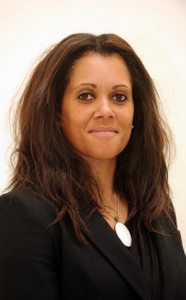
Prof. Valentina Boeva is an Assistant Professor at the Department of Computer Science, ETH Zürich, specializing in biomedical informatics. Her research focuses on integrating machine learning and computational methods to address challenges in genomics, oncology, and precision medicine. She holds a position in the Professur für Biomedizininformatik (Biomedical Informatics) and is based at CAB G32.2, Universitätstrasse 6, Zürich, Switzerland. Her work emphasizes applications such as cancer biomarker discovery, tumor heterogeneity analysis, and epigenetic profiling. She teaches courses including Machine Learning Seminar, Data Science Lab, and Machine Learning for Genomics. Her research group develops computational tools like CDState and UniversalEPI to decode complex biological systems. She actively publishes in top-tier journals, with recent work on exosome-driven diagnostics and chromatin interaction modeling. Her scientific contributions span methodologies for single-cell data analysis, survival modeling, and drug response prediction. She collaborates across disciplines to bridge computational science with clinical applications in cancer research.
Nadya Dimitrova is an Assistant Professor in the Department of Molecular, Cellular, and Developmental Biology at Yale University, affiliated with the Yale School of Medicine. She holds secondary appointments in Genetics and is a member of multiple interdisciplinary centers, including the Center for RNA Science and Medicine. Her research focuses on long non-coding RNAs (lncRNAs) and their roles in cancer biology, particularly in tumor suppression and oncogenesis. Dimitrova earned her Sc.B. in Biochemistry from Brown University (2002), a Ph.D. from The Rockefeller University (2009), and completed postdoctoral training at MIT's Koch Institute. Notable awards include the HHMI Predoctoral Fellowship, Damon Runyon Postdoctoral Fellowship, and the 2023 Yale Cancer Center Class of '61 Award. Her lab explores lncRNA mechanisms using genomic and genetic tools, aiming to uncover their roles in cancer pathways. Recent work highlights lncRNAs' roles in metastasis, cardiac hypertrophy, and p53 signaling. Collaborations with researchers like Antariksh Tyagi and Clara Liao drive translational insights into RNA-based therapies. Education: Sc.B., Brown University (2002); Ph.D., The Rockefeller University (2009). Research interests include lncRNA regulation, cancer transcriptomics, and RNA-driven disease mechanisms. Her lab integrates systems biology approaches to dissect lncRNA functions in health and disease.
Wilfried Haerty is a Senior Group Leader in Evolutionary Genomics at the University of East Anglia (UEA), affiliated with the School of Biological Sciences and the Norwich Institute for Healthy Aging. He also holds an external position as Senior Group Leader at the Earlham Institute since December 2015, reflecting his significant role in genomics research. Institution: University of East Anglia School: School of Biological Sciences External Affiliation: Earlham Institute Position: Senior Group Leader His academic background includes a Doctor of Science from Université de Paris, awarded in 2004, based on research into reproductive isolation in Drosophila melanogaster . Dr. Haerty's research focuses on evolutionary and comparative genomics, particularly the characterization of functional non-coding sequences and long non-coding RNAs in mammalian and human genomes. He investigates evolutionary constraints and selection pressures using population-level sequence variation data. His work integrates computational and genomic approaches to understand genome evolution across species. The recent trends in his publications highlight a strong focus on genome evolution, including hybridization in cichlid fishes, NUMT dynamics in mammals, fission yeast phylogenetics, avian developmental genomics, and evolutionary behavioral responses. These reflect interdisciplinary research spanning molecular evolution, genomics, developmental biology, and ecology. No scientific awards are explicitly mentioned in the provided text. There is no mention of student advising or research grants in the available information. However, his leadership role as a Group Leader suggests involvement in mentoring researchers and managing research projects. His collaborations span multiple institutions and countries, as indicated by co-authorship on recent studies. Dr. Haerty is associated with research teams at both the University of East Anglia and the Earlham Institute, particularly within genomics and evolutionary biology groups. His work is part of broader collaborative networks in evolutionary genomics and healthy aging, including the Norwich Institute for Healthy Aging.
Andrew Godwin is a Professor at the University of Kansas Medical Center , where he serves as the Chancellor’s Distinguished Chair in Biomedical Sciences and Director of Molecular Oncology in the Department of Pathology and Laboratory Medicine. He is also the Deputy Director of the NCI-designated University of Kansas Cancer Center and the Founding Director of the Kansas Institute for Precision Medicine and Biospecimen Shared Resource . Dr. Godwin is a leader in translational research and precision medicine , with a focus on molecular oncology , biomarker discovery , and genomic diagnostics . His work bridges basic and clinical science to improve cancer patient care, particularly in ovarian cancer , Ewing sarcoma , and breast cancer . He has contributed over 230 ovarian cancer-related publications and pioneered studies linking the PI3K/AKT pathway to cancer treatment targets. His research program encompasses liquid biopsies using extracellular vesicles , molecular therapeutics , companion diagnostics , and clinical trial validation . He leads the Biomarker Discovery Laboratory and has secured over $250M in extramural funding , including a $11.4M NIH grant for precision medicine initiatives. His team has developed CELLSEARCH® , the first FDA-cleared test for circulating tumor cells. Notable awards include the Dolph C. Simons, Sr. Higuchi Award (2020), Outstanding Mentorship in Pathology Award (2024), and multiple mentoring accolades from KU. He has mentored over 150 trainees across career stages and leads a multidisciplinary lab with expertise in genomics , proteomics , and bioengineering . Academic Roles: Chancellor’s Distinguished Chair in Biomedical Sciences Director, Molecular Oncology, Pathology and Laboratory Medicine Deputy Director, KU Cancer Center Founding Director, Kansas Institute for Precision Medicine Adjunct Professor, Bioengineering Program, University of Kansas Scientific Awards: KUMC Achievement Award for mentoring postdocs (2014) Chancellor’s Club Award for Research (2018) Dolph C. Simons, Sr. Higuchi Award (2020) KU Excellence in Mentoring Award (2021) Outstanding Mentorship in Pathology (2024) Key Research Themes: Extracellular vesicles as liquid biopsy tools Molecular mechanisms of sarcoma and breast cancer Genomic diagnostics and precision oncology Clinical trial biomarker validation Biospecimen repository leadership
Dr. Hajk-Georg Drost is a Senior Lecturer and Principal Investigator in the Division of Computational Biology at the University of Dundee's School of Life Sciences. He leads the Digital Biology Group, focusing on integrating machine learning and high-performance computing with biological research to advance healthcare innovation. Previously, he established a Computational Biology group at the Max Planck Institute for Biology Tübingen (2019-2024) and conducted postdoctoral research at the University of Cambridge's Sainsbury Laboratory. His research explores: Evolutionary transcriptomics and phylotranscriptomic patterns across species Machine learning applications in genomics and proteomics Development of bioinformatics tools (DIAMOND, myTAI) for tree-of-life scale analyses Gene regulatory networks and transposable element dynamics His publications demonstrate a consistent focus on evolutionary constraints in development, with recent work expanding into single-cell resolution analyses of developmental diseases. Awards include: Royal Society Wolfson Fellowship (2024) Fellow, Cambridge Philosophical Society Postdoctoral Affiliate, Trinity College Cambridge He currently supervises PhD students including Stefan Manolache and leads projects funded by the Royal Society and others, focusing on protein alignment infrastructure and developmental disease research. His lab develops open-source software for genomic analyses and maintains active collaborations across Europe.
Pavel P. Kuksa is a Research Assistant Professor in the Department of Pathology and Laboratory Medicine, specializing in bioinformatics, computer science, and functional genomics. His work focuses on high-throughput sequencing analysis, chromatin interaction data, and developing scalable software platforms for genomics research.
Prof. Lars Mägdefessel is a Professor of Vascular Biology at the Technical University of Munich (TUM), leading the Molecular Vascular Biology group within the TUM School of Medicine and Health. His research focuses on non-coding RNAs in vascular diseases, particularly atherosclerosis and aortic aneurysms, using translational approaches for molecular treatment discovery. He holds an MD from Johannes Gutenberg University (Mainz, Germany), completed cardiology clinical training, and postdoctoral research at Stanford University before joining TUM in 2016. Education: MD from Johannes Gutenberg University, Mainz Postdoctoral training at Stanford University, USA Assistant Professor at Karolinska Institute, Sweden Research Interests: Non-coding RNA regulation in vascular pathology Mechanisms of atherosclerotic plaque vulnerability Translational therapies for vascular diseases Advanced aortic aneurysm progression Awards include the ERC Consolidator Grant (2023), Russell Ross Award (2023), and Heisenberg Professorship (2016). His lab is supported by the German Center for Cardiovascular Research (DZHK).
Dr. Ramanjulu Sunkar is a Regents Professor in the Department of Biochemistry & Molecular Biology at Oklahoma State University. He leads research on epigenetic and small RNA mechanisms in plant stress responses, focusing on gene regulation under drought, heat, and abiotic stresses. His work integrates genomic tools like ChIP, RNA sequencing, and CRISPR/Cas9 to study stress tolerance in crops. Education: B.Sc. (Sri Venkateswara University), M.Sc. and Ph.D. (Sri Krishnadevaraya University, India), followed by postdoctoral research at the Weizmann Institute (Israel), University of Bonn (Germany), and UC Riverside (USA). He joined Oklahoma State University in 2006, becoming Professor in 2016 and Regents Professor in 2024. Research Interests: Epigenetic modifications (DNA methylation, histone changes), microRNA-guided gene regulation, plant stress memory, and translational control mechanisms. His lab uses model systems like Arabidopsis, rice, and sorghum to study adaptive responses to environmental challenges. Grants: Over 15 grants, including USDA-funded projects on microRNA roles in photosynthesis, epigenetic control of drought tolerance, and systems genetics in rice. NSF-EPSCoR support for bioenergy research. Teaching: Courses include 'Plant Biochemistry,' 'Epigenetics,' and graduate supervision through research credits. Developed new courses on plant stress biology and molecular techniques. Labs/Teams: Leads a research group focused on epigenomics and RNA regulation in plants. Collaborates internationally on projects like the Arabidopsis transcriptome and stress memory mechanisms.
Professor Annette Byrne is a leading academic at RCSI University of Medicine and Health Sciences , where she serves as Professor of Physiology and Head of the Precision Cancer Medicine (PCM) Group. She has held this position since 2019 after progressing through roles as Lecturer (2008), Senior Lecturer (2013), and Associate Professor (2017). Her research focuses on precision medicine approaches for colorectal and brain cancers , integrating multi-modality molecular imaging , Next Generation Sequencing , and patient-derived xenograft models . PhD in Cell Biology (University of York, 1999) John Kerner Fellowship in Gynaecologic Oncology (UCSF, 1999-2001) Scientist at Pharmacyclics Inc. (2001-2003) Senior Scientist at Angion Biomedica Corp. (2003-2005) Principal Investigator at UCD Conway Institute (2005-2008) Her research interest lies in precision cancer medicine , particularly elucidating predictive biomarkers (genomic, transcriptomic, proteomic) and identifying novel therapeutic targets . Key methodologies include radiomics , fluorescence-guided surgery , and systems modeling of apoptosis pathways. She has pioneered Ireland's first Tumour Xenograft Facility and Translational In Vivo Imaging Centre . Recent publications highlight her work on cross-species radiomics , cell-free DNA analysis , and glioblastoma microenvironment subtyping . Her Marie Curie networks (Gliotrain, Glioresolve) and COLOSSUS project have trained 25+ PhD researchers in brain cancer therapeutics. Over €45M in national/international grants Member of Royal Irish Academy (2025) Highly cited in Cancer Discovery , Annals of Oncology , and Nature journals She supervises multiple PhD candidates and leads the RCSI Precision Cancer Medicine Group , which utilizes computational approaches and molecular imaging to improve cancer treatment outcomes. Her GLIORESOLVE and EDIReX projects focus on tumor microenvironment manipulation and distributed PDX infrastructure.
Lauren Weiss, PhD is a Professor of Psychiatry at the University of California, San Francisco (UCSF) School of Medicine and a faculty member at the UCSF Weill Institute for Neurosciences. Her research focuses on understanding the genetic architecture of autism spectrum disorder through genome-wide genetic data analysis and human induced pluripotent stem cell (iPSC) models. Dr. Weiss's laboratory investigates the genetic mechanisms by which DNA variants influence autism risk, examining questions about copy number vs. SNP variation, rare vs. common variation, gene-sex interaction, gene-gene interaction, and gene-environment interaction. Her team uses rich genetic datasets to identify susceptibility loci and the physiological pathways these risk loci implicate. Additionally, they employ iPSC models to study known mutations or copy number variants predisposing to autism, first identifying the effects of genetic risk variants and then determining whether these effects can be modified at the cellular level by environmental or pharmacological agents. Analysis of Dr. Weiss's recent publications reveals a strong focus on sex differences in autism genetics, the role of specific copy number variants (particularly 16p11.2 and 22q11.2), maternal environmental factors during pregnancy, and the integration of multi-omics data to understand neurodevelopmental pathways. Her work bridges basic genetic research with potential clinical applications for improving understanding, prevention, diagnosis, and treatment of autism and related traits. Dr. Weiss has secured significant research funding as Principal Investigator on multiple NIH grants, including R01MH114924 (Decoding the Genetics of Sexual Dimorphism in Autism Spectrum Disorders), R01MH107467 (Utilizing eQTL networks to gain biological insight into multigenic CNVs), and DP2OD007449 (Dissecting Epistasis and Pleiotropy in Autism towards Personalized Medicine). Her laboratory offers research opportunities for students interested in analytical genetics projects related to gene-environment effects, gene-sex effects, gene-gene effects, and the relationship between ASD and brain size. Dr. Weiss actively collaborates with numerous researchers across institutions, particularly on large-scale genomic studies of autism and other neurodevelopmental disorders. Her work has contributed significantly to our understanding of the complex genetic architecture underlying autism spectrum disorder and related conditions.
Dr. Steven Jacobsen is a Professor in the Molecular, Cell, and Developmental Biology Department at the University of California, Los Angeles (UCLA), where he leads the Jacobsen Lab. His work focuses on epigenetic inheritance and gene regulation in Arabidopsis thaliana and mammalian stem cells, utilizing genetic screens, genomics, epigenomics, and biochemical approaches. The lab also pioneers CRISPR-mediated genome editing techniques. University: University of California, Los Angeles Department: Molecular, Cell, and Developmental Biology Research Interests: Jacobsen's research spans multiple interconnected domains in epigenetics, including DNA methylation patterning, histone modification interplay, and transposable element silencing. His team investigates how chromatin structure influences gene expression and epigenetic inheritance, with applications from plant development to human health. Key areas include: CRISPR-based epigenetic modifications RNA-directed DNA methylation (RdDM) mechanisms Chromatin compaction via MORC proteins Histone variant functions in methylation Transposon control in plant genomes Comparative epigenomics across species Advising Legacy: Over two decades, Dr. Jacobsen has mentored 21 former lab members who now hold academic and industry positions globally, including professors at Chinese Academy of Sciences, University of Georgia, and Southern University of Science & Technology. His lab's publications reveal a consistent focus on DNA methylation dynamics, chromatin remodeling, and small RNA pathways, with recent work emphasizing CRISPR innovations and structural insights into epigenetic regulators.
Christopher S. Sullivan is a Professor in the Department of Molecular Biosciences within the College of Natural Sciences at the University of Texas at Austin. He directs an active research laboratory focused on viral non-coding RNA biology and host-pathogen interactions, with continuous funding evidenced by publications spanning 2005-2025. His work bridges molecular virology, immunology, and RNA biology through investigations of tumor viruses and host defense mechanisms. Research interests center on the role of non-coding RNAs in viral infection and host defense pathways, with particular emphasis on viral microRNAs , RNA interference mechanisms , and host-pathogen coevolution . His lab studies diverse virus families including Polyomaviridae, Herpesviridae, Retroviridae, and avipoxviruses, with key discoveries regarding viral miRNA functions in tumorigenesis and immune evasion. Research approaches integrate molecular virology, next-generation sequencing, and computational analysis to dissect RNA-based regulatory networks. Publications reveal consistent focus on viral non-coding RNA functions, particularly how viruses exploit host RNA machinery (notably DUSP11 phosphatase) to modulate immune responses. Recent work (2021-2025) expands into viral shedding dynamics, SARS-CoV-2 diagnostics, and circular RNA biology in polyomaviruses, demonstrating evolving yet cohesive research trajectory in RNA-virus interactions. Scientific contributions include: Pioneering identification of viral microRNAs across multiple virus families Discovery of DUSP11's critical role in RNA triphosphate regulation during infection Mechanistic insights into viral evasion of RNAi and innate immunity Development of novel RNA-based detection methods The Sullivan lab maintains active collaborations through the Center for Systems and Synthetic Biology, John Ring LaMontagne Center for Infectious Disease, and Interdisciplinary Life Sciences Graduate Programs. Lab culture emphasizes collective scientific inquiry with stated mission to 'increase understanding of pathogen-host interactions while enjoying the company of fellow lab members.' Current research directions include viral exploitation of RNA modification pathways and identification of novel host defense mechanisms using viruses as 'molecular divining rods.'
G. Petur Nielsen, MD is a Professor of Pathology at Harvard Medical School and serves as Subspecialty Head, Bone and Soft Tissue Pathology at Massachusetts General Hospital . With a clinical focus on bone and soft tissue tumors, his expertise spans diagnostic pathology, molecular genetics of neoplasms, and ancillary testing applications. Research interests center on Pathology and biology of bone/soft tissue tumors Molecular genetics of bone and soft tissue neoplasms Chordoma and sarcoma research Epithelioid vascular tumor differentiation Mesenchymal tumors of the female genital tract His work includes landmark studies on tumor misdiagnosis rates, immunohistochemical profiling, and genomic analysis of chordomas. Scientific contributions appear in leading journals like Nature and American Journal of Surgical Pathology , with major emphasis on Molecular tumor classification Mutational signature analysis Translational oncology Diagnostic accuracy improvement Genomic instability mechanisms
Professor Ghazaleh Tabatabai serves as Head of Department for Clinical and Experimental Neuro-Oncology at the Hertie Institute for Clinical Brain Research, University of Tübingen. She leads a multidisciplinary research group focused on translational neuro-oncology with active collaborations through the German Glioma Network, German Cancer Consortium (DKTK), European Organisation for Research and Treatment of Cancer (EORTC), European Association of Neuro-Oncology (EANO), and International Consortium on Meningioma (ICOM). Her research program centers on molecular mechanisms of tumorigenesis, therapy resistance, and treatment-induced vulnerabilities in nervous system tumors. The laboratory employs CRISPR screening technologies, molecular profiling, and preclinical models to identify therapeutic targets, with particular expertise in glioma and meningioma biology. Current projects span from discovery through validation to clinical application, including phase I/II trials of novel therapies such as CureVac's mRNA vaccine candidate CVGBM. Recent publications demonstrate leadership in molecular classification of meningiomas, CRISPR-based target discovery, immunotherapy development, and clinical trial design. Her work on the TRACE app for patient-reported outcomes and the PRIDE trial for dose-escalated radiation therapy represents significant clinical translation efforts. The 2024-2025 publication record shows strong productivity with high-impact papers in Neuro-Oncology, Nature Medicine, and Genome Biology. Elected spokesperson of the DFG Board for Neuroscience (2024) Active participation in EANO guideline development Leadership in multiple international consortia including ICOM Principal investigator for clinical trials including N2M2/NOA-20 umbrella trial Professor Tabatabai mentors a large research team including PhD students, medical doctoral candidates, and postdoctoral researchers. Her laboratory maintains active clinical collaborations across neurosurgery, radiation oncology, and medical oncology departments. She is featured in the 'Key To My Research' podcast discussing tumor intelligence and regularly presents at major neuro-oncology conferences including ASCO, EANO, and SNO.
Dr. David T Wong is a Professor in the Dentistry Department and Head and Neck Surgery at the University of California Los Angeles. With dual appointments across departments, he leads groundbreaking research at the intersection of molecular biology, diagnostics, and oral medicine. His work has established UCLA as a global leader in salivary diagnostics research. Dr. Wong earned his BSc in Biochemistry from Simon Fraser University in 1977, followed by a DMD in Dental Medicine from the University of British Columbia in 1981. He completed advanced training at Harvard with a DMSc in Molecular Biology (1985) and a Certificate in Oral Pathology from Harvard School of Dental Medicine (1985). His research focuses on salivary diagnostics for disease detection, particularly in oral/head and neck cancer. Dr. Wong pioneered the field of "Salivaomics" - the comprehensive study of saliva as a diagnostic fluid containing proteomic, genomic, transcriptomic, metabolomic, and microbiome information. His laboratory spearheads high-throughput technologies to identify genomic and proteomic determinants of oral cancer progression, with emphasis on developing non-invasive diagnostic tools. Key areas include liquid biopsy technologies (particularly saliva-based), extracellular RNA communication, and the development of point-of-care diagnostic devices like the Oral Fluid NanoSensor Test (OFNASET). Analysis of his recent publications reveals a strong trend toward clinical translation of salivary biomarkers, with increasing focus on Sjögren's Syndrome diagnostics, liquid biopsy applications for cancer detection, and the development of novel technologies like EFIRM (Electric Field-Induced Release and Measurement) for ultra-sensitive detection of biomarkers in saliva. His work bridges basic science with clinical applications, particularly in early cancer detection and monitoring. Dr. Wong has received extensive NIH funding as Principal Investigator for numerous projects, including multiple R01, U01, and T32 grants focused on salivary diagnostics, oral cancer biomarkers, and dentist-scientist training programs. His research funding spans over two decades, demonstrating sustained impact and relevance in the field. He leads the Wong Lab, which functions as an interdisciplinary research hub bringing together experts in molecular biology, engineering, dentistry, and oncology. The lab has been instrumental in establishing saliva as a viable biofluid for liquid biopsy applications, particularly for detecting actionable mutations in human cancers. Current research directions include refining EFIRM technology for clinical implementation and expanding the applications of salivary diagnostics to systemic diseases beyond oral conditions.