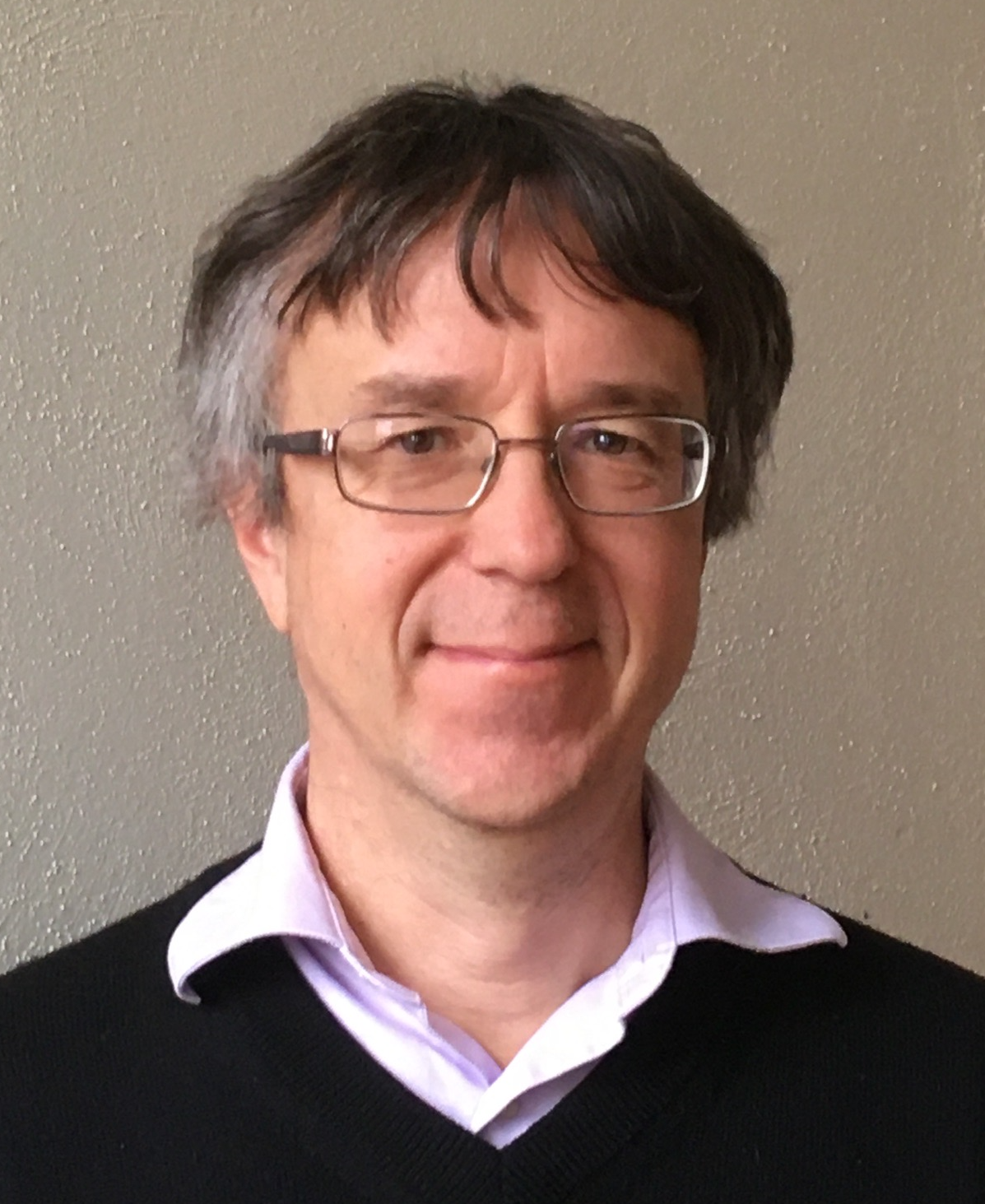
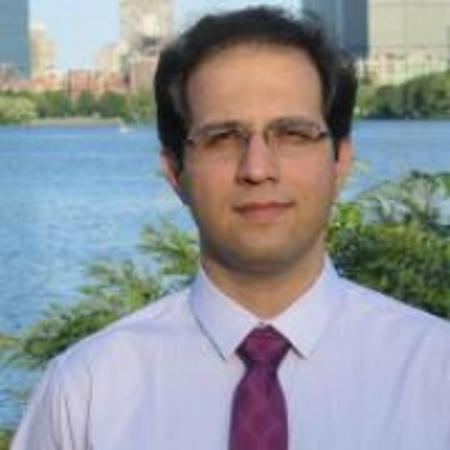
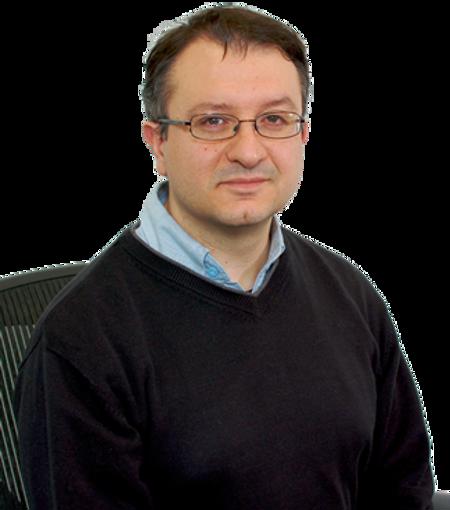
Hubert de Guise is a Professor in the Department of Physics at Lakehead University. His research focuses on Theoretical Physics and Mathematical Physics , particularly SU(n) symmetries, quantum interferometry, and Wigner functions. University: Lakehead University Email: hdeguise@lakeheadu.ca, hubert.deguise@lakeheadu.ca Contact: Office CB4033, Phone: +1 (807) 343-8010 ext. 8468 His work spans quantum mechanics, phase space methods, and symmetry-based approaches in quantum systems. Key themes include SU(3) and SU(2) group applications, finite-dimensional quantum systems, and polarization coherence. Notable collaborations include researchers from the Canadian Association of Physics, Canadian Prairie Theoretical Physics Network, and Fields Institute. His publications address topics such as quantum tomography, squeezing transformations, and discrete Fourier methods.
Ioakeim Ampatzoglou serves as an Assistant Professor in the Department of Mathematics at the Weissman School of Arts and Sciences, City University of New York (CUNY). His academic profile centers on advanced mathematical research with significant contributions to kinetic theory and partial differential equations. His educational trajectory includes a Ph.D. in Mathematics from The University of Texas at Austin (United States) and a B.Eng in Electrical and Computer Engineering from the National Technical University of Athens (Greece). These foundational qualifications underpin his rigorous analytical approach to complex mathematical problems. Dr. Ampatzoglou's research program focuses on evolutionary partial differential equations, mathematical physics, and kinetic theory. He specializes in deriving and analyzing fundamental equations like the Boltzmann equation and kinetic wave equations, with particular emphasis on well-posedness, scattering theory, and moment estimates for collisional processes. His work bridges abstract mathematical analysis with physical applications in statistical mechanics. His 14 publications from 2020-2024 reveal a cohesive research trajectory centered on kinetic theory. Key themes include rigorous derivations of higher-order Boltzmann equations for hard spheres and dense gases, global well-posedness for binary-ternary collision models, and scattering theory for inhomogeneous kinetic wave equations. These contributions demonstrate increasing mathematical sophistication in handling nonlinear phenomena across fluid dynamics and statistical physics. Dr. Ampatzoglou actively serves the academic community as a reviewer for prestigious journals including Nonlinearity , SIAM Journal on Mathematical Analysis , and Journal of Statistical Physics , as well as for National Science Foundation grant proposals. He also contributes institutionally through committee service at Baruch College, including the Calculus Committee and Finals Committee.
Robert Brown is a Senior Lecturer of Physics at Duke University's Trinity College of Arts & Sciences since 2023. His research focuses on applying algebraic and statistical methods to study equilibrium and nonequilibrium phenomena in quantum optics and magnetism, particularly through Monte Carlo simulations of critical behavior in Heisenberg models. Ph.D., Duke University (1982) His work bridges computational physics with theoretical models, including development of Langevin equation-based techniques for dynamic systems analysis. Research spans quantum mechanics, magnetism, and critical phenomena in condensed matter systems. Key publication trends include: classical Heisenberg model critical behavior studies (2006), finite size scaling (2005), and foundational contributions to non-muffin-tin band theory (1983-1988). His computational physics expertise extends to Beowulf cluster optimization (2000). He received a Monte Carlo Studies of Continuous Hamiltonian Systems Coupled to Dissipative Mechanisms grant from the Army Research Office (2001-2005). Current appointments include Senior Lecturer (2023-present), while previous roles include Lecturer (2010-2023) and Visiting Professor (2001-2010).
Prof. Dr. Robert T. König is an Associate Professor at the Technical University of Munich (TUM) , holding the Professorship of Theory of Complex Quantum Systems in the TUM School of Computation, Information and Technology and Department of Mathematics. His research focuses on quantum information theory, with particular emphasis on mathematical methods for quantum communication, fault-tolerant quantum computing, and quantum many-body systems. Education: Diploma in Theoretical Physics, ETH Zurich (1998–2003) PhD in Applied Mathematics and Theoretical Physics, University of Cambridge (2005–2007) Key research areas include quantum communication theory , fault-tolerant quantum information processing , and quantum computation , with significant contributions to topological quantum computing, quantum error correction, and quantum channel capacity analysis. His recent work explores hybrid quantum-classical algorithms, non-abelian anyon manipulation, and bosonic code optimizations. Scientific awards include Swiss National Science Foundation Fellowship (2010) Smith/Rayleigh-Knight Prize, Cambridge (2006) ETH Medal and Willi-Studer Prize (2003) Pólya Prize, ETH Zurich (2003) He co-leads the Quantum Information Theory research group with Prof. Michael Wolf at TUM, supported by grants like the ERC Consolidator Grant 'Enhanced quantum information processing targeting the near term (EQUIPTNT)' and the Munich Quantum Valley initiative . His work has applications in quantum hardware design, noise resilience strategies, and fundamental limits of quantum communication.
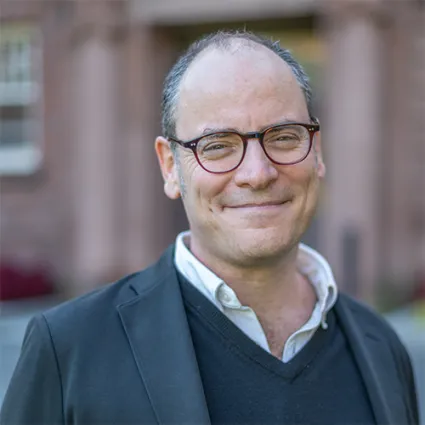
Luca Capogna is the Mary Augusta Jordan Professor of Mathematical Sciences at Smith College. Prior to joining Smith, he held positions as a Courant Instructor at NYU, a Rademacher Instructor at the University of Pennsylvania, and tenured positions at the University of Arkansas and Worcester Polytechnic Institute (where he served as department head from 2013-2020). From 2011-2013, he was a visitor at the University of Minnesota, serving as associate director of the Institute for Mathematics and its Applications (IMA). Capogna earned his Ph.D. from Purdue University and his B.S. from the Second University of Rome, Tor Vergata (Italy). His research spans analysis and partial differential equations, with specific interests in quasiconformal mappings, sub-Riemannian geometry, and geometric flows. In recent years, he has expanded his research to include machine learning applications, particularly using neural networks for system identification problems. His work demonstrates a strong connection between classical mathematical analysis and modern computational techniques. Capogna's publication record shows a clear evolution from pure mathematical analysis (particularly in sub-Riemannian geometry and PDE theory) to more applied work incorporating machine learning. His recent publications (2021-2024) increasingly focus on neural networks, system identification, and deep learning applications, while maintaining strong connections to his foundational work in analysis. Mary Augusta Jordan Professorship at Smith College Capogna has collaborated extensively with researchers including Giovanna Citti, Mario Bonk, and Enrico Le Donne. His work has been supported by various research grants, including an NSF RUI grant titled 'PDE and Geometry in non-smooth spaces' (2024). He has served in leadership roles, including as department head at Worcester Polytechnic Institute and associate director of the IMA at the University of Minnesota. His research has significant implications for both theoretical mathematics and practical applications in system modeling and identification, bridging the gap between pure mathematical analysis and modern computational approaches.
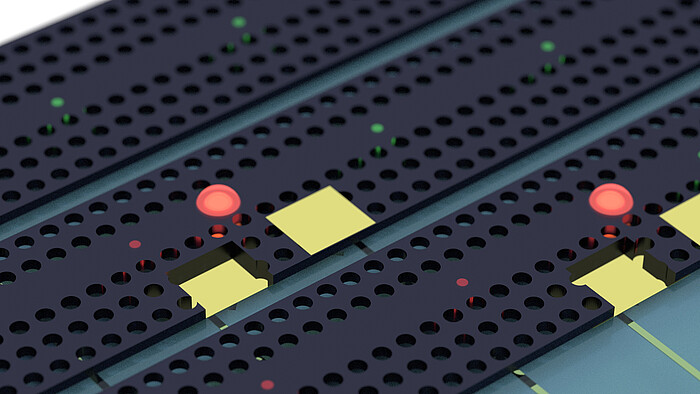
Jun.-Prof. Dr. Michael Zopf , a Tenure-Track Assistant Professor at the Institute of Solid State Physics (Faculty of Mathematics and Physics, Leibniz University Hannover), specializes in Quantum Optics and Semiconductor Physics . His research focuses on quantum networks , entangled photon sources , and micro-electromechanical systems (MEMS) for dynamic optical tuning. Key Projects : SemIQON (Semiconductor Integrated Quantum Optical Network, 2022), QVLS-iLabs (integrated photonic platforms, 2023), and CLICS (colloidal quantum dots in photonic chips, 2025). Research Themes : Semiconductor quantum dots as flying qubits , telecom wavelength emission , and topological photonics for neuromorphic quantum computing. Collaborations : Coordinated with Prof. Fei Ding in the Semiconductor Quantum Optics working group (2025) and contributing to ERC-funded quantum communication initiatives.
Gaurav Mahajan serves as a Postdoctoral Associate in Yale University's Department of Computer Science under Dan Spielman's mentorship, concurrently holding lecturer appointments for specialized courses including CPSC 648: Quantum Codes (Fall 2024) and the ICTS Reinforcement Learning Theory Bootcamp (Fall 2025). His academic journey includes a PhD from UCSD's Theory Group advised by Sanjoy Dasgupta and Shachar Lovett, with research summers at Microsoft Research, Institute for Advanced Study, and Simons Institute. His research spans machine learning theory with dual emphases on quantum learning (quantum error correction applications to complexity theory) and reinforcement learning (computational-statistical gaps, sample complexity). Recent publications in COLT, ALT, and NeurIPS reveal a trajectory from foundational PAC learning theory toward quantum-enhanced complexity analysis, featuring collaborations with leading theorists including Sham Kakade, Shachar Lovett, and Daniel Kane. Teaching activities demonstrate specialized expertise: his Quantum Codes course progresses from basic stabilizer codes to quantum Tanner codes using chain complex formalisms, while the RL Bootcamp bridges PyTorch implementations with theoretical complexity analysis. Though not leading a formal lab, his work connects Yale's quantum initiative with theoretical computer science communities through institutes like Simons. Current research shows increasing focus on quantum-classical connections—applying quantum information tools (e.g., classical shadows) to classical learning problems—while maintaining rigorous theoretical standards evidenced by consistent publications in top theory venues. Future directions likely involve deeper quantum complexity applications and expanding the quantum-RL interface.
Mauro Ferrario is a Full Professor at the Department of Physical, Computer and Mathematical Sciences (former Physics campus) within the University of Modena and Reggio Emilia . His academic leadership is evident through dual roles in Computational Physics Laboratory (Physics degree program) and Physics teaching for Biological Sciences . Research Pillars: Non-Equilibrium Molecular Dynamics (NEMD/D-NEMD) Quantum-informed machine learning potentials Green lubricant additive development 2D material tribology (graphene, phosphorene) Multi-scale modeling from atomistic to continuum Surface passivation and chemical reactivity under stress Methodological Expertise: Ab initio/DFT simulations QM/MM hybrid approaches Constraint dynamics and thermostat algorithms High-throughput interface characterization Transient transport phenomena analysis The 2025-2024 publications reveal cutting-edge work on machine learning-enhanced simulations for green lubricants, NEMD melt-front modeling, and superlubricity mechanisms. His 2023-2022 studies on phosphorene oxidation, tribochemical constraints, and friction reduction through nanoscale patterning demonstrate sustained innovation across 15 recent articles . Teaching Impact: He develops computational physics curricula emphasizing Python programming, numerical algorithms, and interdisciplinary applications. His Computational Physics Laboratory course integrates DataCamp tools, while Physics for Biological Sciences bridges classical mechanics with life science applications through digital whiteboard instruction. Contact: Office MO-17-04-011 , Via Campi 213/A. Reception: Mondays 9:00-10:00 or by email appointment.
Elisa Affili serves as a Postdoctoral Researcher at the Chair in Computational Mathematics, Deusto Foundation, University of Deusto, under the leadership of Prof. Enrique Zuazua (affiliated with FAU, University of Deusto, and Universidad Autónoma de Madrid). Her academic journey includes: PhD in Mathematics (2017-2021) from University of Milan and Sorbonne Université MSc in Mathematics (2015-2017) from University of Padova BSc in Mathematics (2012-2015) from University of Padova Internship at CAMS (EHESS), France (2017) Her research centers on partial differential equations applied to population dynamics and fractional operators, with recent expansion into control theory and reinforcement learning. Her work bridges pure mathematical analysis with biological and social applications, particularly examining decay estimates in evolution equations and diffusion models. Current investigations include Lotka-Volterra competitive systems and civil war modeling through mathematical frameworks. Publication trends reveal deepening expertise in classical/fractional calculus, progressing from foundational diffusion studies toward interdisciplinary control applications. Her 2019-2020 articles establish methodological rigor in decay analysis for both standard and anomalous diffusion processes. Affili actively contributes to the research community through conference presentations including the CIRM "Non-Local Models Arising from Biology" conference (October 2021), where she presented on Fisher-KPP models with fast diffusion lines. She operates within Prof. Zuazua's research group at the Deusto Foundation's Computational Mathematics Chair, maintaining strong ties to European mathematical institutions.
Catherine Potel is a Professor at the University of Le Mans and Co-Head of the Department of Acoustics (DAUM) since 2020. She has held key academic roles including directing professional Licences and Masters programs in Acoustics and Vibrations, and led the cultural department at the university. Her research focuses on ultrasonic non-destructive testing of anisotropic composites, modal wave propagation in rough guides, and parametric signal processing for wave separation. Education: HDR (Accreditation to Lead Research), UTC, 2000 PhD in Applied Mechanics, UTC, 1994 DEA in MAAM (Mechanics, Acoustics, Materials), UTC, 1990 Engineering Diploma, IPSA, 1989 Research Interests: She specializes in ultrasonic NDE for composite materials, Lamb wave analysis in rough waveguides, and energy coupling in complex media. Her work addresses limitations in classical time-of-flight methods and proposes parametric approaches for echo separation. Collaborations include IRCCyN and GDR 2501 for NDT applications in corrosion, bonding, and urban acoustics. Recent articles highlight her contributions to acoustics education via Lindsay's Wheel, wind instrument modeling, heat maps, and Lamb wave studies in corrugated plates. These works span ultrasonic testing, waveguide theory, and anisotropic material characterization. Scientific Awards: Yves Rocard Prize (Société Française d'Acoustique, 1994) Advising & Collaborations: She advised Aurélien Roux's thesis and collaborated with researchers like Laurent Simon and Jérôme Idier. Her leadership in the DAUM and LAUM laboratory underscores her academic influence. Labs & Teams: Active in the Acoustics Laboratory of the University of Le Mans (LAUM), she contributes to transversal axes like metamaterials and nonlinear acoustics, and participates in the GDR 2501 consortium for NDT in heterogeneous media.
Sam Howison is a Professor at the Mathematical Institute, University of Oxford , with an academic rank of Associate Professor. His research spans applied mathematics and financial engineering, focusing on differential equations, free and moving boundary problems, stochastic processes, and network modeling. Research Interests: His work in applied mathematics addresses fluid dynamics, shallow water flows, and non-classical PDEs, while in financial mathematics, he specializes in derivatives pricing, energy markets, volatility modeling, and market microstructure. Recent projects include network-based analysis of cryptocurrency markets and community detection in temporal multilayer networks. Publication Trends: Over the past decade, his research has bridged fluid mechanics with financial modeling, emphasizing asymptotic methods, stochastic games, and network theory. Key themes include limit order books, non-Markovian biological systems, and environmental market pricing. Scientific Awards: SIGEST Paper Award for Risk-Neutral Pricing of Financial Instruments in Emission Markets Advising and Collaborative Work: He has co-authored over 80 publications with colleagues like Mason Porter and Michael Boulton, contributing to interdisciplinary projects in mathematical finance and industrial applications. He co-founded the Oxford Centre for Industrial and Applied Mathematics and served as Head of the Mathematical Institute (2011-2015).
Dr Ullrich Hustadt is a Professor in the Department of Computer Science within the School of Electrical Engineering, Electronics and Computer Science at the University of Liverpool, where he has been a faculty member since 2001. His academic career spans over two decades with significant contributions to logical reasoning systems. His research focuses on Automated Reasoning , particularly in Modal and Temporal Logics , Knowledge Representation , and Web Ontology Languages . His work includes the design and analysis of theorem provers, development of decision procedures, and practical reasoning approaches for web ontologies and multi-agent systems. Recent research has centered on efficient reductions for modal logics and their applications in knowledge representation. Hustadt's publication record shows consistent output in top venues for automated reasoning, with a clear trend toward optimizing modal logic reasoning techniques. His most recent work examines model construction, local reductions, and efficiency improvements across the modal cube framework, demonstrating both theoretical depth and practical implementation focus. Hustadt has secured significant research funding including multiple grants from the ENGINEERING & PHYSICAL SCIENCES RESEARCH COUNCIL (EPSRC) for projects spanning temporal representation, knowledge reasoning, and web ontology development. His professional service includes extensive program committee work for major conferences including IJCAR, IJCAI, ECAI, and specialized workshops on description logics and theorem proving. As an educator, Hustadt teaches programming languages with emphasis on JavaScript and PHP for web development courses (COMP284 and COMP519), and has taught multiple computer science modules including Complex Information Networks, Database Development, and Multi-Agent Systems. He serves as Module Co-ordinator for key programming courses and has examination responsibilities for postgraduate programs.
Ryan LaRose is an Assistant Professor at Michigan State University (MSU) with appointments in the Department of Computational Mathematics, Science and Engineering and the Department of Physics & Astronomy within the College of Natural Science. He also holds affiliations with the Department of Electrical and Computer Engineering and MSU's quantum initiative (MSU-Q), focusing on quantum computing research and development. His educational background includes a PhD in Computational Mathematics, Science and Engineering from Michigan State University (2022) and a BS with Distinction in Mathematics and Physics from the University of Michigan, Ann Arbor (2017). LaRose's research bridges computational physics and quantum information science through two interconnected themes: (1) the physics of computation, examining how quantum principles inform information theory and computer science, and (2) the computation of physics, leveraging quantum computers to solve complex problems in physical sciences. His work emphasizes practical quantum algorithm development, error mitigation techniques for noisy hardware, and open-source software tools for quantum computing. Analysis of his recent publications (2022-2024) reveals strong emphasis on quantum error mitigation strategies—particularly zero-noise extrapolation—and variational quantum algorithms for optimization and linear algebra problems. His contributions span hardware solutions, software frameworks like Mitiq and BGLS, and theoretical advances in quantum volume measurement. His notable scientific awards include: Engineering Distinguished Fellowship Fitch H. Beach Award for Outstanding Graduate Research NASA Space Technology Graduate Research Fellowship As an active contributor to the quantum community, LaRose co-organizes the QuIC Seminar series at MSU and develops open-source quantum software. He leads research efforts within MSU-Q, collaborating on quantum algorithm implementation and error mitigation techniques for near-term quantum devices.
Mohammad Maghrebi is an Associate Professor in the Department of Physics & Astronomy at Michigan State University , where he has been since January 2017. His research focuses on non-equilibrium quantum systems , entanglement in many-body systems , and fluctuation-induced phenomena . He received his Ph.D. from MIT in 2013 and was a post-doctoral research scholar at the Joint Quantum Institute (JQI) at the University of Maryland before joining MSU. His group explores long-range interacting systems , topological phases , and quantum Brownian motion , with applications in quantum information science and quantum materials engineering . Recent work includes non-equilibrium criticality studies using trapped-ion quantum simulators and hybrid quantum-classical approaches to spin-boson models. NSF CAREER Award recipient (2021) AFOSR Young Investigator awardee (2019) Two-time Favorite Graduate Teacher Award winner (2018, 2020) Maghrebi advises a team including PhD students and postdoctoral researchers, with alumni now at institutions like MIT Lincoln Laboratory and UC Boulder/NIST . He also leads outreach initiatives such as the public "Schrodinger's Cat is in Town!" workshop series on chaos theory and art.
Carlo Piermarocchi is a Professor in the Department of Physics & Astronomy at Michigan State University. His research bridges quantum physics and biological systems, focusing on semiconductor nanostructures, quantum computing, and signaling in complex biological networks. He holds a Laurea Degree in Physics from the University of Pisa (1994) and a Ph.D. in Theoretical Physics from EPFL (1998). Education : Ph.D. in Theoretical Physics, Swiss Federal Institute of Technology (EPFL), Lausanne (1998) Laurea Degree in Physics summa cum laude, University of Pisa (1994) His research spans three main areas: Semiconductor and Quantum Systems : Investigating optically-induced spin coupling in quantum dots, cavity polaritons for quantum logic gates, and non-dissipative computing methods. Exciton and Polariton Dynamics : Studying energy transfer in nanostructures and potential applications in Bose-Einstein condensates and light extraction technologies. Biological Signaling Networks : Applying statistical physics and information theory to model cellular signaling, drug combination sensitivity, and disease progression. Recent publications highlight his interdisciplinary approach, including 2025 works on non-reciprocal Hopfield networks and therapeutic escape mechanisms in ophthalmology. His 2023–2021 papers emphasize computational frameworks for single-cell transcriptomics, omics analysis, and quantum-classical hybrid modeling. He teaches advanced courses in research methodology, including PHY 800: Research Methods PHY 899: Master's Thesis Research PHY 905: Special Problems PHY 999: Doctoral Dissertation Research