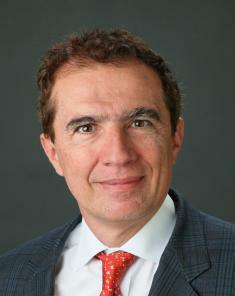
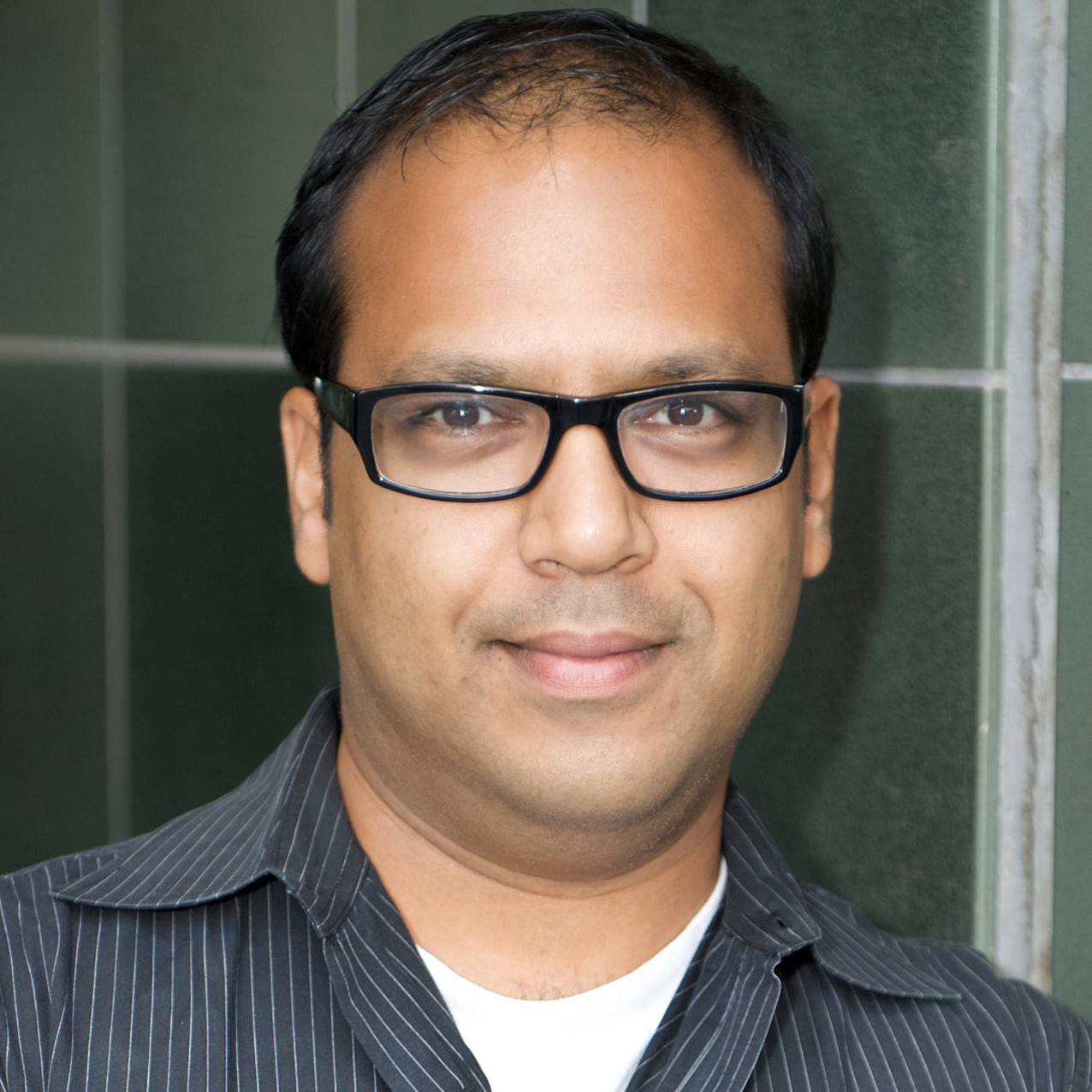
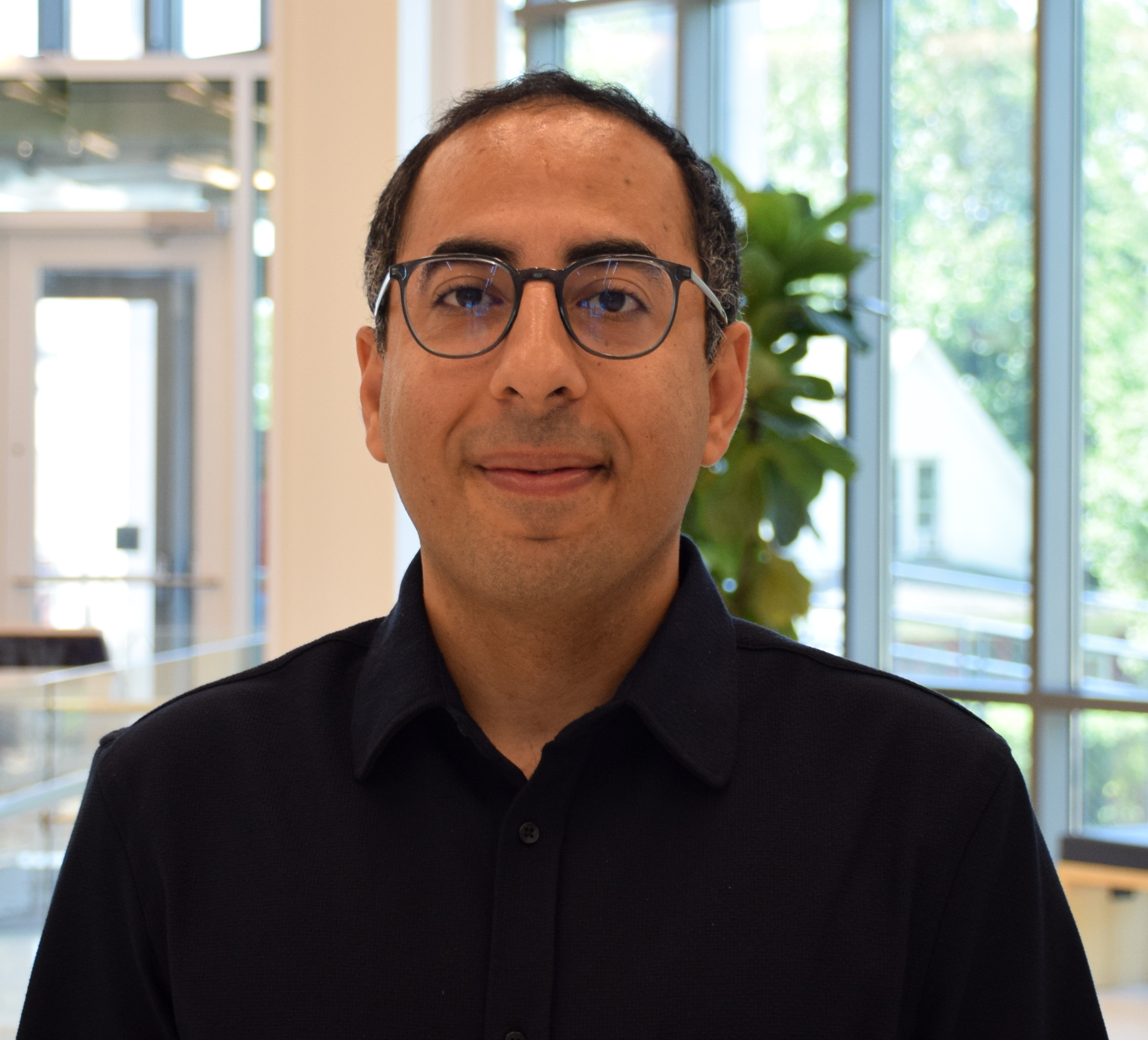
Giovanni De Micheli is a Professor of Electrical Engineering and Computer Science at EPF Lausanne, Switzerland. He also serves as Director of the Integrated Systems Centre and the Institute of Electrical Engineering at EPFL, and chairs the Scientific Committee of CSEM in Neuchatel. Previously, he held academic roles at Stanford University for 18 years, including Full Professor, Associate Professor, and Assistant Professor in the Department of Electrical Engineering. His research spans synthesis of digital circuits, hardware/software co-design, low-power design, and Networks on Chip (NoC) technology. 2003: IEEE Emanuel Piore Award 2000: Golden Jubilee Medal of the IEEE CAS Society 2000: ACM Fellow 1994: IEEE Fellow 1990: IEEE/CS Distinguished Service Award 1988: NSF Presidential Young Investigator Award His seminal contributions include pioneering C-based synthesis and Boolean matching algorithms for digital circuits, foundational work in dynamic power management using stochastic control, and the development of Network-on-Chip (NoC) technology. His publications, such as "Networks on Chips: A New SoC Paradigm" and "Dynamic Power Management for Portable Systems" , have shaped modern SoC design practices. With over 400 technical articles, 9 books, and an H-index of 56, his work remains highly influential.
Xi Chen is an Associate Professor in the Department of Computer Science at Columbia University. Prior to this, he was a postdoctoral researcher at the Institute for Advanced Study (Princeton University) and the University of Southern California. He holds a B.S. in Physics/Maths from Tsinghua University (2003) and a Ph.D. in Computer Science from Tsinghua University (2007), advised by Professor Bo Zhang under the guidance of the Institute for Theoretical Computer Science led by Andrew Chi-Chih Yao. His research focuses on Algorithmic Game Theory, Economics, and Complexity Theory. His work is supported by an NSF CAREER award, a Sloan Research Fellowship, and Columbia University startup funds. He has received the EATCS Presburger Award and multiple best paper awards, including at FOCS 2006, ISAAC 2009, and CCC 2017. Xi Chen has taught courses such as Analysis of Algorithms , Lower Bounds in Theoretical Computer Science , and Introduction to Computational Complexity . He co-advises current PhD students Tim Randolph and Erik Waingarten, and has graduated students like Timothy Sun (Emory University) and Xiaorui Sun (University of Illinois at Chicago). He has served on program committees for conferences like WINE, SODA, and STOC. His research spans theoretical computer science, including property testing, graph isomorphism, and fixed-point computation. He is affiliated with Columbia's Theory Group and actively participates in the Theory Seminar organized by Alex Andoni. Xi Chen's research also extends to algorithmic economics, exploring mechanisms, pricing strategies, and market equilibria. His work on complexity theory includes contributions to counting problems and circuit complexity. He maintains a lab and collaborates with researchers in theoretical computer science and algorithmic game theory.
Maneesh Agrawala is the Forest Baskett Professor of Computer Science and Director of the Brown Institute for Media Innovation at Stanford University. He is also a consulting AI Scientist at Roblox. His research lies at the intersection of computer graphics, human-computer interaction (HCI), and visualization, with a focus on cognitive design principles for improving audio/visual media. He leads a vibrant research group and has advised numerous PhD students and postdocs. His research interests include: Computer Graphics Human-Computer Interaction Visualization and Visual Communication Cognitive Design Principles Generative AI and Diffusion Models Interactive Video and Sketch-based Interfaces Data and Information Visualization His recent publications (2023–2025) reflect a strong trend toward leveraging generative models—particularly diffusion models—for video and image synthesis, editing, and personalization. Key themes include controllable generation (e.g., SparseCtrl, ControlNet), sketch-to-image translation, relightable texturing, and tools that enhance visual storytelling and data communication. His work integrates cognitive science with computational tools to build systems that support human creativity and understanding. His scientific honors include: MacArthur Foundation Fellowship (2009) Alfred P. Sloan Foundation Fellowship (2007) NSF CAREER Award (2007) SIGGRAPH Significant New Researcher Award (2008) Allen Distinguished Investigator Award (2014) Induction into the SIGCHI Academy (2021) ACM Fellow (2022) Okawa Foundation Research Grant (2006) A dedicated mentor, Agrawala has advised a large cohort of students and postdocs, many of whom have gone on to influential positions in academia and industry. His lab develops tools for video editing (e.g., AnimateDiff, ControlNet), sketch-based design, and visualization (e.g., EmphasisChecker), often bridging theory with practical applications in media and education. He continues to be a leading figure in visual computing and interactive systems.
Justin Thaler is an Associate Professor in the Department of Computer Science at Georgetown University, researching algorithms and computational complexity with focus on probabilistic proof systems, verifiable computation, and streaming algorithms. Education: PhD Computer Science, Harvard University BS Computer Science and Mathematics, Yale University Research Interests: Develops protocols for verifying computations (including zero-knowledge proofs), analyzes the power of low-degree polynomials, and designs efficient streaming/sketching algorithms for large datasets. Publications: Research advances theoretical foundations of proof systems, with recent work on SNARKs, lookup arguments, and Fiat-Shamir security. Authored the monograph 'Proofs, Arguments, and Zero-Knowledge'. Advising & Labs: Advises PhD students in theoretical computer science. Contributes to open-source projects including DataSketches library of streaming algorithms. Currently on leave at a16z crypto research.
Mohsen Heidari is an Assistant Professor in the Department of Computer Science at Indiana University, Bloomington. He is affiliated with the IU Quantum Science and Engineering Center (QSEc) and the NSF Center for Science of Information (CSoI). He previously held positions as a Visiting Assistant Professor at Purdue University and as a Postdoctoral Research Associate at CSoI. Ph.D. in Electrical Engineering (2019) and M.Sc. in Applied Mathematics (2017) from the University of Michigan His research focuses span quantum computing, theoretical machine learning, and information theory. Key themes include: Quantum algorithm design and sample complexity Fourier-based learning frameworks Quantum-classical duality in learning problems Information-theoretic approaches to biological systems Article trends show a strong emphasis on quantum-classical learning intersections (6/15 papers), Fourier analysis applications (5/15), and information-theoretic foundations (12/15). Notable venues include NeurIPS, IEEE Transactions, and ISIT. He directs research involving: Quantum Neural Network development Quantum measurement simulation Quantum data compression techniques Quantum algorithm implementation constraints
Giorgio Satta is a Full Professor at the Department of Information Engineering , University of Padua, Italy. He received his Ph.D. in Computer Science from the University of Padua in 1990. His career includes research positions at Fondazione Bruno Kessler (Trento) and the University of Pennsylvania (IRCS). Research Focus : His work centers on computational linguistics and formal language theory , with emphasis on: Parsing algorithms (CCG, TAG, LCFRS) Computational complexity of grammar formalisms Probabilistic language modeling Dependency parsing and synchronization techniques Professional Service : He chaired the European Chapter of the ACL (2009-10), served on editorial boards for Computational Linguistics , Transactions of the ACL , and co-chaired ACL-2001/IWPT-2001. Teaching : Current courses include Automata, Languages, and Computation and Natural Language Processing (2024-25).
Shachar Lovett is a researcher at the University of California, San Diego (UCSD), specializing in computational complexity, combinatorics, and theoretical computer science. His work spans advanced topics in communication complexity, pseudorandomness, and coding theory, often intersecting with problems in additive combinatorics and Boolean function analysis. Education : Not explicitly detailed in the provided text. Research Interests : Lovett's research focuses on computational complexity, particularly in communication and circuit complexity, combinatorial structures like sunflowers and high-dimensional expanders, and the analysis of Boolean functions through Fourier and Gowers norms. His work explores the limits of deterministic vs. randomized computation, the structure of codes over finite fields, and the interplay between additive combinatorics and theoretical computer science. Article Trends : His recent publications address exact vs. approximate representations of Boolean functions, quasipolynomial bounds in combinatorics, hypercontractivity in high-dimensional expanders, and advancements in the log-rank conjecture. These works emphasize connections between computational complexity, discrete mathematics, and pseudorandomness, often yielding improved bounds or novel frameworks for understanding Boolean function behavior. Scientific Awards : No specific awards or honors were mentioned in the provided text. Advising and Collaborations : Lovett collaborates extensively with researchers like Hamed Hatami, Kaave Hosseini, and Jiapeng Zhang, contributing to fields such as non-malleable codes, matrix multiplication algorithms, and communication complexity. No formal student advising details were provided.
Jilles Vreeken is a Professor of Computer Science at Saarland University and tenured faculty at the CISPA Helmholtz Center for Information Security, where he leads the Exploratory Data Analysis research group. He is also an ELLIS Fellow and Faculty of the Saarbrücken Unit on AI and ML. His work bridges theoretical foundations with practical applications in causal inference, unsupervised learning, and exploratory data analysis. Dr. Vreeken's research focuses on developing theory and algorithms for answering fundamentally exploratory questions about data: "what is going on in my data?", "what causes what and how?", and "what can we learn from this model?" without making unnecessary or unjustified assumptions. He takes a principled approach based on information theory to identify what is worth knowing, then develops efficient algorithms for extracting useful interpretable results. His work spans causal inference under realistic conditions (including hidden confounding, selection bias, and non-i.i.d. data), summarizing complex data and models in understandable terms, and combining these threads to create more robust and useful models across diverse data types. His recent publications demonstrate a strong trend toward causal discovery in increasingly realistic settings, including non-stationary time series, event sequences, and scenarios with hidden confounders. He has made significant contributions to federated learning, interpretable machine learning, and pattern mining. His work consistently applies information-theoretic principles to develop methods that are both theoretically sound and practically useful for extracting insights from complex data. Dr. Vreeken has received numerous prestigious awards including: IEEE ICDM'18 Tao Li Award for Excellence in Research IEEE ICDM'18 Best Paper Award UdS-CS'15 Busy Beaver Teaching Award ACM SIGKDD'11 Best Student Paper Award ACM SIGKDD'10 Doctoral Dissertation Runner-Up Award ECML PKDD'09 Best Student Paper Award As an advisor, Dr. Vreeken has mentored numerous doctoral researchers to completion, including Dr. Osman Ali Mian, Dr. David Kaltenpoth, Dr. Boris Wiegand, Dr. Sebastian Dalleiger, Dr. Janis Kalofolias, Dr. Jonas Fischer, Dr. Alexander Marx, Dr. Panagiotis Mandros, Dr. Kailash Budhathoki, Dr. Roel Bertens, Dr. Koen Smets, and Dr. Michael Mampaey. He has secured significant research funding as PI for multiple projects including "AI for Prediction and Therapy Guidance in Acute Stroke" (HAICU, 2025-2028), "Neuro-Explicit Models of Language, Vision and Action" (RTG, DFG, 2023-2028), and "Crushing Antimicrobial Resistance using Explainable AI" (HAICU, 2021-2024). Dr. Vreeken leads the Exploratory Data Analysis (EDA) research group at CISPA, which focuses on developing theory and algorithms for discovering novel insights from data, learning inherently interpretable models, and drawing reliable causal conclusions. The group has produced numerous influential algorithms and frameworks in causal inference, pattern mining, and exploratory data analysis, with applications spanning healthcare, materials science, and cybersecurity.
Prof. Dr. Reinhard Kahle is a faculty member at the University of Tübingen in the Faculty of Philosophy . He holds the academic rank of Professor and his research focuses on Mathematical Logic , Philosophical Logic , Philosophy of Mathematics , and History of Logic . He also investigates the Societal Relevance of Science and Philosophy of Language . Education : Studium der Mathematik, Philosophie und Informatik in Göttingen, Zürich und München (1987-1993) Diplom in Mathematik, LMU München (1993) Promotion in Informatik, Universität Bern (1997) Habilitation in Informatik, Universität Tübingen (2007) Habilitation in Mathematik, Universidade de Coimbra (2008) Awards : Carl Friedrich von Weizsäcker-Stiftungsprofessor für Theorie und Geschichte der Wissenschaften, University of Tübingen (2019) Publications : Advances in Proof Theory (2016, co-editor) Gentzen's Centenary: The quest for consistency (2015, co-editor) Over 40 peer-reviewed journal articles and book chapters focusing on proof theory, mathematical logic, and philosophical implications of formal systems
Nirvan Tyagi is an Assistant Professor at the University of Washington's Paul G. Allen School of Computer Science & Engineering, specializing in Human-Centered Computing and Software & Hardware Systems. His research focuses on cryptography, security, and privacy, with particular emphasis on building systems that provide users with precise privacy and security guarantees while enabling accountability mechanisms to counter abuse. Dr. Tyagi's research interests span cryptographic protocols that balance user privacy with necessary accountability in online systems. His work explores the tension between sender anonymity and abuse mitigation in encrypted messaging, develops novel verifiable registries using RSA authenticated dictionaries, and creates systems for distributed randomness generation. He is particularly interested in how cryptography can enable new balances between user privacy and user accountability, believing that users should enjoy strong privacy while bad actors can be held accountable for misbehavior. His publications reveal a strong trend toward developing practical cryptographic systems that solve real-world problems in privacy and security. Recent work has focused on zero-knowledge proofs, verifiable computation, and privacy-preserving protocols for distributed systems. His research consistently bridges theoretical cryptography with practical system implementations, as evidenced by the availability of code repositories for many of his publications. Early Career Award (CRYPTO 2020) Dr. Tyagi leads research in the Cryptography Group and Security & Privacy Research Lab at the University of Washington. His work has been published in top-tier venues including CRYPTO, CCS, USENIX Security, and SOSP, demonstrating both theoretical rigor and practical impact. His research has direct applications to real-world systems like encrypted messaging platforms and distributed ledgers.
Leif Kobbelt serves as a University Professor at RWTH Aachen University, leading the Computer Graphics Group within the Department of Computer Science (Informatik 8). His research focuses on advancing geometry processing, interactive visualization, and computer graphics through innovative algorithmic solutions and interdisciplinary collaborations. Professor Kobbelt's research program centers on geometry acquisition and processing, with significant contributions to mesh generation, surface reconstruction, and neural rendering techniques. His work bridges theoretical geometry with practical applications in computer vision, photo-realistic image synthesis, and multimedia data transmission, often involving collaborations with industry partners and international research teams funded by DFG and EU sources. Recent publications (2023-2025) reveal a strategic integration of deep learning with traditional geometry processing, particularly in Gaussian splatting for real-time rendering, NeRF-based 4D content generation, and robust mesh Boolean operations. His group maintains leadership in quad mesh optimization and surface mapping while expanding into immersive visualization techniques for complex data analysis. The group has earned recognition through prestigious awards: Günter Enderle Best Paper Award at Eurographics 2023 Best Paper Award (1st place) at Symposium on Geometry Processing 2022 Honorable Mention for Best Paper at ACM Symposium on Virtual Reality Software and Technology Funding from Deutsche Forschungsgemeinschaft and European Union programs supports the group's research infrastructure and international collaborations. The team actively supervises graduate theses while developing open-source software tools that translate theoretical advances into practical industry applications, particularly in digital fabrication and immersive visualization systems. The Computer Graphics Group operates as a central hub for visual computing research at RWTH Aachen, maintaining strong ties with both academic institutions and technology companies. Their recent work on virtual reality educational tools and high-fidelity 3D reconstruction systems demonstrates commitment to knowledge transfer and real-world impact beyond traditional publication venues.
Elchanan Mossel is a Professor of Mathematics at the Massachusetts Institute of Technology (MIT), with a joint appointment at the Institute for Data, Systems, and Society (IDSS). His research focuses on probability, combinatorics, statistical inference, and their applications to computer science and social choice theory. He earned his B.Sc. from the Open University of Israel, and both his M.Sc. (1997) and Ph.D. (2000) in Mathematics from the Hebrew University of Jerusalem. Before joining MIT in 2016, he was a faculty member at UC Berkeley and held visiting positions at the Weizmann Institute and the Wharton School of the University of Pennsylvania. Mossel's work bridges theoretical foundations and applied problems, including computational complexity, randomized algorithms, Markov random fields, and evolutionary biology. He has made significant contributions to the theory of social choice, game theory, and the mathematical underpinnings of machine learning. Notable achievements include resolving the Majority Is Stablest conjecture and advancing phylogenetic reconstruction methods. His awards include the Sloan Fellowship and Miller Fellowship. He has mentored numerous graduate students, including Sebastien Roch, Allan Sly, and Miklos Racz, and has held editorial roles in journals like the Electronic Journal of Probability . Mossel's teaching spans topics from introductory probability to advanced courses on social networks and game theory.
Manuel Penschuck is a Research Fellow at the Institute of Computer Science , Goethe University Frankfurt, Germany. His research focuses on algorithm engineering, graph theory, and scalable network generation, with emphasis on parallel computing, I/O-efficient algorithms, and random graph models. He actively contributes to conferences like ESA, SEA, and IPDPS, and has co-authored publications in top venues including LIPIcs , IEEE Transactions , and SIAM . His work includes engineering algorithms for non-linear preferential attachment , parallel shuffling , and hyperbolic graph generation . He has co-organized program committees for ESA, EuroPar, and SEA, and his collaborations span institutions such as MPI-INF, TU Darmstadt, and Australian National University. Recent publications highlight advances in uniform graph sampling, geometric network models, and distributed systems. His research integrates theoretical rigor with practical implementation, addressing challenges in big data and high-performance computing. He is a key contributor to the Networkit toolkit for large-scale network analysis.
Gheorghe Craciun is a Professor in the Department of Mathematics and Department of Biomolecular Chemistry at the University of Wisconsin-Madison. His research focuses on mathematical and computational methods in biology and medicine, particularly chemical reaction networks, dynamical systems, and their applications to biochemical processes. He has organized and participated in workshops such as the Madison Workshop on Mathematics of Reaction Networks and the AIM-style Workshop on Mathematics of Reaction Networks, fostering collaborations and advancing the field. His work bridges theoretical mathematics with practical biological modeling, including studies on neurofilament transport, gene regulatory networks, and acoustic wave turbulence. Craciun's research spans diverse areas such as mass-action kinetics, graph-theoretic stability analysis, and algebraic approaches to reaction networks. He has published extensively in journals like SIAM Journal on Applied Mathematics, Bulletin of Mathematical Biology, and Journal of Mathematical Biology, often collaborating with interdisciplinary researchers. His teaching includes courses like Math 703 and involvement in the Madison Math Circle and Putnam Club.
Louis Narens is a Professor at the University of California, Irvine (UCI), holding dual affiliations in the Department of Cognitive Sciences and the Department of Logic and the Philosophy of Science. His work bridges mathematical rigor with psychological and philosophical inquiry, focusing on foundational issues in measurement theory, probability, and metacognition. Narens is renowned for his contributions to abstract measurement theory, as seen in his influential books like Abstract Measurement Theory (1985) and Theories of Meaningfulness (2002). His research explores how quantitative frameworks can be applied to subjective phenomena such as perception, belief systems, and cognitive processes. Key areas of investigation include: Foundations of probability and support theory Psychophysical laws and perceptual scaling Metamemory mechanisms and judgment accuracy Philosophical implications of measurement invariance His articles analyze topics like evolutionary color categorization, scientific belief systems, and the theoretical underpinnings of psychological measurement. Narens collaborates across disciplines, engaging with cognitive scientists, philosophers, and mathematicians to advance interdisciplinary understanding. Despite his prolific output, he has not been explicitly noted for receiving major scientific awards in the provided materials.