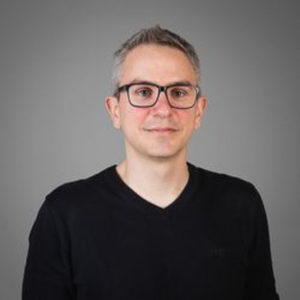
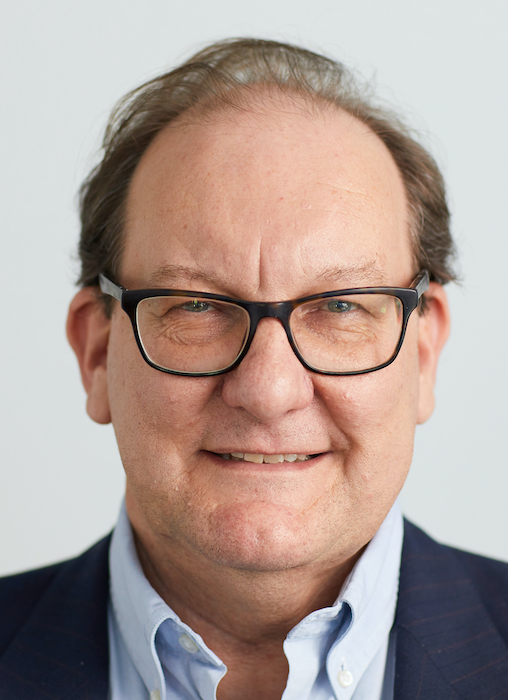
Antonio Fábregas (b. 1978) is a Professor at the Department of Language and Literature, Norwegian University of Science and Technology (NTNU), specializing in Spanish grammar, variation, morphosyntax, comparative linguistics, and semantics. He has authored 8 monographs and over 150 articles/book chapters. Research : Focuses on syntax, semantics, phonology, and their interactions in word formation. Explores Spanish language variation, sociolinguistic contact phenomena, and theoretical morphology. Teaching : Engaged in linguistics education at NTNU (office: Bygg 4 Dragvoll, Trondheim). Publications : Recent work includes analyses of Spanish prefixation, argument structure, elative compounds, and negation-participle constructions. Key contributions to morphological theory and Romance language comparison.
Dr. Malcolm Heywood is a Professor in the Faculty of Computer Science at Dalhousie University, Halifax, Canada. He leads the Network Information Management and Security (NIMS) Lab and is actively involved in research on genetic programming, coevolution, reinforcement learning, and big data analytics. His research interests span: Genetic Programming and Evolutionary Computation Coevolution and Competitive Learning Problem Decomposition and Hierarchical Models Streaming Data Analysis and Anomaly Detection Network Security and Insider Threat Detection Reinforcement Learning in Games (Atari, ViZDoom, Dota 2) Dr. Heywood's recent publications focus on emergent behaviors in reinforcement learning using Tangled Program Graphs (TPG), benchmarking genetic programming for streaming data, and applications in cybersecurity and computational finance. His work demonstrates a strong trend toward scalable, efficient evolutionary models for complex, real-world problems. His scientific awards include: Silver placed at Human-Competitive (Humies) Competition (2018) Best Paper at EuroGP (2017) Best Paper at DETA track, ACM GECCO (2017) Best Paper at RWA track, ACM GECCO (2018) Nomination for Best Paper at DETA track, ACM GECCO (2019) He has supervised numerous graduate students, including PhD and Master's candidates, many of whom have continued research in evolutionary computation. His lab has developed open-source code distributions for Tangled Program Graphs and Symbiotic Bid-Based GP. Dr. Heywood teaches courses in Computer Organization, Introduction to AI with Gaming Applications, and Genetic Algorithms and Programming.
Sverre Helge Torp is a Professor at the Norwegian University of Science and Technology (NTNU) in the Department of Clinical and Molecular Medicine, and a Consultant Neuropathologist at St. Olavs Hospital, part of Trondheim University Hospital. His work bridges academic research and clinical practice in pathology. Research Interests: Neurooncology, with a focus on meningioma and glioma biology Molecular pathology and immunohistochemical analysis of tumour markers Clinicopathological correlations in brain tumour diagnosis/prognosis Ultrasound-based drug delivery techniques like Acoustic Cluster Therapy (ACT®) Investigation of blood-brain barrier permeability mechanisms His publications from 2020–2025 emphasize advancements in meningioma molecular profiling, tumour-associated macrophage roles, and imaging innovations for targeted therapy. Key topics include TERT promoter mutations, ErbB receptor expression, and somatostatin analog efficacy. Dr. Torp has received the Best Teacher Award at NTNU’s Faculty of Medicine (2006) and was repeatedly nominated (2005, 2016–2018). His contributions to teaching excellence were also recognized through the 2007 SINTEF Prize awarded to his department’s pathology course. Advising & Grants: No formal advisees or grants are explicitly listed in the provided information. His collaborative work involves co-authorship on multiple studies, particularly with Dr. Wenche Sjursen, Dr. Ole Solheim, and Dr. Sofie Eline Tollefsen. Labs & Teams: Based at Laboratoriesenteret, LS21.209, Øya, Erling Skjalgssons g 1, he contributes to research teams focused on neuro-oncological pathology and medical imaging innovations.
Dunstan Brown is an Anniversary Professor in the Department of Language and Linguistic Science at the University of York. He specializes in morphological and typological research, focusing on complex morphological systems and global linguistic diversity. University: University of York Department: Language and Linguistic Science Academic Rank: Professor Email: dunstan.brown@york.ac.uk His research explores nominal morphology, agreement systems, inflectional classes, and phenomena like defectivity and overabundance. Projects include studies on Eegimaa, Oto-Manguean languages, and Russian noun paradigms, supported by grants from AHRC, ESRC, and the Leverhulme Trust. Key trends in his recent publications (2023-2025) include computational modeling of morphological complexity, typological classification of defective paradigms, and cross-linguistic analysis of agreement mismatches. These works bridge theoretical linguistics with machine learning and corpus-based methodologies. Scientific Awards: Leverhulme International Fellowship Advising: He welcomes PhD supervision in morphology, computational approaches, theoretical morphology, and morphology-syntax interactions. Collaborations span institutions like Surrey, Essex, Harvard, and CNRS.
Lindsey Westover, PhD, PEng, serves as an Associate Professor in the Department of Mechanical Engineering and Associate Dean in the Faculty of Engineering at the University of Alberta. Her research and teaching activities are centered in the Biomedical Engineering program, with her laboratory located in the Donadeo Innovation Centre for Engineering (13-224, 9211 116 St, Edmonton, AB T6G 2H5). She maintains an active research profile while contributing to academic leadership through her deanship. Her educational background includes: 2018: Postdoctoral Fellowship in Rehabilitation Medicine, University of Alberta 2016: Ph.D. in Mechanical Engineering, University of Alberta 2011: M.Sc. in Mechanical Engineering, University of Calgary 2007: B.Sc. in Mechanical Engineering, University of Calgary Dr. Westover's research program spans biomechanics and biomedical engineering with emphasis on noninvasive assessment of biological structures, vibration analysis for percutaneous implants, joint biomechanics (ligaments and cartilage), spinal deformity analysis through asymmetry metrics, mechanical testing of biological tissues, and computational modeling of biological systems. Her work integrates laboratory experiments, computational methods, and in vivo studies to develop innovative diagnostic and therapeutic approaches. Analysis of her 15 most recent publications (2018-2020) reveals consistent focus on bone mechanics, implant stability, and symmetry analysis across orthopedics, audiology, and dentistry. Key themes include osseointegration evaluation using ASIST technology, pelvic/spinal deformity quantification, and computational modeling of biological structures. Her work appears in high-impact journals spanning engineering and clinical disciplines, demonstrating strong interdisciplinary collaboration. Scientific recognition includes: Nomination for Ear and Hearing 2018 Editor's Award for bone conduction device research Dr. Westover mentors graduate students through co-authorship on numerous publications and teaches core mechanical engineering courses including MEC E 451 (Vibrations and Sound), MEC E 390 (Numerical Methods), and MEC E 200 (Introduction to Mechanical Engineering). Her research is supported by collaborative grants with clinical partners and engineering colleagues. She leads biomechanics research within the Department of Mechanical Engineering, collaborating extensively with the Faculty of Rehabilitation Medicine and surgical departments. Her laboratory develops advanced testing systems like ASIST for implant stability evaluation across hearing devices and dental applications, while her computational work informs clinical approaches to scoliosis management and fracture reconstruction.
Katja Hose is a Professor in the Department of Computer Science at Aalborg University's Technical Faculty of IT and Design. Her research focuses on Data, Knowledge and Web Engineering with specializations in AI for the People and Artificial Intelligence and Machine Learning. She maintains an active research profile with numerous publications and projects. Department of Computer Science Technical Faculty of IT and Design Aalborg University Research areas: Query Processing, Semantic Web, Linked Data, Knowledge Graphs Professor Hose's research interests center on knowledge representation, semantic web technologies, and AI applications. Her work spans from theoretical database systems to practical applications in healthcare, environmental assessment, and microbial data analysis. She has made significant contributions to knowledge graphs, large language models, and semantic search technologies, with particular emphasis on addressing hallucinations in AI systems and improving table search in semantic data lakes. Her recent publications demonstrate a strong trend toward integrating knowledge graphs with large language models, developing evaluation frameworks for AI hallucinations, and applying data science to diverse domains including healthcare and environmental sustainability. Her research bridges theoretical computer science with practical applications that address real-world challenges. NLP4KGC Best Paper Award (2023) ESWC 2023 Best Demo Award (2023) 2020 AMiner AI 2000 Most Influential Scholars AIME 2020 Best Paper Nomination (2020) ESWC 2019 Best Demo Award Nomination (2019) Professor Hose leads multiple significant research projects including ARISTOTLE (AI for clinical risk assessment), DarkScience (microbial data analysis), and the Poul Due Jensen Professorate in Big Data and AI. She has supervised numerous PhD students and collaborates extensively across disciplines, particularly in healthcare applications of AI and environmental assessment technologies. Her research has attracted substantial funding from sources like Villum Fonden and Danish E-infrastructure Cooperation. She is actively involved in several interdisciplinary research teams, including collaborations with microbiologists on microbial dark matter projects and with environmental scientists on digital environmental assessment systems. Her work on the ARISTOTLE project demonstrates strong connections between AI research and clinical applications, while her DarkScience project bridges computer science with microbiology.
Swapna Gottipati is a Full-time Associate Professor of Information Systems (Education) and Associate Dean (Undergraduate Education) at the School of Computing and Information Systems , Singapore Management University . Holding a PhD from SMU (2014) , she specializes in text analytics, education technology, and digital business. Current focus areas: Artificial Intelligence, Data Science, Technology-Enhanced Learning Interdisciplinary applications: Health Informatics, Social Media Analytics Research Interests span text analytics, opinion mining, curriculum analytics, and digital transformation. She applies machine learning and data mining to educational systems, business processes, and health domains. Scientific Contributions: 2016 Best Paper Award (AIS SIG-ED) 2016 MOE TRF Grant 2017-2020 Conference Best Paper Nominations 2013 Best Paper Finalist (CIKM) Academic Leadership includes: Director of Undergraduate Education Co-developer of SMU-X pedagogy Founder of MyCompetencies mobile platform Organizer of curriculum analytics workshops Grant Projects include the Learning Analytics on Qualitative Student Feedback system (MOE TRF 2016) and ICDL-funded digital literacy studies. She has delivered 12+ invited talks on digital transformation in education and industry.
Dr. Victoria Chiu is an Associate Professor of Accounting at the School of Business, SUNY Oswego, specializing in accounting bibliometrics, fraud detection, and data analytics. She joined SUNY Oswego in 2016 after serving as an Assistant Professor at SUNY New Paltz and a doctoral fellow at the AAA/Deloitte Foundation/J.M. Cook Consortium. Dr. Chiu holds a Ph.D. in Accounting from Rutgers University (2013) and a BS from National Changhua University of Education (2008). Her research focuses on applying bibliometric methods to analyze accounting subfields, with a particular emphasis on fraud detection, continuous auditing, and emerging technologies in accounting education and practice. Dr. Chiu has published over 25 peer-reviewed articles in journals like International Journal of Accounting Information Systems, Accounting & Finance, and Journal of Forensic Accounting Research. She has received two Best Faculty Paper Awards from the AAA Strategic and Emerging Technologies Workshop (2017, 2018) and has served on editorial boards for major journals, including the International Journal of Accounting Information Systems and Journal of Emerging Technologies in Accounting. Her teaching spans undergraduate and graduate courses in accounting, including Principles of Accounting and Cost Accounting. She has been recognized for her teaching excellence through multiple Professor Recognition Awards (student-nominated) and actively contributes to curriculum development integrating emerging technologies like process mining and machine learning. Dr. Chiu’s research also emphasizes pedagogical innovation, such as hands-on learning approaches for transaction cycles and adapting AACSB’s Standard A5 into accounting curricula. Professional service includes roles on the AAA Research and Publications Committee (2023–2024) and the Innovation in Accounting Education Awards Committee (2019–2020). Her work bridges academic research and practical applications, particularly in leveraging technology to enhance auditing, fraud detection, and educational outcomes.
Dr. Giorgos Spathas is a senior researcher and project leader at the Leibniz-Zentrum Allgemeine Sprachwissenschaft (ZAS), Berlin, leading the DFG-funded project Measures of Change in the Grammar of Verbal Predications (MeasChange) . He holds a PhD in Linguistics from the Utrecht Institute of Linguistics OTS (2005-2010) and has held research positions at Humboldt University Berlin, University of Stuttgart, and MIT. His research focuses on the semantics of natural language interfaces with syntax and prosody, particularly in binding theory, focus theory, and argument structure alternations. Recent work emphasizes inner aspect and integrating event-decompositional/scalar analyses of verbal predication. Key Projects: DFG Project MeasChange (since 2022) DFG Project Relative measurement and the DP Border (2018-2022) Collaborative Research Center SFB 732, Project B6 (2003-2008) Research Interests: Proportional measurement in linguistic structures Event decomposition and aspectuality Diachronic developments in verbal predication
Associate Professor Wayne Wobcke is a faculty member in the School of Computer Science and Engineering at the University of New South Wales (UNSW), where he has been employed since 2002. His academic career includes previous positions at the University of Sydney until 1998, British Telecom Labs in the UK for three years, and the University of Melbourne for one year. He holds a PhD in Computer Science from the University of Essex (1989), an MSc from the University of Queensland (1985), and a BSc (Hons) in Mathematics/Computer Science from the University of Queensland (1984). Dr. Wobcke's research spans both theoretical and practical aspects of artificial intelligence and data science. His work encompasses intelligent agents, data mining, agent-based modeling, dialogue management, personal assistants, recommender systems, and computational social science. He has collaborated extensively with industry through three Cooperative Research Centres (Smart Internet Technology CRC, Smart Services CRC, and Data to Decisions CRC), where he served as a Programme Manager and Project Leader for over 10 years. Notable achievements include developing a voice-controlled mobile application for email and calendar interaction (a precursor to Apple's Siri) and deploying a people-to-people recommender system for online dating on one of Australia's largest dating sites. His recent research focuses on data science in humanitarian contexts and machine learning applications in official statistics, conducted in collaboration with BPS (Statistics Indonesia) and STIS (Politeknik Statistika, Indonesia). His publication record shows a consistent trajectory of impactful research, with recent work concentrating on poverty targeting, domain adaptation, natural language processing for recommender systems, and political opinion mining. Scientific Awards: Best Paper Nomination, 11th Workshop on Argument Mining (2024) UNSW Arc Postgraduate Research Supervisor Award (2017, 2018) AAAI Deployed AI Application Award, Twenty-Sixth Annual Conference on Innovative Applications of Artificial Intelligence (2014) Best application paper runner up, 17th Pacific-Asia Conference on Knowledge Discovery and Data Mining (2013) Dr. Wobcke has successfully supervised numerous research students, with Irwan Rahadi currently working on 'Causal Modelling and Machine Learning for Official Statistics'. His grant portfolio includes significant funding from the Australian Research Council and various Cooperative Research Centres, totaling over $3.7 million since 2003. He teaches COMP9414 Artificial Intelligence and COMP9727 Recommender Systems at UNSW.
Guillaume Thomas is an Associate Professor in the Department of Linguistics at the University of Toronto. His research focuses on the study of meaning (semantics and pragmatics) in relation to morphosyntactic structures, particularly in Mbyá Guaraní, a Tupí-Guaraní language spoken in Argentina, Brazil, and Paraguay. He combines corpus linguistics and digital methods with fieldwork, developing resources like dependency treebanks and morphological analyzers. His work includes language documentation projects, such as the National Inventory of the Cultural Heritage of the Guaranis in Brazil, which involved community-based documentation of oral traditions. His research interests also encompass usage-based approaches, probabilistic models in language analysis, and the interface between semantics and syntax. Education: PhD in Linguistics from the Massachusetts Institute of Technology (MIT). Research Interests: Cross-linguistic semantics and pragmatics Morphosyntax and its interface with meaning Language documentation and digital linguistics Corpus-based methods and computational tools for endangered languages Funding: Supported by grants from the Social Sciences and Humanities Research Council of Canada and the Connaught Fund. His work integrates theoretical linguistics with practical applications in language preservation and computational modeling. Labs/Teams: He collaborates with the Indigenous Museum of Rio de Janeiro on documentation projects and contributes to the Universal Dependencies project for syntactic annotation.
Prof. Roland Kießling is a Professor of African Studies at the University of Hamburg's Faculty of Humanities, affiliated with the Asia-Africa Institute's Department of African and Ethiopian Studies. He has held visiting professorships at the Universities of Bayreuth and Cologne, and served as a DFG Heisenberg Fellow (2001–2006). His research focuses on African languages, particularly Southern Cushitic, Nilotic, Niger-Congo, and Khoisan languages, emphasizing documentation, phonetics, morphosemantics, and language change. Academic Career: Studied at University of Hamburg (African Studies, Phonetics), M.A. 1988, Ph.D. 1993, Habilitation 2000 1990–1993: Research Associate in the DFG 'Iraqw Texts' project 1993–1999: Research Assistant at Hamburg's Institute for African and Ethiopian Studies Recipient of the Kurt-Hartwig-Siemers Prize (1995) Since 2006: Full Professor at University of Hamburg Research Interests: Documentation of endangered African languages, phonetic transcription, morphosemantics, language contact, and historical linguistics. Specializes in Cushitic (Southern), Nilotic (Southern), Niger-Congo (South Bantoid), and Khoisan languages including !Xoon. Key Projects (selection): Cluster of Excellence 'Understanding Written Artefacts' (2019–2025) DFG SFB 950 'Manuscript Cultures' (2011–2020), leading subproject C07 on Arabo-Swahili manuscripts DoBeS-funded documentation projects for Bezen (2011–2015) and Datooga motion lexico-grammar (2018–2022) Publications: Over 59 publications including monographs on Isu (West Ring Bantu), edited volumes on African linguistics, and articles in Journal of African Languages and Linguistics , Afrika und Übersee , and others. Recent work explores numeral classifiers, hybrid youth discourse, and tonogenesis. Awards: Kurt-Hartwig-Siemers Prize (1995), Heisenberg Fellowship (2001–2006), and contributions to major linguistic reference works like The Oxford Handbook of African Languages .
Henrik Høeg Müller is an Associate Professor and Head of Department in Spanish Business Communication at the School of Communication and Culture, Aarhus University, Denmark. He is actively engaged in linguistic research focusing on typological differences between Danish and Spanish, particularly in syntax, morphology, and lexical-schematic distinctions. Institution: Aarhus University School: School of Communication and Culture Department: Spanish Business Communication Position: Associate Professor, Head of Department Email: henhm@cc.au.dk His research centers on the structural and typological contrasts between Danish and Spanish, especially in nominal expressions, predicate formation, and lexical vs. syntactic encoding. Key interests include bare nouns, count/mass distinctions, telicity, motion verbs, and schematicity. His work often employs comparative and cognitive linguistic frameworks. The most recent publications reveal a strong trend in analyzing how lexical and syntactic strategies diverge across languages, especially in expressing similarity, kind, and event structure. Topics such as the Danish 'slags', complex predicates, and ambiguous nominal structures highlight his focus on fine-grained syntactic and semantic analysis. These works contribute to broader discussions in typology and cognitive linguistics. Henrik Høeg Müller has served as an editor for Ny Forskning i Grammatik and frequently presents at academic events, including workshops and conferences. He has no listed scientific awards in the provided text. Editorial Role: Editor, Ny Forskning i Grammatik Presentations: Regular lecturer at seminars and conferences on Danish and Spanish linguistics He is involved in academic networks related to Scandinavian and Romance linguistics, contributing to collaborative research and scholarly discourse. No labs or formal research teams are explicitly mentioned.
Marie Candito is a Lecturer at the School of Linguistics, Paris Cité University. She serves as Deputy Director of the Laboratoire de Linguistique Formelle (LLF, CNRS) since January 2025 and Head of the M2 Computational Linguistics program at Paris Cité University. Her research focuses on natural language processing, computational linguistics, and linguistic abilities of large language models. Current Projects : Co-PI of ANR SELEXINI (2021-2025) and scientific coordinator for LLF in ANR PANTAGRUEL (2023-2025) Past Projects : PI of ANR ASFALDA-French FrameNet (2013-2016), scientific coordinator for ANR PARSEME-FR (2015-2019), and member of ANR SEQUOIA (2010-2013) Her work involves measuring and mitigating biases in language models, inducing semantic lexicons from corpora, and studying human vs. LLM word associations. She supervises PhD students including Maria Andueza Rodriguez, Anna Mosolova, and David Kletz.
Francesca Crowe is an Associate Professor in Applied Health Sciences at Aston University, with a robust research profile spanning cardiovascular health, pregnancy complications, and the application of artificial intelligence in clinical decision-making. Her work primarily focuses on systematic reviews, meta-analyses, and large-scale epidemiological studies using primary care electronic health records. Dr. Crowe's research interests center on understanding the relationships between pregnancy-related complications and long-term health outcomes, particularly cardiovascular disease, type 2 diabetes, and hypertension in women. She has pioneered work in developing risk prediction models for postpartum cardiovascular disease and defining phenotypes of disease severity across multiple health conditions. Her recent work explores healthcare professionals' perspectives on AI implementation for managing patients with multiple long-term conditions. Analysis of her publication record reveals a strong emphasis on methodological rigor, with frequent use of umbrella reviews, systematic reviews, and retrospective cohort studies. Her work demonstrates significant impact in women's health, with particular attention to the intersection of reproductive health and chronic disease development. Dr. Crowe has received considerable attention for her research, with multiple publications picked up by news outlets and widely read on academic platforms like Mendeley. Her 2024 umbrella review on pregnancy complications and type 2 diabetes has been particularly influential, with 65 Mendeley readers and 9 citations. As an active researcher, Dr. Crowe serves as Principal Investigator and Co-Investigator on multiple significant projects funded by NIHR, UK Research and Innovation, and industry partners like BAYER. Her current projects focus on improving care for patients with diabetes and kidney disease, reducing residual risk in diabetic renal disease, data innovation in public health, and addressing gambling-related harms through equitable approaches.