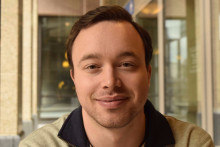
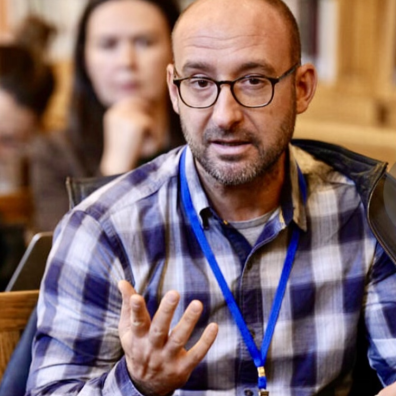
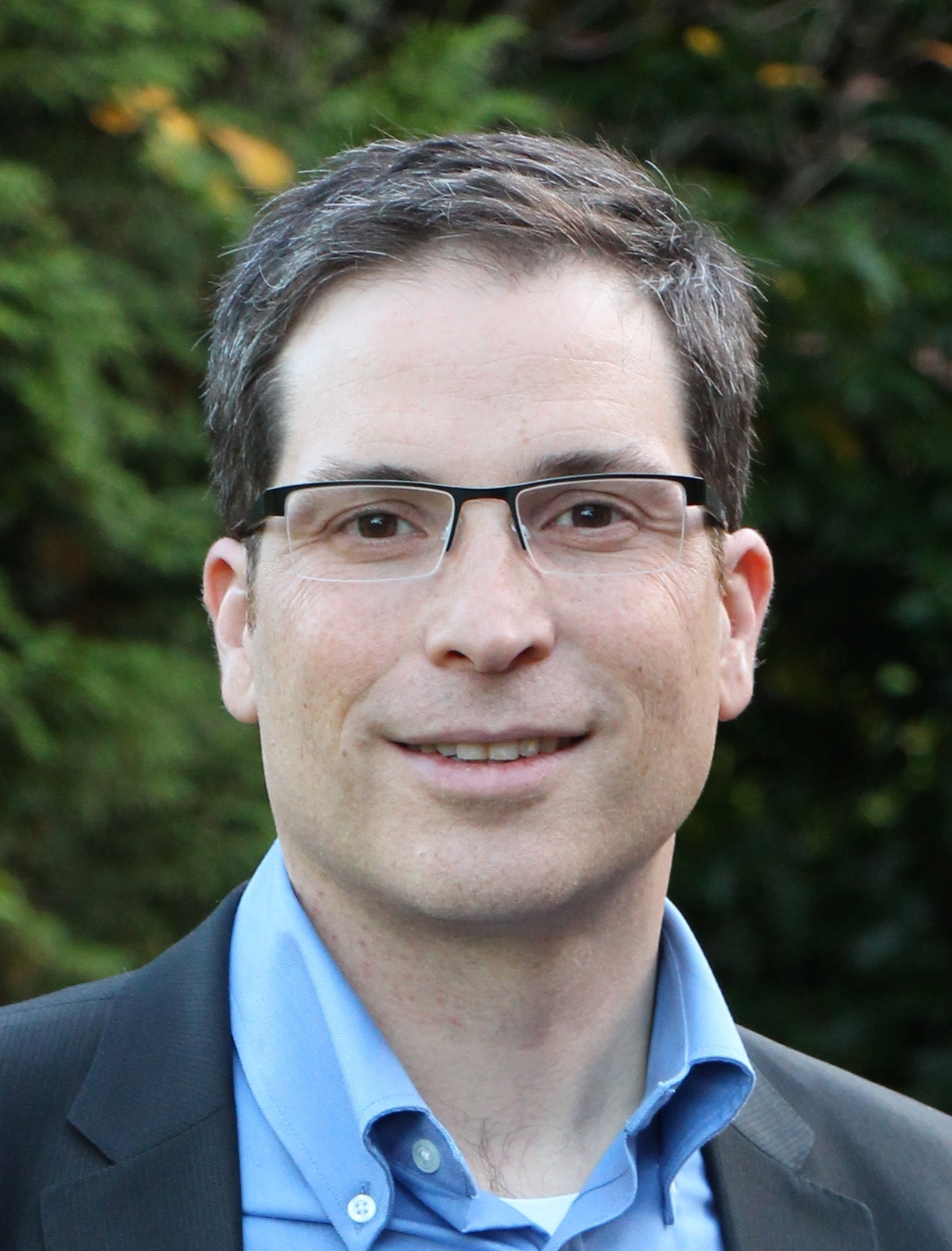
Chao Zhang is an Assistant Professor in Human-Centered AI at Eindhoven University of Technology (TU/e), specializing in the intersection of psychology and technology. He holds an MSc and PhD from TU/e, with a focus on using data-driven methods and psychological theories to design AI systems that positively influence human behavior. His research spans behavior change interventions, AI-driven health persuasion, and the social implications of AI systems. He coordinates the HUMAN-AI Alliance program and co-organized workshops on human-centered AI. Education: MSc (Human-Technology Interaction, TU/e), PhD (Intelligent Systems for Lifestyle Behavior Change, TU/e). Research interests include machine learning applications in psychology, computational modeling for behavior change, and ethical AI design. Awards include a 2021 PhD Thesis Award nomination. Key collaborations include work with Utrecht University and projects like ENFIELD (European Lighthouse for Trustworthy AI). He teaches courses on behavioral research methods and human-AI interaction. His lab explores topics like trust in XAI systems and human-robot bonding mechanisms.
Adrien Wartelle is an Associate Professor at Toulouse Institute of Computer Science Research (IRIT) and Institut National Universitaire Champollion since September 2025, specializing in health and production system modeling through statistical, queuing, and optimization tools. His primary affiliation is with the Argumentation, Décision, Raisonnement, Incertitude et Apprentissage (ADRIA) team within IRIT's Faculty of Computer Science. His research focuses on health system optimization with expertise in emergency department operations, multimorbidity analysis, and semiconductor manufacturing optimization. Key methodologies include queuing models, digital twin development, machine learning applications, and statistical analysis of complex systems. His work bridges healthcare operations and industrial engineering through data-driven approaches to system crowding and resource allocation. Analysis of his 14 publications reveals strong emphasis on emergency department congestion measurement (60% of works), semiconductor manufacturing optimization (20%), and healthcare patient flow modeling (20%). His recent work demonstrates increasing integration of machine learning with traditional queuing theory, particularly in real-time congestion indicators for healthcare systems. Scientific Recognition: Nominated for academic prize for pathway of excellence (2019) 14 publications with 1,041 reads and 52 citations Collaborations with Mines Saint-Étienne, University of Technology of Troyes, and Centre Hospitalier de Troyes Wartelle maintains active research in both healthcare and semiconductor domains, having completed post-doctoral research at Mines Saint-Étienne (2023-2025) focused on semiconductor manufacturing systems after his PhD at University of Technology of Troyes (2019-2022) on emergency department optimization. His technical expertise spans C++, R, Linux environments, and object-oriented programming for simulation and optimization applications.
Pierce Darragh is a Researcher at the University of Maryland , specifically within the Department of Computer Science . He is advised by David Van Horn , an Associate Professor. His research interests revolve around: Programming Languages Type Systems Algebraic Data Types Pattern Matching Functional Programming Domain-Specific Language Development The most recent publications highlight his work in program synthesis, experimental design frameworks, and randomness libraries. His 2023 article on Xsmith explores automated program generation, while his 2022 work on SweetPea focuses on factorial experiment modeling. His 2020 Clotho paper delves into parametric randomness in Racket. His blog posts extensively discuss the design of Viper's type system, including structural vs. nominal typing, algebraic data types, pattern matching, and optional types. He also analyzes the integration of language in science fiction literature through a classification scale, though this appears to be a personal interest rather than his primary academic focus.
Benjamin Doerr is a full Professor of Computer Science at École Polytechnique in France, affiliated with the Laboratoire d'Informatique (LIX). He conducts research in algorithms and artificial intelligence, with a specific focus on randomized algorithms and heuristic search. His work spans theoretical computer science, evolutionary computation, and mathematical analysis of optimization algorithms. Professor Doerr's research interests center on randomized search heuristics, including evolutionary algorithms, ant colony optimizers, and estimation-of-distribution algorithms. His work extends to foundational areas such as group theory (from his diploma work), discrepancy theory and combinatorial games (from his PhD), and algorithmic mathematics (from his habilitation). He has made significant contributions to understanding the runtime behavior of evolutionary algorithms and establishing theoretical guarantees for their performance across various optimization problems. His recent publications reveal a strong focus on multi-objective evolutionary algorithms, particularly analyzing and improving the performance of popular frameworks like NSGA-II, NSGA-III, and SMS-EMOA. His research demonstrates a consistent pattern of providing rigorous theoretical foundations for heuristic search methods, moving beyond empirical observations to establish provable performance guarantees. This theoretical approach has become increasingly influential in bridging the gap between theoretical computer science and practical optimization techniques. Professor Doerr has received several prestigious awards including two Otto-Hahn medals, the Dr. Eduard Martin prize, and the Digiteo-Digicosme prize. His students have also earned significant recognition, with multiple dissertation awards and nominations. He has supervised numerous PhD students to completion, including Tobias Friedrich (now director of HPI and professor at University of Potsdam), Carola Winzen (now permanent researcher at CNRS), and Marvin Künnemann (now professor in Kaiserslautern). He regularly supervises M1/M2 research projects, with many leading to international conference publications at venues like AAAI, IJCAI, and GECCO. Professor Doerr serves on the editorial boards of several leading journals including Artificial Intelligence, Evolutionary Computation, and IEEE Transactions on Evolutionary Computation. At École Polytechnique, Professor Doerr is a member of the executive board of the doctoral school of IP Paris, where he oversees computer science doctoral students across multiple institutions. He previously served as the habilitation reference person for the IDIA department and has been instrumental in shaping the academic processes for doctoral candidates and HDR (Habilitation à Diriger des Recherches) candidates.
Y. Tan is a Professor at Erasmus University Rotterdam, active in interdisciplinary research bridging Molecular Biology and Computer Science . Their work spans CRISPR-Cas systems, bacteriophage resistance, and digital infrastructure development for circular economy monitoring. Key research areas: CRISPR-Cas systems, phage-host interactions, digital product passports, ontology alignment Recent projects address global supply chain challenges and environmental sustainability through digital frameworks Publications (15 most recent) reflect dual expertise in genetic engineering (e.g., CRISPR-Cas evolution, phage tRNA evasion) and computational systems (e.g., ontology integration, blockchain for trade). Scientific Awards: Best Management Paper Award at dg.o 2021 DGo2022 Best Poster Award Nominated for Best Paper Award with Business Implications (2019)
Dr. Pilar Valenzuela is a Professor in the Department of World Languages and Cultures at Wilkinson College of Arts, Humanities, and Social Sciences , Chapman University. Her work focuses on Panoan and Kawapanan languages of the Peruvian Amazon, including Shiwilu (Jebero) and Amahuaca , with expertise in linguistic typology, phonology, morphosyntax, and language revitalization . Education: Pontifical Catholic University of Peru (BA in Hispanic Linguistics & Literature, Diploma in Anthropology) University of Oregon (MA and PhD in Linguistics) Research Highlights: She has published three books and numerous articles on synchronic and historical syntax , verb borrowing , and ethnobiological taxonomies . Her PhD dissertation on Shipibo-Konibo grammar won the Mary R. Haas Book Award . Awards & Grants: Recipient of the Wang-Fradkin Professorship (2006-2008) and a National Science Foundation grant (DEL BCS-0853285) for documenting Kawapanan languages. In 2012, she received the Global Engagement Research Award from Chapman University. Teaching: Offers courses in Spanish linguistics, advanced grammar, and documenting Shiwilu , a critically endangered language. Collaborates with Chapman undergraduate students on creating a trilingual (Shiwilu-Spanish-English) dictionary . Publications: Recent work explores lexical tone in Amahuaca , temporal constructions , and body-part terminology in Pano-Takana languages.
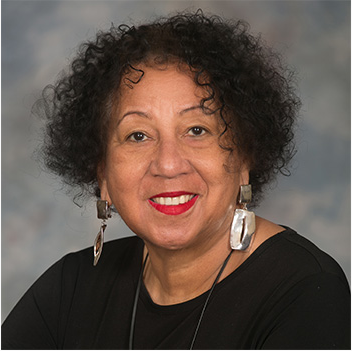
Professor Patricia A. Broussard is a full-time faculty member at Florida A&M University College of Law, where she has served as Professor of Law since 2013. Previously, she was a Visiting Associate Professor at the same institution and taught at Howard University School of Law. Her academic expertise lies in Constitutional Law, First Amendment rights, Women and the Law, and human rights, with a focus on Female Genital Mutilation (FGM). She holds a J.D., cum laude, from Howard University School of Law and a B.S. from Northwestern University. Professor of Law, Florida A&M University College of Law (2013–Present) Visiting Associate Professor of Law, Florida A&M University (2006–2011) Acting Director, Legal Reasoning, Research, and Writing Program, Howard University (2005–2006) J.D., Howard University School of Law (cum laude) B.S., Northwestern University Her research centers on constitutional law, civil rights, gender justice, and the intersection of race, gender, and systemic oppression. She is particularly known for her scholarship on Female Genital Mutilation, Black women’s legal contributions, and the societal implications of judicial decisions. Her work critically examines how legal systems perpetuate or challenge inequality. Her 15 most recent publications, spanning from 2004 to 2023, reflect a consistent engagement with themes of racial justice, gender equity, and constitutional interpretation. The articles demonstrate a strong interdisciplinary approach, combining legal analysis with social theory, human rights frameworks, and feminist jurisprudence. Key topics include voting rights, judicial nominations, pandemic impacts on marginalized communities, and the criminalization of cultural practices like FGM. Professor Broussard has received numerous awards recognizing her excellence in teaching and service: Fulbright Specialist, U.S. Department of State (2013) Five-time recipient of Florida A&M University College of Law “Professor of the Year” Four-time recipient of the Percy Luney Spirit of Service Award Warren Rosmarin Award for Outstanding Teaching and Service (2003) She is deeply committed to student mentorship, having coached moot court and client counseling teams, and to community engagement through initiatives like “Clean-Up Parramore Day.” She also serves on the City of Orlando Mayor’s Martin Luther King Commission. Her leadership extends to curriculum development and legal writing programs. Professor Broussard is affiliated with scholarly initiatives such as the Feminist Judgments Project and has contributed to books on federal employment law and medical sociology. She regularly presents at legal conferences on topics ranging from reproductive rights to racial justice.
Karolin Obert is a Researcher in General Linguistics at the Centre for Languages and Literature , Lund University , Sweden. Her work spans language documentation, semantics, and typology, with a focus on Amazonian languages and linguistic fieldwork. Active in 11 research outputs (2022–2024) Current projects: Walking while Talking , DIAD , LangMov Engaged in international conferences (2022–2024) Her research explores spatial semantics, onomatopoeia, and nominal classification systems. Key collaborations include work with Nadëb and Dâw languages, addressing challenges in digital integration and cultural heritage documentation. Recent publications analyze motion categories, language vitality, and semantic typology. She contributes to comparative handbooks and open-access journals like Glossa and Cadernos de Etnolingüística . Projects : 4 active (2021–2026), including supervision of a Baniwa classifiers grammar Activities : 10 (2022–2025), including presentations at the International Conference on Spatial Cognition and workshops on language documentation
Manuel Mucientes Molina is a Full Professor at the Research Center on Intelligent Technologies (CiTIUS) within the University of Santiago de Compostela . His research focuses on Artificial Intelligence , particularly in Computer Vision and Machine Learning , with applications in object detection, process mining, and healthcare diagnostics. Research Areas : Machine learning, Computer vision, Process mining, Deep learning, AI for healthcare. Projects : Protonterap-IA (2025), AZOR (2024), RAI4P (2021), eXplica-IA (2018), DronePlan (2014), SoftLearn (2012). Publications highlight advancements in few-shot object detection, small object tracking, and AI-driven conformance checking. Notable collaborations include work on X-ray vision systems and medical mask detection in operating rooms. Awards : Best Student Paper Nomination (2015), Runner-up best industry-oriented paper award (2008). Teaching includes courses on Statistical Learning, Deep Learning, and Automata Theory at the M.Sc. and B.Sc. levels.
Mardale Alexandru is a University Professor at Inalco , affiliated with the Europe Department and the SeDyL research center. His work focuses on the syntax–semantics–discourse interface, particularly in heritage Romanian contexts, differential object marking, and the grammaticalization of prepositions in Romance languages. Research Interests: His expertise spans heritage language acquisition, linguistic expression of displacement, and modality in Romanian. He examines how language contact and reduced input affect syntactic structures, with a strong emphasis on grammaticalization processes and case-preposition interactions. 2024-2023 publications highlight his work on heritage Romanian in France, differential object marking, and clitic doubling. 2022-2003 contributions explore complex prepositions, animacy effects, and diachronic changes in Romanian syntax. Administrative Roles: He serves as Head of Romanian Studies and Educational Manager of the cross-disciplinary Linguistics course (LGE) at Inalco. He holds key positions in institutional governance, including membership in the Scientific Council and Research Commission.
Saint-Joanis Olena is a Lecturer at INALCO's Department of Slavic Languages and Literature, specializing in Ukrainian language processing and pedagogy. She coordinates the Erasmus+ project EUkraine Forum and co-organizes the Rencontres des linguistes du CREE conference. Her work involves developing online pedagogical tools for Ukrainian through the Erasmus+ Lesser-Used Languages Classroom project. Her research focuses on formalizing Ukrainian language structures within the NooJ framework, including verb aspect relations, morphological grammars, and language variant formalization. She has presented at multiple international NooJ conferences and TALN-RECITAL, with publications in edited volumes and conference proceedings. She teaches Ukrainian language courses at all undergraduate and master's levels, including written practice, grammar exercises, and media language, while also developing continuing education programs. Her technical contributions include Ukrainian dictionary creation and disambiguation grammar implementations for NLP applications.
Abraham Bernstein is a Full Professor of Informatics at the University of Zurich (UZH), where he serves as Head of the Dynamic and Distributed Information Systems Group and Director of the UZH Digital Society Initiative. He leads a university-wide initiative with over 180 faculty members investigating the interplay between society and digitalization. His work bridges social science foundations (organizational psychology/sociology/economics) and technical disciplines (computer science, artificial intelligence), creating a unique interdisciplinary approach to digital transformation challenges. Education: Diploma in Computer Science from ETH Zurich Ph.D. in Management with concentration in Information Technologies from MIT's Sloan School of Management Professor Bernstein's research spans the Semantic Web, data mining/machine learning, recommender systems, crowd computing, and collective intelligence. His work uniquely integrates social science perspectives with technical computer science approaches, examining how social and technical elements interact in digital systems. Recent work focuses on explainable AI, ethical decision-making with AI systems, and the societal implications of digital transformation, reflecting his commitment to addressing both technical challenges and their broader societal context. His publication record shows a strong trajectory in multimodal information retrieval, knowledge representation, and human-AI collaboration, with increasing focus on ethical considerations and societal impact of AI technologies. The research demonstrates consistent innovation in bridging technical AI capabilities with human-centered design principles, particularly in areas like explainable recommender systems and democratic applications of AI. Scientific Recognition: Nominated Digital Shaper by Bilanz magazine (2017) Professor Bernstein has supervised over 30 PhD students whose work spans semantic technologies, data mining, recommender systems, and human-AI interaction. His research group has secured significant funding for projects related to digital society, knowledge representation, and AI ethics. As Director of the Digital Society Initiative, he coordinates cross-disciplinary research across UZH's faculties, bringing together scholars from humanities, social sciences, law, economics, and STEM fields to address complex digital transformation challenges. He leads the Dynamic and Distributed Information Systems Group at UZH, which maintains strong international collaborations and contributes significantly to both theoretical advances and practical applications in information systems. The group's work has influenced standards in semantic web technologies and continues to shape discourse on responsible AI development and deployment in society.
Professor Irina Nikolaeva is affiliated with the School of Languages, Cultures and Linguistics (LAC) at SOAS University of London . Her research focuses on linguistic typology, morphosyntax, and endangered languages, particularly in Siberian and Uralic language families. Primary Affiliation: School of Languages, Cultures and Linguistics, SOAS University of London Email: in3@soas.ac.uk Her work explores: possessive constructions and switch-reference systems mixed categories in noun modification morphosyntactic features in Tundra Nenets and Yukaghir polarity focus and finiteness in typological frameworks Recent publications analyze vowel harmony in Yukaghir, contact-induced morphosyntactic changes in Siberia, and the morphosyntactic properties of internal possessors across diverse languages. Her scholarship bridges theoretical linguistics with fieldwork on endangered languages.
Prof. RNDr. Václav Blažek, CSc. is a Professor of Indo-European Comparative Linguistics at the Institute of Linguistics and Baltic Studies, Faculty of Arts, Masaryk University in Brno, Czech Republic. Born on April 23, 1959 in Sokolov, he has established himself as a leading scholar in historical linguistics with expertise spanning multiple language families. His academic career at Masaryk University began in 1995, following earlier teaching experience at a secondary school in Dubná near Příbram. His academic credentials include: 1983: Completed studies in mathematics and physics education at Charles University's Faculty of Mathematics and Physics 1981-1983: External studies in Africanistics and Indo-European studies at Charles University's Faculty of Arts 1984: RNDr. (equivalent to MSc) from Charles University 1993: CSc. (PhD equivalent) with dissertation "Zoological Terminology of Indo-European Languages (Mammals)" 1998: Habilitation with work "Numerals" 1998: Associate Professor in Indo-European Comparative Linguistics 2003: Full Professor in Indo-European Comparative Linguistics Prof. Blažek's research spans multiple linguistic domains with particular focus on comparative historical linguistics across diverse language families. His primary interests include Indo-European comparative linguistics, etymology, and the study of numeral systems across language families. He has made significant contributions to understanding connections between Indo-European and Afroasiatic languages, as well as exploring Uralic and Altaic linguistic structures. His work often bridges linguistic analysis with cultural anthropology and historical migration patterns, examining how language reflects human movement and cultural exchange across millennia. Prof. Blažek is particularly known for his meticulous work on etymological dictionaries and comparative studies of linguistic features across disparate language families. His extensive publication record reveals consistent engagement with core questions in historical linguistics, particularly regarding language classification, etymological connections, and the reconstruction of proto-languages. Recent work shows continued focus on Indo-European studies while expanding into comparative analyses with Afroasiatic, Uralic, and Altaic language families. A notable pattern is his interest in material culture terms (like vessels, body parts, and natural phenomena) as windows into ancient cultural practices and language contact. Prof. Blažek has received several prestigious academic recognitions including: Humboldt Scholarship (1993-1994 and 1998) at universities in Cologne and Bonn Scholarship from the Austrian Institute for South and Southeast Europe (1996) at the University of Vienna Scholarship at the Netherland Institute of Advanced Study (2003) As an academic supervisor, Prof. Blažek has guided numerous master's theses and doctoral dissertations in Indo-European Comparative Linguistics and Ethnolinguistics. His teaching portfolio includes courses on World Languages, Writing Systems, Mathematical Apparatus of Linguistics, Selected Topics in Etymology, and Indo-European Languages. He has served on dissertation committees and has been instrumental in shaping the next generation of linguists specializing in comparative historical linguistics. Prof. Blažek is also an active member of the Scientific Council of the Faculty of Arts at Masaryk University and has participated in academic governance. Prof. Blažek maintains active involvement in academic communities through memberships in the Industry Council for English Linguistics, Classical Philology, Comparative Indo-European Linguistics, Religious Studies, and Greek Studies. He has served on the Program Board for Classical Greek Language and Literature and has contributed significantly to the academic direction of linguistic and classical studies at Masaryk University.
Kirstin Dahl-Pedersen serves as Associate Professor at the Department of Veterinary Clinical Sciences within the University of Copenhagen's Faculty of Health and Medical Sciences, where she leads research in production animal welfare with specialized focus on global animal transport systems and innovative cow-calf contact dairy farming models. Her interdisciplinary research program uniquely bridges clinical veterinary medicine with pathology, forensic jurisprudence, ethology, and social sciences to address critical animal welfare challenges. Current projects examine the welfare implications of transporting billions of animals annually and develop evidence-based frameworks for emerging dairy practices like cow-calf contact systems, which represent potential paradigm shifts in livestock management. Analysis of her 29 research outputs reveals consistent emphasis on dairy cattle health disorders (particularly corkscrew claws), calf welfare in alternative farming systems, and emergency protocols for transport accidents, demonstrating strong integration of practical veterinary concerns with legislative and ethical dimensions of animal welfare. Scientific recognition includes: Selection by the Danish Royal Academy for Sciences and Letters for specialized science communication training (2022) Nomination for UCPH Veterinary Departments' Annual Communication Award (2023) Dahl-Pedersen maintains exceptional public engagement through frequent television and radio appearances, while her research network spans veterinarians, biologists, agronomists, legal experts, farmers, transport professionals, and regulatory authorities, reflecting her commitment to solution-oriented, multi-stakeholder approaches to animal welfare challenges.