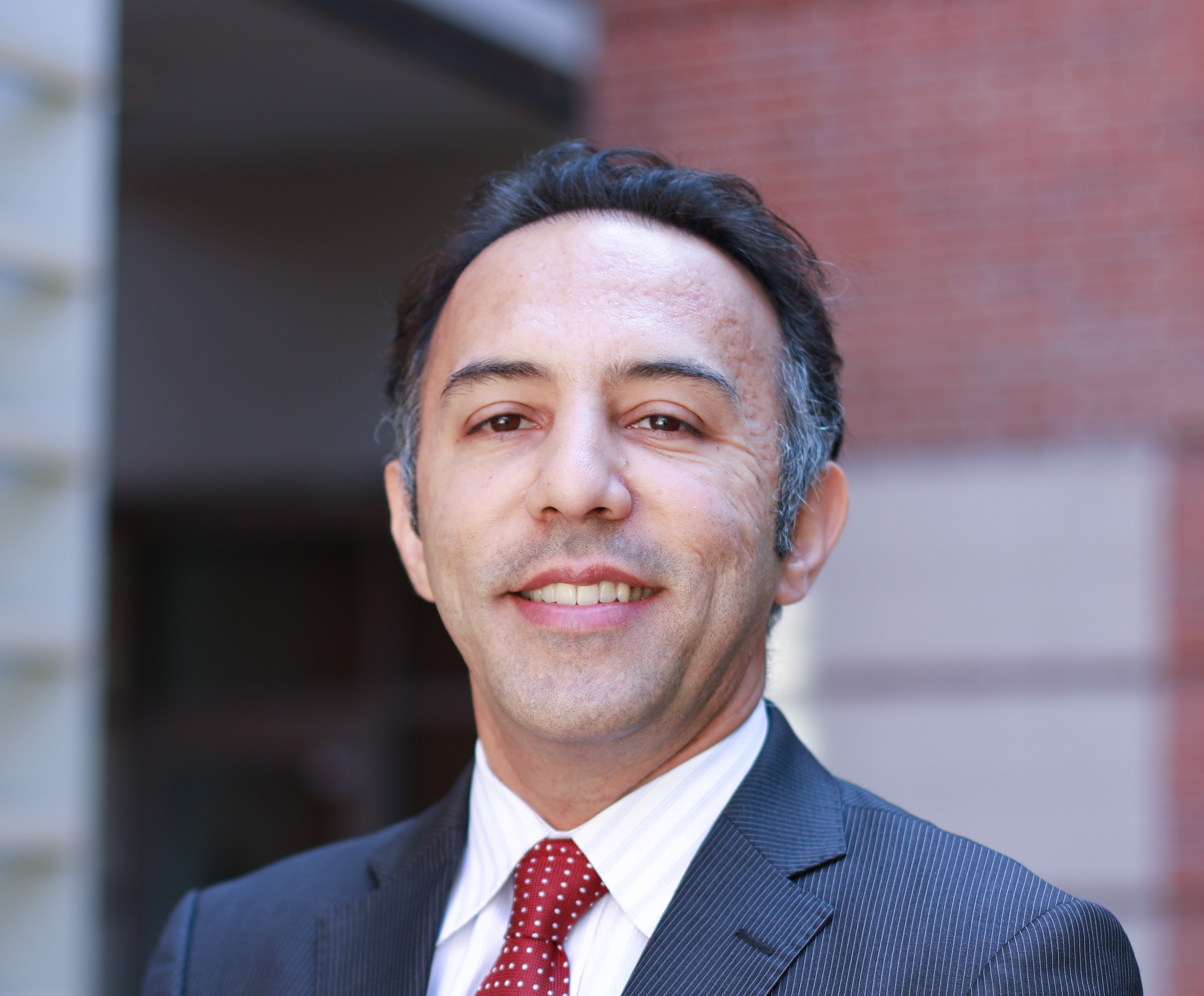
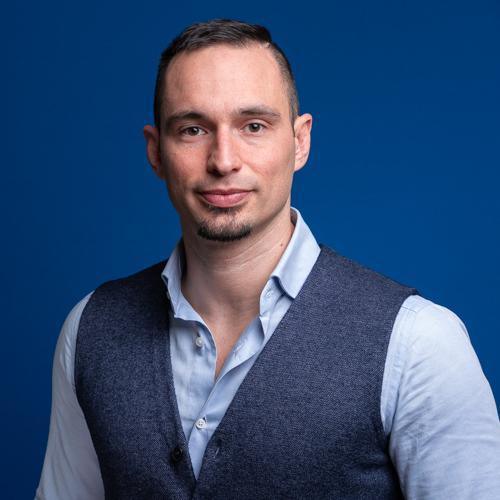
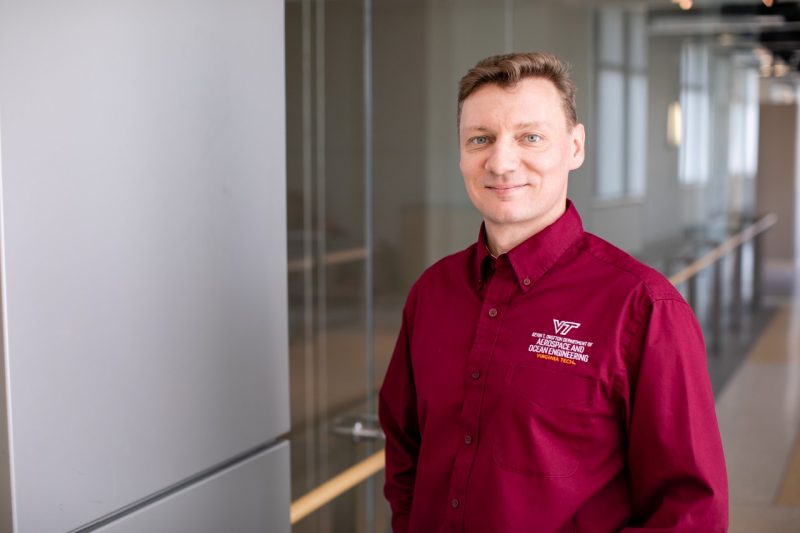
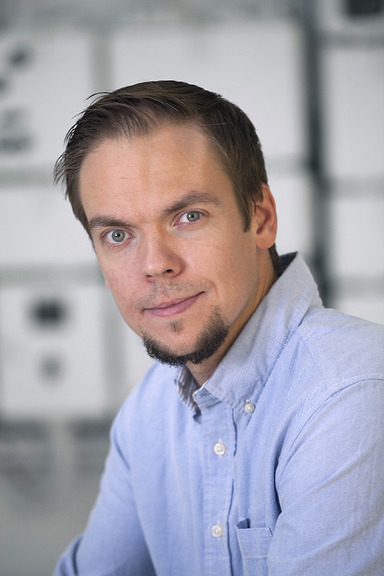
Nirupam Roy is an Assistant Professor at the Department of Computer Science, University of Maryland, College Park, and Director of the iCoSMoS research lab. His work bridges wireless networking, mobile computing, and acoustic sensing with applications in IoT, localization, healthcare, security, and wearables. Research Focus: Wireless Networking & Mobile Sensing Awards: Best paper award, MobiSys 2022 Best demo award, MobiSys 2021 CSL Ph.D. Thesis Award, UIUC 2019 Students: Nakul Garg, Yang Bai, Irtaza Shahid, Harshvardhan Takawale, Aritrik Ghosh, Ayushi Mishra, Sumbul Zehra, Justin Goodman Grants: NSF CAREER award (2023), Meta Research Award (2023)
Professor Kim Eun-hee is a faculty member in the Department of Defense Systems Engineering at Sejong University, specializing in advanced radar technologies and signal processing. Her work bridges theoretical research and practical applications in defense systems. Ph.D. in Mechanical Engineering (2004), KAIST M.Sc. in Engineering (1996), KAIST B.Sc. in Precision Engineering (1994), KAIST Her research focuses on radar system design, including airborne active phased array radar, automotive radar, broadband noise radar, and over-the-horizon radar. She explores waveform optimization, MIMO architectures, and signal processing algorithms to enhance radar performance in complex environments. Publications highlight her expertise in MIMO radar configurations, Doppler-insensitive waveforms, and machine learning integration for signal analysis. She leads industry-academic collaborations with organizations like Hanwha Systems and LIG Nex1. She contributes to technical committees, including the Sensor and Signal Processing Division of the Korean Society of Military Science and Technology. Her laboratory (Defense Radar Technology Laboratory) focuses on radar design, signal processing, and sensor integration.
Ronald Parr is a Professor of Computer Science in the Department of Computer Science at Duke University's Pratt School of Engineering. He has been at Duke since 2000, progressing from Assistant Professor to Associate Professor with tenure, and ultimately to Full Professor. From 2014 to 2017, he served as Department Chair and delivered graduation speeches in 2015, 2016, and 2017. Dr. Parr received his Ph.D. in Computer Science from the University of California, Berkeley in 1998, with a dissertation titled "Hierarchical Control and Learning in Markov Decision Processes" under advisor Stuart Russell. He earned his A.B. in Philosophy, cum laude, from Princeton University in 1990. His primary research focuses on methods for solving large stochastic planning problems using Markov Decision Processes and approximate dynamic programming techniques. His work spans reinforcement learning, value function approximation, game theory, sensing, and robotics. Dr. Parr's research has been consistently funded by major agencies including NSF, DARPA, and ARO, with recent projects focusing on feature encoding for reinforcement learning, neurosymbolic hierarchical reinforcement learning, and reasoning in large, structured, uncertain domains. His publication record demonstrates consistent contributions to top venues including NeurIPS, ICML, and AAAI, with work that bridges theoretical foundations and practical applications. Dr. Parr has received numerous honors including being elected as an AAAI Fellow in 2023, receiving an AAAI Outstanding Paper Honorable Mention in 2013, winning the IJCAI-JAIR Best Paper Award in 2007, receiving an NSF CAREER award in 2006, and being named an Alfred P. Sloan Fellow in 2003. He has advised ten graduate students to completion across various research areas within AI and robotics. His research has been supported by over $1.5 million in direct funding to his lab, with additional collaborative funding from multiple NSF, DARPA, and ARO grants. Dr. Parr has served extensively on program committees for major AI conferences including ICML, NeurIPS, AAAI, and UAI, and has held leadership roles such as Program Co-Chair and General Chair for UAI. Dr. Parr maintains an active research group focused on reinforcement learning and sequential decision making, with ongoing projects in neurosymbolic AI, hierarchical reinforcement learning, and interpretable machine learning models, continuing to bridge theoretical foundations with practical applications in robotics and AI systems.
Noorbakhsh Amiri Golilarz is an Assistant Professor in the Department of Computer Science at The University of Alabama, College of Engineering. He has established himself as a prominent researcher in artificial intelligence, particularly in computer vision, deep learning, and image processing. His educational background includes: Postdoctoral Research Fellow, Computer Science, Boston College (2023) Ph.D., Electrical and Computer Engineering, Southern Illinois University Carbondale (2023) D. Eng., Computer Science and Technology, University of Electronic Science and Technology of China (2021) M.S., Electrical and Electronic Engineering, Eastern Mediterranean University (2017) B.S., Electrical Engineering, University of Guilan (2012) Dr. Golilarz's research spans multiple domains of artificial intelligence with a particular focus on computer vision, deep learning, and image processing applications. His work addresses challenges in medical imaging, satellite imagery, and cognitive neuroscience. He has made significant contributions to image denoising techniques, control chart pattern recognition, and AI applications in healthcare. His recent work has expanded into generative AI, large language models, and secure machine learning operations. His publication portfolio demonstrates consistent productivity with over 2500 citations and an h-index of 25. His most impactful work includes applications of blockchain and federated learning for COVID-19 detection, optimized support vector machines for medical diagnosis, and innovative image denoising techniques using metaheuristic optimization algorithms. Among his professional achievements: Co-founded AI Letters journal in 2024, serving as Associate Editor-in-Chief Served as Lead Guest Editor and Topic Editor for several SCI-indexed journals Held the role of Conference Program Chair Dr. Golilarz has supervised numerous graduate students and research projects, with his work spanning theoretical advancements in AI algorithms to practical applications in healthcare, energy systems, and cybersecurity. His research group has established collaborations with institutions including Boston College and Mississippi State University.
Aydin Babakhani is a Professor in the Department of Electrical and Computer Engineering at the University of California, Los Angeles (UCLA), affiliated with the College of Life Sciences. He directs the Integrated Sensors Laboratory (ISL), which focuses on the design and implementation of integrated sensors and systems. His research spans high-speed wireless communication, terahertz technology, medical implants, radar systems, and industrial monitoring solutions. Research Interests: Prof. Babakhani's work integrates silicon-based technologies with applications across multiple domains. Key areas include: Silicon mm-Wave/THz transceivers and on-chip antennas for communication and sensing Wirelessly powered medical implants for biopotential monitoring and neural stimulation THz radar systems for micrometer-resolution imaging and vibration detection Energy harvesting solutions for batteryless sensors in industrial and biomedical applications CMOS-based optoelectronic systems and photonic computing accelerators His recent publications (2021-2025) demonstrate a strong emphasis on terahertz systems, wireless power transfer, and miniaturized medical electronics. Over 80% of his latest articles involve silicon-integrated solutions for biomedical implants or THz sensing, with emerging focus on AI-accelerated photonic computing and multi-Gbps wireless links.
John Davis is a Professor in the Department of Physics at the University of Alberta, Faculty of Science. He holds a PhD and MSc from Northwestern University and a Bachelor’s from Washington University. His research focuses on nanomechanics, superfluidity, and superconductivity, particularly in confined geometries and quantum properties of nanomechanical systems. His lab develops superfluid-based technologies for dark matter detection and precision measurement. He has held academic positions since 2010, including roles at the Canadian Institute for Advanced Research and postdoctoral training at the University of Alberta with Prof. Mark R. Freeman. Education: PhD in Physics (2008), Northwestern University MSc in Physics (2003), Northwestern University Bachelor’s in Physics with Honors (2001), Washington University Research Interests: Superfluid nanomechanical resonators Ultralow-temperature superfluid 3He Nanofluidic cavity quantum electrodynamics Quantum-limited torque magnetometry Applications in dark matter detection and gravitational wave sensing His recent work emphasizes magnomechanics and optomechanical transduction , integrating superfluid systems with quantum sensors. Articles highlight advancements in cryogenic devices, nonlinear dynamics, and hybrid quantum systems. Ongoing projects include the HElium-based Light Operated Superfluid (HELIOS) dark matter detector. Grants & Labs: His lab operates a cryogen-efficient low-temperature facility, focusing on microfluidic quantum fluid experiments. Collaborations involve advanced photonic crystal cavities and diamond-based optomechanical platforms.
Professor Hong Hao is a John Curtin Distinguished Professor at Curtin University, affiliated with the School of Civil and Mechanical Engineering and the Curtin Research Centre for Infrastructural Monitoring & Protection. His expertise spans Structural Dynamics, Earthquake Engineering, Blast and Impact Engineering, and Structural Health Monitoring. He holds prestigious roles like Fellow of ATSE, ISEAM, and ASCE, and has led organizations such as the International Association of Protective Structures and the Australian Earthquake Engineering Society. Education: BE (Tianjin University, 1982), MSc (UC Berkeley, 1985), PhD (UC Berkeley, 1989). Awards include the Tan Chin Tuan Fellowship and multiple Ko Medals. He has authored over 200 journal articles, with recent work focusing on blast-resistant materials, seismic fragility, and AI-driven structural health monitoring. His research emphasizes resilient infrastructure, including metaconcrete structures, corrosion-resistant materials, and sensor-based damage detection. Ongoing projects involve smart tunnel safety under BLEVE explosions and modular building systems.
Prof. Dr. Melanie Zeilinger is an Associate Professor at the Department of Mechanical and Process Engineering at ETH Zurich, leading the Intelligent Control Systems group at the Institute for Dynamic Systems and Control. She holds a diploma in Engineering Cybernetics from the University of Stuttgart (2006) and a Ph.D. in Electrical Engineering from ETH Zurich (2011). Her postdoctoral research included stints at EPFL (2011–2012), a Marie Curie fellowship at UC Berkeley and the Max Planck Institute (2012–2015), and a professorship at the University of Freiburg (2018–2019). Her research focuses on learning-based control, distributed control systems, and robotics , with applications to medical devices (e.g., hydrocephalus shunts) and human-in-the-loop systems. She organizes the Conference on Learning for Dynamics and Control (L4DC) and contributes to initiatives like the "Algorithm on My Team" project. Her awards include the ETH Medal for her PhD thesis, a Marie-Curie IO Fellowship , and an SNF Assistant Professorship grant . She serves as an Associate Editor for IEEE Control Systems Letters and actively reviews for top journals/conferences like IEEE TAC, Automatica, and NeurIPS. Key projects include: VIEshunt: A smart ventricular shunt for hydrocephalus treatment, combining control systems and medical engineering. Autonomous Racing: Contextual tuning and safety-certified learning-based MPC for real-time obstacle avoidance. Data-Driven Control: Integrating Gaussian processes and state-space models into MPC frameworks for uncertain systems. Her work bridges control theory, machine learning, and robotics, addressing societal challenges such as healthcare and energy efficiency.
Prof. Dr. Steffen Marburg is a Full Professor at the Chair of Acoustics of Mobile Systems within the TUM School of Engineering and Design at the Technical University of Munich. His research focuses on numerical methods in vibroacoustics, structural optimization, and acoustic modeling for applications in automotive, maritime, and musical instrument domains. Education: PhD from Technical University of Dresden (1998). Academic Career: Junior Professor at TU Dresden (2004), Chair of Technical Dynamics at University of the Federal Armed Forces Munich (2010), Full Professor at TUM (2015–present). Editorial Roles: Co-Editor-in-Chief of Journal of Theoretical and Computational Acoustics, Associate Editor of Journal of the Acoustical Society of America, Editor of Acoustics Australia and Mechanical Systems and Signal Processing. His research integrates computational acoustics, boundary element methods, and machine learning to address noise control and structural optimization challenges. Recent work explores acoustic metamaterials, viscothermal losses, and data-driven modeling. He has co-authored over 150 publications and led advancements in multifrequency solution methods and noise-insulating structures. Scientific awards include the Innovation Award of the Industrieclub Sachsen e.V. (1999). His editorial contributions and leadership in journals highlight his influence in computational acoustics and structural dynamics.
Yonatan Bisk is an Assistant Professor at Carnegie Mellon University (CMU) in the School of Computer Science , with dual appointments in the Language Technologies Institute and Robotics Institute . His research bridges Natural Language Processing (NLP) with robotics, focusing on grounded and embodied language understanding. Assistant Professor, Language Technologies Institute, CMU (2021–Present) Courtesy Appointment, Robotics Institute, CMU Research Themes : Language as a social codification of embodied experience Interpretable multimodal model training Human-robot collaboration frameworks Embodied question-answering systems Selected Trends : His recent publications show increasing focus on cross-modal attention mechanisms (Vid2Robot), error detection in toolchains (Tools Fail), and theory-of-mind reasoning in language agents (SOTOPIA). Multimodal integration spans vision, audio, and robotic control contexts (ANAVI). Labs & Collaborations : Founder of CLAW Lab (Connecting Language to Action and the World) Collaborations with Microsoft Research, Meta Inc, and CMU's REAL (Robotics, Embodied AI, Learning) community
Andrea Bonfiglio is an Associate Professor at the Department of Naval, Electrical, Electronic and Telecommunication Engineering (DITEN) within the School of Engineering at the University of Genoa. His work focuses on power systems, smart grids, and renewable energy integration with a particular emphasis on innovative control strategies and energy storage solutions. Teaching areas: Electrical Systems, Industrial Measurements, Energy Security Key research themes: Smart distribution networks, synthetic inertia, microgrid control, vehicle-to-grid technologies, battery energy storage Recent work explores virtual energy partitioning, load flow optimization, and inertia allocation in transmission networks Contact: a.bonfiglio@unige.it His publications highlight advanced control methodologies using machine learning and sliding mode control for both transmission and distribution networks, with applications to renewable integration and grid stability challenges.
Shiyu Su is an Assistant Professor in the Department of Electrical and Computer Engineering at the University of Waterloo. His research focuses on high-speed data converters, wireless transceivers, digital phase-locked loops (PLL), and AI-assisted analog/mixed-signal design automation. He holds a Ph.D. from the University of Southern California (2019) and teaches courses such as ECE 340 (Electronic Circuits 2) and ECE 432 (Radio Frequency Integrated Devices and Circuits). Education: B.S. from Beijing University of Post and Telecommunication (China) and Queen Mary, University of London (UK), 2011; M.S. and Ph.D. from USC, 2013 and 2019, all in electrical engineering. Research Interests: High-speed ADCs/DACs RF/mm-wave transceivers Time-approximation filters (TAF) Analog/mixed-signal design automation Memristor-based computing Biomedical interfaces Key Awards: IEEE SSCS Predoctoral Achievement Award (2017–2018) Best Student Paper Award at IEEE RFIC (2022) Ming Hsieh Institute Scholar (2019–2020) Lab Focus: The Shiyu Su Lab develops integrated circuits for communications, sensing, and computing, with a focus on AI-driven methodologies and digital-analog co-design. Collaborations include work with Prof. Wei Wu (USC) on memristor-based systems.
Dr. Mathieu Joerger is an Associate Professor in the Aerospace & Ocean Engineering Department at Virginia Tech, leading the Assured Vehicle Autonomy (AVA) Lab. He holds a Ph.D. (2009), M.S. (2002), and Diplôme d’Ingénieur (2002) from Illinois Institute of Technology and INSA Strasbourg. His research focuses on navigation safety, multi-constellation GNSS, and autonomous system integrity. He serves as Technical Editor for IEEE Transactions on Aerospace and Electronic Systems and co-leads the CARNATIONS initiative for resilient PNT systems. Notable awards include the ION Early Achievement Award (2015) and Bradford W. Parkinson Award (2009). Research interests include GNSS augmentation, LiDAR/IMU integration, and safety quantification for autonomous vehicles. His lab collaborates with industry/government on projects like CAAMS and develops methods to detect GNSS interference using UAS. Key publications address integrity monitoring in SLAM, particle filtering, and Kalman filter applications. Education: Ph.D. Mechanical & Aerospace Engineering, Illinois Tech (2009); M.S. Mechanical Engineering, Illinois Tech (2002); Diplôme d’Ingénieur, INSA Strasbourg (2002). Awards: ION Early Achievement Award, Outstanding NAVIGATION Reviewer, Bradford W. Parkinson Award. Professional Roles: Senior Editor for IEEE Transactions, ARAIM Standards Contributor, CARNATIONS Co-Director. Advises multiple PhD/Master’s students and oversees lab activities involving 20+ researchers. Projects include R-PNT systems, UAS-based RFI localization, and automotive GNSS safety. Active in international conferences like ION GNSS+ and AIAA forums.
David Allcock is an Assistant Professor in the Department of Physics at the University of Oregon, part of the College of Arts and Sciences. His research focuses on ion trapping, quantum computing, and hybrid quantum systems, with an emphasis on manipulating atomic and molecular systems using electric and magnetic fields for quantum information applications. He leads the Ion Trapping Lab at UO, where he develops scalable quantum technologies and open-source control systems like ARTIQ and Sinara. His work bridges experimental physics with engineering, addressing challenges in qubit control, error mitigation, and large-scale quantum computer design. Education: MPhys from the University of Oxford (2007), D.Phil. in Physics from Oxford (2012). Prior to UO, he was a Lindemann Fellow at the National Institute of Standards and Technology (NIST) in Boulder, CO. His research includes innovations in trapped-ion qubit control, including laser-free entangling gates, scalable architectures, and applications in quantum sensing and dark matter detection. Key research themes include metastable qubit systems, photon scattering error mitigation, and the integration of superconducting detectors for state readout. He collaborates on open-source hardware-software stacks for quantum experiments and mentors students in quantum engineering through programs like the Quantum Technology Master’s Internship. Current projects explore hybrid quantum-classical interfaces and ultra-stable ion trap fabrication. His lab’s contributions span theoretical and experimental domains, with recent advances in geometric phase gates, microwave-driven control, and error-resilient qubit operations. The group also engages in interdisciplinary work linking quantum computing with precision measurement, such as SPUD (SPectroscopy for Ultralight Dark matter) and bosonic sensing tools.
Ville Vuorinen is an Associate Professor at the Department of Energy and Mechanical Engineering, Aalto University. His research focuses on computational fluid dynamics (CFD) in energy technology, particularly using Large-Eddy Simulation (LES) and hybrid LES-RANS approaches with OpenFOAM. Research Interests: Combustion, Turbulence, Hydrogen, Emission Reduction, Biofuels, Marine Engine Hydrodynamics, Primary Atomization, Liquid Cooling. His team explores hydrogen-enriched flames, ammonia combustion, two-phase flows, and virus transmission modeling. Article Trends : Recent work spans hydrogen pre-ignition in engines, LES of ammonia/methanol flames, aerosol transmission in choir rehearsals, atomic layer deposition conformality, underwater noise analysis, and techno-economic waste-to-hydrogen systems. Keywords include combustion modeling, sustainable energy, and cross-disciplinary CFD applications. Scientific Awards Teknologiateollisuus ry Diesel- ja kaasumoottoritoimialaryhmän tunnustusapuraha (2010) Collaborations : Works closely with experimentalists. Advisees include Shervin Karimkashi Arani, Parsa Tamadonfar, Ossi Kaario, and others. Research impacts energy-efficient ships, marine engines, and biomedical applications.