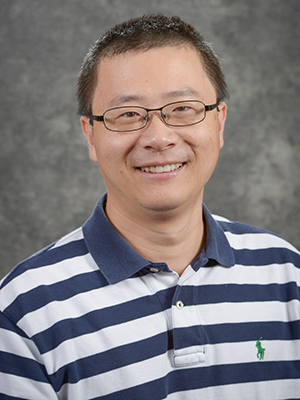
Guofei Gu is a Professor of Computer Science & Engineering and holder of the Eppright Professorship in Engineering at Texas A&M University's College of Engineering. He leads the SUCCESS Lab, focusing on cybersecurity research in areas such as software-defined security, AI security, and IoT/malware analysis. His work bridges networking, systems, and applied cryptography, addressing practical security challenges. Guofei received his Ph.D. from Georgia Tech (2008) and holds prestigious awards including IEEE Fellow (2020), NSF CAREER Award (2010), and AFOSR Young Investigator Award (2013). He has published extensively in top venues like S&P, CCS, and NDSS, with over 18,000 citations. Research Interests: Network/System Security, AI Security, SDN/NFV Security, Mobile/IoT Threats, Malware Analysis, and Zero Trust Frameworks. Selected Awards: Best Paper at ASIACCS 2022 Eppright Professorship in Engineering (2020) IEEE Fellow (2020) AFOSR Young Investigator Award (2013) Labs/Teams: Director of the SUCCESS Lab, collaborating on projects like S2OS (Security OS) and FRESCO. His work emphasizes programmable security solutions for emerging technologies.
Clément Pit-Claudel is an assistant professor at École Polytechnique Fédérale de Lausanne (EPFL), where he heads the SYSTEMF lab in the School of Computer and Communication Sciences. His research focuses on programming languages, compilers, and formal verification, with broader interests spanning systems engineering, hardware design languages, security, performance engineering, and type theory. Education: Undergraduate studies at École Polytechnique PhD at MIT with Adam Chlipala, specializing in proof-producing compilers Pit-Claudel's research program is organized around three main axes: extensible compilation (teaching compilers domain-specific optimization tricks), hardware design languages and verification (creating ways to describe and verify hardware), and tooling for proof assistants (to support verification efforts and lower entry barriers). His work bridges theoretical foundations with practical applications, as evidenced by algorithms from his Elk project being merged into V8 (and hence Chrome and Node.js). Scientific Awards: Distinguished artifact, Untangling Mechanized Proofs, ACM SIGPLAN International Conference on Software Language Engineering (2020) William A. Martin Memorial Thesis Award for Outstanding Thesis in CS, MIT (2016) Frederick C. Hennie III Teaching Award in Recognition of Outstanding Contributions to Departmental Teaching, MIT (2016) Pit-Claudel has extensive experience mentoring students through MIT's Undergraduate Research Opportunities Program and currently teaches Software Construction to approximately 400 undergraduate students and Interactive Theorem Proving at the graduate level. He's deeply committed to educational excellence, having developed innovative teaching methods including continuous assessment through oral examinations and designing assignments that lead students to build concrete artifacts they can be proud of. The SYSTEMF lab, created in January 2023, focuses on building "small, fast, and completely verified components for critical systems, at reasonable cost." The lab's philosophy of "full assurance, without compromise" combines machine-checked proofs of correctness, hardware-software co-design, low-level compiler engineering, and new tools for interactive theorem proving.
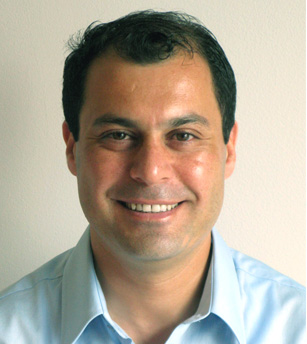
Anders Møller is a Professor at the Department of Computer Science , Aarhus University , Denmark. His career spans roles as an author , committee member , and session chair in conferences like SPLASH, OOPSLA, ECOOP, ISSTA, ICSE, and PLDI. Affiliation: Aarhus University Co-founder: Coana Research Focus : Specializing in static and dynamic program analysis for JavaScript, TypeScript, Java, and Node.js applications, his work addresses: Pointer analysis precision in Java Race condition detection in Node.js Library evolution and semantic patching Soundness improvements in static analyzers Type safety in modern languages Concolic execution for web testing Publication Trends : Recent work (2021–2024) emphasizes security-critical static analysis (taint specifications, Node.js security), soundness optimization (approximate interpretation), and program verification (channel-based communication). Earlier work (2013–2018) includes foundational contributions to JavaScript refactoring , Dart type safety , and AJAX race detection . Scientific Recognition : ISSTA 2019 Distinguished Paper Award Leadership Roles : Active in steering committees for SPLASH, ECOOP, and SIGPLAN, with chairs in OOPSLA, ECOOP, and PLDI program committees.
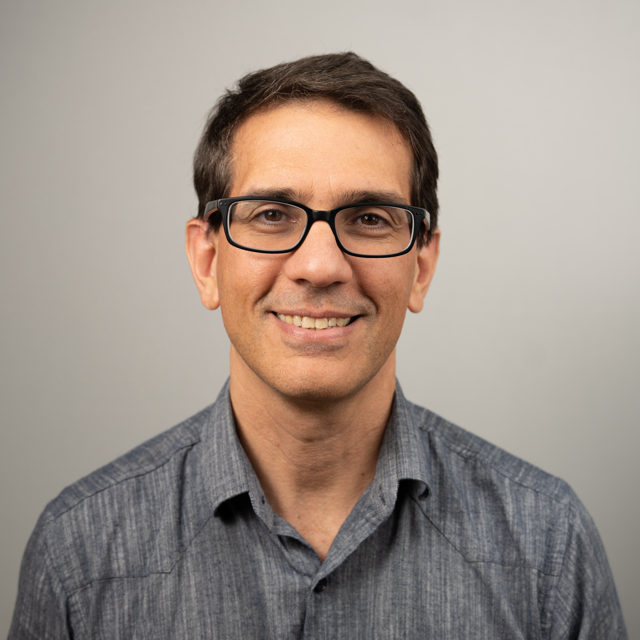
Daniel Hedin is a researcher at Chalmers University of Technology, specializing in information-flow security for JavaScript and web technologies. His work focuses on dynamic type systems, runtime monitoring, and hybrid security mechanisms to enforce confidentiality and integrity policies. Research Themes : JavaScript security, information flow control, browser fingerprinting, trigger-action platforms, hybrid security models, and language-based enforcement. Collaborations : Frequently co-authors with Andrei Sabelfeld, Luciano Bello, and Musard Balliu. Recent publications (2021–2015) emphasize practical challenges in JavaScript security, including browser API tracking, server-side sandboxing (Node.js), and fine-grained policy enforcement. Earlier work (2005–2006) explores theoretical foundations like termination-sensitive noninterference and timing-aware security for bytecode.
Michael Pradel is a full professor at the University of Stuttgart and a faculty member at the CISPA Helmholtz Center for Information Security. He leads the Software Lab at the University of Stuttgart and holds additional affiliations with the International Max Planck Research School (IMPRS) for Intelligent Systems and the Stuttgart ELLIS Unit. Previously, he served as an assistant professor at TU Darmstadt, a postdoctoral researcher at UC Berkeley, and a lecturer and postdoctoral researcher at ETH Zurich, where he completed his PhD. His educational background includes computer science studies at TU Dresden and engineering studies at Ecole Centrale Paris, with a master's thesis conducted at EPFL. He has taken sabbaticals at Facebook, UC Berkeley, and UCLA. Pradel's research spans software engineering, programming languages, security, and machine learning, with a focus on tools and techniques for building reliable, efficient, and secure software. He is particularly interested in neural-symbolic software analysis, analyzing web applications, dynamic analysis, and test generation. His recent work increasingly incorporates large language models for software engineering tasks including bug detection, test generation, and program repair. His research group has produced significant work in WebAssembly analysis, Python dynamic analysis, quantum program analysis, and automated program repair, with notable tools including Wasm-R3, DynaPyt, LintQ, and RepairAgent. Ernst-Denert Software Engineering Award Emmy Noether grant by the German Research Foundation (DFG) (1.3 million Euro) ERC Starting Grant (1.5 million Euro) Best/Distinguished Paper Awards at FSE (3x), ISSTA, ASE, ASPLOS, and MSR ACM Distinguished Member Multiple ACM SIGSOFT Distinguished Paper and Artifact Awards Pradel has advised numerous PhD students including Matteo (thesis on "Testing and Analysis of Quantum Software"), Luca (thesis on "Supporting Software Evolution via Search and Prediction"), and Daniel (thesis on program analysis for WebAssembly). His research has been supported by significant grants including the Emmy Noether grant and ERC Starting Grant. He serves in leadership roles for major conferences including PC co-chair for FSE 2027 and area chair for ICSE 2026. Pradel leads the Software Lab at the University of Stuttgart, which includes visiting professors Cristian Cadar and Prem Devanbu (both supported by Humboldt Research Awards). The lab maintains active collaborations with institutions including CMU, Google, KAIST, and USI Lugano, and regularly contributes to major software engineering conferences.
Dr. Selcuk Uluagac is an Associate Professor in the Department of Electrical and Computer Engineering at Florida International University. His research focuses on cybersecurity challenges in emerging technologies including Internet of Things, blockchain systems, and next-generation networks. His work addresses critical security vulnerabilities in modern computing environments, with particular emphasis on IoT device security, ransomware defense, and privacy-preserving technologies. Dr. Uluagac has developed novel frameworks for securing smart home systems, detecting cryptojacking activities, and analyzing security issues in enterprise IoT deployments. Current research explores security implications of Web 3.0 technologies, decentralized identity systems, and privacy aspects of extended reality devices. His contributions include innovative defense mechanisms for ransomware attacks over web browsers, security protocols for 5G networks, and forensic techniques for IoT systems.
Juho Vepsäläinen is a Lecturer in the Department of Computer Science at Aalto University, specializing in web development, JavaScript, and hybrid rendering models. His research bridges traditional content management systems (CMS) with modern static site generation (SSG) techniques while exploring serverless edge computing and developer experience. Education: Master of Science in Information Technology, University of Jyväskylä (2005-2011) Doctoral Thesis on hybrid rendering models in web application development (2025) Research Focus: Vepsäläinen’s work centers on optimizing web application performance through edge computing, serverless architectures, and disappearing frameworks. He investigates how to retain the benefits of CMS and SSG while reducing complexity and enhancing resumability in development workflows. Publication Trends: Recent articles emphasize serverless edge-powered solutions, hybrid rendering models, and the evolution of disappearing frameworks. Keywords span Web Development , Edge Computing , and Performance Optimization , with subfields including distributed networks, content delivery systems, and framework-less architectures. Collaborations: Collaborated with Antti Hellas and Petri Vuorimaa on edge computing and web performance, contributing to conferences like WEBIST and journals such as IEEE Access .
Marcelo D'Amorim is an Associate Professor in the Department of Computer Science at North Carolina State University's College of Engineering. His research focuses on improving software reliability through advanced program analysis and systematic testing methodologies. With a Ph.D. from the University of Illinois Urbana-Champaign (2007), he has established himself as a leading researcher in software engineering and programming languages. Dr. D'Amorim's educational background includes a Master's and Bachelor's degree from Universidade Federal de Pernambuco (2001 and 1996 respectively), providing him with a strong foundation in computer science before his doctoral studies in the United States. His research interests center on Software Engineering and Programming Languages , with specific focus on improving software reliability through program analysis and systematic testing. He investigates practical methods to prevent, detect, and fix bugs in code, developing tools to automate software testing and debugging activities. His recent work has increasingly incorporated machine learning approaches, particularly large language models, to address longstanding challenges in software quality assurance. His research spans areas including software testing, bug detection, program analysis, and security analysis, with applications in various domains including deep learning libraries and cryptographic APIs. Analysis of his recent publications reveals a clear trend toward leveraging artificial intelligence to solve traditional software engineering problems. His work increasingly focuses on LLM applications for test oracle generation, vulnerability repair, and code quality improvement, while maintaining strong foundations in traditional program analysis techniques. The research spans both theoretical foundations and practical tool development, with many of his publications including publicly available implementations. Dr. D'Amorim has secured significant research funding, including an NSF grant for 'eSLIC: Enhanced Security Static Analysis for Detecting Insecure Configuration Scripts' (2020-2025, $199,978). This project aims to develop automated techniques to identify security weaknesses in configuration scripts to prevent large-scale security attacks and data breaches. His academic service includes roles on program committees for major conferences including ASE'25 and ICSE'26. He teaches courses such as 'Software Testing and Reliability' at NC State University, connecting his research directly to classroom instruction. His research group appears to focus on practical software engineering tools with real-world applications, particularly in the areas of software testing, debugging, and security analysis.
Ravindra (Ramsey) Muvva serves as an Assistant Professor in the Department of Informatics at Fort Hays State University. Since 2019, he has taught a comprehensive suite of web and mobile development courses, including Front-End, Back-End, and Mobile Web Development sequences for both undergraduate and graduate students. Education: Master of Science (M.S.) in Information Technology Management, Campbellsville University Master of Computer Science and Engineering, Silicon Valley University Bachelor of Computer Science and Engineering, Jawaharlal Nehru Technological University Research and Teaching Interests: Dr. Muvva's academic focus lies in Web & Mobile Application Development, with expertise in JavaScript, Node.js, and React frameworks. His teaching and practical approach ensure students gain industry-relevant skills in full-stack development and mobile platforms. Professional Activities: He holds a CCNA certification (2019) and brings prior industry experience from roles as a Web Developer at Ennovar and SAP Administrator in India. Student Engagement: As the leader of the Web Development Club, Dr. Muvva mentors students in applying classroom concepts to real-world projects, fostering a hands-on learning environment.
Simone Teglia is a Research Fellow at ALCOR Lab, Sapienza University of Rome, working in the Department of Computer, Control and Management Engineering. He recently graduated with honors in a M.Sc. in Engineering in Computer Science from the same institution. His primary research interests include: Natural Language Processing Computer Vision Deep Learning Multimodal Deepfake Detection Trajectory Prediction for Autonomous Vehicles Simone has developed several notable projects including the Europarl Language Detection model using XLM-Roberta, which achieves 99% accuracy in identifying 21 European languages, and a Bi-LSTM Event Detector for NLP tasks. His work demonstrates expertise in both theoretical research and practical implementation of machine learning solutions. His scientific contributions include publications at major conferences such as ACL 2025 and CVPR 2025 workshops. His research shows a strong trend toward multimodal AI systems that can address complex real-world problems in language understanding and transportation systems. Notable achievements: Graduated with honors in M.Sc. in Engineering in Computer Science Development of high-accuracy language detection models Creation of synthetic datasets for urban traffic analysis Simone is also an active developer with skills in React, Node.js, D3.js, and Three.js, having built the official website for TedxSapienzaU and created visualizations for Sapienza's student career data. His work bridges the gap between academic research and practical software development.
Shahbaz Siddeeq is a Doctoral Researcher at the GPT Lab, Tampere University, specializing in Large Language Models (LLMs) and Multi-Agent environments for software refactoring . Affiliated with the Faculty of Information Technology and Communication Sciences, Computing Sciences department, his work bridges theoretical advancements in Generative AI with practical applications in software engineering. Education : Master’s degree in Computer Science and Technology from Donghua University, Shanghai His research focuses on automating legacy codebase transformations using LLMs and Multi-Agent systems, with a particular emphasis on functional languages. Parallel to academia, he has extensive industrial experience as a Software Developer, mastering technologies like Python, PHP, AngularJS, Node.js, MySQL , and open-source platforms such as WordPress and OpenCart . Shahbaz's interdisciplinary expertise includes Generative AI applications in environmental sustainability during his tenure in Italy, blending AI, software engineering, and sustainability. His career spans 2019–2020 roles at AI Tools and 2020–Present at Tampere University. Contact: shahbaz.siddeeq@tuni.fi , Personal Website
Daniele Bonetta is an Assistant Professor in the Department of Computer Science at Vrije Universiteit Amsterdam and holds an ancillary role as a Medewerker (Employee) at Eindhoven University of Technology since June 2020. His primary affiliation is with the Faculty of Science, where he contributes to the Network Institute as well. His research focuses on optimizing virtual machines, parallel programming models, and dynamic compilation techniques, with a particular emphasis on multicore systems and distributed computing environments. Bonetta has also been involved in teaching advanced courses such as Advanced Network Programming and contributes to the Accelerator-Centric Computing Ecosystems program. His research interests are centered around improving the performance of managed runtimes, including virtual machine optimization, dynamic taint analysis, and efficient data processing in polyglot environments. He has explored topics such as speculative optimizations for JSON data access, columnar array storage transformations, and scalable solutions for virtual memory oversubscription. His work frequently addresses challenges in distributed systems, cloud computing, and cross-language program analysis. Bonetta’s recent publications (2023-2025) highlight advancements in transparent scale-out mechanisms for virtual memory, automated supernode generation in interpreters, and dynamic query engines embedded in polyglot runtimes. His contributions to the field include both theoretical frameworks and practical implementations, often leveraging the GraalVM and Truffle frameworks for polyglot execution. While no formal awards are listed, his extensive publication record (47+ outputs) demonstrates significant scholarly impact. His teaching portfolio includes courses on network programming and systems architecture, reflecting his dual focus on both theoretical research and applied computer science education.
Darion Cassel is an Applied Scientist at Amazon Web Services Automated Reasoning Group , focusing on improving the reliability of Large Language Models (LLMs) through formal methods. He completed his PhD at Carnegie Mellon University's CyLab under the advisement of Limin Jia , where his research centered on practical analysis of security properties for software systems using program analysis and type system design. His research interests span Security Analysis , Program Analysis , Type System Design , Formal Methods , Web Privacy , and Secure Computation . He has contributed to various high-impact publications in conferences like NDSS , EuroS&P , PETS , and CCS , with a notable PETS Best Artifact Award (2022) . His work includes tools like NodeMedic-FINE for vulnerability detection and MIRAI , an abstract interpreter for Rust. He has served on program committees for CCS and MADWeb , and as an Artifact Evaluation Committee member for PETS and ISSTA . His professional experience includes internships at AWS , Facebook Research , and NASA Goddard , among others.
Cristian-Alexandru Staicu is a tenure-track faculty member at CISPA Helmholtz Center for Information Security in Saarbrücken, Germany. He earned his PhD from the Software Lab group at TU Darmstadt under Michael Pradel's supervision, a Master's from EIT Digital (University of Trento and Twente), and a Bachelor's in Computer Engineering from Politehnica University Timișoara. Research Focus : Systems security at the intersection of software/web security, software engineering, and programming languages Contributions : Empirical studies on JavaScript ecosystems, vulnerability detection in npm/Deno, open-source tool development, and security benchmarks His research group Empirical and Behavioral Security investigates real-world threats through case studies on JavaScript bundling, Deno runtime risks, and prototype pollution vulnerabilities. Recent work includes security analysis of source code models and empirical studies of cross-economic web disparities. Key publication trends include: Security risks in Node.js and Deno ecosystems Automated testing techniques for JavaScript sandboxes and constraints Empirical methodologies applied to web inclusivity and global digital disparities Analysis of type systems and gradual typing security implications Dr. Staicu actively supervises PhD candidates and contributes to open-source security , having uncovered multiple critical vulnerabilities in popular JavaScript packages. His group develops tools like SecBench.js while maintaining strong collaborations across USENIX , IEEE , and ACM venues.
Carlos Barahona is a Data Scientist and Systems Architect at the University of California, Davis, working within the Department of Environmental Science & Policy. He collaborates with Professor Mark Lubell and the Center for Environmental Policy & Behavior, focusing on computational social science applications and data-driven environmental policy research. Education: University of California, Davis (B.S. in Computer Science, 2007) With over 15 years of technical experience, Barahona specializes in web application development, network analysis, and large-scale data integration projects. His work combines programming expertise (PHP, Python, JavaScript) with environmental policy frameworks through platforms like Drupal and MongoDB. Key projects include the US COVID-19 Dashboard visualization system, departmental websites for environmental policy programs, and the Extension 3.0: Knowledge Networks for Sustainable Agriculture initiative that analyzes agricultural knowledge sharing networks using computational methods. His technical skills span full-stack development (HTML5, Angular.js, Node.js), database management (MySQL, MongoDB), and survey platforms (Qualtrics, SurveyGizmo). He also works with environmental impact data visualization systems using ESRI Living Atlas and CDC SVI layers.