Raman Lakshmanan serves as a Specialist Professor in the Department of Computer Science and Software Engineering at Monmouth University, teaching diverse courses from introductory programming to advanced software engineering topics including full-stack development, cloud systems, and mobile applications. His academic credentials include: Ph.D., Oakland University His research concentrates on applied computing domains: Web technologies and applications Cloud computing architectures SQL and noSQL Databases Machine Learning Enterprise iOS apps No scientific awards are documented in the provided materials. Information regarding student advising, research grants, or laboratory affiliations is not specified in the source text.
Norma Latif Fitriyani is an Assistant Professor at the Department of Artificial Intelligence and Data Science at Sejong University, South Korea . She holds a Ph.D. in Engineering from Dongguk University (2021), an M.S. in Industrial Management from National Taiwan University of Science and Technology (2016), and a B.Eng. in Computer Science from UIN Sunan Kalijaga (2014). Research Interests: Her work focuses on Health Informatics , Machine Learning , and Artificial Intelligence , with applications in disease prediction, energy systems, and agricultural technology. She leads the Data Driven Decisions Lab , which emphasizes data mining, statistical learning, and AI for business efficiency. Recent Publications: In the past year, she has contributed to advancements in lithium-ion battery health estimation, wheat disease detection, and fake news classification. Her research spans interdisciplinary domains including healthcare, environmental sustainability, and financial security.
Anton Dignös is a professor at the Free University of Bozen-Bolzano , specializing in temporal databases , time series analysis , and database systems . His research focuses on efficient query processing for interval data, temporal joins, and schema design, with significant contributions to in-memory and time series databases. Key research areas include: Temporal Data Management : Advanced techniques for interval and duration queries. Time Series Analytics : Machine learning integration and pattern detection. Schema Optimization : Automated design and tuning of database schemas. Visual Analytics : Tools for period data comparison and correlation analysis. His work spans collaborations with researchers like Johann Gamper and Michael H. Böhlen , addressing challenges in healthcare systems, industrial applications, and financial data analytics. Notable contributions include algorithms for temporal anti-joins , range-duration queries , and machine learning-based anomaly detection .
Dr. Paraskevas Koukaras is an Academic Scholar at the International Hellenic University (IHU) and a Postdoctoral Research Associate at the Information Technologies Institute (ITI) of the Centre for Research and Technology - Hellas (CERTH), affiliated with the School of Science and Technology at IHU. His educational background includes: IT Engineer from the Department of Informatics, Alexander Technological Educational Institute of Thessaloniki (ATEI) PhD in Interdisciplinary data science methods using machine learning for enhanced knowledge acquisition from the School of Science and Technology, International Hellenic University (IHU) Dr. Koukaras' research spans social media analytics, energy systems, and machine learning. His work focuses on energy load forecasting and optimization, data analytics, information modeling, and graph mining in heterogeneous networks. He applies these techniques to address challenges in public health, financial markets, and building energy efficiency through prescriptive analytics. His recent publications (2020-2023) demonstrate a strong focus on applying machine learning to real-world problems, particularly in social media analysis for public health during the COVID-19 pandemic, energy forecasting, and fake news detection. His work consistently employs multi-model approaches leveraging both traditional and deep learning techniques across healthcare, finance, and energy domains. Dr. Koukaras has participated in major European research projects including eDREAM (H2020), DRIMPAC (H2020), PRECEPT, SmartWins, easySRI, and SMACCs, focusing on demand response technologies and energy ecosystems. He contributes to academic training through teaching courses in data science and computing despite no formal advisees being listed. He operates within interdisciplinary research teams at ITI/CERTH and IHU's School of Science and Technology, collaborating on AI applications for energy efficiency, healthcare support, and social media analytics in residential and industrial contexts.
Professor Zbyszko Królikowski is a faculty member at Poznań University of Technology, where he works in the Faculty of Computer Science and Telecommunications, specifically in the Institute of Computer Science. He holds the academic title of Professor (indicated by "prof. dr hab. inż.") and has been actively contributing to the field of computer science, particularly in database systems and data warehousing. His scientific work spans multiple disciplines, with 75% focus on Computer and Information Sciences and 25% on Information and Communication Technology. Professor Królikowski has established himself as an expert in data warehousing, having authored a comprehensive monograph titled "Data warehouses: logical and physical data structures" published in 2007. His research interests primarily revolve around database systems, with specific focus on: Data warehousing and OLAP analysis Logical and physical data structures for databases Sequential data analysis Materialized views and query optimization Database performance evaluation Evolution of data warehouse systems Professor Królikowski has maintained an active research profile with publications spanning nearly two decades, from the early 2000s to 2021. His work shows a consistent focus on database technologies, evolving from traditional relational database systems to more contemporary approaches including in-memory architectures and graph databases. Analysis of his publication trends reveals a progression from theoretical database modeling to practical applications in production planning and modern database technologies. He has contributed to the academic community not only through his publications but also by supervising doctoral research. Notably, he supervised Mikołaj Morzy's dissertation on "Advanced database structures supporting effective association discovery" in 2004 and has served as a reviewer for numerous other doctoral dissertations in related fields. Professor Królikowski has collaborated extensively with other researchers in the database community, particularly with scholars from Poznań University of Technology including Tadeusz Morzy, Bartosz Bębel, and Robert Wrembel. These collaborations have resulted in numerous joint publications that have contributed significantly to the field of data warehousing and database systems.
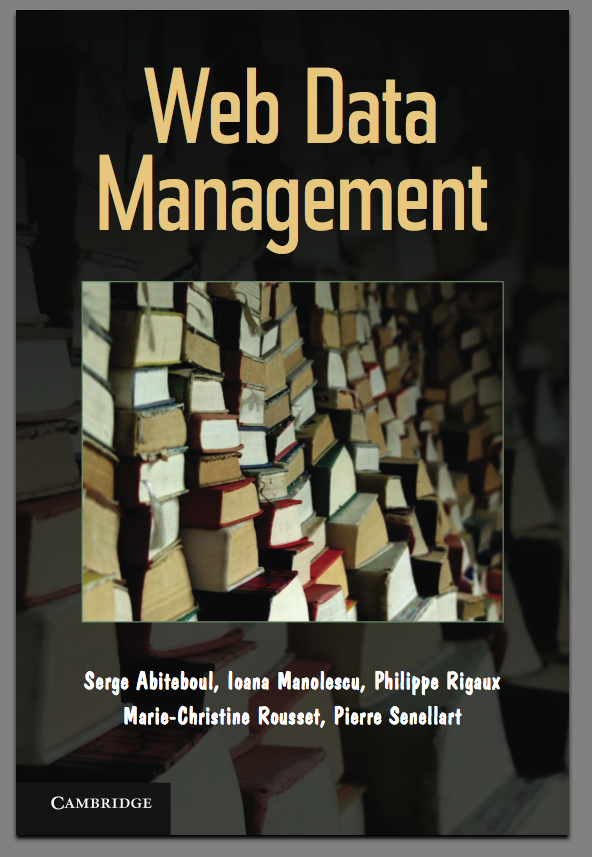
Marie-Christine ROUSSET is a Professor of Computer Science at the University of Grenoble Alpes (UGA) in France, where she is a member of the LIG (Laboratoire d'Informatique de Grenoble) in the SLIDE group. Previously affiliated with Paris-Saclay (LRI), she has established herself as a leading researcher in Knowledge Representation and Information Integration. She holds the distinguished position of Senior member of the Institut Universitaire de France (IUF) (2011-2016, renewed for 2016-2021) and serves as co-responsible for the chair Explainable and Responsible AI within MIAI Grenoble Alpes. Her research focuses on ontology-based data access, logic-based mediation between distributed data sources, query rewriting using views, data linkage, and distributed reasoning for the Semantic Web. She skillfully combines artificial intelligence and database techniques to address complex information integration challenges, with applications spanning biomedical informatics, educational technology, and trustworthy AI. Her work demonstrates consistent innovation from foundational research to practical implementations, as evidenced by her co-authorship of the book 'Web Data Management' published by Cambridge University Press. Professor ROUSSET's recent publications (2019-2022) reveal a growing emphasis on data privacy, RDF graph anonymization, and interactive ontology engineering, while maintaining her strong contributions to semantic web technologies and knowledge representation. Her research shows increasing attention to trustworthy AI concerns, aligning with her leadership roles in relevant projects. Scientific Recognition Senior member of Institut Universitaire de France (IUF) (2011-2016, renewed for 2016-2021) Junior member of Institut Universitaire de France (IUF) from 1997 to 2002 Chevalier de l'Ordre National du Merite (July 11, 2011) EurAI Fellow (nominated ECCAI Fellow in 2005) Best Paper Award at AAAI'96 for 'Verification of Knowledge Bases based on Containment Checking' Professor ROUSSET maintains an active role in the scientific community through editorial work and organizational leadership. She serves on the Editorial Board of Communications of the ACM (CACM) and has held significant roles including PC chair of EGC 2019, Workshops co-Chair of WWW 2018, and Area Chair of IJCAI 2017. Her consistent service on program committees of major international conferences demonstrates her standing in the field. Her laboratory, the SLIDE group within LIG, focuses on semantic web technologies, knowledge representation, and data integration. The group maintains strong connections with the international research community and participates in collaborative projects addressing cutting-edge challenges in artificial intelligence and data management, with particular emphasis on trustworthy and explainable AI systems.
Elisabetta Di Nitto serves as Full Professor at Politecnico di Milano within the Department of Electronics, Information and Bioengineering, teaching Software Engineering 2 and Informatica B (in Italian). Her academic leadership extends to editorial and conference organization roles across premier software engineering venues. Her research program centers on evolving software systems through: Cloud-native application engineering and elasticity management Self-adaptive architectures for dynamic environments Service-centric and autonomic computing paradigms NoSQL database integration and scalability challenges Global/open source development methodologies Dr. Di Nitto has significantly shaped the field through editorial stewardship of ACM Transactions on Software Engineering and Methodology, IEEE Transactions on Software Engineering, SOCA Journal, and Journal of Software: Evolution and Process. She chaired pivotal conferences including ESEC/FSE 2015 (General Chair), SEAMS 2020, ASE 2010, and ServiceWave 2010 (Program Co-Chairs). No scientific awards were documented in the provided materials. Her mentorship encompasses numerous Master's students whose theses address cloud migration frameworks, software forge awareness, QoS optimization in decentralized clouds, and scalable NoSQL relation handling.
Dr. Hayden Wimmer is an Associate Professor in the Department of Information Technology at Georgia Southern University, with affiliate status at the Institute for Health Logistics & Analytics. He holds a PhD in Information Systems from the University of Maryland Baltimore County, an MS from UMBC, an MBA from Penn State, and a BS from York College of Pennsylvania. His research focuses on: Artificial Intelligence : Generative models, ethical safeguards, and neural network applications Data Science : Mining techniques for fraud detection and big data analytics Digital Forensics : Mobile device analysis and IoT security frameworks Publication analysis shows consistent output since 2012 (176+ works), with recent emphasis on AI ethics (2025), counterfeit detection systems (2025), and healthcare data interoperability (2017-2018). He leads multiple funded projects including: NSA grants for cybersecurity education ($200k+) Microsoft Azure research grants for cloud-based AI NSF-funded workforce development initiatives ($300k total funding) Dr. Wimmer directs the DAC Lab and holds key editorial positions in major information systems journals.
Sriram Mohan is a Professor and Department Head of Computer Science and Software Engineering at Rose-Hulman Institute of Technology. He has served as a consultant in Hadoop and NoSQL systems for clients in Media, Insurance, and Telecommunication sectors, and has been fundamental in revamping the software engineering program and founding the Engineering Design program. Education: PhD in Computer Science, Indiana University, 2007 MS in Computer Science, Indiana University, 2003 BE in Computer Science, University of Madras, 2001 Dr. Mohan's research spans data science and computer science education, with specific interests in NoSQL databases, Hadoop, distributed database systems, and software engineering pedagogy. He has integrated reflection and problem-based learning into the software engineering curriculum, fostering innovative educational approaches through studio-based integration of Humanities, Science, Math, and Engineering. Awards: Outstanding Young Alumni Award, School of Informatics and Computing, Indiana University (2015) He actively mentors students through curriculum development initiatives and serves as a facilitator for MACH, a faculty development program focused on building change agent capabilities among educators and administrators.
Brice Chardin is an Associate Professor in Data Engineering at ISAE-ENSMA since 2013, affiliated with the LIAS (Laboratoire d'Ingénierie des Applications de la Connaissance et des Systèmes) Data and Model Engineering team. His work bridges academic research and industrial applications, focusing on data management solutions for critical systems. His research spans clustering algorithms under dissimilarity constraints , RDF query relaxation for explaining empty/overabundant results, pattern mining through the RQL language, and energy data management . Key projects include Chronos (a NoSQL system for industrial sensor data) and collaborations with energy companies SRD and Nexeya for predictive consumption analysis. Recent publications (2021-2024) emphasize constrained clustering techniques and cooperative query processing for RDF knowledge bases, revealing a strong trend toward practical solutions for industrial data challenges. His work integrates machine learning with database theory to address real-world data imperfections. PhD in Computer Science from INSA Lyon (2011) Postdoctoral position at LIRIS (2012-2013) on ANR DAG project Specialized in industrial data management since 2011 EDF collaboration Chardin actively supervises academic projects including drone simulation with Ardupilot and Smart Data mining initiatives. His industrial partnerships focus on energy sector applications, particularly predictive analysis for electricity distribution and storage systems. Current work involves developing clustering algorithms with error bounds and query relaxation frameworks for semantic web technologies.