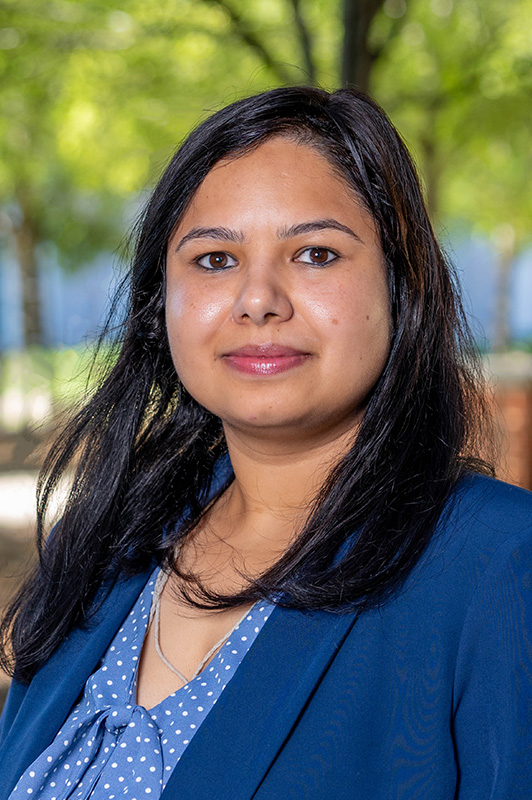
Neha Sharma is an Assistant Professor in the Department of Civil and Environmental Engineering at Auburn University. Her research focuses on nutrient recovery, electrochemical resource recovery, water reuse, trace metal cycling, and pollutant fate and removal.
Carol Smith is an Associate Professor in the Department of Soil & Physical Sciences at Lincoln University, New Zealand, where she serves as Head of Department since 2017. She has been an elected academic staff member of the Lincoln University Council from 2018-2022. Dr. Smith holds a PhD from the University of Aberdeen, an MSc from the University of Reading, and a BSc(Hons) from the University of Portsmouth, forming the foundation of her expertise in soil science and physical geography. Her research spans both fundamental and applied aspects of pedology. On the fundamental side, she investigates Quaternary pedology and paleoenvironmental reconstruction using loess stratigraphy, geomorphology, and micromorphology, which provides critical data for verifying future climate change predictive models. Applied research focuses on sustainable use of recycled organic matter and rehabilitation of degraded soils. She collaborates internationally on multidisciplinary projects involving paleoclimate reconstruction, paleoliquefaction, Antarctic soils, and viticulture. Dr. Smith is passionate about teaching and science communication, employing experiential learning methods to develop practical field skills in soil science through 'soil judging competitions' in New Zealand and Australia. Her research addresses UN Sustainable Development Goals including Life on Land (15), Climate Action (13), and Quality Education (4). Among her notable recognitions are the Norman H Taylor Memorial award 2020 from the New Zealand Society of Soil Science for outstanding contributions to soil science in New Zealand and Fellowship in the Royal Geographical Society, London. She serves as Associate Editor of Natural Sciences Education and was previously editor of Quaternary Australasia. Dr. Smith has supervised numerous graduate students through research-based supervision, with completed projects covering diverse topics from soil patterns in Southland to Antarctic soil ecology. She teaches advanced courses in field research, soil science, and physical landscapes, and has developed innovative approaches to teaching during the pandemic, including virtual field trips.
Angela D. Kent is a Professor in the Department of Natural Resources and Environmental Sciences at the University of Illinois Urbana-Champaign, where she also serves as Director of the Program in Ecology, Evolution, and Conservation Biology within the School of Integrative Biology. She is affiliated with the Carl R. Woese Institute for Genomic Biology. Her research focuses on microbial communities in agroecosystems and natural environments, particularly their roles in nitrogen cycling, soil health, and sustainable bioenergy production. Key research interests include microbial interactions in plant-microbe systems, the impact of genetic variation in crops on microbial processes, and the ecological and biogeochemical implications of soil microbiomes. She has authored over 99 publications and supervised datasets on topics such as denitrification dynamics, rhizosphere microbiome assembly, and microbial contributions to nitrogen retention. Dr. Kent has received the NACTA Educator Award (2012) and has contributed to high-impact studies on topics like microbial community responses to environmental stressors and the application of stable isotopes in bioenergy research. Her work bridges microbial ecology, agronomy, and environmental science, emphasizing practical solutions for sustainable agriculture and ecosystem management.
Roles & Affiliations: Daniel J. Jacob is the Vasco McCoy Family Professor of Atmospheric Chemistry and Environmental Engineering at Harvard University. He leads the Atmospheric Chemistry Modeling Group at the Harvard John A. Paulson School of Engineering and Applied Sciences, part of the Department of Earth and Planetary Sciences. He has held academic ranks including Gordon McKay Professor (1994-2004) and Associate/Assistant Professor (1991-1994), and was a postdoc at Harvard (1985-1987). Education: Ph.D. in Environmental Engineering Science from Caltech (1985), Ingenieur Chimiste from École Supérieure de Physique et Chimie Industrielles (1981), and earlier studies at Lycee du Parc (Lyon). Research Interests: Jacob's work focuses on atmospheric chemistry, climate modeling, and air quality. Key areas include methane emissions, tropospheric ozone, satellite remote sensing, and global biogeochemical cycles. His research integrates field campaigns (e.g., SEAC4RS, ARCTAS) and chemical transport models (GEOS-Chem) to address environmental challenges like pollution and climate change. Publications & Awards: Jacob has authored over 550 peer-reviewed publications, with an H-index of 145 (ISI) and 184 (Google Scholar). Notable awards include the Haagen-Smit Prize (2010), Macelwane Medal (1994), and recognition for teaching and climate science leadership. His work on methane emissions and air quality has been featured in Nature , Science , and AGU journals. Grants & Advising: Jacob advises numerous PhD students and postdocs, many of whom hold academic or research roles globally. He leads international initiatives like the Carbon Mapper project and chairs committees for NASA and the National Academies. His grants support studies on methane detection, aerosol chemistry, and climate policy. Labs & Collaborations: The Atmospheric Chemistry Modeling Group collaborates with NASA, NOAA, and institutions worldwide. Key projects include the GEOS-Chem model, TROPOMI satellite inversion analyses, and the Integrated Methane Inversion (IMI) tool for emissions monitoring.
Gary Rochelle is the Carol and Henry Groppe Professor in Chemical Engineering and a faculty member at the University of Texas at Austin . His research focuses on developing fundamental insights into kinetic and mass transfer phenomena in aqueous technologies for air pollution control and acid gas treating, particularly for carbon dioxide and mercury removal. Education: Ph.D. in Chemical Engineering from UC Berkeley (1977), M.S./B.S. from MIT (1971) His work addresses critical challenges in CO2 capture using amine scrubbing, including process design optimization, solvent degradation mitigation, and pilot plant validation. Recent studies emphasize energy efficiency, oxidation inhibition, and environmental impacts such as amine aerosol emissions. The Texas Carbon Management Program , which he contributes to, aims to improve amine scrubbing technologies for retrofitting power plants and enabling geological sequestration or enhanced oil recovery. His group has validated concentrated aqueous piperazine (PZ) with an advanced flash stripper as the most efficient open-literature system.
Yali Tang is an Assistant Professor in the Department of Mechanical Engineering at Eindhoven University of Technology (TU/e), specializing in fluid dynamics and transport phenomena within multiphase flows and physicochemical conversions . Her work targets Iron Power technology , green steel production , and alkaline water electrolysis for hydrogen generation, combining advanced computational models with experimental validation . Education: Master's in Chemical Engineering from Sichuan University (2011) PhD in Mechanical Engineering at TU/e (2015) with Prof. Hans Kuipers Research Interests: She focuses on interphase interactions , interfacial transport mechanisms , and high-resolution simulations (down to 40 nm mesh) to predict bubble coalescence and film dynamics. Her studies on hydrogen bubble growth , dendritic iron formation , and gas distribution in electrolyzers aim to refine reactor design and industrial processes. Collaborations with industrial partners ensure practical applicability of her computational models. Recent Publications: Her 2025 work includes dimensional analysis of liquid film formation, solutal Marangoni effects in electrolysis, and X-ray validation of gas distribution models. Earlier studies (2020–2023) cover defluidization behavior of iron fines, CFD-DEM modeling of raceways, and acoustic field applications in particle dynamics. Labs & Collaborations: She leads computational efforts within the Power & Flow group under Prof. Niels Deen, contributing to the EIRES Research cluster. Her work bridges academic research with industrial innovation in fluid dynamics and energy transition technologies.
Hugo de Boer is a Professor at the Copernicus Institute of Sustainable Development , Faculty of Geosciences, Utrecht University. He serves as scientific lead for the Delta Climate Center in Vlissingen and coordinates MSc programs in Water Science and Management and Water Management for Climate Adaptation . His research explores climate-ecosystem interactions, focusing on plant ecophysiology, ecosystem dynamics, and nature-inclusive climate adaptation in deltas. Research Themes: Future Deltas, Pathways to Sustainability, Integrative Bioinformatics Projects: LEMONTREE, CloudRoots, 'From losers to winners' (ancient plant lineages under elevated CO2) Teaching Expertise: System thinking for sustainability, quantitative statistics, plant ecophysiology Research Trends emphasize interdisciplinary approaches to climate change impacts on ecosystems, with publications spanning plant-cloud processes, CO2 acclimation, and eco-evolutionary optimality models. His work bridges biogeochemistry, land-atmosphere interactions, and sustainable development frameworks. Projects & Collaborations include experimental studies on ancient plant lineages (Equisetum) and integrative field campaigns in Amazon and temperate forests. He contributes to modeling climate-vegetation feedbacks, pesticide emission scenarios, and social-ecological system transitions.
Prof. Dr. Florian Scholz is a Professor of Geology and Biogeochemistry at the University of Hamburg , affiliated with the Institute of Geology within the Department of Earth System Sciences . He joined the university in 2024, following leadership of an Emmy-Noether research group at GEOMAR Helmholtz Centre for Ocean Research Kiel. His academic training includes a doctorate (summa cum laude) and habilitation from Kiel University, and a Marie Curie postdoctoral fellowship at Oregon State University. Ph.D., Geomar Helmholtz-Zentrum & University of Kiel (2010) Habilitation, University of Kiel (2019) Diploma in Geoecology, Karlsruhe Institute of Technology & University of Bordeaux (2007) His research lies at the intersection of marine geochemistry , biogeochemistry , and paleoceanography , with a focus on sediment-water interactions , early diagenesis , and the impact of environmental change on biogeochemical cycles . He investigates trace metal cycling (e.g., Fe, Mo, W, Ni), redox processes, and authigenic mineral formation in marine sediments, using field data, laboratory analyses, and geochemical modeling. His recent publications (2024–2025) reveal a strong trend in paleo-redox proxy development (Mo, W, Ni isotopes), trace metal flux quantification in oxygen minimum zones, carbon cycle impacts of sediment disturbance, and ocean-based carbon dioxide removal via seafloor alkalinity enhancement. His work frequently appears in high-impact journals such as Earth and Planetary Science Letters , Geochimica et Cosmochimica Acta , and Communications Earth & Environment . Emmy-Noether-Gruppenleiter, GEOMAR (2016–2023) Marie Curie Fellow, Oregon State University & GEOMAR (2012–2015) Postdoctoral Researcher, SFB 574 & 754 (2010–2012) Prof. Scholz teaches courses including Marine Biogeochemistry , Environmental Geochemistry , and Field Geology at both undergraduate and graduate levels. He leads an active research group focused on marine sediment geochemistry and collaborates widely across international oceanographic projects. His work contributes significantly to understanding past and present ocean chemistry and developing strategies for climate change mitigation.
Katy D. Heath is a Professor of Plant Biology and Affiliate Professor in Microbiology at the University of Illinois Urbana-Champaign (UIUC). She leads the Plant Biology department and is affiliated with the Carl R. Woese Institute for Genomic Biology. Her research focuses on the evolution of mutualisms, particularly plant-microbe interactions such as legume-rhizobium symbiosis, emphasizing genetic and ecological factors influencing symbiotic stability and adaptation. She investigates how environmental pressures (e.g., global change) shape mutualistic relationships and microbial community dynamics. Education: B.S. (2000) and Ph.D. (2007) from the University of Illinois and University of Minnesota, respectively, followed by postdoctoral work at the University of Toronto (2007–2009). Research Interests: Symbiosis evolution, microbial genetics, plasmid transmission dynamics, and the impacts of agricultural practices on rhizobia populations. She studies diverse systems, including Medicago-Sinorhizobium, soybean-Bradyrhizobium, and invasive legume-rhizobium interactions. Recent publications (2020–2025) highlight studies on endophyte impacts on soybean yield, rhizobia diversity under conventional farming, and genomic analyses of symbiotic coevolution. Her work integrates molecular biology, quantitative genetics, and ecology. Grants & Collaborations: Lead PI on a $12.5M NSF Biology Integration Institute (Genomics and Eco-evolution of Multi-scale Symbiosis). Her team includes collaborations with institutions like Indiana University and the University of Chicago. Labs & Teams: Heath Lab focuses on symbiosis research, with active projects on microbiome dynamics, plasmid-host coevolution, and community outreach (e.g., Boys and Girls Club collaborations). Recent lab highlights include student graduations (e.g., Ivan Sosa Marquez, Chase) and awards like the John R. Laughnan Award in Plant Biology.
Professor George Britovsek (FRSC) is a leading figure in catalysis and sustainable carbon management at Imperial College London . As Director of the MRes in Catalysis & Engineering and Head of Teaching in Inorganic Chemistry, he bridges academic leadership with cutting-edge research. His work focuses on transition metal complexes for converting ethylene , alkanes , biomass , and CO₂ into valuable chemicals and fuels through industrial collaborations. Education : M.Sc. (Technical University of Aachen, 1990), Ph.D. (Aachen, 1993) under Prof. W. Keim Postdoctoral Training : University of Tasmania (1994-1996), Imperial College London (1996-2000) His research interests span: Selective oxidation of alkanes using bio-inspired iron complexes Alkene conversions to functional polymers via novel catalysts CO₂ valorization into polymers and cyclic carbonates Biomass-derived feedstocks for chemical synthesis Recent catalysis trends highlight his work on: Designing Fe-N/C catalysts for epoxidation Developing PN3P pincer ligands for H₂ activation Creating degradable polyethylene via iron-catalyzed chain growth Modeling alternating α-olefin distributions in chromium systems Awards : Fellow of the Royal Society of Chemistry (FRSC) Students & Collaborators actively engage in: Photocatalytic polymer degradation Electrocatalytic CO₂ conversion Functionalized polymeric materials 3D-printed catalytic scaffolds His Britovsek Research Group operates at the Molecular Sciences Research Hub, White City Campus, advancing both homogeneous and heterogeneous catalysis through experimental and computational approaches.
Du Changwen is a Researcher (Professor) at the Nanjing Institute of Soil Science, Chinese Academy of Sciences, serving as Deputy Director of the National Engineering Laboratory for Soil Nutrient Management. He supervises doctoral and master's students in soil science and agricultural technology development. His academic journey includes: Bachelor's degree from Huazhong Agricultural University's College of Resources and Environmental Science (1997) Master's degree from Huazhong Agricultural University's Trace Element Laboratory (2000) PhD from Nanjing Institute of Soil Science, Chinese Academy of Sciences (joint program with Technion - Israel Institute of Technology) (2003) Dr. Du's pioneering research focuses on precision fertilization technologies, particularly polymer-coated controlled-release fertilizers developed through model membrane and water-based reaction film-forming techniques. His work integrates Fourier Transform Infrared spectroscopy (ATR and PAS modes) with engineering mathematics to monitor nutrient release dynamics, soil chemistry processes, and plant nutrition in real-time. This interdisciplinary approach bridges agricultural chemistry, materials science, and environmental engineering to optimize fertilizer efficiency while minimizing ecological impact. Analysis of his 2015-2017 publications reveals a consistent emphasis on spectroscopic methods for soil-plant system analysis, with dominant themes in controlled-release fertilizer development, soil organic matter characterization, and in-situ nutrient monitoring. His work demonstrates strong cross-disciplinary integration between agricultural technology, analytical chemistry, and environmental science. His scientific recognition includes: Special Award of the First China Agricultural Science and Technology Innovation and Entrepreneurship Competition First Prize of Jiangsu Science and Technology Award First Jiangsu Youth Entrepreneurship Award Second Prize of Chinese Academy of Sciences Science and Technology Contribution Award First Prize of China Agricultural Science and Technology Award Dr. Du has secured major research funding including National Natural Science Foundation projects (key, general, youth), National '973' Basic Research Program, '13th Five-Year' R&D Plan sub-projects, '863' High-tech Program sub-projects, and Jiangsu Provincial Science and Technology Support Plan initiatives. His leadership in the National Engineering Laboratory for Soil Nutrient Management drives innovation in fertilizer technology, with significant outputs including 198 academic papers (89 SCI, 35 EI), 6 monographs, 1 international patent, 8 national patents, and 2 software copyrights. His laboratory specializes in advanced spectral analysis of soil-plant systems, utilizing FTIR-ATR and FTIR-PAS technologies for real-time monitoring of nutrient dynamics and polymer membrane reactions. Current research focuses on next-generation controlled-release fertilizers, machine learning-enhanced spectral analysis, and precision nutrient management systems for sustainable agriculture.
Nicolas Federico Martin is an Associate Professor in the Department of Crop Sciences at the University of Illinois at Urbana-Champaign, with additional appointments as Associate Professor in the Center for Latin American and Caribbean Studies, Center for Digital Agriculture, and the National Center for Supercomputing Applications (NCSA). His interdisciplinary work bridges traditional agricultural science with cutting-edge computational approaches. Dr. Martin's research focuses on the intersection of agriculture and data science, with particular emphasis on: Precision agriculture and on-farm experimentation methodologies Machine learning applications for crop management and yield prediction Nitrogen and nutrient management optimization Soybean and corn breeding and production systems Remote sensing and UAV applications in agriculture Sustainable agricultural practices including cover crop management His publication record demonstrates a clear trajectory toward increasingly sophisticated integration of artificial intelligence with agricultural science. Recent work shows heavy emphasis on using machine learning algorithms (particularly reinforcement learning, convolutional neural networks, and generalized additive models) to solve practical farming challenges related to crop management decisions, yield prediction, and resource optimization. This research has significant implications for both scientific understanding of crop-environment interactions and practical farm management. Dr. Martin actively collaborates across disciplines and institutions, as evidenced by his extensive co-authorship network spanning agronomy, computer science, environmental science, and economics. His work has garnered attention from numerous news outlets and social media platforms, indicating its relevance to current agricultural challenges. He is a key contributor to the Data-Intensive Farm Management project, which aims to transform agronomic research through on-farm precision experimentation. His affiliation with NCSA provides access to high-performance computing resources essential for processing large agricultural datasets. Additionally, his work in Latin American agriculture (particularly in Mexico and Argentina) reflects his commitment to addressing global food security challenges.
Dr. Rodney Weber is a Professor in the School of Earth & Atmospheric Sciences at Georgia Institute of Technology, part of the College of Sciences. His research focuses on atmospheric aerosols, urban air quality, and particle formation mechanisms. He holds a Ph.D. (1995) and M.S. (1991) in Mechanical Engineering from the University of Minnesota, and a B.S. (1987) from the University of Waterloo. Key research interests include atmospheric aerosol sources and processing, new particle formation via homogeneous nucleation, and aerosol growth processes. He develops novel instrumentation, such as the Particle Into Liquid Sampler (PILS), and leads field studies like the ALPACA project in Fairbanks, Alaska. His work bridges laboratory experiments and real-world atmospheric measurements. Dr. Weber has received awards including the Cullen-Peck Faculty Fellow Award (2007), Whitby Award (2005), and NASA Global Change Fellowship. His recent publications (2024–2025) address biomass burning plumes, urban pollution dynamics, and aerosol chemistry in cold climates. He collaborates on global initiatives like the NASA Atmospheric Tomography (ATom) mission and FIREX-AQ campaigns. His lab (ES&T 2107/2115) focuses on aerosol optical properties, reactive oxygen species in particulate matter, and the health effects of pollution. Research highlights include quantifying sulfur chemistry in Fairbanks and assessing oxidative potential of PM2.5 in urban environments.
Philip Poole is a Professor of Plant Microbiology at the University of Oxford's Department of Plant Sciences and Senior Research Fellow at Somerville College. His research focuses on plant-microbe interactions, nitrogen fixation, and rhizosphere microbiology. He has led major international projects including the BBSRC-NSF Synthetic Symbioses program (2014-2019) and the India-UK Nitrogen Fixation Consortium (2016-2019). With 26 grants as PI from the UK's BBSRC, he has secured over £10.5 million in funding. His work includes pioneering bacterial Lux biosensors for metabolite analysis, transcriptomics under sterile conditions, and metatranscriptomics in soil to study microbiome-plant interactions. Current projects model nitrogen fixation biochemistry in legume nodules and investigate rhizobia lifecycle transitions from rhizosphere colonization to symbiotic bacteroid differentiation. He co-directs the Oxford Centre for Plants for the 21st Century and serves on editorial/advisory boards for Microbiology UK, The Journal of Bacteriology, and Pivot Bio. His contributions include elucidating the ammonia-alanine pathway for nitrogen secretion and demonstrating symbiotic auxotrophy dependencies in bacteroids. Key achievements include developing global mutagenesis strategies (INSeq) and advancing understanding of microbial community structures in the rhizosphere. His research integrates molecular, genetic, and systems biology approaches to address global challenges in sustainable agriculture.
Dr. Laura L. Van Eerd is a Professor of Sustainable Soil Management at the University of Guelph Ridgetown Campus, affiliated with the School of Environmental Sciences. Her research focuses on biogeochemical cycling of nitrogen and carbon in agroecosystems, emphasizing cover crops, soil health, and sustainable agriculture. She holds a BSc (Env), MSc, and PhD from the University of Guelph. Her research addresses: (1) cover crop roles in soil health and productivity, (2) nitrogen use efficiency, and (3) mitigating environmental impacts of agricultural practices. Current projects include cover crop nitrogen losses, remote sensing for crop nitrogen deficiency, and pest control product environmental impacts. She has published over 50 peer-reviewed articles, including the 2018 Best Paper in the Canadian Journal of Plant Science. Education: BSc (Environmental Science), University of Guelph MSc, University of Guelph PhD, University of Guelph Her awards include recognition as one of Canada’s Influential Women in Agriculture (2020), the Dr. Ron Pitblado Teaching Excellence Award (2016), and the OAC Distinguished Extension Award (2011). Her work bridges research, teaching, and extension to support Ontario’s agricultural sector. Advising and grants: Laura leads research teams at Ridgetown Campus, focusing on vegetable production systems and sustainable soil management. Her grants include funding for cover crop nitrogen dynamics and soil health indicator studies. Labs/teams: Active in Ridgetown Campus’s agricultural research initiatives, collaborating with growers and government to develop practical solutions for soil health and environmental sustainability.