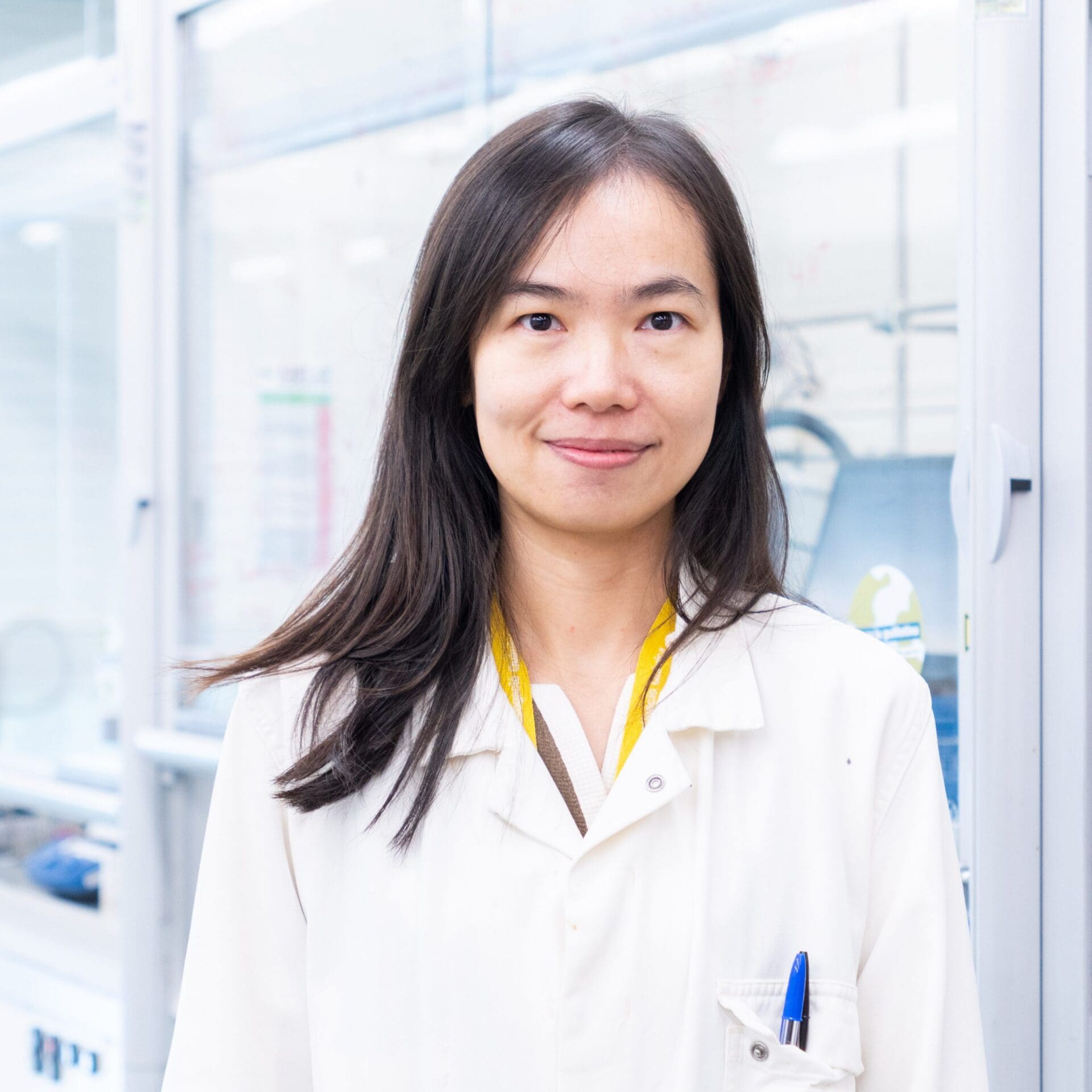
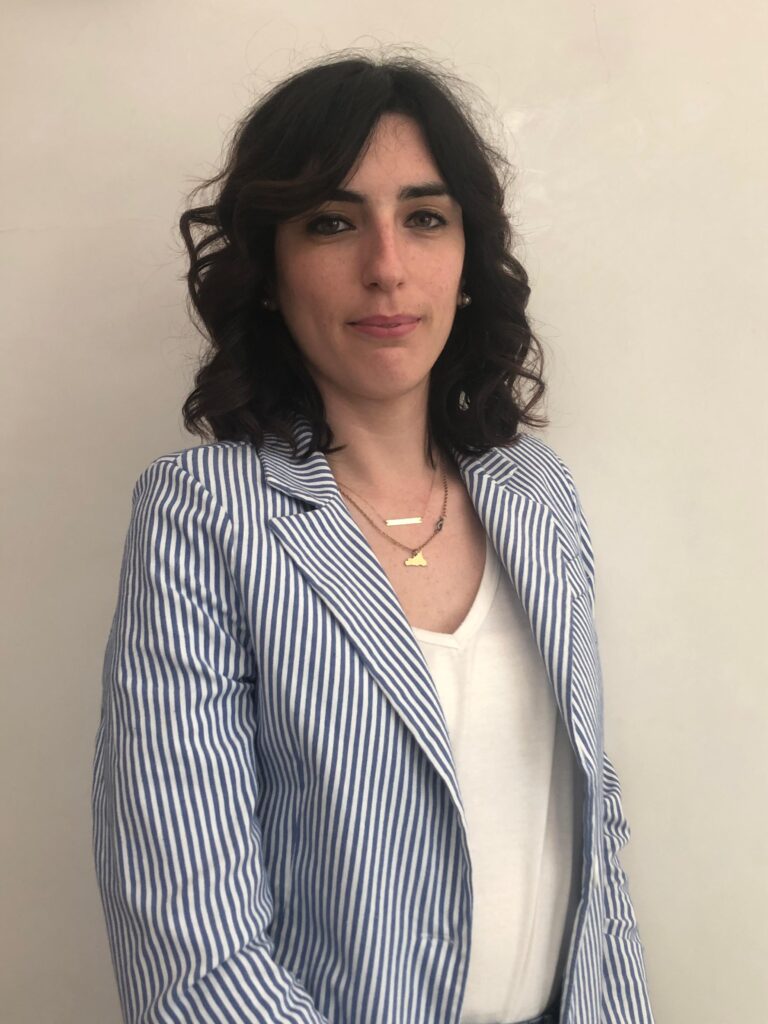
Dr. Xiaojiao Yuan is a Postdoctoral Researcher at the Institut Català d'Investigació Química (ICIQ) under the research group of Prof. J.R. Galán-Mascarós. Her work focuses on photocatalytic conversion of CO₂ into valuable chemicals and fuels, funded by the grant FJC2021-047222-I from MCIN/AEI/UE 'NextGenerationEU'. She completed her doctoral studies at the Université de Bourdeaux. Her research aligns with ICIQ's strategic areas in sustainable catalysis and renewable energy. The Galán-Mascarós group, where Yuan collaborates, includes researchers like Dr. Vanesa Lillo (Group Scientific Coordinator) and Dr. Santiago Capelo Aviles, alongside PhD students and visiting scholars addressing advanced catalytic systems. Yuan’s expertise contributes to developing innovative photocatalytic pathways for carbon-neutral energy solutions. Contact: xyuan@iciq.es .
Prof. Massironi Sara is an Associate Professor in Gastroenterology at Vita-Salute San Raffaele University, specializing in autoimmune diseases, neuroendocrine tumors, and endoscopic interventions. Her research focuses on chronic pancreatitis, gastric polyps, and neuroendocrine complications. She has authored over 150 publications, including studies on AI-driven Barrett’s esophagus detection and venous thromboembolism in neuroendocrine neoplasms. Prof. Massironi has held editorial roles at Digestive and Liver Disease and World Journal of Gastroenterology , and leads the Italian Chronic Pancreatitis Registry (ITARECIPE). She received the SIGE Research Award (2002) and a PNRR–NextGenerationEU grant (2024). Her teaching includes courses on gastroenterology at the Milan-Bicocca and Milan Universities, focusing on clinical practice and endoscopy techniques. Prof. Massironi has contributed to national and international research networks such as ITANET and the Italian Society of Gastroenterology (SIGE), advancing clinical and translational gastroenterology.
Ramón Villaplana is a Political Scientist and Assistant Professor at the University of Valencia, Spain. He completed his PhD in Political Science and Public Administration at the University of Murcia, focusing on leadership selection processes in Spanish political parties (1974–2018), supervised by Dr. Antonio Garrido Rubia. Bachelor's degree in Political Science and Public Administration (University of Murcia) Master's degree in Politics and Democracy (UNED, Madrid) Ramón's research examines how political parties adapt to the digital age, with expertise in political leadership, digital politics, electoral systems, and public security policies. He is affiliated with: ESPOL-Lab research center Digital Parties and Politics Research Network (DPPRN) Editorial board of Más Poder Local CEMOP (Public Opinion Studies Center) His work was funded by a Margarita Salas grant through the European Commission's NextGenerationEU program, Spanish government, and University of Murcia.
Josep Vicent Boira Maiques is a full professor of Urban Geography at the University of Valencia, affiliated with the Department of Geography in the Faculty of Geography and History. He is also a key researcher at the Inter-university Institute for Local Development (IIDL) and serves as academic director of the journal Nexe . His career spans academia, public policy, and intellectual engagement, with a strong focus on territorial development, urban planning, and Mediterranean integration. Doctorate: University of Valencia, 1991 Academic Rank: Full Professor Department: Geography School: Faculty of Geography and History Institution: University of Valencia His research centers on urban geography , spatial perception , citizen participation in urban planning , and the geopolitical dynamics of the Mediterranean . He has extensively studied the Mediterranean Corridor , cross-border cooperation, historical urban landscapes, and the intersection of literature and geography. His work emphasizes spatial justice, regional identity, and the transformation of Mediterranean cities. The most recent articles (2021–2025) reflect a consistent focus on transport infrastructure , European integration , and territorial equity , particularly in the context of the Mediterranean Corridor and its role in reshaping Spain’s radial geography. Themes include cross-border cooperation, shared sovereignty in infrastructure, and the metaphorical dimensions of urban space. His publications combine theoretical depth with policy relevance. He has been honored with prestigious awards: Joan Fuster Essay Award (2002) Ramon Trias Fargas Essay Prize (2009) Boira has held significant public roles, including Regional Secretary for Housing, Public Works and Territorial Vertebration in the Valencian Government (2015–2018), and currently serves as coordinator of the Spanish Government’s Commissioner for the Mediterranean Corridor. He has supervised numerous academic works and contributed to public discourse through conferences and media engagement. His involvement in research grants and institutional leadership, particularly in territorial development projects, underscores his impact beyond academia. He is a member of the Philosophy and Social Sciences Section of the Institute of Catalan Studies (since 2017). He is affiliated with the Inter-university Institute for Local Development (IIDL) , a research group focused on territorial innovation and sustainable development. His work often involves interdisciplinary collaboration, especially in urban studies, heritage, and policy design.
Prof. Dr. Martin Nettesheim is Full Professor of Public Law at the University of Tübingen, where he also served as Dean of the Faculty of Law (2003–2005). He currently directs the Research Centre for International Economic Law and is a member of the Board of the European Centre for Federalism Research at the same university. Education & Academic Career: Doctorate (Freie Universität Berlin, 1992) with a dissertation on anti-dumping law. Habilitation and successive professorial appointments leading to the Chair of Public Law, University of Tübingen. Research Focus: His work centres on European constitutional and administrative law, the interplay between EU law and national constitutional law, fundamental rights protection, and data-protection regulation. Recent projects investigate the constitutional implications of EU fiscal governance, climate constitutionalism, and the legitimacy of EU economic governance. Current Projects & Grants: Project on “Risk Sharing in the Euro Area” (forthcoming). DFG-funded Graduate School “Bioethics” (co-sponsor, 2006–2015). Graduate School “Global Challenges – Transnational and Transcultural Challenges” (DFG 2002–2010). Scientific Awards & Distinctions: While no single named prizes are listed, Prof. Nettesheim’s repeated appointments to high-level commissions and editorial boards (e.g., co-editor of the leading Grabitz/Hilf/Nettesheim EU-law commentary, member of the Scientific Advisory Board of the Alfred Toepfer Foundation) attest to his scholarly reputation. Research Team & Supervision: He leads a sizeable team of research assistants and doctoral candidates housed in Rooms 150.3 and 151.x of the New Auditorium, including Laura Dias de Almeida (secretariat), Lennart Brohm, Oliver Schmidt, Cecilia Rademacher, Maya Schleicher, Jacob Fabian, Lilli Sattlegger, Lorenz Moser, Carolina Wildemann, Lara Olgun, and Lars-Henrik Kahle.
Alberto Vallan is an Associate Professor in the Department of Electronics and Telecommunications at Politecnico di Torino, Italy. He is actively engaged in research, teaching, and academic leadership, particularly in the fields of measurement science, optical sensors, and biomedical instrumentation. Research Interests: His work focuses on Fiber Bragg Grating sensors , optical and plastic fiber sensors , measurement uncertainty , and biomedical device development . He also contributes to low-cost space systems and lyophilization process monitoring . His research integrates metrology, photonics, and real-world applications in healthcare and industry. The recent publications highlight a strong trend in fiber-optic sensing for medical diagnostics , smart wearable systems , and real-time monitoring technologies . These works span applications from cancer therapy and mental stress detection to cultural heritage preservation and space-based power delivery, reflecting a highly interdisciplinary approach. Scientific Honors: Elevation to IEEE Senior Member (2012) IEEE Fellow (2013) IEEE IMS Outstanding Reviewer (2014) Guest Editor, Sensors (2023–2024) Advising and Grants: He supervises PhD students such as Chiara Bellezza Prinsi, Matteo Raggi, and Aurora Bellone, whose projects include smart textiles and tumor therapy monitoring. He has led multiple funded research projects, including PRIN-funded work on intrinsic optical fiber sensors and commercial projects on energy harvesting and lyophilization monitoring. His work is co-financed by entities like the European Union (NextGenerationEU). Labs and Research Groups: He is affiliated with the Electrical and Electronics Measurements and Nanosatellites research groups at DET. He also collaborates with Advanced Magnetic Controls A.M.C. srl and industry partners like H-Cube srl.
Elisa Pignanelli is a researcher at the University of Milan, pursuing her PhD in Image, Language, Figure, Forms and Ways of Mediation – Social Inclusion. She collaborates with Prof.ssa D’Amico’s chair of constitutional law and women’s rights in the constitutional state and is on the editorial board of the Observatory on Violence against Women at the University of Milan. Her research interests include: Social Inclusion Gender Equality Workplace Inclusion Human Rights Constitutional Law Sustainability Elisa contributes to projects such as Academic Inclusion, Social Sustainability and UN 2030 Agenda, Gender Equality and Violence against Women, and Multilayered Urban Sustainability Action (MUSA) funded by the European Union – NextGenerationEU, PNRR.
Guido Sali is a Full Professor of Rural Economics and Estimation at the University of Milan. He serves as the Rector’s Delegate for Development Cooperation in Agribusiness and Environment and is a delegate in the University Coordination for Development Cooperation. He is also a member of the Scientific Committee of the Center for the Study of Estimation and Territorial Economics (CeSET). His research focuses on agricultural and environmental economics, agri-environmental and rural development policies, and sustainable practices in low-income countries. Recent studies include circular economy models in agriculture, sustainable water use analysis, and regional-scale food production-consumption dynamics. He oversees the "Strengthening Academic Inclusion" project at Human Hall and contributes to international research initiatives under frameworks like the MUSA (Multilayered Urban Sustainability Action) project, funded by the European Union’s NextGenerationEU program.
Professor Dan Mercea is a leading academic in political sociology and communication studies, currently based at the Department of Sociology and Criminology, City, University of London. He holds a PhD from the University of York and has held research and teaching positions across Europe, including in the Netherlands, Romania, France, and Italy. He is Editor-in-Chief of the journal Information, Communication & Society and leads major research projects such as INTERFACED (Horizon Europe) and TakePart (NextGenerationEU). PhD, University of York, United Kingdom MA, Babeș-Bolyai University, Romania MA, Central European University, Hungary BA, Babeș-Bolyai University, Romania BA (Hons), Nottingham Trent University, United Kingdom His research centers on digital activism, social movements, and civic participation, with a focus on how social media technologies shape collective action, political engagement, and democratic processes. He explores topics such as networked protest, movement parties, disinformation, and the emotional and behavioral dynamics of online mobilization. His theoretical interests span political behavior, social psychology, science and technology studies, and democratic theory. The 15 most recent articles reflect a strong trend toward mixed-methods research combining network analysis, digital ethnography, and experimental design. They examine the structural roles of individuals in protest networks, the influence of policy versus protest on political support, and the geographical and gendered dimensions of urban activism. The work is deeply interdisciplinary, bridging sociology, political science, media studies, and data science. Best Paper Award, Activism, Communication and Social Justice Interest Group, International Communication Association (2019) Dan Mercea actively supervises PhD students and has secured significant funding from the European Union, Volkswagen Stiftung, and the European Climate Foundation. He collaborates with institutions across Europe and regularly presents at international conferences and policy forums. He is a member of the European Communication Research and Education Association (ECREA), the International Communication Association, and the European Sociological Association. He is involved in multiple research teams and projects, including ProDem, READJUST Climate, and INTERFACED, which bring together scholars from political science, sociology, and data science to study the evolving relationship between digital communication and democratic participation.
Angelo Francini is an educational tutor and PhD student at the University of Bologna, affiliated with the Department of Life Quality Sciences, Department of Legal Sciences, and Department of Sociology and Economic Law. His work focuses on public law, administrative planning, and legal frameworks for third sector organizations. PhD in Sport, Health, and Well-being (Cycle 38), funded by the PNRR-NextGenerationEU program. Teaching Assistant for courses in Corporate Law, Third Sector Organizations, and Economic Law (2017–2023). His research examines regulatory compliance, sustainability, and governance models for public-private partnerships, particularly in sports facilities and third sector organizations. Articles highlight his expertise in EU law, digitalization, whistleblowing, and corruption prevention. He has contributed to journals like Rivista di Diritto dello Sport and Innovazione e Diritto , with publications spanning 2018–2022. His teachings also include modules on third sector management and international business regulation at the Forlì campus.
Dr. Cristina Blanco Sío-López is a Senior Distinguished Researcher in Contemporary History and Digital Humanities at the University of La Coruña (UDC), Spain, and a Principal Investigator of the FUNDEU and FREEMOVEU projects funded by NextGenerationEU and the Spanish National Research Agency (AEI), respectively. She is a 2024 María Moliner National Research Award laureate and a Fellow of the Royal Historical Society (2023) and the Young Academy of Europe (2022). Her work bridges European Integration History, Schengen Area governance, and Digital Humanities, emphasizing sustainable peace through Arts-informed 'Peace-scapes' and policy dialogue.
Sandra Pellizzoni is a Researcher (RTD-B) at the University of Trieste's Department of Life Sciences, where she has been employed since December 1, 2017. She is a key member of the Evolutionarily LAB directed by Professor Maria Chiara Passolunghi, focusing on developmental and educational psychology with particular emphasis on mathematical cognition. Dr. Pellizzoni serves as Scientific Manager for multiple research projects including 'Cognitive & emotional pathways to hidden STEM' and the 'INCLUSIV_ABILITIES' initiative supporting children with disabilities in Iraq. Her primary research interests center around three interconnected domains: (1) the relationship between mathematical learning and cognitive factors (working memory, executive functions, attention) alongside emotional aspects (math anxiety, self-esteem, general anxiety); (2) developmental processes in children with complex surgical pathways (sensory deprivations, prenatal malformations, urogenital malformations), conducted in collaboration with the IRCCS Burlo Garofolo of Trieste; and (3) learning processes in highly deprived contexts, particularly war zones, through international cooperation projects primarily in the Middle East. Her work demonstrates a strong commitment to understanding both typical and atypical development across the lifespan. Analysis of her recent publications reveals a consistent focus on math anxiety, executive functions, and mathematical cognition across diverse populations including preschoolers, middle school students, university students with learning disabilities, and children in war-torn regions like Yazidi genocide survivors. Her research employs both longitudinal and intervention approaches, often examining the interplay between cognitive and emotional factors in mathematical achievement. Recent work has increasingly incorporated cross-cultural perspectives, particularly regarding educational challenges in conflict zones. Dr. Pellizzoni leads significant research initiatives funded by the European Union (NextGenerationEU) and the Autonomous Region of Friuli Venezia Giulia. Her project 'Cognitive & emotional pathways to hidden STEM' investigates factors influencing higher educational choices in STEM fields, while 'INCLUSIV_ABILITIES' provides training and support for inclusion and autonomy paths for children with disabilities in Iraq. She also collaborates extensively with international partners on projects addressing learning in highly deprived contexts. Within the academic community, Dr. Pellizzoni serves as a member of multiple doctoral colleges and committees, including the Neuroscience and Cognitive Science Doctoral College (cycles XXXIV-XXXIX). She is actively involved in advising PhD students and contributing to the academic administration of her department, serving on various committees related to course of study recommendations and research commission.
Álvaro Velasco is a Postdoctoral Researcher at the Institut Català d’Investigació Química (ICIQ), working under Prof. Rubén Martín. His research focuses on developing sustainable methodologies for transforming greenhouse gases into valuable products through transition-metal catalysis. He holds a BSc from the University of Salamanca (2015), an MSc in Organic Chemistry from the University of Santiago de Compostela (2016), and a PhD in Organic Chemistry (2021, Cum Laude), also from Santiago de Compostela. His doctoral work involved bioactive seven-membered azaheterocycles under Professors Carlos Saá and Jesús A. Varela, with an international stay at Caltech (Prof. Brian M. Stoltz) studying stereospecific Overmann rearrangements. He currently investigates alkane functionalization in Prof. Martín’s group, supported by the FJC2021-046870-I grant (MCIN/AEI/UE NextGenerationEU). His team includes PhD and master’s students, postdoctoral researchers, and technicians, though specific advisees are not listed. His work aligns with sustainable chemistry, emphasizing practical applications of catalytic processes.
Elina Sagne-Ollikainen is a PhD student in Public International Law and a Researcher at Åbo Akademi University , affiliated with the Institute for Human Rights and the Faculty of Social Sciences, Business and Economics, and Law . Role: Project Coordinator and Researcher in legal-political intersections Key Collaborations: Co-investigator in LAWPOL (2023–2025) funded by the Research Council of Finland/EU NextGenerationEU Research Interests: Elina’s work examines Public International Law , Human Rights , and the impacts of EU sustainability legislation on Finnish firms. She explores themes like climate crisis , energy transition , and corporate accountability , particularly in Sámi territories ( Sápmi ). Recent Publications: Her 2025 commissioned report The Cumulative Effects of EU Sustainability Legislation (CEULA) analyzes regulatory impacts on businesses. Other works critique diluted corporate responsibility ( Så urvattnas företagsansvaret , 2025) and societal peace dynamics ( Även resursstarka gynnas av samhällsfred , 2025). Network & Activities: Active in national legal research conferences and panels on climate-energy transition in Sápmi, she collaborates with scholars like Elina Pirjatanniemi and institutions such as the Ministry for Foreign Affairs of Finland.
Dr. Carina Ginty serves as Head of Teaching and Learning at Atlantic Technological University (ATU) with responsibility for Education Innovation & Transformation. She leads ATU's involvement in the N-TUTORR program, a €40 million NextGenerationEU-funded initiative focused on transforming teaching, learning and assessment through student empowerment, staff capability building, and digital ecosystem development in Irish technological universities. With 20 years of experience in higher education, Ginty has established herself as a leader in teaching and learning innovation at ATU, initiating numerous national and international projects in educational enhancement. Her educational background includes a PhD from Atlantic Technological University, an M.Litt. in Education from University of Galway, a Postgraduate Diploma in Public Relations from PRII, and a BBS (Hons) from Atlantic Technological University. Ginty's research interests focus on digital transformation in education, student engagement, Recognized Prior Learning (RPL), and career pathway development. Ginty's recent publications demonstrate a strong focus on educational transformation, with particular emphasis on student empowerment, digital pedagogies, and innovative assessment practices. Her work reflects a systematic approach to reimagining higher education through technology-enabled solutions and student-centered design principles. The trend in her research shows increasing attention to AI in education, sustainable futures, and micro-credentialing as pathways to address industry skill needs. Principal Fellowship with Advance HE (PFHEA), February 2025 President's Award for Outstanding Institutional Citizenship, 2022 As ATU lead for N-TUTORR Transforming Learning and sector co-lead for student empowerment, Ginty oversees a significant EU-funded program that has generated multiple impact case studies and publications. She also co-leads the HigherEd 4.0 project developing MyCareerPath.ie, a career and learning pathway platform transforming access to higher education. Her work with DigitalEd.ie has built digital teaching capabilities across ATU campuses, demonstrating her commitment to faculty development and educational innovation. Ginty chairs ATU's Learning, Teaching and Assessment Committee of Academic Council and leads a team coordinating professional development for 9 EU university partners through the EU Green Alliance Education Commission. Her leadership extends to developing knowledge platforms and digital ecosystems that support both staff and students in the technological university sector.