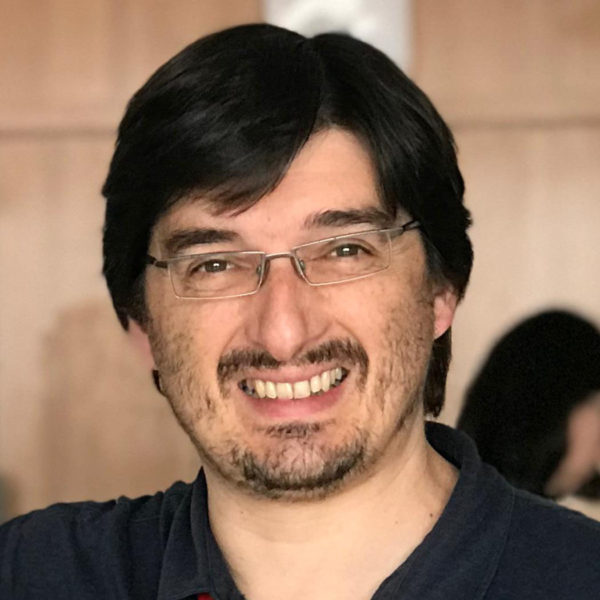
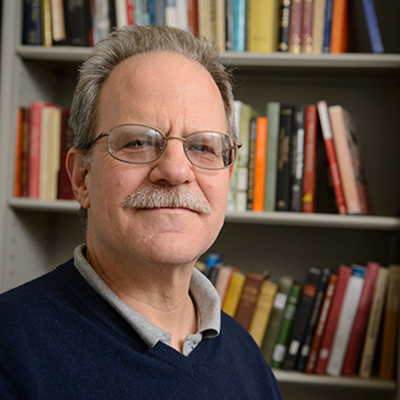
Professor Qing Cao is Professor, Director of Studies, and Director of the Centre for Comparative Modernities at Durham University's School of Modern Languages and Cultures. His research examines Chinese media, communication, and modern intellectual history through three interconnected strands: the role of media in China's modernization, the impact of media language on social perceptions, and mutual China-West representations shaping identity politics. His research interests encompass China's modern intellectual history, Chinese politics, mass media dynamics, Western reporting on China, Chinese linguistics, and translation studies. Current projects include a book on Chinese state media's construction of alternative modernity and editorial work for the Routledge Research Encyclopaedia on Chinese Studies. Previously funded by AHRC and British Academy, his work explores the discursive transformation of Chinese society. Professor Cao's publications demonstrate sustained focus on discursive constructions of modernity and identity across historical periods, with recent work examining late Qing intellectual transformations through linguistic analysis. His supervision includes PhD students researching Western media representations of China, diplomatic language, and gender discourses in Chinese newspapers.
Rita Finkbeiner is a Professor of German Linguistics at Johannes Gutenberg-Universität Mainz, where she has held a W3 professorship since April 2020 and served as managing director of the German Institute from 2022-2023. Previously, she was a W2 Professor at Heinrich-Heine-Universität Düsseldorf (2018-2020) and has been affiliated with Johannes Gutenberg-Universität Mainz since 2010. Her research focuses on the critical interface between grammatical structures and pragmatic functions in language use. Her academic background includes: Magistra Artium in German Linguistics and European Ethnology from Humboldt-Universität zu Berlin (2000) Ph.D. in German Linguistics from Stockholm University (2009) Habilitation at Johannes Gutenberg-Universität Mainz (2016) Professor Finkbeiner's research examines how linguistic constructions operate at the grammar-pragmatics interface, with particular attention to speech acts, implicit meaning, and expressivity in German. She investigates phenomena such as wh-headlines in newspapers, reduplicative constructions, expressive morphology, and the pragmatics of social media commenting. Her work bridges theoretical linguistics with practical applications in language teaching and media discourse, demonstrating how linguistic form and communicative function interact systematically. Analysis of her recent publications reveals a consistent focus on construction grammar and pragmatics, with increasing attention to digital communication patterns while maintaining strong theoretical foundations. Key trends include exploration of wh-headlines across discourse types, expressive morphology in German word formation, and the pragmatics of social media commenting, demonstrating both theoretical depth and practical relevance to contemporary communication contexts. Professor Finkbeiner actively supervises doctoral and master's students, with numerous successful completions including Julian Stawecki (2024) and Robert Külpmann (2019). She has led significant research projects including the DFG-funded "W-Überschriften im Deutschen" (2018-2022) on German wh-headlines, and is coordinating the development of a German linguistics textbook. She collaborates closely with researchers including Dr. Robert Külpmann, Dr. Paul Reszke, and Charlotte Eisenrauch. She leads a research team at Johannes Gutenberg-Universität Mainz that investigates construction grammar and pragmatics across various discourse contexts, with particular attention to digital communication and educational applications. Her work environment provides a strong interdisciplinary context connecting theoretical linguistics with language education and media studies.
Dr Glenda Cooper is Reader in Journalism Studies and Head of the Department of Journalism at City St George's, University of London , where she leads a team of 25 staff, 50 visiting lecturers, and over 500 students from 53 countries. She holds a PhD in Journalism from City and an MA in English Language and Literature from Oxford, and has played a pivotal role in elevating the BA Journalism programme to 1st place nationally in the Guardian and Complete University Guide (2023), as well as 1st for Graduate Prospects (Sunday Times 2022). Education: MA in Academic Practice, City, University of London (2022) PhD in Journalism, City, University of London MA in Creative Writing, City, University of London BA (Hons) English Language and Literature, St Hilda's College, University of Oxford PG Diploma in Newspaper Journalism, City University of London Glenda's research focuses on crisis and humanitarian reporting , journalism ethics , live journalism , and the intersection of media and politics, particularly through the legacy of Alistair Cooke’s Letter from America . She has led major funded projects with the British Academy, ESRC, Google Digital News Initiative, and HEIF. Her current research explores AI’s impact on journalism through the DMINR project and innovative storytelling formats via the News on Stage initiative and the Contemporary Narratives Lab . Her recent publications span topics such as AI in newsrooms, humanitarian scandals (#AidToo), refugee representation, and digital narrative innovation. These works reflect a strong interdisciplinary trend, combining journalism studies with media technology, ethics, performance, and political communication. The articles indicate a growing focus on digital transformation, ethical challenges in sourcing, and the evolving role of journalists in public discourse. Scientific Awards and Recognition: Laurence Stern Fellow at the Post (2001) Guardian Research Fellow at Nuffield College, Oxford (2006–2007) AURORA Role Model for Future Women Leaders in Academia (2018) Glenda has supervised PhD students on topics ranging from political communication in Istanbul to the manosphere's influence on journalism. She has been instrumental in curriculum development, notably designing a core ethics module for final-year journalism students. She also serves as Reviews Editor for Journalism: Theory, Practice and Criticism , UK Director of the European Journalism Observatory, and Board Member of The Conversation UK . She co-founded and co-presented the Knowhow podcast, bridging academia and media. She co-directs the Contemporary Narratives Lab and co-founded the News on Stage project, which merges journalism with theatre through live events such as News Cabaret and News on the Street . Her play Aid Memoir , based on her PhD research, was performed at the Pleasance Theatre and featured in the ESRC Festival of Social Science.
Ariel Katz is an Associate Professor at the Faculty of Law, University of Toronto, where he teaches intellectual property, constitutional law, cyberlaw, and the intersection of competition law and intellectual property. He holds an SJD from the University of Toronto and prior degrees from the Hebrew University of Jerusalem. His research focuses on the economic analysis of competition law and intellectual property, with additional interests in digital trade, pharmaceutical regulation, and constitutional issues. LL.B., Hebrew University (1997) LL.M., Hebrew University (2001) S.J.D., University of Toronto (2005) Professor Katz’s research interests lie at the intersection of law, economics, and innovation policy. He explores how intellectual property and competition laws shape markets, innovation, and access to knowledge. His work critically examines doctrines such as fair dealing, copyright exhaustion, and collective administration of rights, often from a comparative and transatlantic perspective. He investigates the economic rationales behind legal rules and their implications for digital platforms, libraries, and global research. His recent publications demonstrate a sustained engagement with copyright and antitrust policy, particularly in digital environments. Themes include text and data mining, fair use evolution, data governance, and the impact of trade agreements on domestic law. His scholarship frequently bridges legal theory and practical policy, influencing academic and public discourse. Notable recognition includes: The Canadian Association of Research Libraries (CARL) Award of Merit (2022) Professor Katz has advised on policy matters, including submissions on copyright term extension under CUSMA. He was Director of the Centre for Innovation Law and Policy (2009–2012) and has collaborated with scholars across North America. He maintains an active blog and has written op-eds in major Canadian newspapers. His work appears in leading journals such as the University of Chicago Law Review , Antitrust Law Journal , and BYU Law Review . He is affiliated with the University of Toronto’s Faculty of Law and contributes to SSRN and public intellectual forums. Professor Katz has been involved in digital scholarship initiatives and has written on the role of libraries in knowledge ecosystems. His work connects legal doctrine with broader societal challenges, including access to medicines, digital rights, and constitutional integrity, particularly in the context of Canada and Israel.
Terrance L. Green is an Associate Professor of Educational Leadership and Policy at the University of Texas at Austin College of Education , with a focus on racial justice and equity in educational systems. He has over a decade of experience at UT Austin and teaches courses on educational administration. Education : Ph.D. in Educational Leadership & Policy Analysis (University of Wisconsin-Madison), B.S. in Biology Education (Kentucky State University, HBCU) His research examines the intersection of urban school reform and equitable community development, addressing critical issues like school closures, gentrification, and equity audits. His work emphasizes leadership strategies to combat systemic inequities in low-income neighborhoods of color. Dr. Green's publications in top-tier journals such as American Educational Research Journal and Urban Education reflect trends in school gentrification, equity leadership frameworks, and spatial analysis of educational markets. His scholarship combines critical theory with practical tools like the Community Equity Literacy Leadership Assessment (CELLA). Scientific Awards : William T. Grant Scholar (2020-2025), NAEd Spencer Postdoctoral Fellowship (2018), AERA Division A Early Career Award (2017), William J. Davis Award (2016) His research has been funded by the Spencer Foundation and William T. Grant Foundation, and his op-eds appear in TIME.com , Psychology Today , and regional newspapers. Prior to academia, he was a high school science teacher.
Professor Ian Gregory , Distinguished Professor of Digital Humanities at Lancaster University's School of Global Affairs , is a pioneer in integrating Geographical Information Systems (GIS) with humanities research. His work bridges historical demography, literary studies, and social geography through projects like the European Research Council-funded Spatial Humanities: Texts, GIS, Places and the Leverhulme Trust's Geospatial Innovation in the Digital Humanities . BA in Geography (Lancaster), MSc in GIS (Edinburgh), PhD in Historical GIS (London) Co-founder of Lancaster’s Digital Humanities Centre Former Head of Department of History (2018-2022), now Associate Dean of Research Research Interests : Historical GIS for long-term change in Britain and Ireland Textual GIS to analyze large corpora (e.g., Lake District literature, 19th-century newspapers) Developing spatial methodologies for humanities scholarship Publications span GIS applications in literary geography, historical demography, and corpus linguistics, with recent trends focusing on emotional mapping of testimonies and deep mapping of cultural landscapes. Grants include 25 major awards (14 as PI) from the ERC, AHRC, ESRC, and Leverhulme Trust, supporting projects on topics like space-time narratives and historical vegetation change. Labs/Teams : Co-directs Lancaster’s Digital Humanities Centre, fostering collaboration in spatial humanities, NLP, and AI.
Professor David Abbink is a Full Professor of Haptic Human-Robot Interaction at Delft University of Technology, holding a joint appointment between the Department of Cognitive Robotics in the Faculty of Mechanical Engineering and Industrial Design Engineering since November 2023. He founded the Delft Haptics Lab and co-founded the Cognitive Robotics Department in 2017. Abbink leads the transdisciplinary research and innovation centre FRAIM, which was awarded the prestigious NWO Stevin Premie (Dutch Nobel Prize equivalent) in June 2024. Trained as a mechanical engineer specializing in biomechanics, Abbink's research focuses on human behavior adaptations when interacting with autonomous systems. He has published over a hundred scientific articles on human-robot interaction, haptics, shared control, tele-operation, driver assistance systems, and sensorimotor control. His research has been funded by industry partners (Nissan, Boeing, Renault), RVO (Brightsky project 2022-2026), and the Dutch Science Foundation NWO through personal grants (VENI 2010-2014, VIDI 2015-2019). Abbink's recent work centers on worker-robot relations as an academic focus, collaborating with organizations like Erasmus Medical Centre for nursing work, Schiphol and KLM for baggage handling, and KLM Engine Repair Services for maintenance work. He also serves as scientific director for the Centre for Meaningful Human Control, launched in October 2024. His work bridges engineering, social sciences, and practical applications to responsibly shape the future of work with emerging robotic capabilities. NWO Stevin Premie (2024) Best IEEE SMC journal paper on Cybernetics (2019) Top 25 scientific talents according to New Scientist (2015) Best teacher of Faculty 3mE (2013, 2014) Best teacher of Department of BioMechanical Engineering (seven consecutive years) Abbink has supervised over 110 MSc students and 11 PhD students. His educational contributions include developing the Master Programme in Robotics at TU Delft and receiving international recognition for his course 'The Human Controller.' He is also a prominent science communicator, featured on national television, radio, and major Dutch newspapers, and has delivered lectures at venues like The Royal Institution and Lowlands Festival. Despite his academic commitments, Abbink maintains a drummer persona, having recorded four albums and performed over 400 shows across three continents between 1999-2014.
Associate Professor, Dr. Nguyễn Thị Thanh Huyền serves as Deputy Director of the Institute of Journalism and Communication at Vietnam National University, Hanoi. With her academic title awarded in 2014 and PhD received in 2010 from Sogang University (Korea), she represents a prominent figure in Vietnamese communication and journalism studies with extensive administrative and research responsibilities. Her educational background demonstrates remarkable interdisciplinary breadth: Bachelor of Journalism (1995) from Hanoi University of Science, Bachelor of English (1996) from University of Foreign Languages, Hanoi, Master of Journalism (2001), and PhD in Public Relations and Advertising (2010) from Vietnam National University and Sogang University respectively. This diverse training underpins her comprehensive approach to communication studies. Professor Huyền's research spans multiple critical areas including digital journalism practices, strategic communication, public relations theory, and cross-cultural communication studies with special focus on Korea-Vietnam relations. Her work examines communication in special contexts like crisis situations and war, national image construction, information access challenges for journalists, and the evolving role of social networks in organizational communication. She has developed particular expertise in analyzing Korean public relations models and their applicability to Vietnam's communication landscape. Her publication record from 2009-2016 reveals consistent scholarly output with increasing focus on digital transformation in journalism, information access challenges in the digital age, and sophisticated analysis of national image representation. The research demonstrates methodological diversity including content analysis, survey research, and comparative historical approaches, with strong emphasis on practical applications for Vietnamese media professionals and communication educators. Professor Huyền has led significant research projects including the comprehensive study of relationships between businesses and the press (surveying Vietnam's top 500 companies in 2012-2013), investigations into Vietnamese journalists' information access challenges, and analyses of foreign information activities during Hanoi's integration period. These projects reflect her commitment to addressing practical communication challenges facing Vietnam's evolving media ecosystem. As Deputy Director of the Institute of Journalism and Communication, she plays a crucial role in shaping communication education and research direction at Vietnam National University. Her leadership extends to developing training programs that address contemporary challenges in digital media, public relations, and international communication, ensuring Vietnamese communication professionals remain competitive in the global information landscape.
Katherine McDonough is a Lecturer in Digital Humanities at Lancaster University's Department of History and Senior Research Fellow at The Alan Turing Institute. Her research focuses on 18th-century France, combining historical scholarship with computational methods. She earned her PhD in History from Stanford University (2013) and has held roles at Bates College, Western Sydney University, and Stanford's Center for Interdisciplinary Digital Research. Research Interests: Infrastructure history, spatial humanities, digital mapping tools (e.g., MapReader), Enlightenment geography Key Projects: Living with Machines (industrialization history via data), Machines Reading Maps (text analysis on historical maps) Her monograph Public Work: Making Roads and Citizens in Eighteenth-Century France examines the corvée labor system in Brittany. She has developed award-winning software for historical map analysis and collaborates internationally on geospatial humanities initiatives. Awards include the American Historical Association's Roy Rosenzweig Prize (2023) and fellowships from the Royal Historical Society and Software Sustainability Institute.
Rich Shivener is an Associate Professor in the Writing Department at York University's Faculty of Liberal Arts & Professional Studies (LA&PS). He holds a PhD from the University of Cincinnati and an MA from Northern Kentucky University. His research focuses on digital media composing practices, emotions in rhetoric, and the intersections of technology and communication. He has served as a section editor for Kairos: A Journal of Rhetoric, Technology, and Pedagogy from 2016 to 2024. Before academia, he worked in journalism and technical writing, contributing to local newspapers, national magazines, and software documentation. Shivener's recent work explores virtual reality (VR) writing, remote collaboration in game development, and environmental rhetoric in digital infrastructure. His articles analyze topics such as affective labor in online spaces, infrastructural storytelling for environmental justice, and pandemic-era remote work adaptations. He teaches in the digital authoring stream, emphasizing multimodal and hybrid approaches to writing. His research trends highlight a focus on emerging technologies’ impact on communication practices, with particular attention to equity, emotion, and sustainability. He has contributed to discussions about digital authorship, technical communication ethics, and the rhetorical dimensions of webcomics and gaming communities. Shivener’s career reflects a commitment to bridging academic and applied contexts, leveraging his industry experience to inform teaching and research. He remains active in methodological innovations, such as discourse-based interviews and infrastructural narrative analysis, to explore tacit knowledge and systemic inequities in technical fields.
Makoto Harris Takao is an Assistant Professor of Musicology at the University of Illinois at Urbana-Champaign, with an affiliated appointment in East Asian Languages and Cultures. He holds a joint PhD in History and Musicology from the University of Western Australia and has held postdoctoral positions at the Max Planck Institute for Human Development and the Freie Universität Berlin. His research bridges Japanese religious history, global music historiography, and the history of emotions, focusing on transcultural dynamics in early modern Japan and contemporary East Asia. Education: B.A. (Japanese Studies), B.A. Hons (Asian Studies), and Ph.D. (History and Musicology) from the University of Western Australia. Research interests include Kirishitan (Japanese Christian) transculturation, global baroque music, and the interplay between music and colonial/postcolonial politics. His current book projects explore 16th-century Japanese Christian soundscapes and the Okinawan singer Amuro Namie’s entanglement with postcolonial pop politics. He also performs on the viola da gamba in revival projects of early modern Japanese-Christian music. Awards include the Bruce Mansfield Prize in Religious History and an honorable mention from UIUC’s Humanities Research Institute. He serves on the American Musicological Society’s Education Committee and the editorial board of Early Music . Teaching focuses on global music history, the Baroque era, and Japanese popular music. Courses include Global Baroque: Music, Power, and the ‘European’ Tradition and History of Japanese Popular Music .
Mehmet Soyer , Assistant Professor at Utah State University’s College of Arts & Sciences , specializes in the School of Social Sciences . His work bridges environmental sociology , social inequality , and pedagogical innovation . Research Focus : Socio-environmental conflicts, hydraulic fracturing impacts, autoethnography, and community-engaged learning. Teaching Philosophy : Advocates for experiential learning, digital tools, and brave spaces in classrooms. Publication Trends : Recent work highlights climate activism, inclusive education, and interdisciplinary approaches to sustainability. Earlier research explores Kurdish identity, sociological theory, and health dynamics.
Paul H. White is an Associate Professor of Social Psychology in the Department of Psychology at the University of Utah, where his research centers on the three 'P's': persuasion, prejudice, and performance, investigating motivational drivers of human behavior. His educational background: B.A., Berea College (1989) Ph.D., Northeastern University (1993) Post-doctoral training, Ohio State University (1993-1995) Dr. White's persuasion research examines how source/target characteristics (race, gender, sexual orientation) impact message processing and attitude change, including 'stealing thunder' dynamics. His prejudice work investigates subtle bias through intergroup models incorporating stigmatized groups' perspectives, while his performance studies explore evaluation effects, social underachievement ('letting up'), and stereotype threat mitigation. Analysis of his publications reveals sustained focus on stereotype threat, intergroup relations, and environmental behavior across cross-cultural contexts, with consistent application of social psychological theory to real-world problems in education and sustainability. Dr. White currently mentors three graduate students: Logan Call (admitted 2020) Emma Franklin (2022) Brittany Clark (2022) He directs the Persuasion, Prejudice, and Performance (PPP) Lab, which serves as the primary research environment for experimental and applied investigations into his three core research areas.
Antoine Doucet is a Full Professor at the University of La Rochelle, where he teaches in the Computer Science department of the University Institute of Technology (IUT). He conducts his research at the Computer Science, Image and Interaction Laboratory (L3i) within the 'Images and Content' team, which he has led since 2015. He is also a member of the Franco-Vietnamese laboratory ICTLab and serves as Director of the ICT Department at the University of Science and Technology of Hanoi since 2016. His research focuses on information retrieval, natural language processing, text mining, and artificial intelligence, with emphasis on automatic analysis of text in all forms across languages. His work prioritizes generic methods that work across languages without relying on language-specific linguistic resources. This approach is particularly valuable for under-resourced languages and noisy texts from sources like social media or OCR output. As coordinator of the Horizon 2020 NewsEye project, he led efforts to improve access to European historical newspapers through semantic enrichment and advanced search capabilities. His research has practical applications in epidemic surveillance, document fraud detection, and historical content analysis. The NewsEye project involved 11 teams across Europe, including 3 national libraries and multiple research groups. Best paper award from IMIA Yearbook 2016 (among 1,272 candidates) Best paper award at HCI International with Ilona Nawrot Press coverage for ACL 2013 paper in major publications Recipient of French scientific excellence award (Prime d'Excellence Scientifique) Doucet actively supervises PhD and Master's students, with recent advisees including Chloé Artaud (Document fraud detection), Paul Martin (Photograph Time-Stamping), Ilona Nawrot (Temporal and Multilingual Text Analysis), and Gaël Lejeune (Multilingual Epidemic Surveillance). His research has been funded through multiple projects including ANR Digistory, AmeliOCR, PHC Nusantara, and USTH SWARMS. He has also coordinated significant European projects like NewsEye and Embeddia. At L3i, he leads a research group of approximately 40 persons focused on Images and Digital Content. His work bridges theoretical advances in multilingual text processing with practical applications in historical document analysis, epidemic surveillance, and document security.
Peter Zarrow is a Professor at the University of Connecticut specializing in Modern China, heritage studies, and conceptual history and global circulation of ideas. His academic career spans multiple continents, having taught at Vanderbilt University, the University of New South Wales in Sydney, Australia, and served as a research fellow and deputy director at the Institute of Modern History, Academia Sinica in Taipei, Taiwan from 2001 to 2013. Zarrow earned his Ph.D. from Columbia University in Chinese history after completing undergraduate studies that included time at UConn and a year in Taiwan. Before pursuing academia, he worked as a newspaper reporter in Willimantic and in the early computer publishing industry in San Francisco and New York. Professor Zarrow's research focuses on modern Chinese intellectual and cultural history, with particular attention to the global circulation of ideas and conceptual transformations. His current projects explore national heritage in China and Japan, focusing on the Forbidden City and Meiji Shrine, as well as collaborating with Prof.-Dr. Thomas Fröhlich of Hamburg University on 'key texts' of modern Chinese political thought. His work bridges historical analysis with contemporary theoretical frameworks to understand how concepts travel across cultural boundaries and transform in new contexts. He has made significant contributions to understanding the intellectual foundations of modern China, particularly regarding political thought, educational reform, and cultural transformation during the late Qing and Republican periods. Zarrow's scholarly output demonstrates a consistent focus on the intellectual foundations of modern China, with particular attention to political thought, educational reform, and cultural transformation during the late Qing and Republican periods. His publications reveal an interdisciplinary approach that combines intellectual history, cultural studies, and political theory to examine how China engaged with global ideas while developing its own modern identity. His recent work has increasingly focused on utopian thought, heritage studies, and the conceptual transformation of the Chinese state. Among his notable recognitions are: Dr. Hu Shih Memorial Chair, Academia Sinica University of Sydney China Distinguished Fellowship Fellowship at the Humanities Institute at UConn He has also held visiting positions at prestigious institutions worldwide including École des hautes études en sciences sociales in Paris, East China Normal University in Shanghai, International Research Center for Japanese Studies in Kyoto, British Academy and London School of Economics, and the Institute for Advanced Study in Princeton. Throughout his career, Zarrow has maintained an active research agenda supported by various fellowships and institutional affiliations. His international collaborations reflect the global significance of his work on Chinese intellectual history and its connections to broader theoretical questions about modernity, heritage, and conceptual change. His current research on national heritage sites demonstrates his ability to connect historical scholarship with contemporary cultural and political issues.