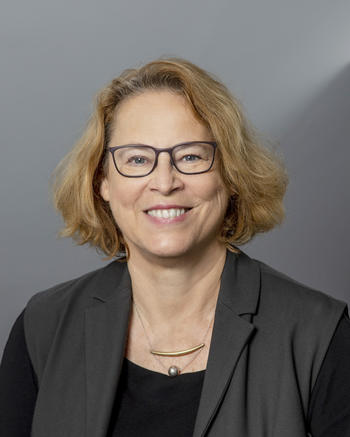
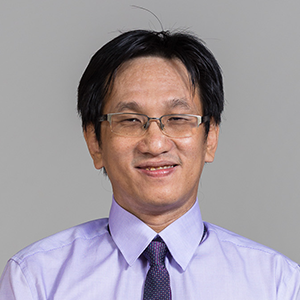
Laurel MacKenzie is an Associate Professor in the Department of Linguistics at New York University (NYU), affiliated with the Faculty of Arts and Science. She specializes in variationist sociolinguistics, dialectology, and language change, with a focus on English and French varieties. Her work integrates quantitative analysis of speech data to explore intra-speaker variation and language evolution. She co-directs the NYU Sociolinguistics Lab and leads the NSF-funded NYC Individual Differences Corpus project, alongside the Our Dialects initiative, an online atlas of British English dialects. Education: PhD in Linguistics, University of Pennsylvania (2012) BA in Linguistics and French, University of California, Berkeley (2006) Research Interests: Morphological and syntactic variation Regional dialects of English and French Linguistic pedagogy and public engagement Recent Projects: Recent work includes publications on participle leveling in English, sociolinguistic replication studies, and grammatical variation analysis. She has also collaborated on dialect mapping tools and consulted for media projects on language change and accents. Awards: No awards explicitly listed in provided texts. Labs/Teams: NYU Sociolinguistics Lab (Co-Director) Our Dialects Project (Academic Lead)
Walid Magdy is a Professor at the School of Informatics, The University of Edinburgh, where he is a faculty member at the Institute for Language, Cognition and Computation (ILCC). He holds a PhD from Dublin City University's School of Computing and has been a faculty fellow at The Alan Turing Institute. With substantial industry experience, he has worked for Qatar Computing Research Institute (QCRI), Microsoft, and IBM, where he filed nine patents. His research spans computational social science and natural language processing. In computational social science, he focuses on social content analysis, political bias detection, polarization, and users' behavior analysis/prediction, with particular attention to understudied communities. His natural language processing work centers on social applications including sentiment analysis, sarcasm detection, and hate-speech identification, with specialized expertise in Arabic and its dialects as well as Persian. Professor Magdy's recent publications demonstrate a consistent focus on Arabic language processing and social media analysis, with growing attention to cultural factors in NLP systems. His work bridges computational methods with social science questions, particularly regarding misinformation, cultural differences in online behavior, and the impact of platform policies on diverse linguistic communities. He has expanded his research to include Persian language processing and continues to explore social dynamics across different cultural contexts. His significant contributions have been recognized with multiple awards: Best Demo Award for TwiXplorer at CSCW 2024 Outstanding Paper Award at ACL 2024 Best Paper Award Runner-up at SocInfo 2022 Best Paper Award at WANLP-EMNLP 2022 Best Paper Award at AIRS 2015 Best Dataset Award at ICWSM 2013 Professor Magdy serves as an editor for Springer's Social Network Analysis and Mining journal and has held leadership roles in major conferences including ACL 2023, ArabicNLP 2023, ICWSM 2022, and ASONAM 2022. He has co-organized numerous shared tasks focused on Arabic language processing and social media analysis, contributing significantly to community resources and benchmarks. He founded and directs the Social Media Analysis and Support for Humanity (SMASH) research group at the University of Edinburgh, which has organized the Summer School in Computational Social Science (SICSS-Edinburgh) in 2022, 2023, and 2025, training researchers in computational social science methodologies.
Vasu Tewari is an Assistant Professor (CLTA) at the University of Toronto, working across both the Downtown Toronto (St. George) and Mississauga (UTM) campuses. Their office is located at HU1015 (215 Huron), and they can be reached at vasu.tewari@utoronto.ca. As a member of the Department of Mathematics within the Faculty of Arts and Science, Professor Tewari contributes to both teaching and research activities at the university. Professor Tewari's research focuses on advanced topics in algebraic combinatorics, with particular expertise in: Quasisymmetric functions and their geometric interpretations Schubert polynomial theory and related structures Representation theory of symmetric groups and related algebras Combinatorial aspects of algebraic geometry Enumerative combinatorics with connections to symmetric functions Algebraic structures arising from combinatorial objects Analysis of Professor Tewari's recent publications reveals a consistent focus on the interplay between combinatorial structures and algebraic frameworks. Their work often explores generalizations of classical symmetric function theory through the lens of quasisymmetric functions, providing new insights into Schubert calculus, permutation statistics, and geometric combinatorics. A notable trend in their research is the investigation of stability phenomena in combinatorial structures and the development of new algebraic tools for studying these phenomena. Professor Tewari has made significant contributions to understanding the geometry of combinatorial objects through algebraic methods, particularly in the areas of permutahedral varieties, zonotopal algebras, and quiver representations. Their work bridges pure mathematics with potential applications in theoretical physics and computer science.
Dr. John M. Ruter is the Allan M. Armitage Professor and Director of the UGA Trial Gardens within the College of Agricultural & Environmental Sciences at the University of Georgia. His work integrates plant breeding, genetics, and sustainable nursery crop production, focusing on ornamental plants for southeastern landscapes. Education: B.S. in Ornamental Horticulture, California Polytechnic State University (1984) M.S. in Ornamental Horticulture and Landscape Design, University of Tennessee (1986) Ph.D. in Horticultural Science, University of Florida (1989) Research interests include developing climate-resilient ornamental plants (e.g., Camellia oleifera , hibiscus, crape myrtle), mutation breeding via gamma irradiation, and optimizing nursery production systems. Recent projects focus on polyploid conifer evaluation and tea oil crop development for the southeastern U.S. Recent publications highlight advancements in induced mutagenesis (EMS, gamma irradiation), disease resistance screening (Cercospora leaf spot), and genetic characterization of native and ornamental species. Key subfields include ornamental breeding , genomic analysis , and sustainable production practices . As Director of the UGA Trial Gardens, he leads plant evaluation programs that inform regional landscaping decisions and cultivar development.
Dr Rebecca Mitchell is an Affiliated Lecturer in the French Section of the Faculty of Modern and Medieval Languages and Linguistics at the University of Cambridge, based at the Raised Faculty Building on Sidgwick Avenue. Her academic journey includes undergraduate studies in Modern and Medieval Languages at Cambridge, an MA in Translation and Interpreting from the University of Kent, and a PhD from Cambridge focused on syntactic variation in Gabonese French. Her educational background comprises: PhD in Linguistics (University of Cambridge) MA in Translation and Interpreting (University of Kent) Undergraduate degree in Modern and Medieval Languages (University of Cambridge) Dr Mitchell's research centers on the sociolinguistics of sub-Saharan Africa, examining language attitudes, endangerment, policy, planning, and healthcare communication. She also investigates traditional belief systems through Sub-Saharan African anthropology, emphasizing the intersection of language, culture, and power structures in Central and West African contexts. Her work consistently addresses decolonization themes and linguistic justice. Analysis of her publications reveals a dual trajectory: recent works (2023-2025) prioritize public engagement through initiatives like National Linguistics Day and educational advocacy, while earlier research (2004-2019) establishes foundational contributions to African linguistics, particularly Gabonese French syntax, language policy, and endangerment in Central Africa. No scientific awards are documented in the provided materials. She has supervised undergraduate courses since 2012 including Fr1 (Introduction to French Literature, Linguistics, Film and Thought), Fr2 (Structures and Varieties of French), Li14 (History of the French Language), and Li12 (History of Ideas about Language). Dr Mitchell currently cannot accept new doctoral students but maintains active engagement through curriculum development and public lectures. Her public engagement initiatives, notably National Linguistics Day launched in 2024, constitute a significant platform for promoting linguistic science through school talks, Civil Service workshops, and national events like the Language Show, positioning her as a key bridge between academic linguistics and public understanding.
Professor Devyani Sharma is a Professor of Linguistics at Queen Mary University of London, affiliated with the Department of Linguistics within the School of Languages, Linguistics and Film. She holds a PhD from Stanford University. Her research focuses on sociolinguistics, style variation, migration, bilingualism, new varieties of English, syntax, typology, and accent bias. She has conducted extensive studies on diasporic communities, particularly Punjabi Londoners, examining dialect development and social change through projects like 'Generations of London English' and 'Accent Bias in Britain.' Her work integrates quantitative and qualitative methods, including sociolinguistic interviews, acoustic analysis, and discourse analysis. Notable contributions include studies on the role of social networks in language variation, the concept of 'lectal focusing,' and the impact of accent biases in professional contexts. She has authored/co-authored books such as From Deficit to Dialect: The Evolution of English in India and Singapore (2023) and edited volumes including English in the Indian Diaspora (2014). Professor Sharma collaborates on public engagement initiatives like Teach Real English! and Multilingual Capital , aiming to improve linguistic education and address accent bias in society. Her research has been funded by grants from the ESRC and other UK organizations, totaling over £412,000 for major projects. She serves as Associate Editor for the Journal of Sociolinguistics and contributes to international conferences and workshops.
Gregory Michael Peck is an Associate Professor and Director of Undergraduate Studies for the Plant Sciences Major at Cornell University's School of Integrative Plant Science, Horticulture Section. His research focuses on sustainable tree-fruit production, particularly in organic apple systems , cider apple germplasm evaluation , and crop-load management through pollen tube growth modeling . Award-winning educator (2021 Cornell Teaching, Advising & Mentoring Award) 2018 Grower Advocate of the Year (American Cider Association) Active in outreach through field days, extension publications, and social media Peck's work spans tree-fruit physiology , soil health , and mechanization of orchard practices . He co-teaches Cornell's popular cider appreciation course with microbiologist Kathy Arnink, combining apple production science with fermentation expertise. His research explores phenolic development , nitrogen management , and yeast interactions in cider production systems. Recent publications highlight collaborations in rootstock effects , compost applications , and fermentation chemistry . Peck's career has included work in California, Washington, New York, and Virginia, with training spanning horticulture, plant physiology, soil science, and agricultural economics.
Engelbert Stockhammer is Professor of Political Economy in the Department of European and International Studies at King's College London, where he joined in 2018 after previously working at Vienna University of Economics and Business (2000-2009) and Kingston University London (2010-2018), where he led the Political Economy Research Group. He holds a PhD in Economics from the University of Massachusetts at Amherst and has held visiting positions at Bilkent University, German Institute for Economic Research (DIW Berlin), Maastricht University, Macroeconomic Policy Institute (IMK), and Sabanci University. His research interests focus on political economy and macroeconomics , with particular emphasis on financialisation, distribution and growth, and economic policy in Europe. His work bridges Post-Keynesian economics with comparative political economy, examining growth models, housing systems, and business cycle dynamics. He has published over 70 peer-reviewed articles and is actively engaged in research projects funded by organizations like the Leverhulme Trust and the Institute for New Economic Thinking. His recent publications reveal a strong focus on housing cycles, heterodox business cycle theory, and the political economy of growth models, with particular attention to European economies and historical perspectives. His work integrates macroeconomic modeling with institutional analysis, examining how financialization affects growth patterns across different economic systems. Stockhammer actively engages with policy through collaborations with international organizations including the International Labour Office (ILO), and think tanks such as the New Economics Foundation, Friedrich Ebert Stiftung, Renner Institute, Rosa Luxemburg Foundation, and Foundations for European Progressive Studies. He has published commentary in media outlets including The Guardian, Al Jazeera, Profil, and ORF. He leads the ongoing research project "The Political Economy of Growth Models in an Age of Stagnation" funded by the Leverhulme Trust (2021-2024), and previously led a project on "Income distribution, asset prices and aggregate demand formation 1850-2010" funded by the Institute for New Economic Thinking. His work contributes to several United Nations Sustainable Development Goals, particularly those related to economic growth and reduced inequalities.
Miguel Castillo is an Associate Professor in the Crop and Soil Sciences Department at North Carolina State University (NC State), leading the Forage & Grassland Program and serving as Grassland Science Specialist. He holds a Ph.D. in Agronomy from the University of Florida and an MBA from NC State. His work focuses on improving ecosystem services in agricultural and pasture-based livestock systems through integration of silvopasture, agroforestry, and advanced technologies like near infrared spectroscopy (NIRS) for management decisions. Dr. Castillo's education includes a B.S. in Plant and Animal Sciences from Zamorano University (2006), followed by M.S. and Ph.D. in Agronomy from the University of Florida (2009, 2013). His research spans international collaborations in tropical/sub-tropical environments, with expertise in forage crop management, bioenergy grasses, and sustainable livestock systems. He is fluent in Spanish and Portuguese. Research Interests: Forage-Livestock Systems Optimization Silvopasture Development Bioenergy Crop Production NIRS Applications in Agriculture Pasture-Based Livestock Management Climate Resilient Forage Crops Recent work emphasizes NIRS for rapid forage quality analysis, evaluating new bermudagrass cultivars, and advancing silvopasture systems in the southeastern U.S. and Peruvian Amazon. His publications address topics like poultry litter impacts, switchgrass management post-freeze, and frost-seeding clover into tall fescue pastures. Grant-supported research includes USDA-funded projects on forage conservation techniques and bioenergy crop development. He advises graduate students on forage systems and collaborates with industry partners on applied agronomic solutions. Labs/Teams: Directs the Forage & Grassland Program at NC State, collaborating with USDA and international research networks. Active in extension programs, publishing guides on forage management, hay production, and silvopasture implementation.
Prof. Dr. Katharina Bluhm is Professor of Sociology with a focus on Eastern Europe at the Institute for Eastern European Studies (Osteuropa-Institut) at Freie Universität Berlin. She has served as Head of the Department of Sociology since 2011 and as Head of the Institute for East European Studies since 2014. Her academic career spans multiple prestigious institutions including Humboldt University, Friedrich Schiller University in Jena, Harvard University, and the University of Osnabrück. Her educational background includes philosophy studies at Humboldt University and Lomonosov University in Moscow, followed by a shift to sociology after the fall of the Berlin Wall. She completed her doctoral degree at Humboldt-Universität zu Berlin in 1987 and her habilitation at Friedrich-Schiller-Universität Jena in 2004. Prof. Bluhm's research focuses on the illiberal-conservative turn in Russia and Eastern Central Europe, economic and social policy, and the role of elites. Her work combines theoretical frameworks from economic sociology, political sociology, and the sociology of knowledge to analyze post-Soviet transformations. She has made significant contributions to understanding the new Russian conservatism, varieties of capitalism in Eastern Europe, welfare state regimes, and business elites. Her recent research has examined Russia's conservative counter-movement, the relationship between business, state, and social welfare provision in Russian regions, and the development of illiberal conservatism in Eastern Europe. Her 2023 monograph "Russia and the West: Ideology, Economics, and Politics since the End of the Soviet Union" represents a major scholarly contribution that analyzes how Russian neoconservatives construct societal alternatives to the "West" through both civilizational demarcation and positioning Russia as the "other Europe" with a mission for Europe itself. Member of the foundation board of the Leibniz Institute for East and Southeast European Studies (IOS), Regensburg (since 2017) Member of the academic advisory board of the Center for East European and International Studies (ZOiS), Berlin (since 2017) Member of the advisory board of the Institute for European Politics (IEP) Berlin (since 2016) Member of the international advisory council of the Strategic Academic Unit for Social Development of the National Research University Higher School of Economics (HSE), Moscow (since 2016) Editor of the online journal 'Employment and economy in Central and Eastern Europe' (emecon) (since 2011) Prof. Bluhm actively leads the Cluster of Excellence "Contestations of the Liberal Script" (SCRIPTS) as Principal Investigator for Research Unit "Orders." She has supervised numerous research projects including "GOVRUS - Variationen von Governance in hybriden Regimen" and "Ökonomische Eliten im erweiterten Europa." Her research colloquia regularly bring together international scholars to discuss pressing issues in Eastern European studies, with recent events addressing Ukraine's resilience, Russian conservatism, and transformations in post-Soviet societies. She remains deeply engaged in public intellectual discourse through events like the "Futuring the Liberal Script" discussion series.
Samantha Su-Hsien Sim is an Assistant Professor at Nova School of Business and Economics (NOVA SBE) in Portugal, where she teaches Organisational Behaviour and Human Resource-related courses. She is affiliated with the Leadership for Impact Centre at Nova SBE and the Mindfulness Initiative at Singapore Management University, and serves as a faculty adviser for the student-led Nova Mindfulness Club. Doctorate in Business, Singapore Management University Bachelor in Social Science, Singapore Management University Master in Social Science, Tilburg University Her research centers on compassion and mindfulness in the workplace, organisational justice, and cross-cultural differences. She investigates how compassion influences workplace behavior and leadership, and how mindfulness affects cooperation and negotiation outcomes. Her work bridges organizational psychology and management, with implications for employee well-being, ethical leadership, and inclusive organizational cultures. Her recent publications explore mindfulness-based training, corporate well-being programs, and algorithmic fairness in employment. The research spans topics like psychological well-being, negotiation dynamics, and public policy, showing a strong interdisciplinary focus on human-centered organizational practices. Published in top journals including Journal of Applied Psychology , Academy of Management Journal , and Organizational Behavior and Human Decision Processes She advises student research through the Nova Mindfulness Club and contributes to research grants related to leadership, mindfulness, and organizational justice. Her collaborative network includes scholars from Singapore, Europe, and North America, reflecting her cross-cultural research orientation. She is active in research centers focused on leadership impact and mindfulness, contributing to both academic and practical applications in organizational settings.
Anthony TUNG Kum Hoe is a Professor in the Department of Computer Science at the National University of Singapore (NUS), where he has established himself as a leading researcher in database systems and data mining. He is also affiliated with the NUS Graduate School for Integrative Sciences and Engineering and serves as a SINGA supervisor. His educational background includes a Ph.D. in Computer Science from Simon Fraser University (2001), an M.Sc. in Information Systems & Computer Science from NUS (1998), and a B.Sc. with 2nd Class Upper Honours in Information Systems & Computer Science from NUS (1997). Professor Tung's research spans several interconnected areas within database systems and data mining. His primary focus is on developing efficient methods for indexing and searching complex data structures including time series, trajectories, trees, graphs, and high-dimensional objects. He has pioneered work in visual query processing, keyword search, and ranking systems. His GENIE (Generic Inverted Index) and LAMP (semi-Lazy Mining Paradigm) projects represent significant contributions to big data analytics, particularly in handling the 'variety' aspect of big data by providing unified frameworks for processing diverse data structures while preserving semantic meaning. His research bridges theoretical database concepts with practical applications in visual data mining, collaborative analytics, and just-in-time model construction. His recent publications reveal a clear evolution from traditional database research toward more complex analytics on diverse data types. While maintaining his core expertise in database indexing and query processing, his work has expanded to incorporate machine learning techniques, particularly in areas like nearest neighbor search, anomaly detection, and predictive analytics. There's a noticeable trend toward interdisciplinary applications, with publications spanning computer vision, natural language processing, transportation systems, and social computing. His research group consistently publishes in top-tier venues including SIGMOD, VLDB, ICDE, and KDD, demonstrating both theoretical rigor and practical relevance. 2005 Best Paper Award for 'Indexing DNA Sequences Using q-grams' 2007 Invited panel speaker on 'Advice for a successful database researcher career in Asia' at SIGMOD 2010 Guest Lecturer for VLDB Database School 2012 VLDB 2012 Research PC Co-chairs 2015 10 Years Best Paper Award, DASFAA 2015 Invited to SIGMOD 2008 and SIGKDD 2008 Program Committees Professor Tung has supervised numerous PhD students and research associates throughout his career, including notable researchers like Zhang Zhenjie (recipient of the 2007 President Graduate Fellowship) and Wang Nan (published in SIGMOD'08). His research group has been consistently productive, with students publishing in top conferences including SIGMOD, ICDE, and VLDB. His professional service is extensive, having served as PC Chair for COMAD'06, Research PC Co-chair for VLDB 2012, and on program committees for virtually all major database and data mining conferences over the past two decades. His research has been supported by various grants that have enabled significant contributions to database technology. His GENIE and LAMP projects represent a cohesive research direction focused on developing systematic approaches to big data analytics. GENIE provides a unified platform for storage and retrieval of big data with various structures, while LAMP introduces a novel paradigm for predictive analytics that combines the strengths of lazy and eager learning approaches. These projects have evolved to incorporate GPU acceleration and parallel processing capabilities, reflecting his commitment to addressing real-world scalability challenges in data-intensive applications.
Lan T. Chu serves as Professor of Diplomacy and World Affairs at Occidental College, where she has held faculty position since 2005. Her office is located in Johnson 205 with regular availability on Tuesdays (11:30 AM-12:45 PM in person/Zoom) and Fridays (9:00-10:00 AM). Her academic credentials include: B.A. and M.A. from New York University Ph.D. from George Washington University Chu's research centers on religion's political dimensions, particularly the Catholic Church's global influence through faith diplomacy and norm entrepreneurship. She examines inter-religious dialogue, ideological frameworks, and democratization processes in communist regimes, with recent work analyzing religious responses to climate change and migration. Her scholarship applies constructivist theory to position religious institutions as transformative actors in international relations. Analysis of her publication history reveals evolving scholarly priorities: early work (2005-2015) focused on church-state dynamics in Vietnam and China, while current research (2022-2025) emphasizes environmental stewardship and citizenship. This trajectory demonstrates increasing engagement with contemporary global crises through religious institutional lenses. Her scholarly recognition includes: Foreign Language Area Studies (FLAS) Fellowship Visiting Fellowship at University of Southern California Linda & Tod White Teaching Prize (2022) As Faculty Director for Equity and Justice, Chu leads campus-wide inclusion initiatives while advancing three major book projects: Catholic Church's global policy influence (Routledge), religion and citizenship (Routledge), and Vietnamese religious freedom (Brill Press). Her mentorship in DWA 299 (Qualitative Methods) trains students in research design for political analysis. Chu contributes to international scholarship as Country Expert for Gothenburg's Varieties of Democracy Project (2012-present) and editorial board member of Politics, Groups, and Identities , building academic networks that inform her classroom instruction on ideology and international relations theory.
Rajneesh Suri is the Senior Vice Provost for Academic Industry Partnerships and former Vice Dean for Research & Strategic Partnerships at Drexel University's LeBow College of Business. He holds a PhD in Marketing from the University of Illinois Urbana-Champaign, an MBA from the Indian Institute of Management Calcutta, and a Bachelor of Engineering (Mechanical) from Delhi College of Engineering. His research focuses on consumer decision-making, pricing strategies, and the application of neuroimaging (e.g., fNIR, EEG) to study consumer behavior. He has authored numerous articles in top journals like Journal of Consumer Research and Journal of Retailing , and his work has been recognized with awards such as the Literati Award and teaching accolades. Dr. Suri’s research explores how consumers perceive value through price and brand cues, with recent studies addressing upcycled foods, crisis pricing, and the impact of digital marketing. His interdisciplinary collaborations, often involving neurophysiological tools, bridge traditional marketing theory with cutting-edge methodologies. He has advised corporate partners on talent acquisition and innovation through Drexel’s Solutions Institute, emphasizing applied research and industry partnerships. Key achievements include co-authoring a book on pricing strategies, leading teaching fellowships at LeBow’s Center for Teaching Excellence, and serving as a Research Fellow at Cornell’s Center for Hospitality Research. His work has been cited widely, including in media outlets for its relevance to consumer behavior trends.
Martti Vasar is a Research Fellow in Ecoinformatics at the Institute of Ecology and Earth Sciences, University of Tartu. He holds a Doctor's Degree (2020) and Master's Degree (2012) from the University of Tartu, specializing in ecology and computer science. His research focuses on arbuscular mycorrhizal fungi, soil biodiversity, and bioinformatics, with a strong emphasis on understanding microbial interactions and their ecological implications in agricultural and natural systems. Education: PhD (2014–2020): Institute of Ecology and Earth Sciences, University of Tartu Master's (2010–2012): Infotechnology, Faculty of Mathematics and Computer Science, University of Tartu Bachelor's (2006–2010): Infotechnology, Faculty of Mathematics and Computer Science, University of Tartu Research interests include plant-microbe symbiosis, soil microbial communities, and the application of bioinformatics tools for analyzing fungal diversity. His work spans global soil microbiomes, agricultural land use impacts, and ecological restoration strategies. Vasar co-supervises students like Roland Lehemets in projects related to regenerative agriculture and soil biota. Key projects include Agroecology and new crops in future climates (2024–2030) and Plant-microbial mutualisms in dynamic ecosystems (2021–2025). Over 40 publications reflect his contributions to understanding mycorrhizal networks, soil health, and biodiversity.