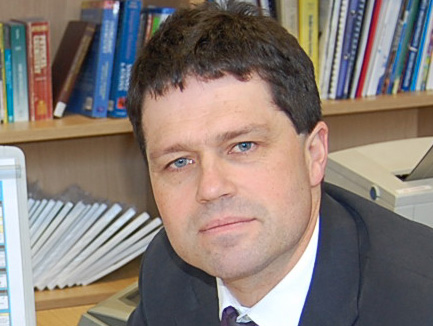
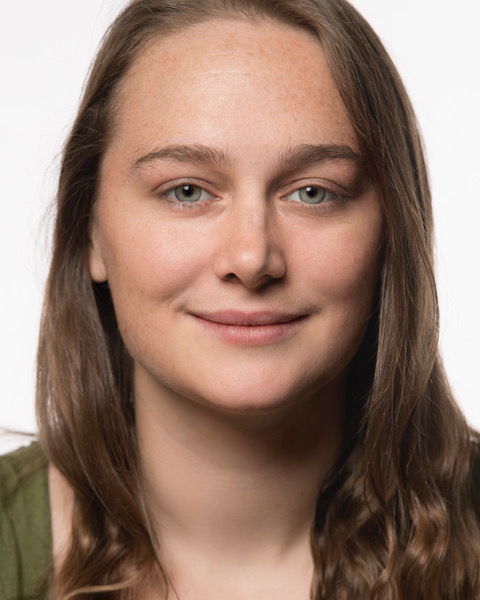
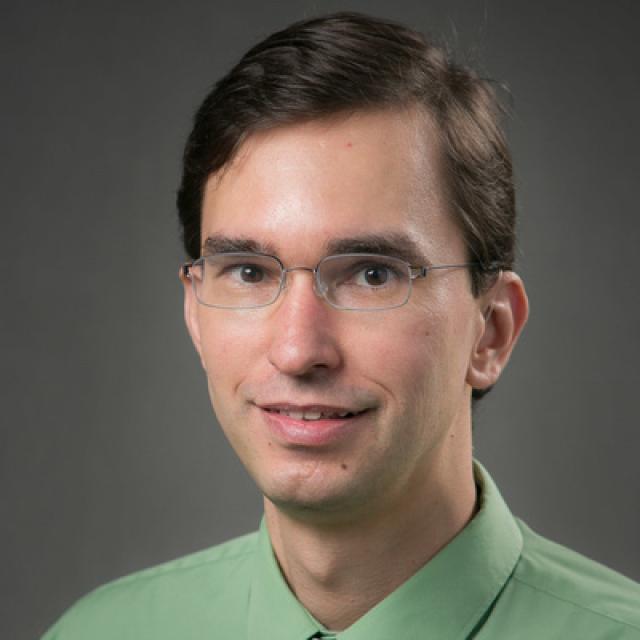
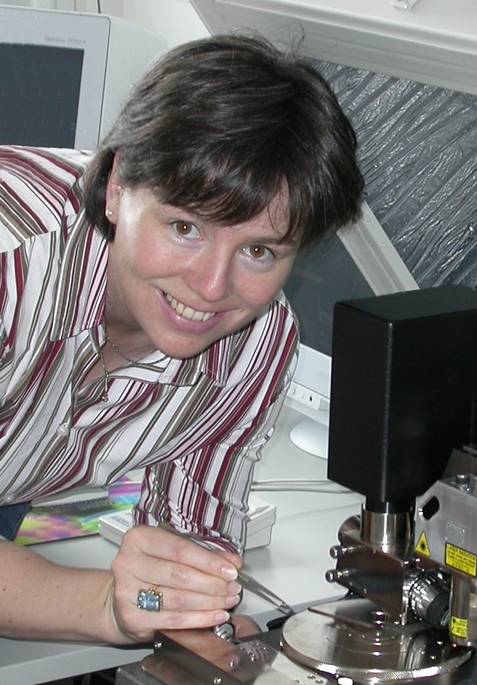
Alexey Vorobiev is a Researcher at Uppsala University's Materials Physics department, focusing on neutron reflectometry and magnetic materials. His work spans thin films, superlattices, and nanoparticle interfaces. Education : Not explicitly mentioned in the text. Research Interests Vorobiev's research explores magnetic properties of materials, surface interactions, and neutron optics. Key areas include spintronics, nanoscale assembly, and thin film characterization. His work often integrates experimental methods like neutron scattering with materials engineering. Article Trends Recent publications emphasize neutron-based techniques for studying magnetic multilayers, graphene oxide behavior, and nanoparticle self-assembly, reflecting a strong focus on interfacial physics and advanced material synthesis.
Areg Danagoulian is an Associate Professor of Nuclear Science and Engineering at the Massachusetts Institute of Technology (MIT), where he conducts research at the intersection of nuclear physics and security applications. His work focuses on developing technological solutions for nuclear nonproliferation, arms control, and cargo security. Dr. Danagoulian earned his PhD in Experimental Nuclear Physics from the University of Illinois at Urbana-Champaign, where his thesis focused on real Compton scattering on the proton at 2-6 GeV to probe the proton's internal structure. Following his PhD, he worked as a postdoctoral researcher at Los Alamos National Laboratory and then as a senior scientist at Passport Systems, Inc. (PSI), where he developed the Prompt Neutron from Photofission (PNPF) technique for detecting shielded fissionable materials in cargo traffic. His research interests span multiple critical areas in nuclear security, including arms control verification technologies, nuclear nonproliferation methods, cargo security systems, and nuclear detection techniques. Dr. Danagoulian's work on nuclear resonance phenomena for warhead verification represents groundbreaking contributions to the field of nuclear disarmament verification. Dr. Danagoulian's research has earned him significant recognition, including: Fellow of the American Physical Society, Forum on Physics and Society (2025) - "For seminal technological contributions in the field of arms control and cargo security, which significantly benefit international security" Arms Control Association's Arms Control Person(s) of the Year award (2020) - "For developing an innovative new nuclear disarmament verification process using neutron beams" American Nuclear Society Radiation Science and Technology Award (2019) - "For technology-critical contributions exploiting nuclear resonance phenomena for warhead verification in nuclear disarmament and nuclear detection techniques in cargo security" In addition to his research, Dr. Danagoulian is actively involved in teaching and mentoring. He serves as faculty co-director for MIT's MISTI Eurasia program and teaches several graduate courses including Nuclear Detection Laboratory (22.09, 22.90), Advanced Nuclear Laboratory (22.s902), and Applied Nuclear Physics (22.101). His teaching approach emphasizes hands-on laboratory experience to prepare students for real-world nuclear detection challenges. Dr. Danagoulian leads the Laboratory for Applied Nuclear Physics (LANPh) at MIT, where his team develops innovative technologies for nuclear security applications. Current research directions include nuclear resonance transmission analysis for material identification, portable detection systems for cargo security, and cryptographic approaches to nuclear warhead verification that protect sensitive information while enabling verification.
David J. Brenner serves as Higgins Professor of Radiation Biophysics in Radiation Oncology and Environmental Health Sciences at Columbia University Medical Center. He directs both the century-old Center for Radiological Research and the Radiological Research Accelerator Facility (RARAF), leading interdisciplinary teams focused on radiation applications in medicine and safety. BA in Physics from Oxford University (1974) MSc in Radiation Physics from University of London (1976) MA in Physics Philosophy from Oxford University (1979) PhD in Physics from University of Surrey (1980) His research spans dual aspects of radiation: therapeutic applications in cancer treatment and risk assessment across diverse scenarios. Key initiatives include advancing carbon-ion therapy for pancreatic cancer, developing safe far-UVC light for pathogen elimination, and investigating low-dose radiation risks from medical imaging to nuclear terrorism. His team leverages RARAF's unique capabilities for mechanistic studies of radiation effects. Publications reveal dominant themes in radiation biophysics, with significant contributions to biodosimetry (RABiT platform), UV disinfection technology, and cancer risk modeling. Recent work emphasizes translational applications including medical countermeasures for radiation exposure and precision radiation oncology techniques. National Academy of Sciences Nuclear and Radiation Studies Board member National Council on Radiation Protection and Measurements member Radiation Research Society Failla Gold Medal recipient (2011) Oxford University Weldon Prize for mathematical biology (2015) Robert D. Moseley Award for Radiation Protection in Medicine Brenner leads multiple NIH-funded projects including biodosimetry development and UV disinfection research. His mentorship extends through directing Columbia's Radiological Research Accelerator Facility and training programs in radiological sciences. Current lab efforts focus on carbon-ion therapy mechanisms and 222-nm UV applications against drug-resistant pathogens, with active collaborations across oncology, microbiology, and physics disciplines.
Professor Matthew Jonathan Rosseinsky holds the Chair of Inorganic Chemistry at the University of Liverpool, a position he has occupied since October 1999. His career includes significant appointments at the University of Oxford (1992-1999) and Bell Laboratories in New Jersey (1990-1992), following his DPhil at Merton College, Oxford. As a Fellow of the Royal Society and recipient of numerous prestigious awards, Professor Rosseinsky maintains an active research program and leadership roles in the international chemistry community. Professor Rosseinsky's educational background includes a First Class Honours degree in Chemistry with Quantum Chemistry from the University of Oxford (1987) and a DPhil in "Physical Properties of Superconducting Oxides and Radical Cation Salts" completed in 1990 under Professor P. Day FRS. His research focuses on the synthesis of new materials with applications in energy storage and generation, communications, separation, and catalysis. The Rosseinsky Group employs a broad range of synthesis and characterization techniques, including neutron and synchrotron X-ray diffraction, combined with computational methods in collaboration with Dr. George Darling. Current research areas include Dynapore, CO2 fuels, SOLBAT, and CATMAT projects that target specific material challenges. Professor Rosseinsky's publication record is exceptional, with 304 papers including 11 in Nature, 6 in Science, and 3 in Nature Materials, accumulating over 15,000 citations and an h-index of 56 as of 2012. His work demonstrates consistent excellence across materials chemistry, with particular emphasis on porous frameworks, electronic materials, and solid-state chemistry. Among his numerous accolades are the Harrison Memorial Prize (1991), Corday-Morgan Medal (2000), Royal Society Wolfson Research Merit Award (2002), De Gennes Prize (2009), and the prestigious Hughes Medal from the Royal Society (2011). He also holds an ERC Advanced Investigator Grant and has delivered distinguished lectures worldwide. Professor Rosseinsky has served in numerous editorial and advisory capacities, including as Associate Editor for Chemical Sciences, membership on the Royal Society Conference and Travel Grant Committee since 2007, and as a member of the International Advisory Board for the Max Planck Institut for Solid State Research since 2011. His professional activities extend to international review committees for research institutions in France, South Korea, and Saudi Arabia. The Rosseinsky Group operates within the Department of Chemistry at the University of Liverpool, collaborating extensively with researchers including Dr. John Claridge, Professor Andrew Cooper, and Professor Paul Chalker. The group maintains strong international partnerships and utilizes advanced facilities for materials synthesis and characterization to drive innovation in functional materials development.
Nicola McConkey is an Ernest Rutherford Fellow and Lecturer in Particle Physics at the School of Physical and Chemical Sciences, Queen Mary University of London. She joined the Particle Physics Research Centre in 2024 and leads experimental work in neutrino interactions and detector development. Her affiliations include the Centre for Fundamental Physics and Centre for Experimental and Applied Physics. McConkey is an active member of international collaborations including SBND, DUNE, and MicroBooNE, where she contributed to the assembly of SBND and pioneered high-statistics measurements of electron-neutrino interactions using liquid argon detectors. Her research focuses on three primary domains: neutrino physics (particularly neutrino-argon scattering cross-sections), quantum technology applications for neutrino mass measurement, and liquid argon time projection chamber (LArTPC) detector development. McConkey's investigations aim to advance fundamental particle physics through precision measurements and technological innovation, with emphasis on improving detection capabilities for next-generation neutrino experiments. Publications predominantly explore neutrino interaction dynamics, cross-section measurements, and detector performance optimizations across MicroBooNE, SBND, and DUNE collaborations. Research trends demonstrate consistent focus on refining LArTPC technologies, developing machine learning applications for particle reconstruction, and probing beyond-Standard-Model physics through neutrino interactions. Scientific Awards: Ernest Rutherford Fellowship (2022) McConkey advises two PhD students (Oscar Chow, Yoshita Dabburi) and leads significant research funding including: STFC Grant: 'Piecing together the neutrino mass puzzle' (£431,666; 2024-2027) STFC Outreach Grant: 'Quantum Technologies for Neutrino Mass' (£99,999; 2024-2025) She coordinates research within the Particle Physics Research Centre laboratory and collaborates extensively within the SBND, DUNE, and MicroBooNE international teams, alongside leading the Quantum Technologies for Neutrino Mass collaboration developing novel measurement techniques.
Kai Landskron is a Professor in the Department of Chemistry at Lehigh University. His research focuses on high-pressure synthesis of mesoporous materials, supercapacitive swing adsorption for CO2 separation, and electrochemical engineering. He has been at Lehigh since 2006 and was promoted to full professor in 2018. Diplom in Chemistry, University of Bayreuth, Germany PhD in Chemistry, Ludwig Maximilians University of Munich Research interests include Energy and Catalysis , Molecular Assembly , Materials Science , and Nanoscience . Key areas are supercapacitive CO2 capture, high-pressure synthesis of mesoporous materials, and electrochemical methods for gas separation. Recent publications highlight trends in supercapacitive swing adsorption (2024, 2014), high-pressure synthesis of nanomaterials (2010, 2009), and CO2 separation technologies (2019, 2017). Subfields span adsorption kinetics, porous frameworks, and material stability under extreme conditions. Current students include Alysson Bermudez, Jacob Dooley, Jiajie Li, and Muhammad Bilal Zarafullah. The Landskron Research Group explores periodic mesoporous organosilicas, coesite nanocrystals, and diamond monoliths.
Karin Jacobs is a Professor in the Department of Physics at Saarland University, where she leads the research group for soft matter physics within the Faculty of Natural Sciences and Technology. Her work bridges experimental physics and applied materials science, focusing on interfacial phenomena, thin films, and functional materials. Research Interests: Her group investigates the stability of coatings, properties of simple and complex fluids, and the adhesion of biomolecules on surfaces. Using advanced experimental techniques such as atomic force microscopy (AFM), ellipsometry, surface plasmon resonance spectroscopy, optical microscopy, and ultra-high vacuum (UHV) methods like photoelectron spectroscopy, her team probes nanoscale and microscale interactions at solid-liquid and solid-gas interfaces. The research spans fundamental and applied domains, including the synthesis and characterization of graphene and boronitrene, production of water-in-water vesicles using hydrophobins, and bacterial adhesion studies. These investigations are often linked to industrial applications in the paint, semiconductor, and biomedical sectors. Publication Trends: Over the past 15 years, her publications reflect a consistent focus on surface physics and soft matter. Key themes include graphene synthesis via liquid precursor deposition (including unconventional sources like fingerprints), interfacial rheology, biopolymer adsorption, and quantitative imaging analysis. The interdisciplinary nature of her work is evident in the combination of physics, chemistry, and biological interfaces. Scientific Awards: No specific awards are mentioned in the provided text. Advising and Grants: As head of an active research group, Prof. Jacobs supervises graduate students and postdoctoral researchers, though specific names are not listed. Her collaborations with theoretical groups and external institutions (e.g., University of Augsburg) suggest participation in joint grants and funded projects, particularly in nanomaterials and surface science. The applied orientation of her research indicates engagement with industry partners in coatings and semiconductor technologies. Labs and Teams: The Jacobs Group operates a well-equipped experimental laboratory at Campus E2 9, Saarland University, specializing in surface analysis and soft matter characterization. The team includes researchers working on biofilms, microfluidics, and functional materials, supported by technical and administrative staff.
David Cory is a Professor and Canada Excellence Research Chair Laureate in Quantum Information Processing at the University of Waterloo's Department of Chemistry. He is affiliated with the Institute for Quantum Computing and the Waterloo Institute for Nanotechnology. His research focuses on quantum information science, neutron interferometry, structured light applications, and spin systems. Cory's work bridges quantum physics, materials science, and biomedical imaging, with contributions to quantum control, entanglement, and advanced neutron beam technologies. He has pioneered methods for generating structured neutrons and developing quantum measurement devices, including phase grating neutron interferometers. Scientifically, Cory has advanced quantum simulations of mesoscopic systems, explored thermal state structures in quantum models, and applied structured light for biomedical diagnostics. His recent articles highlight innovations in neutron Airy beam generation, robust micro-macro entanglement, and psychophysical studies of light perception. Awards include the Canada Excellence Research Chair, recognizing his leadership in quantum technologies. Awards: Canada Excellence Research Chair Laureate in Quantum Information Processing Labs/Teams: Institute for Quantum Computing, Waterloo Institute for Nanotechnology
Zohreh Davoudi is an Associate Professor in the Department of Physics at the University of Maryland, College Park. She holds additional roles as a Fellow of the Joint Center for Quantum Information and Computer Science (QuICS) and Associate Director for Education at the NSF Institute for Robust Quantum Simulation. Her research focuses on simulating strongly interacting systems using lattice quantum chromodynamics (LQCD), quantum simulation, and quantum computing. She earned her B.Sc. and M.Sc. from Sharif University of Technology in Iran, followed by a Ph.D. in Theoretical Physics from the University of Washington (2014), and served as a postdoctoral researcher at MIT's Center for Theoretical Physics before joining UMD in 2017. Her research interests include developing computational frameworks to study nuclear and particle physics phenomena, such as neutrino interactions, dark matter scattering, and neutron star dynamics. She has pioneered efforts to leverage quantum computing to address the 'sign problem' in fermionic systems and simulate real-time dynamics of early universe matter. Notable awards include the 2025 Presidential Early Career Award, 2024 Simons Emmy Noether Fellowship, and 2019 Alfred P. Sloan Fellowship. Her educational contributions include leading training programs in quantum information science and fostering collaborations across institutes like RIKEN (2017–2021) and the NSF Quantum Simulation Institute. She supervises a dynamic research group focused on lattice gauge theory, quantum algorithms, and interdisciplinary applications such as neutrinoless double-beta decay calculations.
Jonas Strandberg is an Associate Professor at KTH Royal Institute of Technology's Department of Physics, part of the School of Engineering Sciences. His research focuses on particle physics, particularly within the ATLAS Collaboration at the Large Hadron Collider (LHC). He contributed to the Higgs boson discovery and currently studies its properties. Strandberg has been involved in detector development, including the HGTD timing detector for the LHC upgrade. He holds a PhD from Stockholm University (2006) and worked as a postdoc at the University of Michigan (2006-2011) before joining KTH. His teaching responsibilities include courses on experimental particle physics, statistical methods, and engineering skills. Research interests span high-energy physics, collider technology, and detector systems. Research Highlights: Member of the ATLAS Collaboration since 2011 Key contributor to Higgs boson measurements Developed timing detector systems for LHC upgrades Published extensively on particle physics and accelerator technology Teaching & Supervision: Course responsible for Experimental Particle Physics (SH2203) Teaching roles in Applied Modern Physics (SH1015), Embedded Systems Design (IL2232), and more Professional Activities: ATLAS Data Preparation Coordinator (2015-2017) Member of the Particle and Astroparticle Physics Group at AlbaNova University Centre
Professor Roxanne P. Springer is a faculty member at Duke University's Department of Physics within Trinity College of Arts & Sciences, specializing in weak interactions and quantum chromodynamics (QCD). Her research explores fundamental symmetry violations and hadronic structure through effective field theories. Education: Ph.D. in Physics from California Institute of Technology (1990) Research Interests: Springers work focuses on hadronic parity violation, large-Nc expansion, and precision nuclear physics. She applies pionless effective field theory (EFT(π/)) to study neutron-deuteron capture, two-nucleon interactions, and neutrinoless double-beta decay. Her projects bridge QCD symmetries with nuclear dynamics. Publication Trends: Recent works emphasize large-Nc scaling, parity-violating observables, and cross-section calculations in nuclear reactions. Key topics include Wigner-SU(4) symmetry, renormalization group constraints, and hadronic structure analysis. Scientific Awards: POWRE Visiting Professorship (1998-1999) Grants: Principal investigator for DOE-funded projects on lattice QCD and effective field theory since 2005. Co-PI for multiple DOE grants on high-energy nuclear physics from 1990-2005. Includes support for strangeness physics and extreme energy density studies. Teaching: Taught graduate courses on quantum mechanics, quantum field theory, and nuclear physics since 2022. Led methods courses for physics research. Advising: Chaired thesis and preliminary committees for students including James Wheeler (2019), Adryanna Major (2020), and Qiaofeng Liu (2021). Mentored graduate students Xincheng Lin, H Nguyen, and Son Nguyen through 2021.
Lauri Rautkari is an Associate Professor in the Department of Bioproducts and Biosystems at Aalto University, Finland. His research focuses on water interactions in biomaterials, particularly wood, with an emphasis on developing advanced analytical methods for water vapor sorption, creating novel low-sorption materials, and investigating hygroscopicity and fungal decay resistance in modified wood systems. Research Highlights: Gas-phase ozone treatment for improved wettability, thermal and chemical wood modification, hyperspectral imaging for moisture prediction, bioinspired coatings for fungal protection, and interlaboratory studies on sorption data quality. Recent Publications: Key contributions to understanding lignin's role in moisture interactions, acetylation reversibility, and the impact of fungal degradation on heat-treated wood. The trend in his publications reflects a strong focus on hygroscopicity, chemical modification techniques (acetylation, melamine-formaldehyde impregnation), advanced imaging methods (hyperspectral, neutron scattering), and the development of sustainable wood-based materials for construction and acoustic applications. Collaborative interlaboratory efforts dominate his work, ensuring standardized methodologies for moisture analysis.
Brian Appelbe is a Research Fellow in the Department of Physics at Imperial College London, affiliated with the Centre for Inertial Fusion Studies (CIFS), Plasma Physics Group, and the Faculty of Natural Sciences. His research focuses on inertial confinement fusion (ICF) and high-energy-density physics, particularly nuclear processes in ICF plasmas, neutron production, and plasma-plasma interactions. He explores applications of ICF experiments to stellar nucleosynthesis and quantum computing in plasma physics. Research topics include measuring neutron capture cross sections in excited states, optimizing neutron sources, and leveraging quantum computing for plasma modeling. He collaborates on projects at facilities like the National Ignition Facility (NIF) and Omega laser, investigating magnetic field effects in plasma dynamics and burn propagation mechanisms. His work addresses challenges like plasma temperature/density measurement, magnetic field transport in burning plasmas, and mitigating hydrodynamic instabilities. Recent articles highlight advancements in neutron spectroscopy, magnetized implosion performance, and diagnostic innovations bridging magnetic and inertial confinement fusion. Despite no listed awards, his contributions to CIFS and plasma physics research are significant. He advises on experimental platforms for magnetized implosions and explores multi-disciplinary applications of ICF diagnostics. Labs/teams include the Plasma Physics Group and CIFS, advancing ICF theory and experimental techniques.
Igor Di Marco is a Researcher at Uppsala University's Department of Physics and Astronomy, specializing in Materials Theory. He has maintained continuous research activity at Uppsala since 2009, initially as a postdoctoral fellow and subsequently as a researcher, with a temporary leave in 2017 to lead a group at the Asia-Pacific Center for Theoretical Physics in South Korea. Dr. Di Marco earned his PhD in condensed matter theory from Radboud University of Nijmegen in 2009. His academic trajectory has focused on computational approaches to understanding complex quantum materials, particularly those exhibiting strong electron correlations. His research centers on computational physics and condensed matter theory , with emphasis on developing methods to determine electronic and magnetic properties of strongly correlated materials . Dr. Di Marco is one of the principal developers of the all-electron DFT code RSPt (a Sweden-USA-France collaboration), which utilizes the full-potential linearized muffin-tin orbitals method. His expertise spans density-functional theory (DFT) , dynamical mean-field theory (DMFT) , and their integration (DFT+DMFT). Current research extends to X-ray absorption spectroscopy (XAS) and resonant inelastic X-ray scattering (RIXS) . Analysis of his recent publications reveals a consistent focus on electronic correlations in quantum materials, particularly in kagome metals, van der Waals magnets, and complex alloys. His work bridges theoretical method development with practical materials applications, frequently examining magnetic properties and electronic structure calculations across diverse material systems. Dr. Di Marco has made significant contributions to computational methodologies for strongly correlated electron systems, including the development of the DFT+DMFT framework within RSPt featuring full self-consistency over electron density and self-energy. His research projects have addressed magnetic properties of transition metals, excitation spectra of metal oxides, theoretical frameworks for lanthanides, and prediction of novel 2D materials.
Mingda Li is an Associate Professor in the Department of Nuclear Science and Engineering at the Massachusetts Institute of Technology (MIT), holding the Class of 1947 Career Development Professorship. His research spans quantum materials, nanoscale energy transport, and AI-driven materials discovery, utilizing neutron/X-ray scattering techniques and machine learning to address challenges in quantum computing, thermal management, and energy conversion. He leads the Quantum Measurement Group and teaches graduate courses including Quantum Theory of Materials Characterization. Education: Bachelor of Science in Engineering Physics, Tsinghua University, 2009 Doctor of Philosophy in Nuclear Science and Engineering, MIT, 2015 Postdoctoral Research, MIT Mechanical Engineering Department Research Interests: Dr. Li's quantum research develops theoretical frameworks for topological order and defect-engineered quantum materials, with applications in microelectronics and quantum computing. His energy transport studies investigate phonon/electron dynamics at interfaces under non-equilibrium conditions to design materials for thermal management in electronics. The AI program creates symmetry-aware generative models that integrate ab initio calculations with experimental data, enabling closed-loop materials discovery for quantum and energy technologies. Publication Trends: Analysis of 15 recent 2025 publications reveals dominant themes in quantum materials (topological semimetals, 2D magnets), AI-driven design (generative models, symmetry-equivariant networks), and advanced characterization (neutron/X-ray spectroscopy). Key innovations include defect engineering for thermal transport, machine learning for spectroscopic data interpretation, and quantum phenomenon discovery in complex materials, reflecting strong interdisciplinary integration. Scientific Awards: No scientific awards were mentioned in the provided text. Advising and Grants: Dr. Li mentors graduate students in the Quantum Measurement Group, guiding research in quantum materials characterization and AI applications. He has taught core courses including Applied Nuclear Physics and Machine Learning in Nuclear Science and Engineering. His research is supported by grants focused on quantum engineering and nuclear materials, with collaborations spanning national laboratories and industry partners for quantum computing and energy applications. Labs and Teams: The Quantum Measurement Group operates at the intersection of experimental physics and computational science, utilizing neutron scattering facilities (including Spallation Neutron Source) and ultrafast X-ray techniques. The team develops custom software for data analysis and collaborates with institutions like MIT.nano for materials synthesis, maintaining a pipeline from theoretical prediction to device-level validation for quantum and thermoelectric materials.