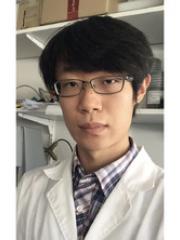
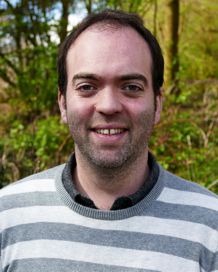
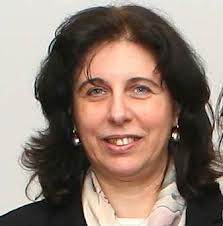
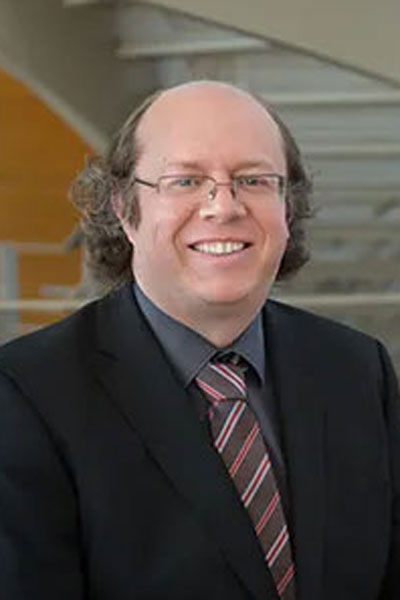
Dr. Yuan Xu is a Postdoctoral Research Fellow at the School of Chemical Engineering, The University of Queensland. His research focuses on rheology, colloidal science, physical chemistry, soft matter physics, and tribology. He holds a PhD in Chemical Engineering and a Bachelor of Engineering (Chemical and Material) from UQ. PhD in Chemical Engineering, The University of Queensland (2019) Bachelor of Engineering (Chemical and Material), The University of Queensland (2015) His research spans soft matter systems, nanocellulose hydrogels, tribological behavior of complex fluids, and viscoelastic lubrication. Recent work examines tribofilm formation, phase transitions, and rheological modeling of colloidal suspensions. Dr. Xu has contributed to 15+ publications between 2014-2024, including studies on cellulose nanocrystals, chocolate rheology, and pH-responsive materials. Collaborations include SICC Co., Ltd. for tribology applications in industrial polishing. He is available for research supervision and has participated in multidisciplinary projects involving material science and food engineering.
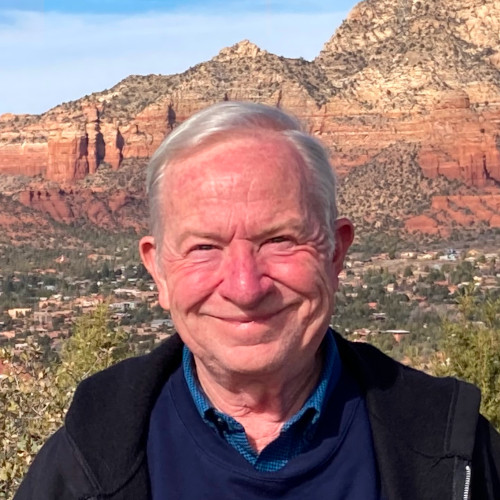
Ronald D. Ransome is a Professor in the Department of Physics and Astronomy at Rutgers, The State University of New Jersey. A member of the Graduate Faculty Group, he is affiliated with the Experimental Nuclear Physics research group. His work involves high-statistics neutrino experiments at Fermilab and studies of spin physics in light nuclei using electron beams at JLAB's CEBAF accelerator. Major research focus: MINERvA experiment (Fermilab) Secondary research: Spin structure and nucleon modifications in nuclear environments via CEBAF Instrumentation: Co-designed a large polarimeter for CEBAF Hall A Scientific Recognition : Involved in a neutrino scattering measurement recognized as PhysicsWorld 's 2023 Top 10 Breakthrough. Recipient of a Department of Education GAANN fellowship award. Teaching & Service : Currently serves as Undergraduate Program Director. Built comprehensive personal webpage integrating departmental resources.
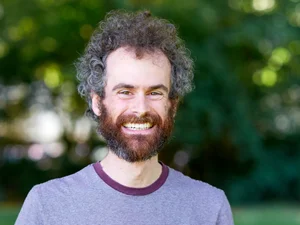
Carlos Gonzalez Lopez is an Assistant Professor in the Department of Materials Science and Engineering at Pennsylvania State University's College of Earth and Mineral Sciences. Joined in 2024, he leads research on soft matter systems with a focus on polyelectrolytes, poly(ionic liquid) gels, and colloidal dispersions. His work bridges fundamental polymer physics with practical applications in industrial settings. PhD in Chemical Engineering, Imperial College London MSc in Experimental and Theoretical Physics, University of Cambridge Dr. Lopez's research program investigates the structure-property relationships in complex polymeric systems. His work combines advanced experimental techniques including rheology, neutron scattering, and microfluidics to understand fundamental mechanisms governing polymer behavior in solution. His expertise spans polyelectrolyte solutions, cross-linked poly(ionic liquids), polysaccharide rheology, and polymer-ion interactions, with applications ranging from industrial detergents to advanced materials design. Recent publications reveal a strong focus on polyelectrolyte behavior under varying ionic conditions, nanoparticle-polymer interactions, and the rheological properties of complex biopolymer systems. His work demonstrates consistent innovation in understanding how molecular structure translates to macroscopic material properties, with particular attention to electrostatic effects and chain conformation in solution. Julia Higgins Centenary Prize for PhD work at Imperial College, London Dr. Lopez's research has attracted significant attention, with publications in high-impact journals including Macromolecules, Angewandte Chemie, and Soft Matter. His work on polyelectrolyte solutions has established him as a rising expert in polymer physics, particularly in understanding how counterion effects influence polymer conformation and solution properties. He maintains active collaborations with researchers in Germany and the United States, continuing his interdisciplinary approach to soft matter research.
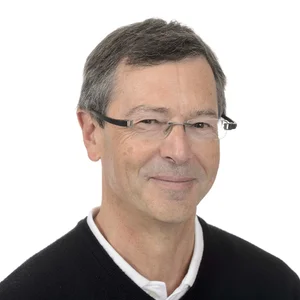
Gregory Smith is a SANS instrument scientist at the ISIS Neutron and Muon Source in the UK. He earned his degrees in Chemistry from the University of Bristol and has held positions at the University of Sheffield (UK) and the Niels Bohr Institute, University of Copenhagen. His research focuses on the interactions and self-assembly of soft matter and colloids, such as surfactants, polymers, and nanoparticles, using neutron-based techniques to study structures spanning length scales from ångströms to micrometres. Education: Chemistry, University of Bristol Research & Responsibilities: Gregory specializes in neutron scattering methods, including SANS, SESANS, and MISANS, which are applied to food science and soft matter systems. He is responsible for the Larmor instrument at ISIS, a flexible facility optimized for Larmor precession techniques and capable of polarized SANS, SESANS, and dynamic studies. His work bridges fundamental physical chemistry with practical food science challenges. Leadership & Recognition: Gregory leads Working Group 5 (Food Structure and Health) under the Northern Lights on Food initiative and is a LINXS Fellow, highlighting his interdisciplinary contributions to food science and neutron-based research.
Peter Schurtenberger serves as Professor of Physical Chemistry at Lund University's Department of Chemistry since 2010 and is the founding Director of LINXS International Research Center. Previously Director of LINXS and leader of its Dynamics Core Group, he remains an active mentor and contributor to the center's interdisciplinary scattering science initiatives. His academic journey commenced with a PhD from ETH Zurich in 1984, followed by postdoctoral positions at Lund University, MIT, and Harvard Medical School. After 12 years as a senior researcher at ETH Zurich's Polymer Institute, he became Full Professor of Experimental Physics at the University of Fribourg in 1999, founding both the Fribourg Center for Nanomaterials (2006) and the Adolphe Merkle Institute (2008) before relocating to Lund. Professor Schurtenberger's research spans Soft Matter , Biophysics , and Nanotechnology , with specialized focus on characterizing biological systems through light, X-ray, and neutron scattering techniques. He actively pioneers new instrumentation for advanced scattering applications across materials science and life chemistry domains. His exceptional contributions earned election to the Royal Swedish Academy of Sciences and Royal Swedish Academy of Engineering Sciences , alongside honorary membership in the European Colloid and Interface Society . As co-founder and former CEO (2000-2008) of LS Instruments Inc., he bridges academic research and commercial innovation. His leadership extends to mentoring young researchers through LINXS initiatives and guiding strategic development as a Scientific Advisory Board member. Currently active in LINXS's Dynamics Core Group, he advances collaborative projects in quantum materials, environment/climate science, and heritage analysis while fostering next-generation scattering methodologies.
Professor Brendan Kennedy is a distinguished academic in the field of Chemistry at The University of Sydney, where he has been a faculty member since 1998. He holds the position of Professor of Chemistry within the School of Chemistry, Faculty of Science, and is also a member of The University of Sydney Nano Institute, reflecting his interdisciplinary research approach that bridges chemistry, materials science, and nanotechnology. His educational background includes: B.Ed. Melbourne SC Ph.D. from Monash University Postdoctoral Fellow positions at Oxford University and ANU Professor Kennedy's research focuses on Solid State and Materials Chemistry, with particular expertise in Crystallography using X-ray and Neutron Scattering techniques. His work centers on the Structure and Bonding in Metal Oxides, investigating complex phenomena such as structural phase transitions in perovskite oxides, heavy metals in inorganic hosts, valence states in mixed 3d and 4d oxides, and oxides for solid state memory devices. His research aligns with the Faculty of Science Research Strengths in Molecules to Materials, Critical Minerals and Materials, and Next Generation Materials. He has made significant contributions to understanding the delicate balance of ionic size and covalency in cations that leads to rich behavior in metal oxide systems. Analysis of Professor Kennedy's extensive publication record reveals a sustained focus on advanced materials characterization, particularly using diffraction techniques to understand structure-property relationships in complex oxides. His work spans from fundamental studies of crystal structures to applied research on materials for energy applications, catalysis, and electronic devices. There's a clear progression toward more sophisticated structural analysis techniques and a growing interest in functional materials with specific technological applications, particularly evident in his recent publications on photocatalysis, energy storage, and ferroic properties. His notable scientific achievements include: AINSE Gold Medal for Research Excellence (2003) ANZAAS 2005 Liversidge Lecturer Professor Kennedy actively mentors the next generation of researchers, currently supervising students working on projects including "Oxides for Energy Application," "Rare earth-free high-performance magnets," and "Bi-functional catalyst synthesis and water management system in unitised regenerative fuel cells (URFCs)." His research program is supported by significant grants that enable advanced materials characterization using synchrotron and neutron facilities, providing students with access to world-class instrumentation and collaborative networks. As a member of The University of Sydney Nano Institute, Professor Kennedy collaborates with researchers across disciplines to develop novel materials with applications in energy, electronics, and environmental technologies. His laboratory utilizes state-of-the-art diffraction and spectroscopy techniques to probe materials at the atomic level, contributing to fundamental understanding that informs technological innovation. His extensive publication record spanning over two decades demonstrates consistent productivity and leadership in the field of solid-state chemistry and materials science.
Dr. Bertrand Blau is a Researcher and Group Leader of Cold Moderators at the Paul Scherrer Institute (PSI) in Villigen, Switzerland. He is affiliated with the Laboratory for Neutron and Muon Instrumentation under the PSI Center for Neutron and Muon Sciences. His work focuses on advanced neutron and muon instrumentation, particularly in cold moderator systems critical for materials research and nuclear physics experiments. Blau's research interests include optimizing neutron beamline technologies, developing instrumentation for scattering experiments, and advancing cold moderator applications in materials science. His contributions are pivotal in enhancing the performance of neutron scattering facilities at PSI. No academic awards, grants, or publications are explicitly listed in the provided materials. His professional activities are centered around leading technical teams and advancing experimental infrastructure at PSI.
Phillip S. Barbeau is a Professor of Physics at Duke University 's Trinity College of Arts & Sciences . His research focuses on neutrino and astroparticle physics , particularly through experiments involving coherent neutrino-nucleus scattering, dark matter detection, and neutrinoless double beta decay. He utilizes advanced detector technologies at facilities like Oak Ridge National Laboratory's Spallation Neutron Source. Education: Ph.D. from University of Chicago (2009) Current Appointments: 2025-Present at Duke University Previous Appointments: Associate Professor (2019-2025) and Assistant Professor (2013-2019) at Duke His experimental work emphasizes detector development for studying low-energy nuclear recoils, with applications in both dark matter searches and neutrino physics . Recent projects include acoustic positioning systems for neutrino experiments and xenon-doped liquid argon stability analysis. Barbeau's scientific awards include a prestigious Sloan Foundation Early Career Award (2014) and major National Science Foundation grants for detector development and undergraduate research training. He has received fellowships from Oak Ridge National Laboratory, University of Michigan, and North Carolina State University for antineutrino physics and dark matter research . His grant portfolio spans multiple decades, including continuous Department of Energy support since 1997 for nuclear structure studies.
Jens M. Walter is a Researcher at the Georg-August-University Göttingen in the Department of Structural Geology and Geothermal Energy . He has been actively involved in neutron diffraction research since 2007 and co-founded the MASA Institute GmbH in 2013. His work spans structural geology, archaeometry, and advanced materials analysis. Education: Doctorate in Geology (2000-2004) and Post-Doc (2004-2006) at University of Bonn Research Interests: Focus on in-situ deformation experiments , texture analysis , and recrystallization processes using neutron diffraction at POWTEX. Also specializes in archaeometric ceramic provenance and graphite characterization via Raman spectroscopy. Recent Article Trends: Publications emphasize neutron-based strain monitoring , critical metal analysis , and quantitative textural studies across geological and archaeological contexts. Key collaborations include institutions in Germany, Austria, and Italy. Instrumentation Leadership: Instrumental in designing sample environments for POWTEX Neutron Diffractometer at FRM II research reactor. Developed automated pole figure measurement systems for geological materials. Labs & Teams: Works with Geoscience Center (GZG) and co-manages MASA Institute GmbH , a university spin-off focused on material analysis and cultural heritage studies.
Jessica Valle Orero is an Assistant Professor at the American University of Paris (AUP) in the Department of Computer Science, Mathematics, and Environmental Science. She obtained her PhD in 2012 from the École Normale Supérieure de Lyon, followed by postdoctoral research at Columbia University and the École Normale Supérieure in Paris. Her research focuses on the physics of biomolecules, particularly DNA and protein dynamics, employing advanced techniques like neutron scattering and single-molecule magnetic tweezers. She has taught courses at institutions including Columbia University and AUP since 2022. Education: MSci Physics (UCL, 2008), PhD Physics (ENS Lyon/ILL, 2012) Postdoctoral experience: Fernandez Lab, Columbia University (2013–2017); Biophysics Lab, ENS Paris (2018–2022) Research interests include DNA fiber dynamics, protein folding mechanics, and the interplay between molecular and macroscopic scales. Her work bridges experimental and theoretical approaches, with contributions to understanding DNA glass transitions and mechanical protein aging. Current research is conducted at ENS Paris, focusing on biophysical mechanisms of biomolecular systems. Teaching spans applied statistics, environmental science, and foundational math courses at AUP. Over 30 peer-reviewed publications highlight her expertise in single-molecule biophysics and structural biology.
Patrik Henelius is the Dean of the Faculty of Science and Engineering at Åbo Akademi University. His research focuses on condensed matter physics, particularly magnetic materials, neutron scattering techniques, and quasicrystals. He has led projects such as FICORE (Finnish Indian Collaboration in Research and Education) and a doctoral double degree program between Åbo Akademi and IIT Mandi. His work explores topics like spin ice, magnetic structures in quasicrystals, and quantum magnetism using neutron scattering. Key contributions include studies on magnetic interactions in approximant crystals and tunable critical correlations in kagome ice systems. Projects span collaborations with institutions globally, emphasizing cross-disciplinary research in materials science and physics.
Paul Souder is a Professor of Physics at Syracuse University's College of Arts & Sciences. His research focuses on fundamental particle and nuclear physics using spin-polarized experiments, particularly parity-violating interactions and neutron skin thickness measurements. He leads major experimental collaborations like PREX-2, CREX, and SoLID at Jefferson Lab. Education: PhD in Physics (1972, Yale University), MS in Particle Physics (1971, Princeton University), BS in Physics (1966, Wheaton College). Research emphasizes precision measurements of electroweak interactions and nuclear structure Develops advanced polarimetry techniques for subatomic physics Explores implications for neutron star composition and Standard Model extensions Recent work includes groundbreaking neutron radius measurements and weak form factor determinations. Active in experimental particle physics instrumentation and detector development. Teaching includes graduate-level courses in electromagnetism, classical mechanics, and quantum mechanics, along with undergraduate nuclear physics courses.
Chris Murphy is Senior Lecturer in Laser-Plasma Physics at the University of York's School of Physics, Engineering and Technology. His research focuses on high-intensity laser-plasma interactions with applications in nuclear physics and advanced imaging techniques. Research specialties include diagnosis of laser-produced plasmas, XFEL probing of dynamic plasma states, laser-driven nuclear processes, and neutron/X-ray imaging in extreme environments. Current projects investigate quantum electrodynamic effects in strong fields and novel radiation sources for industrial imaging. Recent publications demonstrate advances in laser-driven neutron imaging, photon-photon scattering measurements, and inertial fusion studies. His group develops innovative diagnostic techniques for extreme plasma conditions. Dr. Murphy teaches undergraduate mathematics and postgraduate courses on inertial confinement fusion. He supervises PhD students working on wakefield acceleration, high-resolution imaging, and laser-plasma interactions. His research is supported by EPSRC and STFC grants.
Angela Bracco is a Full Professor in Experimental Nuclear Physics at the University of Milan and associated with INFN (the Italian Institute of Nuclear Physics). Her research focuses on nuclear structure, particularly gamma spectroscopy and collective nuclear modes like giant resonances. Supervised 33 Master's and 13 PhD theses Co-editor of the journal EPL since 2015 Chair of NuPECC since 2012 Her work involves building and using complex gamma-ray instrumentation for heavy-ion beam experiments at international labs such as CERN, GANIL, GSI, and TRIUMF. She has published over 200 refereed papers with 5,325 citations (h-index=36). Recent research trends emphasize: Pygmy dipole resonances and neutron skin studies Isospin mixing in nuclear reactions Low-energy gamma enhancements Giant resonances at finite temperatures Scientific honors include: Chair of NuPECC (2012) Executive Board member of the European Physical Society (2014) She has advised 10 post-docs, organized 7 international conferences, and contributed to EU review panels (FP6/FP7) and the ERC Starting Grant panel since 2014.
David Alan Tennant is a Professor in the Department of Materials Science and Engineering at the University of Tennessee, affiliated with the Tickle College of Engineering. His position is based at the Oak Ridge National Laboratory (ORNL), collaborating with the Spallation Neutron Source (SNS) facilities. His research focuses on quantum magnetism, spin liquids, and neutron scattering techniques, with particular expertise in applying neutron spectroscopy to study entanglement in quantum materials. Active in both experimental and theoretical work, Tennant integrates machine learning approaches to analyze neutron scattering data and model complex magnetic systems. Key research interests include: Quantum spin liquids and fractionalized excitations Topological materials and Weyl semimetals Neutron scattering instrumentation development Machine learning-driven materials discovery His recent work (2022-2025) emphasizes dynamics of spin ice systems, entanglement quantification, and quantum critical phenomena. He has pioneered the use of laser-neutron hybrid techniques and analog quantum processors for simulating neutron scattering. His lab at ORNL collaborates with international institutions on neutron scattering experiments at the SNS Second Target Station. Publications from 2020–2025 highlight advancements in: Pressure-induced quantum phase transitions Entanglement signatures in spin chains KPZ hydrodynamics in low-dimensional magnets Machine learning for inverse scattering problems