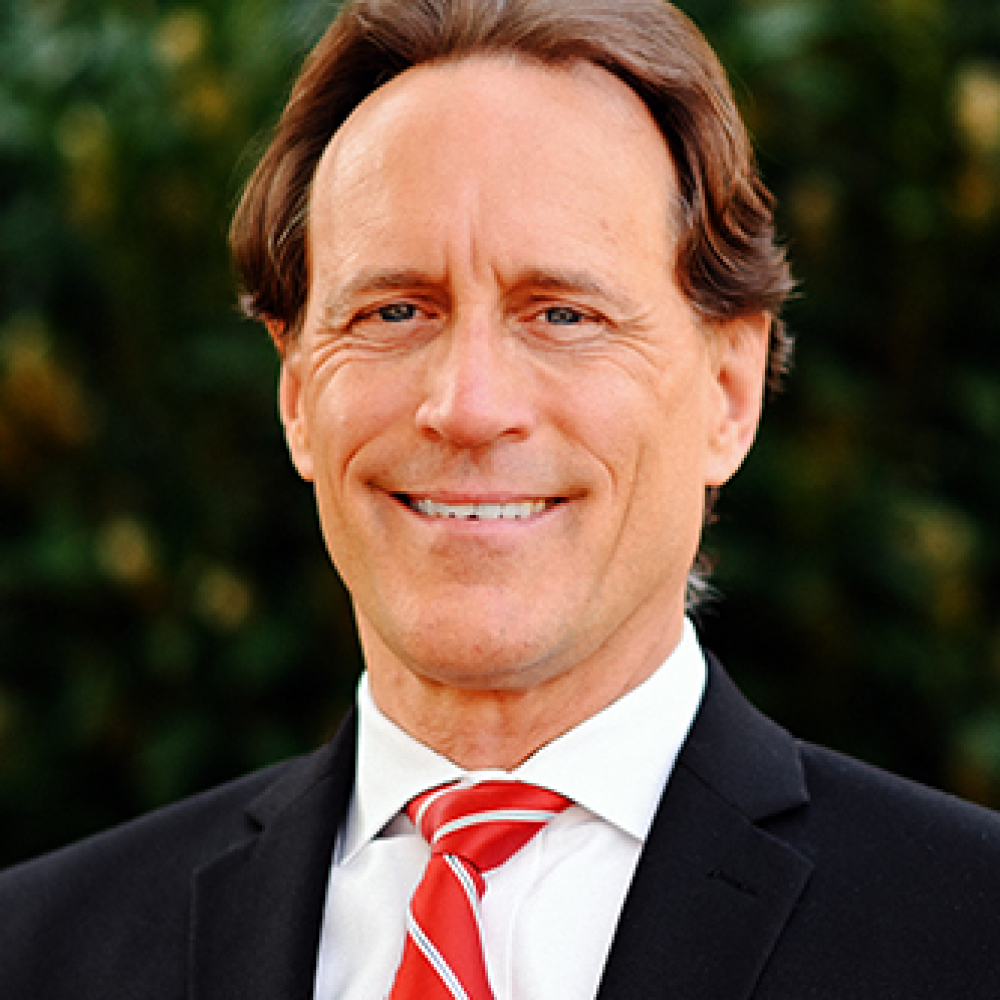
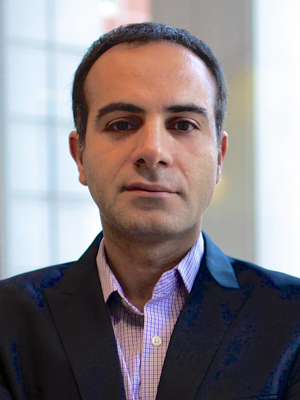
Prof. Christian Holz is an Associate Professor at the Department of Computer Science and Deputy Head of the Institute of Intelligent Interactive Systems at ETH Zürich. His work focuses on advancing human-computer interaction through innovations in wearable technologies, mixed reality systems, and sensor-driven applications. Key research areas include motion capture, physiological signal processing, and adaptive user interfaces. Holz leads the SIPLab (siplab.ethz.ch), producing influential work at the intersection of computer science and biomedical engineering. His research explores cutting-edge topics such as egocentric vision systems, wearable health monitoring devices, and VR/AR applications. Recent studies investigate cybersickness detection via EEG, heart rate estimation from eye-tracking cameras, and scalable motion capture using inertial/UWB sensors. Holz's work emphasizes practical applications in healthcare, education, and human-centered computing. Publications reflect a strong focus on interdisciplinary solutions, combining machine learning with sensor data analysis. Notable contributions include the EgoSim multi-view simulator, WildPPG biomedical dataset, and MiBOT cardiovascular modulation device. His research bridges theoretical advancements with real-world usability in domains like emergency response training, chronic disease monitoring, and immersive education.
Russell Epstein is a Professor and Director of Graduate Studies in the Department of Psychology at the University of Pennsylvania. He is affiliated with the Center for Cognitive Neuroscience and Goddard Labs. His research focuses on neural mechanisms underlying visual scene perception, spatial navigation, and memory. Epstein holds a BA in Physics from the University of Chicago and a PhD in Applied Mathematics from Harvard University. Epstein’s research interests include high-level vision, spatial cognition, and the neural basis of environmental representations. His lab uses functional MRI and cognitive neuroscience techniques to study how scenes, objects, landmarks, and spaces are encoded in brain systems such as the parahippocampal place area and retrosplenial cortex. Recent work explores cognitive maps, grid-like neural representations, and the role of multisensory cues in navigation. His articles emphasize spatial navigation strategies, hierarchical cognitive maps, and the interplay between perception and memory. Notable contributions include investigations into hippocampal spatial metrics, olfactory navigation, and the neural underpinnings of environmental learning. Epstein teaches courses on cognitive neuroscience, including PSYC 149 and PSYC 600. He advises two graduate students in Psychology and has no listed scientific awards. His work is supported by grants (unspecified) and conducted within collaborative teams at the Center for Cognitive Neuroscience. Epstein’s research extends to labs focused on spatial cognition and neuroimaging, advancing understanding of how humans mentally map environments through visual and sensory integration.
Brent Doiron is a Professor at the University of Chicago, holding appointments in the Departments of Neurobiology and Statistics, and serving on the Committee on Computational and Applied Mathematics (CCAM). His research integrates nonlinear dynamics and statistical mechanics to study neural circuit variability, focusing on mechanisms underlying neural coding and network learning through collaborations with experimentalists in sensory systems. Education: PhD in Physics (University of Ottawa, 2004) Postdoc: Center for Neural Science at New York University (2017) Previous Roles: Mathematics Professor at University of Pittsburgh (2007-2020), Co-Director of Neural Computation Program at Carnegie Mellon Neuroscience Institute Research interests center on neuronal population dynamics, recurrent circuit mechanisms, and computational neuroscience. Current work investigates correlated variability in cortical networks, inter-areal communication, and stochastic spiking models. Recent publications emphasize cortical stability/gain modulation, asynchronous/synchronous activity balance, and Bayesian inference frameworks. Key themes include sensory processing, network plasticity, and dimensionality reduction in neural coding. Scientific Awards Alfred P. Sloan Research Fellowship in Neuroscience Vannevar Bush Faculty Fellowship Chancellor’s Distinguished Research Award (University of Pittsburgh) Active grants include NIH R01 and R90/T90 awards for neuronal dynamics research and computational neuroscience training programs.
Raul Vicente Zafra is a Professor of Data Science at the University of Tartu, Faculty of Science and Technology, Institute of Computer Science, where he has been working since 2013. His research spans computational neuroscience, artificial intelligence, and data science, with a particular focus on bridging biological and artificial models of intelligence. Education: PhD in Physics (2001-2006), University of the Balearic Islands BSc in Physics (1997-2001) Professor Zafra's research interests center on computational neuroscience and artificial intelligence, with specific expertise in brain-computer interfaces, reinforcement learning, neural modeling, and explainable AI. His work bridges the gap between biological and artificial intelligence systems, exploring how neural principles can inform machine learning algorithms and vice versa. He has made significant contributions to understanding neural coherence, time interval learning in neural systems, and the application of information theory to brain-computer interfaces. His research often involves interdisciplinary collaboration between computer science, neuroscience, and medicine. Analysis of Zafra's recent publications reveals a strong focus on the intersection of artificial intelligence and neuroscience. His work spans explainable AI methods, brain-computer interfaces, reinforcement learning models that mimic cognitive processes, and neurophysiological studies of brain activity. A notable trend is his exploration of how biological principles of neural computation can inform and improve artificial intelligence systems, particularly in areas like time-based learning, consciousness modeling, and neural coherence. Scientific Awards: 2012: Attendee at the 62nd Lindau Nobel Laureate Meeting 2007: Quantum Electronics and Optics Division Prize of the European Physical Society for the best PhD Thesis in Applied Optics in Europe 2006: PhD Extraordinary Award of the Physics Department of the University of the Balearic Islands 2001: Physics Degree Extraordinary Award (First Class Honors, best GPA) 1997: Bronze Medal in the "8th Spanish Physics Olympiad" Professor Zafra has been principal investigator on numerous significant research projects including the Estonian Centre of Excellence in Artificial Intelligence, Cardiovascular Stress Impacts On Neuronal Function, and Bridging biological and artificial models of vision. His grant portfolio demonstrates strong funding support from the Estonian Research Council, European Commission, and other major funding bodies. He has supervised multiple PhD students and mentored early-career researchers in computational neuroscience and AI. His laboratory work focuses on developing computational models of neural systems and applying these insights to artificial intelligence. Current research directions include explainable AI methods, brain-computer interfaces, modeling of consciousness and cognitive processes, and the application of AI to healthcare challenges.
Silvestro Micera is a Full Professor at the Swiss Federal Institute of Technology Lausanne (EPFL) and holds the Bertarelli Foundation Chair in Translational Neuroengineering. He directs the Translational Neural Engineering Laboratory and teaches courses including Neural signals and signal processing and Translational neuroengineering . His research bridges neural interfaces, robotics, and neuroprosthetics to restore motor functions in spinal cord injuries, stroke, and amputations. Micera's research integrates implantable neural interfaces, robotic rehabilitation, and hybrid neuro-prosthetic systems. Key focus areas include: Robotic neurorehabilitation for mobility restoration Neural control mechanisms in movement CNS/PNS neural interface development Bioelectronic modulation for sensory feedback His recent publications emphasize machine learning-driven motor recovery prediction, closed-loop sensory feedback systems, and minimally invasive neuroprosthetics. Trends include AI-optimized stimulation protocols, multimodal data fusion for rehabilitation, and clinical translation of neural bypass technologies. Awards: IEEE EMBS Early Career Achievement Award (2009) IEEE EMBS Technical Achievement Award (2021) Micera leads EU-funded projects such as TIME, CLONS, and NeuWalk, focusing on neural prostheses. He advises 8 current and 18 former PhD students in neuroengineering. His lab collaborates with MIT, Harvard, and industry partners (e.g., Plexon) to advance translational neurotechnologies.
Joe Kable, PhD, serves as the Baird Term Associate Professor of Psychology at the University of Pennsylvania, where his research investigates the neurophysiological basis of human decision-making through integrative approaches from experimental economics, cognitive neuroscience, and judgment psychology. His laboratory specializes in fMRI studies examining how subjective value representations guide choices involving immediate versus delayed rewards. Education: B.S. in Chemistry, Emory University PhD in Neuroscience, University of Pennsylvania Dr. Kable's research program centers on neural mechanisms of temporal discounting, risk assessment, and individual differences in choice behavior. His work demonstrates how socioeconomic status, aging, and clinical conditions modulate decision processes, with particular emphasis on hippocampal-prefrontal interactions during value computation. Recent studies reveal how time perception alterations affect neural activity in reward circuits and how social factors influence trust decisions across the lifespan. Analysis of his 15 most recent publications shows a strong methodological focus on fMRI and lesion studies, with growing clinical translation in depression, addiction, and dementia. Key thematic trends include the neural encoding of effort costs in social contexts, structural brain markers for impulsivity, and the dissociable roles of frontal subregions in persistence behaviors. His work consistently bridges basic decision neuroscience with real-world applications in mental health. Scientific Awards: No scientific awards mentioned in source material Dr. Kable leads an active research laboratory at Penn but the source text provides no details about graduate student advising or specific grant funding. His publications indicate collaboration with clinical researchers at the Penn Memory Center, particularly in aging-related decision studies. The laboratory employs multimodal neuroimaging techniques including resting-state fMRI, TMS, and lesion mapping to investigate decision circuits, with recent work extending to computational modeling of value representation and social cognition mechanisms.
Gert Cauwenberghs is a Professor of Bioengineering at the University of California San Diego (UCSD), affiliated with the Jacobs School of Engineering. He co-directs the Institute for Neural Computation and holds a visiting professorship at MIT. His research focuses on neuromorphic engineering, energy-efficient neural interfaces, and wearable biosensors. Key contributions include silicon-based adaptive neural circuits, implantable neural recording systems, and in-ear biosensing devices. Education: M.Eng. in Applied Physics (University of Brussels, 1988), M.S. and Ph.D. in Electrical Engineering (Caltech, 1989–1994). Prior roles include Professorships at Johns Hopkins University and Visiting Professor at MIT. Research Interests: Biomedical integrated circuits, neuromorphic computing, brain-machine interfaces, and energy-efficient neural systems. His work bridges neuroengineering and clinical applications, emphasizing adaptive intelligence and low-power designs. Recent Work: Development of femtojoule-efficient neural chips, high-density neural interfaces, and closed-loop wearable systems. Projects include neurobench benchmarking frameworks and RRAM-based neuromorphic hardware. Awards: NSF Career Award (1997), ONR Young Investigator (1999), PECASE (2000), IEEE Distinguished Lecturer (2003–2004). Grants & Labs: Active in NIH and DoD-funded projects, co-directs the UCSD Institute for Neural Computation. Collaborates with industry on neural interface technologies. Labs/Teams: Cauwenberghs Lab at UCSD focuses on integrated neuroengineering systems, including neural recording systems and neuromorphic computing architectures.
Natalie H. Brito is an Associate Professor of Applied Psychology at New York University (NYU), affiliated with the Steinhardt School of Culture, Education, and Human Development. Her research focuses on how early social and cultural contexts shape neurocognitive development in infants and toddlers, particularly in areas of attention, memory, and socio-emotional skills. Prior to NYU, she completed a postdoctoral fellowship at Columbia University Medical Center and was a Robert Wood Johnson Health and Society Scholar. Dr. Brito’s work bridges developmental psychology, neuroscience, and public policy, emphasizing the need for equitable environments that support healthy child development. She has received prestigious awards such as the APS Rising Star Award and NIH grants, reflecting her impactful contributions to understanding developmental trajectories. Her research also extends to policy implications, such as the effects of paid maternal leave on infant brain function and the role of structural inequities in maternal mental health. Key themes include early life stress, gut microbiome influences, and the neurobiological underpinnings of cognitive development. Dr. Brito has published extensively in journals like Child Development , Developmental Cognitive Neuroscience , and JAMA Psychiatry , with a focus on innovative methodologies (e.g., the OWLET gaze-tracking tool). She teaches courses on developmental psychology and the principles of applied psychology, fostering interdisciplinary approaches to human development. Her scientific accolades include recognition from the International Society of Developmental Psychobiology and the American Psychological Association, underscoring her leadership in advancing developmental science and equity-focused research.
Dr. Gregor Schuhknecht is a Researcher and incoming Max-Planck Research Group Leader at the Max Planck Institute for Brain Research in Frankfurt, Germany. Starting December 2025, he will lead the Brain Algorithms and Circuits Group, focusing on computational neuroscience and neuronal circuitry in larval zebrafish. His work bridges experimental and computational approaches to understand brain algorithms enabling flexible behaviors. Education PhD in Neuroscience (2014–2019), Institute for Neuroinformatics, University of Zurich and ETH Zurich MSc in Biology (Neuroscience) (2012–2019), ETH Zurich BSc in Biosciences (2009–2012), Heidelberg University His research investigates how synaptic circuitry implements computational algorithms for sensorimotor processing, evidence accumulation, and behavior. Experimental approaches include functional imaging, optogenetics, connectomics, and computational modeling. The group will explore neuronal circuits across scales, from synapse to behavior, with a focus on biophysical properties and dynamic environmental adaptation. Recent publications highlight correlative light/electron microscopy, developmental activity-free circuit formation, and neocortical synapse analysis. Scientific Awards Meselson Prize (2024) Aspirational Neuroscience Award (2023) Best Publication Award (2021) Swiss National Science Foundation Fellowships (2021, 2019, 2018) Gregor Schuhknecht's lab will welcome graduate and postdoctoral researchers starting December 2025, focusing on experimental and computational systems neuroscience. He previously collaborated with Harvard University's Department of Molecular and Cellular Biology and the Department of Moritz Helmstaedter for connectomic analyses.
Nicolas Mathevon is a Professor at the University of Saint-Etienne, with a focus on Animal Behavior and Bioacoustics . He currently serves as Director of Studies at Ecole Pratique des Hautes Etudes and leads the ENES Team . His research explores acoustic communication across diverse species, including crocodiles, seals, penguins, and humans, with particular emphasis on vocal recognition, signal evolution, and neurobiological underpinnings. Major collaborations include Dr. T. Aubin (CNRS), Dr. I. Charrier (marine mammals), Dr. N. Grimault (crocodilian bioacoustics), and Prof. D. Reby (human communication). He also co-edits a new book, The Voices of Nature , published by Princeton University Press. His recent work spans ecoacoustic monitoring for conservation, multi-modal communication in crocodiles, and cross-species analysis of distress signals in bonobos, chimps, and humans. Neurobiological studies include brain activation patterns in response to vocalizations and sound localization mechanisms in reptiles. Scientific Awards include senior membership in the Institut universitaire de France .
Mayank R. Mehta is a Professor at the University of California, Los Angeles (UCLA), holding joint appointments in the Departments of Physics & Astronomy, Neurology, and Neurobiology. He is a member of the Brain Research Institute and the W. M. Keck Center for Neurophysics at UCLA. His research bridges experimental and theoretical neuroscience, focusing on how neuronal networks encode space-time, the role of brain rhythms in learning and memory, and the impact of sleep and virtual reality on neural dynamics. His recent publications highlight breakthroughs in understanding hippocampal spatiotemporal selectivity, dendritic activity during behavior, and the causal influence of visual cues on memory neurons. Notable findings include the discovery that dendrites generate ten times more spikes than neuronal cell bodies and the modulation of hippocampal theta rhythms in virtual reality. Research Themes: Neurophysics of spatial-temporal coding Dendritic contributions to learning Virtual reality and brain plasticity Neural oscillations in memory consolidation Key Collaborators: Bert Sakmann (Max Planck Florida Institute) Thomas Hahn (Bernstein Center Heidelberg/Mannheim) Maryam Ghorbani (UCLA) Mehta's lab at UCLA trains graduate and postdoctoral researchers in cutting-edge techniques combining hardware development, electrophysiological recordings, and biophysical modeling. His work has significant implications for treating learning and memory disorders like Alzheimer's disease.
Dr. Kelsey Onderdijk is a Post-doctoral Researcher at Tilburg University in the Department of Communication and Cognition within the Tilburg School of Humanities and Digital Sciences. Her research focuses on the intersection of music cognition, virtual reality, and social connectedness, with publications spanning neuroscience, psychology, and human-computer interaction domains. Dr. Onderdijk completed her doctoral studies at Ghent University with a dissertation titled "Come together: Exploring unity in music interaction through agency and social connectedness." Her academic journey reflects a strong commitment to understanding human interaction through musical experiences, particularly examining how technological mediation affects social bonding. Her research interests include: Music cognition and embodied music interaction Virtual reality applications in musical contexts Social connectedness in digital music environments Effects of technological constraints on musical collaboration Physiological measures of emotional engagement in music Impact of external constraints on creative expression Dr. Onderdijk's publication record demonstrates a clear trajectory examining how people connect through music in both physical and virtual spaces. Her work bridges psychology, musicology, and human-computer interaction, with particular attention to the impact of the COVID-19 pandemic on musical collaboration. Recent publications have focused on concert experiences in virtual reality environments and the physiological correlates of emotional engagement during musical performance. Her research has garnered significant attention, with multiple publications receiving citations and mentions in news outlets, policy sources, and social media platforms. The "Impact of Lockdown Measures on Joint Music Making" paper has been particularly influential, accumulating 39 citation indexes and 50 Mendeley readers. Dr. Onderdijk actively collaborates with researchers across institutions, particularly with scholars from Ghent University including Marc Leman and Pieter-Jan Maes, indicating a strong network within the music cognition research community. Her work contributes to UN Sustainable Development Goals, particularly those related to well-being and innovation.
Alexander Mathis is an Assistant Professor at the École Polytechnique Fédérale de Lausanne (EPFL) in the Brain Mind Institute (School of Life Sciences). His research bridges computational neuroscience and machine learning to decode sensorimotor behaviors and develop AI tools for behavioral analysis. Pure Mathematics MSc, Ludwig Maximilians University Munich PhD in Computational Neuroscience, Ludwig Maximilians University Munich His work focuses on understanding how the brain generates behavior through computational models and algorithms. Key contributions include the DeepLabCut toolbox, hBehaveMAE , and other frameworks for pose estimation, action segmentation, and brain-inspired AI. His group also explores proprioception, motor control, and neural coding theories. Recent publications include unsupervised hierarchical behavior modeling via masked autoencoders (ECCV 2024), synthetic basketball benchmarks (Shot7M2), and extensions of BABEL into hBABEL. These works highlight his interest in temporal hierarchies in behavior and scalable AI solutions for neuroscience. Scientific Honors Robert Bing Prize (2024) Eric Kandel Young Neuroscientists Prize (2023) Frontiers of Science Award (2023) Marie Skłodowska-Curie Postdoctoral Fellowship Studienstiftung des deutschen Volkes scholarship He advises PhD candidates in neuroscience and life sciences, leads courses on brain-like computation and software engineering for life sciences , and collaborates across AI4Science initiatives. His group actively participates in competitions, such as NeurIPS' MyoChallenge, where brain-inspired reinforcement learning algorithms have won awards.
Jeffrey Schall is a Full Professor of Biology and Program Director of the Visual Neurophysiology Centre at York University. He holds the Canada Research Chair in Translating Neuroscience. His research focuses on neural mechanisms underlying behavior, integrating neurophysiological and computational approaches across multiple scales. Schall is a core member of the Centre for Vision Research and the Canada First Research Excellence Fund Connected Minds initiative. Education: PhD in Anatomy (University of Utah School of Medicine, 1986), postdoctoral training at MIT. Awards include the Troland Research Award, Sloan Foundation Fellowship, and AAAS Fellowship. He served as Vision Science Society President in 2019. Research interests include visual attention, executive control, error monitoring, and translational neuroscience applications in law. His work bridges basic science with applied studies in clinical populations like schizophrenia patients. Collaborative projects involve EEG/MEG analysis, cortical microcircuitry modeling, and neuromodulation techniques. Teaching: YU_NRSC 2100 Systems, Behavioral, and Cognitive Neuroscience. Active in interdisciplinary initiatives linking neuroscience with legal systems through scholarship and policy engagement.
Nima Mesgarani is an Associate Professor of Electrical Engineering at Columbia Engineering, Columbia University, affiliated with the Sense, Collect and Move Data Committee. His research bridges engineering and neuroscience through reverse-engineering neural signal processing mechanisms, leading to advancements in brain-machine interfaces, neural prosthetics, and speech processing algorithms. He received his PhD in Electrical Engineering from the University of Maryland and completed postdoctoral training at Johns Hopkins University's Center for Language and Speech Processing and UC San Francisco's Neurosurgery Department. Research Focus Professor Mesgarani's lab integrates computational neuroscience and engineering to study acoustic signal processing. Key areas include: Neural decoding of speech and auditory attention in multi-talker environments Development of brain-controlled hearing technologies Novel speech separation and synthesis algorithms inspired by cortical processing Cross-modal learning between auditory and visual systems Applications of large language models in neural signal interpretation Publication Trends Analysis of his 15 most recent articles (2025) reveals dominant themes: neural decoding techniques using intracranial EEG, brain-inspired speech separation models (e.g., Mamba architectures), applications of large language models in auditory neuroscience, cross-modal distillation methods, and clinical translation of audio processing algorithms. A strong emphasis emerges on real-time brain-computer interfaces and noise-robust speech processing. Laboratory and Collaborations Mesgarani directs an interdisciplinary lab developing neurotechnology for hearing restoration. His team collaborates with neurosurgery departments and speech processing centers, focusing on translating theoretical models into clinical brain-machine interfaces. The lab's work has yielded patents for brain-informed speech separation systems and attention-decoding frameworks.