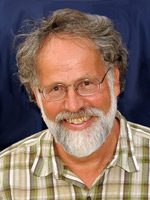
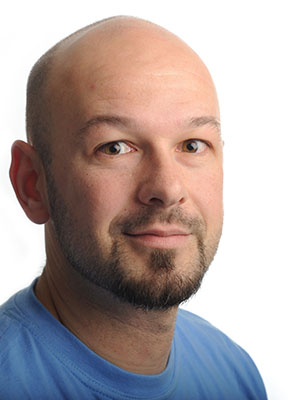
Benjamin Adric Dunn is an Associate Professor in (Neural) Data Science at the Department of Mathematical Sciences, NTNU. His research focuses on computational neuroscience, systems neuroscience, and topological data analysis. He holds a PhD and postdoctoral experience from NTNU's Kavli Institute for Systems Neuroscience, an MS in Computational Engineering from Purdue University, and a BS in Applied Mathematics from the University of Connecticut. Previously, he worked as a Computational Methods Engineer at Pratt & Whitney, UTC. His work explores neural mechanisms underlying spatial navigation, grid cell dynamics, and neural coding in rodents. Key contributions include studies on toroidal representations in grid cells and cortical coding of 3D posture. Dunn has published extensively in journals like Nature , Science , and Neuron , with a focus on interdisciplinary methods combining topology, statistics, and neuroscience. He has collaborated on projects involving neural ensemble activity analysis and hidden variable modeling in biological data. Dunn’s research also addresses computational challenges in neuroscience, such as removing experimental variability in functional data.
Gaute Tomas Einevoll is a Professor in the Department of Condensed Phase Physics at the University of Oslo. His research focuses on computational neuroscience, neurophysics, and theoretical biophysics. He leads the COBRA project (COMPUTING BRAin signals) and contributes to the Condensed phase physics research group. His work integrates physics-based approaches with neuroscience to study brain signal analysis, synaptic plasticity mechanisms, and neuron modeling. Recent research includes computational modeling of schizophrenia-related synaptic impairments and topological analysis of neural population activity in visual cortex systems. He has published extensively in top journals like PLoS Computational Biology and PNAS, with notable contributions on electric brain signal predictions and genetic mechanisms in mental health. Einevoll collaborates internationally and engages in multidisciplinary projects at the intersection of neuroscience, computing, and technology. His research has implications for understanding brain disorders and advancing neurotechnology applications.
Professor Gaute T. Einevoll is affiliated with the Department of Physics at both the University of Oslo and the Norwegian University of Life Sciences (NMBU) . His research focuses on computational neuroscience , integrating methods from physics, mathematics, and computer science to understand neural mechanisms underlying biological intelligence. Key areas: Neural network modeling , brain signal analysis (EEG, MEG, LFP), computational psychiatry Leadership roles: Co-leader of Norwegian node of INCF since 2007; Partner in EU Human Brain Project since 2013 His recent work explores topological neural representations , GABAB receptor signaling , and ultra-high density electrode technology , as evidenced by publications in 2024-2025. He also develops open-source tools like LFPy and Uncertainpy for biophysical modeling. Active in science communication, he hosts the podcast "Vett og vitenskap med Gaute Einevoll" , discussing neuroscience and related disciplines.
Alejandro Omar Blenkmann is a Researcher at the RITMO Centre for Interdisciplinary Research on Rhythm, Time and Movement , Department of Psychology, University of Oslo. His work focuses on brain prediction mechanisms, auditory sensory processing, and intracranial electrode localization. He holds a PhD in Engineering (2012) from the National University of La Plata, Argentina, and has academic affiliations with institutions in Norway, Argentina, and the United Kingdom. Education: PhD in Engineering (2012) - National University of La Plata MSc in Biomedical Engineering (2007) - Favaloro University BSc in Engineering (2004) - Favaloro University Research Interests: Neuronal networks in auditory prediction Intracranial recordings (ECoG/SEEG) Frontal lobe role in prediction iElectrodes open-source toolbox development Collaborations: University of Cambridge University of California, Berkeley International Biomedical Cooperation Network
Sabine Leske is a researcher affiliated with the University of Oslo, where she works as a Guest researcher in the RITMO Centre for Interdisciplinary Studies of Rhythm, Time and Motion and the FRONT neurolab. She also holds the position of Researcher II at the Neuropsychology Research Group, Helgelands Hospital. Her research focuses on auditory perception, temporal prediction, neuronal oscillations, and predictive processing using EEG and intracranial EEG techniques. Doctor of Natural Sciences, University of Konstanz (Clinical Psychology and Neuropsychology) Diplom in Psychology, Technical University of Berlin Her work investigates the role of neural oscillations in auditory and temporal prediction, particularly through the lens of prefrontal and temporal cortex function. She employs EEG and intracranial recordings (ECoG/SEEG) in patients with frontal lesions and healthy controls to explore these mechanisms. The 15 most recent publications reflect a focus on auditory cognition, neural oscillations (alpha, beta, theta), lesion studies (orbitofrontal cortex), and advanced neuroimaging techniques like intracranial EEG. Key themes include temporal expectation, predictive coding, and the interplay between brain regions during cognitive tasks.
Benjamin Adric Dunn is an Associate Professor in (Neural) Data Science at NTNU's Department of Mathematical Sciences. Formerly, he held positions as a PhD researcher and postdoc at NTNU's Kavli Institute for Systems Neuroscience, with prior education including an MS in Computational Engineering from Purdue University and a BS in Applied Mathematics from the University of Connecticut. His career also includes industrial experience as a Computational Methods Engineer at Pratt & Whitney, UTC. His research focuses on integrating mathematical and computational approaches to understand neural systems, particularly spatial cognition, grid cells, and topological data analysis in neuroscience. Key contributions include work on toroidal representations in grid cells, posture coding in neocortex, and cohomological feature extraction from neural data. Publications emphasize multidisciplinary methods bridging algebraic topology, statistical physics, and neuroscience. Teaching includes courses like TMA4255 (Applied Statistics) and TMA4285 (Time Series). Outreach activities highlight engagement in scientific communication, including media interviews about posture-coding neurons and grid cell research.
Bente Gunnveig Berg is a Professor in the Department of Psychology at NTNU, focusing on insect olfaction and neural systems. Her research investigates how moth brains process olfactory information, particularly the neural circuits underlying pheromone reception, plant odor responses, and sexual dimorphism. Her work combines experimental techniques like intracellular recordings, immunocytochemistry, and computational modeling. Key research areas include: Neuronal architecture of olfactory pathways Functional mapping of sensory neurons Sensory integration in insect brains Neurochemical modulation (e.g., serotonin, GABA) Publications span over 25 years, emphasizing neuronal tract organization, glomerular mapping, and comparative neuroanatomy across moth species. Notable contributions include identifying novel neural pathways for CO₂ sensing and defining male-specific pheromone processing regions. She supervises graduate students in neuroanatomical tracing and electrophysiological studies. Her Chemosensory Lab focuses on model organisms like Helicoverpa armigera, leveraging advanced microscopy and data visualization tools to map neural networks. Current projects explore how aversive and attractive odors are encoded in distinct brain regions.
May Britt Moser is a Professor at the Kavli Institute for Systems Neuroscience, NTNU. Her research focuses on the neural basis of spatial location, spatial memory, and cognition. She co-discovered grid cells in the entorhinal cortex, a breakthrough earning her the 2014 Nobel Prize in Physiology or Medicine alongside Edvard I. Moser and John O'Keefe. Key roles include Founding Director of the Centre for Algorithms in the Cortex and former Director of the Centre for Neural Computation (2013–2022). She holds a PhD in neurophysiology from the University of Oslo (1995). Research Interests: Moser’s work explores spatial navigation, memory formation, and neural circuits underlying cognition. Her group investigates grid-cell circuits, hippocampal-entorhinal interactions, and temporal coding mechanisms. Recent studies address object-vector coding, theta rhythm dynamics, and the impact of geometric environments on neural representations. Scientific Contributions: Over 50+ publications since 2010, including seminal work on grid cells, spatial coding, and neural oscillations. Key awards include the Nobel Prize and honors from the Royal Swedish Academy of Sciences. Teams & Projects: Leads the Moser group and initiatives like KiloNeurons and TheMini2P. Collaborates on large-scale imaging techniques and computational models of neural circuits.
Bente Gunnveig Berg is a Professor at the Norwegian University of Science and Technology (NTNU), Department of Psychology. Her research focuses on understanding how insect brains process olfactory information, particularly in moths. She leads the Chemosensory Lab, investigating neural pathways and functional networks underlying odor perception. Her work combines experimental techniques like intracellular recordings, immunocytochemistry, and computational modeling to map sensory inputs to neural activity patterns. Key research areas include neuronal architecture of olfactory circuits, sexual dimorphism in moth brains, and the integration of pheromone and plant odor signals. She has published extensively in journals like Current Biology , eLife , and Journal of Comparative Neurology . Her editorial role in Frontiers in Cellular Neuroscience highlights her leadership in the field. She has supervised numerous Master’s theses, mentoring students on topics like neural tracing, sensory pathway mapping, and behavioral neurobiology. Her research bridges molecular, cellular, and systems levels to uncover universal principles of olfactory processing in insects, with implications for pest control and comparative neurobiology.
Vinicius Rezende Carvalho is a Research Fellow at the RITMO Centre for Interdisciplinary Studies in Rhythm, Time and Motion (University of Oslo). His work focuses on auditory predictive coding, cognitive maps, and seizure dynamics using intracranial EEG and computational models. Education : Bachelor's, MSc, and PhD in Electrical Engineering from Universidade Federal de Minas Gerais (UFMG), Brazil. Academic Interests : Predictive coding, brain rhythms, computational neuroscience, epilepsy, nonlinear dynamics, and speech decoding. His current research investigates the neurophysiological basis of auditory predictive coding through the AudioPred Project, analyzing single-unit recordings and local field potentials in response to auditory stimuli. Earlier work explored seizure prediction using stimulation probes and computational models. Publications highlight applications of delay differential analysis in speech decoding and seizure dynamics, alongside studies on neural entrainment and cognitive impairments in animal models. Scientific Award : 2020 Society for Neuroscience Latin American Training Program Fellow. Collaborations span institutions including the Salk Institute, University of California (Los Angeles), and Massachusetts General Hospital. He contributes to open-access datasets and participates in teaching programs like Neuromatch Academy.
Johan Frederik Storm is a Professor in Neurophysiology at the Department of Physiology, Institute of Basal Medicine (IMB), University of Oslo, since 1996. His research spans neuronal signaling, consciousness mechanisms, and brain states, with affiliations at institutions like the Max Planck Institutes. He leads the Forum for Consciousness Research and previously directed the Centre for Molecular Biology and Neuroscience. MD (1980) and PhD (1989) from University of Oslo Postdoctoral work at SUNY and MIT His research interests include: Neuronal computation and dynamics Consciousness theories and neural correlates Ion channel functions and neurodegeneration EEG-based consciousness measures Neuroplasticity and synaptic physiology Effects of anesthesia and psychedelics Recent publications focus on cholinergic modulation, anesthetic effects on cortical dynamics, and EEG complexity during sleep/anaesthesia. Key journals include Neuron , PLOS ONE , and Journal of Physiology . Honors : Elected member of The Norwegian Academy of Science and Letters Elected member of The Royal Norwegian Society of Sciences and Letters Gleditsch Prize 2002 for Medicine and Biology
Lena van Giesen is an Associate Professor in the Department of Biology at NTNU, affiliated with the Faculty of Natural Sciences. Her research focuses on cellular and molecular mechanisms underlying sensory perception in marine invertebrates, particularly coral larvae and cephalopods. She leads the van Giesen Lab, which explores how animals adapt to environmental changes through sensory biology. In 2022, she received an ERC Starter Grant to study larval settlement in the coral Lophelia pertusa , a cold-water coral species critical to deep-sea ecosystems. Her research integrates techniques like electrophysiology, transcriptomics, and behavioral analysis to investigate sensory systems in organisms such as octopuses and cnidarians. Key projects include uncovering chemotactile receptors in octopus suckers and understanding coral-larval biofilm interactions. She collaborates with institutions like NINA and Human Technopole, Milan. Teaching responsibilities include courses on animal ecophysiology, advanced physiology, and ecotoxicology. Her work bridges fundamental biology with conservation, addressing challenges posed by climate change and anthropogenic impacts on marine life. ERC Starter Grant (2022): Focus on coral larval ecology Lab facilities: Cold-water coral lab, NTNU Sealabs, electrophysiology setups Collaborators: Johanna Järnegren (NINA), Jose Davila-Velderrain (Human Technopole)
Koen Gerard Alois Vervaeke is a Professor at the University of Oslo in the Faculty of Medicine , leading the Vervaeke Lab . His research focuses on understanding how brain circuits transform complex sensory inputs into coherent perceptions, with emphasis on dendritic integration and cortical network dynamics. 2011-2014: Janelia Farm Research Campus – Junior Fellow (Mentors: Karel Svoboda, Jeff Magee) 2007-2011: University College London – Postdoctoral Researcher (Angus Silver Lab) 2002-2007: University of Oslo – PhD in Physiology (Johan Storm Lab) Research Themes Neocortical processing of sensory information Dendritic integration of internal and external inputs Computational modeling of neural circuits Optogenetic manipulation in perceptual tasks In vivo two-photon imaging and electrophysiology Article Trends (2007-2025): Focus on hippocampal spatial coding (VIP interneurons, place cells), neocortical sensory integration, gamma oscillations, and astrocytic Ca 2+ signaling. Methodologies include in vivo imaging, dynamic clamp, and computational modeling. Scientific Awards ERC Starting Grant (2015) FRIPRO Young Research Talents Grant (2014) The lab combines experimental (mice behavioral studies, two-photon imaging) and computational approaches to model neural circuit operations. Their work aims to establish frameworks for understanding brain dysfunction in neuropsychiatric disorders.
Jørgen Afseth Sugar is an Associate Professor at the Faculty of Medicine , University of Oslo, specializing in Neuroscience and Neurophysiology . His research focuses on understanding the neural mechanisms underlying episodic memory formation and retrieval in humans, utilizing clinical epilepsy patient data through intracranial recordings. Education: Medicine (NTNU), PhD in Neuroanatomy (NTNU), Postdoc in Neurophysiology (NTNU) Current projects: Brainsight , Memory maps , Neurophysiological Mechanisms of Human Auditory Predictions (AudioPred) His work bridges Neuro-Surgery and Neurocell Signaling , emphasizing neuronal network oscillations in memory processes. Collaborations include FRONT neurolab, RITMO, and the Voytek lab. Publication trends reveal a focus on hippocampal connectivity , retrosplenial cortex interactions , and temporal coding across rodent models and human studies.
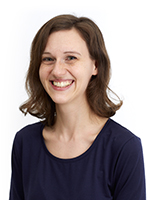
Kristina Xiao Liang is an Associate Professor and Senior Researcher at the Department of Clinical Medicine, University of Bergen, and the Principal Investigator and Group Leader of the Mitochondrial Stem Cell Research Group within the Department of Biomedicine. Her research is centered on modeling mitochondrial diseases using patient-derived iPSCs and developing brain organoids to study neurodegeneration and test therapeutics. Position: Associate Professor, Senior Researcher, Principal Investigator, Group Leader Institution: University of Bergen Department: Department of Biomedicine School: Department of Clinical Medicine (K1) Email: xiao.liang@uib.no Her educational and professional background includes research in dental sciences and transition into mitochondrial and stem cell biology. She has been actively involved in teaching neuroscience courses at the graduate level since 2021. Dr. Liang’s research focuses on mitochondrial dysfunction in neurodegenerative diseases, particularly those linked to POLG mutations. She employs advanced stem cell technologies—such as iPSC reprogramming, neural differentiation, and 3D brain organoids—to model diseases like Alpers’ syndrome, Parkinson’s, and Alzheimer’s. Her work also explores metabolic reprogramming between neurons and glia, and uses single-cell transcriptomics for in-depth phenotyping. She is part of the Neuro-SysMed Center, enhancing translational impact. The recent publications (2021–2025) show a strong emphasis on mitochondrial disease modeling, neurotoxic astrocytes, NAD+ metabolism, and drug discovery using organoids. Key themes include POLG-related pathology, mitochondrial dynamics, oxidative stress, and therapeutic rescue strategies. There is a clear progression from 2D neural models to complex 3D systems, reflecting technological advancement and deeper biological inquiry. She has been recognized through consistent publication in high-impact journals such as EMBO Molecular Medicine , Experimental Neurology , and Cell and Tissue Research . While no formal awards are listed, her leadership in funded research and editorial contributions to scientific reviews indicates strong peer recognition. Dr. Liang supervises students, including master’s theses, and collaborates extensively within the University of Bergen and international networks. She is involved in developing high-throughput platforms for drug screening and has contributed to methods in flow cytometry and synthetic imaging. Her lab is equipped for stem cell reprogramming, differentiation, and molecular phenotyping.


.jpg)