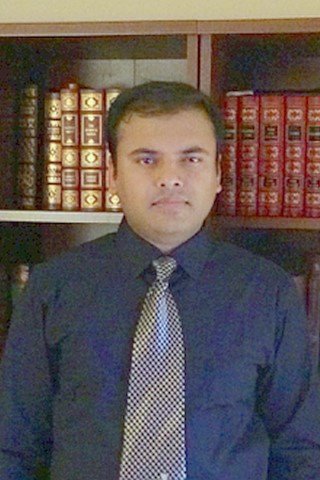
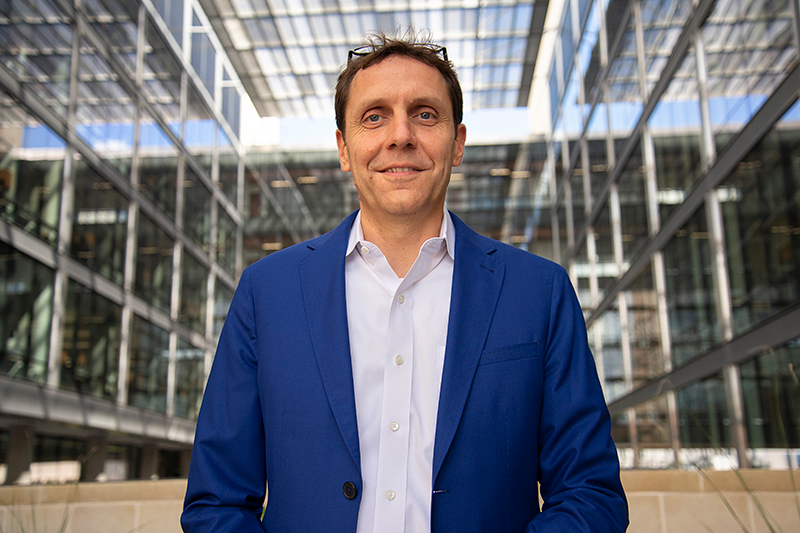
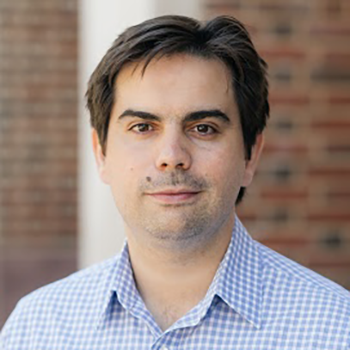
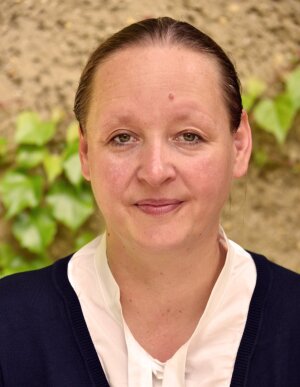
Arijit Raychowdhury is a Professor in the School of Electrical and Computer Engineering at Georgia Institute of Technology's College of Engineering. His research spans low power digital and mixed-signal circuit design, power converters, sensor systems, and circuit-device technology interactions, supported by over 80 publications and 25+ patents. He earned his PhD from Purdue University in 2007, receiving the College of Engineering Best Thesis Award and Dimitris N. Chorafas Award for doctoral research excellence. His work focuses on energy-efficient hardware for smart cameras, voice activity detection, and non-Boolean computing fabrics using emerging devices. Recent publications reveal strong trends in in-sensor analytics via compressed sensing, oscillator-based neuromorphic computing, and ultra-low power adaptive circuits for variation tolerance. His innovations bridge circuit design with machine learning and context-aware systems. Scientific awards include: Intel Labs Technical Contribution Award (2011) Best Paper Awards at ISLPED (2012, 2006) and IEEE Nanotechnology Conference (2003) SRC Technical Excellence Award (2005) Intel Foundation and NASA INAC Fellowships (2006, 2004) Dimitris N. Chorafas and Purdue Best Thesis Award (2007) He serves on Technical Program Committees for DAC, ICCAD, VLSI Symposium, and ISQED, and contributes as guest associate-editor for JETC while teaching specialized short courses globally.
Professor Lamine Mahdjoubi is Professor of the Built Environment at the University of the West of England (UWE Bristol), Faculty of Environment and Technology, Department of Architecture and the Built Environment. An architect and urban designer by training, he has gained international recognition for integrating advanced ICT solutions into the design, management, and visualisation of the built environment. Education & Qualifications: Qualified in Architecture and Urban Design (specific institutions and dates not provided in the text). Research Interests: Professor Mahdjoubi’s research focuses on the intersection of digital technologies and sustainable urban environments. He develops innovative methodologies and tools for analysing human–environment interactions, with particular emphasis on: Building Information Modelling (BIM) for design, construction, and operations; Virtual and immersive environments for collaborative design and stakeholder engagement; Child-friendly outdoor environments, linking urban design to public health outcomes; Heritage Building Information Modelling (HBIM) for retrofitting and conservation; Blockchain and machine-learning applications for decentralised energy management; Decision-support systems for brownfield redevelopment and risk assessment. Publication Trends: Across >100 peer-reviewed outputs, recent work (2020–2025) demonstrates a clear pivot toward AI and data-driven approaches in the built environment. A dominant strand couples BIM with machine-learning and VR/AR technologies to enhance design coordination, safety, and sustainability. Energy research increasingly integrates blockchain and large-language-model systems for smart grids. A second major strand addresses socio-environmental equity, producing evidence-based guidelines for healthy outdoor spaces for children and refugee communities. Scientific Awards & Recognition: While specific named awards are not listed, Professor Mahdjoubi’s international recognition is evidenced by: Membership of the Advisory Board, International Making Cities Livable (USA); Invited keynote speaker at numerous national and international conferences; Chief/External Examiner roles for universities in the UK and overseas; Founding Director of the pioneering Virtual Reality Enterprise Centre (VREC) at UWE Bristol. Research Funding & Teams: He has secured and directed major projects funded by: UK Engineering & Physical Sciences Research Council (EPSRC); British Academy; European Union Framework Programmes; Qatar National Research Fund (QNRF); Industry partners and local authorities. These initiatives have supported multidisciplinary teams spanning architecture, computer science, public health, and social policy. Laboratories & Centres: Professor Mahdjoubi founded and directed the Virtual Reality Enterprise Centre (VREC) , the first UK centre dedicated to knowledge exchange in visualisation and analysis of the built environment. The centre provides state-of-the-art VR/AR facilities for teaching, research, and industry collaboration.
Andreas Gerstlauer is a Professor and holder of the Cullen Trust for Higher Education Endowed Professorship in Engineering #6 at The University of Texas at Austin. He serves as the Associate Chair for Academic Affairs in the Chandra Family Department of Electrical and Computer Engineering. His academic appointments include membership in the Architecture, Computer Systems, and Embedded Systems (ACSES) research area and the Integrated Circuits & Systems (ICS) research area. Dr. Gerstlauer received his Dipl.-Ing. (M.S.) degree in Electrical Engineering from the University of Stuttgart, Germany in 1997 and M.S. and Ph.D. degrees in Information and Computer Science from the University of California, Irvine in 1998 and 2004, respectively. Prior to joining UT Austin in 2008, he was an Assistant Researcher in the Center for Embedded Computer Systems (CECS) at UC Irvine. His research focuses on embedded systems, cyber-physical systems, and the Internet of Things, with particular emphasis on electronic system-level design methods, system modeling, design languages, and embedded hardware/software synthesis. His work spans from novel hardware/software fabrics and System-on-Chip architectures to system-level design automation methods and tools, with special emphasis on underlying system modeling foundations. His research group, the System-Level Architecture and Modeling (SLAM) Lab, investigates resource-constrained and application-specific embedded, high-performance, and edge computing systems. Dr. Gerstlauer's publication record shows a consistent trajectory in advancing system-level design methodologies, with recent work focusing on IoT applications, deep learning inference at the edge, power modeling using machine learning techniques, and advanced simulation frameworks for heterogeneous architectures. His research bridges the gap between theoretical design methodologies and practical implementation, with commercial applications used by organizations including JAXA and NEC Toshiba Space Systems. Humboldt Research Fellowship (2016-2017) Best Research Paper Award at DAC (2016) Best Paper Award at SAMOS (2015) Outstanding Paper Award at ECRTS (2023) IEEE HSTTC Top Pick in Hardware Security (2021) Best Paper Award at MLCAD (2021) Dr. Gerstlauer has successfully mentored numerous Ph.D. and Master's students who have gone on to prominent positions at companies including Google, NVIDIA, Apple, AMD, Facebook, Intel, and Samsung. His research has been supported by major funding agencies including NSF, DOE, SRC, Sandia National Labs, and industry partners such as AMD, ARM, Intel, Qualcomm, and Samsung. He has served in leadership roles for major conferences including General Co-Chair for ESWEEK 2020-2021 and Program Committee Chair for CODES+ISSS 2015-2016. The SLAM Lab, under his direction, currently pursues active research in neuromorphic computing system co-design, accelerator-rich heterogeneous system architectures, and predictive modeling for next-generation heterogeneous computer system design. The lab maintains strong industry partnerships and has produced multiple open-source software tools including QLA-RTS, DeepThings, LIPPo, and NoSSim that have been adopted by both academic and industrial researchers.
Caitano L. da Silva serves as Associate Professor of Physics at New Mexico Institute of Mining and Technology (New Mexico Tech), affiliated with the Department of Physics and Langmuir Laboratory for Atmospheric Research. His work bridges atmospheric sciences, space physics, and plasma dynamics with experimental and computational approaches. His research centers on atmospheric and space electricity phenomena, including thunderstorm effects on near-Earth space, lightning physics, electrical discharge plasma modeling, and space plasma wave analysis. Key interests involve narrow bipolar events, sprite dynamics, X-ray/gamma-ray emissions from lightning, and computational tools for geophysical data interpretation. His team investigates high-energy atmospheric processes through laboratory experiments and field measurements. Recent publications (2021-2024) reveal dominant trends in lightning initiation mechanisms, runaway electron production, and electromagnetic wave propagation. Work frequently combines neuromorphic sensors, Geant4 simulations, and 3D interferometry to study high-energy radiation from leaders and sprite current-morphology relationships. The research demonstrates strong interdisciplinary connections between plasma physics and atmospheric electricity. Dr. da Silva leads an active research group at Langmuir Laboratory, mentoring students evidenced by underlined co-authorships in publications. His team collaborates internationally on projects involving rocket-triggered lightning experiments, narrow bipolar event analysis, and ionospheric disturbance studies. The NY Times featured his 2023 research on lightning-related space phenomena.
Prof. Dr. Manuela Nowotny is a Professor of Animal Physiology at the Institute for Zoology and Evolutionary Research, University of Jena, Germany. Her research focuses on understanding sensory adaptations in the animal kingdom, particularly investigating the functions and specializations of insect and mammalian auditory systems. She leads a research group that explores how sensory organs detect and process environmental signals, with implications for understanding perception and behavior regulation. Dr. Nowotny's research interests span several interconnected areas of sensory physiology and evolutionary biology. Her work examines how sensory organs become highly specialized to detect specific environmental signals while ensuring animal survival. A major focus is on convergent evolution in hearing , where she has discovered remarkable similarities between insect and mammalian auditory systems. Her group investigates insect ears , particularly in bushcrickets, revealing specialized adaptations like the auditory fovea - previously thought to exist only in mammals. She also studies mammalian hearing mechanisms and the development of tinnitus following acoustic trauma. Her interdisciplinary approach combines biomechanics, neurophysiology, and evolutionary biology to understand how sensory information is processed at the organ level. Analysis of Dr. Nowotny's recent publications reveals a consistent focus on comparative auditory physiology across species. Her work demonstrates how insects provide valuable models for studying natural diversity in mating behavior and sensory adaptation. A recurring theme is the discovery of convergent evolutionary solutions in hearing mechanisms between phylogenetically distant species. Her research on traveling waves in insect hearing organs shows surprising similarities to mammalian cochlear mechanics, challenging previous assumptions about the uniqueness of mammalian auditory processing. More recent work has expanded into neurotoxicology, examining how pesticides affect insect auditory processing, and biomedical applications through neuromorphic engineering for hearing aids. Adolf-Messer Stiftungspreis 2009 for tinnitus research Multiple Deutsche Forschungsgemeinschaft grants (NO 841/1-1, NO 841/2-1, NO 841/4-1) Funding from Jürgen Manchot Foundation Goethe University's "Nachwuchswissenschaftler/innen im Fokus" project Dr. Nowotny's research is primarily supported by the Deutsche Forschungsgemeinschaft (DFG), with multiple grants focusing on different aspects of auditory physiology. Her work on bushcricket hearing mechanisms (NO 841/1-1 and NO 841/2-1) has revealed fundamental principles of sensory adaptation, while her tinnitus research (NO 841/4-1) explores the connection between inner ear damage and phantom noise perception. She has successfully mentored numerous researchers, with several collaborators (particularly S. Schöneich, J. Scherberich, and M. Kössl) appearing consistently across publications, suggesting a productive mentoring relationship. Her lab utilizes diverse methodologies including biomechanical measurements, neurophysiological recordings, and comparative anatomical studies. Dr. Nowotny leads a research group within the Institute for Zoology and Evolutionary Research that employs interdisciplinary approaches to study auditory systems. Her team combines expertise in entomology, mammalian physiology, biomechanics, and neuroethology to investigate sensory processing across species. The lab maintains collaborations with institutions including Goethe University and appears to have strong connections with researchers studying neurophysiology and acoustic communication. Current projects include examining the effects of pesticides on insect auditory processing and developing neuromorphic engineering applications for hearing aid technology through the NeuroSensEar project.
Xiaolin Xu is an Associate Professor in the Department of Electrical and Computer Engineering at Northeastern University. His research focuses on hardware and AI security, machine learning privacy, and energy-efficient deep learning. He earned a PhD from the University of Massachusetts Amherst and completed postdoctoral work at the Florida Institute for Cybersecurity Research. Education PhD, Electrical and Computer Engineering, University of Massachusetts Amherst, 2016 M.S., B.E., University of Electronic Science and Technology of China Research Interests : His work spans secure hardware design, AI model protection, and embedded systems security. Notable projects include securing FPGA-based ML accelerators and developing defenses against adversarial attacks. Recent Article Trends : Recent publications emphasize robustness in neural architectures, secure multi-party computation, and lightweight graph-based models for edge devices. Grants & Awards 2025 DAC Under-40 Innovators Award NSF CAREER Award (2023) Multiple NSF grants for hardware security research Advising : Supervises PhD students including Shijin Duan and Jiaxing, focusing on ML security and hardware-software co-design.
Mauro Di Marco serves as an Associate Professor in the Department of Information Engineering and Mathematical Sciences at the University of Siena, Italy, with office hours held weekly in the San Niccolò Complex (room 209) for student consultations. His research specializes in nonlinear dynamics and chaos theory applied to memristor-based electronic systems, focusing on discrete-time circuit analysis, snap-back repellers, coexisting attractors, and parameter-independent bifurcations. Key contributions include embedding classical chaotic maps into simplified memristor architectures and analyzing convergence in neural network models like the brain-state-in-a-convex-domain. Recent publications demonstrate expertise in designing tunable Chua's circuits using nonvolatile memristors, advancing applications in chaotic signal generation and neuromorphic computing through rigorous mathematical modeling and experimental validation.
Chandra Sekhar Seelamantula is a Professor in the Department of Electrical Communication Engineering at the Indian Institute of Science (IISc), Bangalore, leading the SPECTRUM LAB. His research spans signal and image processing, computational imaging, and AI applications in healthcare, with expertise in Speech Processing, Biomedical Image Processing, Compressed Sensing, and Neuromorphic Imaging. He teaches core courses including Digital Signal Processing and Time-Frequency Analysis. His educational background includes: Postdoctoral fellow, Ecole polytechnique fédérale de Lausanne (2006-2009) Ph.D., Indian Institute of Science, Bangalore (2005) B.E., Osmania University College of Engineering, Hyderabad (1999) Professor Seelamantula's work focuses on advancing Sampling Theory and solving Inverse Problems in Computational Imaging through AI-driven approaches. His research bridges theoretical foundations with practical applications in Digital Healthcare, particularly in Biomedical Image Analysis and Neural Signal Processing, contributing to innovations in medical diagnostics and assistive technologies. His scientific awards and honors include: Outstanding Editorial Board Member Award 2022, IEEE Transactions on Image Processing Digital Health prize at NBEC 2018 Prof. Priti Shankar Teaching Award 2013 Intellectual Ventures Invention Awards (2010, 2011) IBM India Research Labs Research Student Fellowship Award (2001-2004) Multiple IEEE student paper contest prizes Undergraduate honors including Srinivasa Ramanujam Gold Medal (1997-1999) He has advised graduate students and secured research support through prestigious fellowships. His professional service includes leadership roles in IEEE Signal Processing Society chapters and technical committees. He directs the SPECTRUM LAB at IISc, which pioneers research in computational imaging, neuromorphic systems, and AI-driven healthcare solutions.
Edward Wasige is Professor of High Frequency Electronics in the Division of Electronics and Nanoscale Engineering at the University of Glasgow's School of Engineering, where he leads the High Frequency Electronics (HFE) Group. His research spans compound semiconductor devices, including GaN technologies for power/microwave electronics and InP-based systems for terahertz applications. Education: BSc (Eng.) in Electrical Engineering (First Class Honours), University of Nairobi, 1988 MSc in Microelectronics & Telecommunications, University of Liverpool, 1990 PhD in Electrical Engineering (with Distinction), Kassel University, 1999 Research Focus: His group pioneers high-frequency semiconductor devices with emphasis on neuromorphic photonics (RTD-based spiking neurons), terahertz wireless systems, and GaN HEMT advancements. Current work includes photonic-electronic integration for brain-inspired computing and thermal optimization of wide-bandgap devices. Publication Trends: Recent articles (2023-2024) demonstrate strong focus on terahertz instrumentation (35%), neuromorphic hardware (40%), and GaN device innovation (25%), with emerging themes in cryogenic characterization and 6G communications testbeds. Awards: UNESCO Postdoctoral Fellowship (Technion, Israel) Laboratories: Leads the HFE Group with capabilities in nanofabrication (sub-100nm processes), on-wafer characterization up to 1.7 THz, and semiconductor device testing across temperature ranges (77K–400K).
Dr. Mohammad Khaleqi Qaleh Jooq serves as a Postdoctoral Research Fellow at the International Centre for Neuromorphic Systems (ICNS), Western Sydney University. Previously, he held a Brain Pool Postdoctoral Research Fellowship at Inje University, South Korea from 2022 to 2024. His academic background includes: Ph.D. in Electrical Engineering, Lorestan University, Khorramabad, Iran (2019) His research focuses on neuromorphic hardware systems and next-generation electronics, with primary expertise in ASIC design for real-world applications, carbon nanotube-based devices, and fuzzy logic implementations. His work bridges theoretical device modeling with practical image processing solutions through emerging beyond-CMOS technologies and approximate computing paradigms. As an active member of the International Centre for Neuromorphic Systems, he contributes to advancing brain-inspired computing architectures while exploring nanoscale device physics for next-generation hardware implementations.
Dr. Andrea Soltoggio is a Reader in Artificial Intelligence (Associate Professor) and Research Coordinator in the Computer Science Department at Loughborough University's School of Science. He holds a combined BSc and MSc in Computer Science from the Norwegian University of Science and Technology and Politecnico di Milano, and a PhD from the University of Birmingham. His academic journey includes research positions at EPFL, the University of Central Florida, and Bielefeld University where he served as Technical Coordinator for the FP7 European project AMARSi. His research focuses on creating AI systems that learn continuously like biological brains, with particular emphasis on lifelong learning, collaborative knowledge sharing, and energy-efficient AI. Dr. Soltoggio has made significant contributions to the development of algorithms that enable AI systems to share knowledge without centralized control, as demonstrated in his MOSAIC framework published in 2025 and his Nature Machine Intelligence paper on collective AI systems. His recent publications reveal a strong trend toward sustainable AI development, with multiple projects focused on reducing the energy footprint of machine learning systems. His work bridges neuroscience and AI, exploring how biological learning mechanisms can inform more adaptive artificial systems. The research spans from theoretical frameworks to practical applications in robotics, healthcare diagnostics, and edge computing. Fellow of the Higher Education Academy (FHEA) Published in Nature Machine Intelligence (2024) Lead researcher on multiple funded projects including FP7 AMARSi Regular media contributor on AI topics (BBC, The Conversation) Dr. Soltoggio actively supervises PhD students and postdoctoral researchers in the Computer Science Department, with current projects focusing on lifelong learning, neuromorphic computing, and sustainable AI. His research group collaborates with Loughborough Business School on digital decarbonization initiatives and maintains connections with international AI laboratories. The team has access to advanced computational resources including Nvidia A100 GPUs and various robotic platforms for experimental validation of their theories.
Tom Glover is an Assistant Professor in the Department of Computer Science within the Faculty of Technology, Art and Design at Oslo Metropolitan University. His office is located at Stensberggata 29, 0170 Oslo (Office number: SG204) with contact information including mobile: +47 975 38 894 and office: +47 672 37 712. Dr. Glover's research focuses on the intersection of cellular automata, artificial intelligence, and complex systems. His work spans theoretical computer science, artificial life, and practical applications in reservoir computing and control systems. His research group is part of the Innovation, Digital Transformation and Sustainability Research groups within the Department of Computer Science. Analysis of his publications reveals a consistent focus on cellular automata as computational models, with particular emphasis on their application in reservoir computing, network dynamics, and self-organizing systems. His work demonstrates how simple computational rules can generate complex behaviors with applications across multiple domains including control systems and biologically inspired computing. As an active researcher, Glover has published in reputable venues including the International Journal of Parallel, Emergent and Distributed Systems, Complex Systems, and proceedings from the Artificial Life Conference series. His recent work (2023-2024) shows continued development in sensitivity analysis of cellular automata and network topologies.
Dr. Silvia Gomez Coca serves as a Lecturer in the Department of Inorganic and Organic Chemistry at the University of Barcelona's Faculty of Chemistry, where she integrates computational and experimental methodologies to advance molecular science. Her academic foundation includes degrees from the University of Alicante and University of Barcelona. Her educational pathway comprises: Bachelor of Chemistry, University of Alicante (2007) Master's Degree in Chemistry, University of Barcelona (2010) PhD in Chemistry, University of Barcelona (2013) Research expertise spans molecular magnetism , supramolecular chemistry , and AI-driven materials design , with emphasis on single-molecule magnets for quantum computing applications. Her interdisciplinary approach bridges inorganic synthesis, theoretical modeling, and machine learning to engineer functional molecular systems. Recent publications (2015-2025) reveal a strategic evolution toward computational innovation, particularly in spin dynamics modeling and neural network applications for crystal structure prediction. This trajectory demonstrates increasing integration of artificial intelligence with traditional quantum chemistry methods. Key scientific recognitions include: FPU Fellow (Spanish Government PhD Grant, 2009-2013) Beatriu de Pinós Fellow (Catalan Government Postdoctoral Grant, 2018-2021) Juan de la Cierva Fellowship (Spanish Government Postdoctoral Grant) As Principal Investigator for AGAUR's 'Encapsulation of Mononuclear Single Molecule Magnets' (2018-2021) and co-PI for multiple national grants including 'AI for Quantum and Neuromorphic Magnetic Devices' (2022-2024), she directs significant research funding. Current projects focus on radical-metal magnetic coupling for digital technologies (2024-2026) and theoretical chemistry infrastructure development. She actively contributes to the Electronic Structure Group (GEE) and Institute of Theoretical and Computational Chemistry (IQTC), fostering collaborative research in quantum materials design and computational methodology development.
Sara Achour is an Assistant Professor jointly appointed to the Computer Science and Electrical Engineering departments at Stanford University. She earned her PhD in Computer Science from MIT in 2021. Her research develops programming languages, compilers, and runtime systems for emerging analog computing platforms. Dr. Achour leads research in hardware-aware optimization frameworks and novel analog compute paradigms, with applications spanning quantum computing, IoT devices, and neuromorphic systems. Her research focuses on: Bridging software abstractions with unconventional hardware capabilities Energy-efficient computing paradigms for edge devices Cross-layer optimization of analog and hybrid computing systems Publication analysis reveals consistent themes in analog computing architectures, hardware-aware optimizations, and emerging computing platforms. Recent work explores quantum compilation techniques, hyperdimensional computing optimizations, and hardware security metrics. Dr. Achour advises multiple graduate students including: 16 doctoral candidates across computer architecture and quantum computing 10 master's students in software-hardware co-design She maintains active research collaborations through the Stanford SystemX Alliance.
Clara Santato is a Full Professor in the Department of Engineering Physics at Polytechnique Montréal. She holds a M.Sc. from the Università di Bologna and a Ph.D. from the University of Geneva. Her research focuses on sustainable electronics, organic semiconductors, and energy conversion materials. She leads the UNESCO Chair in Green and Sustainable Electronics and is a Tier-1 Canada Research Chair. Her work integrates bio-sourced materials like melanin and tannins into electronic devices to address environmental challenges. Education: M.Sc. in Chemistry, Università di Bologna (1995) Ph.D. in Chemistry, Université de Genève (2001) Research Interests: Sustainable electronics materials (bio-sourced, biodegradable) Charge transport in organic semiconductors Nanostructured photocatalysts for solar energy conversion Electrochemical energy storage Awards & Affiliations: UNESCO Chair in Green and Sustainable Electronics (2023) Tier-1 Canada Research Chair (2020) IEEE Senior Member (2020) Member of Microfabrication Laboratory and Material Surface Analysis (LASM) Grants & Projects: Pan-Canadian CREATE SEED program for sustainable electronics training Natural Sciences and Engineering Research Council (NSERC) funding Collaborations with industry and academic institutions worldwide Labs & Teams: Leads the Santato Research Group focusing on bio-inspired electronics and sustainable materials development.