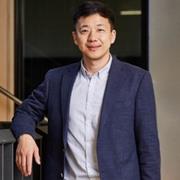
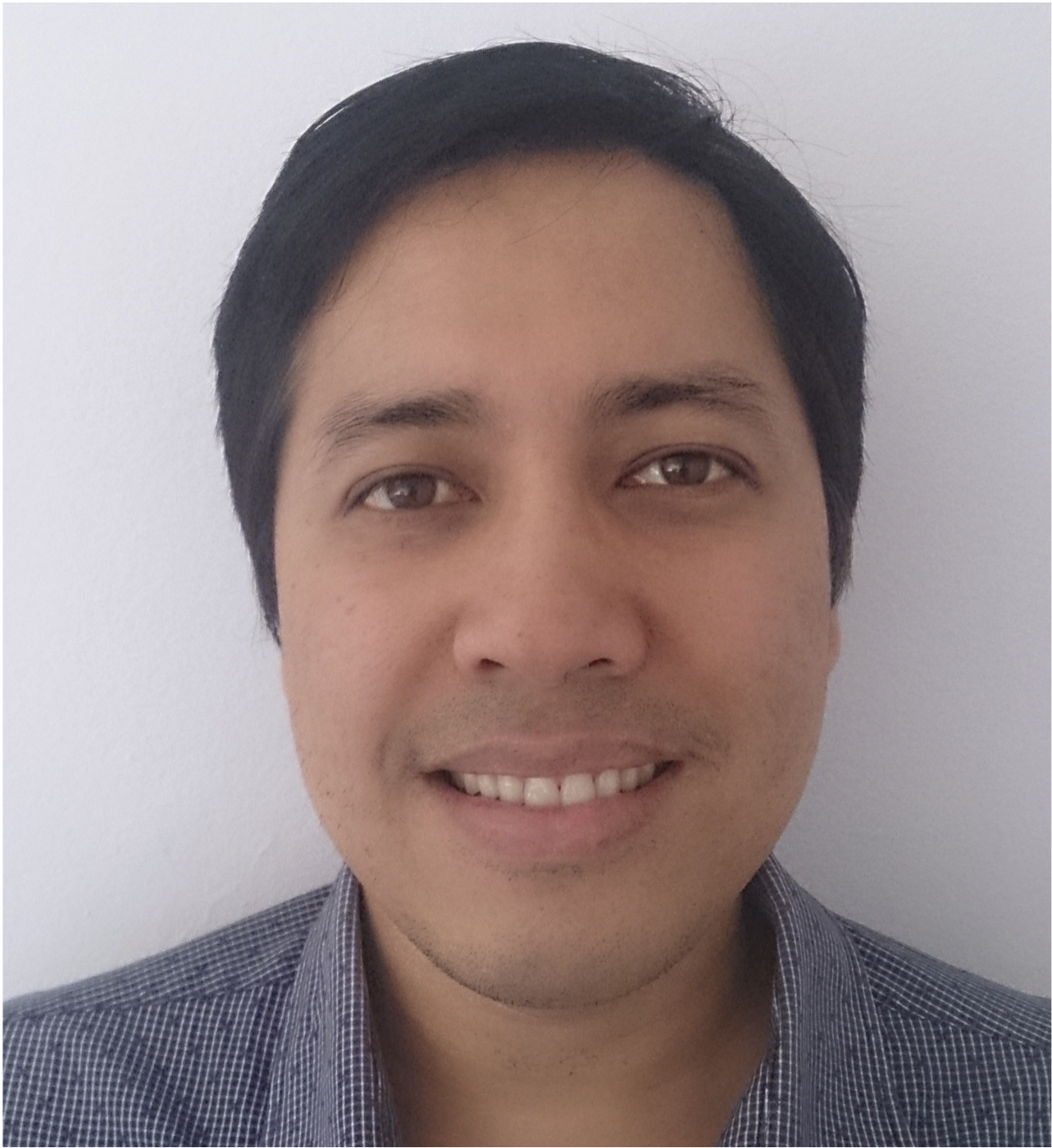
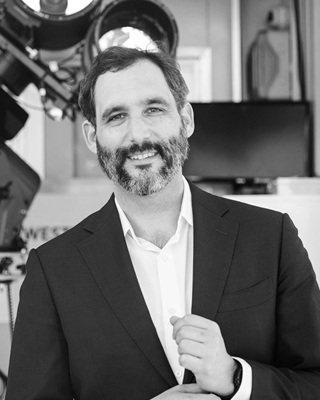
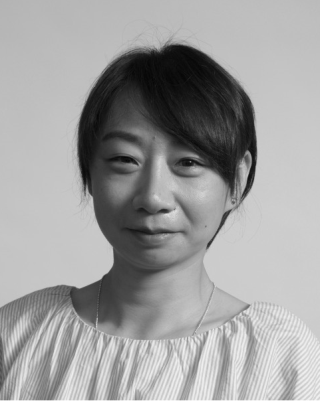
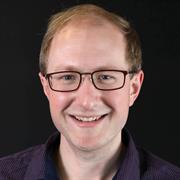
Weiwei Lei is a full Professor and Australian Research Council Future Fellow at RMIT University's School of Science (STEM College). His research focuses on nanomaterials for sustainable water and energy solutions, with over 230 publications and $20M in grants. He leads interdisciplinary collaborations globally, mentoring 29 students and 6 postdocs. Research & Impact: Specializes in functional nanomaterials for energy conversion/storage and water purification. His work has garnered 500+ media mentions (BBC, ABC) and industry partnerships (e.g., UK Highways, AquaPure). Key contributions include nanomaterial synthesis routes and energy-water nexus solutions. Awards: ARC Future Fellowship (2022), DECRA (2014), TechConnect Innovation Award (2015). Leadership roles include Research Theme Leader and ERA Engineering Deputy Cluster Leader. Grants: Secured $12.2M as lead CI across ARC grants, IMCRC, and federal funding. Active in industry partnerships for applied research. Mentoring: Supervised 17 primary PhD/Master’s students, many now professors/industry leaders. Postdoc mentorship includes 2 ARC DECRAs. Labs/Teams: Leads initiatives like 'Plasma coating for sustainable future' and 'Advanced nanomaterials for energy harvesting'. Collaborates with global researchers (Asia/Europe/Americas) on 75% of publications.
Dr. Glenn Matthews is a Senior Lecturer in the School of Engineering at RMIT University, specialising in Electrical and Computer Engineering. He holds positions in both academic and research capacities, including Principal Investigator roles at CSIRO and Smart Services CRC. His teaching responsibilities include coordinating undergraduate courses such as Introduction to Engineering Computing and Engineering Design modules. Dr. Matthews' research focuses on high-performance computing, acoustic wave device modeling using Finite Element Method (FEM), and embedded system design. Notable projects include developing FEM software for SAW device analysis and investigating asynchronous computing architectures for high-throughput systems. He has supervised numerous research projects spanning machine learning applications in clinical analysis, gas sensing technologies, and neuromorphic learning. His work integrates hardware-software co-design principles, with contributions to radar SLAM systems, mercury vapor sensors, and neural network frameworks like SwiftSpike. Dr. Matthews collaborates with industry partners through ARC Linkage Grants and maintains affiliations with IEEE and DSP/Embedded Systems groups. His research outputs include over 20 peer-reviewed articles, with impactful contributions to sensor technology, circuit design, and biomedical applications.
Ben Duan is an Adjunct Lecturer at the Department of Data Science & AI, Faculty of Information Technology, Monash University. He holds a PhD in Big Data and Electronics from the University of Technology Sydney. Previously, he was a Research Fellow at the Hong Kong University of Science and Technology. His research focuses on reinforcement learning, graph neural networks, intelligent transportation systems (ITS), and fintech. He teaches courses such as FIT5221: Intelligent Image and Video Analysis, FIT5215: Deep Learning, and FIT5217: Statistical Data Modeling at Monash’s Suzhou campus. Dr. Duan’s work aligns with UN Sustainable Development Goals related to sustainable cities and communities (SDG 11) and industry innovation (SDG 9). His recent research explores AI-driven solutions for traffic congestion, stock trend prediction using graph neural networks, and spiking neural networks for neural activation control. He has contributed to over 28 publications and a patent with the Monash Suzhou Research Institute. He supervises PhD students interested in reinforcement learning, graph neural networks, or ITS, offering full scholarships at Monash Suzhou. Key collaborations span transportation systems, fintech, and data-driven industrial processes.
Dr. Hendra I Nurdin is a Senior Lecturer in the School of Electrical Engineering and Telecommunications at the University of New South Wales (UNSW), where he has been a faculty member since 2012. His academic background spans Electrical Engineering and Applied Mathematics with a focus on systems and control theory, with significant research intersections in quantum physics and power engineering. He serves as an Associate Editor for IEEE Control Systems Letters (IEEE L-CSS) starting from January 2024. Dr. Nurdin's research spans quantum systems and control, nonlinear control of microgrids, and neuromorphic computing for nonlinear systems. His work in quantum control intersects with quantum physics while his research on microgrid control intersects with power engineering. His research has resulted in numerous publications across prestigious journals including Nature Communications, Physical Review Research, IEEE Control Systems Letters, and IEEE Transactions on Automatic Control. His recent publications (2020-2025) predominantly focus on quantum reservoir computing, quantum parameter estimation, control of non-Markovian quantum systems, and applications of control theory to energy systems. The research demonstrates a clear trajectory toward practical implementations of quantum computing concepts and advanced control methodologies for both quantum and classical systems. Associate Editor for IEEE Control Systems Letters (IEEE L-CSS) from January 2024 Dr. Nurdin has supervised several PhD students to completion and currently mentors PhD candidate Wen Liu. His research group has produced significant work in quantum control systems, with former students including Wenxing Li, Yihuan Liao, Jiayin Chen, Jiacheng Li, Muhammad Ali, Zhan Shi, and Onvaree Techakesari. He actively seeks new students with strong academic backgrounds for research in his areas of interest, particularly in quantum systems and control. His laboratory work focuses on quantum systems control, quantum reservoir computing, and microgrid control systems. He has developed courses including ELEC9782 Special Topics in Electrical Engineering 2 (Quantum Control) and teaches ELEC4631 Continuous-Time Control System Design.
Professor Margaret Lech holds a position as Discipline Leader in the Department of Electrical & Electronic Engineering at RMIT University's School of Engineering. She has been at RMIT since 1998, progressing from a Research Fellow to her current role as Professor. Her expertise spans machine learning, signal processing, speech and image processing, and biomedical applications. Education: MSc in Physics from the University of Maria Curie-Sklodowska (Poland), PhD in Electrical Engineering from the University of Melbourne. Research highlights include groundbreaking emotion detection from speech signals, clinical depression analysis, and conversational trust modeling. She has co-authored over 160 papers and holds an international patent for her work on emotion detection. Awards: Telstra Innovation Challenge 2010, Vice-Chancellor's Research Supervision Excellence Award (2013), RMIT Award for Excellence in Graduate Research (2019). Grants: VPAC, ARC Linkage, DSI, AOARD, DSTG, and current co-investigator on Office of National Intelligence and ARC Discovery grants. Her research focuses on applications of AI and machine learning in healthcare, cybersecurity (e.g., Smart Grids), robotics (multi-agent systems), and fine art analysis. She has supervised over 30 PhD students and pioneered techniques in real-time speech emotion recognition and sleep stage classification. Labs/Teams: Leads interdisciplinary teams working on neuromorphic sensing, neural network systems, and computational inference of social signals. Active in collaborative projects involving industry and international partners.
Professor Gregory Cohen serves as Director of the International Centre for Neuromorphic Systems (ICNS) at Western Sydney University, where he pioneers biology-inspired neuromorphic technologies to solve real-world sensing challenges with exceptional power efficiency. His research bridges biological principles and engineering to develop systems capable of complex visual tasks beyond current machine capabilities, focusing on neuromorphic engineering, event-based sensing, and spiking neural networks. Key application areas include satellite/space debris monitoring, atmospheric phenomenon detection, and high-speed tracking for space domain awareness. Cohen leads ICNS research initiatives aimed at creating human-equivalent autonomous systems through biomimetic approaches, though specific grant details and student supervision records are not documented in the provided materials.
Dr. Ying Xu serves as a Researcher at the International Centre for Neuromorphic Systems (ICNS) within Western Sydney University, specializing in neuromorphic computing and hardware implementations. Her academic qualifications include: PhD from Western Sydney University (2019) M.Sc. in Microelectronics from Waseda University, Japan (2008) Bachelor of Electrical Engineering from Xidian University (2006) Her research focuses on biologically inspired computing systems with expertise in neuromorphic auditory processing , analog-digital circuit design , and hardware-accelerated machine learning . She bridges theoretical neuromorphic principles with practical VLSI implementations for next-generation computing architectures. Based at Western Sydney University's Penrith (Werrington South) campus in Room BA.2.01, she contributes to the ICNS research ecosystem advancing neuromorphic technologies through mixed-signal hardware solutions.
Dr. Timothy Wiley is a Lecturer in Computer Science at RMIT University's School of Computing Technologies within the STEM College. He specializes in Artificial Intelligence and Robotics, focusing on autonomous systems, online learning, and human-robot interaction. His roles include leading the RedbackBots RoboCup team and designing core courses in AI and robotics. He holds a PhD from UNSW Sydney and has extensive industry and academic collaborations, including with Rheinmetall Defence Australia and Nova Systems. Affiliations: RMIT AI Innovation Lab, CIAIRI, RUASRT Education: PhD (Computer Science, UNSW), BSc (Computer Science, UNSW) Research: Autonomous robotics, Explainable AI, UAV systems, fatigue crack modeling Research interests center on data-efficient machine learning for robotics, explainable AI, and applications in agriculture, aviation, and defense. Recent projects include UAV delivery systems and AR visualization for RoboCup. He teaches courses like Programming Autonomous Robots and leads the first-year Programming Studios. Notable achievements include the 2025 Best Paper Award at HRI and finalist status in RMIT's 2023 Research Leadership Awards. His work bridges academic research with industry applications, such as food waste reduction in macadamia harvesting and urban wind environment modeling for AAM.
Dr. Abhronil Sengupta serves as an Associate Professor in the School of Electrical Engineering and Computer Science at The Pennsylvania State University, holding the Joseph R. and Janice M. Monkowski Career Development Professorship. He maintains secondary appointments in the Department of Materials Science and Engineering and the Materials Research Institute (MRI). His academic foundation includes a PhD in Electrical and Computer Engineering from Purdue University (2018) and a B.E. from Jadavpur University, India (2013), complemented by a DAAD Fellowship at the University of Hamburg (2012) and research internships at Intel Labs (2016) and Facebook Reality Labs (2017). Dr. Sengupta's research pioneers the convergence of Nanoelectronics, Neuroscience, and Machine Learning to develop event-driven cognitive intelligence systems. His interdisciplinary work spans sensor-to-algorithm stacks with emphasis on neuromorphic hardware architectures for ultra-low-power applications, addressing critical challenges in energy-efficient AI. His exceptional contributions have earned prestigious recognition: ARO Early Career Award (2024) NSF CAREER Award (2023) IEEE EDS Early Career Award (2023) Facebook Faculty Award (2018) IEEE SiPS Best Paper Award (2018) Purdue Bilsland Dissertation Fellowship (2017) With over 95 peer-reviewed publications and 3 US patents, his research program attracts significant funding from agencies like NSF and ARO. His work has gained international visibility through features in MIT Technology Review, IEEE Spectrum, and Nature Materials. He actively shapes the field through editorial roles at IEEE Transactions on Cognitive and Developmental Systems and Scientific Reports, plus technical committee service for 12+ conferences including DAC and ICCAD. His MRI affiliation enables cross-cutting collaboration in advanced materials for next-generation computing systems.
Dr. Andrey Alenin serves as a Senior Lecturer at UNSW Canberra within the School of Engineering and Technology. His extensive academic contributions focus on advanced optical systems, particularly in polarimetry and imaging technologies. With numerous publications spanning over a decade, his work has established him as a significant contributor to the field of optical science and engineering. Dr. Alenin's research interests center on optical polarimetry, Mueller matrix systems, and advanced imaging techniques. His work spans theoretical foundations of linear systems in optics to practical implementations of polarimetric imaging systems. He has made significant contributions to channeled spectropolarimetry, photoelastic modulator systems, and polarization visualization methods. His research bridges fundamental optical theory with real-world applications in remote sensing, satellite imaging, and quantum communications. The extensive list of book chapters he co-authored demonstrates his deep understanding of Fourier optics and linear systems theory. Analysis of Dr. Alenin's recent publications reveals a strong trajectory from fundamental polarimetric theory toward practical implementations. His work increasingly incorporates machine learning techniques for polarization data processing, particularly deep learning for spectral-temporal analysis. The research shows progression toward applications in remote sensing and satellite systems, including tropical cyclone monitoring and intersatellite quantum communications. His co-authorship of the comprehensive reference 'Field Guide to Linear Systems in Optics' with J.S. Tyo has provided valuable educational resources for students and researchers in the field. Dr. Alenin maintains active collaborations with researchers across multiple institutions, as evidenced by his extensive co-authorship network. His work appears in leading optics journals including Applied Optics, Optics Express, and the Journal of the Optical Society of America. His research has practical applications in defense, remote sensing, and quantum communications technologies.
Matthew Arnold is an Associate Professor in the School of Mathematical and Physical Sciences at the University of Technology Sydney (UTS), where he has been employed since 2007, progressing from Lecturer to Senior Lecturer and currently Associate Professor. His academic career includes postdoctoral research at the University of Canterbury and visiting positions at the Fraunhofer Institute Jena (2001) and University of Southampton (2008). Arnold holds a PhD and BSc(Hons) from the University of Otago, New Zealand. His leadership roles at UTS include serving as Physics Discipline Leader, BSc(Physics) Program Director, and currently as HDR director and RAO for the Faculty of Science. He is also active in professional organizations, having served as Chair of the NSW Australian Institute of Physics and as a senior member of both Optica and SPIE. Arnold's research focuses on the interaction of electromagnetic fields with complex systems, spanning from modeling and design to fabrication and characterization. His primary research areas include neuromorphic computing using percolating networks of nanoparticles, plasmonic resonators and materials, self-assembled metamaterials, and opto-thermal coatings for energy applications. His work bridges fundamental physics with practical applications in building technologies, solar energy, and next-generation computing architectures. His recent publications demonstrate a strong trend toward neuromorphic and brain-inspired computing systems, particularly exploring the computational capabilities of self-assembled nanoscale networks. These works investigate how the intrinsic physical properties of nanomaterials can be harnessed for energy-efficient information processing, with applications in random number generation, Boolean operations, and image classification. His research also maintains a strong focus on practical optical applications, including high-temperature polarizers and spectrally selective solar absorbers. AIP NSW Branch Service Award (2024) UTS MAPS: Individual Teaching Award (2023) STANSW Dedicated Service Award (2019) Arnold is deeply committed to mentoring the next generation of scientists, having successfully guided research students at all levels from internship to PhD. His teaching philosophy emphasizes engaging students in experiences that develop practical skills and deep insight, which has been recognized with teaching awards. He has secured significant research funding through ARC Linkage Infrastructure grants and numerous industry collaborations, particularly with building industry partners on glazing and facade performance. His current funded projects include advanced deposition systems for superconducting circuits and solar-thermal performance evaluations. Arnold leads research activities centered around experimental and computational investigations of nanoscale systems, with particular expertise in physical vapor deposition, optical characterization techniques, and computational modeling of complex electromagnetic systems. His work connects fundamental physics with real-world applications through strong industry partnerships and interdisciplinary collaborations across physics, materials science, and engineering disciplines.
Matthew Crossley is a Senior Lecturer at Macquarie University's School of Psychological Sciences and a member of the Performance and Expertise Research Centre. His research focuses on human learning mechanisms, motor control, and the intersection of neuroscience with artificial intelligence. He leads the Brain-Inspired AI Memory Systems project (2019-2022), exploring neurobiologically grounded AI architectures. His work spans sensorimotor adaptation in surgery, procedural learning, and cognitive modeling. Notable contributions include studies on sensory uncertainty's impact on motor learning and theoretical frameworks for categorization systems. Crossley collaborates internationally, with recent projects addressing visual processing pathways and hearing impairment data infrastructure. Media highlights include coverage of surgical expertise research and discussions on AI's potential for human-like cognition. He has authored over 30 peer-reviewed articles and contributed chapters to major academic handbooks like the New Handbook of Mathematical Psychology .
Susan Sun is a Research Fellow at Swinburne University of Technology's School of Science, Computing and Emerging Technologies. Her research focuses on integrated nonlinear optics, microwave photonics, and neuromorphic computing, with a PhD from Swinburne (2020–present) and prior degrees from Beijing Institute of Technology (Bachelor, 2012–2016) and Beijing University of Posts and Telecommunications (Master, 2016–2019). She has authored 13 SCI journal papers, including high-impact works in Advances in Optics and Photonics and IEEE Journal of Selected Topics in Quantum Electronics , with over 600 citations and an H-index of 9. Her work emphasizes optical microcomb applications in high-speed signal processing, feedback control systems, and neuromorphic computing architectures. Recent contributions include microcomb-based microwave photonic transversal filters, graphene oxide-enhanced nonlinear optics, and ultra-high bandwidth optical neural networks. She is a member of Optica and IEEE, and serves as a reviewer for Optics Continuum . Key research themes include optimizing microcomb-based systems for precision and scalability, exploring novel materials (e.g., graphene oxide) for integrated photonics, and advancing optical solutions for real-time data processing and AI applications. Her lab integrates theoretical modeling with experimental validation, targeting innovations in both discrete and integrated photonic platforms.
Phuong Le Yen is a Research Fellow in the School of Engineering at RMIT University, affiliated with the ARC Centre of Excellence for Transformative Meta-Optical Systems (TMOS) in the Materials and Fabrication division. Her work focuses on nanotechnology, condensed matter physics, and advanced materials engineering. She holds an ORCID identifier: 0000-0001-8326-6725. Research Interests: Nanomaterials synthesis and characterization Electronic properties of materials at interfaces Development of neuromorphic and sensor technologies X-ray spectroscopic analysis techniques Device physics in semiconductors and amorphous systems Publications Trends: Recent work emphasizes nanostructured materials (e.g., SnO₂, amorphous carbon) applied to neuromorphic computing, sensor systems, and electronic device interfaces. Key themes include material fabrication methods, surface chemistry effects, and energy-efficient electronics. Labs/Teams: Active contributor to the ARC CoE TMOS, focusing on materials innovation for meta-optical systems. Collaborates with interdisciplinary teams across RMIT and international partners.
Professor Arnan Mitchell is a distinguished academic and director of RMIT's Micro Nano Research Facility (MNRF) and the Integrated Photonics and Applications Centre (InPAC). He leads a team of over 40 researchers, focusing on translating photonics innovations into real-world applications such as high-speed internet, defense-grade photonic sensing, and biosensors for rapid disease diagnosis. His career spans 20 years, during which he has built RMIT’s photonics capability through international collaborations. Affiliations : Director of MNRF ($60M facility), InPAC Lead, RMIT University. Research Focus : Integrated photonics, nonlinear physics, biomedical devices, and industry-academic partnerships. His research has resulted in publications in top-tier journals like Nature , Nature Medicine , and Optica . Key achievements include record-breaking data communications technology and lab-on-a-chip innovations. Awards include the RMIT Vice-Chancellor’s Research Excellence Award (2012) and Early Career Teaching Award (2005). Prof. Mitchell advocates for Australia’s deep technology manufacturing sector, emphasizing academia-industry synergy. His work bridges microtechnology, photonics, and fluidics to address global challenges in healthcare, environmental monitoring, and defense.