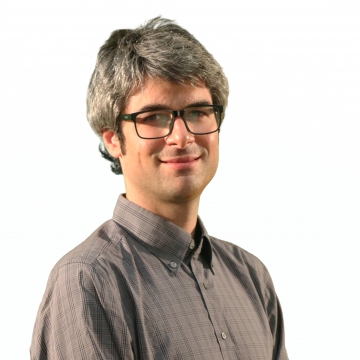
Jonas Deuermeier is a Researcher at Universidade Nova de Lisboa, specializing in material science and optoelectronics. He earned a joint PhD from Universidade Nova de Lisboa and Technische Universität Darmstadt under Prof. Elvira Fortunato and Prof. Andreas Klein. X-ray Photoelectron Spectroscopy (XPS) expert Developed in situ electrical characterization techniques Focus on oxide semiconductors and memristive devices His research explores energy band alignment at nanoscale interfaces and develops rectifying resistive switching memdiodes . Recent publications highlight laser-induced graphene synthesis, flexible OLEDs, and sustainable nanomaterials for environmental applications. He manages XPS equipment at i3N/CENIMAT and contributes to advancing neuromorphic computing through printed zinc-tin oxide technologies.
Prof. Dr. Didier Stricker is a leading academic in computer science, serving as Scientific Director at the German Research Center for Artificial Intelligence (DFKI) and Professor at the University of Kaiserslautern-Landau (RPTU). His career spans over two decades, including leadership roles at Fraunhofer IGD and founding the Augmented Vision research unit at DFKI/RPTU, which now includes ~30 researchers. Education: Electrical Engineering (Technical University of Grenoble, Karlsruhe) PhD: Computer Vision-based Calibration and Tracking Methods for Augmented Reality (2002, TU Darmstadt) His research focuses on virtual and augmented reality , computer vision , human-computer interaction , and on-body sensor networks . He leads major EU/national projects like LUMINOUS (Language-Augmented XR) and SHARESPACE (Ethical Hybrid Shared Spaces), with industrial partnerships including Sony, Google, and John Deere. Recent publications emphasize 3D reconstruction , neural network optimization , and XR systems . Key trends include event camera processing , scene flow estimation , and multimodal AI for industrial applications . He holds patents in AR tracking and has received the 2006 Innovation Prize from the German Society of Computer Science. Scientific Awards : Innovation Prize (2006) Best Paper/Demonstration Awards at ISMAR, EUSIPCO, CVPR, and ICRA As a reviewer for journals and conferences in VR/AR and computer vision, he contributes to shaping research standards. His lab ( AG Augmented Vision ) combines academic and industrial collaborations to advance cognitive interfaces and extended reality systems.
Mohsen Kaboli is an Assistant Professor (Part-time) at Eindhoven University of Technology (TU/e) in the Netherlands, affiliated with the Department of Electrical Engineering and the Electronic Systems group. Since 2018, he has served as head of the AI, Robotics & Cognitive Vehicle research lab at BMW Group’s Center of Invention in Munich, Germany. Previously, he held positions at Radboud University’s Institute for Brain and Cognition (2019-2022) and Technical University of Munich (TUM) as a postdoctoral research fellow. His research focuses on Embodied Robotics, Visuo-Tactile Interactive Perception, and Machine Learning, with applications in Robotic Grasping, Human-Robot Collaboration, and Neuromorphic Computing. He leads European-funded projects like PHASTRAC (Oscillatory Neural Networks for AI Edge Computing) and INTUITIVE (Tactile User Interfaces). Keywords: Tactile Intelligence, AI, Robotics Application Domains: Mobile Robotics, Medical Instrumentation, Neuroprosthetics His recent publications (e.g., ViTract, Shared Visuo-Tactile Perception) emphasize robust object pose estimation and shape reconstruction using Bayesian filtering and Graph Neural Networks. He has authored ~40 academic works and contributed to 20 patents. Scientific Awards : IEEE Senior Member (2018) Georges Giralt Ph.D. Award (Finalist) IEEE ICRA Outstanding Paper Award (Finalist, 2023) IEEE FLEPS Outstanding Student Award (Winner, 2022) IEEE ROSE Outstanding Paper Award (Winner, 2024) Mohsen Kaboli serves as Editor/Associate Editor for IEEE ICRA, IROS, R-AL, T-RO, and IJRR. His work bridges tactile perception, AI, and robotics, with impacts in wearables, medical devices, and autonomous systems.
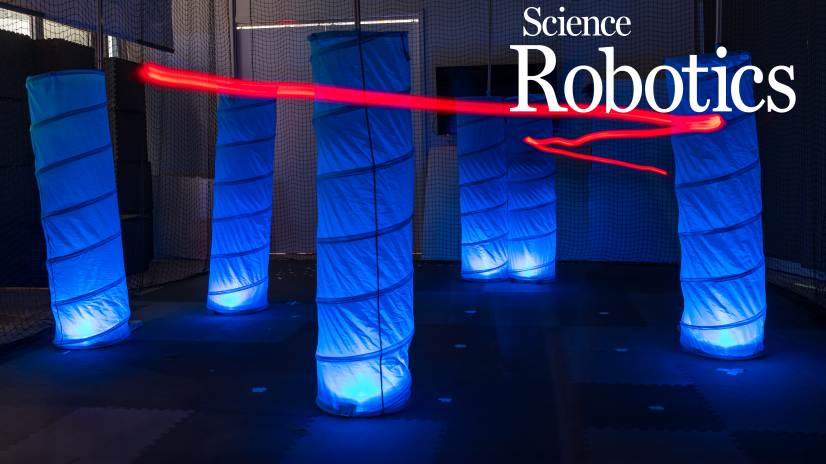
Nitin J Sanket is an Assistant Professor in the Robotics Engineering Department at Worcester Polytechnic Institute, where he leads the Perception and Autonomous Robotics Group (PeAR) founded in 2022. His research focuses on advancing autonomy for tiny mobile robots through bio-inspired approaches that enable on-board sensing and computation without external infrastructure. Ph.D. in Computer Science from University of Maryland, College Park (2021) M.S. in Robotics from University of Pennsylvania (2016) B.E. in Electronics and Communication from M. S. Ramaiah Institute of Technology, Bangalore, India (2013) Professor Sanket's research centers on four interconnected thrusts: Active perception (using movement to simplify perception problems), Interactive perception (selectively interacting with the environment), Novel perception (using data statistics like neural network uncertainty), and Novel sensing (employing sensors like event cameras). His work targets extreme resource-constrained robots, exemplified by the world's first RoboBeeHive prototype – hummingbird-sized nano-quadrotors capable of pollination with all sensing and computation performed on-board. His lab's 'Minimal-AI' philosophy emphasizes efficiency, using perception-action synergy to solve complex problems with minimal computational resources. His recent publications reveal a strong focus on efficient vision algorithms for tiny robots, with papers in Science Robotics (featured on the cover), IEEE ICRA, IROS, and CVPR. Key themes include uncertainty modeling for resource-constrained systems, event-based vision, and bio-inspired navigation. His work frequently bridges theoretical innovation with practical implementation on real hardware. Larry S. Davis Award for Best Computer Science PhD Thesis at University of Maryland (2021) MDPI Drones 2021 PhD Thesis Award Brin Family Prize (2018) Science Robotics cover feature (2023) Professor Sanket actively mentors 19 students (3 PhD, 6 Masters, 10 undergraduates) and recently secured a $705K NSF grant (September 2025) for bio-inspired sound navigation in tiny robots. His lab emphasizes hands-on experience with real hardware systems rather than pure simulation. His research on bat-inspired drones for search and rescue operations has received extensive media coverage from Associated Press, Washington Post, NPR, and other major outlets, demonstrating the real-world relevance of his work. The Perception and Autonomous Robotics Group (PeAR) provides students with opportunities to work on cutting-edge problems in nano-drone development, bio-inspired navigation, and minimal-AI approaches, preparing them for careers at the forefront of robotics innovation.
Dr. Anna Palau Masoliver is a Tenured Scientist at the Institute of Materials Science of Barcelona (ICMAB-CSIC), where she leads the SuperQMat research group focused on Nanoengineered Superconductors and Quantum Materials. She holds affiliations with CSIC and previously served as a Research Associate at the University of Cambridge (2005-2007). Education: Physics Degree, University of Barcelona (1999) Materials Science Engineering, Polytechnic University of Catalonia (2000) PhD in Materials Science, ICMAB-CSIC (2005) Her research explores fundamental phenomena in functional oxides and superconducting systems, with emphasis on: Modulation of superconducting order parameters via nanostructuring Field-induced quantum phase transitions Vortex dynamics and pinning mechanisms Magnetic metasurfaces for energy-efficient ICT Hybrid superconductor/spintronic devices Current projects include the MetaMagIC initiative developing microscale magnetic field control technologies. Publications demonstrate strong focus on: Advanced characterization of vortex matter Nanocomposite superconducting films Quantum transport in oxide heterostructures Non-equilibrium phenomena in superconductors Magnetoresistive sensor development with recent advances in cryogenic computing applications and metasurface engineering. Research Group: The SuperQMat lab hosts 3 PhD students, 1 postdoctoral researcher, and multiple undergraduates. Current projects involve international collaborations with Cambridge, Leipzig, and European quantum consortia.
Professor Robert Bogdanowicz is Head of the Department of Optoelectronics and Deputy Director of the Doctoral School for Education and Quality at Gdańsk University of Technology's Faculty of Electronics, Telecommunications and Informatics. His research integrates materials science, electrochemistry, and nanotechnology to develop sustainable solutions. Research Focus: His work centers on carbon-based nanomaterials, with emphasis on: Advanced electrode design (3D-printed, boron-doped nanostructures) Electrochemical sensors for environmental/medical applications Neuromorphic computing via graphene-diamond heterojunctions Sustainable wastewater treatment technologies Recent publications (2025) demonstrate consistent innovation in sensor development, materials synthesis, and energy-efficient computing. His research shows strong translational potential in environmental monitoring, healthcare diagnostics, and information technology. Contact: robbogda@pg.edu.pl
Nancy Lynch is the NEC Professor of Software Science and Engineering in MIT's Department of Electrical Engineering and Computer Science. She heads the Theory of Distributed Systems Group at MIT's Computer Science and Artificial Intelligence Laboratory (CSAIL). Her affiliations include MIT, University of Southern California, Brooklyn College, University of Washington, and Georgia Tech. Her research spans: Distributed computing theory and algorithms Formal modeling and verification of real-time systems Wireless network protocols Biological distributed algorithms (ant colonies, neural networks) Nanobot systems for medical applications Recent publications show a strong interdisciplinary focus, with work combining theoretical computer science with neuroscience and biology. Her group maintains an active publication record in top-tier conferences and journals. Professor Lynch actively advises graduate students and teaches courses including Distributed Algorithms at MIT. Her lab develops open-source tools like ParSwarm for evaluating distributed algorithms.
Raluca NEGREA is a Scientific Researcher III at the National Institute of Materials Physics, working in the Laboratory of Atomic Structures and Defects in Advanced Materials (LASDAM). Her research focuses on advanced materials for electronic, energy, and sensing applications. Dr. NEGREA's primary research interests span across multiple areas of materials science: Ferroelectric materials, particularly hafnia and zirconia-based thin films Nanomaterials synthesis and characterization Photocatalysis and water splitting using modified TiO 2 systems Gas sensing applications of metal oxide nanostructures Energy storage in ferroelectric capacitor systems Interface engineering in multiferroic heterostructures Her publication record demonstrates a strong focus on the development and characterization of functional oxide materials, with particular emphasis on ferroelectric hafnium and zirconium oxides. Dr. NEGREA has made significant contributions to understanding the phase control, wake-up phenomena, and polarization mechanisms in these materials. Her work bridges fundamental materials science with practical applications in memory devices, energy storage, and sensors. She frequently employs advanced characterization techniques including X-ray diffraction, transmission electron microscopy, and various spectroscopic methods to elucidate structure-property relationships. Dr. NEGREA collaborates extensively with researchers across Europe, contributing to multi-institutional projects focused on advanced electronic materials. Her laboratory work in LASDAM supports the development of next-generation functional materials for various technological applications.
Ricardo Ferreira serves as Research Scientist Group Leader of the Spintronics research group at the International Iberian Nanotechnology Laboratory (INL). With a PhD in Physics Engineering from Instituto Superior Técnico (IST) completed in 2008, his career has focused on advancing spintronics technology through Magnetic Tunnel Junctions (MTJs). His research group develops high-yield fabrication processes for both micro-scale (down to 1μm²) and nano-scale (down to Dr. Ferreira's research interests span multiple cutting-edge areas in spintronics, with primary focus on nano-oscillators, neuromorphic computing architectures, and advanced magnetic field sensors. His work bridges fundamental physics with practical applications, particularly in developing devices that exploit spin transfer and spin Hall effects for next-generation computing paradigms. The group has made significant contributions to RF signal processing, true random number generation, and physical unclonable functions using spintronic devices. His recent publications reveal a strong trend toward neuromorphic computing applications, with multiple papers on spin-torque nano-oscillators for reservoir computing, weighted neural networks, and RF signal classification. The research demonstrates increasing sophistication in controlling vortex states and coupled oscillator dynamics for computational applications, while maintaining strong contributions to fundamental spintronics phenomena and sensor development. Co-author of 150+ peer-reviewed publications Co-inventor in 4 patent applications submitted at INL Participant in 6 European projects in the last decade Leader of multiple high-TRL industrial application projects Ferreira actively mentors PhD students and postdoctoral researchers, with several alumni having completed their doctoral work under his supervision. His group engages in both fundamental research and applied projects targeting Industry 5.0 ready production systems and space applications. The laboratory maintains advanced fabrication capabilities including UHV sputtering systems, ion milling equipment, and comprehensive characterization tools for spintronic device development.