Amirreza Yousefzadeh is an Assistant Professor specializing in computer architecture design for embedded systems. His research focuses on hardware acceleration for artificial intelligence, particularly in energy-efficient neuromorphic computing and edge AI applications. Research Interests Neuromorphic computing architectures Event-driven AI hardware Sparsity exploitation in neural networks Embedded vision systems Digital circuit design for AI Research Trends Recent work (2024-2025) demonstrates expertise in spiking neural networks (SNNs), activation sparsity, and hardware-software co-design for neuromorphic processors. Key areas include object detection, energy efficiency optimization, and digital implementations of synaptic delays. Technical Contributions Developed SENMap for multi-objective data-flow mapping Created SENSIM simulator for multi-core neuromorphic systems Investigated 3D stacking for memory-dominated architectures Explored temporal sparsity in event-based processing
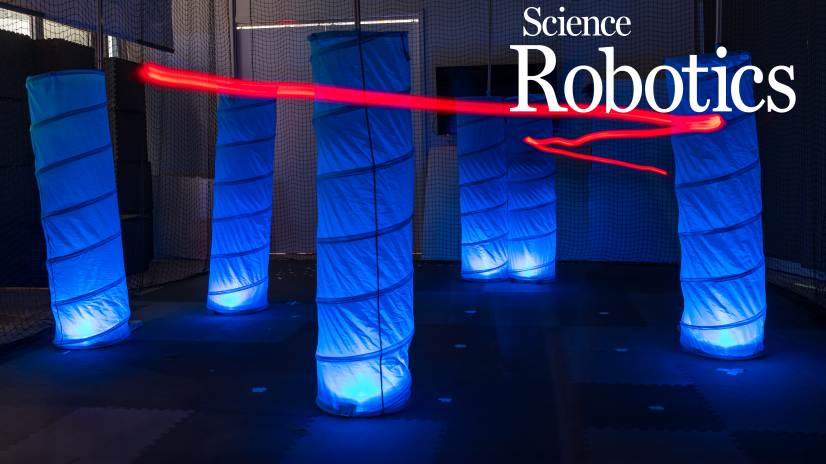
Nitin J Sanket is an Assistant Professor in the Robotics Engineering Department at Worcester Polytechnic Institute, where he leads the Perception and Autonomous Robotics Group (PeAR) founded in 2022. His research focuses on advancing autonomy for tiny mobile robots through bio-inspired approaches that enable on-board sensing and computation without external infrastructure. Ph.D. in Computer Science from University of Maryland, College Park (2021) M.S. in Robotics from University of Pennsylvania (2016) B.E. in Electronics and Communication from M. S. Ramaiah Institute of Technology, Bangalore, India (2013) Professor Sanket's research centers on four interconnected thrusts: Active perception (using movement to simplify perception problems), Interactive perception (selectively interacting with the environment), Novel perception (using data statistics like neural network uncertainty), and Novel sensing (employing sensors like event cameras). His work targets extreme resource-constrained robots, exemplified by the world's first RoboBeeHive prototype – hummingbird-sized nano-quadrotors capable of pollination with all sensing and computation performed on-board. His lab's 'Minimal-AI' philosophy emphasizes efficiency, using perception-action synergy to solve complex problems with minimal computational resources. His recent publications reveal a strong focus on efficient vision algorithms for tiny robots, with papers in Science Robotics (featured on the cover), IEEE ICRA, IROS, and CVPR. Key themes include uncertainty modeling for resource-constrained systems, event-based vision, and bio-inspired navigation. His work frequently bridges theoretical innovation with practical implementation on real hardware. Larry S. Davis Award for Best Computer Science PhD Thesis at University of Maryland (2021) MDPI Drones 2021 PhD Thesis Award Brin Family Prize (2018) Science Robotics cover feature (2023) Professor Sanket actively mentors 19 students (3 PhD, 6 Masters, 10 undergraduates) and recently secured a $705K NSF grant (September 2025) for bio-inspired sound navigation in tiny robots. His lab emphasizes hands-on experience with real hardware systems rather than pure simulation. His research on bat-inspired drones for search and rescue operations has received extensive media coverage from Associated Press, Washington Post, NPR, and other major outlets, demonstrating the real-world relevance of his work. The Perception and Autonomous Robotics Group (PeAR) provides students with opportunities to work on cutting-edge problems in nano-drone development, bio-inspired navigation, and minimal-AI approaches, preparing them for careers at the forefront of robotics innovation.
Evi Zouganeli is an Associate Professor at the University of Oslo's Faculty of Mathematics and Natural Sciences, Department of Informatics. Her research spans from smart home technologies for elderly care to cognitive robotics and earlier work in optical networking. She leads interdisciplinary research in the "Assisted Living Project" funded by the Research Council of Norway under the SAMANSVAR programme (247620/O70), focusing on responsible innovations for dignified lives at home for people with mild cognitive impairment or dementia. Her research interests center around smart home technology, activity recognition, and sensor data analysis for elderly care applications. She develops advanced machine learning approaches including probabilistic models like SPEED and Active LeZi, as well as deep learning techniques like LSTM networks for predicting sensor events and activities of daily living. Her work involves collecting data from real homes with older adult residents using binary sensors and depth video cameras, with applications in healthcare monitoring and assistive living technologies. More recently, she has expanded into cognitive robotics, investigating how cognitive architectures can enhance AI-enabled robotic systems. Professor Zouganeli's publications show a clear research trajectory from optical networking in the early 2000s to her current focus on AI applications for healthcare. Her most recent work demonstrates strong interdisciplinary collaboration across computer science, healthcare, and gerontology fields. The research shows consistent improvement in prediction accuracy, with recent implementations achieving 77-87% accuracy for sensor event prediction and 61-90% for activity recognition depending on the apartment setup. As a supervisor, she has guided PhD students in the Faculty of Mathematics and Natural Sciences at the University of Oslo, with research funded by the Research Council of Norway. Her work involves collaboration with researchers from multiple disciplines, as indicated by the interdisciplinary nature of the "Assisted Living Project." She has also contributed to educational research, particularly in project-based learning approaches for programming education in electrical engineering.
Associate Professor Nicholas Tothill is a Senior Lecturer and Director of WSU Penrith Observatory at Western Sydney University's School of Science. With extensive international experience including positions at Harvard-Smithsonian Center for Astrophysics and Max Planck Institute for Astronomy, he specializes in astrophysics, radio astronomy, and astronomical instrumentation. Education BA in Natural Sciences (Physics and Theoretical Physics), Cambridge University, UK MSc in Radioastronomy, University of Manchester, UK PhD in Astrophysics, University of London, UK Research Interests Nicholas Tothill's research focuses on astronomical and space science applications of event-based cameras, radio astronomy, millimetre-wave astronomy, optical spectroscopy, and cosmic-ray astronomy. His work spans the astrophysics of distant galaxies, star formation processes, and galactic cosmic rays. He has conducted research at the South Pole running radio telescopes and has extensive experience with various astronomical instrumentation and data analysis techniques. Publication Trends Tothill's recent publications (2019-2023) show strong focus on binary star systems, radio astronomy surveys of Magellanic Clouds, and development of astronomical instrumentation, particularly neuromorphic event-based cameras for space imaging. His work bridges observational astronomy with instrument development, contributing to major projects like the Cherenkov Telescope Array. Scientific Awards Antarctica Service Medal, US NSF Member, Astronomical Society of Australia Advising and Grants Professor Tothill supervises research students in computational astrophysics and has been involved in significant research projects including the European Commission-funded "Advancing European submillimetre/terahertz astronomy in Antarctica" (2006-2008). His work combines theoretical astrophysics with practical observational techniques across multiple wavelengths. Laboratories and Teams As Director of WSU Penrith Observatory, Tothill leads observational astronomy efforts at Western Sydney University. He is associated with the International Centre for Neuromorphic Systems and has collaborated extensively with international teams on projects including the JCMT Gould Belt Survey, ASKAP surveys, and Cherenkov Telescope Array development.
Gabriele Gühring serves as Professor at Esslingen University of Applied Sciences with dual appointments in the Faculty of Basic Sciences (since 2008) and Faculty of Computer Science and Information Technology (since 2021). She currently holds the executive position of Vice President for Research and Transfer (since September 2022), concurrently directing the Department of Research and Transfer while serving on the Science Commission and Honours Committee. Her academic foundation includes: Mathematics and Physics studies at University of Tübingen (1991-1996) Doctoral research on nonautonomous differential equations (1997-1999) Part-time Master's in Mathematical Finance at University of Oxford (2002-2004) Prof. Gühring's research centers on practical AI applications , specializing in anomaly detection systems for industrial infrastructure and multimodal learning for technical documentation. Her work bridges theoretical mathematics with real-world implementations in renewable energy, urban mobility, and medical diagnostics, demonstrating consistent evolution from pure mathematics to cutting-edge machine learning. Analysis of her 14 publications (1999-2023) reveals a strategic pivot from theoretical differential equations to industrial AI solutions. Recent work (2020-2023) focuses on anomaly detection in energy systems (power plants, vehicle fleets), multimodal neural networks for product analysis, and mobility data anonymization , with methodologies spanning spiking neural networks, graph-based approaches, and Bayesian deep learning. While no scientific awards are documented, her leadership in the BMBF-funded Anomob project demonstrates active grant acquisition in data privacy. Administrative responsibilities likely encompass significant mentorship, though no formal advisees are listed in the provided materials. Her research operates through Esslingen's Department of Research and Transfer, fostering cross-disciplinary collaborations between computer science, engineering faculties, and industrial partners in energy, transportation, and healthcare sectors.