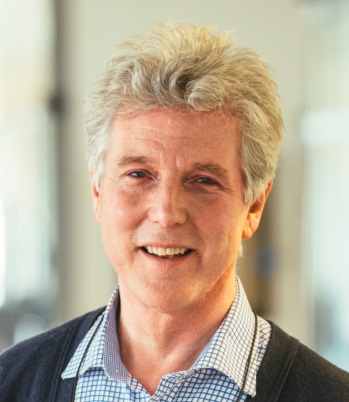
Libo Chen is an Assistant Professor at Uppsala University's Department of Electrical Engineering; Solid State Electronics. His work focuses on neuromorphic tactile systems, bioinspired e-skin, and self-powered transducers. Research Interests : Neuromorphic engineering for tactile feedback Stretchable and self-healing electronics Energy harvesting for bioinspired systems Triboelectric transducers and sensors Surface chemistry of mesoporous materials Publication Trends : Over the past five years, Chen has published in interdisciplinary areas spanning Materials Science , Neuroengineering , and Chemical Physics , with a focus on tactile systems, self-healing materials, and hybrid energy applications. Labs & Teams : He is affiliated with Uppsala University's Ångström Laboratory, a hub for advanced materials and electronics research.
Professor Ahmed Hemani is a faculty member at the Division of Electronics and Embedded Systems, KTH Royal Institute of Technology, affiliated with the Digital Futures Faculty. He holds the role of PI for the project 'New Chip Architectures for Industrial Vision' and leads research in reconfigurable computing, memristor-based systems, and hardware acceleration for AI and edge computing. His work bridges theoretical computer science with practical VLSI design and embedded systems development. He actively contributes to cross-disciplinary initiatives at Digital Futures, a joint center with Stockholm University and RISE Research Institutes of Sweden focused on digital innovation. His research emphasizes scalable FPGA/HPC architectures, low-power neuromorphic systems, and optimization techniques for custom silicon solutions. Current projects include a Lego-inspired edge AI framework and memristor-driven MIMO acceleration. Teaching responsibilities span advanced courses in SOC design, digital system verification, and embedded systems. He supervises advanced-level degree projects across computer engineering and ICT innovation specializations, emphasizing hands-on hardware-software co-design methodologies. Recent publications highlight innovations in memristor applications, FPGA-based acceleration, and reconfigurable architectures for neural networks and bioinformatics. His work addresses challenges in dark silicon utilization, energy-efficient computation, and high-performance embedded systems.
Fredrik Sandin is a Professor in the Department of Computer Science, Electrical and Space Engineering at Luleå University of Technology, where he leads the Machine Learning research group with approximately thirty members. His work focuses on neuromorphic technologies and the intersection of machine learning with computational physics to solve challenging real-world interaction problems. He coordinates the 'Teknisk fysik och elektroteknik' program at LTU and has been instrumental in establishing neuromorphic research activities at the university. Luleå University of Technology, Department of Computer Science, Electrical and Space Engineering Member of WASP (Wallenberg AI, Autonomous Systems and Software Program) and ELLIS (European Laboratory for Learning and Intelligent Systems) Coordinator of Neuromorphic Innovation Platform Sweden with KTH, Lund University, Uppsala University, FOI, ABB, Ericsson, and SAAB Fredrik earned his PhD in Physics from Luleå University of Technology in 2007, with thesis work focusing on dense states of matter in neutron stars. His academic journey began with an MSc diploma work in ATLAS at CERN in 2001, followed by postdoctoral research in computational physics at IFPA in Belgium (2008-2009) and brain-like computing at EISLAB with Prof. Jerker Delsing (2010-2011). Professor Sandin's research interests center around neuromorphic technologies, particularly neuromorphic computing and spiking neural networks. He investigates sensor/detector and intelligent systems co-design where constraints like energy, power, latency, and dynamic range challenge conventional digital approaches. His work spans mixed-signal neuromorphic circuits, algorithms, and systems, as well as machine learning projects involving industrial data and collaboration. He has been a key figure in establishing neuromorphic research at LTU, supported by The Kempe Foundations, particularly through the 2014 Gunnar Öquist Fellowship. His recent publications demonstrate a strong interdisciplinary focus spanning quantum phase transitions, particle physics detector optimization, renewable energy materials, and the integration of large language models into control systems. This diverse portfolio reflects his approach connecting machine learning with fundamental physics and practical engineering applications, particularly in neuromorphic computing and intelligent systems design, with emphasis on solving real-world problems through co-design of hardware and algorithms. Gunnar Öquist Fellowship Award and 3 MSEK grant from The Kempe Foundations ISSP award for an Original Work in Theoretical Physics (signed by Prof. 't Hooft and Prof. Zichichi) New-Talents award for original work in theoretical physics at the International School of Subnuclear Physics in Erice Professor Sandin has supervised numerous PhD students working on topics ranging from neuromorphic TinyML to materials for neuromorphic computing, privacy-preserving machine learning at the edge, and intelligent fault diagnosis. He has secured substantial research funding from various sources including Vinnova, ÅForsk, Kempe Foundations, WASP-WISE, and EU programs like ECSEL JU Arrowhead Tools and ITEA3 AutoDC. His current major projects include the Neuromorphic Innovation Platform Sweden and several initiatives focused on neuromorphic condition monitoring and computing, with total funding exceeding 30 MSEK in the past five years. He leads the Machine Learning group at LTU, which collaborates extensively with industry partners including ABB, Ericsson, SAAB, SKF, and RISE. The group is active in developing neuromorphic technologies for wireless sensor networks, condition monitoring systems, and next-generation intelligent systems that address energy, power, and latency constraints that challenge conventional digital approaches.
Summary Pawel Andrzej Herman is an Associate Professor at the Division of Computational Science and Technology within the School of Computer Science and Communication (CSC) at KTH Royal Institute of Technology. His research focuses on computational neuroscience, brain-inspired AI, and machine learning applications in healthcare and cognitive science. He teaches multiple courses including Artificial Neural Networks and Deep Architectures , supervises degree projects across computer engineering and electrical engineering disciplines, and actively contributes to interdisciplinary research initiatives. His work bridges theoretical neuroscience with practical AI solutions, emphasizing synaptic plasticity models, neuromorphic computing, and medical diagnostic systems. Key areas include olfactory perception modeling, working memory mechanisms, and FPGA-accelerated neural networks. He collaborates internationally on projects such as AI-driven medical imaging and cognitive neuroscience studies. Dr. Herman’s research has been published in high-impact journals and conferences, with recent contributions to understanding neural mechanisms of odor naming deficits, beta/alpha oscillations in working memory, and spiking neural network architectures. His technical leadership spans HPC frameworks like StreamBrain and interdisciplinary tools for scientific data storage (NoaSci).
Tony Lindeberg is a Professor of Computer Science—Computational Vision at KTH Royal Institute of Technology, affiliated with the Division of Computational Science and Technology. He teaches the course Image Analysis and Computer Vision (DD2423). His research focuses on scale-space theory, early vision, and computational modeling of biological and auditory vision systems. Key contributions include theories on receptive fields, time-causal spatio-temporal models, and feature detection algorithms. Research interests span computational neuroscience, medical image analysis, and spatio-temporal recognition. Lindeberg has pioneered work on scale-invariant image features, affine transformations, and Galilean diagonalization for motion analysis. He is the author of the foundational book Scale-Space Theory in Computer Vision (1993). His work bridges computer vision and biological vision systems, with applications in gesture recognition, dynamic texture analysis, and neural networks. He leads the Vision Lab and Computational Brain Science Lab at KTH, emphasizing theoretical rigor and practical algorithms for visual perception tasks.
Prof. Saroj Dash is a Professor in the Department of Quantum Device Physics at Chalmers University of Technology. He leads the Spin and Quantum Devices group, focusing on spintronic devices using 2D quantum materials. His research explores spin transport in graphene, semiconductors, magnets, and topological materials. He earned a PhD from the Max Planck Institute (2007) and held postdocs at the Universities of Twente and Groningen. His group develops nanoscale devices for electronic, spin, and quantum technologies, emphasizing van der Waals heterostructures and neuromorphic computing. Key achievements include pioneering spintronic devices with 2D materials and receiving the Wallmarkska Prize 2023. Research topics include 2D quantum materials, topological spin devices, spin-orbit torque memory, and van der Waals heterostructure proximity effects. The group uses advanced fabrication techniques and characterization methods across frequencies, temperatures, and magnetic fields. He has authored over 96 publications and delivered 100+ invited talks. His research is funded by grants such as the EU Graphene Flagship and the Swedish Research Council.
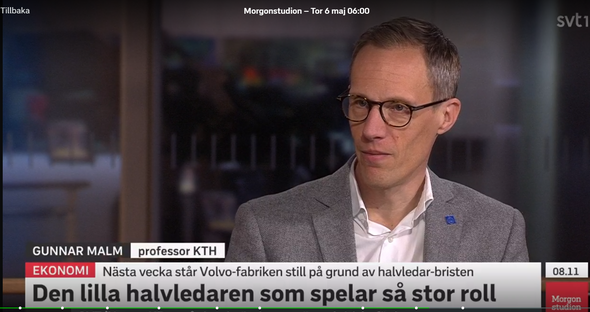
Gunnar Malm is a full-time Professor and Deputy Head of Department at the Royal Institute of Technology (KTH) in the School of Electrical and Computer Engineering. His research focuses on semiconductors and spintronics (nano-electronics), with special emphasis on variability, noise, and fluctuations in electronic components, as well as electronics for extreme environments. He combines experimental work with large-scale computer simulations via KTH's PDC, national SNIC clusters, and Vienna University of Technology's VSC resources. Editor, IEEE Electron Device Letters (2017–present) Technical Program Committee, European Solid-State Device Research Conference (ESSDERC) His pedagogical research (TALE 2022) explores citation practices in thesis writing, and he coordinates multiple semiconductor component courses including Design of Nanosemiconductor Components (IH2657) and Simulation of Semiconductor Components (IH2653) . Malm's Noise and Fluctuations Lab investigates fundamental device physics for sustainable electronics development.
Atakan Aral is a Visiting Lecturer at the Department of Computing Science, Umeå University. His research focuses on Edge Computing, Edge AI, and the Internet of Things (IoT), with a particular emphasis on resource management and sustainable environmental monitoring. He is affiliated with the Autonomous Distributed Systems Lab and Green Distributed Computing Group, both part of the Wallenberg AI, Autonomous Systems and Software Program (WASP) initiative. His work spans theoretical frameworks and practical implementations in edge intelligence and distributed systems. Research Interests: Edge Computing architectures and workflows Neuromorphic and energy-efficient AI systems Federated learning and multi-cluster collaboration Sensor networks for environmental monitoring Optimization of resource allocation in distributed systems Key Publications Trends: Recent work emphasizes neuromorphic edge AI applications, hierarchical federated learning, and energy-efficient IoT deployments. His articles often intersect computing continuum concepts with real-world challenges like rural environmental monitoring and latency-critical systems. Scientific Awards: No awards explicitly listed in the provided text. Advising & Grants: No formal student advisees or grant details provided. However, he contributes to the De facto Center of Excellence in Autonomous Distributed Systems (2023–2029), indicating involvement in large-scale collaborative research. Labs & Teams: Member of the Autonomous Distributed Systems Lab (lead in distributed systems research) and Green Distributed Computing Group (focused on sustainability in computing).
Baktash Behmanesh is an Assistant Professor and Associate Senior Lecturer at Lund University's Faculty of Engineering, Department of Integrated Electronic Systems. He is affiliated with LTH Profile Areas: Engineering Health, AI and Digitalization, and Nanoscience and Semiconductor Technology, as well as the Sentio: Integrated Sensors and Adaptive Technology initiative. His research focuses on analog integrated circuit design, RFIC design, filter design, power amplifier design, and low-noise analog/mixed-signal systems. Behmanesh has contributed to 12 peer-reviewed publications and leads or collaborates on seven research projects, including the NEUROMORF innovation platform and projects on 5G/6G front-end technologies. He advises students, such as I. Ghotbi, on advanced telecommunication systems. His work emphasizes reconfigurable RF front-ends, fractional bandwidth optimization, and sensor integration for next-generation communication and health technologies. Education: Not explicitly stated in provided text. Labs/Teams: Sentio: Integrated Sensors and Adaptive Technology, NEUROMORF, and collaborations within LTH's profile areas. Behmanesh's research spans 5G/6G receiver design, reconfigurable filters, and energy-efficient millimeter-wave amplifiers. His recent work includes a 2024 paper on 5G direct-sampling receivers and a 2023 study on 6G Q-enhanced filters. Projects like 'NIPS' and 'Sentio' highlight his focus on sustainable, adaptive sensor technologies and neuromorphic innovations. While no specific awards are listed, his contributions to advanced RF circuit design are evident through his publications and funded projects.
Anders Lansner is a Professor of Computer Science at Stockholm University and holds an affiliated professorship at KTH Royal Institute of Technology. He leads the Lansner Lab (Computational Biology and Neurocomputing) at the Department of Computational Science and Technology (CST) within the School of Computer Science and Communication (CSC) at KTH. His research focuses on computational neuroscience and brain-like computing, emphasizing mathematical and computational models of neuronal networks in the neocortex and basal ganglia. Key projects include developing neuromorphic algorithms for supercomputers and FPGA-based hardware implementations. Lansner manages the computational neuroscience platform for the Stockholm Brain Institute (SBI) and the neuroinformatics platform for StratNeuro (Karolinska Institutet). His lab contributes to EU projects such as FACETS and NEUROChem, and collaborates with KTH’s Electronics Department on modular brain-inspired FPGA designs. Research interests span synaptic plasticity mechanisms, memory systems (episodic, semantic, and working memory), and applications in neuromorphic computing. He supervises graduate students and teaches courses in computational neuroscience. Lansner’s work bridges theoretical neuroscience with engineering, aiming to advance brain-inspired AI and hardware systems. His lab’s StreamBrain framework supports heterogeneous computing architectures for brain-like neural networks. Notable collaborations include cross-disciplinary efforts in neuromorphic hardware development (e.g., memristor-based learning engines) and olfactory system modeling. Lansner’s research addresses both fundamental brain mechanisms and technical applications in data analysis and neurorobotics.
Muhammad Ihsan Al Hafiz is a Doctoral Student at the KTH Royal Institute of Technology, affiliated with the Division of Software and Computer Systems under the School of Electrical Engineering and Computer Science. His research focuses on hardware accelerators for neuromorphic computing and FPGA-based solutions. PhD (2024–Present): Hardware Accelerator for Neuromorphic Computing MSc (2021–2023): Embedded System, Track: Embedded Electronics His work spans fields such as Neuromorphic Computing , FPGA Design , and Embedded Systems , emphasizing hardware optimization for industrial applications. His recent publication introduces a reconfigurable FPGA accelerator for Bayesian Confidence Propagation Neural Networks, reflecting his focus on AI-driven hardware solutions. Current affiliations include: Role: Researcher Institution: KTH Royal Institute of Technology Division: Software and Computer Systems
Ying Fu is a Professor at Halmstad University's School of Information Technology, where he leads research in applied electromagnetics and photophysics. He belongs to the 'Photonics, Electronics, and Nanotechnology' research group and teaches undergraduate physics courses (FY4006 - Physics 1: Mechanics and Waves, FY4007 - Physics 2: Thermodynamics and Modern Physics) and graduate courses (EL8003 - Semiconductor Devices, EL8010 - Applied Electromagnetics). His research focuses on developing novel metamaterials and nanobiophotonic systems for applications spanning photodetection, solar energy conversion, biomedical sensing, and communications across visible to microwave spectra. Methodologies combine multi-scale theoretical modeling (quantum chemistry, solid-state physics, FDTD, machine learning) with experimental synthesis and characterization of quantum dots (CdSe-CdS/ZnS, ZnO, 3C-SiC), graphene, and metallic microstructures. Publication analysis reveals consistent focus on quantum nanostructures, with recent work (2021-2025) emphasizing infrared photodetector design, graphene metasurfaces, and memristive devices. Earlier contributions (2010-2018) established foundational work in quantum dot solar cells, nanocrystal photophysics, and semiconductor device engineering. His 230+ publications demonstrate interdisciplinary integration of materials science, photonics, and electronic engineering. He leads the 'Photonics, Electronics, and Nanotechnology' research team at Halmstad University, where experimental and computational facilities support investigations in nanomaterial synthesis, optical characterization, and device prototyping.
Christopher Zach is a Research Professor at Chalmers University of Technology, affiliated with the Signal Processing and Medical Technology department within the Digital Image Systems and Image Analysis research group . His work focuses on 3D reconstruction , real-time computer vision , and numerical optimization for machine learning. Develops 3D image understanding techniques Specializes in robust optimization for vision systems Leads research in medical image analysis Recent publications demonstrate expertise in low-light text enhancement , out-of-distribution detection , and domain adaptation for industrial applications. Active in Chalmers' Wallenberg AI and ÅForsk funded projects. Collaborates with researchers from Volvo Group , Volvo Cars , and SAFER Vehicle Safety initiatives.
Yu Yang is a Researcher at KTH Royal Institute of Technology's Division of Electronics and Embedded Systems. He has been affiliated with KTH since at least 2020 and currently holds a postdoc position. His research focuses on neuromorphic computing, FPGA/ASIC implementation, approximate computing, and embedded systems design. He also explores ergonomic applications using wearable sensors to address workplace safety and musculoskeletal disorders. Yang has taught courses like Digital Design and Embedded Hardware Design in ASIC and FPGA , demonstrating expertise in both theoretical and applied electronics. His work bridges hardware acceleration (e.g., memristor-based neural networks) with practical applications like surgeon workload analysis and posture correction systems. Notable projects include the eBrainII ASIC implementation of a human-scale cortical model and developing smart workwear systems for real-time vibrotactile feedback. Publications span IEEE conferences (DATE, FDL, ASP-DAC) and journals like Frontiers in Neuroscience and Journal of Signal Processing Systems . His research often emphasizes low-power, high-performance computing while addressing ergonomic challenges in manufacturing and healthcare sectors.
Wiktor Szczerek is a doctoral student and researcher at the Royal Institute of Technology (KTH), affiliated with the Division of Software and Computer Systems. His research focuses on synthesizing high-performance neuromorphic systems using FPGAs and ASICs, supervised by Prof. Artur Podobas and Prof. Pawel Herman. His work leverages the domain-specific language Syn2Logic, developed at KTH, to translate mathematical descriptions into efficient neuromorphic architectures. He also serves as an assistant for the course Computer Organization and Components (IS1500).