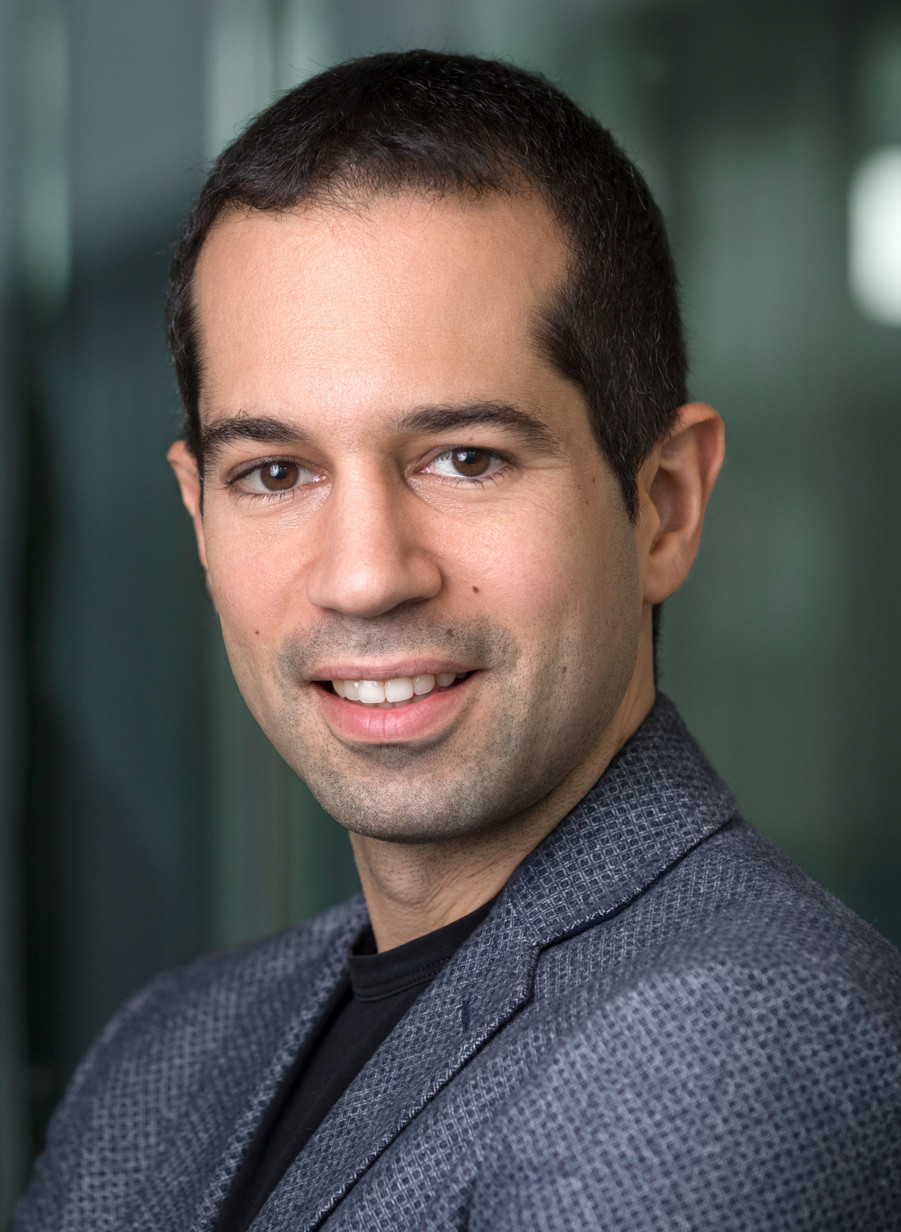
Davide Scaramuzza is a Professor and Director of the Robotics and Perception Group at the University of Zurich. He holds a Ph.D. from ETH Zurich and has conducted postdoctoral research at the University of Pennsylvania and Stanford. His research focuses on autonomous drone navigation using visual and event-based sensors, leading to breakthroughs like AI drones outperforming human pilots in racing (Nature 2023). He pioneered algorithms for Mars helicopter navigation and developed the PX4 autopilot system. Key awards include the Kiyo-Tomiyasu IEEE Technical Field Award (2024), ERC Consolidator Grant (2019), and multiple best paper awards. His entrepreneurial ventures include co-founding Zurich-Eye (later Meta Zurich) and SUIND for agricultural drones. He co-authored the textbook Introduction to Autonomous Mobile Robots , widely used in academia. Research spans event camera algorithms, visual-inertial SLAM, and reinforcement learning for agile flight. His lab's work is featured in IEEE Spectrum, The Guardian, and Forbes. He advises UN initiatives on AI for disaster response and nuclear safety. Current projects include Graph-Generating State Space Models (CVPR 2024) and event-based vision for automotive systems (Nature 2024).
Professor Emil Lupu is a Professor of Computer Systems at the Department of Computing , Imperial College London. He leads the Resilient Information Systems Security Group and serves as Co-Director of the National Research Institute in Trustworthy Inter-Connected Cyber-Physical Systems (RITICS) . As a Security Science Fellow at Imperial’s Institute for Security Science and Technology, his work bridges academic research with real-world security challenges. Education: PhD in Computing, Imperial College London (1994–1998) His research focuses on security and resilience of cyber-physical systems (CPS) , with emphasis on defending against data spoofing attacks , adversarial machine learning , and IoT vulnerabilities . He pioneered the Ponder policy systems for access control and the Self-Managed Cell framework for autonomic computing, and developed Bayesian Attack Graphs for scalable risk assessment in CPS. Recent publications highlight trends in adversarial robustness (2025–2022), including LIDAR spoofing defense for autonomous vehicles, LLM security , and attack graph analysis for IoT. His work explores the intersection of safety and security , applying model-checking to identify adversarial threats in train control, microgrids, and aviation systems. Scientific Awards: Security Science Fellowship, Imperial College London (2011–present) As co-founder of the PETRAS National Centre of Excellence in IoT Cybersecurity (2016–2021), he advanced security methodologies for interconnected systems. His collaborations with institutions like the Cyber Security Body of Knowledge (CyBoK) demonstrate his leadership in shaping cybersecurity research standards. Current projects include the RITICS Institute , focusing on trustworthy cyber-physical systems, and exploring generative AI for security poisoning with practical defenses against adversarial ML.
Roman Kuc is a Professor of Electrical Engineering at Yale University, affiliated with the School of Engineering & Applied Science. He directs the Intelligent Sensors Laboratory, focusing on biomimetic sensors for robotics and bioengineering. His research explores brain-based devices (BBDs), sonar sensing, and neuromorphic processing inspired by biological systems. He holds a BSEE from Illinois Institute of Technology and a PhD from Columbia University. Dr. Kuc’s work bridges signal processing, robotics, and bioengineering, with applications in autonomous systems and clinical diagnostics. He has published over 200 papers and authored textbooks like Electrical Engineering in Context and The Digital Information Age . Notable honors include an honorary doctorate from the Glushkov Institute of Cybernetics and the Yale Sheffield Distinguished Teaching Award. His research themes include cognitive mapping via sonar echoes, neural network-based classification of environmental features, and biomimetic approaches to echolocation. Recent work emphasizes sensorimotor integration and robust performance in uncertain environments. Scientific awards highlight his contributions to robotics, signal processing, and education. His lab develops systems that emulate biological sensory mechanisms, aiming to advance robotics, medical applications, and assistive technologies.
Dr. Richard Jiang is a Senior Lecturer (Associate Professor) at Lancaster University's School of Computing and Communications. His research focuses on Artificial Intelligence, Neurocomputing, Quantum AI, Privacy Computing, and Medical Computing. He has pioneered secure pattern recognition in encrypted domains and quantum neuromorphic computing. With over £1M in research grants from EPSRC and others, he has authored 100+ publications and supervised over 20 PhD students. Dr. Jiang's work includes the Face2Brain method for neurodegenerative assessment and explainable models for brain aging analysis. He contributes actively to academic committees, editorial boards, and conferences like the World Conference on eXplainable AI. His research spans ethical AI frameworks, quantum algorithms for medical imaging, and privacy-preserving biometric systems.
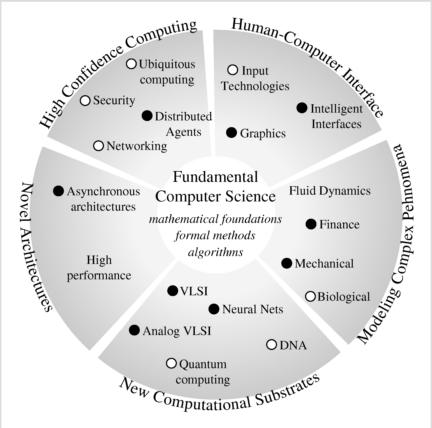
Alan H. Barr is a Professor of Computer Science at the California Institute of Technology (Caltech), affiliated with the Division of Engineering and Applied Science and the Computation & Neural Systems (CNS) department. He is a founding member of the Caltech Computer Graphics Group and a leader in developing mathematically rigorous methods for computer graphics and predictive modeling. His research focuses on enhancing computational modeling accuracy through approaches like interval analysis and constraint-based systems. Notable contributions include deformable models, quaternion interpolation, and cellular simulation frameworks. He has advised over 20 graduate students, many of whom became industry leaders at Pixar, Microsoft Research, and academic institutions like NYU and Brown University. Awards include the ACM SIGGRAPH Achievement Award (1988) and ACM Fellow (1995). Research Interests: Predictive modeling with error bounds Scientific visualization and MRI data analysis Biophysical systems simulation (e.g., cellular organelles) Self-assembling robotic structures for space colonization Mathematically robust computer graphics techniques Key Collaborations: Caltech Biological Imaging Center (Beckman Institute) JPL (Jet Propulsion Laboratory) New computational substrates research (quantum/DNA computing) Recent Work: Expanding into computational biology, medical imaging optimization, and high-confidence systems for managing complex computational interactions. Active in interdisciplinary projects across Caltech divisions.
Professor Klaus McDonald-Maier is a full Professor in the School of Computer Science and Electronic Engineering (CSEE) at the University of Essex , where he leads the Embedded and Intelligent Systems (EIS) Research Laboratory and heads the Intelligent Embedded Systems and Environments Research Group . He is also Director of Impact , Visiting Professor at the University of Kent, and Visiting Research Affiliate at NASA Jet Propulsion Laboratory, California Institute of Technology. Education PhD in High-Performance Parallel Neural Network Architectures, Friedrich-Schiller-University Jena (Germany, 1999) Electronic Engineering studies, University of Ulm (Germany) Electronic Engineering studies, Cardiff University (Wales) Electronic Engineering studies, École Supérieur de Chimie Physique Électronique de Lyon (CPE-Lyon) (France) Research Interests Professor McDonald-Maier’s research integrates embedded systems , System-on-Chip (SoC) architectures , and AI-driven robotics . He pioneers visual place recognition techniques that remain robust under severe appearance and viewpoint changes, develops cybersecurity frameworks based on ICMetrics for autonomous vehicles and IoT, and designs approximate real-time computing solutions for energy-constrained multicore and FPGA platforms. His work on radiation-tolerant systems supports space and nuclear applications, while his bio-inspired algorithms enable lightweight, neuromorphic perception on resource-limited robots. Publication Trends Between 2022 and 2025 his output converges on FPGA-accelerated AI , secure edge intelligence , visual navigation for autonomous systems , and healthcare analytics . He repeatedly couples rigorous algorithmic innovation with practical hardware deployment, yielding energy-efficient, real-time systems validated in domains ranging from autonomous driving to post-stroke rehabilitation. Scientific Awards & Recognition Best Paper Award – IEEE Transactions on Sustainable Computing (2024) Best Paper Award – IEEE/ACM DATE (2024) Best Paper Award – IEEE Systems Journal (2022) Best Paper Award – IEEE Sensors Journal (2021) Best Paper Award – IEEE Access (2020) Research Grants & Industrial Collaboration He has secured major funding from EPSRC , EU Horizon 2020 , Innovate UK , and industry partners. Current projects span trustworthy autonomy, radiation-hardened edge AI, and AI-enhanced rehabilitation technologies. He is Chief Scientist of UltraSoC Technologies Ltd and CEO of Metrarc Ltd , commercialising University research in semiconductor debug and cybersecurity respectively. Laboratory & Team Leadership As Director of the Embedded and Intelligent Systems Laboratory (EIS Lab) , he oversees a multidisciplinary team of researchers and PhD students, providing state-of-the-art FPGA, robotics, and embedded-systems facilities. The lab collaborates closely with NASA JPL, UK Atomic Energy Authority, and leading semiconductor firms to translate fundamental research into high-impact industrial solutions.
Edward Kim is an Associate Professor in the Department of Computer Science at Drexel University's College of Computing & Informatics. His research spans computer vision, sparse coding, neuromorphic computing, and AI, with a focus on neuro-inspired machine learning and robust, interpretable models. Research Interests: Computer Vision Sparse Coding and Dictionary Learning Neuromorphic and Spiking Neural Networks Explainable and Adversarially Robust AI Multimodal Learning Medical Image Processing His recent publications highlight a strong trend in developing biologically inspired, robust, and interpretable machine learning models, particularly using sparse coding and spiking neural networks. Themes include adversarial robustness, model confidence calibration, and cross-modal integration. His work often bridges neuroscience and AI, aiming to create more human-like and trustworthy systems. Scientific Awards: NSF CAREER Award (2019) Longsview Fellow (collaborative project, 2021) Dr. Kim advises several graduate students in the SPARSE Lab and has secured significant research funding from the NSF, DARPA, and the Bill & Melinda Gates Foundation. His grants focus on ethical AI, racial bias in ML, and digital health platforms. He also contributes to academic leadership as a Provost Fellow at the Drexel Solutions Institute and co-chair of computer vision tracks at major conferences. Labs and Teams: He leads the SPARSE (SPiking And Recurrent SOFTwarE) Coding Lab, which investigates biologically inspired learning models beyond traditional deep learning. The lab integrates neuroscience principles to improve stability, interpretability, and robustness in AI systems.
Kyusang Lee is an Associate Professor in the Electrical and Computer Engineering and Materials Science and Engineering departments at the University of Virginia. His research focuses on optoelectronic devices, neuromorphic computing, and smart sensors, emphasizing applications in solar energy conversion and flexible electronics. He holds a B.S. from Korea University (2005), M.S. from Johns Hopkins University (2009), and Ph.D. from the University of Michigan (2014). He conducted postdoctoral research at the University of Michigan and MIT. Education: B.S., Electrical Engineering, Korea University, 2005 M.S., Electrical and Computer Engineering, Johns Hopkins University, 2009 Ph.D., Electrical Engineering and Computer Science, University of Michigan, 2014 Postdoctoral Fellowships: University of Michigan (EECS), MIT (Mechanical Engineering) His research interests span thin-film and flexible optoelectronics, neuromorphic computing architectures, and AIoT-enabled smart sensors. Notable contributions include remote epitaxy techniques for semiconductor membrane integration and solar-tracking concentrator designs. His work bridges materials science and device engineering to advance energy-efficient optoelectronics and bioinspired systems. Key Research Themes: Organic/inorganic optoelectronic devices for solar energy Flexible and stretchable electronics Neuromorphic hardware for edge computing Gas sensing and bioinspired sensor systems Lee’s publications reflect interdisciplinary innovation, with recent work on ferroelectric transistors, neuromorphic vision systems, and high-efficiency photovoltaics. He received the NSF CAREER Award (2020) and AFOSR YIP Award (2023).
Hao Yang is an Assistant Professor in the Department of Civil and Systems Engineering at Johns Hopkins University, with dual affiliations at the Johns Hopkins Data Science and AI Institute and the Johns Hopkins Institute for Assured Autonomy. His research develops Trustworthy Machine Learning methods to enhance urban mobility systems, focusing on traffic safety, equity, and sustainability through ethical AI and human-machine cooperative systems. Yang earned dual bachelor's degrees in Electrical and Computer Engineering from Beijing University of Posts and Telecommunications and the University of London, followed by a Ph.D. in Civil Engineering (Transportation) from the University of Washington. His educational background bridges telecommunications, electrical engineering, and transportation systems. His research integrates spatio-temporal modeling, assured autonomous systems, and multimodal representation learning to address transportation equity and safety. Key projects include edge-AI-powered traffic surveillance, real-time crash identification, and cooperative signal assistance for vulnerable road users. His work emphasizes ethical AI deployment in cyber-physical infrastructure to create sustainable urban mobility solutions. Recent publications reveal a strategic shift toward large language models and multimodal AI for transportation challenges, with strong emphasis on explainability, reliability, and equity in traffic crash prediction, flow forecasting, and autonomous driving systems. This evolution demonstrates his commitment to adapting cutting-edge AI for real-world transportation problems. Yang's scientific contributions have earned significant recognition: Michael Kyte Outstanding Student of the Year Award (2022) High-Value Research Award from AASHTO (2022) Best Paper Award from TRB Information Systems Committee (2023) Best and Outstanding Dissertation Awards (2024) IEEE DTPI Outstanding Paper Award (2022) TRANSFOR22 Data Competition 2nd place (2022) ASCE Bridges Photo Contest First Place (2021) He actively mentors graduate researchers and seeks 2-3 PhD students for Fall 2025 to advance trustworthy AI in transportation. His research is supported by NSF, USDOT, and AASHTO grants including the Real-Time Truck Parking Information System project that received the High-Value Research Award. Current work focuses on edge-AI for traffic safety and multimodal data integration. Yang leads research within Johns Hopkins' Data Science and AI Institute and Institute for Assured Autonomy, collaborating with Transportation Research Board committees. His lab develops real-time perception systems using edge computing and representation learning, with active projects on non-motorized user safety and equitable traffic management for people with disabilities.
Federico Becattini is a Tenure-Track Assistant Professor at the Department of Information Engineering and Mathematics (DIISM), University of Siena, Italy. He is an active member of the Siena Artificial Intelligence Lab (SAILab), where he contributes to cutting-edge research in computer vision, deep learning, and artificial intelligence. His work spans multiple interdisciplinary domains, including autonomous driving, human behavior understanding, cultural heritage, neuromorphic vision, and fashion recommendation. His research interests center on memory-based neural networks , which he has applied in numerous publications at top-tier venues such as CVPR, ECCV, IEEE TPAMI, and ACM TOMM. He has also delivered tutorials on this topic at international conferences including ICIAP 2022 and ACM MM 2022, and taught a Ph.D. course at the University of Florence. His recent work is aligned with the Collectionless AI paradigm, which emphasizes continual learning and interaction with dynamic environments. The recent publications highlight a strong trend in human-centric AI , focusing on understanding people through multimodal analysis of face, body, and clothing, as well as generating 3D virtual avatars. There is also a clear emphasis on memory-augmented architectures for temporal reasoning, explainability, and adaptive learning. His editorial role as Associate Editor of the International Journal of Multimedia Information Retrieval further underscores his standing in the research community. Associate Editor, International Journal of Multimedia Information Retrieval (IJMIR) Organizer, Workshop on Facial and Body Expressions (ICPR2020) Co-organizer, T-CAP Workshop (ICIAP2021, ICPR2022) Co-organizer, MCFR Workshop (ACM MM 2022) Co-organizer, WCPA Workshop and Challenge (ECCV 2022) Federico Becattini actively advises students and researchers within SAILab, particularly in the context of Ph.D. theses and research projects related to Collectionless AI and memory-based models. While specific grants are not mentioned, his extensive publication record and leadership in workshops and editorial roles suggest involvement in funded research initiatives. He collaborates with both academic and international research communities, serving as a reviewer for top-tier conferences and journals. He is a core member of the SAILab research group, which is pioneering the Collectionless AI initiative—a framework for continual learning over time, interacting with humans and agents without relying on pre-built static datasets. This lab serves as a hub for innovation in adaptive and sustainable AI systems.
Alan A. Stocker is a Professor in the Department of Psychology at the University of Pennsylvania, with affiliations in the Neuroscience Graduate Group, Bioengineering Graduate Group, and Computational Neuroscience Initiative. He leads the Computational Perception and Cognition (CPC) Laboratory, focusing on how prior beliefs and expectations shape sensory perception through Bayesian inference and efficient coding principles.
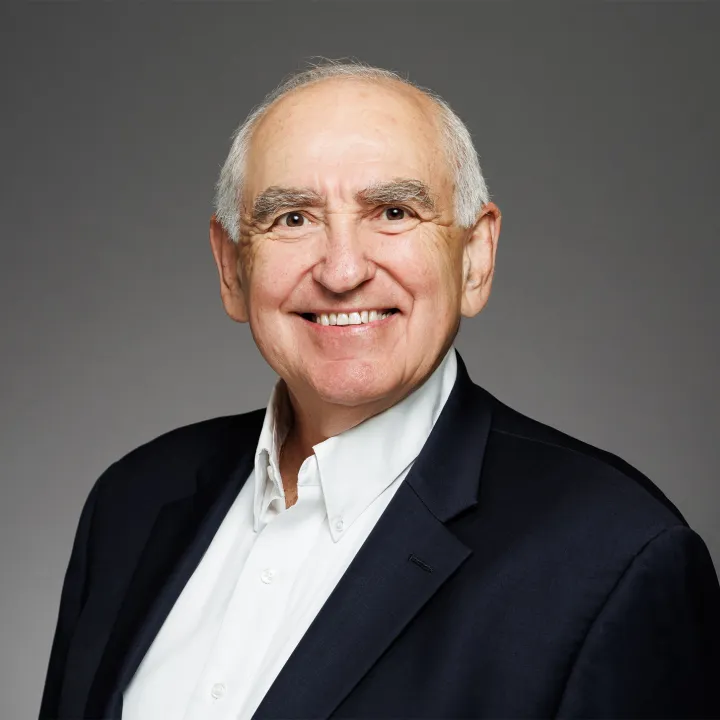
Professor Tobin J. Marks is the Vladimir N. Ipatieff Professor of Catalytic Chemistry, Professor of Materials Science and Engineering, Professor of Applied Physics, and Professor of Chemical and Biological Engineering at Northwestern University. He also serves as a Distinguished Adjunct Professor at Texas A&M Qatar University and is a Senior Fellow of the Hong Kong Institute for Advanced Study at City University of Hong Kong. Dr. Marks is a member of the US National Academy of Engineering, the US National Academy of Sciences, and a Fellow of the Royal Society of Chemistry, UK. Dr. Marks received his BSc in Chemistry from the University of Maryland in 1966 and his PhD in Inorganic Chemistry from MIT in 1970. His academic career at Northwestern began as an Assistant Professor of Chemistry in 1970, progressing to Associate Professor in 1974, Professor of Chemistry in 1978, Charles E. & Emma H. Morrison Professor of Chemistry from 1986-1999, Vladimir N. Ipatieff Professor of Catalytic Chemistry since 1999, Professor of Materials Science and Engineering since 1987, Professor of Applied Physics since 2009, and Professor of Chemical and Biological Engineering since 2017. Professor Marks' research spans numerous areas of chemistry and materials science. His work focuses on transition metal and f element organometallic chemistry, catalysis, vibrational spectroscopy, synthetic facsimiles of metalloprotein active sites, carcinostatic metal complexes, solid state chemistry and low-dimensional molecular metals, nonlinear optical materials, polymer chemistry, tetrahydroborate coordination chemistry, macrocycle coordination chemistry, molecular electro-optics, metal-organic chemical vapor deposition, polymerization catalysis, printed flexible electronics, solar energy, and transparent conductors. His research group consists of nearly 40 researchers working across four laboratories. Analysis of Professor Marks' recent publications reveals a strong focus on advanced materials for electronic and energy applications. His work spans organic electronics, flexible and stretchable devices, catalysis for sustainable chemistry, and novel materials characterization techniques. Key trends include the development of organic electrochemical transistors, high-efficiency organic solar cells, advanced catalysts for polymer recycling, and quantum materials for next-generation electronics. Professor Marks has received numerous prestigious awards throughout his career, including: US National Medal of Science American Chemical Society Joseph Priestley Medal Camille and Henry Dreyfus Prize in the Chemical Sciences Principe de Asturias Prize for Technical and Scientific Research US National Academy of Sciences Award in the Chemical Sciences Materials Research Society Von Hippel Award Harvey Prize in Science and Technology Karl Ziegler Prize from the German Chemical Society Professor Marks has mentored numerous students and postdoctoral researchers throughout his career, with his group currently consisting of nearly 40 researchers. He has received substantial research funding from multiple agencies including NSF, DOE, and DoD. His entrepreneurial spirit has led to the founding or co-founding of 15 startups, with technologies generating an estimated USD 100 billion in sales. Professor Marks leads several research teams focused on catalysis and organic electronic materials. His work has significant implications for sustainable chemistry, renewable energy, and next-generation electronic devices. He continues to be highly active in research, with numerous publications in 2025 demonstrating his ongoing scientific leadership.
Diego Patiño is an Assistant Professor in the Department of Computer Science and Engineering at the University of Texas at Arlington (UTA), a position he began in September 2024. He earned his Ph.D. in Computer Engineering from the National University of Colombia in 2020, following M.S. and B.S. degrees from the same institution. Prior to joining UTA, he served as a Postdoctoral Fellow at Drexel University and a Postdoctoral Researcher at the GRASP Laboratory, University of Pennsylvania. B.S. in Computer Engineering, National University of Colombia, 2010 M.S. in Computer Engineering, National University of Colombia, 2012 Ph.D. in Computer Engineering, National University of Colombia, 2020 Dr. Patiño's research centers on geometric computer vision and machine learning, with applications in robotics and 3D vision. His primary interests include 3D reconstruction, graph neural networks, symmetry detection, physics-informed machine learning, and reinforcement learning. He develops algorithms that integrate geometric priors and physical constraints into deep learning models to improve robustness and generalization in real-world robotic systems. His recent publications demonstrate a strong trend in leveraging implicit neural representations for 3D shape reconstruction, applying graph neural networks to swarm robotics, and enhancing computer vision tasks with self-supervised and physics-informed learning. Work spans high-impact venues such as IEEE RA-L, ICRA, ICPR, and MICCAI, showing a consistent focus on geometric reasoning, robotic perception, and medical imaging applications. His scientific contributions have been recognized with awards from the UTA Division of Student Affairs for exceptional dedication and positive impact (2024 and 2025). He is actively involved in securing research funding, with multiple grants under review from NSF, Air Force SBIR, and industry partners like Sony. Exceptional dedication and positive impact recognition, UTA Division of Student Affairs (December 9, 2024) Exceptional dedication and positive impact recognition, UTA Division of Student Affairs (April 30, 2025) Dr. Patiño advises and serves on committees for multiple graduate students in computer science and engineering, including doctoral and master’s candidates. He is also leading or co-leading several research grants under review, covering topics such as aerial swarm navigation, neuromorphic sensing, and industrial computer vision. He teaches graduate courses in computer vision and is involved in service roles including PhD admissions and faculty appointments committees. He is affiliated with research initiatives at UTA, including the UTARI Research Institute, where he has presented on geometric modeling and physics-informed learning. His lab focuses on developing next-generation computer vision algorithms for robotics, industrial inspection, and safety-critical systems.
Summary Pawel Andrzej Herman is an Associate Professor at the Division of Computational Science and Technology within the School of Computer Science and Communication (CSC) at KTH Royal Institute of Technology. His research focuses on computational neuroscience, brain-inspired AI, and machine learning applications in healthcare and cognitive science. He teaches multiple courses including Artificial Neural Networks and Deep Architectures , supervises degree projects across computer engineering and electrical engineering disciplines, and actively contributes to interdisciplinary research initiatives. His work bridges theoretical neuroscience with practical AI solutions, emphasizing synaptic plasticity models, neuromorphic computing, and medical diagnostic systems. Key areas include olfactory perception modeling, working memory mechanisms, and FPGA-accelerated neural networks. He collaborates internationally on projects such as AI-driven medical imaging and cognitive neuroscience studies. Dr. Herman’s research has been published in high-impact journals and conferences, with recent contributions to understanding neural mechanisms of odor naming deficits, beta/alpha oscillations in working memory, and spiking neural network architectures. His technical leadership spans HPC frameworks like StreamBrain and interdisciplinary tools for scientific data storage (NoaSci).
Yoann Altmann is Professor in the School of Engineering & Physical Sciences at Heriot-Watt University and a member of the Institute of Sensors, Signals & Systems. Since 2024 he holds the Chair in Electrical, Electronic & Computer Engineering (EECE), directing a research programme that bridges statistical signal processing, computational imaging and quantum & neuromorphic sensing. Education & career: 2010 – Eng. degree (Electrical Engineering), ENSEEIHT, Toulouse, France 2010 – M.Sc. (Signal Processing), National Polytechnic Institute of Toulouse 2013 – Ph.D. (Signal & Communications), IRIT Laboratory, Toulouse 2014-2017 – Post-doctoral Research Fellow, Heriot-Watt University 2017 – Royal Academy of Engineering Research Fellow & Assistant Professor, HWU 2024 – promoted to Professor, School of Engineering & Physical Sciences, HWU Research interests: Prof. Altmann develops mathematical and algorithmic tools for Bayesian inverse problems, with emphasis on single-photon LiDAR, low-illumination imaging, neuromorphic computational sensing, variational inference and sparse reconstruction. His work combines principled statistical modelling with efficient computational schemes to enable imaging in extreme scenarios such as underwater scattering, photon-starved environments, quantum metrology and real-time 3-D scene reconstruction. Publication trends: Across 160 outputs (2011-2025) his recent articles reveal a clear trajectory toward integrating modern machine-learning paradigms—variational autoencoders, diffusion generative models, spiking neural networks—with rigorous physics-based forward models. Applications span quantum parameter estimation, multimode-fiber endoscopy, hyperspectral & Compton imaging, nuclear safeguards and cultural-heritage spectroscopy, demonstrating both methodological breadth and high-impact interdisciplinary deployment. Honours & recognition: Royal Academy of Engineering Research Fellowship – competitively awarded (2017) Grants & datasets: He has generated four open datasets supporting reproducible research in quantum sensing, variational autoencoders, underwater single-photon LiDAR and multispectral fluorescence imaging, reflecting sustained funding and commitment to open science. Continuous peer-review service for IEEE and Elsevier journals since 2013 underlines his standing within the signal-processing community. Labs & teams: He leads the Bayesian Imaging & Sensing Computing (BISC) group ( https://bisc.site.hw.ac.uk ) which hosts post-docs, PhD researchers and international visitors working on statistical machine-learning for imaging, sensing and quantum technologies.