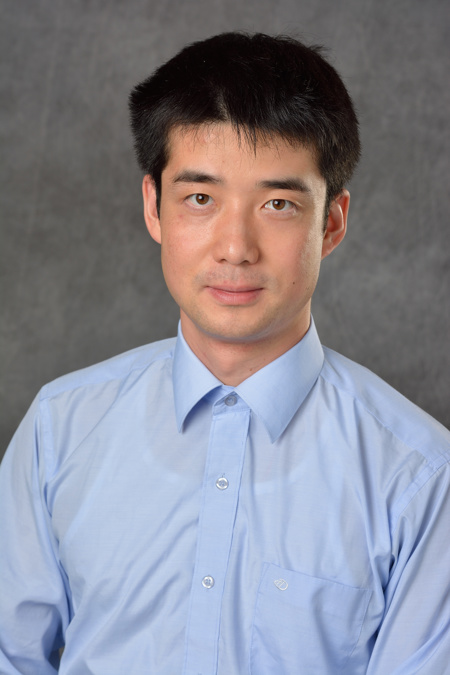
Gianvito Urgese is an Associate Professor at the Interuniversity Department of Territorial Sciences, Planning and Policies (DIST) at Politecnico di Torino, where he is also a member of the EDA research group and the SmartData@PoliTO Big Data and Data Science Laboratory. His academic and research activities are deeply integrated into the Department of Control and Computer Engineering (DAUIN), reflecting his interdisciplinary focus on computer engineering and data science. His research spans artificial intelligence, bioinformatics, neuromorphic computing, edge computing, embedded systems, and Industry 4.0. He investigates optimized task-specific algorithms, designs heterogeneous software-hardware architectures for bioinformatics acceleration, and develops computational paradigms for neuromorphic platforms. His work also extends to digital lifecycle management in Industry 4.0, aligning with Sustainable Development Goals 9, 11, and 12. His recent publications reveal a strong trend in neuromorphic computing and quantum-inspired optimization, with contributions to benchmarking frameworks (NeuroBench), neuron-based encoding tools (WiN-GUI), and quantum annealing methods. These works are published in high-impact journals such as Nature Communications , IEEE Transactions on Emerging Topics in Computing , and Science Translational Medicine , indicating a multidisciplinary and high-impact research profile. Urgese is actively involved in supervising PhD students and teaching graduate-level courses such as Neuromorphic Computing and Engineering, Applied AI and Machine Learning, and System-on-Chip Architecture. He serves on doctoral colleges and course committees, demonstrating leadership in academic governance. Scientific and Research Leadership: Principal Investigator (Scientific Manager) in multiple commercial research projects on data analytics, fog computing, and firmware design (2019–2025). Supervision of PhD research on neuromorphic systems, bioinformatics algorithms, and AIoT solutions. Active contributor to European-funded initiatives in neuromorphic and Industry 4.0 domains. He collaborates with multidisciplinary teams, including researchers at the Candiolo Cancer Institute and participants in the Telluride Neuromorphic Cognition Engineering workshop, highlighting the collaborative and applied nature of his work.