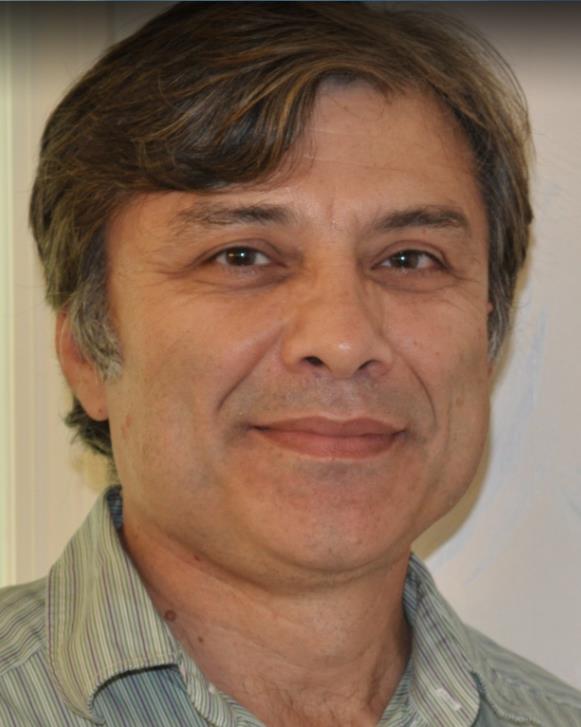
Dr. Omesh Kapur is a Senior Enterprise Fellow at the University of Southampton's Department of Electronics and Electrical Engineering. His research focuses on advanced memristor technologies, materials science, and neuromorphic computing applications. Key projects include developing ultra-high endurance memristors using silicon carbide and exploring reservoir computing frameworks with memristive systems. Recent publications highlight breakthroughs in memristor fabrication and their application in neural network architectures. He currently supervises Qin Liu in the Electron & Electrical Engineering PhD program. Contact via O.R.Kapur@soton.ac.uk for collaboration opportunities.
Artur Andrishak serves as a Junior Research Fellow at the International Iberian Nanotechnology Laboratory (INL) within the Ultrafast Bio- and Nanophotonics research group under Dr. Jana Nieder's supervision. His primary research, conducted as part of the Horizon Europe-funded "InsectNeuroNano" project, focuses on developing smart 3D polymer waveguides for neuromorphic computing platforms using femtosecond laser microfabrication techniques. Andrishak holds a Master's degree in Physics Engineering from the University of Minho (2022), specializing in Devices, Microsystems and Nanotechnologies. His master's thesis, completed during an internship at INL, investigated "3D Optical Interconnect Networks for Neuromorphic Computational Applications", providing him with extensive experience in two-photon polymerization 3D printing, optical waveguide characterization, and FDTD photonic simulations. His research interests center on nanophotonics and ultrafast laser microfabrication for next-generation optical interconnects. He specializes in creating 3D polymer waveguides that integrate multiple materials to enable neuromorphic hardware. Key areas include femtosecond laser processing, two-photon polymerization, optical characterization, and photonic simulation, with applications in high-speed data transfer and artificial intelligence acceleration. Andrishak's recent work, published in Scientific Reports (2024), demonstrates free-standing millimeter-range 3D waveguides for on-chip optical interconnects. This research exemplifies his focus on bridging nanoscale photonics with practical neuromorphic computing systems, emphasizing structural innovation and material integration for enhanced optical performance. No scientific awards were mentioned in the provided information. Andrishak's current research is supported by the Horizon Europe "InsectNeuroNano" project. He collaborates within the Nieder Research Group at INL, contributing to the group's mission of advancing ultrafast bio- and nanophotonics for biomedical and computational applications. He is an active member of the Ultrafast Bio- and Nanophotonics group at INL, where he utilizes advanced femtosecond laser systems for microfabrication and collaborates on interdisciplinary projects at the intersection of photonics, nanotechnology, and neuroscience-inspired computing.
Sebastiaan van Dijken is Professor and Vice Head of the Department of Applied Physics at Aalto University's School of Science. His research focuses on nanomagnetism and spintronics, including electric-field control of magnetism, tunneling transport in nanoscale devices, in situ electron microscopy, magnetoplasmonics, and topological nanomagnetism. His work bridges disciplines to develop solutions for next-generation magnetic storage, analog logic, and cognitive computing. Research areas include magnetoionics, spin-wave computing, hybrid magnonic-plasmonic systems, and neuromorphic computing applications. Van Dijken has received prestigious awards including multiple ERC grants and the Millennium Distinction Award. Recent publications demonstrate advances in dynamic magnonic crystals, magneto-ionic synapses for reservoir computing, and optical control of spin waves. His articles frequently explore material innovations like high-entropy oxide perovskites and applications in neuromorphic engineering. Van Dijken leads significant projects including MANNGA (Magnonic Artificial Neural Networks) and HENC (Hybrid Magnonics for Energy Efficient Computing).
Hongwei Tan is a Visiting Professor in the Department of Applied Physics at Aalto University, affiliated with the School of Science and Technology. He holds a Ph.D. in Natural Sciences from the Chinese Academy of Sciences (2011-2016) and a Bachelor's degree in Natural Sciences from Nankai University (awarded 2011). Research focuses on neuromorphic computing, memristors, wearable health monitoring, and bioinspired materials. Principal Investigator of the Optoelectronic Synapses for Artificial Neuro Networks project (2018-2021). Published 16+ articles in journals like Advanced Materials , Nature Electronics , and ACS Nano . Key research interests include developing neuromorphic systems, flexible synaptic transistors for healthcare, and materials science innovations for machine vision. His work contributes to UN Sustainable Development Goals related to education and technological advancements. Media highlights include coverage of neuromorphic visual sensors and programmable smart fabrics in outlets like Nature Communications and Cell Reports Physical Science . Led projects on optoelectronic synapses and collaborated on datasets like the 2024_CRPS project. His research bridges materials science, computer science, and biomedical engineering.
Dr. Xun Li is a Professor of Electrical & Computer Engineering and Associate Chair (Undergraduate) at McMaster University. He holds adjunct faculty positions at multiple Chinese institutions, including Huazhong University of Science and Technology. His expertise spans semiconductor lasers, photonic devices, and fiber-optic communication systems. He has authored/co-authored nearly 200 journal papers and holds over 30 patents globally. Education: B.Sc. (Shandong University, 1982), M.Sc. (Wuhan Research Institute, 1984), Ph.D. (Beijing Jiaotong University, 1988). Professional memberships include IEEE, Optica, and SPIE. Notable awards include top 2% global citations (Stanford) and early-career accolades in China. Research focuses on optoelectronic device design, nanophotonics, and metamaterials. Recent work includes high-speed photodetectors, on-chip biosensors, and plasmonic systems. Teaching includes graduate courses on photonic device modeling and undergraduate engineering design.
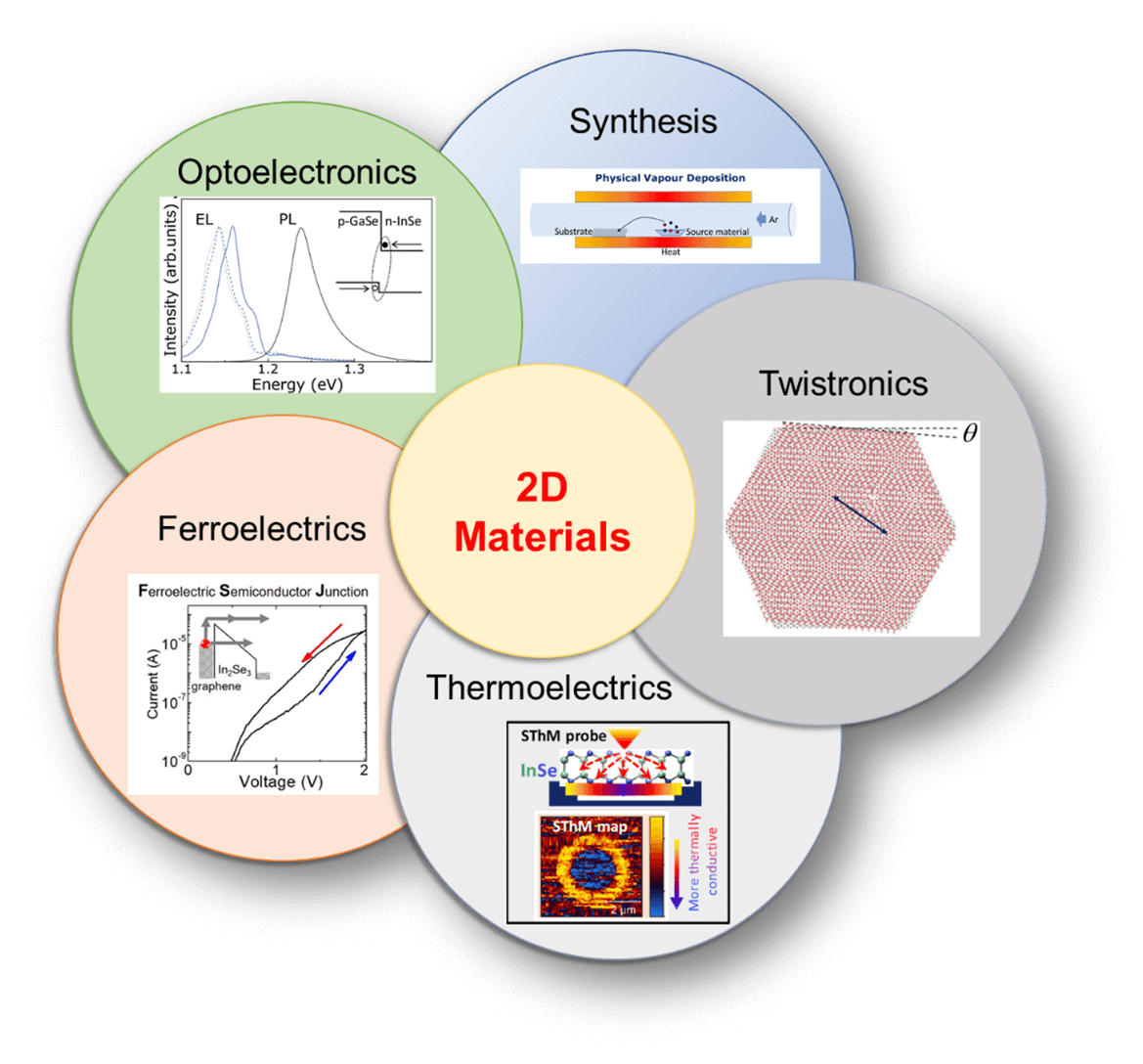
Nilanthy Balakrishnan is a Senior Lecturer in Physics at Keele University's School of Chemical and Physical Sciences, leading an experimental research group focused on 2D materials. Her work investigates fundamental properties and applications of novel materials like III-VI van der Waals compounds. Research funded by Royal Society and EPSRC supports projects in flexible electronics and energy storage. Research spans synthesis of 2D materials via vapor deposition, optoelectronic device fabrication, ferroelectric properties investigation, and thermoelectric applications. Collaborative work involves universities and national laboratories. Recent publications focus on energy storage materials, van der Waals heterostructures, and nanoscale characterization techniques. Article trends show progression from materials synthesis to functional device applications. Teaching includes Applied Physics and Emerging Technologies courses. Supervises postgraduate researchers in experimental condensed matter physics.
Zhi David Chen is a Professor of Electrical Engineering at the University of Kentucky's Stanley and Karen Pigman College of Engineering, where he has held continuous faculty appointments since 1999 and currently serves as Associate Director of the Center for Nanoscale Science & Engineering. His career includes progression from Assistant Professor (1999-2004) to Associate Professor (2004-2009) before achieving full Professorship, with prior industry experience at Bell Laboratories. Education: Ph.D. in Electrical Engineering, University of Illinois at Urbana-Champaign (1999) M.S. in Electrical Engineering, University of Electronic Science & Technology (China) (1987) B.S. in Electrical Engineering, University of Electronic Science & Technology (China) (1984) Dr. Chen's research spans nano-scale materials growth, nano-device fabrication, MOS transistor development, gate dielectrics, and advanced sensors, with dominant focus on perovskite photovoltaics. His work addresses critical challenges in solar cell efficiency, environmental stability, and scalable manufacturing, pioneering innovations in lead-free alternatives, surface passivation, and ambient-air processing techniques. He explores novel nanomaterial architectures for next-generation semiconductor and optoelectronic applications. Analysis of his 2020-2024 publications reveals intense concentration on perovskite solar cell optimization (13 of 15 articles), featuring breakthroughs in tin-lead alloys, hysteresis reduction, and underwater module stability. Emerging themes include neuromorphic optoelectronic synapses for vision systems and terahertz communication technologies, demonstrating interdisciplinary expansion while maintaining core expertise in nanoscale device physics. Scientific Awards: No scientific awards were documented in the provided materials. Advising and Grants: While specific student names and grant details were absent from source materials, his sustained publication output and leadership role at the Nanoscale Science & Engineering Center indicate active research supervision and external funding. Labs and Teams: As Associate Director of the Center for Nanoscale Science & Engineering, Dr. Chen leads cross-disciplinary teams developing advanced semiconductor materials and devices, with particular emphasis on perovskite photovoltaics and nano-sensor technologies through collaborations with national laboratories and industry partners.
Philip (Sanghyun) Lee is an Associate Professor in Computer Engineering Technology at the University of Kentucky, holding joint appointments in the Fujio Cho Department of Engineering Technology and the Department of Electrical and Computer Engineering. He serves as Director of Undergraduate Studies for the Computer Engineering Technology program and holds the Toyota Computer Engineering Technology Professorship. As Faculty Liaison for the Center for Nanoscale Science and Engineering (Class 100 cleanroom), he bridges academic and industrial research. Education: Ph.D., Electrical and Computer Engineering, North Carolina State University M.S., Materials Science and Engineering, Korea University B.S., Materials Science and Engineering, Korea University Research focuses on neuromorphic computing, 3D memory systems, ASIC/VLSI design, renewable energy technologies, photovoltaic systems, and nanotechnology-integrated architectures. Prior academic roles include Assistant Professor positions at Indiana State University and Morehead State University. Industry experience spans First Solar Inc. (Lead Device Physicist) and SanDisk Corp. (Staff Engineer). Community engagement includes roles with the Stanley and Karen Pigman College of Engineering. Professional networks extend through LinkedIn and institutional affiliations.
Thoa Thieu is an Assistant Professor at the School of Mathematical and Statistical Sciences and College of Health Professions at the University of Texas Rio Grande Valley. She holds email addresses at thoa.thieu@utrgv.edu and thoathieu28@gmail.com . Dr. Thieu's education includes a Double Ph.D. in Mathematics from Gran Sasso Science Institute (Italy) and Karlstad University (Sweden), supervised by Prof. Adrian Muntean and Dr. Matteo Colangeli. She earned a Master's in Applied Mathematics from the University of Orleans and Tours (France), and a B.S. in Mathematics and Statistics from the University of Science in Vietnam. Her research focuses on stochastic systems modeling with applications in: Neuroscience (neuronal dynamics, synaptic plasticity) Crowd behavior analysis (pedestrian flows, active-passive interactions) Biological systems (insulin transport in beta cells, cellular cytoskeleton dynamics) Interdisciplinary computational methods (coupled Skorokhod SDEs, lattice gas frameworks) Her recent work emphasizes multi-fidelity modeling and well-posedness analysis in complex systems. She has contributed to neuromorphic computing applications and disaster-evacuation simulations through her mathematical frameworks. Professional experience includes Postdoctoral Fellowships at Indiana University (2023-2024) under Dr. William Holmes, and at Wilfrid Laurier University (2021-2022) under Prof. Roderick Melnik. Her research outputs bridge pure mathematics (stochastic PDEs, uniqueness proofs) with applied domains in health sciences and social dynamics.
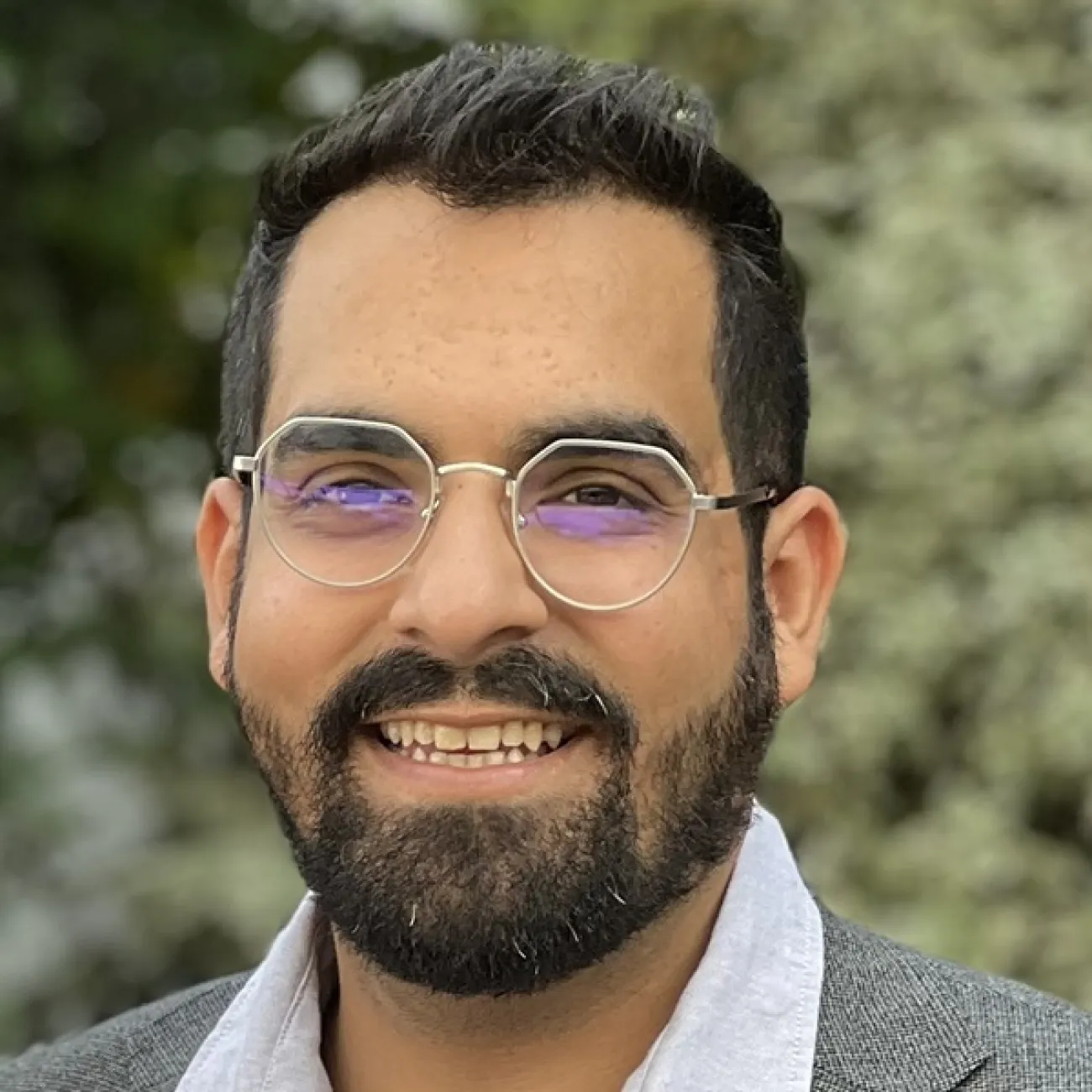
Himanshu Fulara serves as Assistant Professor in the Department of Physics at Indian Institute of Technology Roorkee. His research focuses on experimental condensed matter physics with emphasis on quantum spintronics, nanomagnetism, and energy-efficient nanodevices. He leads the department's Condensed Matter Physics Lab and holds multiple administrative roles including Professor-in-charge of the lab and Coordinator for BSMS Physics program. His research interests span Experimental Condensed Matter Physics , Quantum Spintronics & Nanomagnetism , and Energy-efficient Nanodevices . Key specialties include Spin-Torque and Spin Hall Nano-Oscillators, Skyrmions, Micromagnetic Modelling, Brain-Inspired Computing, and Thin Films/Multilayers. His work demonstrates significant innovation in neuromorphic computing applications and voltage-controlled spintronic devices. Analysis of his recent publications reveals strong focus on spin Hall nano-oscillators (SHNOs) for neuromorphic applications, skyrmion dynamics, and voltage-controlled magnetism. His work frequently appears in high-impact journals including Nature Materials, Nature Nanotechnology, and Science Advances, with notable contributions to memristive control of SHNO synchronization and ultra-low current nano-oscillators. Honors and awards include: Max-Planck Postdoctoral Fellowship (2014) University of Gothenburg Postdoctoral Scholarship (2017) Best Project Award at IIT Delhi (2013) Senior Research Fellowship from CSIR-UGC (2011) He actively supervises PhD students including Shikhar Jugran (Novel Spin-Orbit Torque Materials), Hind Prakash (Magnetic skyrmions), and Arunima TM (Nano-constriction based SHNOs). His current research is funded by SERB (INR 33.11 lakh) and SRIC, IIT Roorkee (INR 20 lakh), both as sole PI. He has delivered numerous invited talks at international conferences including APS March Meetings and INTERMAG. Administratively, he serves on multiple committees including Departmental Purchase Committee, Institute Level Tinkering Committee, and Anti-Ragging Squads. He coordinates departmental initiatives for Tinkering & Mentoring and BSMS Physics programs.
Florian Marquardt is a Professor at the University of Erlangen-Nürnberg and Scientific Director of the Theory Division at the Max Planck Institute for the Science of Light in Erlangen, Germany. His research focuses on the intersection of quantum physics, optics, and machine learning, with a particular emphasis on neuromorphic computing and quantum technologies. He holds a PhD from the University of Basel (2002) and has held roles including Emmy-Noether Fellow (2007-2012) and Full Professor at FAU Erlangen-Nürnberg (2010-2016). His work bridges theoretical physics and applied AI, aiming to advance quantum control, topological photonics, and energy-efficient computing. Education: PhD in Theoretical Physics, University of Basel (2002) Diplom Physics, University of Bayreuth (1998) Research Interests: The Marquardt Group explores quantum optomechanics, neuromorphic computing, and machine learning applications in physics. Current projects include designing analog neuromorphic systems, optimizing quantum error correction, and leveraging deep learning for inverse design in photonics. Recent work emphasizes AI-driven strategies for quantum circuit discovery and topological material engineering. Awards: Walter Schottky Prize (2009) ERC Starting Grant (2011) Emmy-Noether Fellowship (2007-2012) Grants & Collaborations: Leads research networks including the Max Planck School of Photonics and the MPC for Extreme and Quantum Photonics. His lab collaborates on EU-funded projects and organizes workshops on topics like quantum metrology and neuromorphic computing. Labs & Infrastructure: Directs the Theory Division, which hosts interdisciplinary teams working on photonic neural networks, quantum machine learning, and topological transport. The group uses advanced simulation tools like dCG (differentiable connected geometries) for multi-domain optimization.
Clara Wanjura is a leading theoretical physicist at the Max Planck Institute for the Science of Light (MPL) since December 2024, where she heads a Minerva Fast Track Research Group. Her interdisciplinary research bridges quantum optics, solid-state physics, and machine learning. PhD in Physics (2018-2022) from University of Cambridge Master's (2016-2018) and Bachelor's (2013-2016) in Physics from Ulm University Her research focuses on: Non-Hermitian Topology: Exploring directional amplification, sensing, and non-reciprocity in quantum systems with gain/loss dynamics. Neuromorphic Computing: Developing energy-efficient optical hardware for machine learning using linear wave scattering and physical training frameworks. Her recent publications highlight transformative work in topological amplification, quantum interfaces for gravity detection, and photonic neuromorphic architectures. Collaborations span institutions like AMOLF (Amsterdam) and Cavendish Laboratory. Scientific Recognition: DPG SAMOP Thesis Prize (2024) Sam Edwards Thesis Prize (2023) CSAR PhD Students Award (2022) Cavendish PhD Prize (2020) She actively mentors students and welcomes applications for research projects in quantum technologies and computational physics.
Pavel Salev is an Assistant Professor in the Department of Physics & Astronomy at the University of Denver's College of Natural Sciences and Mathematics. His research focuses on quantum materials, particularly phase transitions in vanadium oxides (VO₂, V₂O₃), resistive switching, and spintronics. He explores applications in neuromorphic computing, ferroelectric materials, and nanoscale device physics. His work integrates advanced microscopy, electrical characterization, and theoretical modeling to understand and control material properties. Education : Ph.D. in Physics, University of Tulsa, 2017 M.S. in Physics, Tver State University, 2010 B.S. in Physics, Tver State University, 2008 His research interests emphasize the interplay between structural, electronic, and magnetic properties in materials undergoing phase transitions. Key topics include voltage-induced filament formation, strain engineering, and the development of neuromorphic devices. Recent studies also investigate resistive switching localization and spin dynamics in phase-change materials. Publications highlight advancements in structural microscopy, neuromorphic computing, and magnetic control using novel materials. Though no scientific awards are explicitly listed, his work contributes significantly to the field of quantum materials engineering. Advising and grants are not detailed in the provided text, but his research group likely focuses on experimental and computational studies of nanoscale systems. No specific lab affiliations are mentioned beyond the departmental context.
Gursel Serpen is a Professor in the Department of Electrical Engineering and Computer Science at the University of Toledo's College of Engineering. His research focuses on intelligent systems, machine learning, neural networks, wireless sensor networks, and cybersecurity. He has contributed extensively to areas such as adaptive systems, biometric authentication, and optimization algorithms. Dr. Serpen's work bridges theoretical advancements with practical applications in robotics, healthcare, and network security. Affiliations: University of Toledo, College of Engineering. Research Themes: Ensemble classifiers, Bayesian networks, neuromorphic systems, and wireless sensor network optimization. His research interests include developing algorithms for real-time systems, improving security through data analysis, and advancing computational models for complex problems. Notable projects include automated parking systems and anomaly detection frameworks. Dr. Serpen has collaborated on interdisciplinary projects, integrating machine learning with healthcare diagnostics and materials science.
Francesco Da Ros is an Associate Professor at the Technical University of Denmark , Department of Electrical and Photonics Engineering. His work focuses on machine learning applications in photonic systems, particularly in optical communication and photonic computing. Active in silicon photonics and nonlinear optics Key contributor to optical machine learning and digital signal processing Research Interests: Da Ros explores the intersection of machine learning and photonics , with specific projects involving: Photonic reservoir computing End-to-end optimization of optical communication systems Neuromorphic photonic circuits Channel equalization techniques Quantum communication systems Thermal crosstalk compensation in integrated photonics Scientific Contributions: His research has produced over 245 publications and 23 projects , including significant work on: Raman amplifier optimization Machine learning for optical matrix multipliers Frequency comb phase noise characterization Security systems using distributed acoustic sensing Awards: Recipient of prestigious awards such as: Best Young Italian Researcher in Denmark (2019) DOPS Prize (2017) Horizon Prize for Breaking Optical Transmission Barriers (2016) Academic Leadership: Actively supervises PhD students in projects related to: End-to-end learning for multi-core fiber systems Nonlinear fiber-optic channel optimization Quantum communication lasers Integrated quantum photonic reservoir computing