Dr. Mark S. Borchert is a Clinical Professor of Ophthalmology (Part-Time) at the Keck School of Medicine of USC. He earned his MD from Baylor College of Medicine, completed residency in Ophthalmology at USC, and a neuro-ophthalmology fellowship at Harvard’s Massachusetts Eye & Ear Infirmary. He leads the world’s largest study on optic nerve hypoplasia and focuses on retinal/optic nerve development and non-invasive diagnostic tools like spectroscopic glucose measurement. Research interests include optic nerve hypoplasia pathogenesis, cortical visual impairment, and pediatric eye disorders. Awards include 'Best Doctors in America' and multiple teaching honors from Keck School of Medicine. His work spans over 200+ publications, with recent studies addressing amblyopia treatment disparities, eye tracking diagnostics, and genetic models of optic nerve disorders. Awards: Pasadena Magazine Top Doctors (2010–2014), LA Magazine Super Doctors (2010), American Academy of Ophthalmology Achievement Award (2002) Research: NASA space shuttle experiments on retinal development, Eye Birth Defects directorship Labs/Teams: Directs the Eye Birth Defects study, collaborating on optic nerve hypoplasia and cortical visual impairment diagnostics.
Dr. Bradley Peterson is a Professor of Psychiatry & the Behavioral Sciences and Pediatrics at the Keck School of Medicine, University of Southern California, and serves as the Division Chief of Psychiatry & the Behavioral Sciences at Children’s Hospital Los Angeles (CHLA). He joined USC and CHLA in 2014 after prior roles at Columbia University and Yale University. Education: MD from University of Wisconsin Medical School (1987), Residency at Massachusetts General Hospital, Fellowships at Yale and Columbia Research Focus: Dr. Peterson specializes in neuroimaging technologies to study psychiatric disorders and therapeutic mechanisms across the lifespan. His work spans conditions like Autism, Depression, Bipolar Disorder, ADHD, Tourette syndrome, and environmental toxin impacts on brain development. Publications: Recent studies examine prenatal environmental exposures, maternal nutrition, and brain connectivity in psychiatric disorders. He employs multimodal MRI and SPECT to map developmental trajectories. Scientific Awards: Dean’s Teaching Award (USC, 2017) Blanche Ittleson Award (APA, 2012) John J. Weber Prize (Columbia, 2007) Outstanding Mentor (AACAP, 2014 & 2006) Grants & Collaborations: His research involves collaborations with institutions like CHLA and CTSI, focusing on precision medicine and developmental brain disorders. Labs: Leads the Institute for the Developing Mind at CHLA, integrating neuroimaging with behavioral science to study early brain development.
Professor Dale Nyholt is a leading Human Geneticist at Queensland University of Technology (QUT), specializing in statistical and genomic epidemiology. He holds roles as Centre Deputy Director (Research and Strategic Development) and Program Co-Lead (Genomic Epidemiology and Analysis) within QUT's Centre for Genomics and Personalised Health. He previously served as Academic Lead for Research (ALR) in the School of Biomedical Sciences, overseeing 180+ researchers. He earned a Ph.D. in Health Sciences from Griffith University. His research focuses on genetic factors in complex disorders like migraine, depression, and endometriosis, with emphasis on identifying biomarkers and molecular pathways. His lab, the Statistical and Genomic Epidemiology Laboratory (SGEL), develops globally used bioinformatics tools. Key achievements include leading the €6M EU-funded EUROHEADPAIN project, publishing over 250 papers (h-index 103), and securing $21M in grants. Notable awards include Clarivate Analytics' Highly Cited Researcher (2018) and NHMRC Senior Research Fellowship. He has supervised 25+ PhD students, many securing postdoctoral roles internationally. He actively participates in editorial boards, peer review for major journals, and international funding panels (NHMRC, NIH, EU). His interdisciplinary collaborations span 23 journals and global consortia like the International Headache Genetics Consortium.
Professor Fabio Variola holds a joint academic appointment at the University of Ottawa as a Professor in the Department of Mechanical Engineering , cross-appointed in the Departments of Physics (Faculty of Science) and Cellular and Molecular Medicine (Faculty of Medicine) . He earned his BEng and MEng from the University of Trieste (Italy) and a PhD from a joint program at the Institut National de la Recherche Scientifique-Énergie, Matériaux et Télécommunications (INRS-ÉMT) and Université de Montréal . His research focuses on developing micro- and nano-structured biomaterials to control cellular responses for applications in tissue engineering , medicine , and biophysics , with an emphasis on understanding how cells interact with physicochemical environments. Research interests include biomedical engineering , biomaterials , biophysics , nanotechnology , and regenerative medicine . His work spans surface engineering of titanium implants , nanocomposite hydrogels , plasmonic carbon materials , and 3D in vitro disease models . Recent studies explore applications in neuroengineering , cardiac tissue repair , and targeted cancer therapy . Key research trends in his articles include laser-material interactions , biomaterial-cell interfaces , and nanostructured materials for medical devices . His work bridges materials science and biomedical applications , with a focus on in vitro and in vivo validation of novel materials. Professor Variola has no listed scientific awards but maintains a prolific publication record. His research group collaborates across departments at the University of Ottawa and international institutions. He advises students in interdisciplinary biomaterials and biomedical engineering, though specific advisee names are not publicly listed.
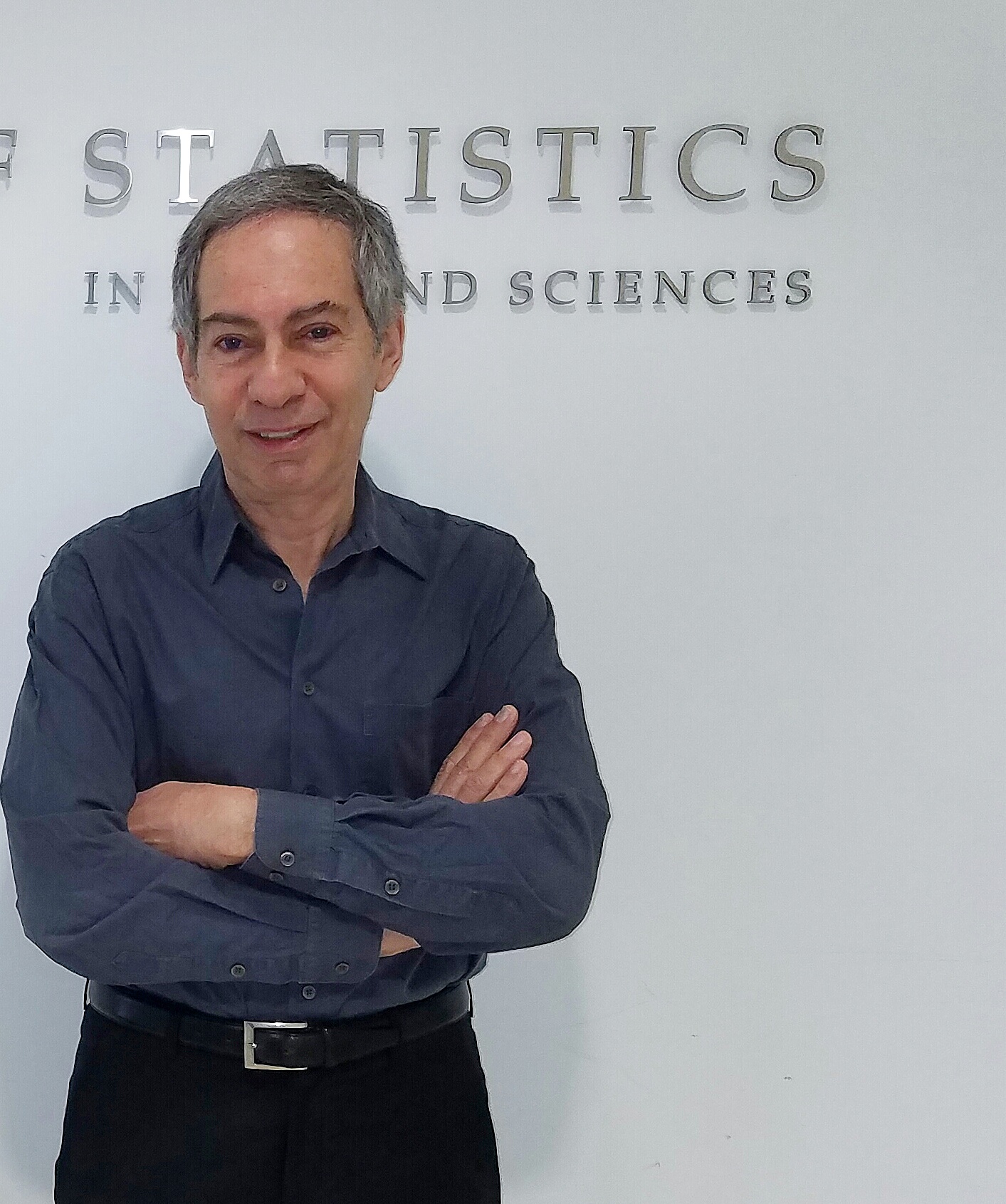
Michael E. Sobel is a Professor in the Department of Statistics at Columbia University. His research focuses on causal inference, functional magnetic resonance imaging (fMRI), and social statistics. He has contributed extensively to methodologies for analyzing causal effects in complex observational and experimental data, particularly in neuroimaging, social policy evaluation, and longitudinal studies. His work bridges statistical theory and applied social science, addressing challenges such as mediation analysis, compliance modeling, and interference effects in randomized trials. Notable contributions include advancements in causal inference for fMRI data and frameworks for interpreting mobility effects in sociological studies. Sobel’s research spans interdisciplinary applications, including public health, political science, and urban policy. He has authored influential papers on topics like the causal interpretation of fMRI connectivity, the analysis of treatment effects with all-or-nothing compliance, and the evaluation of housing mobility programs. His methodologies have been adopted in diverse fields, emphasizing rigorous statistical approaches to real-world problems.
Dr. Karen Lander is a Senior Lecturer in the Department of Psychology at the University of Manchester, serving as Director of Education for the Division of Psychology, Communication and Human Neuroscience. She holds a PhD from the University of Stirling (1999) and previously worked as a Research Fellow there. Her research focuses on the role of motion in face recognition, individual differences in facial perception, and applied forensic contexts such as CCTV analysis. Key collaborations include work with Professors Miyuki Kamachi (Kogakuin University) and David White (UNSW), as well as Drs. Markus Bindemann and Natalie Butcher. She teaches courses on Perception and Action, Clinical Neuropsychology, and Cognitive Neuroscience. External roles include serving as an External Examiner for BSc Psychology at Coventry University since 2023. Her research explores how facial motion aids recognition of degraded faces, particularly in forensic settings, and investigates the neural underpinnings of face processing. She has examined individual variation in face recognition abilities, linking these to traits like extraversion and empathy. Notable projects include studies on super-recognizers, developmental prosopagnosics, and the impact of mindfulness on facial identification. Her work contributes to UN Sustainable Development Goals related to justice and innovation. Teaching responsibilities span undergraduate and postgraduate levels, including MRes programs in Cognitive Neuroscience and Experimental Psychology with Data Science. Her research has been featured in media outlets like BBC Worklife and The Conversation, addressing topics such as face blindness and the link between introversion and face recognition difficulties.
Dr. Sandeep Singh Sengar is a Senior Lecturer in Computer Science at Cardiff Metropolitan University, United Kingdom. Prior to his current role, he served as a Postdoctoral Research Fellow at the Machine Learning Section of the Computer Science Department at the University of Copenhagen, Denmark. His academic journey includes a Ph.D. in Computer Science and Engineering from Indian Institute of Technology (ISM), Dhanbad, India, and an M. Tech. in Information Security from Motilal Nehru National Institute of Technology, Allahabad, India. Sengar actively engages in research collaboration and has organized special sessions and delivered keynote presentations at international conferences. Education: Dr. Sengar holds the following academic qualifications: Ph.D. in Computer Science and Engineering from Indian Institute of Technology (ISM), Dhanbad, India M. Tech. in Information Security from Motilal Nehru National Institute of Technology, Allahabad, India Research Interests: Dr. Sengar's research focuses on advanced applications of machine/deep learning and computer vision, particularly in healthcare diagnostics and cybersecurity. His work combines theoretical methodologies with practical implementations, including: Medical Image Segmentation (e.g., brain tumors, functional connectivity) Motion Segmentation and Tracking for surveillance and activity recognition Visual Object Tracking and Recognition in dynamic environments Video Compression techniques leveraging adaptive optimization Cybersecurity frameworks targeting DDoS attack mitigation Exploring Metaverse applications in healthcare and AI ethics Publications Trends: His recent articles emphasize interdisciplinary innovation, with a strong focus on healthcare AI and cybersecurity. Key themes include hybrid neural networks for medical imaging, entropy-driven frameworks for neurological disorders, and proactive network threat detection using deep learning. He also investigates emerging technologies like the Metaverse's role in healthcare systems and generative AI's broader applications. Scientific Awards: No scientific awards were explicitly mentioned in the provided texts. Advising & Grants: While Dr. Sengar has not listed formal advisees or grant details, his research mentorship is evident through collaborative projects and conference contributions. He actively participates in organizing special sessions and peer-review processes, fostering academic-industry partnerships. Labs & Teams: Though no specific labs are named, his work aligns with Cardiff Met's research centers and innovation initiatives, such as the PDR International Centre for Design and Research and ZERO2FIVE Food Industry Centre.
Senem Velipasalar is a Professor in the Department of Electrical Engineering and Computer Science (EECS) at Syracuse University, affiliated with the Smart Vision Systems Laboratory and the Aging Studies Institute. She holds a Ph.D. and M.A. from Princeton University, an M.S. from Brown University, and a B.S. from Bogazici University. Her research focuses on machine learning, computer vision, and wireless smart camera systems, with applications in human activity classification, driver behavior analysis, and defense against adversarial attacks. Her honors include the NSF CAREER Award (2011), 2021 IEEE Technological Innovation Award, and multiple doctoral prizes for her advisees. She leads grants totaling over $4M, including ARPA-E projects on occupancy detection and DOE-funded research on aerial energy modeling. Research interests span embedded vision, distributed multi-camera tracking, and energy-efficient algorithms. Her lab develops technologies like wearable camera-based fall detection and autonomous UAV navigation. Notable publications include works on adversarial attacks, fNIRS brain activity analysis, and thermal pedestrian detection.
Mike Mamalakis is a Senior Research Associate at the University of Cambridge, affiliated with the School of Clinical Medicine and Department of Computer Science and Technology . His research focuses on applied and theoretical AI, particularly in Deep Learning , Multi-Modal AI , and eXplainable AI for biomedical and healthcare applications. Research Themes : Medical imaging, neuroscience, brain tumors, Alzheimer's disease, and foundation models. Collaborations : University of Sheffield (Richard Clayton, Andriew Shift, George Panoutsos), University of Cambridge (Pietro Lio, Murray Graham, John Suckling), and Cancer Research UK Cambridge Centre. His recent work involves developing predictive models for neuroscience using multimodal data (text, imaging, phenotyping, genomics) and applying gradient-based explainability methods to study brain tumors. Publications highlight AI-driven biomarker discovery in COVID-19 , pulmonary hypertension , and cardiac arrhythmias . Current affiliations include the School of Clinical Medicine and CRUK Cambridge Centre. Contact : mm2703@cam.ac.uk | Room GC01, William Gates Building, University of Cambridge.
Dr. Nikola Simidjievski is a Research Fellow at the University of Cambridge's Department of Computer Science and Technology. His research focuses on machine learning applications in natural sciences, including oncology, neuroscience, and biomedical informatics. He specializes in multimodal data integration, dynamic systems modeling, and explainable AI techniques. Simidjievski contributes to interdisciplinary projects such as AI-driven space research and Earth observation systems (e.g., AIAtlas). His work emphasizes computational methods for small-sample biomedical data and interpretable neural networks. Education background not explicitly stated, but his research spans computational biology, aerospace telemetry analysis (e.g., Mars Express spacecraft), and environmental modeling. He collaborates on projects like GalaxAI for spacecraft data analysis and PATHS for medical imaging. Key tools developed include Healnet for biomedical data fusion and RO-FIGS for tabular ensemble methods. No scientific awards listed. Advising no listed students, but contributes to academic initiatives like the Human Brain Project's neuroscience training programs. Engages in open-source projects (e.g., AITLAS toolbox for Earth observation). Current research trends include tabular data augmentation methods (TabEBM, TabMDA) and efficient transformer-based models for medical imaging (PATHS).
Dr. Borja Blanco is a Research Associate at the Department of Psychology, University of Cambridge, specializing in developmental neuroscience and infant cognition. His research employs advanced neuroimaging techniques like high-density diffuse optical tomography and fNIRS to investigate functional brain development during early childhood. Research interests focus on: Neuroplasticity and bilingualism effects in infant brains Sleep-state modulation of neural connectivity Cross-cultural studies of cognitive development Clinical applications for ASD/ADHD early detection Wearable neurotechnology for infant monitoring Dr. Blanco's work has pioneered methods for cot-side neuroimaging and home-based assessment of infant brain function. His publications demonstrate consistent focus on functional connectivity patterns, bilingual exposure effects, and clinical applications of optical neuroimaging techniques.
Dr. Sara De Felice is a social neuroscientist at the University of Cambridge's Department of Psychology. Her research focuses on the neuroscience of social interaction, particularly how real-world teacher-learner dynamics enhance human learning. She employs advanced neuroimaging, eye-tracking, and behavioral measures to model these interactions, with implications for education, therapy, and teamwork. Dr. De Felice holds a PhD in Social Neuroscience from UCL and has conducted research visits at institutions worldwide, including NYU and Yale University. Education: PhD in Social Neuroscience, UCL (2018–2023) MSc Brain and Mind Sciences, UCL/UPMC (2016–2018) BSc Psychology, Aston University (2012–2016) Research Interests: Dr. De Felice's work explores how social interactions, especially in educational contexts, shape learning. She investigates neural and behavioral mechanisms underlying collaborative learning, emphasizing the role of social dynamics in knowledge acquisition. Her studies often involve hyperscanning techniques to analyze inter-brain synchronization during co-activities. Awards: EPS 13th Frith Prize Jon Driver Prize fNIRS Society Women Excellence in Research Award Advising & Grants: Currently a postdoc in Prof. Blakemore's lab (2023–present) and a ROKOS Fellow at Queen's College. Upcoming role as an MSCA Fellow at IIT, Rome (2026–2028). Her research is supported by grants from the EPSRC and Wellcome Trust. Labs & Teams: Collaborates with the Developmental Cognitive Neuroscience Group and has affiliations with the Blakemore Lab. Engages in interdisciplinary projects with the Cambridge Neuroscience Initiative and the Centre for Educational Neuroscience.
Dr. Susanne Schweizer is a Researcher in the Department of Psychology at the University of Cambridge, affiliated with the Developmental Cognitive Neuroscience Group. Her work focuses on cognitive and social determinants of mental health across the lifespan, emphasizing adolescents. Key areas include affective control mechanisms, cognitive training interventions for mental health improvement, and the neurobiological underpinnings of emotional processing in depression and anxiety. She leads projects like the Future Proofing Study, evaluating school-based programs for adolescent depression prevention, and explores perinatal mental health dynamics. Her research integrates behavioral experiments, neuroimaging, and longitudinal studies to address mental health challenges in vulnerable populations. Recent efforts involve developing gamified cognitive training tools and assessing interventions for social anxiety and trauma recovery. Education: Not explicitly listed, but inferred to hold advanced degrees in Psychology/Cognitive Neuroscience. Key Projects: Future Proofing Study, Affective Control Training (AffeCT), and studies on perinatal intrusions. Research Interests: Cognitive Neuroscience of Emotion, Developmental Psychopathology, Digital Interventions for Mental Health, Affective Working Memory, Trauma and Recovery. Her publications analyze behavioral and neural responses to social evaluation, cognitive control in PTSD, and the role of uncertainty tolerance in emerging adulthood. Collaborations involve clinical trials and community-based interventions targeting youth mental health resilience.
Yun Jiang, Ph.D., is an Assistant Professor in the Department of Radiology and Biomedical Engineering at the University of Michigan Medical School. Their research focuses on developing novel MRI acquisition technologies to enhance disease diagnosis and patient care. Key innovations include Magnetic Resonance Fingerprinting (MRF), which provides accurate, accelerated tissue property measurements. Dr. Jiang's work integrates engineering principles to address clinical challenges, such as improving imaging quality, accelerating scans, and extracting quantitative biomarkers for diseases like cancer and neurological disorders. Education: Ph.D. in Biomedical Engineering Affiliations: Radiology BME, University of Michigan Medical School Research Interests: The lab emphasizes MRI technology development, particularly MRF for simultaneous T1/T2 mapping, diffusion-weighted imaging, and applications in prostate cancer, multiple sclerosis, and cardiovascular imaging. Projects include optimizing MRI hardware, improving reconstruction algorithms, and extending MRF to low-field systems and clinical workflows. Publications: Over 50 peer-reviewed articles highlight advancements in MRF's clinical feasibility, multi-vendor compatibility, and applications in liver, brain, and prostate imaging. Recent work explores deep learning integration and high-field phosphorus MRI for metabolic profiling. Labs/Teams: Leads the Jiang Lab, collaborating on translational MRI research with clinical partners to deploy MRF in diagnostic settings.
Dr. Noura Vyas is an Associate Professor of Mental Health in the Department of Psychology at Kingston University's Faculty of Business and Social Sciences. She serves as the Academic School Lead for Civic Engagement and has been with Kingston University since 2012, having previously held a Senior Lecturer position at Middlesex University. Dr. Vyas is also an Honorary Senior Lecturer at Imperial College London, Imperial College Healthcare NHS Trust. Dr. Vyas completed her PhD in Psychiatry at the Institute of Psychiatry, Psychology and Neuroscience (IoPPN), King's College London in 2008. Her educational background includes a BSc (Hons) in Psychology from City University London. She is a Chartered Psychologist and Associate Fellow of the British Psychological Society, a Chartered Scientist of The Science Council, and holds a Senior Fellowship with the Higher Education Academy. Dr. Vyas's research program focuses on understanding the pathophysiology of schizophrenia, particularly early-onset schizophrenia (EOS), using multimodal approaches including clinical assessment, cognitive testing, and advanced neuroimaging techniques. Her work investigates neurocognitive functioning in EOS patients and their first-degree relatives, brain oscillations and structural/functional abnormalities using magnetoencephalography (MEG), diffusion tensor imaging (DTI), and positron emission tomography (PET), and the effectiveness of mindfulness interventions on wellbeing in typical children. Her research bridges neuroscience, genetics, and clinical psychiatry to uncover the complex mechanisms underlying psychotic disorders. Analysis of Dr. Vyas's publications reveals a consistent trajectory from basic neuroimaging and genetic studies of schizophrenia toward more integrated approaches examining the interplay between multiple biological systems and clinical manifestations. Her work spans psychiatry, neuroscience, genetics, and psychology with increasing emphasis on translational research that connects basic findings to clinical applications. 2017: Women of the Year Award, British Asian Achievers Award 2017: Team Excellence Award, Succeed Canvas project, Rose Awards 2017: "Highly Commended" STEM Leader, Forward Ladies National Awards 2017: 'Inspirational Role Model of the Year' (Finalist), European Diversity Awards 2017: 'Women of the Future Awards – Science' (Finalist) 2017: Marquis Who's Who Lifetime Award 2017: Young Investigator Award, 13th World Congress of Biological Psychiatry 2016: Outstanding Women in Science, Technology & Mathematics (STEM), Precious Award 2016: Winston Churchill Travelling Fellowship 2011: Lindemann Trust Fellowship, English-Speaking Union Dr. Vyas has secured significant research funding from diverse sources including Fulbright, Winston Churchill Memorial Trust, UKRI, and institutional grants. Her leadership roles include Faculty Champion for Canvas implementation (2016-2018), KAPS Panel Assessor (2018-present), and Course Director for the Foundation Year in Social Sciences (2018-2022). She currently co-leads the MSc conversion (online) degree program and teaches across undergraduate and postgraduate courses including Psychology MSc, Clinical Applications of Psychology MSc, and various BSc Psychology programs. Dr. Vyas is actively engaged in public mental health initiatives as a series guest speaker on mental health with Resourceful Women's Network, Riverside Radio, Healing our Earth online platform, and Dharma Mandir. She organizes public engagement talks supporting mental health initiatives and contributes to KU Blogs on mental wellbeing topics. Her Instagram account @mentalhealth_connect serves as a platform for public education on mental health issues.