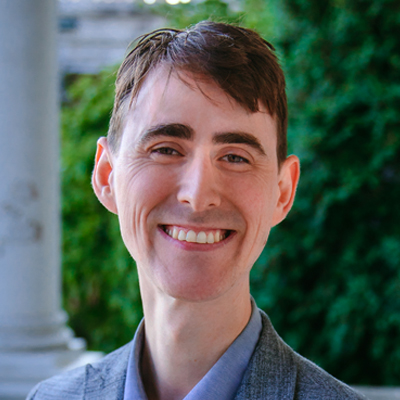
Dr. Laura Maye is a Lecturer at the School of Computer Science and Information Technology, University College Cork. Her research specializes in Interactive Media and Human-Computer Interaction (HCI), focusing on participatory design methods and immersive technologies. Key research interests include virtual reality applications, co-design methodologies for cultural heritage, community-centered technology development, and sensory interaction studies. Her work emphasizes inclusive design and socio-ecological relationships in technology. Recent publications (2020-2025) demonstrate strong trends in VR-based sensory studies, community radio innovations, and rehabilitation technology. Articles frequently employ mixed-methods approaches and highlight cross-modal perception, participatory frameworks, and rural HCI challenges.
Katherine E. Lewis is an Associate Professor in the College of Education at the University of Washington, specializing in Special Education with a focus on high-incidence disabilities teacher education (SPED-TEP) within the Learning Sciences & Human Development area. She holds a Ph.D. and M.A. in Education from the University of California, Berkeley, an M.Sc. in Multimedia Systems from Trinity College, Dublin, and a B.A. in Psychology from the University of Notre Dame. Dr. Lewis's research fundamentally centers on designing accessible educational contexts, particularly for students with disabilities. Her primary research line focuses on students with mathematics learning disabilities (dyscalculia), where she rejects the deficit model in favor of a disability studies approach. She believes individuals are disabled not by neurological differences but by inaccessible spaces and contexts. Her work identifies how students with mathematics learning disabilities develop unconventional understandings of mathematical representations and compensatory strategies to gain access. Her second research line involves designing educational supports for foster and adoptive parents, including the resource website foster-edu.com. A third emerging area examines how American Sign Language can support Deaf students' understanding of mathematics concepts. Her publications reveal a consistent theme of bridging mathematics education and special education, challenging traditional deficit perspectives on learning disabilities. Her work emphasizes designing accessible instruction through detailed analysis of students' unconventional mathematical reasoning rather than attempting to remediate perceived cognitive deficits. She has developed innovative research methods, including clinical interviews and video analysis of one-on-one tutoring sessions, to document students' unique approaches to mathematics. Linking Research and Practice Outstanding Publication Award from the National Council of Teachers of Mathematics, 2018 National Academy of Education - Spencer Postdoctoral Fellow, 2015 Early Career Publication Award of the Special Interest Group on Research in Mathematics, 2015 Spencer Dissertation Fellowship, 2010 Dr. Lewis has created research-recaps to make her work accessible, including visual summaries and videos explaining her reconceptualization of mathematical learning disabilities as differences rather than deficits. She also maintains the research website klewismath.com and the resource site foster-edu.com for foster and adoptive parents. Her personal experience with dyslexia informs her conceptualization of learning disabilities as cognitive differences rather than irreconcilable deficits, driving her commitment to designing accessible educational contexts.
Katherine Twomey is a Lecturer in Language & Communicative Development at the University of Manchester's Division of Psychology, Communication and Human Neuroscience. She holds a PhD from the University of Sussex (2013) focusing on early word learning processes. Her research uses computational and empirical methods to study how infants and toddlers learn language, particularly the influence of environmental stimuli and curiosity-driven exploration. She is affiliated with the Autism@Manchester initiative and the Centre for Robotics and Artificial Intelligence (RAI), contributing to interdisciplinary projects. Key research areas include curiosity mechanisms in early learning, the role of perceived emotions in word acquisition, and telehealth interventions for aphasia. She has received awards such as the Future Research Leaders Fellowship (2016) and has published over 50 peer-reviewed works. Twomey’s work addresses UN Sustainable Development Goal 4 (Quality Education) and 3 (Good Health and Well-being), with projects like the TALES program targeting post-stroke literacy recovery. She actively collaborates with NHS trusts and participates in autism-focused summits, demonstrating commitment to translational research and societal impact. Her research methodologies span experimental psychology, neurocomputational modeling, and longitudinal studies, with datasets archived at the UK Data Service. Twomey is also engaged in public outreach, contributing to media discussions on child language development and autism advocacy.
Katerina Zlatkova-Doncheva is an Associate Professor at the University of Veliko Tarnovo within the Faculty of Education , specializing in Pedagogy . Her research focuses on at-risk children , emotional and behavioral disorders , and inclusive education , with a particular emphasis on Bulgarian community-based mentorship programs . Key Research Areas: Special Education Social Pedagogy Behavioral Intervention Child Psychology Inclusive Education Projects: 2025: Coordinator for "Stimulating publication and research activities of young scholars in Vratsa branch" 2024: Participant in "International scientific symposium on pedagogical education" 2023: Focus on improving practical training for pedagogical students 2022: Advocate for "Methodological and classical trends in pedagogical research" Publications: Authored 15+ works on aggression reduction , anxiety management , and mentorship efficacy in at-risk youth Developed frameworks for multisensory learning in dyslexia education Contributed to international discussions on Vygotsky's theories in inclusive education
Noah Glaser is an Assistant Professor at the University of Missouri’s School of Information Science & Learning Technologies, where he directs the Information Experience Lab. He holds a PhD in Instructional Design and Technology from the University of Cincinnati. His research focuses on leveraging cutting-edge technologies like virtual reality (VR), video games, artificial intelligence (AI), and mobile devices to design inclusive educational interventions, particularly for neurodiverse populations and individuals with disabilities. Key projects include NSF-funded initiatives such as uSucceed (VR/AI-driven cybersecurity curriculum for neurodiverse learners) and Gaming4Good (computational thinking education via Nintendo’s Game Builder Garage). He also develops The Things Left Behind , a video game celebrating neurodivergent experiences, and leads Mizzou Cloud DevOps , advancing cloud computing training for scientific communities. Glaser’s expertise spans mixed-reality learning environments, formal/informal STEAM education, and AI applications in education. His work emphasizes participatory design involving neurodivergent users, resulting in over 30 peer-reviewed publications and frequent conference presentations. He actively mentors students interested in game development, extended reality (XR), and AI. His interdisciplinary collaborations bridge instructional design, neuroscience, and technology, with a focus on promoting equity in STEM education. Notable grants include multiple NSF awards supporting his research into inclusive technologies. His lab develops tools like the Museum of Instructional Design (3D virtual learning environment) and Maria Martinez VR training program for autistic adults. Glaser advocates for universal design principles in online education and has explored emerging technologies such as ChatGPT’s educational potential and VR’s impact on environmental attitudes.
Dr. Heather Petcovic is Chair and Professor in the Department of Geological and Environmental Sciences at Western Michigan University, with a joint appointment in the Mallinson Institute for Science Education. Her research bridges geoscience and education, focusing on field-based learning, cognitive development, and K-12 teacher training. Ph.D., Oregon State University (2004) M.S., Oregon State University (2000) B.A., Smith College (1995) Her research explores how field experiences shape geoscientists' cognition, integrating mixed methods to study spatial reasoning, mental models, and instructional design. She leads NSF-funded initiatives to democratize geoscience education at two-year and minority-serving institutions. Recent publications highlight her expertise in spatial thinking, virtual field experiences, and hydrogeology pedagogy. Awards include the National Association of Geoscience Teachers' Distinguished Lecturer. She mentors graduate students and contributes to geoscience education policy through roles like former associate editor for the Journal of Geoscience Education .
Arvid Nikolai Kildahl is a PhD candidate at the Department of Psychology, University of Oslo, and is employed at Oslo University Hospital, where he works within two national competence units: the Norwegian Centre of Competence for Intellectual Disabilities and Mental Health (NevSom) and the Norwegian Centre of Neurodevelopmental Disorders and Hypersomnias. He splits his time as both a researcher and a clinician, working 50% at the outpatient clinic for mental health and autism/intellectual disabilities at Oslo University Hospital. His research focuses on detecting and understanding post-traumatic stress disorder (PTSD) and trauma-related symptoms in adults with co-occurring autism and intellectual disabilities, particularly when verbal disclosure is limited. Arvid holds a Master’s degree in Psychology from the University of Oslo (2009) and is a certified Specialist Psychologist in Clinical Psychology (2014). His academic interests center on mental health in individuals with autism and intellectual disabilities, emphasizing assessment and treatment challenges. He investigates how clinicians' understanding is shaped by patient interactions and explores biases in diagnosing co-occurring mental disorders. His recent publications (2023–2025) span trauma assessment, psychopathology in autism, mental health services adaptation, and diagnostic tool validation for individuals with intellectual disabilities. He frequently collaborates with researchers like Sissel Berge Helverschou and Hanne Weie Oddli on topics such as PTSD identification, schizophrenia in autism, and trauma-informed care approaches. Arvid’s work addresses critical gaps in clinical practice, including the need for non-verbal trauma detection methods, improved inpatient care environments, and standardized assessment tools tailored for neurodiverse populations. His projects are funded by Oslo University Hospital and aim to bridge research and clinical application in mental health services for vulnerable groups.
Kevin Boyd Hull is an Assistant Professor of Counseling at the School of Behavioral Sciences, Liberty University. He specializes in play therapy for Autism Spectrum Disorder (ASD), families, and young adults, integrating psychodynamic (Jungian) and Biblical wellness approaches. Dr. Hull operates Hull and Associates, P.A., a multidisciplinary counseling practice, and has authored books and chapters on play therapy, video games as therapeutic tools, and ASD treatment. Doctor of Philosophy, Professional Counseling (2010) Masters of Arts, Professional Counseling (1999) Bachelor of Arts, Psychology (1995) His research focuses on play therapy innovations , including teleplay interventions for neurodiverse teens, video game-based therapy , and play therapy in prison settings . Publications emphasize blending technology with therapeutic frameworks and spiritual integration in mental health. Dr. Hull teaches courses such as Counseling Adolescents and Their Families , Counselor Professional Identity , and Practicum/Internship programs.
Fiona Zisch serves as Associate Professor at The Bartlett School of Architecture, University College London (UCL), holding key roles including Programme Director for the MArch Design for Performance and Interaction and Co-Chair of the UK chapter of the Academy of Neuroscience for Architecture (ANFA). She directs the International Centre for NeuroArchitecture and NeuroDesign and leads research at UCL's BodyLab. Her academic trajectory spans positions at the University of Innsbruck, University of Greenwich, University of Westminster, and University of Plymouth. Her educational foundation includes a Dipl. Ing. in Architecture (BSc/MSc equivalent) from the University of Innsbruck and Lunds Tekniska Hogskola, followed by a PhD from UCL's Bartlett School of Architecture and Institute of Behavioural Neuroscience. Zisch's transdisciplinary research explores cognitive ecologies through the integration of architecture, cognitive neuroscience, experimental psychology, philosophy of mind, critical theory, and cyberfeminism. Central to her work is the concept of wickedness and wicked thresholds —dynamic spaces of transformation where discovery emerges through reciprocity between neural spatial construction, architectural design concepts, and experiential qualities. Her investigations into embodied cognition examine how movement and bodily presence shape architectural experience, informed by her background in dance and collaborations with choreographers across spatial and temporal scales. Analysis of her 15 most recent publications reveals a dominant interdisciplinary trajectory merging architectural design with neuroscience. Key trends include neural mechanisms of spatial aesthetics, comparative studies of real/virtual environments, and the application of neuroarchitecture to equitable design. Her work consistently addresses spatial memory distortions , embodied navigation , and affective responses to built environments, while expanding into exhibition-based explorations of care ethics, disruption, and societal transformation through art-technology collaborations. Zisch supervises PhD candidates in UCL's Architectural Design MPhil/PhD programme and cross-departmental students in Neurology and Behavioural Neuroscience. Her teaching emphasizes 5EA cognition (extending 4EA models to incorporate Entanglement) and atmospheric design within performance-oriented architectural education. She actively contributes to international academic discourse through lectures, workshops, and external examination roles. She leads the BodyLab at UCL Here East, a transdisciplinary research space investigating the intersection of architectural design, neuroscience, and movement studies. The lab fosters collaborations with neuroscientists, choreographers, and technologists to develop experimental frameworks for understanding embodied spatial cognition through both physical and virtual environments.
Aubyn C. Stahmer, Ph.D., is a Professor in the Department of Psychiatry and Behavioral Sciences at the University of California, Davis, and serves as Director of the Center for Excellence in Developmental Disabilities at the UC Davis MIND Institute. As a Licensed Clinical Psychologist and Board Certified Behavior Analyst, she leads interdisciplinary teams in clinical care and research for neurodevelopmental conditions. Dr. Stahmer earned her B.A. in Psychology from the University of Colorado, Boulder (1988) and her Ph.D. in Psychology from UC San Diego (1994). Her clinical training underpins her research-practice integration. Her research centers on effective early intervention strategies for autism spectrum disorder (ASD), with deep expertise in dissemination and implementation science . She pioneers adaptations of evidence-based interventions for community settings and low-resource areas, emphasizing parent coaching and naturalistic developmental behavioral interventions (NDBI) . Her work consistently addresses health disparities through culturally responsive frameworks. Recent publications (2018-2021) reveal three critical trends: (1) Neurodiversity-informed diagnostic practices that shift from deficit models, (2) Community-driven adaptations of ASD interventions through caregiver collaboration, and (3) Multi-level implementation strategies targeting systemic barriers in underserved populations. These themes reflect her commitment to equitable access and real-world impact. Dr. Stahmer's contributions have been recognized with prestigious honors: Runner-Up Emergency Medicine Choosing Wisely Champion Team Member (2018) Princeton Lecture Series Fellowship (2016) Implementation Research Institute Fellow (2012) Valliant Knight Award for Collaborative Research (2011) RCHSD Employee of Excellence Award (2008) San Diego Autism Society Health Hero Award (2006) APA Dissertation Research Award (1993) Her leadership in large-scale implementation trials—including Project ImPACT for Toddlers and multi-site cluster randomized studies—demonstrates sustained grant funding from NIH and foundation sources. While specific student advising isn't detailed, her role as Director involves mentoring junior researchers through the MIND Institute's training programs. As Director of the Center for Excellence in Developmental Disabilities, Dr. Stahmer oversees a multidisciplinary team of physicians, researchers, and clinicians conducting groundbreaking work in ASD intervention. Her lab focuses on community-partnered implementation research, with active projects examining cross-cultural service adaptation and implementation fidelity in diverse settings.
Katie Maras is an Associate Professor (Reader) in Psychology at the University of Bath, affiliated with the Centre for Applied Autism Research and the Institute for Digital Security and Behaviour. Her research focuses on neurodiversity and forensic psychology, particularly addressing how autistic individuals navigate police and legal systems. She has pioneered methods like the Witness-Aimed First Account (WAFA) to improve testimony reliability in interviews. Her work includes collaborations with Avon and Somerset Police and the Home Office on initiatives such as the Cyber Prevent strategy. Notable grants include a £657,224 ESRC grant (2023-2026) for 'Measuring Special Measures' to support autistic access to justice, and a £279,555 ESRC Future Research Leaders grant (2017-2021) developing interview adaptations for autistic individuals. Projects span criminal justice system reform, cybercrime prevention, and employment interview adaptations. Maras has authored over 80 publications, including studies on mock juror perceptions, autistic communication challenges in legal contexts, and digital interventions for self-determination. She actively engages with policy makers, delivering keynotes on neurodivergence in criminal justice and advising parliamentary committees like the House of Lords Autism Act review.
Hwajung Hong is an Associate Professor in the School of Interactive Computing at Georgia Institute of Technology's College of Computing. With a prolific publication record spanning from 2009 to 2025, Dr. Hong has established herself as a leading researcher at the intersection of Human-Computer Interaction, accessibility, and mental health applications. Her work frequently appears in top-tier venues including CHI, CSCW, and DIS, with growing emphasis on AI/LLM applications in recent years. Dr. Hong's research focuses on designing technology for vulnerable populations, particularly individuals with autism spectrum disorder, mental health challenges, and neurodiverse communities. Her early work centered on social computing applications for autism support, evolving toward more comprehensive systems addressing mental wellness, stress management, and relationship dynamics. Recent publications demonstrate a strategic pivot toward leveraging large language models for healthcare interventions, communication support, and bias mitigation. Analysis of her 15 most recent publications reveals a strong trajectory toward AI-mediated interventions across multiple domains - from mental health support for Korean investigative officers to communication tools for minimally verbal autistic children. Her work consistently emphasizes user-centered design, cultural sensitivity, and practical implementation in real-world contexts rather than purely theoretical approaches. Dr. Hong has mentored numerous graduate students who have become productive researchers in their own right, with Kwangyoung Lee, Dasom Choi, and Hyunseung Lim appearing as frequent collaborators on recent publications. Her research program demonstrates remarkable continuity in addressing human-centered challenges while adapting methodologies to incorporate emerging technologies.
Professor Stan Skafidas is a leading academic at the University of Melbourne , holding the Professor of Nanoelectronics title in the Department of Electrical and Electronic Engineering under the Faculty of Engineering and Information Technology. He serves as Deputy Dean, Engagement and maintains an honorary professorial fellowship in the Department of Medicine. Education: PhD (University of Melbourne, 1997) Masters (Research) (University of Melbourne) Bachelors Degree (University of Melbourne) Research Interests: Nanoelectronics for biomedical applications Printable electronics and graphene technology Wireless communication systems Medical diagnostics and biosensor development Cognitive technology for dementia care Scientific Achievements: Awards: Fellow of Australian Academy of Technological Sciences and Engineering (ATSE) (2012) Richard Newton Award for Research Excellence (2009) INNOVIC 'Innovation Excellence' (2009) Fellow of Institution of Engineers of Australia (2007) Patents: Adaptive Frequency Hopping (US Patent 7027418) - foundational for Bluetooth robustness High-isolation Transmit/Receive Switch on CMOS (2009) Approach for managing communications channels (multiple patents) Commercialization: Co-founded Bandspeed (acquired by Broadcom) Co-founded Nitero (acquired by AMD) Recent Publications focus on printable electronics (475+ publications), with trends in wearable biosensors, 60GHz wireless systems, and dementia care technology. His 2025 work on nanomaterials for biosensors and 3D printed CMOS circuits demonstrates his interdisciplinary approach.
Dr. Sinéad Smyth is an Associate Professor and Head of the School of Psychology at Dublin City University . She holds a BA and PhD in Psychology, a Postgraduate Diploma in Sleep Medicine, and a Postgraduate Certificate in Higher Education Practice, and is a Senior Fellow of the Higher Education Academy (SFHEA). As Chair of the MSc in Psychology and Wellbeing, she integrates behavioral science into educational frameworks. BA in Psychology PhD in Psychology Postgraduate Diploma in Sleep Medicine Postgraduate Certificate in Higher Education Practice Her research bridges health psychology , educational contexts , and neurodiversity , with a focus on: Sleep health in clinical and non-clinical populations Inclusive education for neurodivergent individuals (ADHD, Autism) Behavioral interventions using gamification and mindfulness Adverse Childhood Experiences (ACEs) and their mitigation Assistive technology for autistic communities Recent publications highlight her work in sleep science , neurodiverse support systems , and game-based behavior change . She has contributed to systematic reviews on group contingency interventions and psychological flexibility, while her applied work includes tools like the LifeSeeker retrieval system. Awards include being shortlisted for the Irish Software Association’s Outstanding Academic Achievement in 2015. She collaborates on grants involving autism resource development and educational technology , and her teaching portfolio includes modules on experimental behavior analysis and neurodivergent support .
Dr. Alexa Matlack is an Assistant Teaching Professor in the Department of School Psychology at the University of Washington's College of Education. She specializes in culturally responsive practices and equity-driven approaches in school psychology. Her work emphasizes social-emotional learning, mental health interventions for children, and dismantling systemic inequities in education. Education: PhD (2019), Ed.S. (2016) from University of Washington; BS (2012) from University of Florida Her research focuses on equity in higher education and K-12 settings, particularly through her role supporting the Equity Caucus. She clinically supervises doctoral interns nationally and directs APEX Summer Camp for neurodiverse youth. Certified in Parent-Child Interaction Therapy (PCIT), she integrates trauma-informed care into school-based interventions. Dr. Matlack teaches courses on psychopathology, counseling, and clinical supervision, and mentors Ed.S. students exclusively. She holds dual licensure as a psychologist and nationally certified school psychologist.