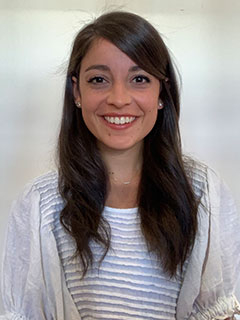
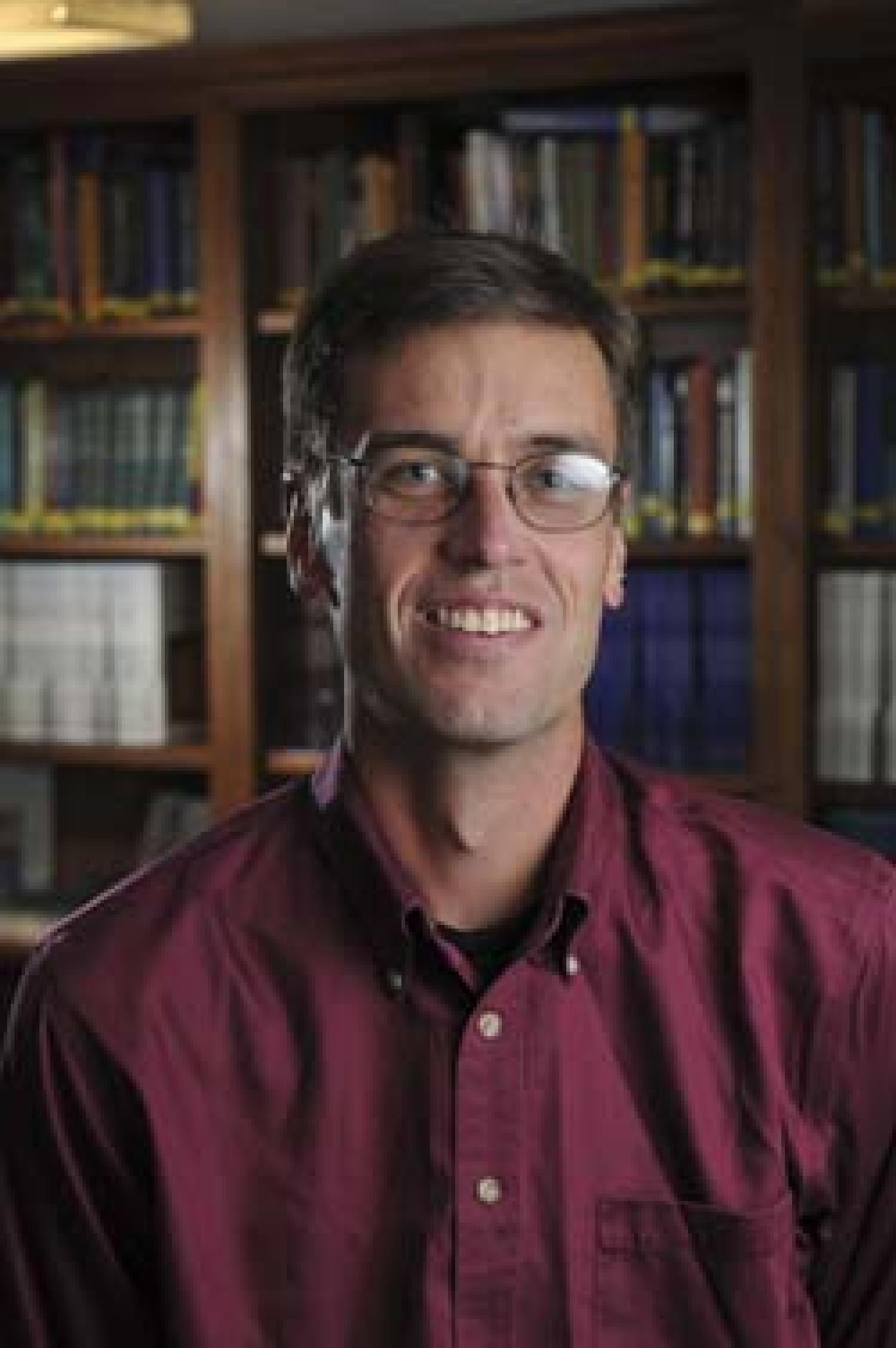
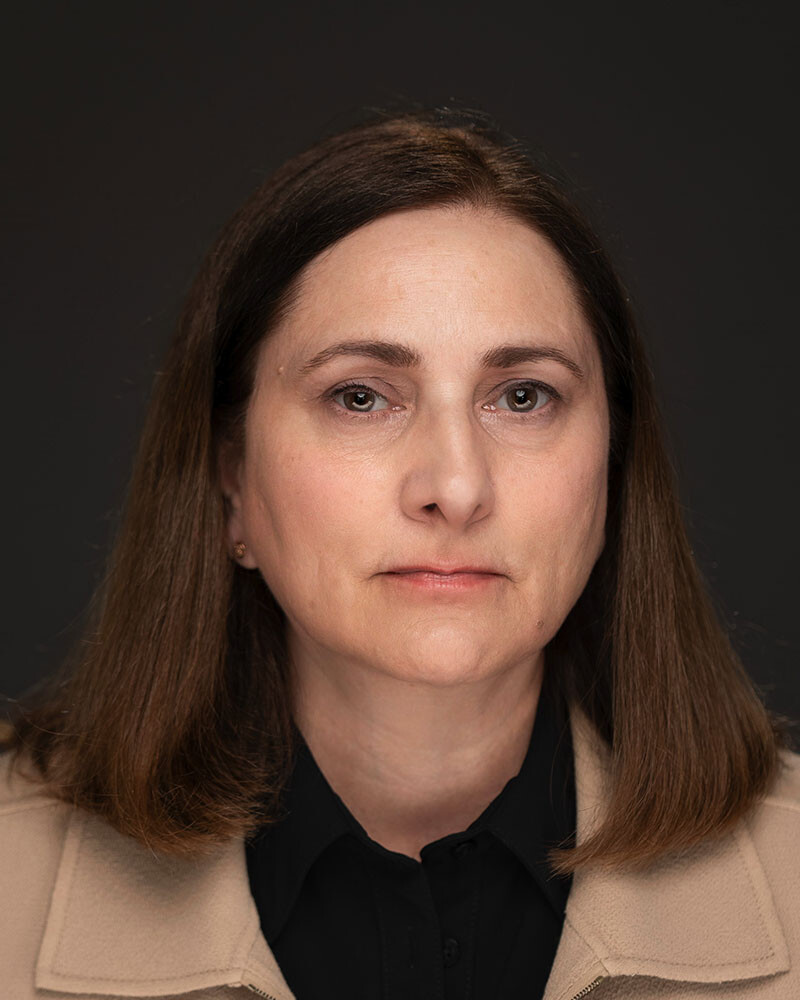
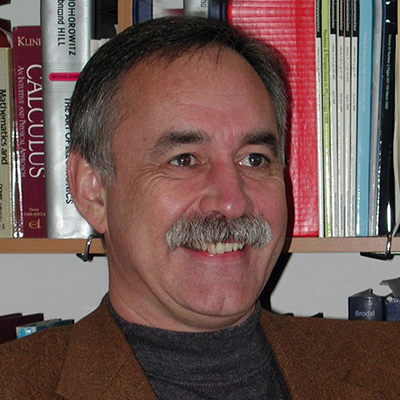
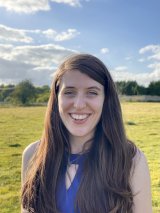
Dr. Melanie Franklin is a pediatric psychologist at Children's Hospital of Philadelphia with expertise in sleep disorders, treatment adherence, and pediatric psychology. She operates within the Department of Child and Adolescent Psychiatry and Behavioral Sciences and collaborates across multiple teams. BA in Psychology – Muhlenberg College PhD in School Psychology – Lehigh University Residency and Fellowship in Pediatric Psychology – Nemours/A.I. DuPont Children’s Hospital Her research focuses on: Sleep behavior in chronic illness populations Mental health communication barriers ADHD functional outcomes Treatment adherence strategies Recent publications demonstrate expertise in ADHD comorbidities , Cystic Fibrosis sleep interventions , and academic functioning analysis . Key collaborations include: Psychiatry and Behavioral Sciences Sleep Center Pulmonary and Sleep Medicine Division
Claudia Passos Ferreira is an Assistant Professor of Bioethics at the Center for Bioethics, New York University (NYU), where she bridges philosophy, psychology, and neuroethics to address ethical questions in consciousness studies and emerging technologies. Education: MA and Ph.D. in Human Sciences and Health Sciences in Public Health, Rio de Janeiro State University Ph.D. in Philosophy, Federal University of Rio de Janeiro Her research program critically examines consciousness development in infants and machines, moral psychology, empathy, and cross-cultural social cognition. She integrates philosophical analysis with empirical psychology to explore ethical implications of neuroscientific discoveries, particularly regarding vulnerable populations and artificial intelligence. Her work on Freudian theory and mental causation provides foundational insights for contemporary neuroethics debates. Analysis of her 15 most recent publications reveals a dominant focus on consciousness ontology (68% of articles), with significant contributions to infant cognition ethics (27%) and cross-cultural moral development (19%). Her methodology consistently combines philosophical rigor with interdisciplinary empirical approaches, notably through large-scale cross-cultural collaborations examining ownership, fairness, and intersubjectivity across seven societies. Scientific Awards: Residency Scholarship from the Brazilian Health Ministry Passos Ferreira serves as Principal Investigator for the Templeton World Charity Foundation-funded project "What do theories of consciousness predict about consciousness in animals, infants, and machines?". Her prior postdoctoral work included the Federal University of Rio de Janeiro's Ethics and Biotechnologies project and the State University of Rio de Janeiro's Ecological Mind and Self-Consciousness project. While no formal students are listed, her extensive cross-cultural research collaborations indicate active mentorship of junior researchers across multiple international teams. Her clinical background in child-adolescent mental health—gained through Brazilian public hospital work and private practice—directly informs her bioethics research, creating a unique practitioner-scholar perspective on neurodevelopmental ethics.
Erik Willcutt is a Professor in the Department of Psychology and Neuroscience at the University of Colorado Boulder. His research focuses on the genetic and neurobehavioral underpinnings of ADHD, learning disabilities, and developmental psychopathologies. He holds positions at the Institute for Behavioral Genetics and the Center for Neuroscience. Education: PhD in Psychology from the University of Denver (1998). Research Interests: Etiology and assessment of ADHD, reading disabilities, and developmental psychopathologies. His work integrates behavioral genetics, neuroimaging, and longitudinal twin studies to understand cognitive and psychiatric disorders. Key topics include neuroanatomical correlates of ADHD, genetic influences on dyslexia, and comorbidity between learning disabilities and psychiatric conditions. Publications highlight advanced methods like genome-wide association studies (GWAS) and phenotype harmonization (e.g., Rosetta method). His work bridges molecular genetics with clinical psychology, emphasizing translational research. Lab/Affiliations: Active in the Institute for Behavioral Genetics and collaborates with interdisciplinary teams studying neurodevelopmental disorders. Office located at Muenzinger D451B.
Marcia Barnes is the Dunn Family Chair in Psychoeducational Assessment and a Professor of Special Education at Vanderbilt University's Peabody College, Department of Special Education. Her research focuses on understanding and addressing learning difficulties in reading comprehension and mathematics among children with neurodevelopmental disorders and those at risk for learning disabilities. Her research interests include: Cognitive and linguistic processes in reading and math disabilities Development of assessment tools for inferential comprehension Design and evaluation of interventions for early mathematics and reading comprehension Co-occurring reading and math disabilities Technology-assisted and combined cognitive-academic interventions Her work employs longitudinal studies, randomized controlled trials, and meta-analyses, and has been supported by federal funding from the Institute of Education Sciences (IES) and the National Institutes of Health (NIH). Her publications appear in top journals such as Scientific Studies of Reading , Journal of Educational Psychology , and Neuropsychology . Marcia Barnes is the author of numerous peer-reviewed papers, book chapters, and a widely used book on learning disability identification and intervention. She leads the Barnes Lab at Vanderbilt, which is dedicated to improving outcomes for children with or at risk for learning disabilities through rigorous research. Ph.D. in Psychology, McMaster University, 1988 Postdoctoral Fellowship, Research Institute, The Toronto Hospital for Sick Children, 1988–1991 She advises students and leads research teams in the Barnes Lab, focusing on innovation in assessment and intervention for learning disabilities. While specific advisees are not listed, her federally funded projects suggest active mentorship and collaboration. Her lab explores future directions in technology-enhanced learning and integrated cognitive-academic supports. The Barnes Lab conducts cutting-edge research on: Risk factors for co-occurring math and reading disabilities Intervention efficacy through randomized trials Development of novel assessment instruments Technology-assisted learning tools Longitudinal trajectories of learning difficulties
Cara Keifer, PhD, is an Assistant Professor of Child Psychology in the Child Study Center at Yale University's Yale School of Medicine. Her research focuses on autism spectrum disorder (ASD), particularly social cognition, electrophysiological measures of face processing, and neurodevelopmental outcomes. She holds a PhD in Clinical Psychology from Stony Brook University (2021), an MA from the same institution (2017), and a BA in Psychology from Haverford College (2013). Her work integrates behavioral and neural methodologies to understand social perception deficits in ASD. Key studies include investigations into face inversion effects, emotional face recognition biases, and EEG correlates of anxiety treatment responses. She collaborates with the McPartland Lab and contributes to translational research initiatives. Recent publications highlight advancements in phenotypic classification of ASD using machine learning and exploration of social motivation constructs. Her interdisciplinary approach bridges clinical, cognitive, and neuroscientific perspectives to advance ASD diagnosis and intervention strategies.
Evelyn Lake is an Associate Professor in the Department of Radiology and Biomedical Imaging at Yale University, with affiliations to the Wu Tsai Institute and Yale Biomedical Imaging Institute. Her research focuses on functional neuroimaging, particularly using rodent models to study brain connectivity, neurovascular coupling, and disorders like Alzheimer’s disease and autism spectrum disorder. PhD in Medical Biophysics, University of Toronto (2016) Postdoctoral Associate, Yale University (2019) BSc (Honors) in Biophysics, University of Guelph (2010) Her work spans multimodal imaging techniques (e.g., simultaneous Ca2+ and fMRI), examining how genetic mutations (e.g., PTEN, KATNAL2) affect cerebrospinal fluid dynamics and neuronal connectivity. She investigates longitudinal changes in Alzheimer’s models and methodological aspects of animal neuroimaging, such as sample size optimization and awake imaging protocols. Recent publications highlight her contributions to understanding autism-related white matter abnormalities, transdiagnostic connectome predictive modeling, and the impact of neurovascular uncoupling in awake mice. Collaborations include Todd Constable, Francesca Mandino, Xilin Shen, and Xenophon Papademetris.
Bertram Müller-Myhsok is a Research Professor and Research Group Leader at the Max Planck Institute of Psychiatry in Munich, Germany. His research focuses on statistical genetics and transcriptomic data analysis in psychiatric disorders, particularly major depression, PTSD, schizophrenia, and their treatment responses. He integrates machine learning with genetic and clinical data to develop predictive models and stratified treatment approaches. Professional activities include leadership roles in the International Max Planck Research School for Translational Psychiatry and collaborations with institutions like the Institut du Cerveau (Paris) and Bernhard Nocht Institute (Hamburg). His work spans genetic epidemiology, psychiatric genomics, and precision medicine, with over 400 publications in high-impact journals. Key research areas include identifying genetic risk factors for mental disorders, developing polygenic scores, and leveraging omics data to uncover disease mechanisms. He leads projects like Psych-STRATA, a Horizon Europe-funded initiative advancing personalized psychiatry through pharmacogenomics.
Dr. Susana Castro-Kemp is an Associate Professor in Psychology and Human Development at University College London's Institute of Education (IOE), where she serves as Director of the Centre for Inclusive Education (CIE) since September 2023. Previously, she was a Reader in Education at the University of Roehampton for eight years. Her work focuses on inclusive education policy and practice globally, with particular expertise in special educational needs and disabilities (SEND), early childhood intervention, and mental health in schools. The IOE has been ranked number one in the world for Education for several consecutive years, providing an ideal environment for her impactful research. Dr. Castro-Kemp holds a PhD in Psychology jointly awarded in 2012 by the University of Porto (Portugal) and the University of North Carolina at Chapel Hill (USA). Her doctoral research was fully funded by the Foundation for Science and Technology/European Commission and the Global Education and Development Studies scholarships. She is a Chartered Psychologist with the British Psychological Society, a Senior Fellow of Advance HE, and a Recognised Research Supervisor by the UK Council for Graduate Education. Dr. Castro-Kemp's research centers on policy regulating education, health, and welfare services for children, particularly those with support needs. She examines inclusive education practices from users' perspectives, policy models leading to effective inclusive pedagogy, and country-level policy impacts on outcomes for children with special educational needs. Her work moves away from diagnostic labels toward engagement and civic participation as educational outcomes. She also investigates inclusion and early intervention in low- and middle-income countries, mental health in schools, and quality of early childhood education. Her recent publications reveal several key trends in inclusive education research. There's growing emphasis on understanding educational experiences through the voices of children and families rather than diagnostic labels. Much of her work examines the implementation gap between inclusive education policy and classroom practice. She has conducted significant research on how children with special educational needs experienced the pandemic, revealing both challenges and unexpected "silver linings" for some groups. Her corpus analysis of Ofsted reports shows narrow focus in early childhood education inspections, while her work on SEND policy increasingly takes an international comparative approach. Dr. Castro-Kemp has received recognition for her impactful work, including: Best Digital Humanities Project for Community Engagement Prize (2023) from the National Institute of Humanities and Social Sciences of South Africa for her project "Optimising collaborations and reducing inequalities of Early Childhood Intervention in post-Covid-19 South Africa" Dr. Castro-Kemp has secured approximately £1.3 million in research funding from various sources including ESRC, British Academy/Leverhulme Trust, European Commission, and private sponsors. Her current major project is 'ScopeSEND' (2024-2026), funded by the Nuffield Foundation (£250,000), examining international SEND policies. She has led numerous projects including "Transdisciplinary provision for children with disabilities in the Global South" (£3,500), "Optimising collaborations in South Africa" (£47,200), and "Froebel meets Ofsted" (£19,185). As a supervisor, she mentors MA/MSc and PhD students in education policy, early childhood, and inclusive education, having been nominated for student choice awards for excellent feedback and outstanding research supervision. As Director of the UCL Centre for Inclusive Education since 2023, Dr. Castro-Kemp leads a team focused on advancing knowledge exchange and research in inclusion and special needs. The Centre works with schools, educators, parents, and early years settings to translate research into practice. Her international collaborations include work with the World Health Organization as a technical advisor on the use of the International Classification of Functioning, Disability and Health (ICF) system in educational contexts. She also serves on the SEN Policy Research Forum and has provided oral evidence to the House of Commons Education Select Committee.
Istvan Mody is a Professor at the University of California, Los Angeles (UCLA) with appointments in the Department of Neurology and Department of Physiology . His research focuses on synaptic signaling in health and disease, including mechanisms of GABAergic transmission, calcium homeostasis, and their roles in neurological disorders such as epilepsy, Alzheimer's disease, Huntington's disease, stress, alcoholism, and postpartum depression. He utilizes advanced techniques like patch-clamp electrophysiology, neuroanatomical and immunohistochemical methods, and molecular biology in animal models and human brain tissue . Research Interests: Dr. Mody investigates the physiology, pharmacology, and pathology of synaptic transmission and extrasynaptic receptor activation , with a particular emphasis on GABA(A) receptors and their subunit-specific modulation. His work explores how disruptions in excitation-inhibition balance contribute to neurological diseases, including mechanisms of tonic inhibition , calcium signaling , and neurosteroid interactions . He also studies the effects of chronic stress and hormonal fluctuations on neural excitability and behavior. Publications Trends: Recent studies highlight his work on gamma oscillations in Alzheimer's models, microglial dynamics , and rehabilitation strategies for stroke. His lab develops optical tools like dqGEVI for neuronal activity monitoring and investigates human brain organoids to model network dysfunction in epilepsy and intellectual disability. Laboratory Location: 635 Charles Young Dr S, Los Angeles, CA 90095, United States.
Dr. Georgie Agar is a Lecturer at the School of Life & Health Sciences, Aston University , affiliated with the College of Health and Life Sciences and the Applied Health Research Group . Her research focuses on sleep disorders, self-injurious behavior, and caregiver impact in individuals with intellectual disabilities and rare genetic syndromes like Smith-Magenis and Angelman syndromes. Research Interests : Dr. Agar specializes in developing inclusive clinical assessment tools for sleep, pain, and behavior in neurodevelopmental populations. She employs mixed-methods, meta-analytic approaches, and longitudinal studies to explore sleep trajectories, behavioral conditioning models, and caregiver experiences. Publications : Her work spans sleep management in Smith-Magenis syndrome, overactivity metrics in genetic conditions, and systematic reviews on self-restraint in autism. Key journals include Molecular Autism , Orphanet Journal of Rare Diseases , and Research in Developmental Disabilities . Labs & Collaborations : She collaborates with the Aston Institute of Health & Neurodevelopment , focusing on neurodevelopmental research and cross-institutional partnerships in sleep and behavioral science.
James Tung is an Associate Professor at the University of Waterloo’s Faculty of Engineering, Department of Mechanical and Mechatronics Engineering. His research focuses on assistive technology, rehabilitation engineering, and mobility solutions for individuals with disabilities. He leads the Neural and Rehabilitation Engineering (NRE) Lab, which develops wearable sensors, robotics, and machine learning tools to enhance mobility and monitor motor rehabilitation. He teaches courses including BME 355 (Physiological Systems Modelling), BME 540 (Neural and Rehabilitation Engineering), and ME/MTE engineering modules. The lab collaborates with clinical and industry partners to translate research into practical solutions, addressing real-world mobility challenges and aging demographics. His research spans real-world gait analysis, fall risk assessment, and prosthetic design, with a focus on pediatric neurodevelopmental disorders and elderly mobility. The NRE Lab emphasizes interdisciplinary work, combining biomechanics, robotics, and data science to improve healthcare outcomes. Lab Alumni: Includes researchers like Robin Murdock (Myant Inc.), Andrew Hart, and Raj Senthilkumar, contributing to prosthetics and gait analysis. Partnerships: Engages clinical and industry stakeholders for knowledge translation and commercialization. Current projects include developing smart rollators, biofeedback prosthetics, and sensor-based assessment tools to address mobility limitations in aging populations and individuals with disabilities.
Fred R. Volkmar, M.D., is the Irving B. Harris Professor of Child Psychiatry, Pediatrics, and Psychology at Yale University, and Director of the Yale Child Study Center. He also serves as Chief of Child Psychiatry at Yale-New Haven Hospital. His academic affiliations include the Yale School of Medicine and leadership roles in multiple clinical and research programs. Dr. Volkmar holds an M.D. from Stanford University (1976) and a psychology master’s degree from the same institution, alongside an undergraduate psychology degree from the University of Illinois (1972). He is renowned for authoring the DSM-IV autism and pervasive developmental disorders section and has authored hundreds of publications and several influential books, including Asperger’s Syndrome and Handbook of Autism . His research focuses on autism spectrum disorders (ASD), including diagnosis, treatment, comorbidities, and transition to adulthood. His publications emphasize evidence-based practices, neurodevelopmental mechanisms, and clinical guidelines. He leads initiatives in medical care for ASD populations and advocates for improved community support systems. Notable contributions include co-developing the M-CHAT screening tool and advancing interdisciplinary approaches to ASD management. His work intersects clinical practice, policy, and education, prioritizing patient-centered care and reducing stigma.
Gary M. Shaw is the Rosemarie Hess Professor and Professor (Research) at Stanford University , with courtesy appointments in the Department of Epidemiology and Population Health and Department of Obstetrics & Gynecology - Maternal Fetal Medicine . He serves as Co-PI of the March of Dimes Prematurity Research Center at Stanford and PI of the California Center for Finding Causes and Preventives of Birth Defects . His research focuses on the Epidemiology of birth defects Gene-environment interactions in perinatal outcomes Nutritional factors in reproductive health . He has developed machine learning approaches for precision parenteral nutrition and predictive models for preterm birth, while investigating persistent metabolomic signatures following hypertensive pregnancy disorders. Shaw's recent work explores Climate change impacts on reproductive health Maternal-fetal immune interactions Epigenetic mechanisms in perinatal disease with applications of multiomics to neonatal intensive care units. As a member of Bio-X and the Maternal & Child Health Research Institute , he contributes to translational research networks while serving as Associate Editor for Birth Defects Research and American Journal of Medical Genetics . He supervises Med Scholar Project student Richard Liang Doctoral co-advisor for Saskia Comess and Richard Liang Master's advisor for Lenae Joe while leading the Division of Neonatology as Associate Chair for Clinical Research (2012-2025). His laboratory work integrates Metabolomic profiling Proteomic analysis Computational modeling Machine learning for biomedical data to advance neonatal care through precision medicine approaches.
Julie Beth Schweitzer is a Professor in the Department of Psychiatry and Behavioral Sciences at UC Davis Health School of Medicine and a key figure at the MIND Institute. She serves as Director of the CTSC Mentoring Academy for Research Excellence (MARE), Director of the Mentored Clinical Research Training Program (MCRTP), and Co-Director of the CTSC TL1 Program. Her work bridges cognitive neuroscience and clinical psychology, focusing on ADHD across the lifespan and its comorbidities. Education: A.B. from University of Southern California (1982), M.S. (1987) and Ph.D. (1990) in Clinical Psychology from University of Massachusetts Amherst, with internship at University of Minnesota and fellowship at Emory University. Dr. Schweitzer's research explores brain-behavior-environmental relationships in ADHD, utilizing neuroimaging to study self-control development and designing tech-based interventions like virtual reality and computerized games to enhance attention and academic outcomes in ADHD and autism. Her work spans developmental psychology, translational neuroscience, and mental health technology. Recent publications highlight her focus on predicting ADHD symptom trajectories, environmental influences (e.g., phthalate exposure, neighborhood conditions), and behavioral interventions (e.g., fidget devices). Studies also address cognitive functioning in autism-ADHD comorbidity and irritability as a predictive factor. Scientific Awards & Honors Dean's Award for Excellence in Mentoring, UC Davis Health (2024) President Elect, International Society for Child and Adolescent Psychopathology (2027-2029) Selected Fellow, Association for Psychological Science (2018) Sigma Xi Grant in Aid of Research (1989) Predoctoral Traineeship, U.S. Department of Education (1984-1987) Dr. Schweitzer actively trains translational scientists through the UC Davis Clinical and Translational Science Center, emphasizing mentoring excellence. Her leadership roles and research programs underscore her commitment to advancing ADHD and developmental disorder studies, integrating clinical practice, neuroscience, and environmental health.
Dr. Angelina Vernetti is a Research Scientist at Yale University's Child Study Center, affiliated with the Social and Affective Neuroscience of Autism (SANA) Program. She holds a PhD in Developmental Neuropsychology from Birkbeck, University of London, and completed postdoctoral training at Yale. Her research focuses on social attention, reinforcement learning, and emotional regulation in children with autism, using advanced methodologies like eye-tracking and physiological recordings. Education: PhD in Developmental Neuropsychology, Birkbeck, University of London (2018) MSc in Neurosciences and Neuropsychology, University of Toulouse (2010) BSc in Cell Biology, University of Angers (2008) Research Interests : Dr. Vernetti investigates the neural and behavioral foundations of social difficulties in autism, including social attention mechanisms, emotional regulation abnormalities, and language processing deficits. Her work integrates experimental paradigms with neuroimaging and physiological measures to identify biomarkers for early intervention. Collaborations: She collaborates with prominent researchers like Katarzyna Chawarska and Suzanne Macari, focusing on neurodevelopmental mechanisms and translational research. Her team explores innovative approaches to autism assessment, including live eye-tracking and puppet-based interventions. Labs & Affiliations: Member of the Chawarska Lab and the Center for Brain & Mind Health. Active in training undergraduate, postgraduate, and doctoral students in autism research methodologies.