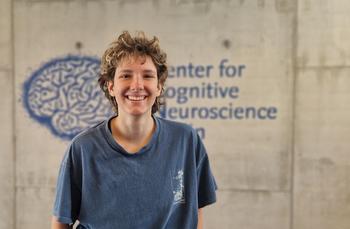
Ilinca Graur serves as a visiting researcher at the Neurocomputation and Neuroimaging Unit within the Department of Education and Psychology at Technische Universität Dresden. Her academic work focuses on the intersection of neuroscience and computational modeling. Her primary research domains include: Neuroscience Computational Neuroscience Neuroimaging Cognitive Science Brain Imaging As a member of this specialized research unit, she contributes to projects examining neural processes through advanced computational frameworks and imaging methodologies. The unit appears to maintain an active research environment with numerous collaborators, postdoctoral researchers, and doctoral candidates working on related topics in neurocomputation. While specific details about her current research projects are not provided in the available information, her position within this specialized unit indicates significant expertise in applying computational approaches to understand complex brain functions and neural mechanisms.
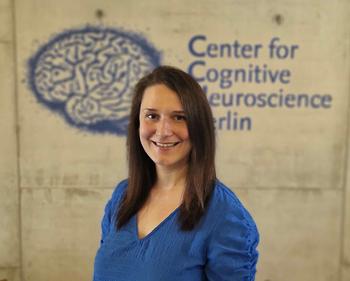
Judit Pekar is a Postdoctoral Researcher at Freie Universität Berlin's Department of Education and Psychology, working within the Neurocomputation and Neuroimaging Unit. Her office is located at Habelschwerdter Allee 45, Room JK 25/222h, 14195 Berlin. Her research focuses on the intersection of neuroimaging techniques and computational modeling to investigate cognitive processes. Key areas include fMRI data analysis , neural network simulations , and quantitative methods in cognitive neuroscience , leveraging advanced neurocomputational frameworks to decode brain function. No scientific awards or student advisement activities are documented in available records. Her work contributes to the unit's mission of integrating theoretical models with empirical neuroimaging data to advance understanding of human cognition.
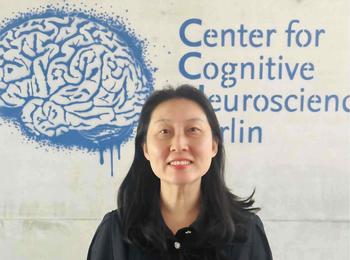
Dr. Yiquan Shi serves as a Postdoctoral researcher in the Neurocomputation and Neuroimaging Unit within the Department of Education and Psychology at Technische Universität Dresden. His position falls under the "VISIT RESEARCHERS" category, indicating active collaboration with the department's interdisciplinary research initiatives focused on psychological and educational sciences. Research Interests: Dr. Shi's work centers on computational approaches to neuroscience and imaging methodologies, with primary emphases on Computational Neuroscience and Neuroimaging techniques applied to psychological phenomena. His research integrates these domains with Cognitive Psychology and Educational Psychology to investigate neural mechanisms underlying learning and cognitive processes. The Neurocomputation and Neuroimaging Unit provides a specialized environment for advancing brain imaging analysis through algorithmic development and experimental design. Dr. Shi contributes to this collaborative unit alongside postdocs, doctoral students, and visiting researchers working on cutting-edge projects at the intersection of computer science, neuroscience, and behavioral studies.
Timothy Ricker is an Associate Professor in the Department of Psychology at the University of South Dakota, where he conducts research on working memory, cognition, attention, and perception. His work combines behavioral experimentation, mathematical process modeling, and Bayesian estimation to investigate how visual sensations transform into robust working memories and the mechanisms of forgetting during multitasking. He teaches courses related to cognition and statistics, framing the brain as a computer and life as probabilistic events. Education: Ph D, Psychology, University of Missouri, 2013 MA, Psychology, University of Missouri, 2009 BA, Psychology, Michigan State University, 2006 Ricker's research focuses on short-term consolidation in working memory, examining how fleeting sensory representations become durable memories. His lab investigates boundary conditions for cognitive load effects, the relationship between working memory and multitasking, and how memory representations change across different tasks. Using computational models, his team differentiates fine-detail and categorical-gist memory representations, with recent work challenging traditional views that multitasking causes forgetting—instead proposing it prevents standard memory creation processes. His publication record shows a clear trajectory toward understanding memory consolidation mechanisms, with increasing emphasis on computational modeling approaches like drift diffusion modeling. Recent work explores the relationship between working memory and long-term memory, the impact of mind-wandering on cognitive performance, and translating laboratory findings to everyday cognitive functioning. Scientific Awards: Arts & Sciences Faculty Travel Grant, College of Arts & Sciences, University of South Dakota (2022) Arts & Sciences Faculty Travel Grant, College of Arts & Sciences, University of South Dakota (2023) Arts & Sciences Faculty Travel Grant, College of Arts & Sciences, University of South Dakota (2024) Ricker has secured substantial grant funding including a $1.5M award from the National Institute of Neurological Disorders and Stroke (2025-2030) for his Bayesian Neurocomputational Model of Cognitive Change in Multiple Sclerosis. His research program is supported by diverse funding sources including the Swiss National Science Foundation and the Center for Brain and Behavior Research at USD. He directs the Memory & Attention Laboratory at USD, which employs behavioral experiments, eye tracking, pupillometry, and computational modeling to study fundamental memory and attention processes. The lab has developed a distinctive focus on translating laboratory findings to everyday cognitive functioning and understanding suboptimal cognitive performance in daily life contexts, moving beyond traditional ideal observer models.