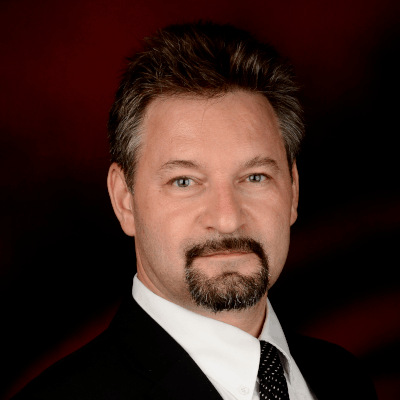
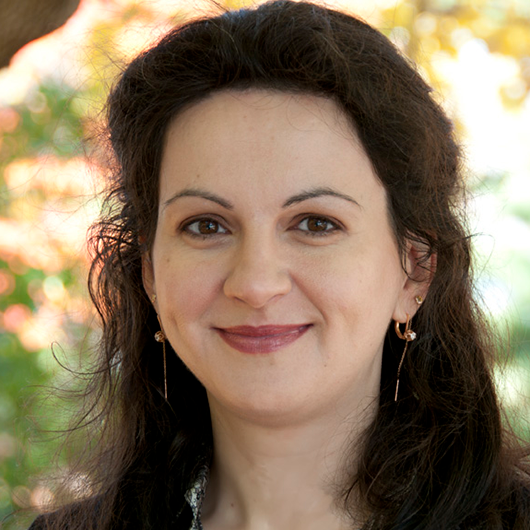
Dr. J.P. de Ruiter is a Professor in both the Psychology and Computer Science departments at Tufts University. He holds a PhD from the Max Planck Institute for Psycholinguistics and a Drs (equivalent to MS) from Radboud University. His research focuses on the cognitive foundations of human communication, including how humans and artificial agents use language, gesture, and multimodal signals to communicate. He previously served as Chair of Psycholinguistics at Bielefeld University and founded the Natural Communication HD Lab there. Research Interests: Cognition and Psycholinguistics Computational models of conversation Artificial Intelligence applications in communication Social robotics and intention recognition Recent work investigates top-down effects of dialogue coherence on speaker identity perception and limitations of Large Language Models in conversational timing. His lab (Human Interaction Lab) explores human-machine interaction through datasets and algorithms enhancing social communication.
Professor Michael Burke holds a full professorship in Rhetoric at Utrecht University (Faculty of Humanities) and teaches at University College Roosevelt (UCR) in Middelburg. Previously, he served as UU Honours Dean (2016–2021). His research focuses on rhetoric, stylistics, cognitive aspects of language, and education. He earned his Ph.D. in English Language and Literature from the University of Amsterdam, where he also completed his undergraduate studies. Research interests span written, oral, and digital rhetoric, emphasizing pedagogical, cognitive, stylistic, and neuroscientific dimensions. He has held visiting roles at institutions like the University of Cambridge and University of Bologna. Editorial roles include series editor for Routledge’s 'Research Monographs in Linguistics' and board memberships with journals like Language and Literature . Teaching includes undergraduate courses on classical rhetoric, argumentation, and public speaking at UCR, plus leadership and interdisciplinary research modules for Utrecht’s Honours College. He supervises PhD students in the UiL-OTS linguistics research school. Notable publications include The Routledge Handbook of Stylistics (2023) and studies on critical thinking, digital literacy, and cognitive literary science. Professional activities include keynote speaking at conferences like PCST and EARS, and contributions to projects such as ‘Undergraduate Research in the Netherlands’. His work bridges rhetoric, cognitive science, and education, emphasizing practical applications for students and educators.
Dr. Naseem Choudhury is a Professor of Psychology and Neuroscience at Ramapo College of New Jersey, affiliated with the School of Social Science and Human Services (SSHS). She holds a Ph.D. in Experimental Psychology from the University of Vermont. Her research focuses on the neural basis of infant information processing, particularly how perceptual abilities influence typical and atypical development, with an emphasis on familial and sociocultural factors. Her work spans auditory processing in infants at risk for developmental language disorders, electrophysiological studies in children with autism, and cross-cultural analyses of artistic perception. She directs the Palestroni Integrated Neuroscience Lab, exploring neural mechanisms underlying cognitive development. Dr. Choudhury has published extensively in journals like Journal of Neuroscience and Developmental Cognitive Neuroscience , with over 50 peer-reviewed articles since 2002. Her studies often involve ERP and EEG methodologies to track developmental milestones and intervention efficacy in high-risk populations. Her research demonstrates that early auditory experiences shape prelinguistic acoustic mapping and that neuroplasticity interventions improve outcomes for language-impaired children. She collaborates internationally on projects linking sensory perception to linguistic outcomes, particularly in Italian and bilingual populations. Dr. Choudhury’s contributions bridge basic neuroscience and clinical applications, emphasizing early screening and preventive strategies for developmental disorders.
Christian Poellabauer is a Professor at Florida International University (FIU) in the Knight Foundation School of Computing and Information Sciences, serving as Interim Associate Dean for Research and Graduate Studies in the College of Engineering & Computing. He holds a Ph.D. from Georgia Institute of Technology (2004) and a Diplom-Ingenieur from TU Vienna (1998). His research focuses on mobile sensing, data analytics, and healthcare technologies, leading the MOSAIC Lab which develops solutions for healthcare, IoT, and smart cities. He previously led the Mobile Computing Lab at the University of Notre Dame and held leadership roles in data science institutes. Research Interests: His work spans digital biomarkers for neurodegenerative diseases, speech analysis for mental health, wearable device authentication, and wireless sensor networks. The MOSAIC Lab addresses challenges like real-time sensor data analysis on constrained devices and translating insights into clinical applications. Teaching: He has taught courses on Operating Systems, Mobile Computing, and Smart Health at both FIU and Notre Dame. Recent courses include COP4610 (Operating Systems Principles) and COP5614 (Graduate Operating Systems) at FIU. Service: He serves as Associate Editor for IEEE Transactions on Network Science and Engineering, and has organized conferences like ICNC 2023 and IEEE MASS 2021. His academic service includes roles on editorial boards and technical program committees for major conferences in distributed computing and networking. Advising & Labs: Advises current Ph.D. students in areas like multi-modal sensing for affective computing and mental health crowdsensing. Past students have pursued roles in academia and industry (e.g., Rose-Hulman Institute of Technology, Facebook, Microsoft). The MOSAIC Lab collaborates on projects like digital clinical outcome assessments and motor impairment detection.
Dr. Lisa Libby is a Professor of Social Psychology at The Ohio State University, affiliated with the Department of Psychology. Her research focuses on how subjective perceptions shape cognition, emotion, and behavior, with a particular emphasis on mental imagery and visual perspective. She explores how manipulating these processes can improve decision-making, emotional well-being, and social harmony. Libby holds a PhD from Cornell University (2003), an MA from Simmons College (1997), and a BA from Williams College (1996). Education: PhD in Psychology, Cornell University, 2003 MA in Psychology, Simmons College, 1997 BA in Psychology, Williams College, 1996 Her research investigates how visual perspective in mental imagery influences self-perception, memory, and goal pursuit. Key themes include the interplay between imagery, identity, and decision-making, with applications to personal and interpersonal contexts. Libby's work highlights how shifting perspectives (e.g., first- vs. third-person imagery) can alter emotional responses, reduce bias in self-assessment, and enhance adaptive behaviors. Her advising contributions include mentoring students like Valenti G. and Shaeffer E.M., who have co-authored influential studies on imagery perspective and memory. Libby's lab at Ohio State University continues to advance understanding of how subjective experiences are constructed and manipulated through psychological mechanisms. Her research spans cognitive and social psychology, addressing topics such as autobiographical memory, regulatory fit, and the psychological effects of motion on conflict resolution. She has contributed to major academic volumes, including The Oxford Handbook of Social Cognition and Advances in Experimental Social Psychology .
Dr. Hideko Hamada Bassett is an Assistant Professor at the School of Integrative Studies, George Mason University, specializing in child development, socialization, and interdisciplinary studies. Her research focuses on social-emotional development, emotion socialization, and school readiness in early childhood education. Education: Ph.D. in Applied Developmental Psychology, George Mason University M.S. in General Psychology, University of Memphis B.A. in English, Kansai Gaidai University Her research emphasizes the interplay between executive functioning, emotional competence, and classroom behavior, with a particular interest in cross-cultural comparisons and teacher-child interactions. Recent publications explore themes such as emotion knowledge, self-regulation, and social information processing in preschoolers. Dr. Bassett’s work includes the development of assessment tools like the BRACE Coding System and the Preschool Self-Regulation Assessment, aiming to improve social-emotional learning frameworks. She has contributed to studies examining gender differences, socioeconomic risk factors, and the role of maternal emotion teaching in shaping preschoolers' developmental outcomes. Contact: hhamada@gmu.edu | Office: Enterprise Hall
Babett Lobinger is a Researcher at the Institute of Psychology at the German Sport University Cologne, specializing in Performance Psychology and Applied Sport Psychology. She holds academic qualifications including Dipl.-Psych., MA Sportwiss, and Dr. in Sport Sciences. Her research focuses on Performance Psychology , Motor Control Disorders (e.g., Yips in Golf), Movement Safety in Aging , and Coaching Psychology . She has collaborated with organizations like the DFB (German Football Association) and clubs like Arminia Bielefeld and 1.FC Köln, providing sport psychological consulting and research. Key Projects include: DFG-funded studies on Yips in Golf Cross-cultural training needs analysis for football coaches Development of the Athlete Competency Questionnaire for Employability (ACQE) She teaches in the German Football Association’s (DFB) coaching academy and contributes to sport psychology curricula for trainers. Her work appears in journals like InMind and conferences such as FEPSAC.
John Monterosso is an Associate Professor of Psychology at the University of Southern California, specializing in addiction, motivation, and decision-making research. His work explores the neurocognitive mechanisms underlying impulse control and reward processing, with particular focus on substance use disorders and behavioral interventions. Monterosso's research integrates behavioral experiments with neuroimaging to examine decision-making processes in addiction contexts. His lab investigates how immediate rewards influence behavior and how cognitive control mechanisms can be harnessed for addiction treatment. Recent work examines the impact of e-cigarette flavors on appeal and sensory perception, obesity medication perceptions, and neural correlates of value representation. With collaborations spanning public health and neuroscience, his publications demonstrate consistent focus on translating basic psychological research into clinical applications. The methodological progression shows increasing sophistication in neuroimaging techniques and large-scale behavioral studies examining substance use patterns across diverse populations.
Viorica Marian is the Ralph and Jean Sundin Endowed Professor of Communication Sciences and Disorders at Northwestern University's School of Communication. Her research focuses on bilingualism/multilingualism, the neurocognitive mechanisms underlying language processing, and the interplay between language, memory, and cultural factors. She holds a PhD in Experimental Psychology from Cornell University, alongside multiple MA and BA degrees in psychology-related fields. Education: PhD (Cornell), MA (Cornell), MA (Emory), BA (University of Alaska). Research Interests: Bilingualism, cognitive neuroscience, language processing, memory, psycholinguistics, and cross-cultural communication. Labs: Bilingualism and Psycholinguistics Research Group. Marian's work bridges behavioral, cognitive, and neurological methodologies. Her studies reveal how bilingualism enhances executive control, influences memory retrieval, and shapes cross-modal perception. Recent research highlights cultural differences in mother-child communication and the cognitive benefits of multilingualism. Her awards include the 2019 JSLHR Editor’s Award and recognition for teaching excellence. She actively contributes to translational research through grants like the NIH-funded Cognitive Architecture of Bilingual Language Processing project. Courses taught include CSD 309: Culture, Language, and Learning, and CSD 551: Topics in Bilingualism. Key Grants: NIH RO1 HD059858 (2022-2027), NIH R21 DC018349 (2021-2023). Prominent Publications: The Power of Language (2023), LEAP-Q methodology (2007), and foundational bilingualism studies in Bilingualism: Language and Cognition .
Angela Crow is an Associate Professor at James Madison University (JMU) in the School of Writing, Rhetoric and Technical Communication, where she has served since 2012. Her research bridges literacy studies, design, and urban mobility, focusing on how communities advocate for car-free infrastructure and equitable public spaces. She explores the role of digital communication in fostering feminist interventions, particularly around cycling advocacy and street design. Her work intersects with gender studies, urban studies, and rhetorical theory. Educated at the University of Kansas (Ph.D., 1997) and Point Loma College (B.A., 1987), she has authored books on writing programs and composition studies, including Aging Literacies (2006) and Field of Dreams (2002). Recent publications analyze surveillance, privacy in digital contexts, and transportation equity. Her research often highlights marginalized voices in shaping public discourse. Research Interests: Her current projects examine embodied literacies in mobility advocacy, social media practices of grassroots movements, and the rhetoric of urban infrastructure. She critiques car-centric planning through feminist and critical frameworks, emphasizing accessibility and safety for non-car users. Her work also addresses aging populations’ digital literacies and the intersection of technology with social inequality. Publications: Her articles span rhetorical analysis of social movements, educational assessment frameworks, and the sociotechnical dimensions of writing. Recent trends include collaborations on privacy in big data and participatory design for community mobility.
Tammy English is an Associate Professor in the Department of Psychological & Brain Sciences at Washington University in St. Louis, where she leads the Emotion and Relationships Laboratory. Her research investigates how individuals regulate emotions in real-world social contexts, with a focus on authenticity, interpersonal dynamics, and well-being across the lifespan. PhD, University of California, Berkeley MA, University of California, Berkeley BA, Swarthmore College Her research interests span emotion regulation , social psychology , affective science , interpersonal relationships , and developmental psychology , with increasing emphasis on aging, cognitive factors, and diversity in educational contexts. She employs intensive longitudinal methods such as experience sampling and ambulatory assessment to capture emotional dynamics in daily life. The most recent publications highlight trends in emotion regulation across adulthood , particularly how cognitive abilities, authenticity, and situational context influence regulatory success. Her work explores both intrapersonal and interpersonal emotion regulation, including its role in romantic relationships, intergroup interactions, and mental health conditions like depression. There is a strong methodological focus on ecological validity, momentary assessment, and distinguishing adaptive from maladaptive regulation. APS Fellow (2022) Tenured faculty (2019) Recipient of multiple NIA grants, including R01AG070139 Mentor to award-winning students (ExpiWell Dissertation Award, SPSP Heritage Award) Dr. English has advised numerous graduate students and postdoctoral researchers, including Tabea Springstein and Isidro Landa, and has secured significant grant funding from the National Institute on Aging to study the neural and motivational underpinnings of emotion regulation across the lifespan. Her lab collaborates widely, including with the Emotion and Mental Health Lab, and presents regularly at premier conferences such as the Society for Affective Science and the Association for Psychological Science. The Emotion and Relationships Lab conducts cutting-edge research on how people manage emotions in social contexts across adulthood, with special attention to aging, cognitive health, and educational equity. The lab uses mobile sensing, experience sampling, and experimental designs to study emotion regulation in real time and real-world settings.
Barbara Landau is the Dick and Lydia Todd Professor of Cognitive Science at Johns Hopkins University (since 2001). She previously served as Vice Provost for Faculty (2011-2014) and Director of the Science of Learning Institute (2013-2018). Her research focuses on the interplay between language and spatial cognition, studying typical and atypical development through experimental psychology, linguistic analysis, and brain imaging. PhD in Cognitive Science, University of Pennsylvania Landau investigates the cognitive primitives underlying early development, including how children learn spatial language (e.g., prepositions), how spatial impairments affect word learning in Williams syndrome, and how language and spatial cognition interact. Her work spans typical development, congenital blindness, Williams syndrome, and post-stroke spatial representation. She leads the Language and Cognition Lab, part of the JHU Vision Sciences Group (Cognitive Science, Psychological and Brain Sciences, Neuroscience). Her research has been featured in Time , New York Times , NPR, and The New Yorker, with a focus exhibit at the Walters Art Museum (2011). She received the Guggenheim Fellowship (2009), William James Fellow Award (2018), and is a member of the National Academy of Sciences. Cognitive Science Society Fellow American Academy of Arts and Sciences Fellow American Association for the Advancement of Science Fellow Landau’s lab collaborates with University of Pennsylvania researchers (John Trueswell, Lila Gleitman) on NSF-funded projects connecting symmetry to linguistic/perceptual development. She trains students like Zihan Wang (2023 Glushko Award) and Rennie Pasquinelli (Science of Learning Fellow). Her studies involve participants aged 18 months to 18 years, including Williams syndrome individuals.
Shannon Johnson is an Associate Professor in the Department of Psychology and Neuroscience at Dalhousie University, concurrently affiliated with the Departments of Pediatrics and Psychiatry. She serves as Director of Clinical Training and Co-Director of the Dalhousie Centre for Psychological Health, which provides mental health services to underserved populations while training clinical psychology students. Dr. Johnson holds a BA from Kalamazoo College, MSc and PhD from the University of Victoria, and a Postdoctoral Fellowship from Indiana University. Her research focuses on enhancing well-being through nature connection interventions, understanding resilience mechanisms in pediatric populations, and improving diagnostic practices for neurodevelopmental disorders. She investigates the physical and cognitive benefits of nature exposure, barriers to nature connection, and behavioral change strategies. Her work bridges clinical and environmental psychology, with recent studies examining nature-based interventions for stress reduction, pain adaptation in youth with juvenile idiopathic arthritis, and moral foundations in autistic children. She has pioneered the concept of Indoor Nature Exposure (INE) as a health-promotion framework. Dr. Johnson’s lab collaborates with healthcare providers to develop scalable mental health interventions, particularly for underserved communities. Her training programs emphasize evidence-based practices and culturally responsive care. Key contributions include validating the role of nature in cognitive restoration and challenging clinical biases in autism assessment.
David Peeters is an Associate Professor at Tilburg University's Department of Communication and Cognition, part of the Tilburg School of Humanities and Digital Sciences. His research focuses on multimodal communication, multilingualism, and digital communication, leveraging immersive virtual reality (VR) technologies combined with EEG, eye-tracking, and fMRI. He explores neurobiological underpinnings of language, including neuropragmatics, non-verbal communication, and multilingualism. His work is supported by grants such as the NWO Veni and Tilburg University Fund. Peeters teaches courses on virtual reality, language psychology, and digital literature integration in education. He is a Research Fellow at the Donders Institute and President of the Tilburg Young Academy. Key research interests include the role of gesture and iconicity in second language acquisition, bilingual language switching in immersive environments, and the impact of dataism on academic publishing. He collaborates with libraries and schools to integrate digital literature into curricula and public collections. His scientific awards include the NWO Veni Grant and a Fellowship from the International Max Planck Research School for Language Sciences. His research bridges cognitive science, linguistics, and technology, emphasizing ecologically valid experimental paradigms.
Kay James is an Associate Professor of Neuroscience and Education at Teachers College, Columbia University, and serves as Director of the Graduate Program in Neuroscience and Education and the Neurocognition of Language Lab. Their work focuses on neural mechanisms underlying language disorders, second language acquisition, and cognitive processes in schizophrenia. Key affiliations include Biobehavioral Sciences, Neuroscience and Education, Human Development, and Cognitive Science in Education. Research interests emphasize the neural basis of language processing in pathological contexts such as developmental speech disorders and schizophrenia, alongside second language acquisition in adults. Their interdisciplinary approach bridges cognitive neuroscience with clinical and educational interventions. Publications span studies on mismatch negativity in speech disorders, syntactic development in Arabic diglossia, and brain-behavior asymmetry in schizophrenia. Ongoing work explores voice-related cortical potentials and emotional face processing through electrophysiological methods. Labs and teams include the Neurocognition of Language Lab, focusing on language neurobiology and clinical applications. Grants and advising roles are not explicitly detailed in the provided materials.