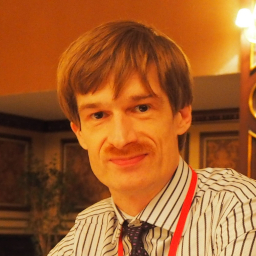
Vishwanathan Mohan is a Lecturer (US equivalent: Assistant Professor) in Robotics and Artificial Intelligence at the University of Essex, UK. He was formally trained in Microelectronics and VLSI design at the Indian Institute of Technology Madras, and his scientific career began with neuromorphic VLSI models of associative memories. Education: Indian Institute of Technology Madras (Microelectronics and VLSI design) His research focuses on human-robot symbiosis, cognitive robotics, and embodied language learning. Key themes include goal-directed reasoning, cooperative robotics in shared workspaces, and neural frameworks for memory and body schema organization in robots. His work spans applications in industrial and humanoid robotics. Recent publications highlight neural models for social cognition, physical reasoning, and episodic memory systems. Collaborators include notable researchers such as Giulio Sandini and Pietro Morasso from the Italian Institute of Technology. As a Guest Associate Editor for Frontiers in Neurorobotics, he contributes to editorial roles. No scientific awards or advising details were explicitly mentioned in the available text.
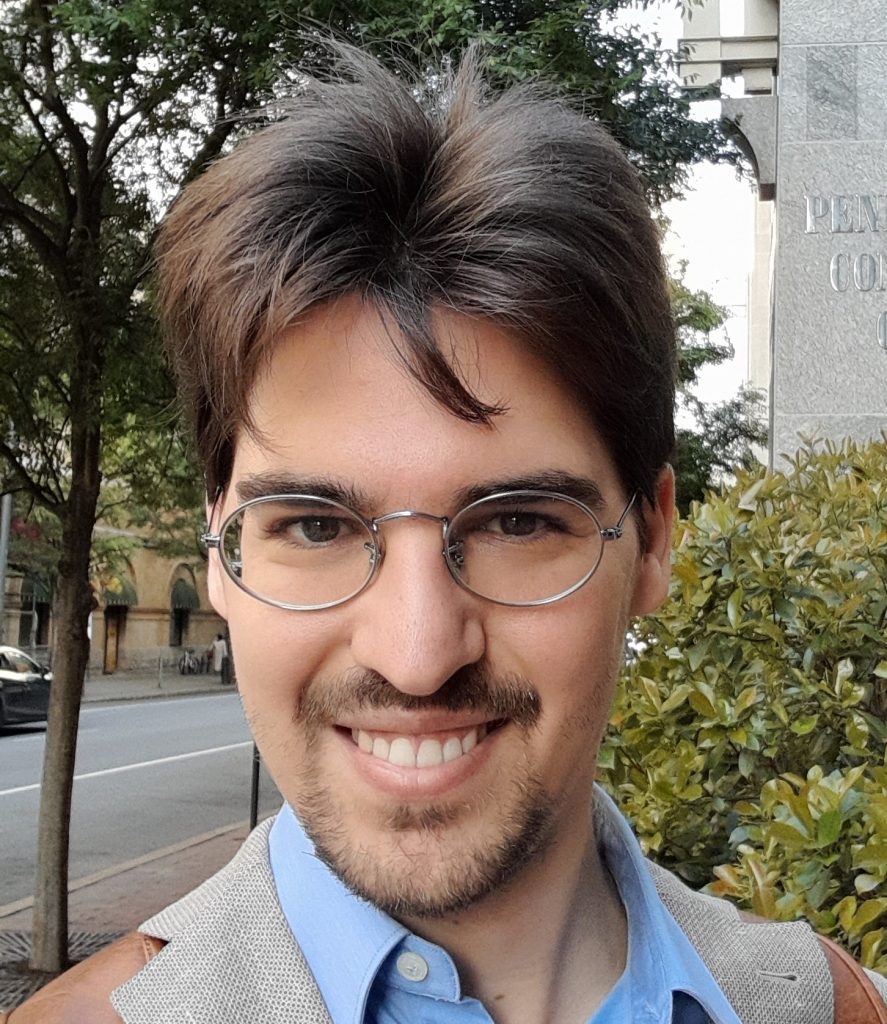
Alexander G. Ororbia II is an Assistant Professor in the Department of Computer Science at Rochester Institute of Technology (RIT), where he directs the Neural Adaptive Computing (NAC) Laboratory. He is also an affiliate professor in the RIT Department of Psychology, an affiliate faculty member of RIT's Center for Applied Neuroscience, and affiliate faculty in RIT's Cognitive Science program. Ororbia received his Ph.D. in Information Science & Technology from Penn State University and a B.S.E. in Computer Science & Engineering from Bucknell University. His research focuses on developing computational models of neural information processing and synaptic plasticity, with significant contributions to predictive coding, active inference, spiking neural networks, neural-based cognitive modeling, and neurorobotic control. As Director of the NAC Laboratory, he leads research on biomimetic intelligence and brain-inspired computing, specifically developing neurocognitively plausible approaches to adaptation and memory formation in artificial neural systems. His publication trends show a strong focus on brain-inspired computing, with particular emphasis on predictive coding frameworks, active inference models, and spiking neural networks. Recent work has advanced the fields of lifelong machine learning, biomimetic intelligence, and backpropagation alternatives, with applications in robotics, computer vision, and cognitive modeling. His research bridges machine learning, computational neuroscience, and cognitive science to create more robust and adaptive artificial intelligence systems. IGERT Fellow NACME Sloan Scholar Jordan-Rednor Scholarship Bunton-Waller Scholarship Ororbia advises numerous Ph.D. and M.Sc. students working on projects related to spiking neural networks, predictive coding, active inference, and lifelong machine learning. His lab has secured research funding that supports multiple graduate students and postdoctoral researchers. The NAC Laboratory collaborates with institutions including Penn State University and has produced research published in top-tier venues including Nature Communications, Science Advances, NeurIPS, and ICRA. The NAC Laboratory, under Ororbia's direction, focuses on neurocognitively-inspired lifelong machine learning, developing novel learning algorithms and memory architectures for artificial neural systems. The lab explores both non-spiking and spiking neural networks, with applications in robotics, computer vision, and cognitive modeling. Current research directions include predictive processing implementations of cognitive architectures, mortal computation frameworks, and biologically plausible alternatives to backpropagation.
Simon Giszter, PhD, is a Professor in the Department of Neurobiology & Anatomy at Drexel University College of Medicine. He is also joint faculty in the School of Biomedical Engineering, Science & Health Systems at Drexel. His research focuses on spinal cord organization, modularity, and motor control mechanisms, particularly in spinal cord injury recovery. Dr. Giszter collaborates extensively with the Spinal Cord Injury Research Center and engineering schools to develop neuroprosthetics and rehabilitation strategies. His work is funded by NIH, NSF, and the Neilsen Foundation. Education: PhD in Neuroscience from the University of Oregon Institute of Neuroscience and postdoctoral training at MIT with Emilio Bizzi. Research interests include motor primitives, neuromechanics, brain-machine interfaces, and spinal cord plasticity. His lab uses rodent and frog models to study locomotion recovery and neural adaptations. Recent work explores robotic rehabilitation and neural stimulation therapies. Awards: 2024 Faculty Professional Development Award and 2023 Julian Marsh Faculty Scholar Award from Drexel University College of Medicine. Key collaborations involve spinal injury models, neurorobotics, and tools for neural bridging. His lab includes postdocs and graduate students focusing on bioengineering, neuroscience, and technical roles. Patents include braided electrode probes and sensing technologies.
Eduardo Iañez Martinez serves as Associate Professor and Department Secretary in the Department of Systems Engineering and Automation at Miguel Hernández University of Elche, Spain. He is a core member of the Brain-Machine Interface Systems Lab (http://bmi.umh.es) and the Institute for Research in Engineering (I3E). His research specializes in neural engineering applications, with primary focus on Brain-Machine Interfaces for robotic control systems. This work intersects with Neurorobotics, Telerobotics, and medical electromechanical systems development. His research integrates control theory with biomedical signal processing to create assistive technologies. Teaching responsibilities span undergraduate and graduate programs including Control Electronics for Telecommunications Engineering, Industrial Computer Systems, Electromedicine, and specialized Robotics courses (Neurorobotics, Telerobotics). He supervises Master's theses in the Robotics program and maintains regular tutorial hours by appointment. Based in the Innova Building on the Elche campus, his work directly supports the university's engineering research initiatives through the I3E institute and BMI laboratory infrastructure.
Dr Alex Rast is a Senior Lecturer in Computing within the School of Engineering, Computing and Mathematics at Oxford Brookes University , where he also serves as Third-Year Tutor for all computing programmes. His career spans academic posts at the Universities of Manchester and Southampton and industry experience at wireless start-up Inficom, Inc. Education & Career Path A-level studies sparked lifelong interest in neural networks and neuromorphic hardware. Post-doctoral research at University of Manchester on cognitive robotics and neuromorphic chips. Research fellow at University of Southampton on large-scale parallel event-driven systems. Industry stint at Inficom working on control processors and modulation theory. Joined Oxford Brookes University, rising to Senior Lecturer while leading multiple research initiatives. Research Focus Dr Rast’s research integrates event-driven vision sensors with neuromorphic cognitive processors to create fully integrated autonomous neurorobotic systems capable of operating in unstructured natural environments. Core themes include: Real-time perception and SLAM for autonomous vehicles and racing robots. Large-scale spiking neural network models for learning and decision-making. Probabilistic temporal reasoning under uncertainty. Ethical decision-making and reinforcement learning for responsible AI agents. Novel applications such as neural models for fine-flavour cacao and chocolate assessment. Funding & Projects Knowledge Transfer Partnership (KTP) with Supponor on advanced scene infilling systems. CLAIMOR (Co-I; British Academy, Apr–Nov 2025) developing comprehensive large AI models for mobile robotics. Active consultancy to the Oxford Brookes Racing (OBR) Autonomous racing team on perception and SLAM. Research Groups & Labs Visual Artificial Intelligence Laboratory (VAIL) Autonomous Driving and Intelligent Transport (ADIT) group Machine Learning and Robotics Group (MLR) Artificial Intelligence, Data Analysis and Systems (AIDAS) Institute Institute for Ethical AI collaboration on ethical agents Teaching & Supervision Dr Rast is Third-Year Tutor for all computing programmes and teaches core AI and robotics modules: Artificial Intelligence (BSc, MSci, MSc), Cognitive Robotics, Autonomous Intelligent Systems, and Artificial Intelligence Systems Engineering. He supervises final-year projects and postgraduate research students in neuromorphic computing and autonomous systems.
Plinio Moreno López is a Researcher at the Faculty of Engineering , University of Lisbon . His work spans robotics, computer science, and neurotechnology, focusing on human-robot interaction, 3D perception, and EEG-based systems. Active in robotics and artificial intelligence research Specializes in multimodal sensing and action recognition Develops socially interactive robotic systems Research interests center around human-robot interaction , deep learning , and 3D object detection . His recent publications demonstrate expertise in knowledge distillation for autonomous systems, cross-view action recognition, and EEG-based interaction models. Collaborations span both robotics and healthcare domains with emphasis on sensor networks and temporal resolution. Scientific contributions include: Advancing social robotics through engagement models Developing EEG-based anticipation frameworks Optimizing 3D perception via knowledge distillation Creating fall detection systems using wrist sensors Building mutual information metrics for robot adaptation Pioneering exocentric-to-egocentric view transitions
Prof. Dr. Manfred Hild serves as Professor and head of the Neurorobotics Research Laboratory at Berlin University of Applied Sciences and Technology (BHT), where he teaches in the Humanoid Robotics program. He is a key member of the HARMONICS research group at BHT. Dr. Hild's research spans humanoid robotics and sensorimotor control, distributed embedded systems, and the theory of nonlinear dynamic systems with emphasis on recurrent neural networks. His work also encompasses sound analysis and synthesis using programmable hardware like FPGAs. His laboratory develops complete autonomous robotic systems from electronics and mechanics through to cognitive processes and linguistic interfaces for human-machine interaction. Dr. Hild earned his doctorate with distinction from Humboldt University in Berlin in 2008 after completing studies in mathematics and psychology at University of Konstanz. Prior to BHT, he conducted research at SONY Computer Science Laboratory in Paris and Fraunhofer Institute for Autonomous Intelligent Systems. Approximately ten years ago, he founded the Neurorobotics Research Laboratory (NRL) in Berlin, where numerous national and international research projects have been conducted and dissertations supervised. Notably, some of Dr. Hild's doctoral students and former colleagues now work as robotics developers in space travel applications or lead robotics development departments at Amazon.
Prof. Dr. Manfred Hild is the head of the Neurorobotics Research Laboratory at Berlin University of Applied Sciences and Technology (BHT). He teaches in the Humanoid Robotics program and has led numerous national/international research projects. Affiliations: BHT: Founder of Neurorobotics Research Laboratory (NRL) Sony Computer Science Laboratory (Paris) - Visiting Researcher Fraunhofer Institute for Autonomous Intelligent Systems - Sankt Augustin, Germany Research Focus: Humanoid robotics, sensorimotor control systems, distributed embedded systems, nonlinear dynamic systems, and recurrent neural networks. Additional interests in sound analysis/synthesis using programmable hardware (FPGAs). Education: Mathematics and Psychology at University of Konstanz, followed by doctorate in Computer Science at Humboldt University in Berlin (2008). Notable Achievements: Developed autonomous robotic systems covering electronics, mechanics, firmware, adaptive control systems, and higher-order behavior with linguistic interfaces.
Florian Walter is a researcher at the Technische Universität München under the Department of Robotics, Artificial Intelligence and Real-Time Systems. He holds a Master’s degree in informatics and has been involved in the Human Brain Project (HBP) SP10 Neurorobotics research group since 2014, focusing on neurobiological learning methods for robotics. His work bridges neuroscience and robotics through spiking neural networks, neuromorphic systems, and cognitive navigation frameworks. Education : Master’s in Informatics (TUM, high distinction), internship in automotive industry, visiting researcher at Stanford University’s AI Lab. Research Interests : Neurobiological learning methods, spiking neural networks, neuromorphic computing, cognitive navigation, multisensory integration, and soft robotics. Publications : Recent work spans deep spiking reinforcement learning, domain adaptation, object detection with event-based cameras, and neuromorphic implementations on Loihi chips. Teaching : Courses on Cognitive Systems, Real-Time Systems, and Advanced Machine Learning in Neurorobotics. Leadership : Coorganized workshops at IROS 2015 and EuroAsianPacific Joint Conference 2015, and organized HBP workshops. Email : florian.walter@tum.de
Stefano Tortora is an Assistant Professor at the Department of Information Engineering of the University of Padova , where he has worked since 2023. His interdisciplinary career bridges engineering and neuroscience, with a focus on human-machine interfacing (HMI) and multimodal sensor integration. Education: M.Sc. in Biomedical Engineering (Politecnico di Milano, 2017), Ph.D. in Information Engineering (University of Padova, 2021). Research Focus: Neurorobotics, computational neuroscience, and assistive technologies using EEG-EMG data fusion. Tortora’s work involves developing hybrid HMI systems and shared-autonomy algorithms for lower-limb exoskeletons. He leads projects under the PNRR PE8 Age-IT and PNRR PE1 FAIR initiatives, applying machine learning to enhance mobility for motor-impaired individuals. His research includes pioneering recurrent neural networks for gait decoding from EEG data (2020) and probabilistic approaches combining brain-muscular activity. Contributions & Recognition: As a team manager for the WHi Team at Cybathlon since 2019, he has earned 2 gold, 1 silver, and 1 bronze medal, culminating in the BCI Jury Award (2024) . He serves as Associate Editor for the European Journal on AI and as Guest Editor for Frontiers in Neurorobotics and MDPI Applied Sciences.
Prof Chris Huyck is a Professor of Artificial Intelligence at Middlesex University's Faculty of Science and Technology, Department of Computer Science, with 25 years of academic experience. His career spans institutions including the University of Sheffield, Microsoft, and the American University in Cairo, culminating in a PhD from the University of Michigan (1994). Dr. Huyck's research focuses on Cell Assemblies (CAs) grounded in mammalian neural circuitry, extending to cognitive architectures , neuromorphic hardware , and NLP applications . Key projects include modeling associative memory , category learning , and robotic control systems using spiking neural networks. Recent Publications : 2025 firefly algorithm tuning studies; 2024 emotion-integrated cognitive models; 2023 UAV path planning with coronavirus-inspired optimization Awards : No specific honors mentioned Students : Supervising Geethu Joy (PhD Enrolled, 2022-) and Babak Mohajer Ashjaei (PhD Enrolled, 2025-) Labs : Active in Middlesex's AI research group, integrating neuroscience with robotics and NLP
Professor Janet Wiles is a leading academic in Human-Centered Computing at the University of Queensland. She holds a PhD in Computer Science from the University of Sydney and completed a postdoctoral fellowship in Psychology. Her work bridges engineering, neuroscience, and social sciences, focusing on AI-driven technologies for dementia care, social robotics, and bio-inspired computation. She leads multidisciplinary teams developing tools like the Florence communication system and the Discursis analytics platform. Wiles teaches advanced research methods and has pioneered courses in human-centered AI, emphasizing cross-disciplinary collaboration. Her research explores complex systems, visualization, and the ethical integration of technology in healthcare and education. Notable projects include citizen science initiatives studying mycelial networks and AI-driven language technology co-design with Indigenous communities. Education: PhD in Computer Science (University of Sydney), Postdoctoral Fellowship in Psychology Research Interests: Human-Centered AI, Social Robotics, Neurosymbolic Systems, Assistive Technologies, Bio-inspired Computation Key Projects: Florence Project, Lingodroids, RatSLAM, Discursis Her publications span AI ethics, robotics, and computational neuroscience, with a focus on real-world applications. Wiles has contributed to over 200 peer-reviewed articles and actively engages in public outreach through initiatives like Visualising AI exhibitions.
Dr. Daniele Cafolla is Lecturer in Robotics and Artificial Intelligence in the Computer Science Department at Swansea University's Faculty of Science and Engineering. He holds dual PhDs in Advanced Technology (National Polytechnic Institute, Mexico) and Civil/Mechanical/Biomechanics Engineering (University of Cassino, Italy). His research focuses on neurorobotics, assistive technologies, and humanoid systems, with applications in medical and industrial contexts. Expertise spans mechanical design, sensor integration, biomechanics, and human-robot collaboration. Previously, he directed the Biomechatronics Lab at IRCCS Neuromed Clinical Research Institute (Italy) and served as Adjunct Professor at University of Rome Tor Vergata. Teaching integrates theoretical concepts with practical activities to develop professional skills. He emphasizes multicultural collaboration and real-world problem-solving in robotics education.
Erhan Öztop is a Professor at Özyeğin University's Computer Science Department and Co-Director of the Ozyegin University Robotics Laboratory. He holds a Specially Appointed Professor position at Osaka University's Symbiotic Intelligent Systems Research Center. Previously, he worked at Advanced Telecommunications Research Institute International (ATR) in Japan from 2002-2011, leading as Vice Head of the Communication and Cognitive Cybernetics Department. He earned a Ph.D. in Computer Engineering (2002) from the University of Southern California, M.S. in Computer Engineering (1996) from METU, and B.S. in Computer Engineering + Mathematics (1993) from METU. His research focuses on computational modeling of intelligent behavior, human-robot adaptation, cognitive neuroscience, and machine learning. His work explores visuomotor learning , mirror neuron systems , grasp affordance learning , and human-in-the-loop robot control . Key projects include: Dexterous manipulation via human-robot body schema integration Mental state inference using visual control parameters Motor interference as a metric for human-like robot perception Sign representation of Boolean functions Recent publications emphasize human-robot co-adaptation , emotion modeling , and affordance-based architectures for collaborative systems. His work bridges robotics , cognitive neuroscience , and machine learning to develop biologically inspired intelligent systems.
Lecturer Catalin V Rusu is a faculty member at the Transylvanian Institute of Neuroscience (TINS) , where he directs the Applied Computational Intelligence Laboratory . His research spans biologically inspired neural systems , spiking neural networks , and machine learning applications in structural diagnostics . Rusu teaches courses like Advanced Programming Methods and Object-Oriented Programming . Research Interests Modeling cortical microcircuits and self-organizing neural systems Spiking neural networks for autonomous robotics (ROBBY framework) Damage detection in beam structures using frequency shifts and ML Predictive modeling for student attention and academic progress Probabilistic planning and reinforcement learning Teaching Requirements Students must bring laptops with Java/Python environments (JDK 8+/Python3) and IDEs (IntelliJ/PyCharm) Git setup required for collaborative coding sessions Hands-on sessions with extended durations (100 minutes with breaks) Contact Transylvanian Institute of Neuroscience (TINS) Str. Ploiești 33, Cluj-Napoca, Romania Email: rusu@bet-you-can-guess-it.much-obvious-very-wow