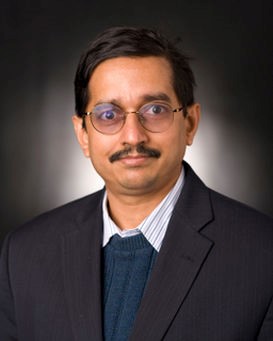
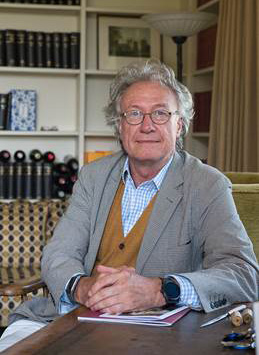
Daniel Moran is a Professor at Washington University in St. Louis since 2001, specializing in neuroprosthetics and brain-computer interfaces through the Division of Biology & Biomedical Sciences. His research restores motor function in paralyzed patients by decoding neural signals for neuroprosthetic control. Education PhD, Arizona State University, 1994 BS, Milwaukee School of Engineering, 1989 His lab investigates voluntary upper limb motor control mechanisms and alternative neural signal pathways for brain-computer interfaces. This work directly enables technologies like the FDA-approved IpsiHand, which translates ipsilateral brain activity into hand movement for stroke patients. Scientific Awards National Academy of Inventors (2021) for 'highly prolific spirit of innovation' Moran co-developed the IpsiHand neuroprosthetic (FDA approved 2021) and leads an NIH-funded neurotech training program (2022) cultivating engineering solutions for neurological disorders. His prior neurophysiology research at the Neurosciences Institute in San Diego established foundational motor control principles.
Dante Mantini is a full professor at the KU Leuven , affiliated with the Faculty of Movement and Rehabilitation Sciences and the Department of Movement Sciences . He serves as the department chair and leads the Movement Control & Neuroplasticity Research Group , while also holding interim leadership at the Bakala Athletic Performance Facility. Research focuses on neural engineering , neuroinformatics , and neuroscience , particularly brain-muscle interactions, movement-related neural dynamics, and neuroprosthetic development. Active projects include multimodal studies on stroke recovery , gait impairments , sleep's impact on motor performance , and neuroprosthetic device fabrication via advanced printing techniques. He contributes to European College of Sport Science and collaborates internationally, notably with Italy's G.D’Annunzio University on brain imaging in athletes. Teaching responsibilities include Research Topics in Motor Control , Advanced Medical Imaging , and Master’s thesis guidance in human movement sciences. His work is funded by the Bijzonder Onderzoeksfonds (BOF), with a sabbatical focused on expanding mobile EEG applications for dynamic movement studies.
Vijaykrishnan Narayanan is a Professor at the College of Engineering , Pennsylvania State University, with affiliations in both Computer Science & Engineering and Electrical Engineering departments. He co-directs the Microsystems Design Lab and leads the Architecture, Benchmarking, and Circuits Thrust at the DARPA/SRC LEAST Center. Education : Bachelors (1993) from University of Madras; Ph.D. (1998) from University of South Florida His research focuses on Power Aware Computing , Computer Architecture , Embedded Systems , and Emerging Device Integration . Recent work explores steep-slope devices for energy efficiency, nonvolatile processors for ambient energy harvesting, and neuromorphic architectures using hybrid VO₂-MOSFET oscillators. Key article trends span post-CMOS technologies (tunnel FETs, VO₂ devices), low-power design , and bio-inspired signal processing . Scientific Awards : IEEE Fellow, ACM Fellow, IEEE Transactions on VLSI Best Paper, IEEE Micro Best Paper Patents : Dynamically-configurable hardware architecture for audience analytics
Professor Marco Prinz serves as Principal Investigator leading the Innate Immunity research group at the Institute of Neuropathology, University of Freiburg Faculty of Medicine. His laboratory investigates the critical role of brain-specific innate immune cells, particularly microglia, in neurological health and disease. Dr. Prinz's research focuses on understanding how microglia—the brain's resident macrophages—contribute to both protective and pathological processes in the central nervous system. His work examines microglial function in neuroinflammation, neurodegeneration, and autoimmune conditions like multiple sclerosis using advanced mouse models including EAE and cuprizone models. A significant portion of his recent research employs single-cell analysis techniques to characterize the heterogeneity of microglial cells in various disease states, particularly in chronic active lesions and paramagnetic rim lesions in MS patients. The laboratory has made important contributions to understanding microglial development, showing how these cells emerge from specific precursors and establish themselves in defined niches within the CNS. Their work has revealed how microglia act as both guardians and potential contributors to neurological damage, with implications for Alzheimer's disease, Parkinson's disease, and multiple sclerosis. Dr. Prinz's research team includes multiple postdoctoral researchers, PhD students, and technical staff who contribute to ongoing investigations into CNS immunity. His laboratory has pioneered techniques for studying microglia, including novel genetic tools and single-cell analysis approaches that have provided unprecedented insights into the cellular composition of brain lesions and the dynamic behavior of immune cells in neurological disorders.
Ayaka Sugawara serves as Associate Professor at Waseda University's Faculty of Science and Engineering, School of Creative Science and Engineering, with concurrent affiliation at the Global Education Center and Waseda Research Institute for Science and Engineering (2024-2026). Her academic journey includes positions at Mie University (2015-2019) and multiple research appointments. BA (2008) and MA (2010) from The University of Tokyo PhD in Linguistics (2016) from Massachusetts Institute of Technology Dr. Sugawara's research spans formal semantics, pragmatics, and language acquisition with specific focus on quantifier scope interpretation , focus particles , Japanese dialectology , and second language processing . Her experimental work combines cross-linguistic comparison (Japanese/English/German/Persian), neuroimaging techniques (MEG/EEG), and computational approaches to vocabulary assessment. Current investigations examine early English education's impact on first language acquisition and non-literal language processing. Her publication trends reveal consistent interdisciplinary work bridging theoretical linguistics with educational applications, particularly in automated language assessment tools and experimental validation of semantic theories across developmental stages. Recent work demonstrates increasing collaboration with computational linguists and educational technologists. Dr. Sugawara actively contributes to the academic community through: Standing Committee membership in The Linguistics Society of Japan (2021-present) Professional affiliations with Linguistic Society of America and The Japanese Society for Language Studies Her research projects include multiple Japan Society for the Promotion of Science grants examining: Early English education effects on L1 acquisition (2021-2024) Question-under-Discussion mechanisms in ambiguous sentences (2019-2021) Cross-linguistic 'only' comprehension studies (2016-2018) Current internal projects investigate non-literal language processing and pragmatics in L1/L2 acquisition contexts.
Dr. Avinash Singh is a Senior Lecturer at the School of Computer Science at the University of Technology Sydney (UTS), Australia. He serves as co-chair of the IEEE Neuroethics Framework for the Workplace, sponsored by IEEE Brain, and is a member of the IEEE Standards Committee on Unifying Brain-Computer Interfaces (BCI). He also serves as an expert advisor for UNICEF and The Centre of Neurotechnology and Law, UK. Dr. Singh completed his PhD in Computer Science in 2019 at UTS, collaborating with the Technical University of Berlin, Germany, the University of California San Diego, USA, and the US Army Research Lab. Prior to his doctorate, he earned a Master's in Software Systems from Birla Institute of Technology and Science Pilani, India, and earlier degrees in Computer Science and Mathematics from Indian institutions. Working at the intersection of machine learning, cognitive neuroscience, and mixed-reality, Dr. Singh focuses on designing and developing real-world neuroadaptive BCI systems. His research integrates AI technologies with cognitive neuroscience to explore cognitive functions, discover relationships between brain dynamics, evaluate everyday interactions, and develop robust next-generation neuroadaptive BCIs. His work spans areas including neuroadaptive BCI applications for improving interpersonal communication, sensory augmentation for blind individuals, and dream reconstruction from brain signals. Analysis of Dr. Singh's recent publications reveals a consistent focus on developing novel EEG signal processing techniques, creating neuroadaptive interfaces, and applying BCI technology to real-world problems. His work shows increasing integration of deep learning with neuroscience, particularly in the context of cognitive conflict detection, spatial navigation, and assistive technologies for the visually impaired. The research demonstrates strong interdisciplinary connections across computer science, neuroscience, and human-computer interaction. Google TensorFlow Faculty Award (2021) Dr. Singh actively supervises PhD students and has received multiple research grants, including ARC Linkage Projects and NHMRC Ideas Grants. His funded research spans neuro-AI for personalized image generation, sensory augmentation for blind individuals, and ethical frameworks for BCI technology. He leads the UTSxDream Recording project (formerly DreamMachine) and collaborates with international institutions on BCI standardization efforts. Dr. Singh founded the India Future Society, a think tank focused on transhumanism, and actively advocates for the ethical development of neurotechnology. His work bridges academic research with practical applications in assistive technology, human-robot collaboration, and spatial navigation systems.
Lars Oestreicher is a Senior Lecturer at the Department of Information Technology at Uppsala University. He holds a Dr. Tech. degree and has been recognized as an Excellent teacher. His work focuses on Human-Computer Interaction with particular emphasis on accessibility and inclusive design. His research interests include disability research, non-excluding design, universal design, usability, user interface programming, and the relationship between AI and art. Notably, he led the MUMIn project (Maximal Expression - Minimal Interaction) at Årsta special needs school in Uppsala, which created conditions for children to actively play music through the use of IT. This project exemplifies his commitment to using technology to empower individuals with special needs. Oestreicher teaches Interface Programming 1 and 2, as well as the course Non-Exclusive Design which focuses on disabilities. His recent publications show a strong trend toward AI ethics, cultural competence in digital systems, cognitive aspects of human-computer interaction, and assistive technologies. His work often bridges the gap between technical systems and human needs, particularly for vulnerable populations. His scholarly output demonstrates consistent quality and relevance over several decades. His most impactful recent works address critical questions about AI ethics in human contexts, cultural competence in image analysis, and the future of assistive technologies. Oestreicher's research methodology consistently emphasizes user participation and co-learning, reflecting his commitment to designing technology that genuinely serves user needs rather than imposing technological solutions on users. What is the problem to which AI chatbots are the solution? (2024) explores AI ethics through philosophical frameworks From Visual Forms to Metaphors (2022) targets cultural competence in image analysis Cognitive Chunks as Neural Activity (2019) investigates the relationship between thought and neural activity Future assistive devices (2019) examines implications of emerging assistive technologies Oestreicher maintains an active presence in the academic community with publications spanning several decades. His work shows consistent focus on human-centered computing with particular attention to inclusive design principles. He also maintains a blog on Medium under the handle @Moomindad where he discusses various topics that interest him and has garnered attention across multiple platforms including news outlets, blog posts, patents, and Wikipedia pages.
Pradeep U. Kurup is a Distinguished University Professor in the Department of Civil and Environmental Engineering at the Francis College of Engineering, University of Massachusetts Lowell. He has been serving at UMass Lowell since 1997, progressing from Assistant Professor to Associate Professor (2001), Full Professor (2005), and ultimately to University Professor (2014), which is the highest faculty honor at UMass Lowell. Dr. Kurup's educational background includes: Ph.D. in Civil and Environmental Engineering (1993) from Louisiana State University M.Tech. in Civil Engineering (1987) from Indian Institute of Technology - Madras, India B.Tech. in Civil Engineering (1985) from University of Kerala, India Dr. Kurup's research focuses on the intersection of geotechnical engineering and advanced sensing technologies. His work spans multi-sensor data fusion for site characterization, novel sensing technology applications, finite element modeling, artificial neural networks for soil mechanics, calibration chamber testing, soil-structure interaction, and "Seeing-Ahead Techniques" for trenchless technologies. His recent publications demonstrate a strong trend toward integrating machine learning techniques with geotechnical instrumentation, particularly in developing electronic noses and tongues for environmental monitoring and contamination detection. Dr. Kurup has received numerous awards and honors, including University Professor (2014), Diplomat Geotechnical Engineering (2012), NSF CAREER Award (1999-2003), and CERF Career Development Award (1999). Dr. Kurup has secured substantial research funding from NSF, Federal Highway Administration, EPA, and U.S. Army Research Office. His research collaborations span academia, industry, and government agencies globally, including partnerships with Geoprobe Systems Inc., Fugro Engineers Inc., Norwegian Geotechnical Institute, and several international universities. Dr. Kurup leads research in innovative sensing technologies for geoenvironmental applications, including electronic noses for detecting hazardous chemicals and explosives, electronic tongues for heavy metal detection, and advanced cone penetrometer systems for subsurface characterization.
Ryoma Hattori is an Assistant Professor at the University of Florida, based at the UF Scripps Biomedical Research campus in Jupiter, FL. His laboratory, the Hattori Lab, focuses on neural mechanisms underlying cognitive functions, learning, and their disruption in autism. Dr. Hattori received his educational degrees from prestigious institutions: Ph.D. in Molecular and Cellular Biology from Harvard University (2016) A.M. in Molecular and Cellular Biology from Harvard University (2012) B.S. in Biophysics and Biochemistry from the University of Tokyo (2010) His research interests center on decision making, reinforcement learning, and number sense, using systems and computational approaches. The lab employs techniques such as in vivo 2-photon imaging, optogenetics, virtual reality behaviors, and machine learning to investigate neural activity and plasticity dynamics in mice. A significant focus is understanding how these processes are impaired in autism spectrum disorder. Analysis of his recent publications reveals a strong emphasis on computational neuroscience and neural circuit mechanisms. His work spans from developing advanced imaging and analysis tools to uncovering fundamental principles of value coding and meta-reinforcement learning, with applications in both basic neuroscience and artificial intelligence. Dr. Hattori has received numerous scientific awards, including: Outstanding Mentor Award 2025 from Society of Research Fellows, UF Scripps SFARI Bridge-to-Independence Award 2022-Current from Simons Foundation Warren Alpert Distinguished Scholar Award 2021-2024 from Warren Alpert Foundation Postdoctoral Grant Award 2021-2022 from The KANAE Foundation And several fellowships during his postdoctoral and graduate training. As a principal investigator, Dr. Hattori leads multiple active grants, including the Shenoy Undergraduate Research Fellowship in Neuroscience (2025-2026) and a project on "Neural activity and plasticity dynamics for reinforcement learning in autism" funded by the Simons Foundation. His mentorship has been recognized with the Outstanding Mentor Award. The Hattori Lab is a dynamic research group utilizing cutting-edge technologies to explore the neural basis of cognition, with a particular interest in translational implications for autism and related disorders.
Terry D. Johnson is Senior Instructional Professor and Program Director for the Master of Engineering at the University of Chicago's Pritzker School of Molecular Engineering. He holds an MS in Chemical Engineering from MIT and is an emeritus Teaching Professor from UC Berkeley, where he co-founded the Masters of Translational Medicine program. Research integrates engineering and biomedicine, with patented innovations in tissue engineering and synthetic biology. Recent work develops sustainable textile dyeing technologies eliminating toxic reductants. Earlier projects include microfluidic hepatocyte cultures and EGF-functionalized biomaterials. Awards: Golden Apple Award for Outstanding Teaching (UC Berkeley 2010) Distinguished Teaching Award (UC Berkeley 2013) Co-authored the popular science book How to Defeat Your Own Clone . Teaches molecular engineering courses and directs master's programs bridging technical innovation and medical translation.
Anna Huang is an Assistant Professor at the Massachusetts Institute of Technology (MIT), affiliated with the PI Core/Dual program. Her research focuses on AI-driven music technologies, including human-AI collaboration, generative music models, and interactive creative tools. She specializes in developing frameworks for real-time music jamming, adaptive accompaniment systems, and novice-friendly AI co-creation platforms. Huang has contributed to projects like the Bach Doodle and the AI Song Contest , demonstrating scalable applications of machine learning in music composition. Her work bridges computer science and musicology, with a particular emphasis on cross-cultural music generation (e.g., Hindustani classical music modeling) and expressive control mechanisms for generative systems. Key areas include MIDI signal processing, source separation algorithms, and the design of user interfaces that empower both professionals and novices to co-create with AI. Huang’s publications emphasize interdisciplinary innovation, with trends spanning reinforcement learning for music performance, hierarchical generative modeling, and ethical considerations in AI-assisted creativity. Though no awards are explicitly listed, her impactful projects suggest recognition in computational music research. Her research also involves dataset development (e.g., MAESTRO dataset) and open-source tools like Coconet, fostering reproducibility and community engagement in music technology.
Laura Rijns is a Postdoctoral Fellow at Stanford University co-advised by Professors Zhenan Bao and Karl Deisseroth, developing innovative (opto)genetic, electrical, and chemical tools for neural modulation in vitro and in vivo. Her work bridges biomaterials engineering with neuroscience to create next-generation platforms for cellular and tissue engineering. Education PhD in Biomedical Engineering, cum laude (2023), Eindhoven University of Technology (TU/e), Netherlands, under Professors Patricia Dankers and E.W. (Bert) Meijer, focusing on supramolecular hydrogels as extracellular matrix mimics for organoid development. MSc in Biomedical Engineering (2019), Eindhoven University of Technology (TU/e), researching supramolecular assemblies in Professor Meijer's laboratory. BSc in Biomedical Engineering (2017), Eindhoven University of Technology (TU/e). Her research centers on designing dynamic supramolecular hydrogels that replicate extracellular matrix complexity to control cellular behavior. Key interests include tunable mechanical properties for mechanobiology studies, ligand presentation strategies for directing cell polarity, and engineering biomaterials for renal organoid development and neural interfaces. She integrates principles from polymer chemistry, cell biology, and bioengineering to create responsive platforms that bridge synthetic materials with biological systems, with particular emphasis on translating fundamental material properties into functional tissue engineering outcomes. Analysis of her 15 most recent publications (2021-2024) reveals a cohesive research trajectory focused on supramolecular hydrogels for tissue engineering. Dominant themes include stress-stiffening mechanics, cell-adhesive motif engineering, and dynamic control of hydrogel-cell interactions. Her work demonstrates consistent innovation in renal tissue models (glomerulogenesis, tubulogenesis) and neural applications, with increasing sophistication in material design—from basic supramolecular polymers to multi-dynamic systems that mimic extracellular complexity. This progression highlights her unique interdisciplinary approach combining biomaterials science with regenerative medicine. No scientific awards were documented in the provided materials. Laura has no listed advisees or grant funding in the available information. She operates within Stanford's collaborative ecosystem, leveraging resources from both Professor Bao's chemical engineering lab (focusing on biomaterials and electronics) and Professor Deisseroth's neuroengineering group (pioneering optogenetics), creating a powerful synergy for developing neural modulation tools.
David Paterson is Professor of Physiology and Head of the Department of Physiology, Anatomy & Genetics at the University of Oxford, a role he has held since 2016. He is also a Fellow of Merton College, Oxford, and has served in key administrative positions including Deputy Head (Vice Dean) of the Division of Medical Sciences (2008–2016). His leadership spans strategic planning and education policy, contributing to Oxford’s global ranking in Anatomy & Physiology. Paterson’s research focuses on cardiorespiratory control , autonomic neuroscience , and cardiac neurobiology . His Cardiac Neurobiology Research Group investigates neural regulation of the heart in health and disease, with emphasis on hypertension, arrhythmias, and neurocardiac signaling. Key themes include sympathetic neurotransmission, cyclic nucleotide pathways, and bioelectronic interventions for cardiovascular disorders. His recent publications (2020–2025) emphasize translational neurocardiology, exploring molecular mechanisms of sympathetic hyperactivity, stem cell-based disease models, and bioelectronic therapies. Articles consistently address autonomic dysregulation in hypertension, arrhythmia pathophysiology, and innovative diagnostic tools, reflecting interdisciplinary collaboration across physiology, neuroscience, and engineering. Major Awards & Honors: Honorary Doctorates (Otago, UWA), Fellowships (FRSB, FAPS, FPhysiol) Presidency of The Physiological Society (2020–2022) Carl Ludwig Distinguished Award, Brookhart Award Lecture Editorships: Journal of Physiology (2011–2016), Experimental Physiology (2006–2011) Paterson has supervised 27 doctoral students and secured ~£17M in funding, including a British Heart Foundation Centre of Excellence (£8.4M co-PI) and infrastructural grants for the Burdon Sanderson Cardiac Centre. His group leverages molecular, cellular, and whole-organ approaches to advance neurocardiac therapeutics.
Edwin Jager is a Professor and Head of Division for Sensor and Actuator Systems at the Department of Physics, Chemistry and Biology (IFM) at Linköping University. He holds a part-time visiting professor role at the University of Wollongong (2012–2020) and coordinates the MSCA-DN SOFTWEAR project. His research focuses on electroactive polymers, soft actuators, and textile-based technologies for biomedical and robotic applications. Education: M.Sc.Eng. (Applied Physics) from University of Twente (1996), PhD in Applied Physics from Linköping University (2001), and Docent (2014). He co-founded Micromuscle AB (later acquired by Creganna Medical) to commercialize polypyrrole actuator technology. Research interests include textile actuators, bionic systems, and soft microrobotics. Key projects involve EU-funded WEAFING (textile muscles) and collaboration with the Swedish School of Textiles. His work integrates materials science, robotics, and biomedicine to develop smart textiles and wearable exoskeletons. Awards include the JSPS fellowship (2015/2017) and leadership roles in EuroEAP. Recent advancements include glucose-powered actuators and textile-based haptic interfaces. Grants and collaborations span national (Erling-Persson Foundation) and EU funding (Horizon 2020/2024). His lab, Bionics and Transduction Science, pioneers innovations in responsive fabrics and biohybrid systems.
Athanasios Vourvopoulos is an Assistant Professor at the Department of Bioengineering, Instituto Superior Técnico (University of Lisbon). He leads research in Brain-Computer Interfaces (BCI), Virtual Reality (VR), and neurorehabilitation, focusing on applications for stroke recovery and neurological disorders. His work integrates EEG neurofeedback, neuromodulation, and embodied VR to enhance clinical outcomes. He teaches courses such as Fundamentals of Bioinstrumentation and Introduction to Biomedical Engineering. Research Interests Brain-Computer Interfaces Neurorehabilitation EEG Neurofeedback Neuromodulation techniques Human-Machine Interaction Assistive technologies His research emphasizes translating neurotechnologies into clinical settings, with studies on BCI-VR systems for motor recovery in stroke patients and EEG-based action anticipation in robotics. Recent work includes multimodal neuroimaging (EEG-fMRI) and open-source tools like NeuXus for real-time artifact reduction. Awards Early Career Investigator Award , International Society for Virtual Rehabilitation (ISVR, 2022) Diploma of Excellence in Teaching , Instituto Superior Técnico (IST, 2023) He collaborates with the Institute of Systems and Robotics (ISR-Lisbon) and has published extensively on BCI-VR integration, neuromodulation, and neurorehabilitation outcomes. His labs focus on developing embodied VR systems and BCI-driven therapies for motor impairment recovery.