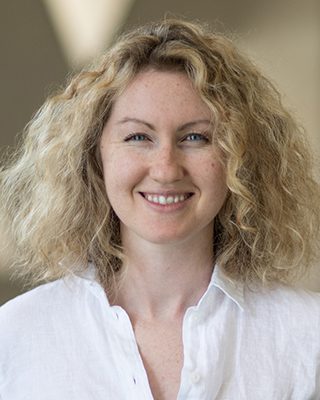
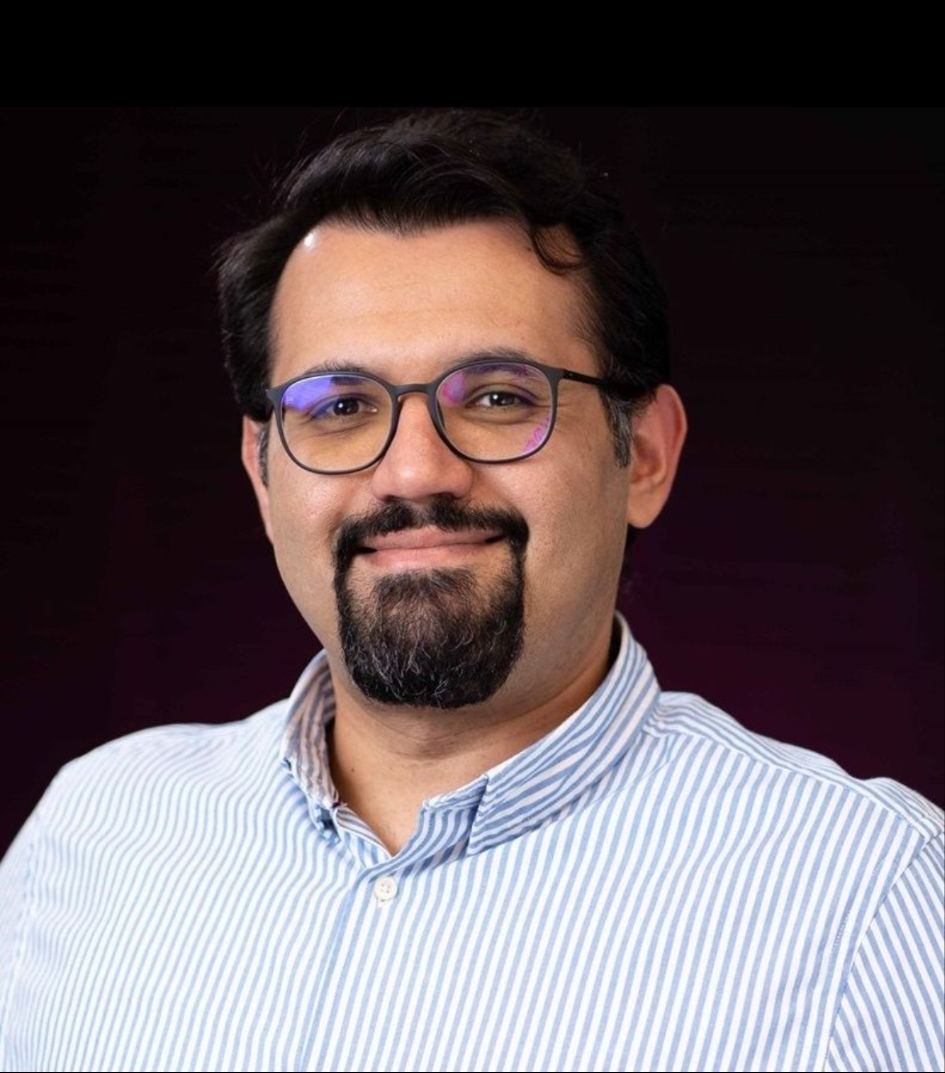
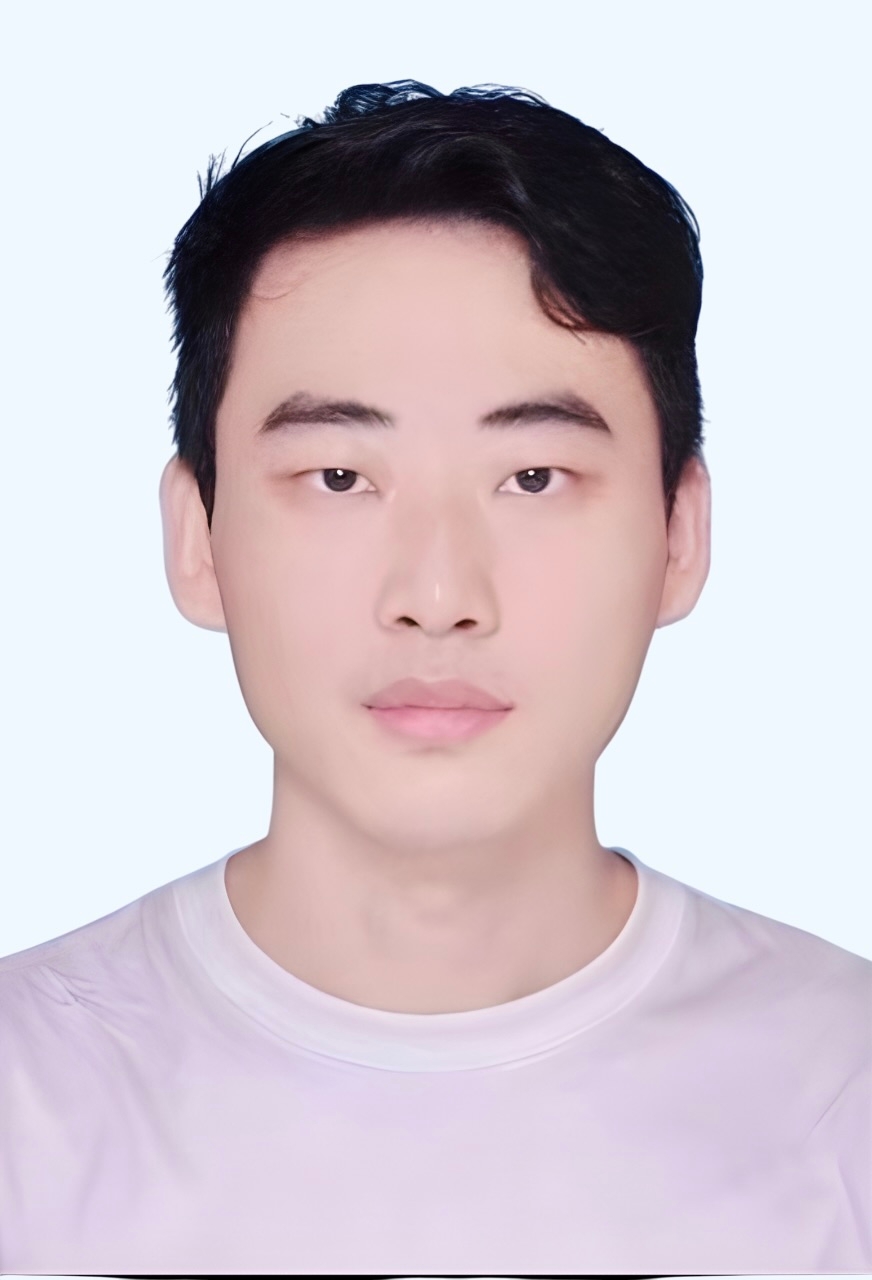
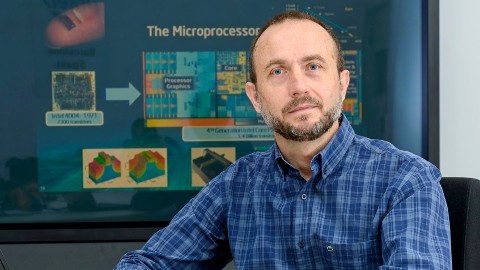
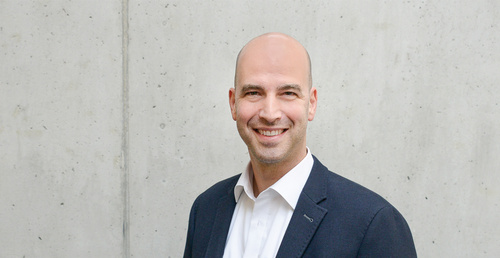
Prof. Justus Thies is Full Professor for 3D Graphics & Vision at the Technical University of Darmstadt and leads the Neural Capture & Synthesis research group at the Max Planck Institute for Intelligent Systems. His research develops AI methods to capture and synthesize the real world using commodity hardware, focusing on markerless motion capture of faces and bodies, and photorealistic neural rendering. His work has been recognized with the German Pattern Recognition Award, Eurographics Young Researcher Award, and an ERC Starting Grant (all 2024). Recent publications focus on Gaussian-based avatars, neural human reconstruction, and diffusion models for scene synthesis.
Prof. Marc Stamminger is a Professor of Visual Computing at FAU since 2002, leading the Chair of Computer Science 9 (Computer Graphics). His work focuses on algorithms for synthesizing and analyzing images through 3D modeling, LiDAR/Radar capture, and light simulation. He co-leads FAU Solar, applying 3D modeling for environmental lighting analysis under varying conditions. Stamminger has published over 250 papers, winning prestigious awards like the Siggraph Test-of-Time Award. He holds executive roles in Eurographics and is Vice Dean of FAU's Technical Faculty. Research interests span neural rendering , 3D reconstruction , radar imaging , and medical visualization . Recent work emphasizes radiance field rendering (e.g., VR-Splatting, INPC) and radar-based human motion tracking. His lab's FAU Solar project integrates large-scale 3D models with environmental lighting simulations. Publications trends highlight neural rendering optimizations , radar-MIMO systems , and agricultural digital twins . Key collaborations involve medical imaging (e.g., vocal fold reconstruction) and autonomous driving data generation. Awards: Siggraph Test-of-Time (2023?), 2× Siggraph Best-Of-Show Grants/Teams: FAU Solar Lab, Eurographics leadership, FAU Vice Dean Labs: Chair of Computer Science 9, FAU Solar Initiative
Soumya Dutta is an Assistant Professor in the Department of Computer Science and Engineering at the Indian Institute of Technology Kanpur (IITK), where he leads the INSIGHT: Intelligent Scientific and Visual Computing of Big Data Research Group. He joined IIT Kanpur in October 2022 after working as a Scientist II at Los Alamos National Laboratory (LANL) from July 2019 to August 2022, and previously as a Postdoctoral Research Associate at LANL from June 2018 to July 2019. His educational background includes a Ph.D. and M.S. in Computer Science and Engineering from The Ohio State University (2011-2018), where he was part of the GRAVITY research group, and a B.Tech. in Electronics and Communication Engineering from West Bengal University of Technology, India (2005-2009). Research Interests: Dr. Dutta's research focuses on the intersection of machine learning, visual computing, big data, and high-performance computing. His primary research areas include Machine Learning for Visual Computing and Image Analysis, Big Data Visualization and Analytics, Data Science and HPC, Machine Learning for Scientific Computing, and Explainability and Interpretability of AI Models. His work addresses various big data characteristics including the 5 Vs: Volume, Velocity, Variety, Veracity, and Value. He develops techniques that make complex machine learning models more interpretable and explainable, enabling their effective adoption in real-life applications across scientific domains, social media, IoT, healthcare, and industry applications. Dr. Dutta's research group has secured multiple funded projects including: DAVi: An Intelligent Data Analytics and Visualization Framework (funded by ISRO), Intelligent Visual Computing of Extreme-scale Data for Accelerating Scientific Discovery (IIT Kanpur Initiation Grant), Enabling Interactive Big Data Analytics and Visualization at Exascale (SERB), Development of AI-Enabled National Portal for Efficient Search of Missing People (C3iHub), and Proactive and Generalized Deepfake Defense Mechanisms (C3iHub). Best Reviewer, Honorary Mention Award for IEEE Transactions on Visualization & Computer Graphics (TVCG), 2021 Best Paper Award at ISAV 2021, co-located with Supercomputing (SC) LAAP Award at Los Alamos National Laboratory, 2021 Best Paper Award at TopoInVis 2019 Best Paper Award at ISAV 2018, co-located with Supercomputing (SC) Best Poster Award in 12th Annual CSE Student Poster Exhibition, The Ohio State University, 2018 Best Poster Award in 11th Annual CSE Student Poster Exhibition, The Ohio State University, 2017 Best Paper Honorable Mention Award at IEEE Visualization Conference (IEEE VIS) 2016 Dr. Dutta actively mentors a large group of students including Ph.D., M.Tech., and B.Tech. students. His current Ph.D. students include Shanu Saklani, Sankhadeep Bhowmick, Ananya Chaturvedi, Arpita Santra, Anubhav Dixit (co-supervised), and Robin Shah. He has supervised numerous M.Tech. students with thesis topics ranging from uncertainty-aware neural networks to deepfake detection. Dr. Dutta currently teaches courses including CS360 - Introduction to Computer Graphics and CS661 - Big Data Visual Analytics. The INSIGHT research group collaborates internationally with researchers from Meta, Oak Ridge National Laboratory, and National Taiwan Normal University. The group's work focuses on building machine learning and data science-based solutions to analyze large-scale multifaceted data in a scalable way, enabling interactive and interpretable analytics of complex data from scientific simulations, social media, IoT, healthcare, and other application domains.
Parastoo Abtahi is an Assistant Professor in the Computer Science Department at Princeton University. She leads the Situated Interactions Lab (Ψ Lab) as part of the Princeton HCI Group, focusing on AR/VR and spatial computing. Prior to Princeton, she worked at Meta Reality Labs Research. PhD in Computer Science from Stanford University BSc in Electrical and Computer Engineering from University of Toronto (Engineering Science program) Her research explores wearable interactive technologies that augment human intelligence in physical contexts through: Input on-the-go: Low-effort, privacy-preserving multimodal interfaces Intelligent output: Timely, minimal multisensory systems Situated AI: Personalizable, predictable, safe physical-digital interaction Recent publications analyze: Drone-based haptic illusions for AR/VR Microgestures for mobile AR input Interactivity in explainable AI systems Temporal dynamics in VR haptics Awards include: 2025 Google Research Scholar Award CHI 2019 & 2018 Honorable Mentions She teaches courses like: COS 436: Human-Computer Interaction COS IW: AR Meets AI
Chita R. Das is a Professor at Pennsylvania State University, known for extensive contributions in computer architecture, machine learning, and high-performance computing. Their research focuses on optimizing hardware-software co-design for edge computing, cloud infrastructure, and energy-efficient systems. Key areas include FPGA acceleration, GPU optimization, and serverless computing frameworks. Das collaborates frequently with institutions like AMD and Intel, addressing challenges in parallel computing and distributed systems. Their work bridges theoretical advancements with practical applications in recommendation systems, bioinformatics, and real-time video processing. Research interests span across hardware acceleration techniques, cloud resource management, and sustainable computing. Notable projects include adaptive training frameworks for intermittent power environments and neural-augmented game streaming for mobile platforms. Das's publications often address performance bottlenecks in modern architectures and propose novel solutions for latency and energy efficiency. Recent articles highlight innovations in serverless computing cost optimization, low-bandwidth VR streaming, and FPGA-based bioinformatics tools. Their contributions are characterized by interdisciplinary approaches combining computer architecture with machine learning and embedded systems.
Giorgio Grisetti is a Full Professor at Sapienza University of Rome within the Department of Systems and Computer Science, maintaining active research roles in the RoCoCo lab at Sapienza since November 2010 and the Autonomous Intelligent Systems Lab at Freiburg University where he previously served as a Post Doc under Wolfram Burgard starting in 2006. His educational background includes a M.Sc. in Computer Engineering from the University of Rome (2001) and a Ph.D. from Sapienza University of Rome's Intelligent Systems Lab (2006), supervised by Daniele Nardi. His doctoral thesis focused on SLAM using Rao-Blackwellized particle filters. Dr. Grisetti's research centers on mobile robotics with emphasis on robust solutions for autonomous navigation systems. His work spans theoretical and practical advancements in Simultaneous Localization and Mapping (SLAM), robot localization, path planning, and sensor fusion, particularly leveraging LiDAR and multi-sensor configurations. Recent publications demonstrate strong focus on optimization techniques, sensor calibration, and real-time performance for autonomous systems operating in complex environments. His publication trends reveal deep specialization in LiDAR-based SLAM (7 of 15 recent articles), bundle adjustment methods (4 articles), and sensor calibration/perception (3 articles), with consistent contributions to top robotics venues like IEEE Robotics and Automation Letters and ICRA. Key recognitions include: Nomination for the best IROS paper award (2010) Open Source achievement award from Willow Garage (2010) Best paper award at the International Conference and Exhibition on Unmanned Areal Vehicles (2010) Best Paper award at ICRA 2009 (2009) His research is conducted through the RoCoCo lab at Sapienza University of Rome and the Autonomous Intelligent Systems Lab at Freiburg University, focusing on developing foundational algorithms for mobile robot autonomy. Current projects emphasize robust perception systems, optimization frameworks for sensor fusion, and practical implementations for real-world navigation challenges.
Ira Kemelmacher-Shlizerman is a Full Professor of Computer Science at the Paul G. Allen School of Computer Science & Engineering at the University of Washington and Director of the UW Reality Lab. She also serves as a Principal Scientist at Google, where she leads the Shopping Gen AI visuals teams focusing on Virtual Try-On, 3D, and product videos. Her research spans computer vision, computer graphics, and Generative AI, with particular contributions to virtual try-on technology, 3D modeling, and augmented reality applications. Professor Kemelmacher-Shlizerman's research interests focus on Generative AI applications in visual computing. Her work bridges the gap between theoretical computer vision and practical applications, particularly in e-commerce and virtual reality. She has made significant contributions to virtual try-on technology, 3D editing with generative models, and AI applications for shopping experiences. Her research combines deep learning with traditional computer vision techniques to solve challenging problems in image and video synthesis. Her recent publications demonstrate a strong trend toward Generative AI applications for visual shopping experiences, virtual try-on technology, and 3D content creation. The work spans multiple top conferences including CVPR, SIGGRAPH, and ICCV, with a focus on practical applications of computer vision and graphics. Her research has evolved from foundational work in face reconstruction and aging to current applications in virtual shopping and 3D content generation. Google faculty award Madrona prize GeekWire Innovation of the Year Award Covers of CACM and SIGGRAPH Best student paper honorable mention at CVPR'21 Best demo runner up MobiSys'22 Senior member of IEEE Distinguished Member of ACM Professor Kemelmacher-Shlizerman has successfully tech-transferred multiple research projects to industry. She founded Dreambit, a startup acquired by Meta, and previously built and launched the Face Movies feature at Google. She currently leads Google's Shopping Gen AI visuals teams, focusing on 10x improvements to shopping journeys. Her UW Reality Lab serves as a hub for AR/VR research with industry partnerships. She has mentored numerous PhD students who have become researchers in both academia and industry, with several publications featuring student co-authors receiving recognition at top conferences. Professor Kemelmacher-Shlizerman leads the Graphics and Imaging Laboratory (GRAIL) and the UW Reality Lab, which focuses on augmented and virtual reality research with industry partnerships including Google. The labs work on cutting-edge projects in virtual try-on, 3D modeling, and immersive experiences, bridging academic research with real-world applications.
Michael J. Black is a Professor and Director at the Max Planck Institute for Intelligent Systems in Tübingen, Germany, where he leads the Perceiving Systems department and serves as Managing Director . He is also an Honorarprofessor at the University of Tübingen 's Faculty of Science . His career spans roles at Brown University (2000-2010), Xerox PARC, and academic-industry collaborations with Amazon and Meshcapade.
Dr. Ehsan Abbasnejad is an Associate Professor at Monash University's Department of Data Science and Artificial Intelligence, and holds adjunct positions at the Australian Institute for Machine Learning (AIML, University of Adelaide) and the Centre for Augmented Reasoning (CAR). He specializes in foundational AI, focusing on vision-language tasks, adversarial machine learning, and reinforcement learning. His work bridges theory with real-world applications in agriculture, energy, healthcare, and sports. Education: PhD in Computer Science from Australian National University (ANU). Research Interests: Machine Learning Theory and Adversarial Defenses Neural Network Robustness and Generalization Multimodal Learning (Vision-Language) Continual and Transfer Learning Applications in Energy, Healthcare, and Robotics Awards: Finalist for Australian AI Academic/Researcher of the Year (2024) Multidisciplinary competition wins (e.g., OzMineral Explorer Challenge) Advising & Grants: Australian Research Council (ARC) Discovery Project on Reinforcement Learning CSIRO's Next Generation Graduate Fund Accepting PhD students in foundational AI and applications Labs & Teams: Director of Foundational Machine Learning & Reasoning at Monash, leading global teams in AI competitions and industry collaborations (Microsoft Research, NEC Labs America).
Xiaoxiao Long is a Tenure-Track Associate Professor at the School of Intelligence Science and Technology, Nanjing University. He joined NJU as an associate professor in February 2024. Previously, he earned his Ph.D. from the University of Hong Kong (HKU) under the supervision of Prof. Wenping Wang (IEEE & ACM Fellow) and Prof. Taku Komura. His educational background includes: Ph.D. in Computer Science from University of Hong Kong Bachelor's degree in Control Science & Engineering from Zhejiang University Dr. Long's research focuses on computer graphics and 3D computer vision, with particular emphasis on 3D Vision, Physical AI, and World Models. His long-term goal is to develop General-Purpose AI with spatial capabilities. His work bridges theoretical understanding of 3D spaces with practical implementations of spatial AI systems, with applications spanning robotics, virtual reality, and augmented environments. He employs innovative neural network approaches and geometric constraints to advance 3D scene understanding and reconstruction. His publication record shows strong momentum with multiple papers accepted to top-tier conferences including CVPR (5 papers in 2025 alone), ICML, ICLR, ECCV, and TPAMI. His research demonstrates a clear progression from foundational geometric estimation techniques (ASN++) toward more comprehensive spatial AI systems. His scientific recognition includes: Excellent Young Scholars Fund (Overseas) from NSFC Dr. Long has successfully mentored numerous students who have published at major venues and gone on to pursue advanced degrees at prestigious institutions including USTC, Beihang University, HKU, UCAS, Virginia Tech, and HKUST. He is currently recruiting Ph.D. and master's students for Fall 2026, seeking candidates interested in pushing the boundaries of 3D computer vision and spatial AI. His laboratory focuses on developing advanced techniques for 3D scene understanding, neural rendering, and physical AI. Current projects span Gaussian-based representations, neural radiance fields, and geometric estimation, with applications in robotics, virtual environments, and spatial reasoning systems.
Matthew B. Blaschko is a Professor in the Department of Electrical Engineering at KU Leuven, Belgium. He serves as director of the KU Leuven ELLIS unit and is a fellow in the ELLIS Health program. He is a Core PI in the Flanders AI Research Program, working as a workpackage lead for Decision Support Systems and Medical Imaging. Blaschko is also a member of the KU Leuven Institute for Artificial Intelligence and one of the leaders of the working group on Machine Learning and Data Science. Professor Blaschko received his B.S. from Columbia University, M.S. from the University of Massachusetts Amherst, and Dr. rer. nat. from Technische Universität Berlin (awarded for work at Max Planck Institutes Tübingen). He was a Newton International Fellow at the University of Oxford and received his Habilitation (HDR) from École Normale Supérieure de Cachan. Prior to joining KU Leuven, he was a Permanent Research Scientist in the INRIA Saclay Research Center and a Faculty Member at Ecole Centrale Paris. His research focuses on machine learning techniques applied to visual data, with particular emphasis on calibration in deep learning, medical image analysis, and federated learning. Blaschko's work bridges theoretical foundations with practical applications, as evidenced by technology developed in his research being incorporated into MONA, software for ophthalmic image analysis. His research group has made significant contributions to the fields of model calibration, uncertainty estimation, and medical imaging analysis, with recent publications showing strong trends toward improving reliability of AI systems in medical contexts and advancing theoretical understanding of calibration metrics. Professor Blaschko has been recognized with several awards including the Université Paris-Saclay STIC Doctoral School Best Scientific Contribution Award, Best Paper Award at CVPR 2008, Main Award at DAGM 2008, and Best Student Paper Award at ECCV 2008. Professor Blaschko has supervised numerous PhD and Master's students, with current and former students including Deniz Soysal, Claire Marchal, Dongli Xu, Sebastian Gruber, Jiameng Li, Marco Mezzina, and many others working on diverse topics from Alzheimer's disease analysis to surgical phase recognition. His research has been supported by various funding sources including the Flanders AI Research Program. He has co-organized several influential workshops including the "Another Brick in the AI Wall: Building Practical Solutions from Theoretical Foundations" at CVPR 2025, Commands 4 Autonomous Vehicles workshop at ECCV 2020, and the Learning from Limited Labeled Data workshop series at NIPS 2017 and ICLR 2019. His laboratory focuses on machine learning for medical image analysis, with applications in ophthalmology, neurology, and surgical robotics. The group maintains active collaborations with medical institutions and participates in international challenges such as the KNee OsteoArthritis Prediction (KNOAP2020) challenge.
Antonio González is a full Professor at the Barcelona School of Informatics (FIB), Universitat Politècnica de Catalunya (UPC), where he is affiliated with the Department of Computer Architecture. He leads the Microarchitecture and Compilers (ARCO) research group, focusing on robust and energy-efficient computing systems, including general-purpose processors, GPUs, and cognitive computing architectures. His research spans computer architecture, microarchitecture, compilers, GPU design, and deep learning acceleration, with a strong emphasis on energy efficiency and memory optimization. His work integrates hardware and compiler techniques to enhance performance in modern computing systems. The recent publications highlight a strong trend in energy-efficient DNN acceleration, GPU microarchitecture, memory systems, and near-data processing. His team explores novel quantization methods, adaptive caching, and architectural extensions for vision and AI workloads, published in top-tier venues such as MICRO, ISCA, and IEEE/ACM journals. ACM Fellow (2020) ICREA Academia Award (2014, 2019, 2024) UPC Duran Farell Award (2008) HiPEAC 2024 Paper Award (twice) González has supervised several PhD students and leads competitive R&D+i projects, including those funded by ICREA and the European Research Council. His research group collaborates extensively within UPC and with international institutions. He is actively involved in advancing computer architecture through innovation in simulation, hardware design, and AI acceleration. He is a member of IEEE and ACM, and his work continues to influence both academic and industrial developments in high-performance and energy-efficient computing.
Manuel Kaufmann is a Lecturer in the Department of Computer Science at ETH Zürich. His work focuses on advanced 3D human motion capture, sensor-based systems, and computer vision applications. He is affiliated with the Institute of Informatics (inf.ethz.ch) and contributes to research in real-time motion tracking, dataset development, and machine learning integration for human-robot interaction. Research interests include holistic human-scene reconstruction from monocular videos, gaze estimation using EEG signals, and expressive avatar creation. His projects emphasize practical applications in robotics, sports analytics, and biomedical engineering, often leveraging electromagnetic and inertial sensors for high-precision data acquisition. His publications reflect a trend toward multi-modal data fusion, real-world dataset creation (e.g., WorldPose, ARCTIC), and addressing challenges in loose garment modeling (Reloo). These efforts aim to improve markerless motion capture, crowd analysis, and human-robot collaboration. No scientific awards or grants are explicitly listed. He has no documented advisees, though his research may involve collaborations with students or teams. His office is located at OAT X 23, Andreasstrasse 5, Zürich, Switzerland, and contact details include a phone number and professional email.
Dr. Heather Culbertson is an Assistant Professor in the Department of Computer Science at the University of Southern California, leading the HaRVI (Haptics Robotics and Virtual Interaction) Laboratory. Her research focuses on designing haptic hardware and algorithms to create intuitive human-robot interactions through touch, emphasizing realism in virtual environments and social connectedness. Key areas include mediated touch, wearable haptic systems, and multisensory integration in VR/AR applications. The lab's work spans robotics, human perception modeling, and cross-disciplinary solutions for healthcare and immersive technologies. Research interests revolve around tactile feedback systems, social robotics, and the psychological impact of haptic interfaces. Recent work explores real-time haptic texture rendering, affective communication via touch, and motion platforms for VR. Culbertson's projects often integrate human factors early in design to ensure usability and immersion. Publications highlight advancements in haptics coding standards, drone-human interaction, and emotion regulation systems. Her contributions bridge engineering and cognitive sciences, addressing challenges in wearable tech, surgical training simulations, and assistive robotics. The HaRVI Lab collaborates across disciplines to advance tactile interfaces for virtual reality, social robotics, and medical applications.
Hiroshi Ishikawa is a Professor in the Department of Computer Science and Engineering at Waseda University's Faculty of Science and Engineering. He also serves as a Visiting Professor at the National Institute of Informatics since 2016. Previously, he held positions at Nagoya City University from 2004-2010 as Assistant Professor, Associate Professor, and Professor. His academic journey includes being a JST PRESTO Researcher from 2009-2013 and an Associate Research Scientist at New York University's Courant Institute of Mathematical Sciences from 2000-2001. Ph.D. in Computer Science, New York University (2000) Master of Science, Kyoto University Bachelor's degree in Mathematics, Kyoto University Faculty of Science (1991) Hiroshi Ishikawa's research spans perceptual information processing, computer vision, artificial intelligence, deep learning, and discrete optimization. His work focuses on developing algorithms for image restoration, segmentation, and understanding, with significant contributions to energy minimization techniques in computer vision. He has pioneered approaches in sketch simplification, medical image segmentation, and higher-order graph cuts. His research bridges theoretical advances in mathematical optimization with practical applications in medical imaging, computer graphics, and consumer electronics. Ishikawa's recent publications demonstrate a strong focus on leveraging deep learning for image enhancement and understanding. His work spans super-resolution techniques, colorization methods, human avatar generation, and medical image analysis. A notable trend is the increasing integration of attention mechanisms and generative models to solve complex vision problems, with growing emphasis on real-world applications in medical imaging and computer graphics. His research group consistently produces high-impact work that appears in top-tier computer vision conferences. 75th Annual IEICE Best Paper Award (2019) Innovative Technologies 2016 Special Prize for Culture (Ministry of Economy, Trade and Industry) MIRU Nagao Award (Best Paper Award) (2009) Young Author Award (IEEE Computer Society Japan Chapter, 2006) MIRU2006 Excellent Paper Award (2006) Harold Grad Memorial Prize (Courant Institute of Mathematical Sciences, NYU, 2000) As a professor at Waseda University, Ishikawa has mentored numerous students who have become active researchers in computer vision, including Yuya Masuda, Edgar Simo-Serra, and Satoshi Iizuka. His research has been supported by various grants, including JST PRESTO funding from 2009-2013. He has served on editorial boards for prestigious journals including IEEE Transactions on Pattern Analysis and Machine Intelligence and has held leadership roles in major computer vision conferences such as ICCV, CVPR, and ACCV. Ishikawa leads a vibrant research group at Waseda University focused on computer vision and image processing. His laboratory collaborates extensively with researchers at Nagoya City University, National Institute of Informatics, and international institutions. The group maintains strong connections with industry partners, particularly in medical imaging and consumer electronics sectors, translating theoretical advances into practical applications.