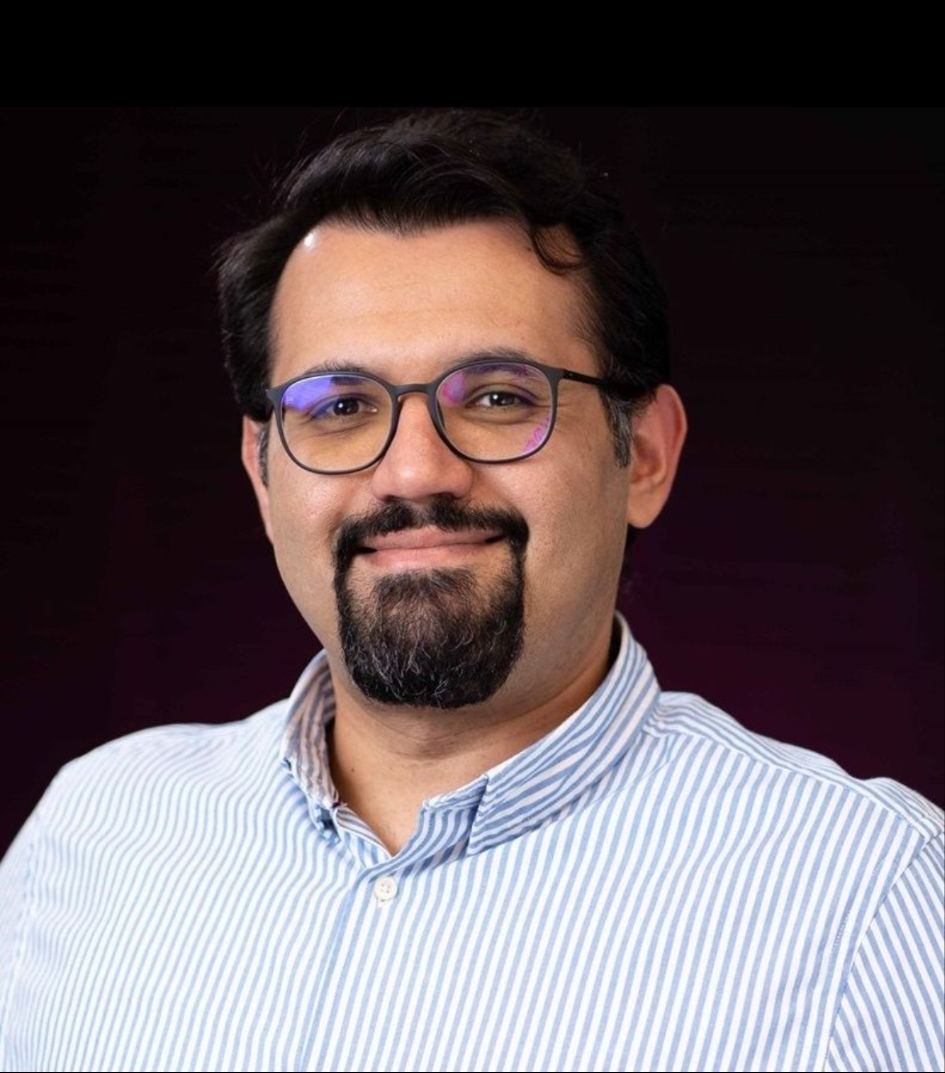
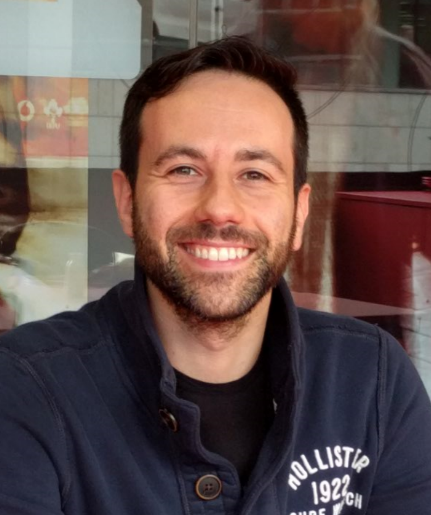
Yang Liu is a tenured Associate Professor at the Department of Management and Engineering , Linköping University, Sweden, and an Adjunct Professor at the University of Oulu, Finland. His expertise spans smart manufacturing, clean energy transition, and Industry 4.0 applications. He holds an M.Sc. and D.Sc. from the University of Vaasa, Finland. Research & Awards: Liu's work focuses on sustainable systems, decision support systems, and AI-driven energy efficiency. He has authored over 140 Web of Science publications, including top 0.1% ESI Hot Papers. He is ranked among the world's top 2% scientists (Stanford-Elsevier) and leads globally in 'big data analytics in manufacturing' and 'Industry 4.0-driven circular economy' research. Leadership & Projects: He leads projects like FlexSUS (EU Horizon 2020) and PERSEUS, developing tools for smart urban energy planning and 15-minute city models. He serves as Editor-in-Chief of Cleaner Engineering and Technology and Guest Editor for multiple journals. His research emphasizes bridging data science with sustainability challenges in manufacturing and energy systems. Key Achievements: Top-ranked in global citations, ESI Highly Cited Papers, and industry-driven sustainability frameworks. Grants: Leads EU-funded projects and collaborates with Siemens Energy on energy transition solutions. Labs & Teams: Part of the Environmental Technology and Management (MILJÖ) division and Unit for Product Service Innovation (MILJOPSI) at Linköping.
Dr. Ehsan Abbasnejad is an Associate Professor at Monash University's Department of Data Science and Artificial Intelligence, and holds adjunct positions at the Australian Institute for Machine Learning (AIML, University of Adelaide) and the Centre for Augmented Reasoning (CAR). He specializes in foundational AI, focusing on vision-language tasks, adversarial machine learning, and reinforcement learning. His work bridges theory with real-world applications in agriculture, energy, healthcare, and sports. Education: PhD in Computer Science from Australian National University (ANU). Research Interests: Machine Learning Theory and Adversarial Defenses Neural Network Robustness and Generalization Multimodal Learning (Vision-Language) Continual and Transfer Learning Applications in Energy, Healthcare, and Robotics Awards: Finalist for Australian AI Academic/Researcher of the Year (2024) Multidisciplinary competition wins (e.g., OzMineral Explorer Challenge) Advising & Grants: Australian Research Council (ARC) Discovery Project on Reinforcement Learning CSIRO's Next Generation Graduate Fund Accepting PhD students in foundational AI and applications Labs & Teams: Director of Foundational Machine Learning & Reasoning at Monash, leading global teams in AI competitions and industry collaborations (Microsoft Research, NEC Labs America).
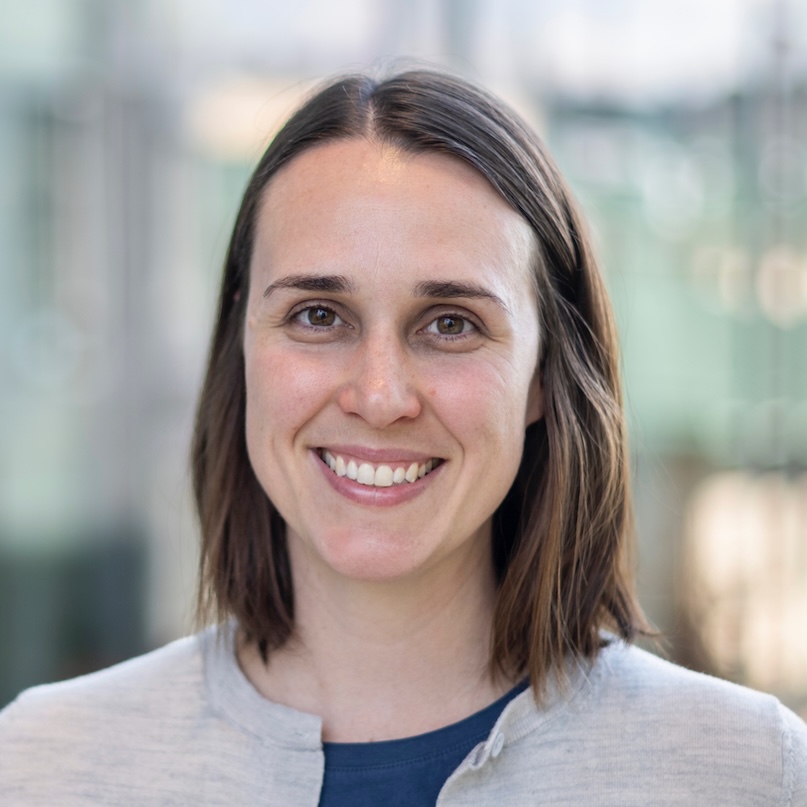
Rebecca Willett is a Professor of Statistics and Computer Science at the University of Chicago and Faculty Director of AI at the Data Science Institute. She holds the Worah Family Professorship and is a member of the Wallman Society of Fellows. Her research focuses on machine learning, signal processing, and scientific computing, with applications in astronomy, climate science, and biochemistry. She has held visiting roles at institutions including UCLA and INRIA. Key roles include Deputy Directorships at the NSF-Simons Institute for Theory and Mathematics in Biology and the SkAI Institute. Education: PhD in Electrical and Computer Engineering from Rice University (2005), followed by faculty roles at Duke University (2005–2013) and the University of Wisconsin-Madison (2013–2018). Awards include the 2024 SIAM Data Science Career Award, NSF CAREER Award (2007), and AFOSR Young Investigator Award (2010). Research interests span inverse problems, optimization theory, and interdisciplinary applications. Her work bridges high-dimensional statistics and imaging science. Recent articles emphasize neural network theory, climate data assimilation, and biophysical modeling. Awards include SIAM Fellowship, IEEE Fellowship, and teaching excellence awards. She leads initiatives in AI ethics, broadening participation in STEM, and serves on key committees like the National Academies' CATS. Labs/Groups: Machine Learning Group at UChicago, CERES Center for Unstoppable Computing. Grants include NSF, DOE, and collaborations with Argonne National Laboratory.
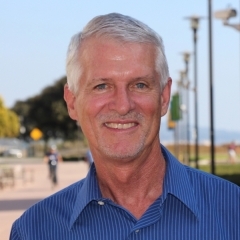
James B. Rawlings is the Mellichamp Process Control Chair in the Department of Chemical Engineering at the University of California, Santa Barbara, and holds the rank of Professor. His research focuses on chemical process control, reaction engineering at the molecular level, and computational modeling with tools like Octave. He has held prominent roles, including the Paul A. Elfers Chair at UW Madison and the Steenbock Professor of Engineering. Education: PhD in Chemical Engineering from the University of Wisconsin-Madison (1985), BS in Chemical Engineering from The University of Texas at Austin. Postdoctoral training at the Institute for System Dynamics and Process Control, University of Stuttgart (1985-1986). Research interests include nonlinear systems, model predictive control (MPC), moving horizon estimation (MHE), and stochastic reaction engineering. His work bridges theory and industrial applications, emphasizing robustness and practical implementation. Awards: Elected Fellow of the National Academy of Engineering (2016), IFAC (2016), and IEEE (2012). Recipient of the Process Automation Hall of Fame (2016), Vilas Distinguished Achievement Professor (2015), and numerous AIChE awards. Honorary doctorate from Technical University of Denmark (2011). Grants & Leadership: Led NSF-funded projects on MPC and control systems. Developed Octave, a widely used computational tool. Active in academic leadership and curriculum development, recognized with teaching awards including the Chancellor’s Distinguished Teaching Award (2013). Labs & Teams: Directs research groups focused on control theory, computational tools, and industrial process optimization. Collaborates with industry on MPC implementation and disturbance modeling.
Dr. Vincent Fortuin is a tenure-track Assistant Professor at the Technical University of Munich (TUM) and a research group leader at Helmholtz AI in Munich. He leads the Efficient Learning and Probabilistic Inference for Science (ELPIS) group and holds multiple prestigious fellowships including the Branco Weiss Fellowship. His academic affiliations include the TUM School of Computation, Information and Technology, the Konrad Zuse School of Excellence in Reliable AI, and the Munich Center for Machine Learning. Dr. Fortuin earned his BSc in Molecular Life Sciences from the University of Hamburg (2012-2015), followed by an MSc in Computational Biology and Bioinformatics from ETH Zürich (2015-2017), where he received the ETH Excellence Scholarship and the Willi Studer Prize. He completed his PhD in Machine Learning at ETH Zürich (2017-2021) under the supervision of Gunnar Rätsch and Andreas Krause, supported by a Swiss Data Science Center PhD Fellowship. Prior to joining TUM, he was a Research Fellow at St. John's College, University of Cambridge (2022-2023). His research focuses on the intersection of Bayesian statistics and deep learning, specifically developing methods for more robust, data-efficient AI systems with reliable uncertainty estimates. His work addresses critical limitations in standard deep learning approaches, particularly their tendency to be overconfident in predictions and require large datasets for training. He investigates better priors and more efficient inference techniques for Bayesian deep learning, deep generative modeling, meta-learning, and PAC-Bayesian theory, with applications in scientific and biomedical domains. Dr. Fortuin's recent publications demonstrate a consistent focus on improving uncertainty quantification in deep learning systems, with increasing emphasis on practical applications in scientific contexts. His work spans from theoretical foundations of Bayesian deep learning to practical implementations in protein design, materials science, and medical applications. A notable trend is his exploration of how to make Bayesian methods more scalable and applicable to modern large-scale AI systems while maintaining theoretical guarantees. Branco Weiss Fellowship (2023) St John's College Research Fellowship (2022) Swiss National Science Foundation Postdoc.Mobility Fellowship (2022) Swiss Data Science Center PhD Fellowship (2018) ETH Excellence Scholarship (2015) Willi Studer Award (2018) Dr. Fortuin actively supervises PhD and Master's students through his ELPIS research group at Helmholtz AI. He serves as a regular reviewer and area chair for major machine learning conferences and is an action editor for TMLR. He co-organizes the Symposium on Advances in Approximate Bayesian Inference (AABI) and the ICBINB initiative, demonstrating his commitment to advancing the field through community building. His research group receives funding from multiple sources including Helmholtz AI, the Branco Weiss Fellowship, and collaborations with international institutions. Dr. Fortuin leads the Efficient Learning and Probabilistic Inference for Science (ELPIS) group at Helmholtz AI, which focuses on fundamental machine learning research motivated by real-world scientific problems. The group collaborates extensively with researchers across Helmholtz centers and international institutions, particularly in biomedical applications where reliable uncertainty estimates are crucial.
Yiping Lu is an Assistant Professor in the Department of Industrial Engineering and Management Sciences at Northwestern University's McCormick School of Engineering. His research focuses on developing interdisciplinary approaches combining domain knowledge (differential equations, stochastic processes), machine learning, and experiments. Key interests include scientific machine learning (AI4Science), stochastic simulation, and robust machine learning. Education: Ph.D. in Applied and Computational Mathematics, Stanford University (2023) B.S. in Computational Mathematics, Peking University (2019) Research Highlights: Hybrid research integrating ML with scientific domains like PDEs and inverse problems Development of Physics-Informed Learning frameworks Contributions to deep learning theory (ResNets, neural collapse) Advances in kernel operator learning and adversarial robustness Awards: CPAL Rising Star Award (2024) University of Chicago Data Science Rising Star (2022) Stanford Interdisciplinary Graduate Fellowship (2021) Labs/Teams: SCALE Lab (Scientific Computation and Learning at Northwestern) Collaborations with NYU's Courant Institute and Stanford
Michael U. Gutmann is a Senior Lecturer in Machine Learning at the School of Informatics, University of Edinburgh, and a member of the Institute for Adaptive and Neural Computation. His research lies at the intersection of machine learning, statistics, and scientific applications, with a focus on developing inference methods for complex and implicit models. Education: PhD in Computational Neuroscience, University of Tokyo MSc in Engineering and Applied Mathematics, Swiss Federal Institute of Technology (ETH) Zurich MSc, Ecole Centrale Paris His primary research interests include Bayesian inference, likelihood-free inference, optimal experimental design, unsupervised learning, and applications in computational biology and neuroscience. He is best known for introducing Noise-Contrastive Estimation (NCE), a foundational technique for training unnormalized statistical models. His recent work spans variational inference, density ratio estimation, flow models for missing data, and AI-driven experimental design in behavioral and biological sciences. His publications, including in NeurIPS , ICML , JMLR , and eLife , demonstrate a strong emphasis on methodological innovation for scientific discovery. He has contributed to open-source tools such as ELFI (Engine for Likelihood-Free Inference) and developed practical implementations of robust inference algorithms. Scientific Awards: No specific awards listed in the provided texts. Michael Gutmann actively supervises students and collaborates with leading researchers in machine learning and computational biology. He has secured research funding from EPSRC and BBSRC for projects in generative modeling and infectious disease epidemiology. He teaches advanced courses such as Probabilistic Modelling and Reasoning and Data Mining, reflecting his deep engagement with both theoretical and applied aspects of machine learning. Labs and Research Groups: Institute for Adaptive and Neural Computation (ANC), University of Edinburgh Former affiliations with Department of Mathematics and Statistics and Department of Computer Science at the University of Helsinki and Aalto University
Pengtao Xie is an Associate Professor (with tenure as of June 2025) in the Department of Electrical and Computer Engineering at the University of California San Diego. He also serves as Associate Adjunct Professor in the Division of Biomedical Informatics, Department of Medicine, and holds affiliate appointments with the Halıcıoğlu Data Science Institute, School of Biological Sciences, Shu Chien-Gene Lay Department of Bioengineering, Skaggs School of Pharmacy and Pharmaceutical Sciences, and multiple research institutes including the AI Group, Center for Machine-Intelligence, Computing and Security, Institute of Engineering in Medicine, and Institute for Genomic Medicine. Education: PhD in Machine Learning, School of Computer Science, Carnegie Mellon University Research Interests: His research focuses on machine learning inspired by human learning skills, such as self-explanation, small-group learning, and learning by teaching. He applies these techniques to large language models, foundation models, healthcare, and biomedicine. His work spans generative AI, medical imaging, protein modeling, and drug discovery. Recent Research Trends: His 2024–2025 publications emphasize generative AI for ultra-low-data medical image segmentation, multimodal large language models for biomedical applications, protein function prediction, and novel training strategies like task-adaptive pretraining and bi-level optimization for model adaptation. Scientific Awards: NIH MIRA Award (2025) NSF CAREER Award (2024) Best Graduate Teacher Award – UCSD ECE (2023) ICLR Notable-Top-5% Paper (2023) Global Top-100 Chinese Young Scholars in AI (2022) UCSD Faculty Career Development Award (2022) Tencent Faculty Award (2021) Outstanding Reviewer – ICLR (2021) AMIA Doctoral Dissertation Award Finalist (2020) Amazon AWS Research Award (2020) Tencent AI-Lab Faculty Award (2020) Innovator Award – Pittsburgh Business Times (2018) Siebel Scholarship (2014) Advising and Grants: He currently advises PhD students, postdocs, and master’s students. He has received major grants including the NIH MIRA and NSF CAREER awards, and actively mentors Schmidt AI in Science postdocs and graduate students. Teaching and Labs: He teaches ECE285 Deep Generative Models and ECE175B Probabilistic Reasoning and Graphical Models . His lab focuses on foundational and translational AI research with applications in biomedicine and healthcare.
Virginia Smith is the Leonardo Associate Professor of Machine Learning at Carnegie Mellon University's School of Computer Science, with a courtesy appointment in the Electrical and Computer Engineering Department. She leads research addressing critical challenges in machine learning systems, particularly focusing on safety and efficiency. Her research interests span federated and collaborative learning, efficient training methods, data privacy, and AI safety. Recent work has explored topics such as model unlearning, LLM security, and resource-efficient distributed learning systems. She has made significant contributions to understanding how to make machine learning systems more robust, private, and efficient while maintaining performance. Professor Smith's publication record demonstrates a clear progression toward addressing practical challenges in deploying machine learning systems at scale. Her recent work shows strong emphasis on large language model safety, privacy-preserving techniques, and efficient distributed learning approaches. The research spans theoretical foundations to practical implementations, with numerous papers appearing in top-tier venues including NeurIPS, ICML, ICLR, and MLSys. AFOSR Young Investigator Award Sloan Research Fellowship 2023 Samsung AI Researcher of the Year Best Paper Award at ICML 2025 Exploration in AI Workshop Outstanding Paper Award at MLSys 2023 As an educator, Professor Smith mentors numerous PhD students and postdocs while teaching advanced machine learning courses at CMU. She serves as Program Chair for ICML 2025 and co-organizes a semester program on Federated and Collaborative Learning at the Simons Institute. Her research group maintains strong collaborations with industry partners including Amazon, where she has received research awards.
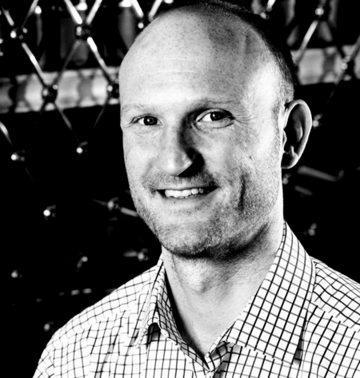
Professor Wayne Luk is a Professor of Computer Engineering at the Department of Computing, Faculty of Engineering, Imperial College London. He leads the Programming Languages and Systems Section and the Custom Computing Research Group, and directs the EPSRC Centre for Doctoral Training in High-performance Embedded and Distributed Systems and the Centre for Advanced Financial Engineering. He previously served as a Visiting Professor at Stanford University from 2006 to 2009. His research spans FPGA acceleration, quantum computing, deep learning optimization, and algorithm-hardware co-design, with affiliations to the CRUK Convergence Science Centre and the Engineering Secure Software Systems group. His research interests include computational modeling for particle physics, causal discovery in agent-based systems, and high-throughput digital electronics. Notable contributions include FPGA-accelerated algorithms for neural networks, quantum circuit simulation, and Bayesian optimization frameworks. His work emphasizes practical applications of reconfigurable hardware in fields like medical imaging, high-energy physics, and financial systems. Professor Luk is a Fellow of the Royal Academy of Engineering, IEEE, and BCS. His publications focus on advancing hardware-aware machine learning, FPGA-based acceleration techniques, and scalable design methodologies. His research bridges theoretical computer science with applied engineering, addressing challenges in real-time systems, embedded computing, and next-generation computing architectures. His academic leadership includes directing interdisciplinary centers and training programs, fostering collaboration across computing, engineering, and physics. Current projects explore quantum computing tools, causal inference systems, and high-performance graph neural networks for particle physics applications.
Yuchen Liu is an Assistant Professor in the Department of Computer Science and Department of Electrical & Computer Engineering (by courtesy) at North Carolina State University. He earned his Ph.D. in Electrical and Computer Engineering from Georgia Institute of Technology. His research spans networking, machine learning, and cybersecurity, focusing on wireless systems, digital twins, and networked agentic systems. Research areas: Networking (3D UAV networks, mmWave/THz communication, cybersecurity), Machine Learning (generative AI, LLMs, reinforcement learning), Digital Twins (synchronization optimization, edge caching), Software Development (differentiable simulators, open-source testbeds) His recent publications emphasize neurosymbolic AI, diffusion models for wireless systems, and multi-agent approaches to spectrum sensing. Articles highlight applications in UAV networks, vehicular security, satellite localization, and federated learning defenses. Honors include NSF CAREER (2025), NVIDIA Academic Grant (2025), NCSU Carla Savage Award (2025), and multiple IEEE/ACM Best Paper Awards. Current projects are supported by NSF CNS (#2312138), NSF SaTC (#2350075), and NSF NAIRR Pilot Demonstration (#2506757) grants.
Maarten de Rijke is a Professor at the University of Amsterdam and affiliated with the Innovation Center for Artificial Intelligence (ICAI) . He is a leading expert in Information Retrieval , Recommender Systems , and Machine Learning , with over 500 publications and 10,000 citations. His work spans theoretical and applied domains, including conversational recommender systems , domain generalization , and neural ranking models . Research Pillars: Information retrieval, e-commerce search, learning to rank, and empathetic AI systems Awards: Best Paper (2x), Best Student Paper Community Roles: Organized workshops (MANILA25, SIGIR editions) His recent publications focus on robust recommendation systems , cross-domain contract extraction , and brain signal integration for query refinement. He leads the AIRLab (Amsterdam) and collaborates with institutions like Shandong University and the University of Chinese Academy of Sciences. Scientific Contributions : Over 500 publications in ACM Transactions, SIGIR proceedings, and journals Developed novel frameworks for learning-to-rank and user satisfaction modeling Pioneered research on conversational AI and adversarial attacks in retrieval He actively engages in community service, including organizing conferences and advocating for epilepsy research through initiatives like Emma’s collection box (over €24,448 raised). His work bridges theoretical rigor with real-world impact in search and recommendation technologies.
Elena Simperl is a Professor of Computer Science and Deputy Head of Department for Enterprise and Engagement at King's College London's Department of Informatics. She co-directs the King's Institute for Artificial Intelligence and serves as Director of Research for the Open Data Institute. As a Hans Fischer Senior Fellow at the Technical University of Munich's Institute for Advanced Study, she leads the Trustworthy Knowledge Graphs focus group and contributes to advancing human-centric AI research across European institutions. Professor Simperl obtained her doctoral degree in Computer Science from the Free University of Berlin and her diploma from the Technical University of Munich. Prior to joining King's, she held academic positions in Germany, Austria, and at the University of Southampton, and was a Turing Fellow. Her career trajectory demonstrates consistent leadership in bridging academic research with practical applications in data ecosystems. Her research sits at the critical intersection of AI and social computing, focusing on human-centric approaches to building sociotechnical systems that integrate data, algorithms, and human capabilities. She investigates how to make knowledge engineering more accessible, how to leverage collective intelligence for data quality improvement, and how to design participatory AI systems that address societal challenges like misinformation. Her work spans knowledge graphs, semantic technologies, crowdsourcing, and open data, with particular emphasis on the social dimensions of data-intensive systems and the governance frameworks needed for trustworthy AI deployment. Analysis of her recent publications reveals a strong evolution toward integrating large language models with traditional knowledge engineering practices while maintaining human oversight. There's a clear trajectory from foundational work on knowledge representation toward increasingly applied research addressing real-world challenges in media ecosystems, citizen science, and data governance, with growing attention to policy implications of AI technologies. Fellow of the British Computer Society Fellow of the Royal Society of Arts Hans Fischer Senior Fellow at TUM-IAS (2023) Ranked among top 100 most influential scholars in knowledge engineering of the last decade Included in Women in AI 2000 ranking Professor Simperl has led 14 major European and national research projects totaling millions in funding, including MediaFutures (a Horizon 2020 program tackling online misinformation), QROWD, ODINE, Data Pitch, and ACTION. She currently co-chairs the Croissant working group in ML Commons developing data standards for AI, and serves as president of the Semantic Web Science Association. Her research has directly influenced the development of data ecosystems supporting startups and citizen science initiatives across Europe, demonstrating exceptional ability to translate theoretical advances into practical impact. As Director of Research at the Open Data Institute, she oversees initiatives connecting data entrepreneurs with artists and civic organizations. Her leadership in the MediaFutures project established a data-driven innovation hub that supported 51 startups/SMEs and 43 artists through three open calls, creating a sustainable model for arts-technology collaborations addressing media challenges. Her work with the ODINE project helped create a European ecosystem for data-driven startups, demonstrating her commitment to building practical applications of open data principles.
Gian Antonio Susto is an Associate Professor at the Department of Information Engineering , University of Padova . With a Ph.D. in Information Technology and post-doctoral experience at National University of Ireland, Maynooth, he leads research in Machine Learning , Semiconductor Manufacturing , and Industrial IoT . His work bridges Anomaly Detection , Continual Learning , and Algorithmic Fairness with applications in Hydroelectric Power Plants , Particle Accelerators , and Smart Mobility . B.Sc. and M.Sc. in Controls Engineering, University of Padova (cum laude) Ph.D. in Information Technology, University of Padova (2013) Post-Doc at National University of Ireland, Maynooth (2012-2013) Assistant Professor at University of Padova (2013-2021) His research focuses on Explainable AI , Virtual Metrology , and Deep Learning for manufacturing and infrastructure monitoring. Recent projects include the AIMS5.0 (AI for Manufacturing Sustainability) and MICS (Circular Economy in Italy) initiatives. His publications span Engineering Applications of Artificial Intelligence , IEEE Transactions , and Information Processing & Management , with 15+ recent papers on topics like Fault Diagnosis , Continual Learning , and Fair Ranking . Key scientific awards include: IEEE CCTA Best Student Paper Award (2021) IP&M 2020 Ph.D Paper Award Best Industry Paper Award, European Workshop on Advanced Control and Diagnosis (ACD 2019) He has supervised Ph.D. students on projects involving Particle Accelerators , Plant Behavior Modeling , and Explainable AI , with alumni now at institutions like Max Planck Institute , IBM , and Scripps Research . Current teaching includes Reinforcement Learning and Explainable Machine Learning at graduate and Ph.D. levels.
Berrak Sisman is an Assistant Professor in the Department of Electrical and Computer Engineering at Johns Hopkins University, affiliated with the Data Science and AI Institute and the Center for Language and Speech Processing (CLSP). She leads the Speech & Machine Learning Lab (SmILe Lab), focusing on AI-driven speech technologies. She received her PhD from the National University of Singapore in 2020 and was previously a tenure-track faculty member at the University of Texas at Dallas (2022–2024). Research Interests: Her work spans artificial intelligence, speech synthesis, voice conversion, emotion analysis in speech, medical speech applications, and secure speech technology. She develops neural models for expressive and adaptive speech processing. Publications: Her recent articles (2024–2025) emphasize speech emotion recognition, zero-shot prosody control, accent conversion, and disentangled representations in TTS, reflecting a focus on cross-modal learning, robustness, and real-world applications. Awards & Grants: NSF CAREER Award (2024) Amazon Faculty Research Award (2022) Singapore Ministry of Education Award (2021) A*STAR Singapore International Graduate Award (2016–2020) Leadership: She directs the SmILe Lab, recruiting PhD/Master’s students for projects in neural speech modeling. Her grants include NSF and Amazon funding for voice conversion and emotion synthesis research.