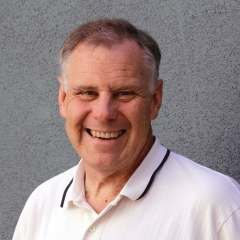
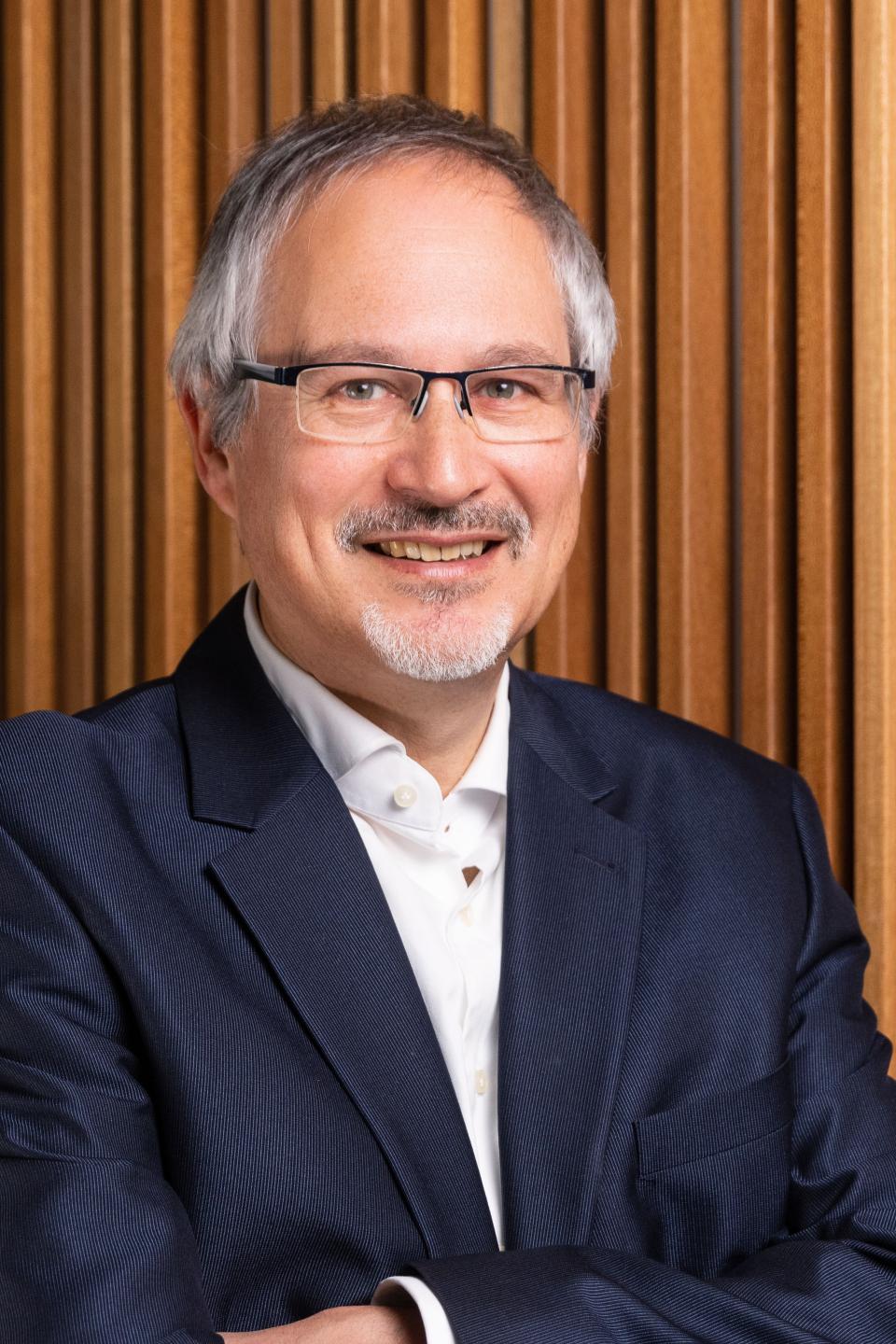
Pavlos S. Georgilakis is a Professor at the School of Electrical and Computer Engineering, National Technical University of Athens (NTUA), specializing in modern techniques for power system analysis, optimization, and renewable energy integration. He holds a Diploma (1990) and PhD (2000) in Electrical Engineering from NTUA. His career includes roles as Lecturer (2009) and Associate Professor (2018–2023) at NTUA, and Assistant Professor at the Technical University of Crete (2004–2009). Research focuses on power transmission/distribution systems, transformer design, and applying AI/optimization for grid efficiency. He led 10 research projects, including Horizon 2020 initiatives SHAR-Q, WiseGRID, and NobelGrid. He authored 3 books and over 230 publications (SCOPUS citations: >5,500). Editor of IET Smart Grid, Energies, and Electricity journals; senior IEEE member. He supervised 4 doctoral, 9 master’s, and 76 diploma theses. Awards include the 2013 Best Reviewer Award from Electric Power Systems Research. Active in energy storage, smart grids, and decentralized energy resource integration.
Dr. Chenang Liu is an Associate Professor in the Department of Industrial Engineering & Management at Oklahoma State University's College of Engineering, Architecture and Technology (CEAT). Their research focuses on smart manufacturing systems, real-time quality monitoring, and machine learning applications in manufacturing and healthcare. Ph.D., Industrial and Systems Engineering, Virginia Tech, 2019 M.S., Statistics, Virginia Tech, 2017 B.S., Mathematics (Statistics track), Zhejiang University, China, 2014 B.S., Environmental and Resource Sciences, Zhejiang University, China, 2014 Research Interests: Dr. Liu develops advanced sensing and data analytics methodologies for smart manufacturing, statistical frameworks for real-time quality control, and mathematical models integrating machine learning with healthcare applications. Their work bridges industrial engineering principles with cutting-edge data science techniques. Publication Trends: Recent articles demonstrate expertise in diabetic retinopathy prediction via interpretable AI, supply chain coordination mechanisms, EHR analytics for disease progression modeling, and combinatorial optimization algorithms. Key themes include healthcare data science, resilient manufacturing systems, and stochastic resource allocation. Scientific Recognition: Featured Article in ISE Magazine, IISE, 2019 Gilbreth Memorial Fellowship, IISE, 2018-2019 Best Poster Award, INFORMS Annual Meeting, 2018 Best Student Paper Finalist, IISE Annual Conference, 2018 Best Paper Awards at INFORMS (2017) and IISE (2017)
Qijia Shao is an Assistant Professor at The Hong Kong University of Science and Technology (HKUST), specializing in Mobile Computing, Human-Computer Interaction (HCI), and Ubiquitous Computing. He earned his Ph.D. in Computer Science from Columbia University (2024), advised by Prof. Xia Zhou and Prof. Fred Jiang, with prior degrees from Dartmouth College (M.Sc.) and UESTC (B.Sc.). His research focuses on developing unobtrusive systems for human physical/physiological signal sensing, integrating machine learning, signal processing, and hardware design to address societal challenges in healthcare, education, and human-computer interaction. Educational Background: Ph.D., Computer Science, Columbia University (2024) M.Sc., Dartmouth College B.Sc., UESTC Visiting Student, National Chiao Tung University (EECS) Research Assistant, Missouri S&T Research Interests: Deployable systems for human state analysis via physical/physiological signals (e.g., ECG, movement) Generalizable AI algorithms for low-overhead data interpretation Hardware-software co-design for imperceptible sensing Applications in healthcare (e.g., Kangaroo Mother Care monitoring), education, and consumer electronics Awards & Recognition: MobiSys 2024 Best Paper and Demo Awards NSF Funding & Rising Stars Honors ACM UbiComp Gaetano Borriello Award Finalist Editorial Board Member (ACM IMWUT, since 2024) Lab & Collaborations: Director of the Ubiquitous X Lab at HKUST Industry partnerships with Samsung, Snap, and Philips Research International conference TPC roles (MobiSys, SenSys) and keynote speaking engagements
Mathew Yarossi is an Assistant Professor at Northeastern University with a joint appointment in the College of Engineering (Electrical and Computer Engineering) and Bouvé College of Health Sciences (Physical Therapy, Movement, and Rehabilitation Sciences). He holds a PhD from Rutgers University (2017) and joined Northeastern in 2022. Research Focus: His work bridges movement neuroscience, clinical research, and engineering, with emphasis on AI-driven solutions for rehabilitation. Key areas include physiological signal processing, neuromuscular control, and human-robot interaction. His NSF-funded project on dyadic object handover with robots highlights his interdisciplinary approach. Publications: Recent work explores VR-based interventions, EMG-driven prosthetics, and computational modeling of transcranial stimulation. His 2025 patent on virtual reality experiment design underscores his translational impact. Awards: Holds a patent for VR experiment systems (2025). Advising & Grants: Mentors students in PEAK Experiences programs and collaborates with the U.S. Army on AI applications in combat systems. His lab is part of the Institute for Experiential AI.
Stefano Noventa is a Research Fellow at the Methods Center, Department of Social Sciences, Faculty of Economics and Social Sciences, University of Tübingen. He has held multiple postdoctoral positions at the University of Tübingen and previously at the University of Verona and the University of Padova. Education: Ph.D. in Cognitive Psychology, University of Padova (2011) M.Sc. in Physics, University of Padova (2006) Studies in Physics, University of Padova (1999–2006) International Visiting Graduate Student, University of Toronto (2009, 2010) Dr. Noventa's research lies at the intersection of mathematical psychology, psychometrics, and psychophysics, with a focus on developing and unifying quantitative models of human cognition and assessment. His work integrates Item Response Theory (IRT) and Knowledge Space Theory (KST) to create more robust frameworks for educational and psychological measurement. He investigates latent variable models, probabilistic knowledge structures, and the identifiability of complex psychometric models, often applying these to domains such as education, organizational psychology, and entrepreneurship. His recent publications (2020–2024) demonstrate a strong trend toward theoretical integration, particularly in bridging cognitive diagnosis models with traditional psychometric frameworks. The articles emphasize mathematical rigor, model generalization, and empirical validation, with applications in both cognitive science and applied psychology. Topics include the unification of assessment models, parameter estimation under local dependence, and the modeling of intuitive physical reasoning. Scientific Awards: No awards or honors listed in the provided text. Dr. Noventa has not been explicitly mentioned as an advisor to students, but he has served as a corresponding author and collaborator on multiple research projects, indicating a leadership role in research teams. He has been involved in a DFG-funded project (GLI NON-NORM) since 2019, suggesting active grant participation. His work is highly collaborative, involving researchers from Germany, Italy, Austria, and Canada. Labs and Research Groups: Methods Center, University of Tübingen Hector Institute of Education Science and Psychology, University of Tübingen Center of Assessment, University of Verona Department of General Psychology, University of Padova
Naomi J. Halas is a University Professor at Rice University, holding appointments in the Department of Electrical and Computer Engineering, Biomedical Engineering, Chemistry, and Physics & Astronomy. She is the Stanley C. Moore Professor in Electrical and Computer Engineering and serves as Director of both the Smalley-Curl Institute and the Laboratory for Nanophotonics. As a University Professor, she holds Rice's highest faculty rank, a distinction awarded to only 10 individuals (and only the second woman) in Rice's 111-year history. Halas is a pioneering researcher in the field of plasmonics, having created the concept of the "tunable plasmon" and invented a family of nanoparticles with resonances spanning the visible and infrared regions of the spectrum. Her research spans fundamental studies of coupled plasmonic systems as well as applications in biomedicine, optoelectronics, machine learning-enabled chemical sensing of environmental toxins, and plasmon-based photocatalysis. She is the author of more than 400 refereed publications, has over 30 issued patents, has presented more than 600 invited talks, and has been cited more than 130,000 times. Her recent publications demonstrate a strong focus on practical applications of plasmonics, particularly in water purification, environmental toxin detection, and cancer treatment. Her work combines nanotechnology with machine learning approaches to create innovative solutions for pressing global challenges in healthcare, environmental sustainability, and energy. The interdisciplinary nature of her research is reflected in publications spanning journals from Nature Water and PNAS to ACS Catalysis. Benjamin Franklin Medal in Chemistry (2025) - For the creation and development of nanoshells for biomedical and chemical applications Mildred Dresselhaus Prize in Nanoscience and Nanomaterials (2024) American Physical Society Frank Isakson Prize for Optical Effects in Solids Willis E. Lamb Award Wood Prize of Optica National Security Science and Engineering Faculty Fellow (Vannevar Bush Fellow) of the U.S. Department of Defense Halas has co-founded two companies based on her research: Nanospectra Biosciences, developing photothermal therapies for prostate cancer (nearing FDA approval), and Syzygy Plasmonics, a deep decarbonization platform. She has advised numerous students who have gone on to successful careers in academia and industry. Her research has been supported by significant grants from NSF, DoD, and other funding agencies. She serves as an advisor to the Mathematical and Physical Sciences Directorate of the National Science Foundation. Halas leads the Laboratory for Nanophotonics at Rice University, where her team focuses on designing new optically active nanostructures, developing nanofabrication strategies, characterizing physical properties of these materials, and prototyping applications of technological and societal interest. Her group is dedicated to producing PhD research scientists with expanded skill sets who can develop solutions beyond traditional disciplinary boundaries.
Lauren Weiss, PhD is a Professor of Psychiatry at the University of California, San Francisco (UCSF) School of Medicine and a faculty member at the UCSF Weill Institute for Neurosciences. Her research focuses on understanding the genetic architecture of autism spectrum disorder through genome-wide genetic data analysis and human induced pluripotent stem cell (iPSC) models. Dr. Weiss's laboratory investigates the genetic mechanisms by which DNA variants influence autism risk, examining questions about copy number vs. SNP variation, rare vs. common variation, gene-sex interaction, gene-gene interaction, and gene-environment interaction. Her team uses rich genetic datasets to identify susceptibility loci and the physiological pathways these risk loci implicate. Additionally, they employ iPSC models to study known mutations or copy number variants predisposing to autism, first identifying the effects of genetic risk variants and then determining whether these effects can be modified at the cellular level by environmental or pharmacological agents. Analysis of Dr. Weiss's recent publications reveals a strong focus on sex differences in autism genetics, the role of specific copy number variants (particularly 16p11.2 and 22q11.2), maternal environmental factors during pregnancy, and the integration of multi-omics data to understand neurodevelopmental pathways. Her work bridges basic genetic research with potential clinical applications for improving understanding, prevention, diagnosis, and treatment of autism and related traits. Dr. Weiss has secured significant research funding as Principal Investigator on multiple NIH grants, including R01MH114924 (Decoding the Genetics of Sexual Dimorphism in Autism Spectrum Disorders), R01MH107467 (Utilizing eQTL networks to gain biological insight into multigenic CNVs), and DP2OD007449 (Dissecting Epistasis and Pleiotropy in Autism towards Personalized Medicine). Her laboratory offers research opportunities for students interested in analytical genetics projects related to gene-environment effects, gene-sex effects, gene-gene effects, and the relationship between ASD and brain size. Dr. Weiss actively collaborates with numerous researchers across institutions, particularly on large-scale genomic studies of autism and other neurodevelopmental disorders. Her work has contributed significantly to our understanding of the complex genetic architecture underlying autism spectrum disorder and related conditions.
Professor Forrest Brewer is a faculty member in the Department of Electrical and Computer Engineering at the University of California, Santa Barbara (UCSB), affiliated with the College of Engineering. His research spans VLSI design, computer-aided design tools, and low-power computing, with a focus on unconventional engineering solutions. Education: PhD in Computer Science, University of Illinois BS in Physics (with honors), California Institute of Technology His work includes CMOS pulse-gate asynchronous logic for high-performance systems, sigma-delta modulation for signal processing, and formal verification strategies for asynchronous circuits. Applications range from radiation-hardened communication links for the Large Hadron Collider (LHC) to spiking neural networks for low-power computing in LIDAR/RADAR systems. Affiliations: California Nanosystems Institute Allosphere Steering Committee (Media Technology) With over 100 publications and 40 years of systems design experience, Brewer has contributed to defense programs, founded UCSB's Computer Engineering program, and served as Intel Faculty Fellow (1997). His lab, the Systems Synthesis Lab, explores collective dynamics and high-resolution, low-latency computation.
Ralf Peeters is a Full Professor in Mathematics of Knowledge Engineering at Maastricht University's Faculty of Science and Engineering , Department of Advanced Computing Sciences. He serves as Vice-Dean of Research and Director of the STEM Graduate School, while leading the university's team at the inter-university research school DISC and co-chairing the Mathematics Centre Maastricht. Education: PhD in Mathematics (Free University, Amsterdam, 1994) Technical Mathematics (Delft University of Technology, 1988) Research Interests span applied mathematics, systems and control theory, signal/image processing, artificial intelligence, and biomedical engineering applications. His work bridges mathematical techniques with real-world challenges in healthcare and industrial systems. Recent Publications highlight advancements in deep learning for cardiac signal reconstruction, tensor-based signal decomposition, and recurrence plot analysis. These works integrate machine learning with clinical diagnostics, particularly in electrocardiographic imaging and arrhythmia characterization. Key Collaborations: Mathematics Centre Maastricht Dutch Mathematics Platform Dutch Institute of Systems and Control Leadership Roles: Vice-Dean of Research (FSE), Director of STEM Graduate School, Head of DISC-affiliated team, and Co-Chair of Mathematics Centre Maastricht. He has supervised over 25 PhD projects, emphasizing applied research across health and industrial domains.
Cihan Tepedelenlioglu is an Associate Professor at Arizona State University's School of Electrical, Computer and Energy Engineering. His work bridges wireless communications, statistical signal processing, and renewable energy systems, with a focus on photovoltaic array monitoring, fault detection, and optimization. PhD, MS, and BS in Electrical Engineering from University of Minnesota, University of Virginia, and Florida Institute of Technology 2001 NSF CAREER Award recipient Research interests span wireless communications , graph signal processing , stochastic optimization , and machine learning applications to solar energy systems . Key projects include quantum machine learning for PV topology optimization, consensus algorithms for distributed networks, and real-time fault detection using neural networks. Recent articles emphasize machine learning in energy systems (2023-2025), with 12 publications on photovoltaic monitoring and 3 on consensus algorithms. Earlier work focused on channel estimation in OFDM systems and fading models in wireless communications. Scientific awards : NSF CAREER Award (2001) Major grants include NSF funding for networked solar array management (2013-2016), nonlinear distributed consensus (2013-2016), and statistical processing of solar data (2009-2012). Teaching roles include EEE 350 Random Signal Analysis and graduate research supervision in signal processing and wireless communications. Collaborates extensively with Andreas Spanias, Mahesh Banavar, and other researchers on cyber-physical systems for energy applications.
Professor Amr Rizk is the Director of the Networks and Communication Systems (NCS) Lab at the University of Duisburg-Essen, where he has been serving as Professor since April 2021. Previously, he was Assistant Professor at Ulm University (2019-2021) and completed his habilitation at TU Darmstadt in 2019. His academic journey includes research positions at prestigious institutions including University of Massachusetts Amherst, University of Warwick, and TU Darmstadt where he was an Athene Young Investigator. Professor Rizk's research spans multiple aspects of networking and communication systems with a particular focus on network performance analysis, stochastic modeling, and practical implementations. His work bridges theoretical foundations with real-world applications, especially in content delivery, video streaming, and network protocols. He has made significant contributions to network calculus, quality of experience optimization, and novel approaches to congestion control and caching mechanisms. His publication record demonstrates consistent high-impact contributions across top networking conferences and journals. Recent work shows a growing emphasis on programmable data planes, AI/ML applications in networking, and advanced techniques for network measurement and performance prediction. His research group at Duisburg-Essen maintains strong connections with both academic and industrial partners in the networking ecosystem. Best Paper Award at ACM MMSys Conference (2023) Distinguished TPC Member for IEEE INFOCOM (2020, 2022) Best Paper Award at ACM/USENIX Middleware Conference (2017) Athene Young Investigator Award, TU Darmstadt (2017) Professor Rizk serves as Associate Editor for Elsevier Computer Communications and has extensive experience with research funding bodies as a reviewer. His leadership extends to conference organization, including roles as PC Co-Chair for IEEE MIPR (2023) and Steering Committee member for Workshop on Network Calculus (2022). He maintains active participation in numerous top networking conferences as Technical Program Committee member, reflecting his standing within the international networking research community.
Xiaobo Li is a Professor in the Department of Bio-Medical Engineering at New Jersey Institute of Technology. Holding a Ph.D. in Computer Aided Geometric Design from the University of Birmingham and a B.S. in Automation from Nanjing University of Aeronautics, their research bridges computational methods with neuroimaging and psychiatric disorder analysis. Ph.D., University of Birmingham (Computer Aided Geometric Design, 2004) B.S., Nanjing University of Aeronautics (Automation, 1999) Dr. Li’s work focuses on applying machine learning and graph theory to understand brain network abnormalities in conditions like ADHD , schizophrenia , and traumatic brain injury . Their studies analyze structural-functional connectivity , reward processing , and gut-brain axis interactions using fMRI , fNIRS , and diffusion tensor imaging . Recent publications highlight their development of tools like the GAT-FD MATLAB toolbox for brain network analysis and their exploration of multimodal MRI in schizophrenia diagnosis. They also investigate the neurobiological effects of photobiomodulation and vision therapy interventions.
Dengfeng Sun is a Professor and Associate Head of the Gambaro Graduate Program in the School of Aeronautics and Astronautics at Purdue University. His research focuses on distributed control systems, autonomy, resilient networks, and air traffic management. Sun holds a B.Eng. from Tsinghua University, an M.S. from The Ohio State University, and a Ph.D. from UC Berkeley. His work spans advanced air mobility, UAV trajectory planning, and stochastic optimization for large-scale systems. Key contributions include resilient UAV traffic control, distributed state estimation algorithms, and fault detection methods for navigation systems. Sun's research has been published in top journals like IEEE Transactions on Intelligent Transportation Systems and Transportation Research Part E. Education: B.Eng., Tsinghua University (2000) M.S., Ohio State University (2002) Ph.D., UC Berkeley (2008) He advises on cutting-edge projects integrating robotics, autonomous systems, and cloud-based traffic modeling. His lab develops solutions for urban air mobility, emergency medical UAV networks, and next-generation air traffic control systems. Notable collaborations include work with NASA and industry partners on continuous descent approach procedures and metroplex routing paradigms. Sun's work bridges theoretical control systems with practical applications in aviation and infrastructure optimization.
Christina Tringides is a tenure-track Assistant Professor in Materials Science and NanoEngineering at Rice University, affiliated with the Neuroengineering Initiative (NEI). She holds the CPRIT Scholar in Cancer Research title and leads the Tringides Lab, which develops soft materials and neurotechnologies for neural system interfaces. Her interdisciplinary work spans from cellular to organ levels, addressing both in vivo and in vitro applications. Education: B.S. in Materials Science & Engineering and Physics from MIT (2015); Ph.D. in Biophysics from Harvard University (2022) under David Mooney. Postdoctoral research at ETH Zürich with Janos Vörös as an ETH Fellow. Recognized with awards including the WIMA laureate (2023), NSF GRFP (2017), and Fulbright Scholar (2015). Research focuses on hydrogels, bioelectronics, and implantable electrode arrays. Key projects include biomimetic in vitro platforms for neural studies and viscoelastic biohybrid interfaces for neuromodulation. Her lab’s innovations aim to advance neurological disorder treatments and diagnostics. Scientific contributions include over 20 peer-reviewed articles, with recent work emphasizing conductive hydrogels, synaptic stimulation systems, and immunotherapy biomaterials. Active in professional organizations like the Materials Research Society and American Chemical Society.
Junhong Chen is the Crown Family Professor of Molecular Engineering at the University of Chicago's Pritzker School of Molecular Engineering and Lead Water Strategist at Argonne National Laboratory. His research focuses on hybrid nanomaterials, 2D materials, sensors for chemical/biological molecules, and energy devices. He has pioneered innovations in real-time water sensing and energy storage, with applications in environmental sustainability and healthcare. Chen holds a PhD from the University of Minnesota (2002) and a postdoc from Caltech (2003). He previously directed the NSF Industry-University Cooperative Research Center on Water Equipment & Policy and served as a NSF program director. Education: PhD in Mechanical Engineering (2002, University of Minnesota), Postdoc in Chemical Engineering (2002–2003, Caltech) Research Interests: Nanomaterials, Sensors, Energy Storage, Water Pollution Control Awards: Fellow of National Academy of Inventors, ASME, IAAM Medal, Wisconsin Innovation Award (2016) Chen's lab group develops nanosensors and energy devices using molecular engineering, with a focus on scalable manufacturing and AI integration. Recent work includes graphene-based sensors for real-time water monitoring and novel battery technologies. His research also addresses global challenges like PFAS contamination and sustainable manufacturing.