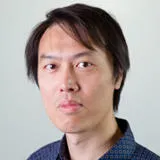
Matthew Holden is an Associate Professor in the School of Computer Science at Carleton University. He holds a PhD (2018) and MSc (2014) from Queen's University and a BScH (2012) from Western University. His research focuses on Surgical Data Science, applying machine learning to surgical time-series data from operating rooms and simulations to improve patient outcomes and surgical training. Key areas include real-time decision support, performance assessment, and surgical efficiency through domain-knowledge integration. Research interests emphasize machine learning for surgical workflows, skill assessment via sensor data (e.g., motion tracking, EEG), and computer-assisted interventions. Notable work includes automated proficiency evaluation in cataract surgery, ultrasound-guided procedures, and neurosurgical training. His contributions span medical robotics, surgical education, and clinical decision support systems. Publications highlight advancements in surgical workflow anticipation, tool detection, and skill metrics across domains like ophthalmology, emergency medicine, and neurology. Holden advocates for interdisciplinary approaches combining computational methods with clinical expertise to enhance healthcare delivery.
Huazhen Fang is an Associate Professor in the Department of Mechanical Engineering at the University of Kansas School of Engineering, where he joined in 2014. He leads the Information & Smart Systems Laboratory (ISSL) and holds a courtesy appointment in the Department of Electrical Engineering & Computer Science. His research focuses on enabling intelligence for complex systems through information-driven approaches. Dr. Fang received his Ph.D. in Mechanical Engineering from the University of California, San Diego in 2014, following an M.Sc. from the University of Saskatchewan and a B.Sc. in Computer Science & Technology from Northwestern Polytechnic University in China. He was a Visiting Faculty Fellow at Mitsubishi Electric Research Laboratories in 2022. His research interests span Systems and Control, Advanced Battery Management, Energy Storage Systems, and Robotics, with particular focus on system modeling, estimation, control design, machine learning and numerical optimization. Dr. Fang's work has significant applications in energy management, cooperative robotics, and environmental observing systems. His research has been supported by the National Science Foundation, Department of Energy, Army Research Laboratory, and Mitsubishi Electric Research Laboratories. His extensive publication record shows a clear trend toward increasingly sophisticated integration of physics-based modeling with machine learning approaches, particularly in battery management systems and autonomous vehicle control. Recent work demonstrates a growing emphasis on Bayesian inference methods, distributed control architectures, and safety-critical applications of intelligent control systems. Faculty Early Career Award from National Science Foundation (2019) University Scholarly Achievement Award (2024) Miller Professional Development Award (2022) Miller Faculty Scholar Award (2018, 2019, 2023) Wesley G. Cramer Outstanding Mechanical Engineering Faculty Award (2016) Big XII Faculty Fellowship (2015) IEEE Transactions on Transportation Electrification Prize Paper Award (2024) Dr. Fang has successfully mentored numerous graduate students through the Information & Smart Systems Laboratory, with many receiving awards for their research. His research has attracted significant funding from prestigious organizations including the National Science Foundation, Department of Energy, Army Research Laboratory, and Mitsubishi Electric Research Laboratories. He currently serves as an Associate Editor for multiple prestigious journals including Information Sciences, IEEE Transactions on Industrial Electronics, and IEEE Control Systems Letters. The Information & Smart Systems Laboratory (ISSL) under Dr. Fang's leadership has established itself as a center for cutting-edge research in information-driven smart systems. The lab focuses on pushing the frontiers of information extraction, analysis and exploitation for dynamic systems to deal with system complexity and enable system intelligence. The lab actively collaborates with industry partners and local communities, emphasizing research that serves societal needs.
Cody Hyndman is a Full Professor and Acting Department Chair at the Department of Mathematics and Statistics, Concordia University, with a focus on Mathematical Finance, Machine Learning, and Stochastic Analysis. He has held significant administrative roles including Department Chair (2017–2023) and Acting Graduate Programs Director (2025–2025). Education: PhD, University of Waterloo (2005) MSc, University of Alberta BCom, University of Alberta His research spans Mathematical Finance , Stochastic Differential Equations , and Machine Learning , with notable contributions to arbitrage-free modeling, neural networks, and computational methods. Recent publications emphasize geometric deep learning and regularization techniques in finance. Scientific Awards: 2023: Concordia Academic Leadership Award Hyndman supervises graduate students in Mathematics and Statistics and co-founded the NSERC CREATE Program on Machine Learning in Quantitative Finance and Business Analytics (FIN-ML) , fostering industrial internships and interdisciplinary training.
Tengfei Ma is an Assistant Professor in the Department of Biomedical Informatics at Stony Brook University, with affiliations to Computer Science and Applied Mathematics & Statistics. He holds a Ph.D. from The University of Tokyo, M.S. from Peking University, and B.E. from Tsinghua University. Previously, he was a Research Scientist at IBM T.J. Watson Research Center. His research focuses on machine learning, natural language processing (NLP), and biomedical informatics, particularly deep graph learning, scalable graph methods, and healthcare applications. He has contributed to frameworks like EvolveGCN for dynamic graphs and IGB datasets for graph benchmarks. Key awards include ISWC 2021 Best Paper (Research Track) and IBM Outstanding Research Accomplishments (2019, 2022). His work bridges theory and practice, addressing challenges like over-dilution in GNNs and interpretable time series analysis. Collaborations span interdisciplinary areas, such as AI for wound monitoring and code summarization. He teaches BMI530: Software Development for Biomedical Informatics and is open to graduate students from CS, BMI, and AMS departments. Research highlights include: Deep Graph Learning: Scalability (FastGCN, IGB), dynamic graphs (EvolveGCN), and topology-enhanced GNNs. Healthcare: Models for EHR analysis, medication recommendation (GAMENet), and wearable wound monitoring. NLP: Document summarization, code summarization (CP-BCS), and commonsense generation via knowledge graph compression. Recent projects include AI tools like Influencer for promotional content creation and neural-symbolic models for interpretable time series analysis. His lab explores foundational AI for healthcare, code analysis, and graph systems.
Bryan Kian Hsiang Low serves as Associate Professor in the Department of Computer Science at the National University of Singapore's School of Computing, while simultaneously holding leadership positions as Director of AI Research at AI Singapore and Deputy Director of the NUS AI Institute. His academic journey includes a B.Sc. (2001) and M.Sc. (2002) in Computer Science from NUS, followed by a Ph.D. in Electrical & Computer Engineering from Carnegie Mellon University (2009). His research spans probabilistic machine learning, multi-agent systems, and trustworthy AI, with particular focus on Bayesian optimization , federated learning , and data-efficient methodologies . The Low Lab develops frameworks for collaborative AI, automated machine learning, and AI applications in scientific domains through the Group of Learning and Optimization Working in AI (GLOW.AI), which maintains a multi-disciplinary approach bridging computer science, mathematics, and engineering disciplines. Analysis of his recent publications reveals a consistent emphasis on data valuation , privacy-preserving collaborative learning , and robust optimization techniques , with increasing integration of large language models into his research framework. His work demonstrates strong theoretical foundations coupled with practical applications in computational sustainability and robotics. Andrew P. Sage Best Transactions Paper Award (2006) NUS Overseas Graduate Scholarship (2004-2009) Faculty Teaching Excellence Award (2017-2018) IEEE RAS Distinguished Lecturer (2019) World Economic Forum Global Future Councils Fellow (2016-2018) Dr. Low actively mentors PhD students including Rachael Sim, Quoc Phong Nguyen, and Zhongxiang Dai, while leading major initiatives like the AI Phenome Platform for plant breeding optimization. His research group GLOW.AI operates at the intersection of theory and practice, with strong industry engagement through AI Singapore. Current projects focus on scalable AI systems for scientific discovery and developing frameworks for equitable collaborative machine learning with robust privacy guarantees.
Massachusetts Institute of TechnologyUnited States
Brandon Weissbourd is an Assistant Professor in the Biology department at the Massachusetts Institute of Technology (MIT) and holds a joint appointment as an Investigator at the Picower Institute for Learning and Memory. He joined MIT in 2023 after completing a postdoctoral fellowship in the lab of David Anderson at the California Institute of Technology (Caltech). Prior to that, he earned his PhD in Biology from Stanford University in 2016 under the mentorship of Liqun Luo, and a BA in Human Evolutionary Biology from Harvard University in 2009. His research interests encompass systems neuroscience, evolutionary biology, and molecular biology. He uses jellyfish models, such as Clytia hemisphaerica, to study the evolution and functional mechanisms of nervous systems. His work combines computational techniques like single-cell RNA-seq and advanced microscopy with traditional genetic and anatomical approaches to dissect neural circuits and their roles in behaviors like feeding and social interaction. Additionally, he has explored serotonin and noradrenaline systems in mammals, focusing on their heterogeneity and functional connectivity. Recent publications emphasize the utility of non-traditional model organisms for evolutionary studies and underscore his expertise in computational methods for neurobiological analysis. Earlier work includes groundbreaking studies on the dorsal raphe serotonin system and basal forebrain circuits governing sleep-wake cycles. No scientific awards or honors have been explicitly mentioned in the provided text. Weissbourd’s academic trajectory reflects a strong emphasis on interdisciplinary research, merging evolutionary, molecular, and systems-level perspectives to understand neural systems across species. His advising record is not detailed here, though he has been affiliated with prestigious research labs during his training. Current affiliations include the MIT Biology department and the Picower Institute, where he likely contributes to collaborative projects in systems and evolutionary neuroscience. Weissbourd’s work is grounded in experimental models such as Clytia medusa and mouse brain studies, enabling him to investigate both ancient nervous system architectures and modern mammalian neural pathways. His lab’s focus on functional genomics and circuit mapping positions him at the forefront of studies on neural diversity and evolutionary innovation.
Pietro Liò is Full Professor in the Department of Computer Science and Technology at the University of Cambridge, where he leads research in Artificial Intelligence and Computational Biology as part of the AI group and the Cambridge Centre for AI in Medicine. He holds additional affiliations as Fellow and Council member of Clare Hall College, member of Ellis (European Lab for Learning & Intelligent Systems), and member of Academia Europaea. Professor Liò earned dual PhDs in Complex Systems and Non Linear Dynamics from the University of Florence and in Theoretical Genetics from the University of Pavia, Italy. His educational background bridges theoretical computer science with biological sciences, forming the foundation for his interdisciplinary research approach. His research focuses on developing Artificial Intelligence and Computational Biology models to understand disease complexity and advance personalized medicine. Current work emphasizes Graph Neural Network modeling for integrating multi-scale, multi-omics, and multi-physics data; combining deep learning with mechanistic approaches; explainability in medical AI; and developing AI-based medical digital twins and personal decision support systems. His work spans from fundamental algorithm development to clinical applications, with particular emphasis on translating computational advances into medical solutions. Analysis of his recent publications reveals strong activity in geometric deep learning , explainable AI for healthcare , and multi-omics integration , with increasing focus on clinically applicable tools that maintain both predictive power and interpretability. Member of Academia Europaea Listed among Top Italian Scientists by VIA-Academy Professor Liò has mentored over 40 PhD students and postdoctoral researchers, including notable names such as Petar Velickovic, David Buterez, and Chaitanya Joshi. His research is supported through collaborations with the Cambridge Centre for AI in Medicine and various international partnerships. He serves on departmental committees including Student Complaints and Postdoc Mentoring, and has completed equality and diversity training essentials. He leads research within the Artificial Intelligence group at Cambridge, focusing on creating computational frameworks that bridge biological complexity with clinical applications through advanced machine learning techniques.
Chris Russell is the Dieter Schwarz Associate Professor of AI, Government & Policy at the Oxford Internet Institute (OII), University of Oxford. His work bridges computer vision, machine learning, and ethical AI governance. He leads the Governance of Emerging Technologies programme, focusing on algorithmic accountability, transparency, and fairness. Prior roles include Group Leader at the Alan Turing Institute and Reader at the University of Surrey. Russell’s research has been recognized with awards, including the ICRA Best Paper Prize for autonomous driving mapping work. Research interests span algorithmic fairness, explainable AI, and responsible AI design. Notable projects include collaborations with the British Antarctic Foundation on climate modeling and causal approaches to algorithmic fairness. His work with Sandra Wachter and Brent Mittelstadt informs GDPR guidelines and tools like TensorFlow’s 'What-if Tool.' Current projects include advancing medical machine learning for inflammatory arthritis prediction and governance frameworks for emerging tech. Russell advises PhD students on socio-technical AI evaluations and teaches courses in machine learning and AI ethics. Recent publications address deepfake proliferation, LLM regulation, and fairness in foundational models. He co-leads initiatives like the Digital Good Network to align tech development with societal benefit.
Subhabrata Sen is an Assistant Professor of Statistics at Harvard University, located in Science Center 713, Cambridge. His research focuses on Applied Probability, Statistics of Networks, Signal Detection, and Machine Learning. He holds a PhD from Stanford University (2017), advised by Amir Dembo and Andrea Montanari, and prior degrees from the Indian Statistical Institute, Kolkata. His work bridges statistical theory, high-dimensional data analysis, and applications in networks and physics-inspired methods. Key contributions include foundational studies on spin glasses, community detection, and causal inference in complex systems. His research often employs mean-field techniques and explores universality principles in estimation problems. Selected awards and recognition are not explicitly mentioned in the provided text. His advising and grants include postdoctoral mentoring at Microsoft Research and MIT (2017-19). He collaborates on projects involving spectral methods, random matrix theory, and multi-layer network analysis. Labs/teams: Active in Harvard's Statistics Department research groups focused on statistical theory and network science. Maintains an academic website with preprints and resources.
Lena Jäger is a Professor in the Department of Computational Linguistics at the University of Zurich (UZH). Her research focuses on the intersection of linguistics, computational cognitive science, and machine learning, particularly analyzing cognitive mechanisms underlying human language processing through experimental psycholinguistics, computational modeling, and NLP methods. She holds an MA in Chinese Language and Culture, an MSc in Experimental and Clinical Linguistics, a PhD in Cognitive Science, and a BSc in Computer Science. Prior to UZH, she led a Machine Learning Junior Research Group funded by the German Federal Ministry of Education and Research (2020) and conducted postdoctoral research at the University of Potsdam. Her work emphasizes developing machine learning methods for analyzing eye-tracking data to uncover cognitive processes reflected in eye movements. Notable contributions include creating multilingual eye-tracking corpora (e.g., MultiplEYE, PoTeC) and advancing tools like pymovements for data processing. Her research spans applications in language comprehension, biometric identification, and clinical diagnostics (e.g., ADHD detection via eye movements). Education: BA/MA: Chinese Language and Culture (University of Freiburg, Tongji University, Beijing Language and Culture University, Université Paris 7) MSc: Experimental and Clinical Linguistics (University of Potsdam) PhD: Cognitive Science (University of Potsdam) BSc: Computer Science (concurrent with PhD) Awards: Machine Learning Junior Research Group Grant (2020). Labs/Teams: Leads computational linguistics and machine learning research groups at UZH, collaborating on projects like ScanDL and CoLAGaze. Her recent work bridges AI and cognitive science, exploring how language models emulate human reading behaviors and developing frameworks for ethical AI applications. Ongoing projects include improving fairness in biometric identification systems and analyzing individual differences in reading through synthetic data.
Jay Pujara is a Research Associate Professor in the Department of Computer Science at the University of Southern California (USC), affiliated with the Viterbi School of Engineering and the Information Sciences Institute (ISI). He directs the Center on Knowledge Graphs and leads research in artificial intelligence, specializing in knowledge graph construction, scalable machine learning, and probabilistic models. Education : PhD in Computer Science (University of Maryland, 2016), MS and BS in Computer Science from Carnegie Mellon University (2005 and 2004), with minors in Robotics, Mathematical Sciences, and Logic & Computation. Research Interests : His work focuses on probabilistic models for dynamic data, knowledge graph construction, entity resolution, and applications in NLP and social network analysis. He emphasizes scalable algorithms and real-world impact in domains like finance, climate science, and healthcare. Awards : Includes the SWSA Ten-Year Award (2023), Best Paper Awards at IUI 2019 and ISWC 2013, and grants totaling over $9M from DARPA, NSF, and industry partners. Grants & Mentorship : Principal Investigator on projects like "Artificial Domain-Understanding and Collaborative Agency" (DARPA) and "Explainable and Robust AI Agents" (NSF). Mentored over 50 students in PhD, MS, and undergraduate programs, focusing on knowledge graphs, NLP, and machine learning. Labs & Teams : Leads ISI’s Knowledge Graph and Neurosymbolic AI teams, coordinating the Open Knowledge Network (OKN) and tools like KGTK. Active in academic service, including roles on PhD admissions committees and ISI’s Space Management Committee.
Adam Brandenburger is a prominent academic holding the J.P. Valles Professorship at NYU Stern School of Business and a Distinguished Professorship at NYU Tandon School of Engineering. He also serves as Faculty Director of the NYU Shanghai Program on Creativity + Innovation and is a Global Network Professor. Previously, he was at Harvard Business School (1987–2002). He earned his B.A., M.Phil., and Ph.D. from the University of Cambridge. His research spans game theory, quantum mechanics, and business strategy. Notable contributions include co-authoring the best-selling book Co-opetition , which introduces the concept of co-opetition (cooperative competition). His work bridges theoretical frameworks like epistemic game theory with practical applications in strategy and decision-making. Recent research focuses on quantum systems' non-classical correlations, divisive normalization in neuroscience, and the implications of finite-order reasoning in games. He has collaborated with institutions like the Royal Society and journals such as Nature Communications and Proceedings of the National Academy of Sciences . Brandenburger’s academic career reflects interdisciplinary impact, combining economics, physics, and cognitive science. His courses include The Strategist and Creativity Considered , emphasizing strategic thinking and innovation.
Andrea Ianiro is a Full Professor in the Aerospace Engineering Department at Universidad Carlos III de Madrid (UC3M), where he leads research in fluid dynamics, turbulence, and heat transfer. His work bridges experimental techniques and machine learning applications for flow analysis and control. He serves as Associate Editor of the International Journal of Heat and Mass Transfer (2025-2028) and directs the EFM Lab (Experimental Fluid Mechanics Laboratory) at UC3M. Professor Ianiro's research focuses on turbulence characterization, boundary layer flows, and the application of machine learning to fluid mechanics problems. His work spans experimental techniques including Particle Image Velocimetry (PIV), infrared thermography, and advanced data processing methods. Recent research emphasizes data-driven approaches for flow field reconstruction, turbulence control, and heat transfer optimization in wall-bounded flows. His projects often combine theoretical, experimental, and computational approaches to address complex fluid mechanics challenges. The analysis of his recent publications reveals a strong trend toward integrating machine learning with traditional fluid mechanics. His work increasingly focuses on using deep learning techniques (particularly CNNs and GANs) for flow field prediction from limited measurements, developing meshless computational methods for flow analysis, and applying optimization techniques (including genetic algorithms) to heat transfer enhancement. His research maintains a strong experimental foundation while embracing data-driven approaches to tackle turbulence modeling challenges. Associate Editor of the International Journal of Heat and Mass Transfer (2025-2028) Professor Ianiro leads multiple significant research projects including SPANDRELS (SParse AND paRsimonious Event-based fLow Sensing, 2025-2030), HumanIC (Human-Centric Indoor Climate for Healthcare Facilities, 2024-2027), and EXCALIBUR (Extraction of machine learning strategies for turbulent flow control, 2023-2026). His work has attracted funding from the European Commission, Spanish National Research Agency, and industry partners including Airbus. He has supervised numerous theses on topics including AI-based sensing of turbulent flows, convective heat transfer control, and turbulent boundary layers. At UC3M, Professor Ianiro directs the Experimental Fluid Mechanics Laboratory (EFM Lab), which focuses on advanced measurement techniques for fluid flow and heat transfer characterization. The lab specializes in PIV/PTV techniques, infrared thermography, and the development of novel experimental approaches for turbulence research. Current research directions include machine learning applications for flow field reconstruction, plasma-based flow control, and heat transfer optimization in complex flow configurations.
Alex Shestopaloff is a Lecturer in Statistics at Queen Mary University of London (QMUL), affiliated with the School of Mathematical Sciences. Previously, he was a Research Fellow at the Alan Turing Institute (2017–2020) and a Junior Research Fellow at Campion Hall, Oxford. He holds a PhD in Statistics from the University of Toronto (2016), supervised by Radford M. Neal. His research focuses on developing efficient MCMC methods, high-dimensional time series analysis, network science, and applications in financial market microstructure. Education: PhD in Statistics, University of Toronto (2016) Supervisor: Radford M. Neal Research Interests: Bayesian online learning in non-stationary environments Limit order book modeling and trading strategies Graph clustering and network analysis Statistical methods for high-dimensional data Algorithmic trading and cryptocurrency markets His recent work spans financial engineering, machine learning, and statistical methodologies. Notable contributions include cluster-based trading strategies (ClusterLOB), generalized Bayesian filtering frameworks, and scalable graph analysis techniques. Collaborations with industry partners (e.g., Wise Plc) highlight applied research in financial systems. Advising & Alumni: Current advisees include Yichi Zhang (Oxford), Maria Fernanda Pintado (QMUL), and Dave Lui (Oxford) Alumni: Gerardo Duran-Martin (Postdoc at Oxford-Man Institute), Claudio Bellani (Citadel Securities) Labs/Teams: Leads interdisciplinary projects at QMUL and collaborates with the Alan Turing Institute on financial and network science initiatives.
Dr. Hak-Keung Lam is a Reader in the Department of Engineering at King's College London, part of the Faculty of Natural, Mathematical & Engineering Sciences. He holds an IEEE Fellowship and has been a Clarivate Web of Science Highly Cited Researcher since 2018. His research focuses on fuzzy control systems, neural networks, stability analysis, and their applications in biomedical and engineering domains. Education: Dr. Eng. (2000), B. Eng. (1995), both from Hong Kong Polytechnic University. Research Interests: Fuzzy modeling, neural network-based control, computational intelligence, machine learning, and biomedical applications such as ECG/EEG signal classification. His work bridges theoretical advancements with practical implementations in robotics, autonomous systems, and healthcare technology. Publications: Over 480 publications (as of 2023) in top-tier journals and conferences, with a focus on control systems, fuzzy logic, and intelligent systems. Recent work includes fault-tolerant control, cyber-physical systems, and explainable AI. Awards: IEEE Fellow (2019), 1st Place in PhysioNet Computing in Cardiology Challenge (2022). Grants/Projects: Active projects include fuzzy control system stabilization, autonomous robots in healthcare environments, and networked control of robotic systems. Labs/Teams: Center for Robotics Research, contributing to solutions for societal challenges through robot-centric approaches.