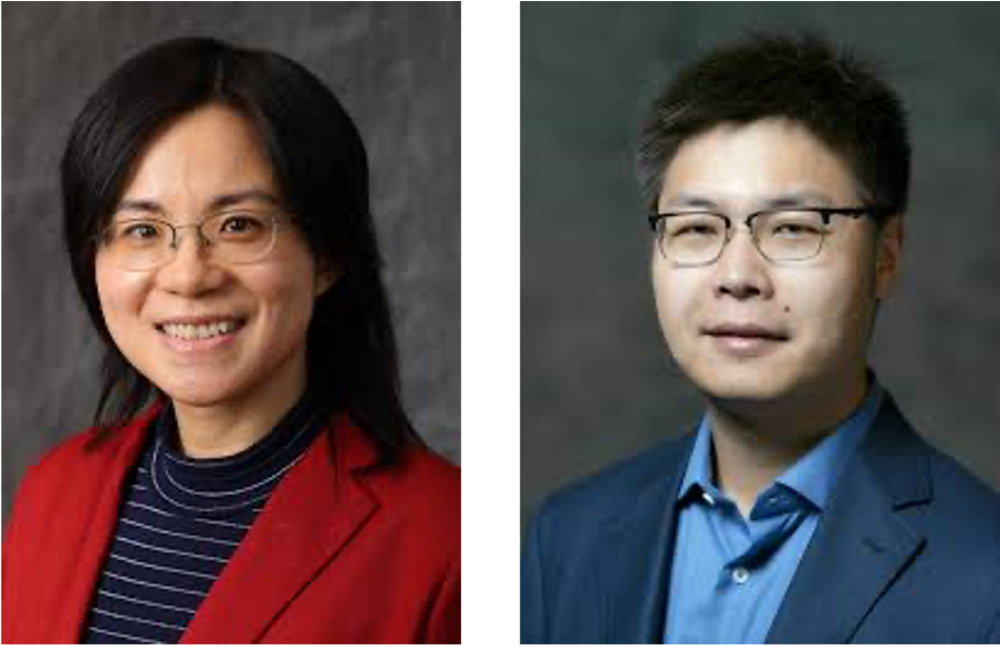
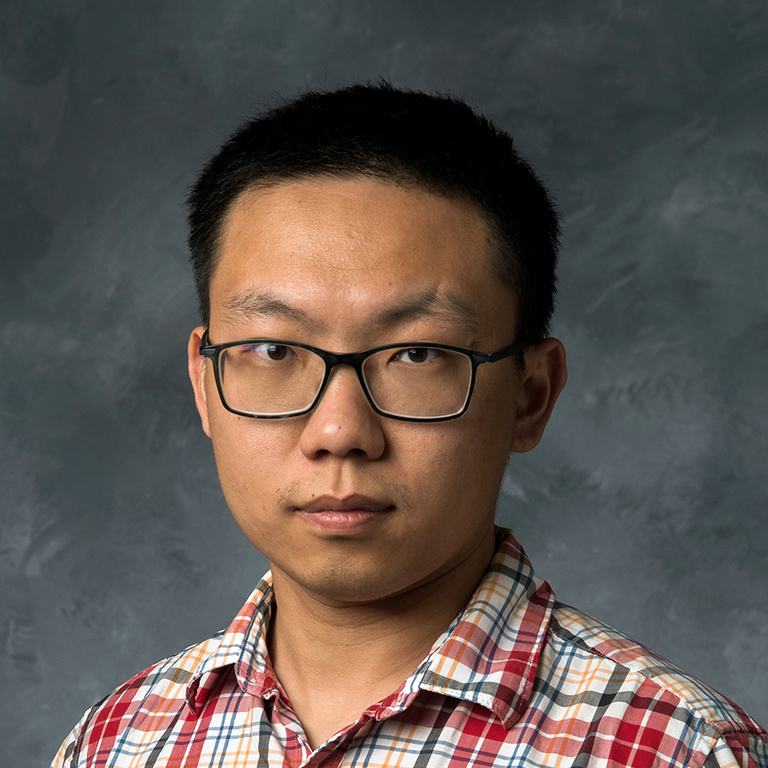
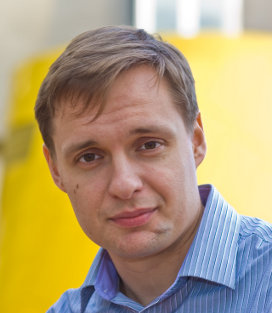
Prof. Wolfgang Utschick is a full Professor at the Technische Universität München (TUM), holding the professorship for Methods of Signal Processing since 2002. He is affiliated with the TUM School of Computation, Information and Technology and the Department of Electrical Engineering and Information Technology (EI). Since 2017, he has served as Dean of the EI Department, overseeing academic and research activities. His research integrates applied mathematics into signal processing applications across wireless communications, radar technology, vehicle safety, and machine learning. Prof. Utschick earned his doctorate after industry experience and completed postdoctoral studies at TUM and ETH Zurich. He has led numerous industrial and DFG-funded projects, resulting in patents in signal processing and over 150 peer-reviewed publications. Notable contributions include advancements in channel estimation, MIMO systems, and quantum radar technology. His research interests emphasize the intersection of mathematical theory and practical engineering, with a focus on optimizing communication systems and safety-critical applications. Awards include IEEE Fellow (2021), TUM Sabbatical for Teaching Excellence (2014), and multiple IEEE publication awards. Prof. Utschick’s work bridges academia and industry, addressing challenges in 5G/6G networks, radar innovation, and machine learning-driven signal processing. He remains active in curriculum development and departmental leadership at TUM.
Meng Wang is a Professor in the Department of Electrical, Computer, and Systems Engineering at Rensselaer Polytechnic Institute (RPI), where she was promoted to Full Professor in June 2025. She received her B.S. and M.S. degrees (both with honors) in Electrical Engineering from Tsinghua University, China, in 2005 and 2007, respectively, and her Ph.D. in Electrical and Computer Engineering from Cornell University in 2012. After a postdoctoral position at Duke University, she joined RPI in December 2012 as an Assistant Professor, was promoted to Associate Professor with Tenure in 2019, and then to Full Professor in 2025. Her research spans machine learning and artificial intelligence, high-dimensional data analytics, power system monitoring, signal processing, and optimization methods. She has made fundamental contributions in sparse signal recovery and monitoring and control of smart grid using high frequency data from phase measurement unit (PMU). More recently, she has collaborated with IBM to produce theoretical guarantees of modern AI architectures such as graph neural networks and transformers used in large language models (LLMs). Wang's recent publications (2023-2025) reveal a strong focus on theoretical foundations of deep learning, particularly transformer architectures and graph neural networks. Her work bridges theoretical guarantees with practical applications in power systems, demonstrating how fundamental insights in machine learning can solve real-world energy challenges. She has increasingly focused on the intersection of AI and energy systems, developing methods for building-level load forecasting, energy disaggregation, and smart grid monitoring with behind-the-meter solar integration. AFOSR Young Investigator Program (YIP) Award (2019) Army Research Office (ARO) YIP Award (2017) James M. Tien '66 Early Career Award and Grant for Faculty (2022) School of Engineering Research Excellence Award (2018) IEEE Signal Processing Society Best Reviewer Award (2018) Professor Wang has mentored numerous Ph.D. students who have gone on to successful careers in academia and industry, including HongKang Li (now postdoc at University of Pennsylvania), Yi Ming (postdoc at University of Michigan), and Shuai Zhang (Assistant Professor at New Jersey Institute of Technology). Her research has been supported by multiple grants from the National Science Foundation, Air Force Office of Scientific Research, Army Research Office, and industry partners including IBM. She is actively involved with research centers including the Center for Future Energy Systems (CFES) and the Center for Materials, Devices, and Integrated Systems (CMDIS), where her group develops cutting-edge methods for power system monitoring and control. Her recent work has increasingly focused on the theoretical foundations of large language models and their applications to energy systems, positioning her at the forefront of AI for critical infrastructure.
Livieris Ioannis is an Assistant Professor in the Department of Statistics and Insurance Science at the University of Piraeus. He holds academic positions including Adjunct Professorships at the University of the Peloponnese and Technological Educational Institute of Western Greece. His research focuses on optimization methods for neural networks, machine learning, ensemble techniques, and their applications in healthcare, finance, education, and environmental science. Education: Ph.D. in Mathematics (2012), University of Patras M.Sc. in Computational Mathematics & Informatics in Education (2008), University of Patras B.Sc. in Mathematics (2006), University of Patras Research Interests: Dr. Livieris specializes in developing optimization algorithms for neural networks, semi-supervised learning, and ensemble methods. His work emphasizes practical applications such as time series forecasting (financial, environmental), medical image analysis (cancer detection, X-ray classification), and educational data mining (student performance prediction). He also explores explainable AI frameworks to enhance transparency in deep learning models. Key Contributions: He has contributed to over 50 peer-reviewed articles, including work on weight-constrained neural networks, gradient-based optimization, and CNN-LSTM models for cryptocurrency forecasting. His research has been recognized with inclusion in Stanford’s top 2% scientists (2020–2023) and a best paper award at HERCMA ’09. Awards & Roles: Associate Editor, Evolving Systems (Springer) Reviewer for 50+ journals including Neurocomputing and IEEE Transactions on Neural Networks Grants & Projects: Principal investigator in EU-funded projects like NEUROCLIMA (climate resilience via AI), ORBIS (democratic participation via AI), and PVAdapt (sustainable energy systems). He also leads initiatives in explainable AI for medical imaging and causal effect estimation in social science. Labs & Teams: Active in interdisciplinary teams at the University of Piraeus, focusing on AI-driven solutions in education, healthcare, and environmental monitoring. Collaborates with institutions like the IEEE and the Hellenic Association of ICT in Education.
Anna Scaglione is a Professor in the Department of Electrical and Computer Engineering at Cornell University's College of Engineering, based at Cornell Tech. She rejoined the faculty in September 2021 after holding professorial positions at Arizona State University, UC Davis, and earlier at Cornell (2001–2008). She earned her M.Sc. in 1995 and Ph.D. in 1999 from Cornell University. Research Interests: Her work centers on statistical signal processing with applications in communication networks, electric power systems, intelligent infrastructure, and network science. Key areas include graph signal processing, federated learning, differential privacy, reinforcement learning for energy systems, and cyber-physical security in smart grids. She integrates machine learning, optimization, and control theory to address challenges in modern power systems and IoT. The 15 most recent publications (2021–2025) reveal a dominant trend in privacy-preserving and AI-driven solutions for power systems. Her research emphasizes federated learning , graph neural networks , differential privacy , and reinforcement learning applied to grid stability, cybersecurity, and distributed energy management. There is a strong focus on graph signal processing for power grid modeling and anomaly detection, as well as synthetic data generation and secure transactive energy platforms . IEEE Fellow (2011) IEEE Signal Processing Transactions Best Paper Award (2000) IEEE Donald G. Fink Prize Paper Award (2013) IEEE Signal Processing Society Young Author Best Paper Award (2013, with Lin Li) IEEE Smart Grid Communications Technical Committee Technical Achievement Award (2020) IEEE SPS Distinguished Lecturer (2019–2020) Dr. Scaglione has advised students including Lin Li, whose work earned a best paper award. She has secured significant research grants related to smart grid security, privacy, and optimization. Her editorial leadership includes Editor-in-Chief of IEEE Signal Processing Letters (2012–2013) and Deputy Editor-in-Chief of IEEE Transactions on Control of Networked Systems . She has served on IEEE technical committees, steering committees, and as General or Technical Chair for major conferences such as SPAWC, SmartGridComm, and GlobalSIP. She leads research in smart grid signal processing , secure distributed energy systems , and privacy-aware machine learning for infrastructure . Her team develops frameworks like Grid-GSP (Graph Signal Processing for power grids), SoDa (synthetic solar data), and CIGAR (cybersecurity via inverter reconfiguration). She is involved in blockchain-based transactive energy platforms and resilient simulation environments for critical infrastructure.
Zhengqing Wu is a Doctoral Assistant and Student at École Polytechnique Fédérale de Lausanne (EPFL), affiliated with the Laboratory for Information and Inference Systems (LIONS) under the Institute of Electrical Engineering (IEM) within the School of Engineering . Their research focuses on machine learning, robotics, quantum computing, and control systems, with notable contributions to neural network optimization, terrain-aware robotics, and quantum parameter-efficient fine-tuning. They are part of the Doctoral Program in Computer and Communication Sciences (EDIC). Key research interests include layer-wise quantization in neural networks, analysis of shallow ReLU networks' loss landscapes, and developing terrain-aware control systems for quadrupedal robots. Their work bridges theoretical insights (e.g., neural noise dynamics) with applied robotics and quantum computing advancements. Education: Doctoral Program in Computer and Communication Sciences (EDIC), EPFL Affiliations: LIONS Lab, EPFL No scientific awards are explicitly mentioned in the provided texts. Their advising and grant activities are not detailed here. The LIONS Lab focuses on information theory, signal processing, and machine learning applications.
Habib Hamam is a Professor in the Department of Electrical Engineering at the University of Moncton's Faculty of Engineering. His research spans optics, biomedical engineering, wireless communication, and AI applications. Specializations: Diffractive elements, optical interconnections, biomedical engineering, hybrid fiber/wireless systems, and AI-driven optimization. Contact: Email habib.hamam@umoncton.ca | Phone (506) 858-4762 Recent publications highlight his focus on AI integration across healthcare, energy systems, and education, combined with blockchain for security and transparent data management. Key subdomains include medical imaging, renewable energy optimization, and IoT scalability. Notable research trends involve deep learning for diagnostics (e.g., brain tumors, diabetic retinopathy), blockchain applications in smart grids and fisheries, and quantum-inspired algorithms for energy forecasting.
Dr. Remco Renken is a neuroimaging researcher at the University of Groningen's Faculty of Medical Sciences , specializing in advanced MRI and PET scan analysis. His work bridges clinical neuroscience and computational methods , with a focus on movement disorders, visual processing, and neurodegenerative diseases. Department of Radiology and Nuclear Medicine (UMCG) Clinical Cognitive Neuropsychiatry Research Program (CCNP) Perceptual and Cognitive Neuroscience (PCN) group Research Interests : Using fMRI , PET , and machine learning to study brain connectivity , visual cortex plasticity , and neurodegenerative patterns in Parkinson’s, multiple sclerosis, and glaucoma. His innovations include algorithms for 3D motion perception tracking and neuroimaging harmonization . Notable Contributions : Co-developed IRMA (Machine learning harmonization for multicenter PET scans) Co-inventor of a 3D motion perception evaluation system Co-supervisor for PhD research on auditory cortex responses and schizophrenia hallucinations Collaborations span neurology, psychiatry, and biomedical engineering, with datasets shared via Mendeley and DataverseNL.
Maggie Zhu (Fengqing Maggie Zhu) is an Assistant Professor at Purdue University's Department of Electrical and Computer Engineering, College of Engineering. She holds a Ph.D. in Electrical and Computer Engineering from Purdue (2011) and has focused on image processing, video compression, computer vision, and computational photography since joining the faculty in 2015. Ph.D. in Electrical and Computer Engineering (2011) Assistant Professor at Purdue (2015–present) Staff Researcher at Huawei Technologies (2012) Her research bridges machine learning with practical applications in image compression , 3D reconstruction , and nutrition analysis , particularly through wearable technologies and edge-cloud systems. Recent work includes class-incremental learning for 3D perception and low-rank adaptation for efficient vision models. Scientific awards include: Huawei Certification of Recognition (2012) NIH mHealth Summer Institute Participant (2011) Charles C. Chappelle Graduate Fellowship Motorola Foundation Fellowship She has contributed to food portion estimation using monocular imaging , neural video compression , and domain adaptation methods, with publications spanning learned compression techniques and healthcare applications. Recent grants focus on technology-enabled dietary assessment and collaborative computing frameworks.
Jens-Michalis Papaioannou is a prominent Researcher in clinical natural language processing (NLP) and medical informatics, with extensive publications in top-tier venues like ACL, LREC, and EMNLP. His work focuses on improving clinical decision support systems through advanced machine learning techniques. 2024 : Revisiting clinical outcome prediction for MIMIC-IV with biomedical transformers 2023 : Developing MEDBERT.de for German medical NLP and MedAlpaca conversational AI 2022 : Introducing ProtoPatient for interpretable diagnosis prediction 2021 : Creating self-supervised knowledge integration frameworks for admission note analysis His research spans seven major themes : Clinical outcome prediction from admission notes Cross-lingual knowledge transfer in medical NLP Prototypical network applications Data drift analysis in longitudinal datasets Knowledge integration techniques Model optimization for healthcare LLM interpretability frameworks He has collaborated with Wolfgang Nejdl, Alexander Löser, and Betty van Aken on 13+ publications , with over 445 citations. Notable contributions include: Novel patient similarity modeling approaches ICD code hierarchy integration methods Multilingual clinical model strategies Adversarial robustness analysis Medical conversational AI frameworks
Marko Martinović is a Senior Lecturer at the University of Slavonski Brod, affiliated with the College of Technical Sciences, Department of Informatics and Information Technology. He holds a PhD in Economics from the University of Osijek (2022) and a master's degree in Computing from the University of Zagreb (2006). His career spans academia and industry, with prior roles at the Polytechnic of Slavonski Brod and private sector experience in IT. PhD in Economics, University of Osijek, 2022 MSc in Computing, University of Zagreb, 2006 His research is centered on Artificial Intelligence , Machine Learning applications , and Financial Engineering . He explores AI in diverse domains including financial markets, renewable energy, sports technology, and ethical computing. His work often bridges technical computing with economic and social implications. The recent publications highlight a strong trend in applied AI , particularly using neural networks for forecasting (financial indices, currency, demand), optimization (edge AI, microcontrollers), and societal analysis (search engine bias). His work combines theoretical models with real-world datasets, emphasizing practical implementation and performance evaluation. Marko actively mentors students, supervising numerous undergraduate theses in computing and informatics. He is involved in institutional research projects such as the MOD-INO project (2019–2022), contributing to curriculum and research development. He has not received any explicitly mentioned scientific awards or major grants in the provided text. He teaches core courses including Basics of Artificial Intelligence , Python Programming , Neural Networks and Deep Learning , and Basics of Informatics . His technical expertise is complemented by a CCNA certification, reflecting a strong foundation in networking.
Peng Jiang is an Assistant Professor in the Computer Science Department at the University of Iowa. His research focuses on machine learning systems, high-performance computing, and graph processing, with a particular emphasis on compiler and programming techniques for GPU acceleration. He earned his Ph.D. in Computer Science from The Ohio State University in 2019 under Dr. Gagan Agrawal. Education: Ph.D., The Ohio State University, 2019 His work spans sparse training, knowledge graph embedding, and subgraph matching, often leveraging fine-grained parameter management and GPU optimization. Key trends in his publications include compiler design for high-performance systems, parallel programming models, and performance-aware weight pruning for neural networks. Scientific Awards 2024 NSF CAREER Award Peng Jiang has collaborated extensively with researchers such as Lihan Hu, Yihua Wei, Shihui Song, and Gagan Agrawal. His contributions to sparse matrix multiplication, distributed learning communication optimization, and PIM architecture-aware frameworks highlight his expertise in bridging machine learning and systems research.
Amin Alipour is an Associate Professor in the Department of Computer Science at the University of Houston, where he directs the Software Engineering Research Group. He holds a Ph.D. from Oregon State University and multiple advanced degrees from institutions in Iran and the U.S. His work focuses on improving safety and user experience of AI-assisted software engineering tools, with funding from NSF and IARPA. Prior to joining the U.S., he taught at the University of Kashan and Shiraz University in Iran. Education: Ph.D. in Computer Science, Oregon State University (Advisor: Alex Groce) M.S. in Computer Science, Michigan Technological University M.S. in Computer Engineering, Tarbiat Modares University B.S. in Computer Engineering, Petroleum University of Technology (Iran) Research interests include: Secure AI systems, particularly in code LLMs Trojan detection and mitigation in neural models Educational impacts of AI tools in programming education Formal methods for software verification Human-AI collaboration in programming tasks His recent articles explore cybersecurity in AI, student interactions with LLMs, and adversarial attacks on code models. He currently serves on program committees for ICER 2025 and ICSME 2025. His research group develops tools like FeatureExtractor and ProgramTransformer for analyzing neural code intelligence models.
Yuan Yuan is an Assistant Professor in the Department of Electrical and Computer Engineering at Northeastern University, based at the Oakland, California campus. His research focuses on optoelectronic devices, single-photon detection, silicon photonics, and large-scale photonic integrated circuits for interconnects and computing. He joined Northeastern in January 2025 and is affiliated with the Institute for NanoSystems Innovation. Yuan holds a PhD in Electrical Engineering from the University of Virginia (2019). His academic affiliations include IEEE and Optica. His work emphasizes practical applications of photonics in high-speed communication and computing systems, leveraging silicon-based photonic integration and advanced device designs. Recent publications highlight innovations in avalanche photodiodes, microring modulators, and precision optical neural networks. His research bridges fundamental photonics principles with scalable manufacturing processes. No scientific awards are explicitly mentioned in the provided text. Yuan’s advising and grant activities are not detailed, though his lab focuses on cutting-edge photonic systems. He collaborates with industry-standard foundry processes to develop next-generation photonic integrated circuits.
Yury Polyanskiy is a Professor of Electrical Engineering and Computer Science at the Massachusetts Institute of Technology (MIT), affiliated with the Laboratory for Information and Decision Systems (LIDS), the Institute for Data, Systems, and Society (IDSS), and the MIT Statistics and Data Science Center. He holds a Ph.D. from Princeton University (2010) and an M.S. from the Moscow Institute of Physics and Technology (2005). His research focuses on information theory, machine learning, statistical inference, error-correcting codes, and wireless communication. He has contributed to fundamental limits of communication systems, finite-blocklength analysis, and applications of information theory to learning and signal processing. Notable awards include the 2020 IEEE Information Theory Society James Massey Award, the 2013 NSF CAREER Award, and the 2011 IEEE Information Theory Society Paper Award. His work spans theoretical advancements and practical applications, including the development of the SPECTRE toolbox for short-packet communication. He is also co-authoring a textbook on information theory. Recent research highlights include studies on quantization techniques for machine learning (e.g., NestQuant), transformer-based empirical Bayes methods, and novel approaches to massive random access in wireless networks (e.g., unsourced multiple access). His contributions bridge information theory and modern data science, addressing challenges in high-dimensional data representation, neural network dynamics, and efficient communication architectures.
José Cano Reyes is a Senior Lecturer (Associate Professor) at the University of Glasgow's School of Computing Science, leading the Glasgow Intelligent Computing Lab (gicLAB) and serving as deputy Head of the GLAsgow Systems Section (GLASS). His academic career includes postdoctoral roles at the University of Edinburgh (2014-2018) and Universitat Politècnica de Catalunya (2012-2013), with a PhD and engineering degree from Universitat Politècnica de Valencia (2004-2012). He has held visiting and guest lecturer positions at Edinburgh and Glasgow across computer architecture, compilers, and embedded systems topics. Research focuses on hardware-software co-design for edge AI, including DNN acceleration (FPGA/GPU), encrypted AI systems, and secure mission-critical SoCs. Key projects include EU's dAIEDGE, EPSRC IDEAL, and UKRI AppControl. He leads over 15 research staff and students in areas like quantization, sparsity exploitation, and robust AI deployment. Notable contributions span 100+ peer-reviewed publications across top venues (ISCA, IJCNN, IEEE TPDS) and 3 authored books on ad hoc networks and embedded systems. Academic service includes organizing 20+ conferences (ISPASS, Euro-Par, ASPLOS) and serving on editorial boards for ACM TACO and IEEE TPDS. His educational efforts include teaching Computer Architecture (Year 4), Computer Systems (Year 1), and supervising over 20 PhD/MSc students since 2017.