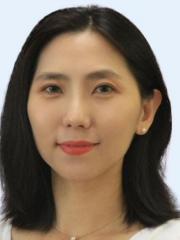
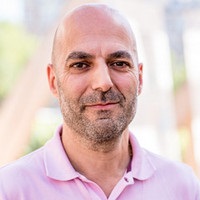
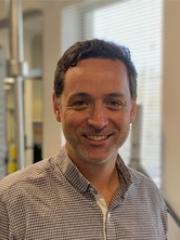
Dr. Fei Xue is a Postdoctoral Research Fellow at the School of Electrical Engineering and Computer Science, The University of Queensland. Her research focuses on integrating machine learning with medical imaging technologies, particularly microwave imaging modalities. She holds a Bachelor's degree from Hebei University of Technology, a Master's degree from Hebei Polytechnic University, and a PhD from The University of Queensland. Current research interests include: Deep learning applications in medical imaging Electromagnetic image reconstruction Development of advanced loss functions for microwave imaging Transfer learning techniques in biomedical signal processing Utilization of large databases for training universal neural networks Her recent work explores cascaded convolutional neural networks and attention-based architectures for improved medical imaging. Earlier research focused on materials science topics including: Ti (C, N) precipitation in enamel steels Hydrogen embrittlement effects in TWIP steel Temperature measurement systems using CCD and MATLAB
Monika Harvey is a Professor of Neuropsychology and Cognitive Neuroscience at the University of Glasgow's School of Psychology & Neuroscience. She holds a BSc in Psychology from the University of Bielefeld (Germany) and a PhD in Neuropsychology from the University of St Andrews (UK). Her career includes appointments at the University of Bristol and the University of Glasgow. Her research focuses on cognitive neuroscience, particularly visual perception, hemispatial neglect, and cognitive aging. She employs techniques like EEG, non-invasive brain stimulation, virtual reality, and AI to study brain age prediction and attention mechanisms. Her work spans neurorehabilitation, aging-related cognitive changes, and clinical applications of neurotechnology. She has contributed to studies on stroke recovery, attention deficits, and driver behavior in autonomous vehicles. Her research emphasizes interdisciplinary approaches, bridging psychology, neuroscience, and technology. Publications highlight her expertise in spatial attention, neglect rehabilitation, and the neural basis of perception-action systems. She collaborates on grants exploring post-stroke insomnia, driver interfaces for autonomous cars, and neuroimaging techniques. Her lab integrates experimental and computational methods to advance understanding of brain function and disorders.
Dr. Wenbin Li is a Senior Lecturer (Associate Professor) in Robotics at the University of Bath's Department of Computer Science. He leads the Pering Laboratory (Perceptual Intelligence Laboratory), affiliated with the AI & Machine Learning and Visual Computing groups. Previously, he held postdoctoral positions at Imperial College London (2016-2018) and UCL (2014-2016), and earned his PhD from the University of Bath in 2013, with earlier degrees from Imperial College London (MSc, 2009) and Xidian University (B.Eng, 2008). His research focuses on unified autonomous systems, including multi-sensory localization/mapping, dynamic motion capture, and uncontrolled scene understanding with applications in manufacturing and professional capture. Key areas include Robotics, Computer Vision, Graphics, and Machine Learning. He actively supervises doctoral students in these fields and has funded PhD openings. Dr. Li has been involved in major initiatives such as the My World - Strength in Places Fund (2021–2027), SLAM with Reinforcement Learning (2022–2023), and the CAMERA MC2 Award (2019–2023). His work aligns with UN Sustainable Development Goals, particularly in advancing technology for societal benefit. Recent publications emphasize aerial robotics, autonomous systems, and computer vision applications, including UAV package delivery reviews, Bayesian optimization for balloon station-keeping, and generative models for intrinsic image decomposition.
Roberto Bresin is a Professor of Media Technology at KTH Royal Institute of Technology's Division of Media Technology and Interaction Design (MID), part of the School of Electrical Engineering and Computer Science (EECS). He leads the Sound and Music Computing group and serves as Director of Studies for the Media Technology program and Director of NAVET, a center for art, technology, and design research. His work bridges music, robotics, and human interaction. Research focuses include expressive music performance, emotion in sound, robot sound design, and sonification. He holds a PhD in Music Acoustics from KTH (2000) and has extensive experience in sound engineering and interactive systems. Key projects involve designing auditory feedback for robots and exploring light's psychological impacts. His publications span robotics, sonification, and human-centered technology. Recent articles address robot sound aesthetics, daylight effects on behavior, and sonification of computer processes. Bresin collaborates internationally, contributing to EU initiatives like SAME and Nordic SMC networks. His work emphasizes cross-disciplinary innovation, with applications in education, healthcare, and environmental science.
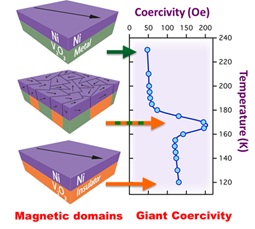
Ivan Schuller is a Distinguished Professor in the Department of Physics at the University of California San Diego (UCSD). His research focuses on superlattices, nanostructures, vortices, organic semiconductors, insulating thin films, proximity effects, and devices. He holds a Ph.D. from Northwestern University (1976). Key awards include the 2015 Lise Meitner Award, the 2014 NTN Nanostar Award, and the 2004 E.O. Lawrence Award. His work spans phase transitions in quantum materials, neuromorphic computing, and magnetic phenomena. The Schuller Group has pioneered studies on hybrid materials, including vanadium dioxide-based devices and thermal neuristors for energy-efficient computing. Research highlights include discoveries in giant magnetic effects induced in hybrid materials, voltage-controlled spin resonance, and stochastic synchronization in spiking oscillators. He has collaborated on projects such as phase-change metasurfaces for thermal management and neuromorphic architectures using correlated electron systems. His lab explores intersections between materials science, energy applications, and computational neuroscience. Education: Ph.D. in Physics, Northwestern University (1976) Awards: NSSEFF Award, IEEE Distinguished Lecturer, Doctor Honoris Causa (Universidad Complutense de Madrid) Labs/Teams: Schuller Group (focusing on quantum materials and neuromorphic engineering) Recent work includes studies on ramp reversal memory in VO₂, resistive switching in engineered Mott insulators, and correlative microscopy of phase transitions. His research bridges fundamental physics and applied technologies, with implications for next-generation computing and energy systems.
Dr. Wim J.C. Verhagen is an Associate Professor and Deputy Head of Department (Research & Innovation) in the School of Engineering at RMIT University, Melbourne. His research focuses on predictive maintenance, decision support systems, and aerospace engineering, with emphasis on data-driven models for aircraft systems. He holds industrial collaborations with global entities like Airbus, NASA, and KLM. Education: Former Assistant Professor at TU Delft (Netherlands), alumni of TU Delft. Academic roles include leadership in RMIT's Aerospace Engineering department since 2024. Research interests: Development of prognostics and health management (PHM) systems, maintenance decision support using NLP and mixed reality, and optimization of maintenance planning. Over 100 peer-reviewed publications. Industry projects: Principal investigator in EU-funded projects like Clean Sky 2 AIRMES (€5.6M H2020 ReMAP) and partnerships with Australian defense and aviation sectors (DSTG, CASG). Teaching: Coordinates courses in aircraft maintenance management, aviation quality systems, and analytical writing techniques. Supervises postgraduate and undergraduate research students.
Dr. Graham Brooker is a Senior Lecturer at the University of Sydney's School of Aerospace, Mechanical and Mechatronic Engineering since 1999. He holds a PhD (2005) and degrees from the University of the Witwatersrand. Research Interests: Focuses on radar systems for autonomous navigation, rehabilitation engineering (dementia/Parkinson's), medical robotics (birth simulators), and millimeter-wave imaging. His work improves safety in mining/military environments and quality of life through assistive technologies. Recent Projects: Includes radar-acoustic interactions, entomological harmonic radar, dental robotics, cervical tissue modeling, and force analysis during childbirth. Active in developing low-cost radar solutions for road vehicles and microwave weed killing systems. Awards: Notable recognitions include 2010 AMME Teaching Award, 2012 Faculty Teaching Award, and top-tier conference paper prizes. Holds patents and has authored multiple textbooks like Introduction to Biomechatronics (2012) and Sensors for Ranging and Imaging (2022).
Professor Gregg Suaning is a leading academic in Biomedical Engineering at the University of Sydney, affiliated with the School of Biomedical Engineering, The University of Sydney Nano Institute, and the Brain and Mind Centre. He holds a PhD from UNSW and has over 25 years of experience in implantable neuroprosthetics, focusing on restoring sensory functions for the blind and deaf. His work spans academic and industry roles, including contributions to Cochlear's cochlear implant innovations and pioneering visual prosthetic research. Education: PhD (UNSW, 2003), MSc and BSc (California State University, 1986-1988). Research interests center on developing implantable bionics to restore vision and hearing. Notable projects include the Phoenix 99 suprachoroidal visual prosthesis and facial nerve paralysis interventions. He has authored over 150 peer-reviewed papers and secured $60M+ in research funding. Awards include the Bartimaeus Award for contributions to the blind community and multiple innovation awards. He leads IEEE's Engineering in Medicine and Biology Society committees and holds senior IEEE membership. Current projects focus on facial nerve paralysis treatments, high-density micro-electrode arrays, and improving cochlear implant efficacy. His lab collaborates with clinical partners to advance biocompatible neural interfaces and prosthetic systems.
Luke Kelly is an Honorary Associate Professor at the School of Human Movement and Nutrition Sciences (The University of Queensland). Specializing in human foot biomechanics , his research explores the evolutionary, neuromuscular, and elastic tissue mechanisms underlying foot function during locomotion, with applications in health (osteoarthritis) , rehabilitation , and robotic/prosthetic design . Industry collaborations: Australian Sports Commission , Asics Oceania , Cricket Australia Research focus: Foot structure-function relationships , Muscle mechanics , Energy conservation His work employs advanced methodologies like biplanar videoradiography and markerless motion capture , addressing questions about foot adaptation to surfaces , diabetic foot morphology , and neuromechanical control . While not directly supervising students currently, he has guided research on foot fatigue , prosthetic optimization , and injury biomechanics . Luke Kelly’s contributions include: Key publications in Journal of Biomechanics , Royal Society Interface , and PNAS Dataset creation for foot shape modeling , muscle-tendon dynamics , and joint kinematics Grants from ARC Discovery , NHMRC , and Arthritis Foundation of Australia
Jingjie Li is a Lecturer (Assistant Professor) in the School of Informatics at the University of Edinburgh, where he conducts interdisciplinary research at the intersection of computer systems, cybersecurity, and human-computer interaction. He is a member of the Institute for Computing Systems Architecture and the School of Informatics Ethics Committee. Ph.D. in Computer Engineering, University of Wisconsin-Madison (2017–2023) B.Eng. (R&D) with First-Class Honours, Australian National University (2015–2017) B.Sc., Beijing Institute of Technology (2013–2015) His research focuses on user-centric security and privacy , measuring human behavior in digital systems , and efficient human-machine interfaces . He investigates risks in emerging technologies such as smart homes, AR/VR, and AI systems, aiming to make them safer and more human-centric. His work combines technical innovation with behavioral insights to design practical privacy controls, measure digital risks, and build efficient computing platforms. The recent publications highlight a strong trend in privacy transparency , AI explainability , smart home and AR/VR security , and hardware-software co-design . His work frequently appears in top-tier venues including IEEE S&P, USENIX Security, ACM CHI, and ISCA, reflecting a consistent focus on both technical depth and human factors. Notable scientific awards include: ACM CHI Best Paper Award (2019) Facebook Trustworthy Products in AR, VR, and Smart Devices Award (2021) CPS Rising Star, NSF (2022) Generative AI Laboratory Seedcorn Award, University of Edinburgh (2024) Qualcomm Innovation Fellowship Finalist (2019, 2021) Jingjie Li actively supervises PhD students including Jiuming Jiang and Karen Jiamin Zheng, and co-supervises Lawrence Piao and Temima Hrle. He has received research support through fellowships such as the UW–Madison Chancellor’s Opportunity Fellowship and has collaborated globally with institutions including Max Planck Institute, Visa Research, and CSIRO. He serves on the program committees of major conferences like ACM CCS, USENIX Security, and ACM CHI. He leads a dynamic research team focused on systems security and human-centered computing, hosting undergraduate researchers and mentoring students through projects in privacy, AI transparency, and hardware security. His lab fosters interdisciplinary collaboration and real-world impact through community engagement, such as the 'Hack Your Age' workshop with intergenerational participants.
Professor Anthony O'Neill at Newcastle University is a leading researcher in semiconductor device physics, optogenetic neuroprosthetics, and strained silicon engineering. His work spans silicon carbide MOSFETs, graphene fabrication, and implantable neural interfaces, with a focus on improving device performance through material science innovations. Semiconductor Device Physics Optogenetic Neuroprosthetics Strained Silicon Technology Micromachining Processes Advanced Material Characterization His 15 most recent publications (2018-2024) demonstrate expertise in: 4H-SiC MOSFET optimization Nitridation techniques Implantable neuroprosthetic systems Molecular dynamics simulations for silicon processing High-κ dielectrics in microelectronics Flexible electrode arrays
Parag Khanna is a Doctoral Student at the Division of Robotics, Perception and Learning , KTH Royal Institute of Technology. His work focuses on Human-Robot Interaction (HRI) , particularly in developing adaptive techniques for robot-human handovers. University: KTH Royal Institute of Technology Department: Robotics, Perception and Learning Khanna's research explores physical and social aspects of HRI . He studies human-human handovers to improve robotic grip release strategies and object weight adaptation. His work also delves into non-touch modalities like EEG and gaze tracking for intention detection. His recent publications highlight advancements in data-driven control , failure explanations , and multimodal datasets for HRI. Notable works include the REFLEX Dataset and studies on adaptive grip release in human-robot collaborations. Key Research Areas: Human-Robot Handovers Machine Learning for Robotics EEG and Gaze-Based Intention Detection Failure Communication in Social HRI Khanna is affiliated with the Digital Futures - Advanced Adaptive Intelligent Systems project, aiming to empower elderly and disabled individuals through autonomous robotics.
Professor Gil Lee holds the Stokes Full Professor of Physical Chemistry position at the University College Dublin, School of Chemistry . With a B.S. and Ph.D. in Chemical Engineering from Purdue University and University of Minnesota respectively, he transitioned to academia after postdoctoral research at the American Society of Engineering Education and a research engineer role at the Naval Research Laboratory. His career spans associate professorship at Purdue University (2000-2008) and adjunct roles, showcasing a trajectory marked by innovation in biomagnetic technologies . Education B.S. Chemical Engineering, Purdue University (1987) Ph.D. Chemical Engineering, University of Minnesota (1992) Postdoctoral Fellow, American Society of Engineering Education (1995) Executive Education Global EMBA, TRIUM (2016) His research is driven by three key areas : Bionanomaterials : Development of superparamagnetic microparticles for biological separations, drug delivery, and hyperthermia therapy. Techniques include iron-gold nanorods and self-assembled iron oxide nanoparticles with controlled surface chemistry. Single-Molecule Force Analysis : Pioneering work in atomic force microscopy (AFM) for quantitative force measurements, including streptavidin-biotin bond lifetime studies and magnetic tweezers for parallel ligand-receptor analysis. Biosensing & In Vitro Diagnostics : Innovations in immunomagnetic cell separation, magnetophoretic sensing, and microfluidic devices for rapid pathogen detection and cancer diagnostics. His scientific awards include the Stokes Chair (2008), E.T.S. Walton Fellowship (2006), and multiple Edison Patent Awards. He has received grants for projects in cancer diagnostics and microfluidic technologies . His teaching activities focus on advanced physical chemistry modules, emphasizing kinetics and thermodynamics, with roles as module coordinator since 2014.
Southern University of Science and Technology (SUSTech)China
Zhang Jin is a Professor at the Department of Mathematics in the College of Science at Southern University of Science and Technology (SUSTech) since December 2024. He also serves as the Associate Vice Director of the Shenzhen National Applied Mathematics Center since February 2023. Education: Ph.D. in Applied Mathematics (2014, University of Victoria); M.Sc. in Operational Research (2010, Dalian University of Technology); B.Art in Journalism (2007, Dalian University of Technology) Research Interests span optimization theory , variational analysis , bilevel programming , and their applications in machine learning , economics , and data science . His work includes convergence analysis of first-order methods , stochastic/robust optimization , and error bound conditions . Recent Publications focus on nonconvex bilevel optimization , gradient-based algorithms , and stochastic programming , with papers in IEEE TPAMI , SIAM Journal on Optimization , and conferences like ICML , NeurIPS , and ICLR . Scientific Awards include the Youth Science and Technology Innovation Award from Guangdong Province (2022) , Youth Science and Technology Award from the Operations Research Society of China (2020) , and Junior Research Award from SUSTech's Faculty of Science (2020) . Students: Supervises Ph.D. candidates like Yixia Song , Peixuan Yang , and Qichao Cao , along with Master's students Yixuan Zhang , Kaiqi Sun , and Feifan Wang . Grants: Leads projects such as the National Key R&D Program (3.2M RMB, 2024-2028) and National Science Fund for Distinguished Young Scholars (2M RMB, 2023-2025) .
Sarah L. Swisher is the Russell J. Penrose Professor in Nanotechnology and Associate Director for Research Advancement at the Minnesota Nano Center. She is an Associate Professor in the Department of Electrical and Computer Engineering at the University of Minnesota, leading the Swisher Research Group. B.S., Electrical Engineering, University of Nebraska-Lincoln M.S. and Ph.D., Electrical Engineering and Computer Sciences, University of California, Berkeley Her research spans semiconductor device physics, materials science, and bioengineering, focusing on nanomaterial synthesis, flexible electronics, and biomedical sensors. Key applications include wearable medical devices, graphene-based neural interfaces, and photonic curing processes for high-performance thin-film transistors (TFTs) on plastic substrates. The 15 most recent publications highlight trends in flexible electronics (e.g., graphene arrays, polymer skulls with transparent electrodes), biomedical sensors (e.g., microneedle ion-selective sensors, impedance monitoring), and advanced fabrication methods (e.g., photonic curing, inkjet printing). Subfields include device layout optimization, thermal management, and high-κ dielectrics. Swisher's lab actively recruits graduate students for PhD research in semiconductor materials, flexible sensors, and smart biomedical devices. She collaborates with interdisciplinary teams at the Minnesota Nano Center and has received funding from undisclosed sources.