Dr. Paul Carter is an Assistant Professor in the Department of Mathematics at the University of California, Irvine, specializing in applied mathematics with focus on dynamical systems and pattern formation. His research examines nonlinear dynamics in biological and ecological contexts through PDE models. Primary research investigates vegetation pattern formation in dryland ecosystems, where he analyzes how sloped terrain influences stripe patterns through reaction-diffusion-advection models. Additional projects study neural pulse dynamics in FitzHugh-Nagumo systems and tumor invasion patterns in cancer models. He leads NSF-funded projects including a CAREER award on pattern formation in singularly perturbed PDEs and directs the Patterns and PDEs REU program. Recent publications demonstrate application of geometric singular perturbation theory to biological pattern formation. Teaching includes graduate PDE courses and undergraduate dynamical systems. He mentors undergraduate researchers through summer REU programs focusing on mathematical biology applications. Professional service includes editorial work for Physica D and organization of SIAM conferences on nonlinear waves. Recent invited talks address pattern-forming instabilities at international mathematics conferences.
Dr. Wenbin Li is a Senior Lecturer (Associate Professor) in Robotics at the University of Bath's Department of Computer Science. He leads the Pering Laboratory (Perceptual Intelligence Laboratory), affiliated with the AI & Machine Learning and Visual Computing groups. Previously, he held postdoctoral positions at Imperial College London (2016-2018) and UCL (2014-2016), and earned his PhD from the University of Bath in 2013, with earlier degrees from Imperial College London (MSc, 2009) and Xidian University (B.Eng, 2008). His research focuses on unified autonomous systems, including multi-sensory localization/mapping, dynamic motion capture, and uncontrolled scene understanding with applications in manufacturing and professional capture. Key areas include Robotics, Computer Vision, Graphics, and Machine Learning. He actively supervises doctoral students in these fields and has funded PhD openings. Dr. Li has been involved in major initiatives such as the My World - Strength in Places Fund (2021–2027), SLAM with Reinforcement Learning (2022–2023), and the CAMERA MC2 Award (2019–2023). His work aligns with UN Sustainable Development Goals, particularly in advancing technology for societal benefit. Recent publications emphasize aerial robotics, autonomous systems, and computer vision applications, including UAV package delivery reviews, Bayesian optimization for balloon station-keeping, and generative models for intrinsic image decomposition.
David Terburg is Associate Professor in Social Neuroscience at Utrecht University's Department of Psychology (Faculty of Social and Behavioural Sciences). His research examines neurobiological mechanisms of social behavior using multimodal approaches including hormone administration, fMRI, and lesion studies. His research focuses on: Neural basis of social motivation and aggression Amygdala function in threat processing and escape behaviors Hormonal modulation of social decision-making Cross-species validation of social neuroscience findings Analysis of his publications shows strong emphasis on the basolateral amygdala's role in rapid threat responses, and hormonal influences (testosterone, oxytocin) on social cognition. Recent work develops neurocomputational models of cerebellum-amygdala interactions. Scientific awards include: NWO Veni Award (2013) for research on neuroendocrine mechanisms of defense behaviors He teaches courses in neuropsychology and social neuroscience, employing methods like eye-tracking and psychophysiology. His lab uses pharmacological interventions and neuroimaging to study clinical populations including psychopathy and social anxiety. Research is supported by Dutch Science Foundation grants and involves international collaborations across Europe and South Africa.
Qi Tang is an Assistant Professor in the School of Computational Science and Engineering (CSE) at Georgia Institute of Technology, part of the College of Computing. He joined Georgia Tech in 2024 after serving as a Staff Scientist at Los Alamos National Laboratory (LANL) from 2018 to 2024. His research focuses on computational plasma physics, high-performance computing, and scientific machine learning, with applications in fusion energy, plasma simulations, and structure-preserving neural networks. Education: Ph.D. in Applied Mathematics, Michigan State University, 2015 B.S. in Mathematics & Applied Mathematics, Zhejiang University, 2010 Research Interests: Qi’s work spans scalable numerical algorithms for exascale computing, fusion modeling, and scientific machine learning. Key areas include: High-order schemes, adaptive mesh refinement, and GPU acceleration for MHD and plasma simulations Structure-preserving neural networks for dynamical systems and multiscale physics Multi-physics modeling of tokamak disruptions and magnetic reconnection Grants & Collaborations: Principal Investigator (PI) for multiple DOE grants, including ASCR MMICC Center (CHaRMNET) Led a multi-institutional ASCR SciML team with LANL, ANL, and universities Recipient of LANL LDRD and NSF grants for fusion and plasma research Advising & Teaching: Advises Ph.D., master’s, and undergraduate students in CSE, physics, and engineering Teaches Parallel Computing Programming and Applications (CSE-6230) Co-advises students in DOE-funded programs and LANL collaborations Labs & Teams: Qi is affiliated with the DOE ASCR MMICC Center (CHaRMNET) and LANL’s Applied Mathematics and Plasma Physics Group. His team develops open-source tools like MFEM-based MHD solvers and structure-preserving ML frameworks.
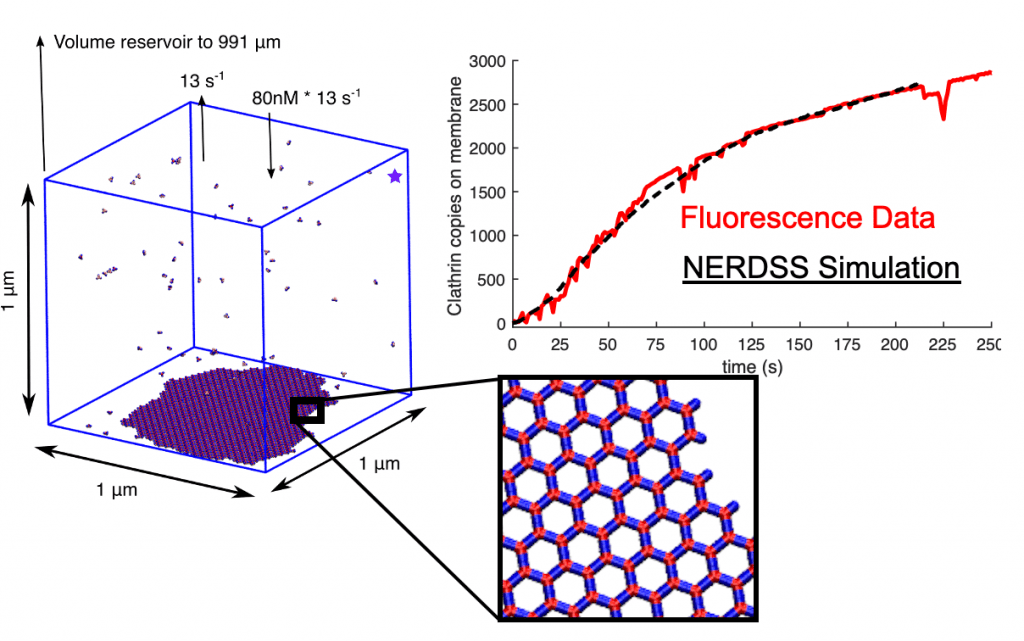
Margaret Johnson is an Associate Professor in the Department of Biophysics at Johns Hopkins University, where she has been since 2013. Her research group focuses on self-assembly and self-organization in cellular systems, with emphasis on clathrin-mediated endocytosis, viral exit mechanisms, and transcriptional regulation. Education: B.S. in Applied Mathematics from Columbia University Ph.D. in Bioengineering from University of California, Berkeley Her multidisciplinary research combines statistical mechanics, computational modeling, and experimental collaborations to study how macromolecular self-assembly is spatially and temporally controlled in biological systems. Key areas include dimensional reduction effects in protein binding, membrane remodeling dynamics, and reaction-diffusion modeling of cellular processes. Recent publications highlight her group's work on optimal kinetic pathways for self-assembly membrane-associated assembly mechanisms dimensional reduction effects in biological systems parallelized simulation algorithms temporal control of viral assembly membrane energy and protein lattice formation These studies often integrate with software development like ioNERDSS for simulation analysis. Scientific Awards: NIH Pathway to Independence Award NSF CAREER Award NIH MIRA Award Margaret's group has trained numerous graduate and postdoctoral researchers, with recent graduates securing academic positions and PhD programs at top institutions. Her lab actively develops open-source simulation tools and maintains collaborations across disciplines to advance understanding of non-equilibrium biological systems.
Gustavo Deco is a Research Professor at the Institució Catalana de Recerca i Estudis Avançats (ICREA) and holds a Professorship (Catedrático) at Pompeu Fabra University (UPF). He leads the Computational Neuroscience Group and directs the Center of Brain and Cognition at UPF. His research focuses on computational models of brain dynamics, integrating biophysics, neuroimaging, and complex systems principles. Deco’s academic journey includes a PhD in Physics (1987, thesis on Relativistic Atomic Collisions), postdoctoral work at the University of Bordeaux (France) and University of Giessen (Germany), and a Habilitation in Computer Science (1997, Technical University of Munich). He has led computational neuroscience research at Siemens Corporate Research Center (1990–2003) and pioneered whole-brain modeling frameworks like The Virtual Brain (TVB). His research interests span critical brain dynamics, non-equilibrium thermodynamics in neural systems, psychedelics’ effects on brain hierarchy, and clinical applications of computational models in disorders such as Alzheimer’s and depression. Recent work emphasizes turbulence-like dynamics in healthy and diseased brains, and biomarker discovery using AI-driven simulations. Deco’s articles (2024–2025) explore topics like entropy production in brain networks, psychedelics-induced flattening of functional hierarchies, sleep-like dynamics post-stroke, and the role of long-range connections in global brain communication. His work bridges theoretical models with clinical insights, aiming to advance personalized neurology and digital brain research.
Yuri Calil is an Assistant Professor & Extension Specialist at Texas A&M University’s College of Agriculture & Life Sciences, Department of Agricultural Economics. His work focuses on agribusiness challenges, policy analysis, and applied economic research in agriculture. Previously, he held roles as Assistant Professor at Federal University of Itajubá (Brazil), consultant at PwC, and visiting scholar at institutions like the University of Chicago and MIT. Dr. Calil earned a B.S. in Agribusiness from Federal University of Viçosa (Brazil), an M.S. in Applied Economics from University of São Paulo, and a Ph.D. in Managerial Economics and Agribusiness from Texas A&M. He completed a MicroMaster at MIT and attended courses at IMPA and Babson College. His research interests span agricultural economics, financial economics, applied econometrics, and Brazilian agribusiness. Key areas include digital twin technology for farm management, crop-livestock integration systems, and policy impacts on greenhouse gas emissions. He leads Extension programs in the Coastal Bend region, emphasizing data-driven solutions for agribusiness. Notable contributions include studies on UAV-based irrigation efficiency, cattle price modeling under arid conditions, and soybean revenue insurance strategies. His work bridges academic research with practical applications for sustainable agricultural practices and policy development.
Kevin Flores is an Associate Professor in the Department of Mathematics at North Carolina State University (NC State), and Director of the Biomathematics Graduate Program. He leads the Flores Lab, focusing on developing mathematical and statistical methods for parameter estimation, uncertainty quantification, and forecasting in Precision Medicine, Environmental Toxicology, and Synthetic Biology. His work bridges computational approaches with biological systems analysis. Dr. Flores earned his PhD in 2009 from Arizona State University. His research groups include the Mathematical Biology cluster within the Department of Mathematics. His affiliations include Cox Hall 406D and the College of Sciences at NC State. Research interests emphasize interdisciplinary applications: (1) Mathematical Biology involving tumor heterogeneity, viral dynamics, and angiogenesis modeling; (2) Biostatistics focusing on parameter estimation in complex systems; and (3) Computational Tools for biomedical image analysis and machine learning in healthcare. His lab pioneered methods like biologically-informed neural networks and topological data analysis for biological systems. Recent work highlights include: (1) tumor spheroid modeling predicting clinical variability; (2) BK virus infection dynamics in transplant patients; (3) EEG-based brain-computer interface improvements using GANs; and (4) few-shot learning for plant phenotyping. His methodologies address challenges in sparse data scenarios and integrate mechanistic understanding with data-driven approaches. Awards and recognition : None explicitly listed in provided texts. Advising and grants: No specific advisees or grant details provided in texts. His lab's software tools support image segmentation and population modeling. Labs/teams: Directs the Flores Lab for Mathematical Biology at NC State, specializing in hybrid computational-experimental approaches. Collaborates across departments in biomathematics and engineering.
Fayssal Benkhaldoun is a Professor at Université Paris 13, affiliated with the LAGA laboratory (UMR7539). He has held leadership roles including former Head of the MCS team (Modeling and Scientific Computing) at LAGA and former President of the Scientific Council at IUT Villetaneuse. He is also the Project Leader of the International Office at IUT Villetaneuse. His research focuses on numerical methods for partial differential equations, particularly finite volume schemes for hyperbolic and elliptic problems. Key areas include shallow water equations, flow in porous media, mesh adaptation, and combustion front propagation. He has organized major conferences such as the International Symposium on Finite Volumes for Complex Applications (FVCA), initiating its first edition in 1996. Recent work emphasizes advanced numerical techniques like stabilized meshless methods, GPU acceleration, and parallel computing for CFD applications. His contributions span environmental modeling (flood simulation, sediment transport) and industrial applications (phosphate slurry rheology). Students advised include Jan Karel (2014, streamer propagation) and Saida Sari (2013, multilayer shallow water equations). He co-organized conferences since 1996 and has been an invited speaker at numerous institutions globally.
Diana Mateus is a Researcher at Centrale Nantes, affiliated with the LS2N Laboratory. She holds a bachelor's in Electronic Engineering from the University of Javeriana (Colombia), a Master's in Control and Automation from Paul Sabatier University (France), and a PhD in Computer Vision from INRIA Grenoble. After postdoctoral work and eight years as an associate researcher at Technical University of Munich and Helmholtz Zentrum (Germany), she returned to France to join Centrale Nantes via the Connect Talent Program, securing a starting grant for interdisciplinary research in medical image analysis and machine learning. Her research focuses on Milcom —a project integrating multimodal imaging (MRI, CT, ultrasound, PET) with machine learning to advance computational medicine. Key objectives include computer-aided diagnosis, disease knowledge advancement, and improving imaging quality. Collaborations include the hospital's Nuclear Medicine Department, focusing on multiple myeloma, and companies Hera-Mi and Keosys for breast cancer research. She supervises six PhD students and two postdocs, emphasizing synergies between engineering and healthcare. At Centrale Nantes, she benefits from dynamic institutional support, quality students, and complementary team skills. Her lab recently acquired a research-dedicated ultrasound machine to develop machine learning-driven imaging optimization. Living in Nantes, she values its family-friendly environment and proximity to academic and medical networks.
Vincent Sitzmann is an Assistant Professor at the Massachusetts Institute of Technology (MIT) in the Department of Electrical Engineering and Computer Science (EECS), where he leads the Scene Representation Group at MIT's Computer Science and Artificial Intelligence Laboratory (CSAIL). His research focuses on building machines that learn to understand and interact with the world autonomously through 'world models' - mental simulators that enable agents to predict environmental outcomes and the consequences of their actions. His educational background includes a PhD from Stanford University under Gordon Wetzstein and a Bachelor's degree from the Technical University of Munich. Sitzmann's research spans computer vision, graphics, and robotics, with pioneering contributions to neural scene representations. He introduced Scene Representation Networks (SRNs) that enable continuous 3D-structure-aware scene modeling from 2D images. His work on implicit neural representations with periodic activation functions has become foundational to the field. Recent research focuses on scaling 3D reconstruction techniques, improving generative models for visual content, and developing methods for robot control through neural Jacobian fields. His approach emphasizes both theoretical rigor and practical applications across multiple domains. His publication record shows a clear progression toward more sophisticated diffusion models applied to video generation, robotics, and 3D reconstruction. The 2025 Nature paper on robot control via Jacobian fields demonstrates his expanding influence beyond traditional computer vision into robotics. His work consistently bridges theoretical advances with practical implementations, as evidenced by the CVPR 2023 Best Paper Runner-Up for pixelSplat, which offers scalable solutions for 3D reconstruction. His notable scientific achievements include: CVPR Best Paper Runner-Up (2023) for 'pixelSplat' Multiple papers with 'Spotlight' or 'Oral' presentations at NeurIPS and CVPR 2023 Amazon Research Award for '2D and 3D Animation via Image-Conditional Generative Flow Models' NeurIPS Outstanding New Directions Honorable Mention (2019) As leader of the Scene Representation Group, Sitzmann mentors researchers working at the intersection of computer vision, graphics, and AI. The group has secured funding from prestigious sources including Amazon Research Awards. Their work has practical applications in virtual reality, robotics, and content creation industries. Sitzmann teaches advanced courses at MIT, including 'Advances in Computer Vision' (6.8300). The Scene Representation Group focuses on developing novel methods for 3D scene understanding and manipulation. Current projects include research on neural radiance fields, diffusion models for 3D content creation, and methods for autonomous scene understanding. The group maintains active collaborations with industry partners and academic institutions to advance visual computing research.
Justin Solomon is an Associate Professor in the Department of Electrical Engineering & Computer Science at Massachusetts Institute of Technology, where he serves as Principal Investigator of the Geometric Data Processing Group. He maintains dual affiliations with the Computer Science and Artificial Intelligence Laboratory (CSAIL) and the MIT Center for Computational Science and Engineering (CCSE), reflecting his interdisciplinary research bridging theoretical mathematics with practical applications in graphics and machine learning. His research interests center around geometric data processing, computational geometry, and optimal transport theory, with significant contributions to computer graphics, machine learning, and computer vision. Solomon's work spans fundamental mathematical theory to practical implementations, particularly in shape analysis, 3D reconstruction, and geometric deep learning. His research demonstrates consistent innovation in developing algorithms that bridge discrete and continuous geometry with applications in graphics, vision, and AI. The publication trends reveal Solomon's evolving research trajectory from foundational work in geometry processing toward increasing integration with modern machine learning techniques. His recent work shows strong emphasis on diffusion models, geometric deep learning, and applications of optimal transport in AI, with significant contributions to SIGGRAPH, NeurIPS, and ICML proceedings. The research demonstrates both mathematical rigor and practical impact, with applications spanning character animation, 3D reconstruction, and generative AI. Amazon Research Award (2017) for Large-Scale Geometrically-Structured Sampling Amazon Research Award (2023) for Lightweight Algorithms for Generative AI Ben Wegbreit Prize for Best Undergraduate Honors Thesis Firestone Medal for Excellence in Undergraduate Research Boothe Prize for Excellence in Writing 2nd place, SGP best paper awards (2010) Solomon has secured substantial research funding through awards like the Amazon Research Awards and maintains active collaborations across academia and industry. His group has produced numerous influential publications with students and collaborators, contributing significantly to both theoretical foundations and practical implementations in geometric data analysis. His textbook "Numerical Algorithms" demonstrates his commitment to education alongside research. As Principal Investigator of the Geometric Data Processing Group, Solomon leads a research team focused on developing mathematical foundations for analyzing and processing geometric data. The group maintains strong connections with both theoretical mathematics and practical applications, working at the intersection of computer graphics, machine learning, and computational geometry. Their work has significant implications for fields ranging from computer animation to medical imaging and scientific computing.
Josien Pluim is a Full Professor of Medical Image Analysis at Eindhoven University of Technology (TU/e), where she leads the Medical Image Analysis group and serves as vice-dean of the Department of Biomedical Engineering. She also holds a part-time professorship at the University Medical Center Utrecht. Her research is centered at the intersection of artificial intelligence and clinical medicine, with strong affiliations to EAISI (Eindhoven Artificial Intelligence Systems Institute) and the EAISI Health initiative. Her academic background includes a Master's in Computer Science from the University of Groningen (1996), specializing in Scientific Computing and Imaging, followed by a PhD (2001) from the Image Sciences Institute at UMC Utrecht on multimodality image registration using mutual information. She advanced from assistant to associate professor at UMC Utrecht before joining TU/e as a Full Professor in 2014, with a concurrent part-time appointment at UMC Utrecht since 2015. Pluim’s research interests span medical image analysis, including image registration, segmentation, detection, and deep learning, with clinical applications in neurology and oncology. She investigates both methodological development and real-world clinical translation. Recent work emphasizes generative AI for synthetic data, robustness in deep learning models, and super-resolution techniques for brain MRI. Her publications reveal a strong trend toward addressing data scarcity, generalization, and evaluation in medical AI, particularly through simulation and diffusion models. She has co-authored over 250 peer-reviewed papers and is recognized with prestigious fellowships: Fellow of the MICCAI Society IEEE Fellow Pluim has served in leadership roles across the academic community, including Associate Editor for journals such as IEEE Transactions on Medical Imaging , IEEE TBME , and Medical Image Analysis . She has chaired major conferences like WBIR 2006 and MICCAI 2010, and served on the Executive Board of the MICCAI Society. She actively supervises research and educational projects, including team challenges and capstone courses in medical image analysis. Her group is involved in significant collaborative research, such as the EU-funded openGTN project, which supports PhD training in generative models for medical imaging. She also contributes to scientific advisory boards, including the Hanarth Fonds.
Associate Professor Phil Clausen is a computational biomechanics and wind energy expert at the School of Engineering, University of Newcastle . His career spans two major research themes: small wind turbine dynamics and fatigue testing and computational biomechanics of biological structures using finite element analysis (FEA). He has led the development of accelerated fatigue test programs for turbine blades and reverse-engineered iconic fossils like Smilodon fatalis and the Tasmanian Tiger to understand biomechanical evolution. Education: PhD and BEng (Hons) from University of Newcastle Research Expertise focuses on: Small wind turbine blade design, fatigue life prediction, and performance optimization Computational biomechanics of crocodiles, komodo dragons, and extinct species Publications (65+ journal articles) cover wind energy systems (2000–2020) and biomechanics (2005–2021), with high-impact work featured in Nature , PLoS ONE , and Royal Society B . Notable findings include debunking assumptions about sabre-toothed cat bite force and quantifying dingo vs. thylacine predatory mechanics. Grants ($1.06M+ total) include ARC Discovery Projects, industry partnerships with Aerogenesis Australia and TUNRA , and commercialization of diffuser-augmented turbine technology. He has supervised numerous research students and collaborated with interdisciplinary teams across engineering, biology, and paleontology.
Professor Yongmin Li is a Senior Member of the IEEE and Senior Fellow of the Higher Education Academy at the Department of Computer Science , Brunel University London , within the College of Engineering, Design and Physical Sciences . His work spans multiple domains including data science, artificial intelligence, medical imaging, and foveated rendering. He has consistently been ranked in the world's top 2% scientists by Elsevier's Standardized Citation Indicators since 2020. Research Interests include Data Science Medical Imaging Computer Vision Biomedical Engineering Natural Language Processing Set-Membership Filtering Scientific Awards include 1st Place, RETOUCH Challenge (Online), MICCAI 2023 2nd Place, FeTA Challenge, MICCAI 2022 Most Influential Paper over the Decade Award, MVA 2019 Best Paper Award, Bioimaging 2018 VC Prize, Brunel University 2015