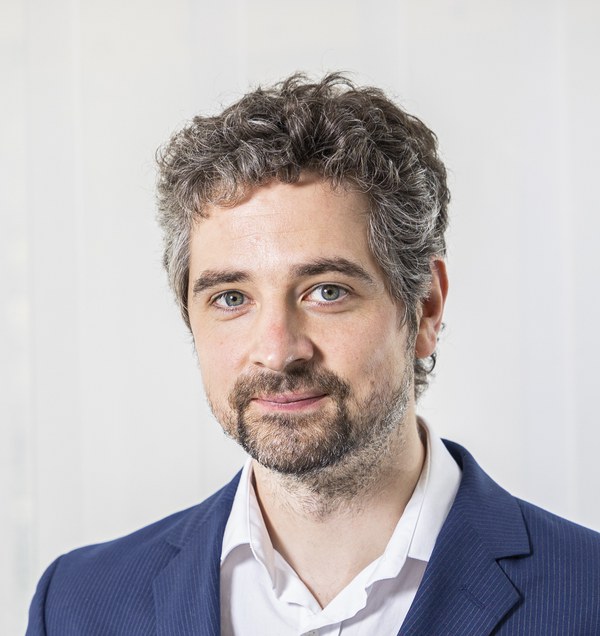
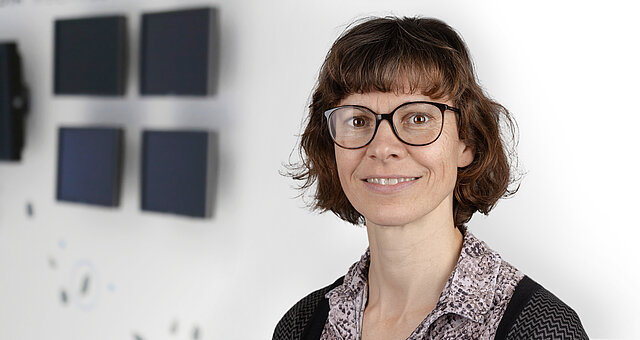
Dr. Nan Liu is a Researcher at the Institute of Neuroscience and Medicine (INM) , specifically within the Cognitive Neuroscience (INM-3) department at the Research Center Jülich GmbH . Their work focuses on neural dynamics, perception, and cognitive processes using advanced neuroimaging techniques. Key research areas include face perception, motor region connectivity, spatial cognition, and reference frame processing. Dr. Liu's recent studies explore theta and alpha oscillations in ambiguous stimuli perception, information flow in motor regions, and overlapping neural responses in visuospatial and arithmetic tasks. Contact: +49 2461/61-4208 | Email Office: Building 05.7, Room 3014, Wilhelm-Johnen-Straße, 52428 Jülich Research emphasizes interdisciplinary approaches, combining EEG, fMRI, and computational modeling to map brain functions. Recent articles highlight contributions to understanding neural synchronization in perception, motor cortex connectivity, and spatial cognition mechanisms.
Prof. Simon Musall is an Assistant Professor of Neuromodulation at RWTH Aachen University and Head of the in-vivo Neurophysiology Lab at Forschungszentrum Jülich. His research focuses on understanding how multisensory information is integrated in neural networks to guide behavior, particularly in mice performing cognitive tasks. He employs advanced techniques like high-density electrophysiology and functional imaging to study cortical networks, pathway-specific information transfer, and neuromodulation effects. Key research interests include neural network function, decision-making mechanisms, and neuromodulation's role in information processing. His lab develops cutting-edge neurotechnology, such as flexible neural probes and organic neurohybrid systems, to advance in vivo recordings and closed-loop control. Collaborative projects integrate computational neuroscience with experimental approaches to dissect cortical circuit dynamics and their behavioral correlates. Recent work highlights contributions to spike sorting algorithms (UnitRefine), network dynamics modeling (Riemannian multi-scale decomposition), and enzyme-mediated neurohybrid interfaces. His interdisciplinary approach bridges basic neuroscience with translational tools for studying neurodevelopmental and psychiatric conditions.
Unnur Andrea Ásgeirsdóttir is a Doctoral Researcher at the Max Planck Institute for Human Cognitive and Brain Sciences in Leipzig, Germany. She is affiliated with the Department of Neurology and the International Max Planck Research School NeuroCom. Previously, she was part of the Former Minerva Fast Track Group focused on Neural Codes of Intelligence. Her work is centered on understanding neural mechanisms underlying cognitive processes and intelligence. She holds a doctoral position within the institute's research framework and is based at the Stephanstraße 1A campus in Leipzig. No specific awards or publications are explicitly listed in the provided text.
Dr. Vadim Nikulin is a Research Professor and Group Leader at the Department of Neurology, Max Planck Institute for Human Cognitive and Brain Sciences in Leipzig, Germany. His research focuses on neural interactions and heart-brain dynamics, with leadership in two key groups: 'Neural interactions and dynamics' and 'Heart-Brain Interactions.' He previously held roles as Principal Investigator at Charité - Universitätsmedizin Berlin and conducted post-doctoral research across institutions in Finland, Sweden, and Russia. Education: PhD in Neuroscience from the University of Helsinki (2001) with a thesis on magnetoencephalographic studies of sensorimotor systems. Master's from St. Petersburg State University (1994). Research interests include neural oscillations, cardio-cerebral interactions, motor system plasticity, and neuroimaging techniques (EEG/MEG/TMS). Recent work explores how cardiac signals influence motor preparation, interoceptive processing, and decision-making, with a focus on translational applications in Parkinson’s disease and mental health. Publications emphasize methodological advancements in electrophysiology, including heartbeat-evoked potential validation and neural oscillation dynamics. His lab integrates computational neuroscience with clinical research, advancing understanding of brain rhythms in health and disease. No scientific awards are explicitly listed; however, his sustained leadership in high-impact research groups indicates significant academic recognition. Students/advising details are not provided in available texts. Labs/Teams: Leads the Neural Interactions and Dynamics Group and Heart-Brain Interactions Group at MPI. Collaborates internationally across neurology, physics, and computational neuroscience disciplines.
Ruud van den Brink is a Research Fellow at the University Medical Center Hamburg-Eppendorf (UKE), affiliated with the Faculty of Medicine and the Institute of Neurophysiology and Pathophysiology. His research focuses on understanding the neural mechanisms underlying cognitive processes, particularly the role of neuromodulatory systems in shaping brain network dynamics and behavior. Key research interests include the interplay between catecholamines (e.g., dopamine, norepinephrine) and large-scale cortical networks, the impact of arousal systems on decision-making and attention, and the application of neuroimaging techniques (EEG/fMRI) to study brain state dynamics. His work bridges systems neuroscience with clinical applications, such as tracking recovery in brain injury patients through EEG spectral analysis. Recent studies highlight how neuromodulators like catecholamines dynamically reconfigure brain connectivity patterns, influencing temporal processing, sensorimotor integration, and behavioral variability. Notable contributions include demonstrating how pupil dynamics and brainstem activity predict cortical interactions during flexible decisions and how attentional demands alter cortical response variability over time.
Stefano Panzeri is a Professor at the University of Hamburg's Medical Faculty, affiliated with the Department of Neuroscience. His research focuses on neural coding, information theory, and computational neuroscience, particularly in sensory systems and decision-making processes. He contributes to the Zentrum für Molekulare Neurobiologie Hamburg (ZMNH), advancing understanding of neural network dynamics and their implications for cognition. Key areas: Neural information processing, sensory systems, decision-making. Publications span topics like cortical coding, neuroimaging, and computational models. His work integrates experimental and theoretical approaches, with recent emphasis on decoding neural signals and their behavioral relevance. Collaborations include developing tools like MINT for neural data analysis.
Birgit Nierula is a Researcher at the Fraunhofer HHI within the Interactive & Cognitive Systems Group , part of the Vision and Imaging Technologies department. Her work focuses on human-computer interaction, emotion recognition, electrophysiology, and brain-machine interfaces. She explores non-invasive electrophysiological methods to study spinal cord activity, somatosensory processing, and neural dynamics across the central nervous system. Her research also delves into the psychological and physiological aspects of agency, responsibility, and pain perception in virtual environments and neurorehabilitation contexts. Her research interests include: Development of brain-computer interface (BCI) paradigms for movement control and neurorehabilitation Analysis of somatosensory and cardiac signals through electrophysiological techniques Investigation of body ownership and agency in immersive virtual reality (VR) environments Impact of expectation and sensory modulation on pain perception and neural responses Her publications emphasize methodological advancements in artifact removal for spinal-cord electrophysiology and interdisciplinary research at the intersection of neuroscience, biomedical engineering, and human-computer interaction. Current projects address the ethical and perceptual implications of BCI technologies and the translation of neurophysiological insights into clinical applications.
Dr. Sherry H. Suyu is an Associate Professor at the Technical University of Munich (TUM) and a Max Planck Fellow at the Max Planck Institute for Astrophysics. Her research focuses on gravitational lensing applications for cosmology, particularly in measuring the cosmic expansion rate and studying dark energy/dark matter. She leads the HOLISMOKES program funded by an ERC Consolidator Grant. Her research group at TUM School of Natural Sciences Department of Physics investigates: Dark cosmos through gravitational lensing Supernova observations and Tidal Disruption Events Bayesian inference methods for astrophysical modeling Machine learning applications in lensed system analysis Scientific achievements include: 2021 Berkeley Prize from American Astronomical Society ERC Consolidator Grant for HOLISMOKES program Discovery of 330 high-quality lens candidates in Pan-STARRS survey She teaches courses including: Experimental Physics 1 (Winter 2024/5) Gravitational Lensing (Winter 2024/5) Introduction to Nuclear/Particle/Astrophysics (Summer 2025) The group includes 13 active members and 14 alumni across 7 institutions. Current work integrates HST and LSST imaging for next-generation lens discovery.
Valeriy Vyatkin is a Professor at Aalto University's Department of Electrical Engineering and Automation within the School of Engineering. He also maintains an affiliation with Luleå University of Technology in Sweden. His research spans industrial automation, distributed control systems, and digital transformation of manufacturing processes. Vyatkin leads a significant research group focusing on next-generation industrial control architectures and has established himself as a leading authority in the IEC 61499 standard for distributed industrial automation systems. Professor Vyatkin's research interests center around industrial automation systems with particular emphasis on distributed control architectures, formal methods for verification of industrial control systems, and digital twin technologies. His work bridges theoretical computer science with practical industrial applications, developing methods for model checking, virtual commissioning, and formal verification of industrial automation systems. He has pioneered approaches for applying reinforcement learning to industrial process control, particularly in steel manufacturing and energy systems. His recent work explores the integration of generative AI with industrial control systems, focusing on rapid prototyping and code generation for IEC 61499 applications. The analysis of Professor Vyatkin's recent publications (2023-2025) reveals a strong research trajectory focused on advancing industrial automation through multiple complementary approaches. His work demonstrates a consistent emphasis on the IEC 61499 standard as a foundation for distributed control systems, with growing integration of AI techniques, particularly generative models and reinforcement learning. A notable trend is the progression from theoretical foundations toward practical implementation frameworks, with increasing attention to security, privacy, and human factors in industrial settings. His research group has expanded into new application domains including energy systems, horticulture, and nuclear instrumentation while maintaining core expertise in manufacturing automation. Professor Vyatkin has made significant contributions to the field through his editorial work, including serving as guest editor for special issues in IEEE Transactions on Industrial Informatics. His research has been supported by multiple grants from national and international funding agencies focusing on industrial digitalization and smart manufacturing initiatives. Professor Vyatkin actively supervises numerous PhD and Master's students, with a consistent research group of 8-10 students and postdoctoral researchers. His advising approach emphasizes both theoretical rigor and industrial relevance, with many students collaborating directly with industry partners. His research group has established collaborations with major industrial players in manufacturing, energy, and automation sectors across Europe. The research activities are centered around the Industrial Automation research group at Aalto University, which maintains strong connections with the international IEC 61499 community. The team operates a dedicated laboratory for industrial automation research with capabilities for virtual commissioning, digital twin development, and formal verification of control systems. The group participates in multiple European research projects focused on Industry 4.0 and 5.0 technologies, with particular emphasis on human-centric automation and secure industrial systems.
Hui Fang is a researcher at Loughborough University , Department of Computer Science, UK. Their work spans Artificial Intelligence , Machine Learning , and Remote Sensing , with recent focus on Medical Imaging , Natural Language Processing , and Urban Mobility . Publications highlight innovations in MRI Reconstruction , Legal Judgment Prediction , and Video SAR Analysis . Research Interests include Graph Neural Networks , Transformer Models , and Data Mining applied to domains like Agricultural Technology , Healthcare Systems , and Smart Cities . Methodologies emphasize Interpretable AI , Federated Learning , and Multimodal Integration . Key 2024-2025 Trends involve Transformer-Based Architectures for Medical Imaging , Information Bottleneck in Spatio-Temporal Networks , and Bootstrapping Techniques for Information Extraction . Collaborative projects with Dongdong Weng , Zhu Xiao , and Yong He demonstrate interdisciplinary applications in Transportation , Healthcare , and Agriculture . Recent Co-authored Publications span IEEE Transactions , Neurocomputing , and Remote Sensing Journals , addressing Dynamic Phasor Modeling , 4D Facial Capture , and Virtual Reality Usability .
Thien Huynh-The is a Professor in the Department of Electrical Engineering at Chungnam National University's College of Engineering, where they lead research in wireless communications, deep learning applications, and IoT systems. With over 150 publications spanning from 2014 to 2025, their work demonstrates sustained academic productivity with significant contributions to 5G/6G networks, spectrum sensing, and federated learning architectures. Research interests focus on the intersection of deep learning and wireless communications, particularly in automatic modulation classification, semantic segmentation for remote sensing, and energy-efficient communication protocols. Their innovative approaches include developing specialized CNN architectures like SRNet for spectrum sensing and CosPoint Transformer for 3D semantic segmentation, addressing critical challenges in 5G/6G systems and metaverse infrastructure. Recent work explores STAR-RIS-aided networks, waveform classification for integrated radar-communication systems, and privacy-preserving federated learning for healthcare applications. Analysis of publication trends reveals increasing focus on metaverse technologies and 6G communications since 2022, with significant contributions to IEEE Communications Surveys & Tutorials and IEEE Internet of Things Journal. Key research areas include federated learning optimization, channel estimation techniques using attention networks, and semantic communication frameworks for edge-assisted metaverse applications. Collaborative research spans multiple institutions with frequent co-authorship with Dong-Seong Kim, Quoc-Viet Pham, and Won-Joo Hwang. Current projects address critical challenges in wireless power transfer, spectrum efficiency, and computational resource allocation in next-generation networks.
Michel Kulhandjian is a researcher specializing in Wireless Communication and Machine Learning applications. His work spans NOMA Systems , RF Fingerprinting , and Drone-Assisted Sensing across academic institutions. Key collaborations with Carleton University , Carleton University , and University of Ottawa researchers Active in 5G/6G technologies and IoT Security since 2018 His recent articles focus on: 2024 : Pedestrian detection, drone-based tree health monitoring, and industrial IoT security 2025 : AI-powered agricultural robotics Scientific contributions include: Code design for OTFS-NOMA systems Low-complexity detection algorithms 3D CNN frameworks for signal analysis RF Fingerprinting under impaired channels
Yoan Shin is a researcher active in wireless communication, machine learning, and remote sensing. His work spans indoor localization, SAR ship detection, UAV object detection, and IoT resource allocation. Key research areas: Wireless Sensor Networks, Deep Learning, SAR Imagery, UAV Systems, IoT Recent publications focus on hybrid Wi-Fi/PDR indoor tracking (2023), enhanced RT-DETR architectures for UAV imagery (2024), and SAR ship detection optimization (2024). Trends show expertise in sensor fusion, attention mechanisms, and domain-specific neural networks. Collaborates extensively with researchers like Chushi Yu, Thu L. N. Nguyen, and Oh-Soon Shin. No explicit awards or teaching roles listed.
Professor Yi-Bing Lin is a distinguished faculty member in the Department of Computer Science at National Yang Ming Chiao Tung University, Taiwan, where he leads pioneering research in Internet of Things (IoT) systems and applications. His work primarily focuses on developing the IoTtalk platform and its numerous derivatives across various domains including smart agriculture, smart homes, environmental monitoring, and creative applications. His research interests span Internet of Things, Edge Computing, Smart Agriculture, Sensor Networks, AI Integration, Wireless Networking, and Smart Home Systems. Professor Lin has developed the IoTtalk framework that enables rapid development of IoT applications with numerous specialized implementations including VoiceTalk, SensorTalk, AgriTalk, and many others that address specific domain challenges. His work emphasizes practical implementations with real-world impact, particularly in precision agriculture where his team has developed systems for orchid disease detection, rice blast monitoring, turmeric farming, and watermelon ripeness prediction. Analysis of his recent publications (2023-2025) reveals a strong trend toward integrating AI with IoT systems, particularly for agricultural applications and smart environments. His work increasingly incorporates advanced techniques like continuous wavelet transform, deep learning, and computer vision to solve practical problems in precision farming and environmental monitoring. The publications also show growing interest in creative applications of IoT technology for performing arts, interactive experiences, and educational contexts. Professor Lin has received recognition through consistent high-volume publication output in top-tier venues including IEEE Internet of Things Journal, IEEE Access, and Sensors. His collaborative network is extensive, with frequent co-authorship with researchers like Yun-Wei Lin, Wen-Liang Chen, and Min-Zheng Shieh. His advising has produced numerous researchers who continue to work in IoT and related fields, with many former students maintaining collaborative relationships. Professor Lin's research has been supported by multiple grants enabling the development of practical IoT systems with real-world implementations. His lab has developed numerous specialized IoT applications through the IoTtalk framework, creating a cohesive research ecosystem. Current work shows expansion into new application domains including interactive miniature worlds, simultaneous performance across locations using IoT-based motion capture, and IoT-based musical instruments like piano playing robots and violin robots, demonstrating the versatility of his research approach.
Jong-Deok Kim is an active researcher in wireless communication and IoT systems, with frequent collaborations on publications spanning dynamic channel bonding, network optimization, and low-power protocols. His work addresses challenges in Wi-Fi, LoRa, and millimeter-wave networks, focusing on throughput, latency, and reliability. Research Focus: Wireless networks, edge computing, and blockchain for IoT. Key Topics: Channel allocation, federated learning, and error compensation methods. His recent publications highlight trends in adaptive algorithms for dense networks, hybrid positioning systems, and federated learning applications. Awards and grants are not explicitly mentioned in the provided data.