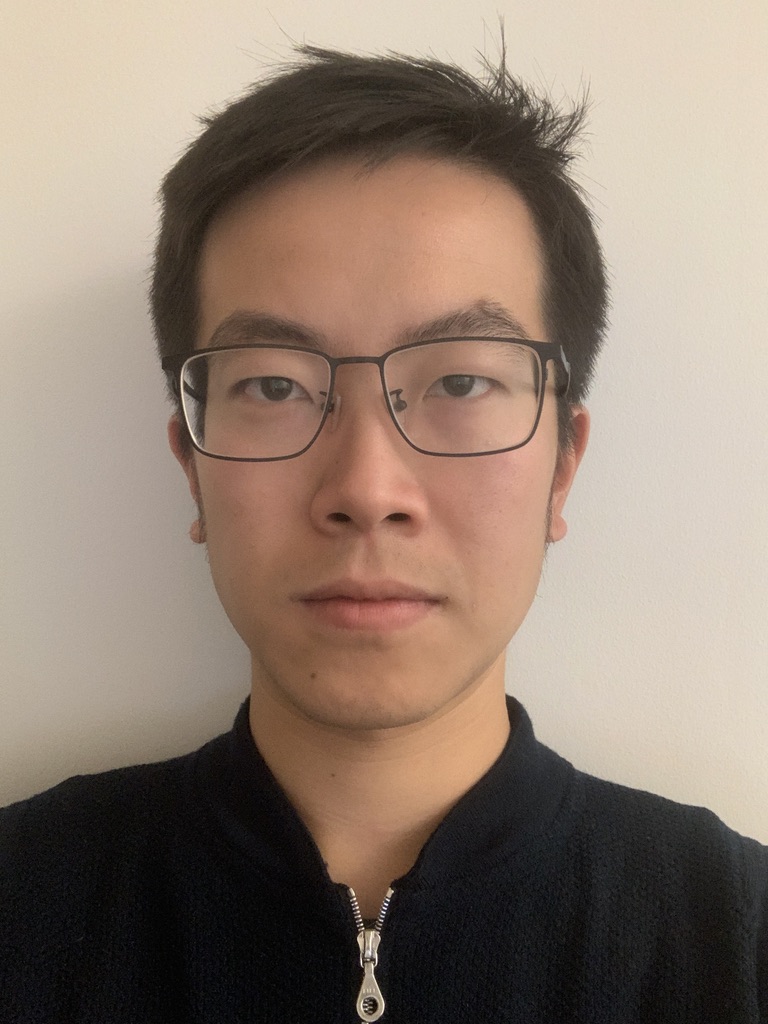
Adjunct Professor Shuai Wan is affiliated with the School of Engineering at RMIT University (City Campus, Australia). His research focuses on computer vision, machine learning, 3D point cloud compression, neural video coding, and remote sensing . Key contributions include lightweight deep learning frameworks for image/video compression, spatio-temporal context models for point clouds, and adaptive quantization techniques. Research Outputs Insights : Wan’s work spans 2024–2025 , emphasizing end-to-end deep learning solutions for challenges in Exemplar-based colorization with semantic attention Rendering-oriented 3D point cloud compression Slimmable video codecs with variable bitrate G-PCC standard enhancements for quantization and entropy coding Adversarial example detection in remote sensing Technical Domains : His articles intersect artificial intelligence, signal processing, and computer graphics , with applications in cloud gaming, SAR systems, and industrial data compression. Methods include transformers, attention networks, and 3D convolutional architectures .
Professor Andreas Geiger leads the Autonomous Vision Group (AVG) at the University of Tübingen , heading the Department of Computer Science and serving as core faculty at the Tübingen AI Center . He is Principal Investigator in the ML in Science cluster of excellence and CRC Robust Vision , while coordinating the ELLIS PhD program . Develops machine learning models for computer vision, NLP, and robotics Focus on 2D/3D representations, geometry/material reconstruction, and robust AI Applications in autonomous vehicles, VR/AR, and document analysis His research has produced hundreds of publications with significant impact, including multiple best paper awards at top venues. The Scholar Inbox platform he co-created revolutionizes academic paper discovery, winning business model awards at Tübingen AI Center spinoff events. Key research areas include: Neural rendering and 3D scene understanding Self-driving perception and planning systems Simulation frameworks for autonomous validation Efficient reinforcement learning architectures Recent awards include: CVPR 2024 Best Paper Sage 10-Year Impact Award 2024 IEEE PAMI Young Researcher Award 2018 Active in CyberValley and ELLIS Institute Tübingen , he maintains strong industry collaborations through initiatives like the ML ⇌ Science Colaboratory . His group's work appears in journals like TPAMI and conferences including SIGGRAPH 2025.
Keivan Navaie is a Professor of Intelligent Networks at Lancaster University’s School of Computing and Communications. He serves as a member of the Independent Scientific Advisory Committee at the Alan Turing Institute, overseeing the £100 million BridgeAI programme, and previously as Principal AI Technology Advisor to the UK Information Commissioner’s Office (ICO). He is recognized with Fellowships from the Institution of Engineering and Technology (IET), Chartered Engineer status in the UK, Senior Fellowship of the Higher Education Academy (HEA), and the IEEE Young Investigator Award. Research Focus: Wireless communications, mathematics, artificial intelligence, 6G networks, blockchain technology, edge computing, cognitive radio networks, and non-orthogonal multiple access (NOMA). Supervision: Actively supervises PhD students in areas like wireless communications and mathematical modeling. Projects: Involved in distributed learning, blockchain integration, 6G research, and spectrum sharing systems. Awards: IEEE Young Investigator Award, Fellow of IET, Chartered Engineer, Senior Fellow of HEA.
Albert Qiaochu Jiang serves as a Visiting Research Fellow at the Department of Computer Science and Technology, University of Cambridge. His research integrates machine learning with formal theorem proving, focusing on neural theorem provers and mathematical reasoning systems. He leads the reasoning team at Mistral AI while maintaining academic supervision at Cambridge. His research interests center on machine learning for theorem proving , with specific expertise in neural-symbolic integration, autoformalization, and large language models for mathematical reasoning. His work bridges artificial intelligence with formal verification, developing systems that enhance automated reasoning capabilities through neural networks. Current projects involve improving premise selection for theorem provers, multilingual mathematical formalization, and creating efficient architectures for mathematical language models. Analysis of his recent publications reveals a strong focus on advancing neural theorem proving through innovative architectures like Target-Based Automated Conjecturing and Magistral. His research trajectory shows increasing sophistication in integrating language models with formal verification systems, with significant contributions to datasets like Numinamath and frameworks like Llemma. Key trends include optimizing compute efficiency in proof generation, enhancing multilingual mathematical reasoning, and developing interactive human-AI collaboration systems for formal mathematics. While no scientific awards are currently documented in available sources, his research output demonstrates significant impact in the intersection of AI and formal methods. As leader of Mistral AI's reasoning team, Jiang directs research on neural theorem proving systems while contributing to academic supervision at Cambridge. His work involves substantial industrial-academic collaboration, leveraging resources from both institutional contexts to advance mathematical AI. Current projects focus on creating practical systems for mathematical automation with real-world verification applications. His research operates at the intersection of academia and industry through Mistral AI's reasoning team, where he develops neural theorem proving systems with practical applications in formal verification. This dual affiliation enables rapid translation of theoretical advances into deployable tools for mathematical automation.
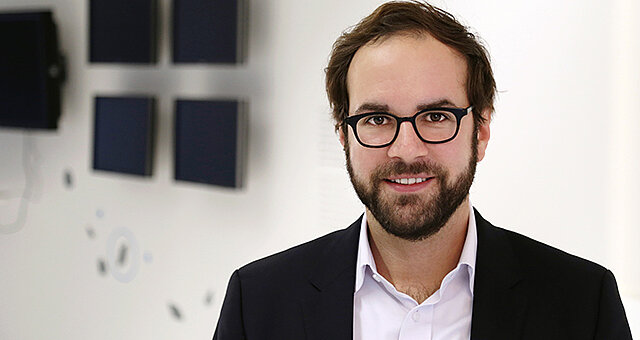
Benjamin Bross is a part-time lecturer at HTW University of Applied Sciences Berlin and heads the Video Coding Systems group at Fraunhofer Heinrich Hertz Institute. He specializes in video coding standards, including HEVC (H.265) and VVC (H.266), contributing to their development and standardization. His work emphasizes open-source implementations like VVenC and VVdeC, deployed in broadcast and streaming systems. Education: Dipl.-Ing. in Electrical Engineering (RWTH Aachen University, 2008). Active in ITU-T VCEG and ISO/IEC MPEG since 2010, leading core experiments and editing key standards. Recognized with IEEE Best Paper (2013), SMPTE Merit (2014), and an Emmy (2017) for HEVC contributions. Research focuses on advanced compression techniques, machine learning integration, and real-time encoding. His team develops VVC tools for 4K/UHD, low-latency streaming, and adaptive bitrate systems. Recent work includes optimizing partitioning strategies and reducing encoding complexity in VVC implementations. Awards highlight his impact on video technology: IEEE Consumer Electronics Best Paper (2013), SMPTE Journal Certificate (2014), and an Emmy for HEVC (2017). Teaching emphasizes practical coding standards and their applications in multimedia systems.
Antonio Servetti is an Assistant Professor at the Department of Control and Computer Engineering (DAUIN) at Politecnico di Torino, Italy, where he has been a faculty member since 2007. He is affiliated with the Internet Media Group (IMG) and the Interdepartmental Center PIC4SeR for Service Robotics. His work bridges multimedia processing, network communications, and web technologies. MS in Computer Engineering, Politecnico di Torino, 1999 PhD in Computer Engineering, Politecnico di Torino, 2004 Visiting Scholar, University of California, Santa Barbara, 2003 His research focuses on speech and audio processing , multimedia communications over wired and wireless networks , and real-time web-based multimedia applications . Key interests include WebRTC, Web Audio, HTTP adaptive streaming, and perceptual quality assessment. He has contributed to the development of secure multimedia transmission techniques, including selective encryption of speech and audio. The recent publications highlight a strong trend toward AI-driven modeling of subjective quality in multimedia, especially through deep learning for image and video quality prediction, understanding observer behavior, and remote music performance systems. His work often involves collaboration with researchers in the VQEG JEG-Hybrid group and the NEXA Center. Best Paper Award, Web Audio Conference 2021 Dr. Servetti has led and contributed to several research projects, including BRIC-2024 (acoustics in educational settings), PNRR HiFiReM (remote music education), and INAR (artistic research). He teaches courses such as 'Web Applications', 'Machine Learning for Vision and Multimedia', and 'Digital Audio Processing' across various engineering programs. He is also involved in educational governance as a member of academic councils for multiple degree programs. He is a core member of the Internet Media Group (IMG) , which focuses on multimedia processing and transmission, and contributes to the VQEG JEG-Hybrid working group on video quality assessment, where he develops frameworks for reproducible research and modeling of human perception.
Dr. Xiaolin Wu is a Professor in the Department of Electrical & Computer Engineering at McMaster University's Faculty of Engineering. With expertise in image processing, multimedia coding, computer vision, and artificial intelligence, he has made groundbreaking contributions to visual/multimedia computing and communication. His research has resulted in over 350 publications and four patents, including the renowned CALIC algorithm for lossless image coding and L3 codec for digital cinema. B.Sc. from Wuhan University (1982) Ph.D. from University of Calgary (1988) Dr. Wu's research spans critical areas such as image restoration (demosaicing, denoising, superresolution), multimedia coding (JPEG, wavelet transforms), and information display (Temporal Psychovisual Modulation). His work on TPVM, featured in MIT Technology Review, redefines display technology by leveraging human vision properties for multi-user VR/AR experiences. Recent publications focus on deep learning applications for image/video restoration, including multi-modality approaches and l∞-constrained compression. His algorithms, such as fast color quantizers and compressive sensing recovery methods, have been widely adopted in industries like medical imaging and digital cinema. Dr. Wu also holds an NSERC Senior Industrial Research Chair and has collaborated with global tech leaders including Microsoft, Nokia, and Huawei. IS&T/SPIE Best Paper Award UWO Distinguished Research Professor Award McMaster Distinguished Engineering Professor Award IEEE Fellow As an educator, Dr. Wu teaches courses in image processing, discrete methods, numerical analysis, and parallel computing, emphasizing algorithm design, data structures, and real-time systems. His work bridges academic research with industrial applications, ensuring practical impact across biomedical imaging, digital security, and smart display technologies.
Stefan Hägele is a researcher at the Chair of Media Technology, Technical University of Munich, affiliated with the Munich Institute of Robotics and Machine Intelligence (MIRMI). He completed his B.Sc. and M.Sc. in Electrical and Computer Engineering at TUM, graduating with distinction in 2022. B.Sc. in Electrical and Computer Engineering, TUM (2019) M.Sc. in Electrical and Computer Engineering, TUM (2022) His research focuses on signal processing applications in communications, radar, and image processing, combined with applied machine learning. Key areas include mmWave radar analysis, WiFi-based indoor positioning, privacy-preserving rehabilitation systems, and complex-valued neural networks. Recent publications highlight his work in radar-based object classification (using MIMO architectures), material recognition (SMCNet), visible light positioning (VLP-KAN), and skeleton estimation for rehabilitation (PoinTS). His contributions also appear in projects like 6G-Life, DFG Teleoperation over 5G, and CeTI (Tactile Internet).
Dr. Chang Y Choo is a Professor of Electrical Engineering at San José State University, where he also serves as Director of the AI/ML FPGA/DSP Systems Laboratory. His academic career spans over three decades, with previous positions at Worcester Polytechnic Institute and industry experience at Altera Corp. (now Intel). Dr. Choo maintains an active research program focusing on hardware acceleration for AI and signal processing applications, with particular emphasis on FPGA-based implementations for real-world systems. Dr. Choo's educational background includes: Ph.D. in Computer and Systems Engineering, Rensselaer Polytechnic Institute (1986) M.S. in Operations Research and Statistics, Rensselaer Polytechnic Institute (1982) B.S./M.S. in Engineering, Seoul National University, Korea Dr. Choo's research interests center on the intersection of hardware design and artificial intelligence. His work focuses on implementing computer vision, deep learning, and digital signal processing algorithms on specialized hardware platforms including FPGAs, GPUs, and custom ASICs. Current projects include developing real-time illumination/view-independent object recognition systems for autonomous vehicles, wideband acoustic echo cancellation for wearable technology, and FPGA-based accelerators for medical imaging applications. His research bridges theoretical algorithm development with practical hardware implementation constraints. Analysis of Dr. Choo's recent publications reveals a clear trajectory toward increasingly sophisticated hardware-accelerated AI systems. His work has evolved from foundational research in digital signal processing and image compression to cutting-edge applications of deep learning on specialized hardware. Recent publications demonstrate expertise in implementing CNN architectures on FPGAs, developing metabolic syndrome prediction models, and creating food object detection systems using transformer models. This progression reflects the broader field's shift toward hardware-aware AI development. Dr. Choo's significant scientific contributions include multiple patents that have advanced the state of the art in several domains: U.S. Patent No. 9,025,763 (2015): 'Apparatus and Method for cancelling wideband acoustic echo' U.S. Patent Nos. 7,058,675 (2006) and 7,124,161 (2006): 'Apparatus and method for implementing efficient arithmetic circuits in programmable logic devices' U.S. Patent Nos. 5,943,096 (1999) and 6,621,864 (2003): 'Motion vector based frame insertion process' U.S. Patent Nos. 5,832,131 (1998) and 5,991,455 (1999): 'Hashing-based vector quantization' U.S. Patent No. 5,587,710 (1997): 'Syntax based arithmetic coder and decoder' Throughout his career, Dr. Choo has been actively involved in both academic and industry collaborations. He has served as a technical consultant for numerous Silicon Valley companies including National Semiconductor (now Texas Instruments), Philips Semiconductor, Skybox Imaging (acquired by Google), Novariant (now AgJunction), and Ricoh Innovations. His industry experience informs his teaching approach, which emphasizes practical implementation considerations alongside theoretical foundations. Dr. Choo has also served as an expert witness in intellectual property court cases involving audio and video compression algorithms and FPGA hardware. Dr. Choo directs the FPGA/DSP AI/DL Laboratory at San José State University, which focuses on developing hardware-accelerated solutions for real-time AI applications. The lab maintains strong connections with Silicon Valley technology companies and provides students with hands-on experience in cutting-edge hardware design methodologies. Current research directions include autonomous vehicle navigation systems, medical imaging applications, and edge AI deployment strategies.
Mallesham Dasari is an Assistant Professor in the Electrical and Computer Engineering department at Northeastern University. His research focuses on immersive media, XR systems, wireless networks, and wearable computing, with a particular emphasis on optimizing video streaming and human-robot collaboration in extended reality environments. He joined Northeastern in January 2024 and is affiliated with the Institute for the Wireless Internet of Things. Education: PhD in Computer Science from Stony Brook University (2021). Research Interests: His work spans advanced video codecs, spatial video distribution, and sensor fusion technologies. Recent projects include developing FSO-based wireless links for VR headsets and neural compression techniques for point cloud streaming. He explores how XR technologies can enhance healthcare through systems like XRAI Care and enable seamless human-robot collaboration via platforms like RoboTwin. Publications: Over 30 peer-reviewed articles in top conferences like ACM SIGCOMM, NSDI, and MMSys, focusing on network optimization, immersive media systems, and edge computing. Awards: Received the Best Reproducible Paper Award at ACM MMSys 2025 and the Best Demo Award at ACM HotMobile 2025 for RoboTwin. His team also pioneered award-winning solutions for NASA’s SUIT Competition and developed markerless localization systems for AR. Advising & Grants: Mentors students in Northeastern’s College of Engineering, leading projects funded by industry partnerships and federal grants. His lab collaborates on multi-agent tracking systems combining visual and RF sensing technologies. Labs/Teams: Active in Northeastern’s XR systems research group, focusing on scalable 3D scene capture (MeshReduce) and time-varying mesh compression (TVMC). His work intersects with digital twin technologies and edge-based asset virtualization frameworks.
Peter Schelkens is a Professor at the Department of Electronics and Informatics (ETRO), Vrije Universiteit Brussel (VUB). He holds additional roles including Department Chair and Head of Research Group, focusing on technology transfer and innovation in electronics and informatics. His research spans fundamental signal processing, holography, medical imaging, and standardized multimedia coding frameworks like JPEG Pleno. Education and Academic Background: Postdoctoral Fellowship (2002–2011) funded by the Research Foundation – Flanders (FWO). His work bridges theoretical advancements with applied domains such as eHealth, bio-informatics, and cultural heritage preservation. Research Interests: Holography and digital signal processing dominate his focus, including holographic compression, Fourier-based techniques, and light field imaging. Strategic projects involve error-resilient coding, computer architectures (e.g., GPU/GPGPU), and quality assessment metrics. His applied research addresses medical imaging, 3D media broadcasting, and immersive technologies. Article Trends: Recent work emphasizes holographic video codecs (e.g., INTERFERE), high-throughput hologram generation, and JPEG Pleno standardization. He explores computational methods for 3D metrology and deep learning applications in hologram optimization. Scientific Awards: Gauss Award (2000), ERC Consolidator Grant (2014), Best Associate Editor Award (2014), and multiple industry accolades. Grants/Projects: Leads major initiatives like the SRP-Onderzoekszwaartepunt LSDS (2022–2027) and GEAR (2021–2025), focusing on health tech and learning-based systems. Labs/Teams: Active in ETRO, the interdisciplinary research group at VUB, collaborating globally on holography, multimedia standards, and biomedical imaging systems.
Dr. Ying Liu is an Associate Professor in the Department of Computer Science and Engineering at Santa Clara University's School of Engineering. She serves as the Secretary/Treasurer of the APSIPA US Chapter and holds multiple leadership roles including APSIPA Distinguished Lecturer (2025-26) and Vice Chair of the APSIPA US Local Chapter. Her research focuses on deep learning applications for visual data processing and compression. Education: Ph.D., Electrical Engineering, SUNY at Buffalo, 2012 M.S., Electrical Engineering, SUNY at Buffalo, 2008 B.S., Telecommunications Engineering, Beijing University of Posts and Telecommunications, 2006 Dr. Liu's research spans deep learning-based image/video processing , coding for machines , and generative AI . Her work integrates convolutional neural networks, transformers, and generative models to advance video compression and machine vision systems. Current projects include vision-language models and point cloud coding, with emphasis on computational efficiency for real-world deployment. Analysis of her 15 most recent publications reveals a strong focus on neural video compression (40%), image coding for machines (30%), and generative AI applications (20%), with increasing emphasis on transformer architectures and multi-task frameworks since 2022. Her research bridges theoretical innovation with practical industrial applications in manufacturing and autonomous systems. Scientific Awards: Researcher of the Year Award, School of Engineering, Santa Clara University (2024) APSIPA Distinguished Lecturer Appointment (2025-26) Dr. Liu actively mentors PhD students in the Video and Image Processing (VIP) Laboratory, with four current advisees including Pengli Du (first PhD graduate in 2024). Her research is supported by significant grants including an NSF ERI award ($500K, 2022-2025), NVIDIA Academic Hardware Grant, and multiple industry-funded projects with Kwai Inc. totaling over $300K. She also secures internal university funding through Kuehler Undergraduate Research Grants and School of Engineering Research Grants. The VIP Laboratory develops deep learning solutions for the projected 13 billion global cameras by 2030, focusing on applications for mobile video sharing, surveillance, and autonomous vehicles. Current projects utilize CNNs, GANs, RNNs, and transformers for visual coding efficiency.
Prof. Jörn Ostermann is a Full Professor and Head of the Institut für Informationsverarbeitung at Leibniz Universität Hannover since 2003, with prior roles at AT&T Bell Labs and AT&T Labs-Research. He served as Dean of the Faculty of Electrical Engineering and Computer Science (2011–2013) and member of the Senat (since 2020). His research spans video coding, computer vision, machine learning, 3D modeling, and computer-human interfaces , with applications in SAR imaging, predictive maintenance, children's speech analysis, and cochlear implants. Key projects include Next Generation Video Coding , Conditional Coding for Learned Compression , and GreenAutoML4FAS . Notable trends in his recent publications (2025–2023) include Neural network-based video compression Uncertainty estimation in speech recognition Zero-delay coding for cochlear implants Domain adaptation for aerial image segmentation 3D mesh compression standards Error concealment in VVC coding Scientific recognitions: AT&T Standards Recognition Award (1998) ISO Award (1998) IEEE Fellow (2005) Distinguished Lecturer, IEEE CAS Society (2002/2003) MPEG Convenor (2020–2023) He co-authored a graduate textbook on Video Communications , holds >30 patents, and has led >20 research projects. His work bridges academic research and industrial standardization, particularly in MPEG and IEEE committees.
António Pinheiro is an Associate Professor in the Department of Physics at Universidade da Beira Interior and researcher at Instituto de Telecomunicações. He specializes in image processing, multimedia quality evaluation, emerging 3D imaging technologies, and medical image analysis. Research interests span: Multimedia quality assessment methodologies Point cloud compression and processing Medical image analysis for diagnostic applications JPEG standardization and emerging imaging formats 5G multimedia streaming technologies He has received multiple scientific awards including: 2022 Best Paper at 3D Imaging and Applications 2020 Award-winning ETRI Journal Papers 2014 Top 10% Paper Award at IEEE MMSP As director of the 'Eletrónica Digital: Circuitos e Sistemas' program, he teaches courses on digital systems, microprocessors, and signal/image processing. He actively contributes to ISO/IEC JPEG standardization as Communication Subgroup chair.
Professor Kenny Mitchell is a faculty member at the School of Computing Engineering and the Built Environment at Edinburgh Napier University. With over 60 research outputs listed, he specializes in Interactive Graphics, Virtual Reality, and Augmented Reality technologies. Research Interests Mitchell's work focuses on real-time systems, motion prediction, and human-computer interaction in immersive environments. His research spans generative AI environments , 3D facial reconstruction , and light field rendering . Key themes include AI-driven animation , networked VR experiences , and haptic-visual integration . Article Trends Recent publications emphasize Transformer-based motion prediction (NeFT-Net), speech-to-VR systems (HoloJig), and low-latency avatar synchronization . His work integrates machine learning with computer graphics for applications in telepresence dance and emotionally intelligent avatars . Projects CAROUSEL+ : £929,077 funded by European Commission (2021-2024) for telepresent dance systems DISTRO : £243,804 European Commission grant for 3D graphics training (2015-2018)