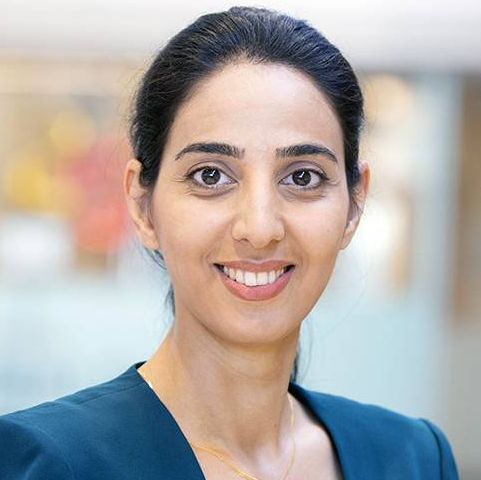
Ifana Mahbub is an Associate Professor at the Erik Jonsson School of Engineering and Computer Science , University of Texas at Dallas, specializing in Electrical & Computer Engineering . Her research focuses on energy-efficient integrated circuits, wireless power transfer systems for biomedical sensors, and advanced antenna designs for UAV and mm-wave applications. She leads the Integrated Biomedical, RF Circuits and Systems Lab . Education: Ph.D. in Electrical Engineering (2017), University of Tennessee, Knoxville B.S. in Electrical Engineering (2012), Bangladesh University of Engineering and Technology Research interests include: Ultrawideband/mm-wave phased-array antennas Far-field wireless power beaming V2V communication for UAVs Energy harvesting via reverse electrowetting Implantable/wearable sensor systems Recent work highlights advancements in high-efficiency rectennas, beamforming algorithms, and AI-driven metasurface design. Her systems address critical challenges in biomedical telemetry and aerial communication.
George N. Karystinos is currently a Professor and Dean of the School of Electrical and Computer Engineering at the Technical University of Crete , Greece. He joined TUC in 2005 and was promoted to full Professor in 2019. His academic journey began with a Ph.D. in Electrical Engineering from SUNY Buffalo (2003) and a Diploma in Computer Engineering and Science from the University of Patras (1997). Specialty: Communication theory, coding theory, adaptive signal processing Key research areas: Wireless communications, signal waveform design, L1-norm principal component analysis Leadership: Dean of School of ECE (2021–present) His work focuses on noncoherent detection for RFID/IoT systems and L1-norm PCA for robust signal processing. Recent publications explore power line communication and low-complexity sequence detection . Scientific Awards: 2003 IEEE Transactions on Neural Networks Outstanding Paper Award 2001 IEEE ICT Best Paper Award 2018 IEEE MOCAST Best Student Paper Award 2015 IEEE ICASSP Best Student Paper Award 2013 IEEE ISWCS Best Paper Award 2011 IEEE RFID-TA Second Best Student Paper Award He is affiliated with the Telecommunications Laboratory at TUC and has supervised award-winning research in wireless systems and signal processing.
Christian Haubelt is a Professor at the Institute of Computer and Network Engineering, School of Engineering, University of Rostock, Germany. He is actively engaged in research and teaching in the areas of embedded and cyber-physical systems, smart implants, and IoT. His work is supported by multiple national and international projects including ELAINE (SFB 1270), SmILE (EU), 6G-Health (BMBF), and GenerIoT (BMBF). His research interests include: Embedded and Cyber-Physical Systems Smart Sensors and Smart Implants System-Level Design Methodologies SystemC-based Modeling and Verification Design Space Exploration and Multi-Objective Optimization Industrial Internet of Things and 6G for Healthcare His recent publications focus on real-time communication protocols, 5G/6G localization, smart implants, and secure IoT systems. Trends show a strong emphasis on integrating embedded systems with medical and industrial applications, particularly leveraging TSN, MQTT-SN, and OPC UA for reliable and secure communication. His work bridges theoretical modeling with practical implementation in safety-critical domains. Christian Haubelt has supervised multiple researchers including Michael Nast, Benjamin Rother, Nico Kalis, and Nico Graumüller. He leads several funded research projects such as ELAINE, SmILE, 6G-Health, and SUSTAIN, which focus on smart implants, secure IoT, and next-generation medical systems. These projects involve collaboration with DFG, EU, and BMBF. He is involved in the following research labs and teams: Embedded Systems and Cyber-Physical Systems Group Smart Implants Research Team (SmILE, ELAINE) 6G-Health Localization Team Industrial IoT Security (SUSTAIN, CargoAssist)
Dr. Liang (Leon) Dong is an Associate Professor in the Department of Electrical and Computer Engineering at Baylor University, where he conducts research and teaches in the areas of signal processing, wireless communications, and artificial intelligence. He leads the Laboratory of Signal Processing, Communications, and Artificial Intelligence, fostering innovation in next-generation communication systems, IoT, and AI-driven applications. PhD, Electrical & Computer Engineering, The University of Texas at Austin (2002) MS, Electrical & Computer Engineering, The University of Texas at Austin (1998) BS, Applied Physics with Minor in Computer Engineering, Shanghai Jiao Tong University (1996) Dr. Dong's research focuses on advancing digital signal processing and wireless communications, with strong emphasis on artificial intelligence applications. His work spans NextG wireless systems , IoT and smart cities , cyber-physical system security , and AI in healthcare and industrial automation . He applies deep learning to domains such as autonomous driving and drug discovery, and investigates energy-efficient, secure, and reliable communication protocols. The recent publications highlight a strong trend toward integrating AI into traditional signal processing and communications. Topics include mRNA vaccine stability prediction , smart city infrastructures , secure cyber-physical systems , and deep learning for biomedical and industrial applications . His work bridges theoretical innovation with real-world impact in defense, transportation, and public health. Dr. Dong has earned recognition as a Senior Member of IEEE and a Member of the American Physical Society. He has also served as Faculty Advisor for Baylor University's InterVarsity chapter. Senior Member, Institute of Electrical and Electronics Engineers (IEEE) Member, American Physical Society (APS) He has successfully advised numerous graduate and undergraduate students, many of whom now hold academic and industry positions at institutions like Stanford, Intel, NASA, L3Harris, and Cummins. His research is generously supported by Baylor's VP for Research, the National Science Foundation, NASA, the Department of Defense (TARDEC), the Michigan Department of Transportation, and industry leaders including Intel, L3Harris, ExxonMobil, and Denso. He actively mentors students through research assistantships and senior design projects. Dr. Dong leads the Laboratory of Signal Processing, Communications, and Artificial Intelligence, which provides a collaborative environment for advancing research in signal processing, communications, and AI. The lab supports graduate and post-doctoral researchers and offers opportunities for undergraduate involvement in AI programming, circuit design, and embedded systems.
Shueng-Han Gary Chan is a faculty member in the Department of Computer Science and Engineering at the Hong Kong University of Science and Technology (HKUST), within the College of Engineering. He is actively engaged in research and mentoring, with a strong publication record in mobile computing, indoor localization, and AI for pervasive systems. His research focuses on indoor localization using Wi-Fi, geomagnetic, and inertial signals , sensor fusion , crowd counting with deep learning , domain adaptation , and efficient mobile AI systems . His work bridges theoretical innovation with real-world deployment, as seen in systems for missing person search and indoor navigation. Recent publications (2023–2025) show a consistent trend toward self-supervised and domain-agnostic learning , efficient model design for mobile devices , and robust signal fusion in noisy environments . His team leverages transformer architectures, graph neural networks, and novel optimization techniques to solve real-world challenges in urban and indoor spaces. He has advised numerous graduate students, including Jierun Chen, Zhuoxuan Peng, and Tianlang He, who have contributed as first authors to joint publications. His collaborations span institutions and include work on large-scale system deployments and mobile AI. He leads a research group focused on mobile and pervasive computing , with projects involving IoT-based contact tracing, indoor navigation (e.g., DeepNavi, SiFu), and real-time localization systems. The team emphasizes practical deployment and system robustness.
Dr. Shideh Kabiri Ameri serves as Associate Professor in the Department of Electrical and Computer Engineering at Queen's University, where she joined in September 2018 after completing postdoctoral research at the University of Texas at Austin. Her interdisciplinary expertise bridges nanomaterials engineering and biomedical applications, with particular focus on developing imperceptible wearable sensors for continuous health monitoring. Her educational foundation includes: PhD in Electrical Engineering (2015) from Tufts University Master's and Bachelor's degrees in Physics (solid state) AS degree in Medical Laboratory Sciences Dr. Ameri's research program centers on 2D material-based electronic devices for wearable bioelectronics, human-machine interfaces (HMI), and mobile healthcare systems . Her lab pioneered graphene electronic tattoos (GETs) that achieve unprecedented skin conformity while recording high-fidelity physiological signals. Current work emphasizes ultrasoft hydrogel-based sensors that eliminate motion artifacts and enable months-long wear without skin irritation, representing a paradigm shift from conventional rigid medical devices toward truly imperceptible health monitors. Analysis of her 40+ publications reveals a strategic evolution from fundamental nanomaterial characterization toward clinically viable systems. Recent work (2021-2025) demonstrates increasing sophistication in multimodal sensing (simultaneous ECG/EEG/temperature), reusable sensor architectures , and wireless power integration . The trajectory shows clear progression from lab prototypes to FDA-pipeline devices, particularly in cardiac and neurological monitoring applications. Her scientific recognition includes: Rising Star in EECE 2017 award Dr. Ameri leads the Ameri Nano Research Group which operates advanced nanofabrication facilities for developing next-generation bioelectronic interfaces. Her research has attracted significant media attention from BBC, IEEE Spectrum, and Phys.Org, highlighting real-world impact in remote patient monitoring. The group actively collaborates with medical institutions to translate innovations into point-of-care diagnostics, with current projects focusing on in-ear physiological monitors and strain-neutralized neural recording systems. The research team maintains strong industry partnerships for commercializing soft bioelectronics, with particular emphasis on creating accessible health monitoring solutions for underserved communities through low-cost manufacturing approaches.
Lars Dittmann is a Professor at the Department of Electrical and Photonics Engineering at the Technical University of Denmark (DTU), leading the Networks Technology and Service Platforms section. His work bridges advanced networking technologies with real-world applications in healthcare and transportation. Academic Role: Professor, Head of Section University: Technical University of Denmark (DTU) Department: Networks Technology and Service Platforms Research Interests: Professor Dittmann specializes in Software-Defined Networking (SDN) , 5G and IoT technologies , and energy-efficient network design , with a focus on applications in telemedicine and transportation systems . His work integrates machine learning for privacy-preserving traffic analysis and explores optical networks for high-bandwidth scenarios. Scientific Contributions: His recent publications emphasize green cellular networks using SDN/NFV/C-RAN, IoT benchmarking for coverage and mobility, and secure edge architectures for railways. Collaborative projects like the Future Patient telerehabilitation program highlight his interdisciplinary impact. Supervision: He supervises PhD candidates such as Radheshyam Singh, focusing on SDN-based IoT security and 5G network optimization. Labs & Projects: Leads initiatives like EXplorative network PLAnnINg and Broadband Trial Integration , addressing challenges in network reliability , emergency communication , and optical data center scaling .
Martin Henze is a tenure-track Assistant Professor at RWTH Aachen University's Department of Computer Science, where he leads the Security and Privacy in Industrial Cooperation (SPICe) research group. Additionally, he co-leads the Secure Production & Energy Networks research group at the Fraunhofer Institute for Communication, Information Processing and Ergonomics FKIE in Bonn, Germany. His work bridges academic research with practical industrial security applications, focusing on critical infrastructure protection. Dr. Henze's research interests center on technical security and privacy aspects of industrial networks and data sharing, with special emphasis on energy and production sectors. His work spans industrial intrusion detection, 5G security for industrial applications, IoT security in constrained environments, and blockchain security. He develops practical security solutions that balance protection needs with the resource constraints and operational requirements of industrial systems, particularly focusing on making security both effective and comprehensible for operators. His recent publications demonstrate a strong focus on industrial security challenges, with particular emphasis on intrusion detection systems that maintain operator control, TLS optimization for resource-constrained industrial IoT, 5G security for production systems, and novel approaches to securing legacy industrial protocols. His work consistently addresses the tension between security requirements and operational constraints in industrial settings. Nachwuchsförderpreis Verbraucherforschung NRW Borchers-Plakette ICT Young Researcher Award Dr. Henze actively contributes to the academic community through service on numerous prestigious program committees including ACM CCS, IEEE S&P, NDSS, and USENIX Security. His teaching portfolio includes graduate courses on Industrial Data Security, Industrial Network Security, and specialized seminars on 5G/6G Security and IoT Security. His research is highly collaborative, frequently involving partnerships across institutions and with industry to address real-world security challenges in critical infrastructure. He heads the SPICe research group at RWTH Aachen, which focuses on developing practical security and privacy solutions for industrial cooperation scenarios. The group's work emphasizes creating security mechanisms that are not only technically sound but also comprehensible and usable by industrial operators, recognizing that the human element is critical in maintaining security in complex industrial environments.
Marina Zapater Sancho is a researcher at the Embedded Systems Laboratory (ESL) within the School of Engineering at École Polytechnique Fédérale de Lausanne (EPFL) . She specializes in computer architecture, with a focus on energy-efficient systems, AI accelerators, and memory-centric computing paradigms. Research Interests: Compute-Near-Memory (CnM) : Pioneering architectures like SideDRAM and processing-near-bank designs to reduce energy consumption and latency in DRAM systems. AI Accelerators : Frameworks such as LIONHEART for analog-digital hybrid systems, and Gem5-AcceSys for exploring interconnects in ML accelerators. System Simulation : Contributions to RISC-V full-system simulation validation (gXR5) and component-level calibration methodologies. Her work bridges software and hardware, addressing challenges in heterogeneous systems, thermal management in 2.5D/3D packages, and virtual memory optimization for cache-intensive workloads. Recent trends emphasize energy-proportional computing and edge AI deployment . Grants & Collaborations: Funded by EU H2020 programs and the ACCESS-AI Chip Center (Hong Kong), her research is conducted within the ESL team led by Prof. David Atienza Alonso.
Dr. Kaiwen Chen serves as an Assistant Professor in the Department of Civil, Construction and Environmental Engineering at The University of Alabama's College of Engineering, where she is affiliated with the Center for Sustainable Infrastructure. Her research integrates drone robotics, sensor technologies, and Artificial Intelligence to revolutionize building diagnostics and performance simulation. Her academic credentials include: Ph.D. in Environmental Design and Planning from Virginia Polytechnic Institute and State University (2020) M.Sc. in Management in Science and Technology from Southeast University (2016) B.S. in Construction Project Management from Southeast University (2013) Dr. Chen's research program focuses on innovations in the AECO field, with core expertise in drone-based imaging systems, 2D/3D data processing, infrared thermography, high-performance computing, and building energy modeling. Her work bridges advanced computational techniques with practical infrastructure challenges, particularly in building envelope diagnostics and pavement inspection. Analysis of her 15 most recent publications (2024-2025) reveals dual research thrusts: primary focus on AI-driven construction applications (digital twins, thermal anomaly detection, UAV-based surveys) and significant contributions to wireless power transfer systems. This interdisciplinary scope demonstrates exceptional versatility in applying cutting-edge computational methods to both civil infrastructure and electrical engineering challenges. Her scientific recognition includes: Runner-Up for 5th Annual ASCE VIMS Datathon Competition (2024) Virginia Tech Outstanding Dissertation Award (2020) ASCE i3CE Best Paper Award (2019) Dr. Chen leads externally funded research initiatives including a US Department of Energy project on aerial intelligence for building envelope diagnostics and a Georgia Department of Transportation project on drone-assisted pavement inspection. These grants demonstrate her ability to secure competitive funding for high-impact infrastructure research. As an active contributor to the Center for Sustainable Infrastructure, she advances research in sustainable infrastructure systems through the integration of drone technologies, AI analytics, and digital twin methodologies for comprehensive infrastructure assessment and management.
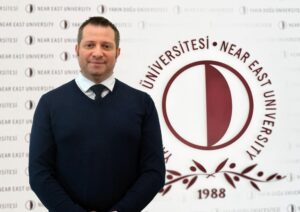
Prof. Dr. Fadi AL-TURJMAN serves as the founding Dean of the Faculty of AI and Informatics at Near East University (NEU), Cyprus. He holds multiple leadership roles including Head of the Software Engineering Department and Director of the AI and Robotics Institute and the International Research Center for AI and IoT. With a PhD in Computer Science from Queen’s University (2011), he specializes in AIoT systems, wireless networks, and blockchain integration. Affiliation: Near East University Leadership: Founding Dean for AI and Informatics, Director of AI & Robotics Institute Research Focus: His work bridges Artificial Intelligence of Things (AIoT) , Blockchain Applications , and Smart Networking . He explores cybersecurity frameworks for smart cities, quantum state optimization techniques, and novel AI-driven solutions for healthcare, agriculture, and energy systems. Key Article Trends: Recent publications emphasize Transformer models for environmental monitoring, blockchain-enabled security protocols , and evolutionary algorithms for resource optimization. His research spans interdisciplinary domains including medical diagnostics, vehicular networks, and sustainable infrastructure. Scientific Awards: Lifetime Golden Award of Dr. Suat Gunsel (2022) Multiple Best Research Awards at International Venues Labs & Teams: Directs the International Research Center for AI and IoT at NEU, leading multidisciplinary teams in developing advanced networking technologies and AI-driven solutions for global value chain applications.
Faiz Hamid serves as an Associate Professor in the Department of Management Sciences at Indian Institute of Technology Kanpur. With a Ph.D. in Decision Sciences & Information Systems from IIM Lucknow (2012) and a B.Tech. in Computer Science and Engineering from Institute of Engineering & Management (2007), he brings strong technical and analytical expertise to his academic position. His research interests span Operations Research, Combinatorial Optimization, Network Optimization, and Data Science, with particular focus on transportation systems, pandemic response modeling, and revenue management applications. Dr. Hamid's scholarly work demonstrates consistent publication in high-impact journals including European Journal of Operational Research, Omega, Transportation Research, and IEEE Transactions on Signal Processing. His recent publications reveal a strong trend toward applying optimization techniques to real-world problems, particularly addressing pandemic-related challenges in transportation systems and developing sophisticated mathematical models for railway operations. His 2024 edited volume 'Optimization Essentials: Theory, Tools, and Applications' demonstrates his leadership in the field. Ph.D. Thesis recognized as runner-up for 2014 Best Dissertation Award by The INFORMS Technical Section in Telecommunications Best Paper Award at COSMAR 2010 Doctoral Conference, Indian Institute of Science, Bangalore Professor Dipak C Jain Best Paper Award at IMR Doctoral Conference 2010, IIM Bangalore Silver Medal, National Mathematics Olympiad 2002 Dr. Hamid has advised numerous students and collaborated extensively with researchers globally, particularly in transportation optimization problems. His professional journey includes industry experience as Associate Functional Architect at JDA Software and post-doctoral research at Telecom SudParis, France, before joining IIT Kanpur's faculty.
Zhiyuan Li is a Professor in the Department of Computer Sciences at Purdue University's College of Engineering. His primary research and teaching focus on program analysis, transformation, and run-time management for high-performance computing and multicore systems, as well as reliable software for networked embedded systems. Professor Li teaches graduate-level courses including CS502: Compiling and Programming Systems and CS591RS1: Research Seminar for First-year Graduate Students. Office: LWSN 3154H Contact: li@cs.purdue.edu Phone: +1 765-494-7822 Professor Li's research spans multiple areas within computer science, with particular emphasis on compiler design, program analysis, and parallel computing. His work addresses fundamental challenges in enabling efficient execution of applications on modern parallel architectures, including multicore processors and large-scale distributed systems. He has made significant contributions to techniques for data dependence analysis, loop parallelization, array privatization, and memory optimization in compilers. His research also extends to reliable software development for embedded and sensor network systems, where resource constraints and reliability requirements present unique challenges. Professor Li's publication record demonstrates consistent contributions to top-tier conferences and journals in computer science, particularly in the areas of parallel computing, compiler optimization, and high-performance numerical methods. His work shows a progression from foundational compiler techniques to applications in scientific computing domains such as computational fluid dynamics for jet engine noise simulation. This interdisciplinary approach connects low-level program analysis with real-world engineering applications requiring petascale computing resources. Principal Investigator for NSF/PetaApps project on jet engine noise simulation Principal Investigator for Intel-sponsored research on data dependence profiling Extensive service on program committees for major conferences including ICS, PPoPP, and LCTES Professor Li has been actively involved in mentoring graduate students through research projects and course instruction. His jet engine noise simulation project specifically mentions training three Ph.D. graduate students and involving undergraduate research assistants. As coordinator for the first-year graduate research seminar, he plays a significant role in guiding new students through the transition to graduate research work in computer science. His laboratory work focuses on developing compiler techniques and runtime systems for parallel and high-performance computing. The research infrastructure includes implementations in GCC for fast data dependence profiling and support for SIMD/SSE instructions, demonstrating practical applications of theoretical compiler techniques.
Youngmoo Kim is Professor of Electrical and Computer Engineering at Drexel University, where he directs the Expressive and Creative Interactive Technologies (ExCITe) Center. His leadership extends to the Music & Entertainment Technology Laboratory (MET-lab), focusing on machine listening, robotics for expressive interaction, and STEM education through music technology. Education: PhD, Media Arts & Sciences, MIT (2003) MS, Electrical Engineering, Stanford University MA, Music, Stanford University BS, Engineering, Swarthmore College BA, Music, Swarthmore College Research Focus: Kim's interdisciplinary work bridges audio signal processing, machine learning for music information retrieval, human-robot interaction, and acoustic synthesis. His lab develops novel interfaces including brain-controlled robotics, augmented instruments, and AI-driven music systems, while championing K-12 STEAM education through technological innovation. Publication Trends: Recent articles demonstrate strong convergence of deep learning with music technology, particularly in neural audio synthesis, instrument recognition, and robotic control systems. Emerging themes include differentiable physical modeling of instruments, neuroadaptive interfaces using fNIRS/tDCS, and computational approaches to creative collaboration. Awards & Honors: 2021 College of Engineering Inclusive Excellence Award 2013 Apple Distinguished Educator 2012 Lindback Foundation Distinguished Teaching Award 2012 Philadelphia Geek Awards Scientist of the Year 2007 NSF CAREER Award Leadership & Funding: Kim has secured research support from the National Science Foundation and Knight Foundation. His ExCITe Center serves as an interdisciplinary hub for creative technology development, while MET-lab advances audio-machine intelligence through collaborations across engineering, computer science, and performing arts.
Pedro M. B. Silva Girão is a Full Professor in the Department of Electrical Engineering at Instituto Superior Técnico (IST), University of Lisbon (UL), and a Senior Researcher at Instituto de Telecomunicações where he heads the Instrumentation and Measurements Group and coordinates the Basic Sciences and Enabling Technologies area. His dual institutional roles position him at the forefront of academic research and technological innovation in Portugal. His research program focuses on instrumentation, transducers, and measurement techniques with specialized applications in biomedical and environmental domains. Key interests include wireless sensor networks for health monitoring, metrology standards, and digital data processing methodologies. This work bridges engineering principles with real-world healthcare and ecological challenges, emphasizing practical implementations in diagnostic systems and environmental sensing. Analysis of his 2019-2024 publications reveals a strong thematic trajectory in IoT-enabled healthcare solutions and precision environmental monitoring. Recurring motifs include gait rehabilitation through mixed reality systems, advanced dosimetry for liver cancer radioembolization, microvascular reactivity assessment, and water quality sensor networks. His output demonstrates consistent interdisciplinary collaboration between engineering, medical, and environmental science communities. Dr. Girão's scientific recognition includes: IEEE Senior Member status IEEE IMS Distinguished Lecturer appointment Honorary Chairmanship of IMEKO TC19—Environmental Measurements As leader of the Instrumentation and Measurements Group at Instituto de Telecomunicações, he directs a multidisciplinary team developing next-generation measurement systems. Current initiatives integrate microwave Doppler radar, wearable biopotential sensors, and wireless networks for unobtrusive health monitoring and environmental assessment, with active partnerships across medical institutions and ecological agencies.