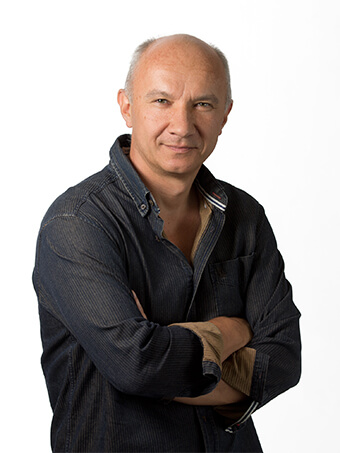
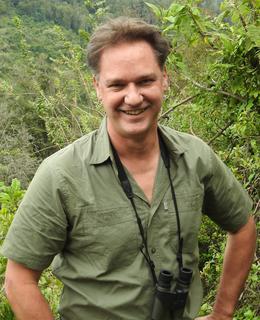
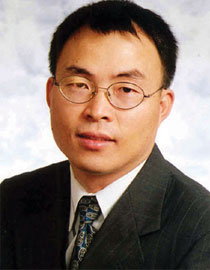
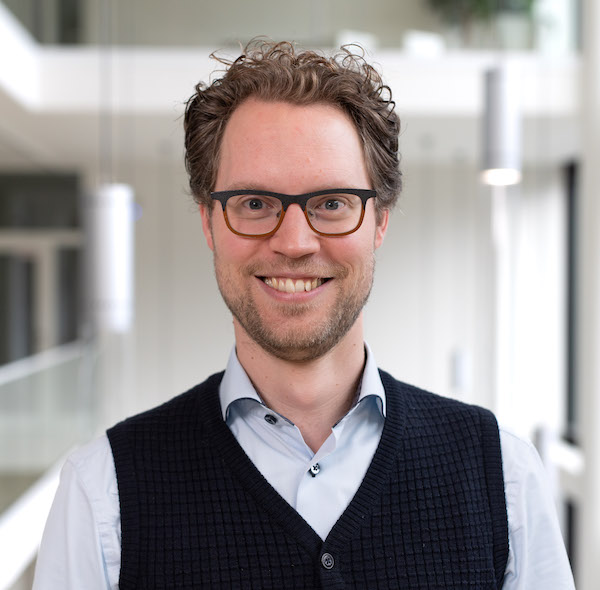
Artur Konrad EKERT is a Research Professor at the National University of Singapore , a Lee Kong Chian Centennial Professor , and a Fellow of the Royal Society (FRS) . His work bridges theoretical and experimental quantum physics, computer science, and information theory, with a focus on quantum cryptography and quantum computing. Education: DPhil from the University of Oxford (1991). His research explores the foundational principles of quantum information processing, emphasizing secure communication protocols and algorithmic efficiency. Key contributions include advancing entanglement-based cryptography and analyzing quantum privacy limits. His publications span quantum key distribution, relativistic quantum effects, and computational complexity, reflecting interdisciplinary collaborations. Scientific awards include: Fellow of the Royal Society (FRS) Lee Kong Chian Centennial Professorship He has mentored researchers in quantum cryptography and contributed to experimental implementations of quantum communication technologies.
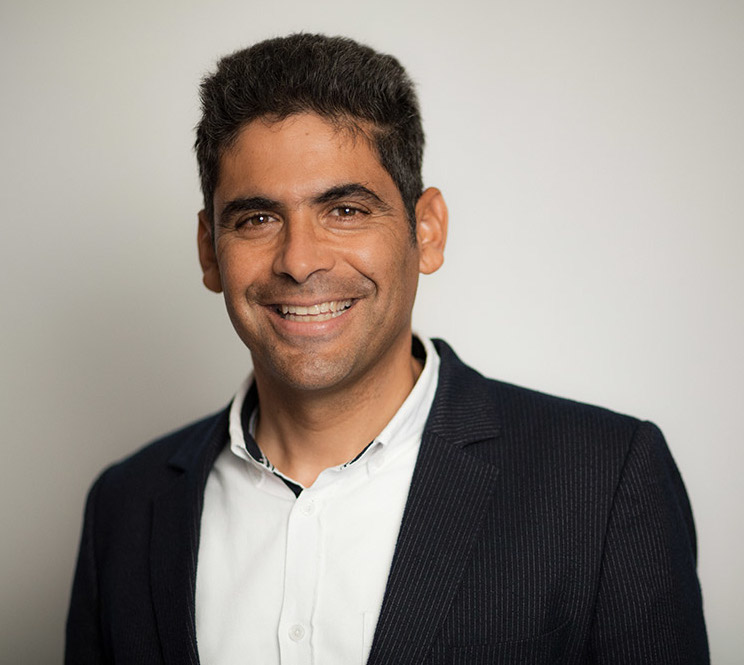
Gabor Orosz is a Professor at the University of Michigan in both the Department of Mechanical Engineering and Department of Civil and Environmental Engineering . His work bridges nonlinear dynamics and control , time delay systems , and connected automated vehicles , with a focus on traffic flow optimization and vehicle safety . Education: PhD in Engineering Mathematics, University of Bristol, UK (2006) MSc in Engineering Physics, Budapest University of Technology and Economics, Hungary (2002) Research Focus : Orosz's research explores the intersection of vehicle automation , connectivity , and nonlinear dynamics . He investigates time delay effects in teleoperation , intent-sharing protocols for cooperative maneuvering , and control barrier functions for safety-critical systems . His work spans theoretical analysis, numerical validation, and real-world experimentation. Article Trends : Recent publications highlight advancements in latency mitigation for remote driving , nonholonomic vehicle control , intent-sharing frameworks , and energy-efficient strategies for connected vehicle systems . Themes include delayed feedback , stochastic communication , and safety-guaranteed control . Awards & Appointments : NSF CAREER Award (2014) Fulbright Scholar at Budapest University of Technology (2023-2024) Editorial roles in Vehicle System Dynamics (2020) and Time Delay Systems (2017) Student Mentorship : Orosz has advised numerous PhD students, including Anil Alan (2024, TU Delft), Chaozhe He (2018, University at Buffalo), and Tamás Molnár (2020, Wichita State University). His alumni work at institutions like Toyota Research Institute , Ford Motor Co. , and Zoox . Labs & Teams : He leads research at the University of Michigan's Mechanical Engineering Department and collaborates with international institutions such as Caltech and Budapest University of Technology . His team focuses on experimental validation of connected vehicle systems and delay-tolerant control .
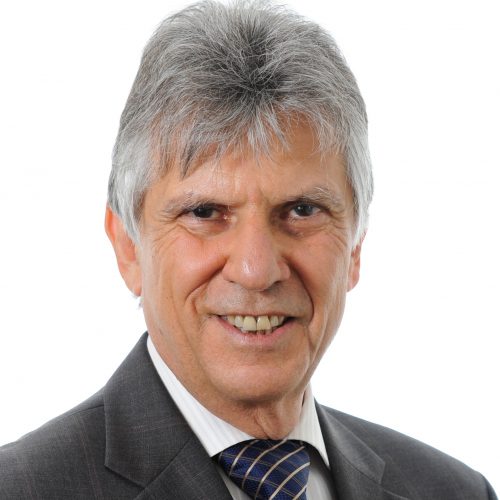
Rachid Guerraoui is a Full Professor at the École polytechnique fédérale de Lausanne (EPFL) where he leads the Distributed Computing Laboratory (DCL) within the School of Computer and Communication Sciences. He holds appointments in multiple departments including IC-SSC and IC-SIN for teaching, and serves on the IC Academic Evaluation Committee. A Moroccan/Swiss/French researcher, Guerraoui has previously been affiliated with Commissariat à l'Energie Atomique in Saclay, Hewlett-Packard Labs in Palo Alto, the Massachusetts Institute of Technology in Boston, and Collège de France in Paris. Guerraoui's research focuses on distributed and concurrent computing across various scales, from multiprocessors to wide-area networks. His work spans Byzantine fault tolerance, distributed machine learning, blockchain technologies, transactional memory, and consensus algorithms. His recent publications reveal a strong emphasis on Byzantine-resistant machine learning, decentralized learning systems, and the theoretical foundations of distributed consensus. The research demonstrates significant contributions to making distributed systems more robust, efficient, and secure against adversarial conditions. Guerraoui has received numerous prestigious awards including ACM Fellow (2012), Professor at College de France (2018), Nygaard-Dahl Award (2024), and Barroso Award (2025). His work has earned multiple best paper awards at top conferences including DISC, ICDCS, IPDPS, and ACM Middleware. He serves as Associate Editor of the Journal of the ACM (2010-2025) and has chaired program committees for major conferences such as PODC, DISC, and Middleware. As an educator, Guerraoui supervises numerous doctoral students and has mentored many successful researchers who now work at leading institutions and companies including Meta, Oracle Labs, Chainlink Labs, and Protocol Labs. He teaches courses on Distributed Algorithms and Concurrent Algorithms at EPFL, emphasizing both theoretical foundations and practical implementations. His educational initiatives include Wandida, a library of scientific e-synopses, and Zettabytes, projects aimed at making computer science accessible to broader audiences.
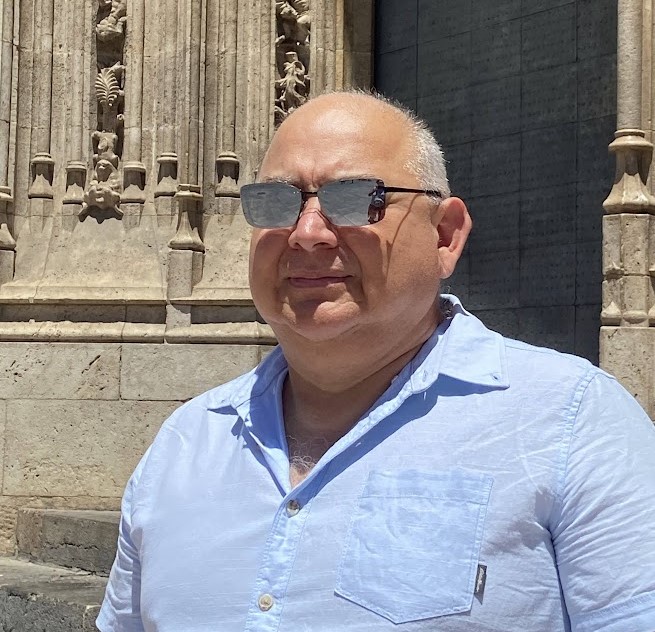
Dr. Ira Weiss is a Professor of Strategic Management at North Carolina State University, affiliated with the Department of Management Innovation & Entrepreneurship. His expertise spans Global/International Management, Corporate Strategy, Higher Education Management, and Business Accreditation. He holds a Ph.D. in Management from UCLA (1976). His research focuses on strategic frameworks, organizational systems, and accreditation processes, as evidenced by his thought leadership in AACSB articles advising institutions on accreditation strategies. His academic contributions include over four decades of publications on IT management, risk mitigation, and professional certification. Notable works address end-user computing strategies, cost control in software development, and auditability of systems. Though no specific grants or advising roles are detailed, his influence extends through academic discourse and institutional best practices. He remains active in North Carolina State’s initiatives related to management innovation and entrepreneurship.
Samuel Sotillo is a Senior Lecturer in the Department of World Languages and Cultures at North Carolina State University. He specializes in Spanish literature, second language teaching, and the integration of technology in education. He co-founded A Contracorriente Press in 2011 and leads the Spain: Language and Culture in Valencia summer program. His research spans Venezuelan literature, medieval Spanish texts, and the intersection of literature with digital technologies and politics. Education: B.S. in Information Security (East Carolina University), M.A. in Spanish Literature and Culture (NC State University). Research Interests: Sotillo’s work explores contemporary Venezuelan literature, the legacy of Jorge Luis Borges, and the application of IT tools in language education. He has published analyses of historical figures like Eric Hobsbawm and technical papers on network security protocols such as EAP and IPv6. Professional Roles: Former NCSU Faculty Senator, Director of the Valencia study abroad program, and contributor to academic presses and journals. His technical expertise includes cybersecurity, VoIP encryption, and open-source software frameworks like Zope. Recognition: While no specific awards are noted, his contributions to academic publishing (e.g., A Contracorriente Press) and pedagogical innovation highlight his impact in both humanities and technical fields.
Axel Moehrenschlager is an Adjunct Professor in the Department of Biological Sciences at the University of Calgary's Faculty of Science. He concurrently serves as Director of Conservation & Science at the Calgary Zoological Society and holds adjunct roles at Clemson University (Adjunct Associate Professor) and New Zealand's University of Canterbury (Erskine Fellow). His expertise spans conservation translocations, species reintroduction, and community-based conservation, with a focus on leveraging science for global biodiversity preservation. Moehrenschlager earned a B.Sc. from the University of Alberta (1993) and a D.Phil. in Zoology from Oxford University (2001). He chairs the IUCN's Conservation Translocation Specialist Group, driving policy integration of the IUCN Reintroduction Guidelines. He advises the UN Equator Prize and the St. Andrews Prize for the Environment, emphasizing sustainable conservation practices. His research integrates ecological, social, and policy dimensions, addressing challenges like sylvatic plague in prairie dogs, amphibian reintroductions, and swift fox genetics. Publications highlight innovative methodologies in conservation translocations, climate change impacts, and community-led conservation. His work bridges academic research with practical applications, aiming to harmonize biodiversity conservation with human well-being. Moehrenschlager has received the Erskine Fellowship (University of Canterbury) and contributed to over 30 peer-reviewed articles and book chapters. His leadership at the Calgary Zoo's Centre for Conservation Research fosters international collaborations, focusing on Africa and Madagascar. Current projects explore translocation success metrics and the ethical dimensions of conservation actions.
Vijay K. Shah is an Assistant Professor in the Electrical and Computer Engineering Department at North Carolina State University, leading the NextG Wireless Lab. His research focuses on advancing wireless communication and network technologies for beyond 5G/6G systems, including O-RAN architecture, spectrum management, and AI-driven network optimization. Education: Ph.D. in Computer Science, University of Kentucky (2019) Bachelor's in Computer Science and Engineering, National Institute of Technology, Durgapur (2013) Research emphasizes open radio access networks (O-RAN), mmWave testbeds, and cross-layer optimization. Recent work highlights include ORAN-Bench-13K (LLM benchmarking), ZT-RIC (zero-trust security frameworks), and Milli-O-RAN (reconfigurable mmWave networks). His contributions span O-RAN applications (xApps/rApps), satellite-terrestrial coexistence, and AI-driven positioning systems. Experimental validations include 3GPP-compliant 5G positioning and adversarial attack defenses. Publications reflect expertise in O-RAN architecture evolution, spectrum policy tools (ASCENT), and UAV-based network coordination (GLIDE). Current projects explore LEO satellite constellations and resilient disaster response networks. Labs/Teams: Head of the NextG Wireless Lab at NC State, focusing on prototype development in O-RAN, 6G, and secure AI-driven networks.
Zixiang Xiong is a Professor and Associate Department Head in the Department of Electrical and Computer Engineering at Texas A&M University, holding the Robert M. Kennedy '26 Endowed Professorship II. He earned his Ph.D. in Electrical Engineering from the University of Illinois at Urbana-Champaign in 1996. His career includes roles at Princeton University, University of Hawaii, and Texas A&M since 1999. Education: Ph.D., Electrical Engineering, University of Illinois at Urbana-Champaign, 1996 Visiting Research Associate, Princeton University, 1995–1997 University of Hawaii, 1997–1999 Research Interests: Focuses on machine learning, image/video processing, federated learning, network information theory, biomedical engineering, and communications. His work spans distributed source coding, genomic signal processing, and energy-efficient systems. Publications & Awards: Over 200 publications, including seminal works on distributed video coding and network information theory. Notable awards include the NSF Career Award (1999), ONR Young Investigator Award (2001), IEEE Fellow (2006), and the ECE Outstanding Faculty Award (2024). His research has led to patents in video compression and multimedia systems. Grants & Advising: Active in NSF-funded projects on coding theory and energy-delay tradeoffs. Advises numerous PhD and MS students, with over 50 alumni in academia and industry. Collaborates on biomedical imaging, remote sensing, and federated learning initiatives. Labs & Teams: Leads a dynamic research group at Texas A&M, focusing on cutting-edge projects in signal processing and machine learning applications. Collaborates with industry and governmental agencies on applied research.
Regan Harrell is an Assistant Professor in the Department of Physical Therapy at the University of Pittsburgh's School of Health and Rehabilitation Sciences (SHRS). She is concurrently completing her PhD in rehabilitation science while serving as a faculty member and co-coordinator of the Advanced Vestibular Physical Therapist Certificate Program at SHRS. Her research focuses on vestibular disorders in moderate-severe traumatic brain injury (TBI) and technology development for diagnostic and treatment applications. Education includes a Bachelor of Science and Doctor of Physical Therapy (DPT) from Duquesne University. She holds certifications as a Board-Certified Specialist in Neurologic Physical Therapy (NCS) and has been recognized with awards such as the Promotion for Doctoral Studies II Scholarship (2024) and Second Place at the 2023 American Physical Therapy Association Combined Sections Meeting for her work on TBI and BPPV laterality. Her professional affiliations include the Academy of Neurologic Physical Therapy and the International Neurologic Physiotherapy Association. Her research interests emphasize advancing clinical understanding of BPPV, improving rehabilitation protocols for vestibular dysfunction in TBI patients, and adapting telehealth strategies during crises like the pandemic. She has contributed to global discussions on telehealth delivery for vestibular care and published extensively on TBI-related vestibular disorders and clinical outcomes. Notable contributions include a case report on vestibular rehabilitation for cerebellar ataxia with neuropathy and vestibular areflexia syndrome (CANVAS) and a scoping review on vestibular disorder prevalence in TBI patients. She was part of the University of Pittsburgh Physical Therapy delegation to the 2024 Bárány Society Meeting, highlighting her engagement in international vestibular research networks.
Wouter Lueks is a faculty member at the CISPA Helmholtz Center for Information Security in Saarbrücken, Germany. His research focuses on designing secure, practical, and privacy-friendly systems using applied cryptography, anonymous communication, and systems engineering. He leads a lab and actively mentors PhD and PostDoc researchers. Education: PhD in Computer Science (Radboud University, Netherlands), advised by Jaap-Henk Hoepman and Bart Jacobs. Postdoctoral Researcher at EPFL, Switzerland (SPRING Lab). Research Interests: Privacy-preserving systems for humanitarian aid and public health. Cryptography in decentralized networks and anonymous communication. Secure protocols for identity management and voting systems. Key Publications: Recent work includes privacy-preserving digital wallets for aid distribution (IEEE S&P 2025), biometric deduplication systems (IEEE S&P 2024), and decentralized proximity tracing protocols (Commun. ACM 2022). His research emphasizes practical applications of zero-knowledge proofs and attribute-based credentials. Awards: Distinguished Paper Award at IEEE S&P 2023. Runner-up Casper Bowden PET Award 2021 and CNIL-Inria Privacy Award 2021. Advising & Grants: Supervises PhD/PostDoc researchers and collaborates on projects funded by EU and industry grants. Active in open-source contributions, including the zksk library and Lightnion anonymous communication tool. Labs/Teams: Principal investigator at CISPA, collaborates with the SPRING Lab (EPFL) and leads interdisciplinary teams in privacy-enhancing technologies.
Valeriy Vyatkin is a Professor at the Department of Electrical Engineering and Automation, Aalto University. His research focuses on advancing industrial automation, control systems, and their integration with emerging technologies like machine learning and digital twins. He specializes in standards such as IEC 61499, addressing interoperability, formal verification, and performance optimization in distributed automation systems. Key research interests include: Physics-informed machine learning for industrial processes (e.g., steel rolling, reservoir engineering) Formal methods for control system validation and safety-critical applications Development of adaptive automation frameworks for Industry 5.0 challenges, including human-robot collaboration and energy systems Interoperability between legacy and modern industrial standards (OPAS, OPC UA) Recent work emphasizes real-time simulation, FPGA-based control prototyping, and AI-driven solutions for energy efficiency and sustainability in manufacturing, horticulture, and process industries. Publications span topics like robotic walker design, probabilistic model checking, and decentralized learning management systems. He collaborates on EU and industry-funded projects, focusing on digital twin implementation, edge computing, and virtual commissioning. His team develops tools for automated code generation, system migration, and anomaly detection in complex industrial settings.
Jean-Philippe Ayotte-Beaudet is an Associate Professor at the Faculty of Education, Université de Sherbrooke, where he also holds the Research Chair on Outdoor Education since 2021. Previously, he served as Director of the Center for Research on Science Teaching and Learning (2020-2023) and as Assistant Professor (2017-2023). His academic journey includes a PhD in Education from Université du Québec à Montréal (2018), where his dissertation focused on students' interest in outdoor science education. Dr. Ayotte-Beaudet specializes in outdoor education, science education, and environmental education, with particular expertise in contextualized learning approaches that connect classroom instruction to real-world environments. His research examines how outdoor learning experiences impact students' engagement, scientific observation skills, and overall well-being. He has developed frameworks for implementing school-based outdoor education and investigated the cognitive and psychological benefits of nature-based learning. His publication record shows strong trends in outdoor education research, particularly focusing on elementary and secondary science education in natural settings. His recent work explores the impact of outdoor learning on students' ability to make scientific observations, the effects of nature exposure on mental health, and the development of media literacy skills in science education. His research spans both theoretical frameworks and practical implementation strategies for educators. Prix du jury, parrainé par le CRSNG, au concours La preuve par l'image (2023) Prix du public Découverte, parrainé par Radio-Canada, au concours La preuve par l'image (2023) Prix Initiatives inspirantes en éducation (2022) Prix Harfang des neiges (2022) Prix Pat-Clifford, lauréat canadien volet doctoral (2020) Bourse d'études supérieures du Canada Vanier (2017) Dr. Ayotte-Beaudet has secured significant research funding, including a $1.2 million SSHRC Partnership Grant for secondary science education development, a $2.5 million SSHRC Observatory grant on student mental health, and multiple FRQSC grants supporting his outdoor education research. He has supervised numerous graduate students and collaborated extensively with school boards, government agencies, and community organizations. His work with the Research Chair on Outdoor Education has established him as a leader in developing evidence-based approaches for implementing outdoor learning in educational settings across Quebec. As Director of the Center for Research on Science Teaching and Learning (2020-2023) and current holder of the Research Chair on Outdoor Education, Dr. Ayotte-Beaudet has built collaborative research teams involving multiple universities, school boards, and community partners. His work with the Open Sky School project demonstrates his commitment to translating research into practical interventions that address mental health challenges through nature-based approaches.
Dr. Sam Ferguson is a Senior Lecturer at the School of Computer Science, University of Technology Sydney (UTS), with a multidisciplinary background in music performance, cognitive science, and psycho-acoustics. His research explores the intersection of sound, music, and human experience through creative coding, machine learning, and interactive systems. Key Research Areas: Sound and Music Computing, Human-Computer Interaction, Creative Coding, Cognitive Science, Installation Art, and Acoustics. Current Projects: ARC Linkage project on creative coding and multiplicitous media; industry collaborations on IoT-based audiovisual systems. Recent Publications: Focus on spatial audio complexity, gestural interaction with networked sound, music emotion recognition frameworks, and robotic performance through genre-based cultural platforms. Leadership Roles: Director of Teaching & Learning Engagement; former Deputy Head of School (Teaching and Learning); active in ACM Creativity and Cognition Steering Committee. Teaching: Courses like Digital Media Studio , Prototyping Physical Interaction , and Data Processing using R within UTS's interdisciplinary Software Development Studio.
Elena Serena Piccardi is a Senior Lecturer in Developmental Psychology at the University of East London (UEL), School of Childhood and Social Care. Her research focuses on the early development of sensory perception in infants at elevated likelihood for Autism Spectrum Disorder (ASD) and Attention Deficit Hyperactivity Disorder (ADHD), utilizing EEG to identify neural markers linked to sensory processing and their longitudinal relationships with behavioral and clinical assessments. Education: PhD in Developmental Cognitive Neuroscience, Birkbeck, University of London (2021) Postgraduate Certificate in Teaching and Supporting Learning in Higher Education, Birkbeck & Higher Education Academy (2019) MSc in Cognitive Neuroscience & Clinical Neuropsychology, University of Padova (2015) BSc in Clinical Psychology, University of Bergamo (2013) Elena's research explores how early sensory atypicalities in tactile, auditory, and visual domains impact later social and cognitive development. Her work emphasizes translational foundations for early intervention protocols and cross-institutional collaboration with the Centre for Brain and Cognitive Development (Birkbeck), University of East Anglia, and Cambridge University. Her recent publications span topics like sensory regulation in typical/atypical development, research reproducibility frameworks, and neural markers of tactile processing in infants. She is a Wellcome Trust Research Fellow and Local Lead for the UK Reproducibility Network, advocating for open science practices. Teaching & Public Engagement: Module Leader for PY7160 (Independent Research Dissertation, MSc) Contributor to PY6010, PY5010, and other developmental psychology courses Public dissemination: STAARScast podcast (2022), UEL Women in Science feature (2022), and international media collaborations
Dr. Lida Derevnina is a leading researcher in plant-pathogen interactions and immune receptor networks at the University of Cambridge , affiliated with the School of Biological Sciences and the Department of Plant Sciences . She heads the Crop Pathogen Immunity Group at the Crop Science Centre , focusing on NLR (Nucleotide-binding and Leucine-Rich Repeat) immune receptor networks and pathogen effector functions to engineer durable crop resistance. Education: PhD in Plant Pathology and Phytopathology, University of Sydney (2008-2012) BSc in Agricultural Science, University of Sydney (2004-2007) Her research explores how pathogens evade plant immunity through effector proteins and how NLR networks can be bioengineered to counteract these mechanisms. This work bridges molecular biology, evolutionary genetics, and sustainable agriculture, with recent advances in resistosome activation models and effectorome characterization. Scientific awards include the Crop Science Centre Fellowship (2022) , Marie Skłodowska-Curie Individual Fellowship (2016) , and the Jeanie Borlaug Laube Women in Triticum Award (2012) . Her work has been published in top journals such as Science , Nature , and PLoS Biology . Dr. Derevnina is actively engaged in public outreach, including the Talking Biotech podcast and a YouTube video explaining plant immunity . Her laboratory collaborates on projects related to global food security and pathogen genomics.