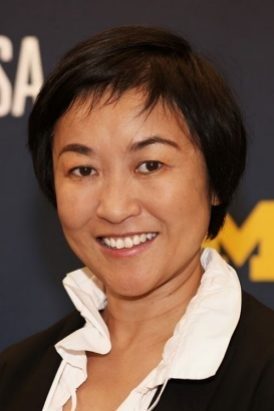
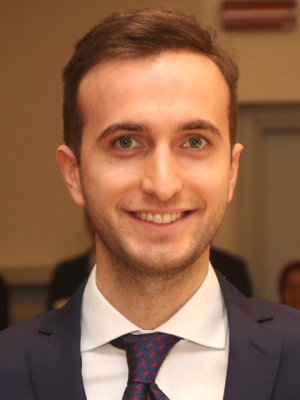
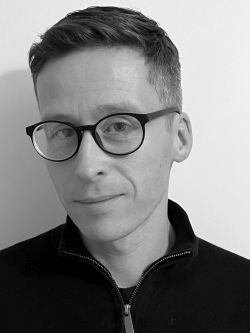
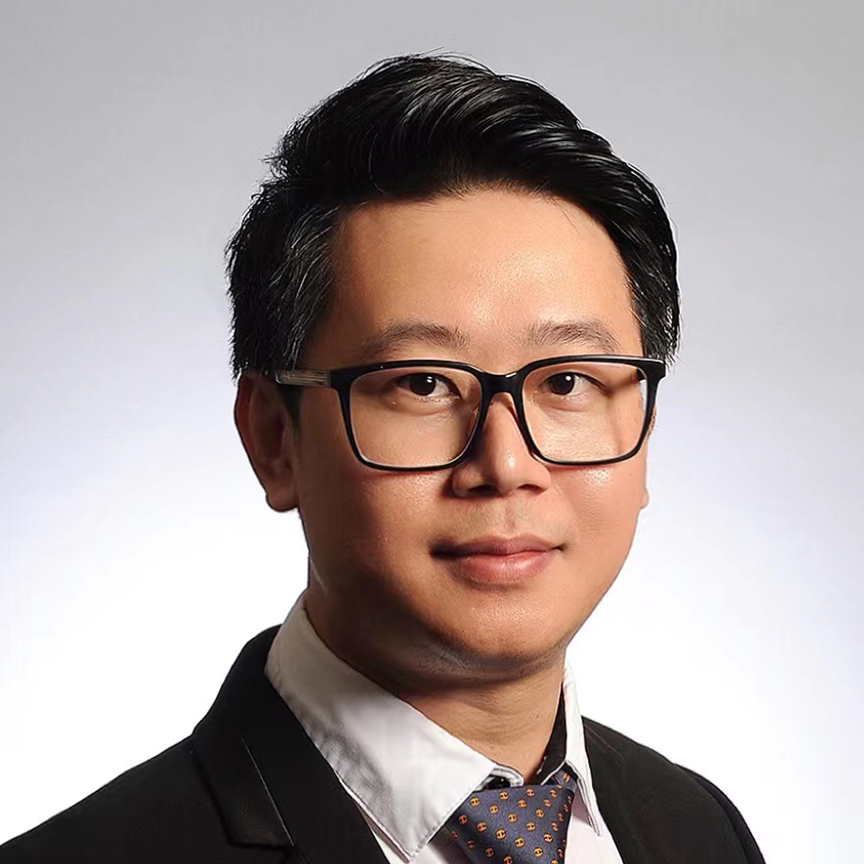
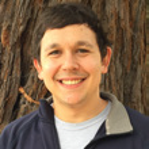
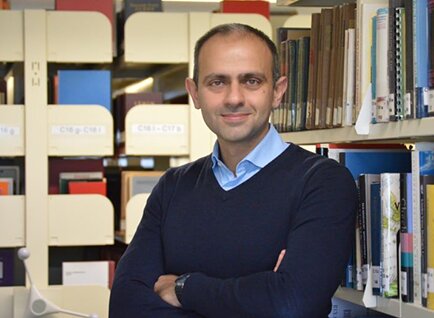
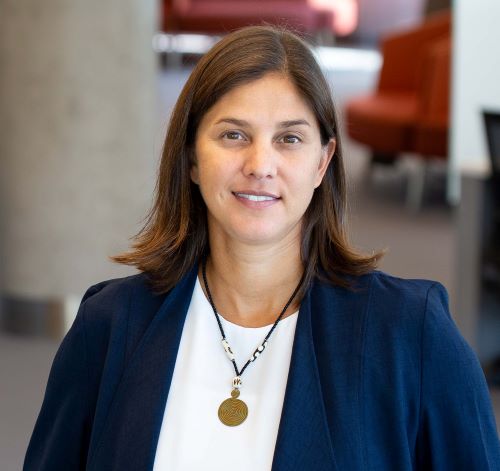
Zhiling Gu is a Research Fellow at Yale School of Public Health, having earned her Ph.D. in Statistics at Iowa State University. Her work integrates statistical theory with applications in public health and medicine. Her research spans Functional Data Analysis Network Analysis Spatiotemporal Modeling Statistical AI Foundations Nonparametric Learning applied to neuroimaging, electronic health records, and environmental health studies. Recent publications focus on Adaptive spatiotemporal models Neuroimaging data processing Pandemic forecasting frameworks Environmental exposure modeling with methodological rigor and practical implementation. Scientific achievements include Runner-up in SMI 2023 Student Paper Competition She has taught STAT 305: Engineering Statistics (ISU) STAT 226: Business Statistics Statistical Computing Statistical Learning and actively engages in academic presentations at conferences like SMI 2024 and CMStatistics 2022.
Fiona Lee is the Arthur F. Thurnau Professor of Psychology at the University of Michigan, with affiliations in Organizational Studies and the Advisory Committee. She holds a Ph.D. from Harvard University. Her research focuses on three core areas: Identity Integration (how individuals navigate multiple identities), Power Dynamics (effects of power on behavior), and Cultural Differences (impact of cultural contexts on organizations and individuals). She teaches courses on Organizational Psychology and Research Methods in Personality/Social Contexts. Lee’s work bridges social psychology and organizational behavior, emphasizing multicultural experiences and adaptation. Her recent studies explore refugee well-being, racial discrimination coping strategies, and the role of family in resettlement processes. Notably, she investigates how cultural identity integration influences creativity, decision-making, and social tolerance. Her publications span cross-cultural communication, biculturalism, and institutional barriers faced by minorities. Lee’s research often combines qualitative and quantitative methods to address real-world challenges in workplace dynamics and global mobility.
Jim Hall is a Professor of Climate and Environmental Risk at the University of Oxford's School of Geography and the Environment, and serves as Director of Research there. He is also a Visiting Fellow at Linacre College and holds leadership roles including Chair of the Science Advisory Committee at IIASA, and Expert Advisor to the UK's National Infrastructure Commission. His work focuses on systemic risk analysis, infrastructure resilience, and policy implications of climate change adaptation. Prof Hall has pioneered methodologies like the National Infrastructure Systems Model (NISMOD) and chairs the Data and Analytics Facility for National Infrastructure (DAFNI). His research spans flood risk management, energy systems decarbonization, and transboundary water resource conflicts in regions such as the Eastern Nile Basin and the Caribbean. Key research areas include robust decision making under uncertainty, info-gap theory applications, and integrated assessments of human-environmental systems. He has contributed to major international assessments, including the IPCC's Fourth Assessment Report, and developed frameworks for multi-hazard stress testing of infrastructure networks. Scientific Awards: George Stephenson Medal (2001), Prince Sultan Prize for Water (2018), Royal Academy of Engineering Fellowship (2010) His advising and grants work includes mentoring a DPhil student Erin Canning and leading projects like MARIUS and ENHANCE. He has also developed innovative modeling tools for coastal erosion prediction and probabilistic assessments of global shipping fuel transitions. Prof Hall’s research groups actively engage in interdisciplinary projects, including the Oxford Martin Programme on Resource Stewardship and the UK Infrastructure Transitions Research Consortium. His work emphasizes bridging scientific analysis with actionable policy solutions for climate adaptation.
Karoline Faust is an Associate Professor at KU Leuven, affiliated with the Laboratory of Molecular Bacteriology (Rega Institute) and the Faculty of Medicine . She contributes to the iSi Health and Leuven One Health institutes, and serves on senior academic councils. Her research spans microbial systems biology, focusing on community dynamics and network analysis. Education: PhD in bioinformatics (2010, KU Leuven) Affiliations: KU Leuven, ISME Journal editorial board, Belgian Society for Microbiology Her research investigates microbial community dynamics , systems biology approaches to microbiomes, and bioinformatics tool development . She specializes in modeling human gut microbiota , synthetic microbial communities , and environmental microbiomes (e.g., microplastic impacts on Daphnia microbiomes). Her work integrates metabolic modeling , network analysis , and experimental systems to understand microbial interactions. Recent publications highlight her contributions to microbial network inference , 16S rRNA sequencing protocols , microfluidics , and ecological modeling of microbiomes. She develops tools like manta , miaSim , and CoNet to analyze community structures. Teaching: Karoline co-teaches courses in microbiology, bioinformatics, and network analysis at KU Leuven, and has contributed to international workshops on microbial network inference. Scientific Engagement: She serves as Senior Editor at ISME Journal and Secretary of the Belgian Society for Microbiology .
Dr. Andrea Martinelli is a Lecturer and Postdoctoral Researcher at the Automatic Control Laboratory (IfA), ETH Zurich. He holds a PhD in Automatic Control from ETH Zurich (2024) under Prof. John Lygeros, an MSc in Control Engineering (2017) from Politecnico di Milano, and a BSc in Management Engineering (2015). His research focuses on optimal control, reinforcement learning, and decentralized control strategies for large-scale systems, emphasizing scalability and applicability to renewable energy systems. He received the ETH Medal for his doctoral thesis on data-driven control methods. Education: BSc in Management Engineering, Politecnico di Milano (2015) MSc in Control Engineering with Honours, Politechnico di Milano (2017) PhD in Automatic Control, ETH Zurich (2024) Research Interests: Optimal control and reinforcement learning Data-driven methods for control systems Decentralized control of interconnected systems Dissipativity theory and passivity-based approaches Applications in renewable energy systems (DC microgrids) Teaching & Outreach: Program Manager for the CAS ETH in Automation Teaching a post-graduate course on automation in 2025 Professional Activities: Worked at Laboratoire d'Automatique (EPFL) during MSc thesis (2017) Research Assistant with Prof. R. Scattolini, Politecnico di Milano (2018)
Professor Cristina Iannelli holds the Personal Chair of Education and Social Stratification at the University of Edinburgh’s Moray House School of Education and Sport, affiliated with the Institute for Education, Community & Society (IECS). She is a Fellow of the British Academy and the Academy of Social Sciences. Her research focuses on social stratification in education and labor markets, social mobility, youth transitions, and quantitative data analysis. She has led major international projects like the ESRC-funded ‘Understanding Inequalities’ (2017-2021) and previously co-directed the ESRC Applied Quantitative Methods Network (AQMeN). Key contributions include analyzing educational policies, intergenerational mobility, and curriculum impacts on inequality. Her educational background includes a PhD from the European University Institute (Florence) and prior roles as a Research Fellow at the University of Edinburgh. She has supervised 14 PhD students across topics like educational inequality, policy analysis, and labor market transitions. Awards include ESRC research fellowships for projects on educational structure and social mobility. Recent work highlights include analyzing sibling data to study intergenerational transmission of advantage, cross-country comparisons of STEM enrollment disparities, and the role of spatial job opportunities in labor market outcomes. She chairs the European Research Network on Transitions in Youth (TIY) and advises ESRC’s Data and Infrastructure Expert Group.
Professor Steven J Reid is a leading scholar in Early Modern Scottish History and Culture at the University of Glasgow , where he has held a professorship since at least 2023. His work bridges intellectual, political, and religious history from c.1450 to c.1650, with a focus on James VI and Mary Queen of Scots . A prolific editor and author, he contributes to major academic series and institutions like the Hunterian Art Gallery. Research Interests Intellectual, political, and religious history of Scotland Jacobean Scotland and Renaissance/Reformation dynamics Latin literature and its cultural role Andrew Melville's educational reforms Key Publications The Early Life of James VI (2023) on royal minority Co-edited volume on The Afterlife of Mary Queen of Scots (2024) Studies in Neo-Latin poetry and educational history Contributions to Oxford Handbook of Calvin and Calvinism (2021) Projects & Grants Co-investigator on RSE-funded Mary Queen of Scots memorialization project AHRC support for Bridging the Continental Divide (2012-2015) Leverhulme Trust international network participant Fulbright Scholars Award at Yale Divinity School (2012) Teaching History 1A: Scotland’s Millennium Special Subject: The Reign of James VI (1578-1603) Module: The Life and Afterlife of Mary, Queen of Scots
Professor Jiti Gao is a Donald Cochrane Chair in Econometrics & Business Statistics at Monash University's Faculty of Business and Economics. He leads the Department of Econometrics and Business Statistics, specializing in non- and semi-parametric econometrics, time-series analysis, and panel data methodologies. His research focuses on developing statistical models for climate change, energy demand, and financial forecasting. Affiliations: Monash University, Impact Labs Grants: Multiple ARC Discovery Projects (e.g., 2020–2025 on climate-energy time series, 2017–2020 on econometric model building) Collaborations: CSIRO, Yale University, and international partners from China, Norway, and Singapore Research interests include climate econometrics, financial time series, and policy evaluation. Over 136 publications span econometric theory and applications, with recent work on nonlinear trending models and quantile regression. His grants emphasize methodological advancements in time series and panel data analysis. Awards: Not explicitly mentioned, but recognition includes Australian Professorial Fellow status and international research leadership roles. Advising/Grants: Primary Investigator on multiple ARC-funded projects, focusing on climate modeling and financial econometrics Labs/Teams: Part of Monash's Impact Labs and collaborates with global institutions on climate and econometric initiatives
Qifeng Li is an Associate Professor at the University of Central Florida specializing in Electrical Engineering with a focus on power and energy systems. His research integrates convex optimization and nonlinear dynamics to address challenges in renewable energy integration, microgrid stability, and energy-water-hydrogen nexus systems. Research Interests: Convex optimization, nonlinear systems, grid resilience, energy-water-food nexus Grants: NSF and DOE projects on microgrid stability and cross-system coordination Professional Roles: Editor for CSEE Journal, IEEE Battery Energy Storage Work Group member Honors: China National Scholarship 2012 His recent publications emphasize data-driven optimization methods, voltage stability analysis, and machine learning applications in power systems. Key trends include hybrid physics-data-driven models, stochastic disturbance analysis, and real-time grid control solutions. Scientific Awards: China National Scholarship (2012)
Dylan Hadfield-Menell is an Assistant Professor in the Department of Electrical Engineering and Computer Science at the Massachusetts Institute of Technology, holding the Bonnie and Marty (1964) Tenenbaum Career Development Professorship. His research focuses on AI alignment and human-AI interaction within MIT's School of Engineering. His research interests center on agent alignment problems in AI systems, particularly examining uncertainty in objective optimization for human-robot teams and societal oversight of machine learning systems. Key areas include the principal-agent alignment problem , assistance games frameworks , and robust preference learning that accounts for hidden contextual factors in reinforcement learning from human feedback. His recent publications reveal strong trends toward multi-agent cooperation , formal contract mechanisms for resolving social dilemmas, and advanced evaluation methodologies for AI safety. The research spans theoretical frameworks like open-universe assistance games while addressing practical challenges in language model alignment and cultural bias assessment. Scientific awards include: AI2050 Early Career Fellowship from Schmidt Futures Berkeley Fellowship NSF Graduate Research Fellowship C.V. Ramamoorthy Distinguished Research Award His work bridges theoretical computer science with real-world AI governance challenges, as demonstrated through MIT's participation in AI policy white papers. Current research directions include developing frameworks for transparent AI systems and addressing fundamental limitations in aligning recommender systems with human values through interdisciplinary synthesis.
Andrew D. White is an Associate Professor of Chemical Engineering at the Hajim School of Engineering & Applied Sciences, University of Rochester. He holds a PhD from the University of Washington (2013). His research focuses on automating scientific discovery through AI, particularly leveraging large language models (LLMs) and deep learning techniques in chemistry. His lab develops agents that integrate literature analysis, hypothesis generation, and experimental design to advance fields like molecular dynamics and drug discovery. Education: PhD in Chemical Engineering, University of Washington, 2013 BS/MS (not explicitly stated in text, inferred from career timeline) Research Interests: Large language models for scientific automation Deep learning applications in chemistry and materials science Molecular dynamics simulations Scientific agents and autonomous systems Publications: His work includes groundbreaking studies on closed-loop AI systems for chemistry, federated learning in molecular property prediction, and multi-agent systems for drug discovery. Recent highlights include the Robin system and ChemCrow tools. Awards: Recipient of the NSF Career Award (2018), NIH Outstanding Investigator Award (2020), and the Curtis Teaching Award (2019). He also advises biotech companies and serves on the National Academy of Sciences' Chemical Sciences Roundtable. Grants & Funding: Supported by DOE, NSF (multiple grants including CBET-1751471), NIH (R35GM137966), and LLNL projects. Collaborates with institutions like Argonne National Lab and Qubit Pharmaceuticals. Labs & Teams: Leads the White Lab at Rochester and co-founded FutureHouse, a nonprofit advancing AI-driven scientific discovery. Supervises a multidisciplinary team of PhD students and postdocs in computational chemistry, AI, and biophysics.
Professor Shani Orgad is a leading academic in the Department of Media and Communications at the London School of Economics (LSE), where she holds the rank of Professor. Her research focuses on gender, feminism, media representations, and globalization, with notable works exploring motherhood, work-life balance, and the intersection of media with contemporary cultural narratives. Education: Orgad earned a bachelor’s degree in Media and Communications from The Hebrew University in Jerusalem, followed by a Master's and PhD in Media and Communications at LSE. She is renowned for her interdisciplinary approach, blending media studies with ethnographic research and sociocultural analysis. Research Interests: Her work critically examines media discourses around gender, motherhood, and inequality. Key themes include the 'confidence culture' critique, menopause visibility, and the role of media in shaping public perceptions of marginalized groups. She has also explored humanitarian communication and the challenges faced by NGOs in engaging the public. Awards: Orgad has been recognized for her teaching excellence, including the 2019 LSE Teaching Excellence Prize and the 2018 LSE Excellence in Education Award. Her book Confidence Culture (2022), co-authored with Rosalind Gill, challenges neoliberal individualism in modern feminist discourse. Public Engagement: She frequently contributes to public discussions on media and gender through blogs, podcasts, and media commentaries. Her work bridges academic rigor with societal relevance, addressing issues like pandemic resilience, menopause discourse, and the impact of social media on self-perception. Current Projects: During the 2024/25 academic year, Orgad is on research leave, focusing on new projects that continue her exploration of media, gender, and cultural dynamics.
Zaur Gasimov is a Lecturer at Johannes Gutenberg University Mainz and currently serves as DAAD Departmental Coordinator and Co-Head at the Faculty of Economics and Administrative Sciences, Turkish-German University. He holds a habilitation in Modern History and Eastern European History, with a focus on Eastern European History, political science, and sociology. Education : B.A. in International Relations from Baku State University; M.A. from Catholic University of Eichstätt-Ingolstadt; Doctorate in Eastern European history Research : Concentrates on Russian-Turkish relations, nationalism in Eastern Europe, cultural transfer processes, and historical narratives. His habilitation thesis analyzed Polish-Turkish anti-Soviet alliances. Publications : Authored monographs on Prometheism, Azerbaijani historiography, and Russification policies. Collaborated on comparative studies of cultural transfer and Ottoman-Russian entanglements.
Elodie Loubaresse is an Associate Professor of Management at Paris-Saclay University since 2009. She holds a PhD in Management from Paris 2 University (supervised by Pr. Isabelle Huault) and is a former student of Ecole Normale Supérieure of Cachan. Her research focuses on innovation-organization relationships in clusters, sectors, and educational contexts, with a strong emphasis on pedagogical innovation and distance learning. She currently leads the L3 Management program and the M1 Strategic Management program in distance learning. Her academic work spans organizational dynamics, cluster networks, and spatial mobility strategies. She has organized international conferences (e.g., AIMS 2022) and served as guest co-editor for special issues on coopetition in ecosystems (FCS 2023) and spatial mobilities (RFG 2012). She is a member of the AIMS scientific committee and contributes to journal peer reviews (Management & Avenir, Revue Française de Gestion). Her teaching portfolio includes courses on strategic management, research methodology, and entrepreneurship across undergraduate and graduate levels. She leads pedagogical innovation initiatives through her role in AUNEGe (French university network for distance education) and has developed resources on management fundamentals for digital education platforms.
Dr. Manisha Kulkarni is a Professor at the School of Epidemiology and Public Health, University of Ottawa, where she holds the University Research Chair in Climate Change and Emerging Diseases. She is also the Director of the INSIGHT (Interdisciplinary Spatial Informatics for Global Health) research lab and serves as Scientific Director of the Canadian Lyme Disease Research Network (TickNet Canada). Her work spans global public health, with a focus on vector-borne and zoonotic diseases. PhD in Medical Entomology, McGill University (2006) BSc in Environmental Biology, McGill University (2001) Dr. Kulkarni's research centers on the socio-ecological determinants of infectious disease emergence, particularly malaria, Lyme disease, and West Nile virus. She applies population surveys, entomological field sampling, molecular diagnostics, and GIS to study spatio-temporal patterns and the impacts of climate change and landscape transformation on disease transmission. Her work emphasizes One Health approaches and capacity building in low-resource settings. Her recent research trends show a strong focus on geospatial modeling of vector-borne diseases, climate change adaptation, urban tick surveillance, and international collaborations in Tanzania, Benin, and Latin America. She leads interdisciplinary projects integrating drone mapping, citizen science (e.g., eTick.ca), and community participation to identify disease risk factors. Scientific awards and recognitions include: University Research Chair in Climate Change and Emerging Diseases Ontario Early Researcher Award Faculty of Medicine Award for Leadership in Global Health (2023) Researcher of the Year, Faculty of Medicine (2019) Member, College of New Scholars, Royal Society of Canada NSERC Discovery Grant and CIHR funding Dr. Kulkarni has successfully advised multiple PhD and Master’s students and leads major funded projects supported by CIHR, PHAC, CFI, IDRC, and NSERC. She has held leadership roles as Associate Dean of Global Health (2021–2024) and currently serves on the CIHR Institute of Infection and Immunity advisory board. Her lab, INSIGHT, fosters an interdisciplinary training environment combining field, lab, and analytical methods for global health research. Key research teams and collaborations include: INSIGHT Lab, University of Ottawa Pan-African Malaria Vector Research Consortium (PAMVERC) Canadian Lyme Disease Research Network (TickNet Canada) London School of Hygiene & Tropical Medicine (LSHTM) National Microbiology Lab, PHAC Centre de Recherche Entomologique de Cotonou (CREC), Benin