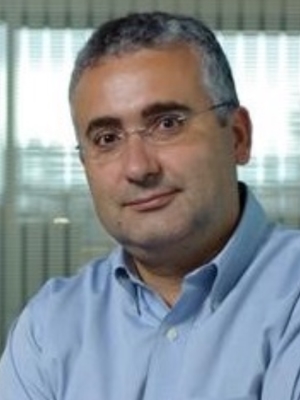
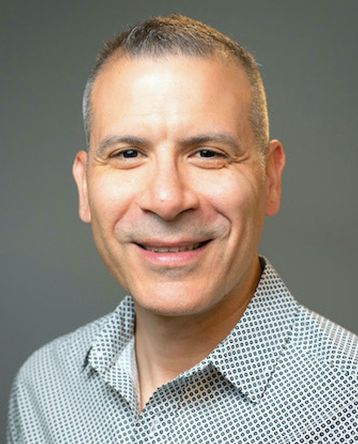
Emilio Frazzoli is a Full Professor at ETH Zurich’s Department of Mechanical and Process Engineering. He leads the Institute for Dynamic Systems and Control and the Center for Sustainable Future Mobility, focusing on autonomous systems, robotics, and socio-technical control frameworks. Current affiliations: ETH Zurich (Dynamic Systems and Control, Sustainable Future Mobility) Research: Autonomous mobility-on-demand, game theory for resource allocation, and safety verification in multi-agent systems His work bridges robotics, control theory, and economics, with projects like the open-source AMoDeus simulation framework for autonomous taxis and karma-based resource allocation systems. Recent publications emphasize trustworthy AI, reproducibility in autonomous vehicle control, and human-robot interaction challenges. Notable projects include nuReality (VR-based pedestrian interaction studies) and CARSI II (context-driven vehicle interfaces).
Matthew B. Blaschko is a Professor in the Department of Electrical Engineering at KU Leuven, Belgium. He serves as director of the KU Leuven ELLIS unit and is a fellow in the ELLIS Health program. He is a Core PI in the Flanders AI Research Program, working as a workpackage lead for Decision Support Systems and Medical Imaging. Blaschko is also a member of the KU Leuven Institute for Artificial Intelligence and one of the leaders of the working group on Machine Learning and Data Science. Professor Blaschko received his B.S. from Columbia University, M.S. from the University of Massachusetts Amherst, and Dr. rer. nat. from Technische Universität Berlin (awarded for work at Max Planck Institutes Tübingen). He was a Newton International Fellow at the University of Oxford and received his Habilitation (HDR) from École Normale Supérieure de Cachan. Prior to joining KU Leuven, he was a Permanent Research Scientist in the INRIA Saclay Research Center and a Faculty Member at Ecole Centrale Paris. His research focuses on machine learning techniques applied to visual data, with particular emphasis on calibration in deep learning, medical image analysis, and federated learning. Blaschko's work bridges theoretical foundations with practical applications, as evidenced by technology developed in his research being incorporated into MONA, software for ophthalmic image analysis. His research group has made significant contributions to the fields of model calibration, uncertainty estimation, and medical imaging analysis, with recent publications showing strong trends toward improving reliability of AI systems in medical contexts and advancing theoretical understanding of calibration metrics. Professor Blaschko has been recognized with several awards including the Université Paris-Saclay STIC Doctoral School Best Scientific Contribution Award, Best Paper Award at CVPR 2008, Main Award at DAGM 2008, and Best Student Paper Award at ECCV 2008. Professor Blaschko has supervised numerous PhD and Master's students, with current and former students including Deniz Soysal, Claire Marchal, Dongli Xu, Sebastian Gruber, Jiameng Li, Marco Mezzina, and many others working on diverse topics from Alzheimer's disease analysis to surgical phase recognition. His research has been supported by various funding sources including the Flanders AI Research Program. He has co-organized several influential workshops including the "Another Brick in the AI Wall: Building Practical Solutions from Theoretical Foundations" at CVPR 2025, Commands 4 Autonomous Vehicles workshop at ECCV 2020, and the Learning from Limited Labeled Data workshop series at NIPS 2017 and ICLR 2019. His laboratory focuses on machine learning for medical image analysis, with applications in ophthalmology, neurology, and surgical robotics. The group maintains active collaborations with medical institutions and participates in international challenges such as the KNee OsteoArthritis Prediction (KNOAP2020) challenge.
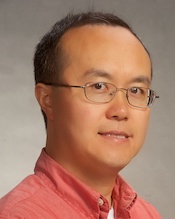
Dr. Xinwen Fu is a Professor in the Miner School of Computer & Information Sciences at the University of Massachusetts Lowell, where he also serves as Director of the iSAFER Center. He received his Ph.D. in Computer Engineering from Texas A&M University (2005), M.S. in Electrical Engineering from University of Science and Technology of China (1998), and B.S. in Electrical Engineering from Xi'an Jiaotong University (1995). Research Interests Dr. Fu specializes in Computer Security and Privacy , with particular focus on IoT Security , Mobile Security , Network Security , and Digital Forensics . His research has been published in all four top computer security conferences: IEEE Symposium on Security and Privacy (S&P/Oakland), ACM Conference on Computer and Communications Security (CCS), USENIX Security Symposium, and Network and Distributed System Security Symposium (NDSS), as well as prestigious journals like ACM/IEEE Transactions on Networking and IEEE Transactions on Dependable and Secure Computing. His work has gained significant media attention from CNN, Wired, Huffington Post, Forbes, Yahoo, MIT Technology Review, and PC Magazine, including multiple appearances on CNN Domestic and International. He has also served as TPC member for numerous prestigious conferences including ACM CCS, IEEE INFOCOM, and IEEE ICDCS. Scientific Awards Best paper award at IEEE International Conference on Industrial Internet (ICII) 2019 Best paper award, International Conference on Wireless Algorithms, Systems, and Applications (WASA), 2017 Teaching Excellence Award of Department of Computer Science, UMass Lowell, 2016 Best paper award, International Performance Computing and Communications Conference (IPCCC) 2016 Award of Excellence, GeekPwn 2016 Ethic Smart Life Hack Competition Erich Spengler Student Cyber Paper Award with students, The Colloquium for Information Security Education (CISSE), 2016 Spotlight Paper of the IEEE Transactions on Mobile Computing (TMC), February 2014 Best paper award, International Conference on Wireless Algorithms, Systems, and Applications (WASA), 2013 Best paper award, IEEE International Conference on Communications (ICC): Communications and Information Security Symposium, 2013 Teaching award, Department of Computer Science, University of Massachusetts Lowell, 2011
Geert Deconinck is a full professor at KU Leuven , leading the Electrical Energy Systems and Applications (ELECTA) research group within the Department of Electrical Engineering (ESAT). He also serves as scientific leader of the EnergyVille research center's algorithms domain, focusing on smart electrical networks and thermal systems. M.Sc. and Ph.D. from KU Leuven Head of ELECTA since 2012 (10 professors, 8 postdocs, 70+ PhDs) Over 8 million EUR research budget in last 5 years 44 completed PhDs and 10 current advisees IEEE Transactions editorial board member His research spans smart grid architectures , distributed control , and cyber-physical security , with recent focus on EV-grid integration , renewable energy democratization , and multi-carrier energy systems . Current projects include: Smart Charging - E-Mobility meets Renewable Energy Early Detection and Defense Systems for Smart Grids Open-source P2P energy sharing platforms Microgrid control strategies for PV-battery systems Awarded IET Fellow and IEEE Senior Member status, his work combines machine learning with power systems engineering through both theoretical modeling and experimental validation . He has contributed over 575 publications with 9800+ Google Scholar citations.
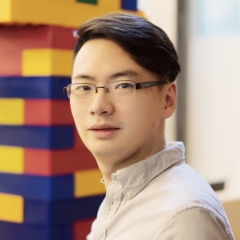
Shiyu Chang is an Associate Professor in the Department of Computer Science at the University of California, Santa Barbara , focusing on machine learning with applications in natural language processing and computer vision . He previously worked as a research scientist at the MIT-IBM Watson AI Lab alongside Prof. Regina Barzilay and Prof. Tommi Jaakkola, and earned both his B.S. and Ph.D. in Computer Science from the University of Illinois at Urbana-Champaign , advised by Prof. Thomas S. Huang. Education : PhD, University of Illinois at Urbana-Champaign BS, University of Illinois at Urbana-Champaign His research centers on enhancing AI systems through human-AI interaction , aiming to improve interpretability , transferability , and adversarial robustness in LLMs. Recent work includes LLM watermarking defense , uncertainty decomposition , and self-denoised smoothing for model robustness. His publications span premier venues like ICML , NeurIPS , CVPR , and ACL , with recurring themes in diffusion models , LLM optimization , and ethical AI (e.g., hallucination detection, unlearning frameworks). He actively mentors students, several of whom are marked as advisees (☆) in his publications.
Petri Myllymäki serves as Director of multiple prominent research entities at Aalto University's School of Science, including the Helsinki Institute for Information Technology (HIIT), the Department of Computer Science, the Finnish Center for Artificial Intelligence (FCAI), and his own research group. His leadership positions demonstrate significant influence in the Finnish and international AI research community. Dr. Myllymäki's research focuses on information discovery, Bayesian networks, information retrieval, and machine learning. His work bridges theoretical computer science with practical applications, particularly in developing systems that enhance how humans interact with information spaces. His research fingerprint prominently features Information Discovery (100%), Bayesian Networks (50%), Hashing (50%), Approximation Algorithms (50%), Information Retrieval (50%), structure learning (50%), Search Engine technology (37%), and Task Performance (33%). His recent publications (2015-2025) reveal a consistent trajectory in interactive information discovery systems, with increasing applications in diverse domains including decision science, public health, and social media analysis. Notably, his 2024-2025 work shows expansion into cognitive burden in decision-making, health outcomes research using machine learning, and political social media analysis – demonstrating how his core AI methodologies are being applied to address complex societal challenges. Recognized at AI Finland Gala 2024 for contribution reaching over 1.4 million users Featured in multiple media outlets including X (formerly Twitter) and Bluesky Work referenced in patents and Wikipedia pages Dr. Myllymäki actively hosts academic visitors and participates in collaborative research activities. His work contributes to UN Sustainable Development Goals through applications in information access and AI development. The Myllymäki Petri group (HIIT) serves as a hub for interdisciplinary research at the intersection of artificial intelligence, human-computer interaction, and information systems.
Antonio A. Casilli is a Professor of Sociology at Télécom Paris (Institut Polytechnique de Paris) and a researcher at the Interdisciplinary Institute of Innovation (i3) . He is an associate member of LACI-IIAC (formerly the Edgar Morin Center) at EHESS and serves as a Faculty Fellow at the Nexa Center for Internet and Society (Polytechnic University of Turin) since 2018. Research Focus: Digital labor, platform economy, AI ethics, and the social implications of technology Awards: Prix Étoiles de la SCAM, Prix Meilleur Documentaire de l'Année (Bangkok), selected as Nature Journal Top Science Pick His work analyzes how digital platforms reshape labor dynamics, privacy norms, and social inequalities. Recent studies explore global AI data work, including fieldwork in Latin America, Africa, and Europe. He advocates for ethical frameworks recognizing human labor behind automation. Media Engagement: Regular contributor to France Culture , Le Monde , Wired , and Rue89 . Authored En attendant les robots (2019) and Schiavi del clic (2020), investigating hidden digital labor structures.
Ron Dror is the Cheriton Family Professor of Computer Science at the Stanford Artificial Intelligence Lab , with courtesy appointments in Structural Biology and Molecular & Cellular Physiology . He also holds affiliations with Bio-X, the Institute for Human-Centered Artificial Intelligence (HAI), the Institute for Computational and Mathematical Engineering (ICME), Sarafan ChEM-H, and the Wu Tsai Neurosciences Institute. Education: PhD in Electrical Engineering and Computer Science, MIT MPhil in Biological Sciences, University of Cambridge (Churchill Scholar) BS in Mathematics and Electrical & Computer Engineering, Rice University (summa cum laude) Ron leads a multidisciplinary research group that combines molecular simulation and machine learning to study biomolecular structure, dynamics, and function. His work focuses on developing computational methods to accelerate drug discovery by predicting molecular interactions and designing more effective therapeutics. Current projects include the PENSA software library for analyzing biomolecular ensembles and FRAME framework for structure-based ligand design. His research has produced groundbreaking work on G-protein-coupled receptors (GPCRs) , RNA structure prediction , and mitochondrial transport mechanisms . Key publications highlight applications of geometric deep learning and molecular dynamics simulations in structural biology. Scientific Awards: Cheriton Family Professorship (2023) Two Gordon Bell Prizes (2014, 2009) Best Paper Awards at NeurIPS (2021), IPDPS (2013), SC11 (2011), SC09 (2009), SC06 (2006) Science Magazine Top 10 Breakthrough (2010) Fulbright Scholarship , NSF Fellowship , DoD Fellowship , Whitaker Foundation Fellowship Ron has advised numerous doctoral and master’s students including EJ Fine , Masha Karelina , and Briana Sobecks . His lab collaborates with experimentalists across academia and industry, applying computational methods to diverse biomedical problems such as RNA structure prediction , GPCR signaling , and mitochondrial metabolism .
Dr. Heather Culbertson is an Assistant Professor in the Department of Computer Science at the University of Southern California, leading the HaRVI (Haptics Robotics and Virtual Interaction) Laboratory. Her research focuses on designing haptic hardware and algorithms to create intuitive human-robot interactions through touch, emphasizing realism in virtual environments and social connectedness. Key areas include mediated touch, wearable haptic systems, and multisensory integration in VR/AR applications. The lab's work spans robotics, human perception modeling, and cross-disciplinary solutions for healthcare and immersive technologies. Research interests revolve around tactile feedback systems, social robotics, and the psychological impact of haptic interfaces. Recent work explores real-time haptic texture rendering, affective communication via touch, and motion platforms for VR. Culbertson's projects often integrate human factors early in design to ensure usability and immersion. Publications highlight advancements in haptics coding standards, drone-human interaction, and emotion regulation systems. Her contributions bridge engineering and cognitive sciences, addressing challenges in wearable tech, surgical training simulations, and assistive robotics. The HaRVI Lab collaborates across disciplines to advance tactile interfaces for virtual reality, social robotics, and medical applications.
Prof. Catherine O'Sullivan is a Professor of Particulate Soil Mechanics at Imperial College London's Department of Civil and Environmental Engineering, part of the Faculty of Engineering. She leads the Geotechnics Section and serves as Editor-in-Chief of the ASCE Journal of Geotechnical and Geoenvironmental Engineering. Her research focuses on particulate soil mechanics, employing Discrete Element Modelling (DEM) and micro-CT imaging to study sand behavior, reservoir sandstones, and internal erosion. Notable recognitions include the 2016 Shamsher Prakash Research Award and the 2021 President’s Teaching Innovation Award. Education : PhD in Civil Engineering, University of California, Berkeley (2002) MEngSc in Civil Engineering, University College Cork (Ireland) BEng (Civil Engineering), University College Cork (Ireland) Research Interests : Prof. O'Sullivan's work integrates computational and experimental methods to explore granular material behavior. Key areas include DEM validation, μCT analysis, and pore network modeling. Her group collaborates across disciplines, involving physicists and mechanical engineers alongside civil engineers. Awards & Recognition : 2015 Geotechnique Lecture Student Choice Supervision Award (nominated twice) 2023 Alert Geomechanics Special Lecture Advising & Grants : She supports PhD and postdoctoral researchers through Imperial scholarships and fellowships. Her students often explore particulate soil behavior, with many securing prestigious awards. Labs & Teams : Leads the Geotechnics Section at Imperial, fostering interdisciplinary research in geomechanics and computational modeling.
Dr. Bin Tang is a Professor in the Department of Computer Science at California State University, Dominguez Hills. He holds a Ph.D. in Computer Science from Stony Brook University (2007) and dual M.S. degrees in Computer Science and Materials Science from the same institution. His research focuses on algorithmic solutions for data placement in networks, with applications in robotic sensor systems and cloud data centers. He has led multiple NSF-funded projects including 'Edge-Based Approach to Robust Multi-Robot Systems' and 'Optimal Resource Allocation in Policy-Driven Data Centers'. Dr. Tang mentors students in research competitions and has supervised numerous graduate theses. He teaches courses in operating systems, algorithms, computer networks, and cloud computing.
Professor Markos Zachariadis is the Chair in Financial Technology (FinTech) and Full Professor of Information Systems at Alliance Manchester Business School (AMBS), University of Manchester. He also directs the Centre for Financial Technology Studies (CFTS) and holds roles such as FinTech Research Fellow at the Cambridge Centre for Digital Innovation and member of the World Economic Forum’s Global Future Council on Financial Systems. His research focuses on the intersection of digital innovation, financial technology, and network economics, with notable studies on payment systems (e.g., SWIFT), Open Banking, and blockchain. He has authored/co-authored influential works like The Society for Worldwide Interbank Financial Telecommunication (SWIFT) (2014) and co-edited The PAYTECH Book (2020). Education: PhD in Management (Economics of Payment Systems) from the London School of Economics (2011), MSc in ADMIS (2004), and BSc in Economics from the University of Patras (2003). Prior academic roles include Associate Professor at Warwick Business School and Visiting Professorships at Ivey Business School and Cambridge Judge Business School. Industry experience includes roles at UBS Investment Bank and Hewlett Packard. Research Interests: Economic impacts of ICT adoption in banking, diffusion of payment networks, data standards, Open Banking, blockchain, and regulatory frameworks. Awards include the NET Institute Award and SWIFT Institute Awards for research on payment systems and digital transformation. He advises global organizations like the Hellenic Competition Commission and frequently engages with media outlets such as BBC, CNN, and The Financial Times. Key Projects: Organized an international PayTech conference funded by Gates Foundation and MasterCard. Co-led the Centre for Digital Trust and Society (2021–present) and the Fintech and Financial Crimes project (2021–2022). His work contributes to UN SDGs related to innovation and financial inclusion. Labs/Teams: Founded the Centre for Financial Technology Studies (CFTS) at AMBS, part of interdisciplinary initiatives like the Centre for Digital Trust and Society.
Xianguo Li is a Professor in the Department of Mechanical and Mechatronics Engineering at the University of Waterloo, Canada. He holds prestigious fellowships including Fellow of the Canadian Academy of Engineering (FCAE), Fellow of the Engineering Institute of Canada (FEIC), and Fellow of the Canadian Society for Mechanical Engineering (CSME). His primary research focuses on thermal fluid science, energy systems, and fuel cell technology, with a strong emphasis on green energy solutions. **Education**: 1989: Doctorate in Mechanical Engineering, Northwestern University, USA 1986: Master's in Mechanical Engineering, Northwestern University, USA 1982: Bachelor's in Thermal Energy Engineering, Tianjin University, China **Research Interests**: His work spans fuel cells, spray dynamics, fluid dynamics, heat and mass transfer, power generation, and renewable energy systems. He leads the Fuel Cell and Green Energy Lab, advancing innovations in energy storage, propulsion systems, and sustainable technologies. **Awards**: Outstanding Performance Award (University of Waterloo, 2007) Frank Walk Service Award (2001) Best Paper Award (2003) Recipient of the Simpson Fellowship (1988) **Advising & Grants**: He supervises graduate students and research associates in projects funded by NSERC, Auto 21, CFI, and industry partners. His lab collaborates on fuel cell durability, thermal management, and green energy policy initiatives. **Editorial Roles**: Founding Editor-in-Chief of the International Journal of Green Energy , Field Chief Editor of Frontiers in Thermal Engineering , and serves on dozens of editorial boards. He chairs major conferences like the International Green Energy Conference and the World Fuel Cell Conference series.
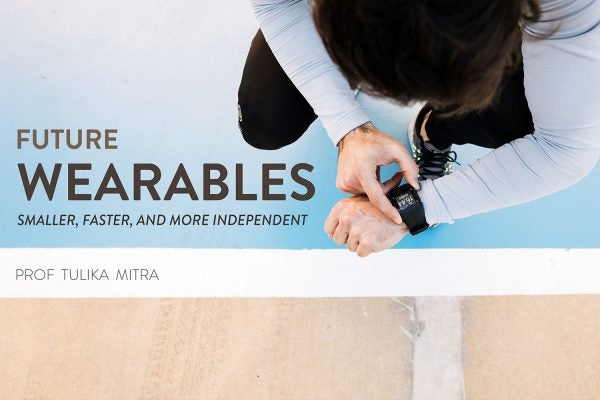
Professor Tulika Mitra is the Dean of the School of Computing and Vice Provost (Special Projects) at the National University of Singapore (NUS). She holds the Provost’s Chair Professor in the Department of Computer Science and has been instrumental in shaping academic policies and strategic initiatives at NUS since joining in 2001. PhD in Computer Science, Stony Brook University (2000) M.E. in Computer Science, Indian Institute of Science (1997) B.E. in Computer Science, Jadavpur University (1995) Her research focuses on hardware-software co-design for energy-efficient computing systems, particularly in real-time embedded systems, heterogeneous architectures, and AI accelerators. She leads major research programs such as the NRF Competitive Research Programme on Low-Power Edge Accelerators and the MOE Tier-3 Programme on Green AI , collaborating with industry leaders like ARM, AMD, and Meta. Her recent publications highlight innovations in CGRA optimization , sparse attention mechanisms , photonic-digital hybrid architectures , and low-power ML inference . These works often integrate compiler techniques, architectural design, and real-time constraints for edge computing applications. Scientific Awards : ESWEEK Test-of-Time Award (2022), ACM SIGDA Distinguished Service Award, IEEE CEDA Outstanding Service Recognition Award, Teaching Excellence Award (2006), and multiple best paper recognitions. Education Leadership : Spearheaded the Computer Engineering (CEG) Programme at NUS, a joint initiative between Engineering and Computing. As a mentor , she has supervised over 25 PhD students , many now in prominent academic or industrial roles. Her research group eCO Lab focuses on embedded computing challenges, while her grant collaborations include projects on 5G base stations, reconfigurable architectures, and IoT-optimized SoCs.
Levent Burak Kara is a Professor in the Department of Mechanical Engineering at Carnegie Mellon University (CMU), with a courtesy appointment in the Robotics Institute. He is a leading researcher in AI-driven computational design, additive manufacturing, and intelligent engineering systems, leading the Visual Design and Engineering Lab (VDEL) at CMU. Education: B.S., Mechanical Engineering, Middle East Technical University (1998) M.S., Mechanical Engineering, Carnegie Mellon University (2000) Ph.D., Mechanical Engineering, Carnegie Mellon University (2005) His research focuses on integrating machine learning, optimization, and geometric modeling to revolutionize engineering design and manufacturing. Key areas include topology optimization, CAD intelligence, digital twins, generative design, bioengineering, and electronic design automation. His work enables automation of traditionally labor-intensive design processes using deep learning and reinforcement learning. His recent publications reveal a strong trend toward physics-informed surrogate modeling, real-time simulation, manufacturability prediction, and AI-driven automation in mechanical, biomedical, and electronic systems. These works frequently appear in top journals such as Journal of Mechanical Design and Journal of Applied Mechanics , and at premier conferences like NeurIPS and DAC. Scientific Awards: National Science Foundation CAREER Award ASME Design Automation Society Young Investigator Award Google AI for Social Good Impact Scholar Kara advises several Ph.D. students and has secured significant funding from federal agencies such as the NSF and the U.S. Army Research Laboratory, as well as collaborations with industrial leaders including Cadence Design Systems and NVIDIA. His research is also supported by CMU’s NextManufacturing Center and the Critical Technology Initiative. He is actively involved in developing intelligent design systems that leverage AI to automate product design, optimize manufacturing processes, and improve medical diagnostics, particularly in oral cancer screening and organ preservation. His lab, VDEL, is a hub for innovation in AI-enabled engineering.