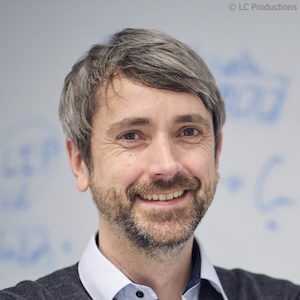
Abhik Roychoudhury is a Provost's Chair Professor of Computer Science at the National University of Singapore (NUS), leading the Trustworthy and Secure Software (TSS) research group since 2001. His work focuses on automated program repair, software testing, security, and agentic AI. He is a Senior Advisor at SonarSource following the acquisition of his startup AutoCodeRover. He holds an ACM Fellowship and has received the ICSE Most Influential Paper Award for program repair research. Education: M.S. and Ph.D. in Computer Science from State University of New York at Stony Brook (1997-2000). Research interests include program analysis, software security, and AI-driven software engineering. His team has pioneered techniques like SemFix and Angelix for program repair, and AFLNet for protocol fuzzing. He has served as editor-in-chief of ACM TOSEM and conference chair for ICSE and FSE. Awards include the NUS Outstanding Graduate Mentor Award (inaugural recipient) and IEEE New Directions Award. His work bridges academia and industry, with contributions to projects like the DesCartes initiative for critical urban systems. Key collaborations include Microsoft on API repair and IBM on AI research centers. His recent focus includes agentic AI for software engineering, reflected in AutoCodeRover's acquisition by SonarSource.
Dr. Paolo Bergamo is a Senior Researcher at the Swiss Seismological Service (SED), ETH Zurich, since April 2016. He specializes in engineering seismology, focusing on earthquake site response models, ground-motion modeling, and seismic risk assessment. His work includes projects such as the Earthquake Risk Model Switzerland (ERM-CH23) and the SERA Horizon2020 initiative. He holds a PhD in Earth Sciences from Politecnico di Torino (2012) and advanced degrees in Environmental Engineering. Key research areas include soil amplification analysis, geophysical surveys, and the integration of empirical and computational methods for seismic hazard mitigation. His contributions span microzonation studies, site characterization using borehole and ambient vibration data, and the development of design-compatible waveforms for Swiss building codes. Education: PhD in Water and Territory Management Engineering, Politecnico di Torino (2012) MSc and BSc in Environmental Engineering, Politecnico di Torino (2008, 2005) Research Interests: Dr. Bergamo’s work emphasizes the collation of empirical ground-motion data with building codes, spatial modeling of soil amplification, and geophysical site characterization. He employs advanced techniques like surface-wave analysis, machine learning, and canonical correlation for seismic hazard assessment. Projects & Grants: ERM-CH23: Site response implementation and national seismic risk modeling SERA Project (Horizon2020): Site characterization indicators Swiss Federal Office for Environment-funded studies on microzonation and geophysical monitoring Labs & Teams: Active contributor to the Engineering Seismology group at SED, leading efforts in alpine valley seismic modeling and offshore site characterization in Lake Lucerne.
Rainald Loehner is a Distinguished Professor of Fluid Dynamics at George Mason University's Center for Computational Fluid Dynamics. Since 2003, he has led the Center for Computational Fluid Dynamics at George Mason University. He is currently a Hans Fischer Senior Fellow at the Technical University of Munich's Institute for Advanced Study (TUM-IAS) for 2023, hosted by Professors Kai-Uwe Bletzinger and Roland Wüchner in the 'Adjoint-Based System Identification of Large-Scale Structures' Focus Group. Loehner received his Diplom Ingenieur (Maschinenbau) degree from the Technical University of Braunschweig, and his PhD and a DSc in civil engineering from the University College of Swansea, Wales. After teaching at Swansea for a year, he worked at the Naval Research Laboratory in Washington, DC, followed by a research professorship at George Washington University. He joined George Mason University as an associate professor and was promoted to full professor in 1995 and distinguished professor in 2004. With over 35 years of experience, Professor Loehner's research spans the complete pipeline of numerical solvers and simulation tools. His expertise includes pre-processing, grid generation, numerical methods, field solvers, parallel computing, adaptive mesh refinement, fluid-structure interaction, shape optimization, system identification, and computational crowd dynamics. His current work focuses on developing advanced field solvers for compressible and incompressible flows, acoustics, electromagnetic wave propagation, heat and mass transfer, structural mechanics, and fluid-structure interaction. Key application areas include blast mitigation, ship hydrodynamics, blood flow, contaminant transport, and pedestrian safety. Loehner's recent research output (2020-2024) shows a strong trend toward digital twin technology and adjoint-based methods for structural analysis and optimization. His publications focus on high-fidelity digital twins for detecting structural weaknesses, risk assessment in engineering systems, and optimization of sensor placement. His work bridges computational mechanics with machine learning approaches, particularly in system identification and inverse problems, demonstrating how computational methods can solve complex real-world engineering challenges. 2020: Ranked #15119 in the Stanford List of Most Influential Scientists of the World; #8 in Aerospace and Aeronautics 2010: Distinguished International Career Award, Argentine Association of Computational Mechanics 2008: Fellow, International Association for Computational Mechanics 2006: Associate Fellow, AIAA 2005: Honorary Professor, University of Wales Swansea 2005: Advisory Professor, Shanghai Jiao Tong University 2004: Distinguished Professor of Fluid Dynamics, George Mason University 1999: Computational Mechanics Achievements Award, Japan Society of Mechanical Engineering 1993: Doctor of Science in Civil Engineering, University College of Swansea 1979-1983: Studienstiftung des Deutschen Volkes (Top 1% of German Students) Professor Loehner has mentored numerous students through his work at George Mason University and has supervised research in computational fluid dynamics, structural mechanics, and related fields. His research has been supported by various grants from government agencies and industry partners, enabling the development of advanced simulation tools applied in aerodynamics, hydrodynamics, shock-structure interaction, and medical applications. His codes and methods have been widely adopted in industry and academia for applications ranging from aircraft and ship design to medical simulations and urban pathogen transmission modeling. Loehner leads the Center for Computational Fluid Dynamics at George Mason University, which focuses on developing cutting-edge computational methods for fluid dynamics and related multiphysics problems. The center works on strategic application areas including blast mitigation, ship hydrodynamics, blood flow simulation, and pedestrian movement modeling. As a TUM-IAS Fellow, he collaborates with the Chair of Computational Modeling and Simulation at TUM on adjoint-based system identification of large-scale structures, bringing together expertise in computational mechanics and digital twin technology to address complex engineering challenges.
Dr. Francesca Delogu is a Scientific Associate at Saarland University's Department of Linguistics and Language Technology. Her research focuses on the cognitive and neural bases of online language understanding, particularly expectation-based mechanisms, event/script knowledge, pragmatic inferences, and reference processes. Specializes in ERP (Event-Related Potentials) and eye tracking methodologies Collaborates extensively with Prof. Matthew W. Crocker and Dr. Herbert Brouwer Her work examines how extra-linguistic knowledge influences semantic integration and lexical retrieval, with applications in computational linguistics and language technology. She has taught courses on experimental methods in psycholinguistic research since 2012. Key research trends include the functional dissociation of ERP components (N400/P600) in language comprehension, rational redundancy in referential expressions, and the role of discourse context in expectation generation. Her publications span journals like Language, Cognition and Neuroscience , Cognitive Science , and Brain Research .
Mohsen Heidari is an Assistant Professor in the Department of Computer Science at Indiana University, Bloomington. He is affiliated with the IU Quantum Science and Engineering Center (QSEc) and the NSF Center for Science of Information (CSoI). He previously held positions as a Visiting Assistant Professor at Purdue University and as a Postdoctoral Research Associate at CSoI. Ph.D. in Electrical Engineering (2019) and M.Sc. in Applied Mathematics (2017) from the University of Michigan His research focuses span quantum computing, theoretical machine learning, and information theory. Key themes include: Quantum algorithm design and sample complexity Fourier-based learning frameworks Quantum-classical duality in learning problems Information-theoretic approaches to biological systems Article trends show a strong emphasis on quantum-classical learning intersections (6/15 papers), Fourier analysis applications (5/15), and information-theoretic foundations (12/15). Notable venues include NeurIPS, IEEE Transactions, and ISIT. He directs research involving: Quantum Neural Network development Quantum measurement simulation Quantum data compression techniques Quantum algorithm implementation constraints
Prof. Vahid Jamali is an Assistant Professor and Head of the Resilient Communication Systems Group at the Technical University of Darmstadt, Germany. His research focuses on resilient communications, 6G wireless systems, bio-inspired molecular communication, and reconfigurable intelligent surfaces (RIS). He holds a Doctoral Degree from Friedrich-Alexander-Universität Erlangen-Nürnberg (FAU), Germany, and has served as a postdoctoral researcher at Princeton University and FAU. Education PhD in Communication Systems, FAU (2019) Visiting Researcher at Stanford University (2017) Research Assistant at FAU's Institute for Digital Communications (2013-2019) Research Interests Resilient Networks : Emergency networks, RIS-based systems, and resilience-by-design architectures. Wireless Innovations : 6G technologies, holographic MIMO, and joint communication-sensing systems. Bio-inspired Systems : Molecular communication modeling using biological principles like diffusion and chemical reactions. Recent Work Trends His 2024-2025 publications emphasize RIS optimization (e.g., temperature-aware phase shifts, fast beam switching) and molecular communication (e.g., Poisson channel identification, bio-inspired receiver designs). Emerging themes include AoI-based RIS reconfiguration and integrated sensing-communication-powering (ISCAP) for IoT. Lab Activities He leads the Resilient Communication Systems Group, exploring cutting-edge RIS hardware (e.g., liquid crystal implementations) and theoretical foundations for future wireless systems.
Dr Peter Batchelor is a Senior Lecturer in Music and Music Technology at De Montfort University, affiliated with the Leicester Media School and the Music, Technology and Innovation – Institute of Sonic Creativity (MTI²). He serves as Programme Leader for the BA Music Technology programme and is actively involved in research, teaching, and creative practice. Education: BMus, University of Wales, Bangor (1996) MPhil, University of Wales, Bangor (1997) PhD, University of Birmingham (2004) FHEA (2024) His research and creative work focuses on electroacoustic composition, multichannel sound installations, public art, and aural landscape construction. He explores sound spatialisation, immersion, theories of space and place, and audience engagement through large-scale sonic artworks. His practice integrates technical innovation with artistic inquiry, often using custom Max/MSP tools for spatial audio and generative systems. The 15 most recent publications reflect a consistent trajectory in immersive sound art, emphasizing environmental sonification, spatial perception, and public engagement. Key themes include multichannel deployment (up to 288 channels), interactive and solar-powered installations, and blending natural and synthetic soundscapes. Projects like Dendrophone and Contraption highlight his focus on accessibility, sustainability, and audience interaction in sonic environments. Scientific Awards and Recognitions: Finalist, Sounds Electric ’07 Competition Mention, Concours de Musique Electroacoustique de Bourges (2007, 1998, 1997) 2nd Prize, CIMESP'99, São Paulo Honourable Mention, CIMESP'97, São Paulo Prize, 'Residences' category, Bourges 1997 Peter Batchelor supervises several PhD students including Stefano Catena, Cristiana Palandri, and Michael Uwins. He has secured external funding as Co-Investigator on projects such as Interfaces (EU Culture Project, 2016–2019) and Sensing the Forest (AHRC Early Career Research Grant, 2023–2025). He has delivered keynote and invited talks internationally and serves as a reviewer for Organised Sound and for REF panels. His creative installations have been exhibited globally, from Helsinki to São Paulo, and he develops open-source Max/MSP tools like N-CHAN and CLATTER to support multichannel sound design. He leads the Dendrophone project, a solar-powered, DIY sound installation in Alice Holt Forest that sonifies environmental data (humidity, sunlight, CO2), offering both on-site and live-streamed access. This project exemplifies his commitment to public engagement, ecological awareness, and accessible sonic art.
John Mandyck is an Adjunct Professor of Sustainability at the Leonard N. Stern School of Business, New York University, and the University of Connecticut School of Business. He brings over three decades of market and policy experience in sustainability, climate change, and urban resilience. His work bridges academia, corporate leadership, and public policy, with a focus on decarbonizing the built environment and advancing sustainable business practices. Education: M.P.A. in Public Administration, Syracuse University Maxwell School of Citizenship and Public Affairs B.A. in Policy Studies, Syracuse University Maxwell School of Citizenship and Public Affairs Executive Education, University of Virginia Darden School of Business John Mandyck's research and teaching center on sustainability, environmental policy, urban resilience, and climate change mitigation. His work explores the intersection of business strategy and ecological responsibility, emphasizing how corporations and cities can drive systemic change. He investigates food waste, energy efficiency in buildings, sustainable aviation, and the role of innovation in climate solutions. His interdisciplinary approach integrates public health, policy, and business leadership. The 15 most recent articles reflect a consistent focus on sustainability across sectors—urban development, business, aviation, and public health. They highlight trends in climate policy, corporate responsibility, and technological innovation. Keywords span environmental science, public policy, and business strategy, while subfields include building decarbonization, food systems, ESG, and resilient infrastructure, demonstrating a holistic view of sustainability challenges and solutions. Scientific Awards: 2024 Centennial Changemaker Award for Environmental Stewardship, Syracuse University John Mandyck has advised and contributed to major climate initiatives through his leadership roles. As CEO of Urban Green Council, he shaped landmark climate laws for buildings in New York City. He has led sustainability strategy at United Technologies Corporation, engaging stakeholders across global markets. Though no formal students are listed, his influence extends through executive education, public speaking, and policy advocacy. He has contributed to research grants and initiatives in urban sustainability, climate resilience, and food systems, often in collaboration with academic and nonprofit institutions. John Mandyck is affiliated with research and advocacy teams at Urban Green Council and has collaborated with scholars at Harvard University’s T.H. Chan School of Public Health. His work involves interdisciplinary teams focused on climate policy, building science, and public health, contributing to evidence-based solutions for sustainable cities.
Emily J. King is a tenured Associate Professor in the Department of Mathematics at Colorado State University (CSU), College of Natural Sciences. She previously held a faculty position at the University of Bremen and has been actively contributing to the mathematical community through research, mentorship, and academic leadership. Her primary research interests include Frame Theory , Harmonic Analysis , Algebraic and Geometric Combinatorics , and Data Science , with applications in signal and image processing, Earth science, and artificial intelligence. She integrates deep mathematical theory with practical data analysis challenges. Her recent scholarly output reflects a strong focus on equiangular tight frames, combinatorial structures in frames, mathematical models for attention mechanisms, and applications to satellite imagery and cloud processes. Her work often bridges pure and applied mathematics, with a growing emphasis on interpretable AI and data science foundations. Dr. King has supervised several doctoral and master’s students, including Lander ver Hoef, Sören Schulze, Harley Meade, and Kristina Moen. She is a co-PI on an NSF grant focused on cloud processes and has been recognized for mentoring excellence, as evidenced by her student Emma Slack receiving the inaugural Outstanding Undergraduate in Mathematics award. NSF Grant Co-PI (2024) Outstanding Undergraduate in Mathematics award (mentored student, 2023) She is a founding co-organizer of the international Codes and Expansions (CodEx) Seminar and has organized sessions at major conferences such as SIAM AG and the Joint Mathematics Meetings. She frequently delivers invited talks at universities and research institutes worldwide, including upcoming presentations at the Air Force Institute of Technology, SIAM AG25, and TU Clausthal. Dr. King’s academic lineage includes John Benedetto as her mathematical advisor and Chandler Davis as her mathematical grandfather. She is actively involved in interdisciplinary research, particularly in marine data science, having co-spoken for the Helmholtz School for Marine Data Science (MarDATA).
Olia Lialina is a Professor for New Media and Art and Design Online at Merz Akademie, Stuttgart. Born in Moscow and active since the early 1990s, she is a pioneer of net.art, co-founder of the Geocities Research Institute, and curator of the One Terabyte of Kilobyte Age Archive. Her work explores digital folklore, the vernacular web, and human-computer interaction through artistic and theoretical lenses. Research Interests : Digital art, net.art theory, media archaeology, user-generated content, web preservation, and internet culture. Recent Articles : Focus on digital literacy, vernacular web practices, and critiques of UX design, with an emphasis on historical internet aesthetics and the evolution of user identity. Scientific Awards : Netbased Award 2018 for Self Portrait (Basel). Academic Service : Active in international conferences, juries (Female Artist Award 2021), and publications like Turing Complete User (2021) and Olia Lialina: Net Artist (2020).
Wei Gao is an Associate Professor at the Swanson School of Engineering, University of Pittsburgh. His research focuses on the design, deployment, analysis and measurement of on-device AI architectures and algorithms on mobile, embedded and networked systems. He has strong interests in unveiling analytical principles underneath practical AI deployment problems, and designing systems based on these principles. The developed AI and system solutions are widely applied to various application scenarios, including Internet of Things, edge computing and smart health. Dr. Gao received his PhD from Pennsylvania State University in 2012 and his B.E. from the University of Science and Technology of China in 2005. Dr. Gao's research spans across Cyber-Physical Systems , Infrastructure Security , High Performance Computing , and the Distributed Governance of Information . His work particularly emphasizes on-device AI architectures and algorithms for mobile and embedded systems. He explores how to deploy AI efficiently on resource-constrained devices, with applications in Internet of Things, edge computing, and smart health. His research aims to bridge theoretical principles with practical system implementations, focusing on creating efficient, secure, and reliable AI solutions for real-world deployment scenarios. His recent work has increasingly focused on bringing Large Language Models to edge devices while maintaining performance and security. Analysis of Dr. Gao's recent publications (2021-2025) reveals a strong focus on on-device AI, particularly around Large Language Models for resource-constrained environments. His work addresses critical challenges including model personalization, security against illegal adaptation, sparse activation techniques, and physics-grounded generation. Much of his research targets making AI more efficient, secure, and practical for deployment on edge devices with limited computational resources, while also exploring applications in health monitoring and power systems. Dr. Gao has received significant recognition for his research, including: NSF Faculty Early Career Development (CAREER) Award (2016) Dr. Gao mentors numerous graduate students who contribute to his research in mobile computing, embedded systems, and on-device AI. His research has been supported by various grants, most notably the NSF CAREER award, enabling his team to explore innovative approaches to mobile and embedded AI systems. His lab investigates how to optimize AI for resource-constrained environments while maintaining performance and security, with particular focus on balancing computational efficiency with model accuracy. Dr. Gao leads a research group focused on mobile and embedded AI systems, with particular emphasis on making AI practical for deployment on everyday devices. His team explores novel techniques for model compression, efficient inference, and secure deployment of AI models on edge devices, with applications ranging from health monitoring to smart infrastructure.
Professor Trina Myers serves as the Head of School for the School of Information Technology at Deakin University's Faculty of Science Engineering and Built Environment. With extensive experience in academia and research leadership, she plays a pivotal role in shaping IT education and research directions at Deakin. She is also an active member of the Australian Council of Deans of ICT (ACDICT), having served as its immediate past President. Her educational background includes: Doctor of Philosophy in Computer Science from James Cook University Master of Business Administration from James Cook University Master of Information Technology from James Cook University Professor Myers' research focuses on semantic technologies, ontology engineering, Internet of Things, knowledge management, natural language processing, and human-computer interaction . Her work emphasizes interdisciplinary collaboration, bridging technology with fields such as healthcare, marine science, environmental conservation, and business. She has pioneered approaches in academagogy (academic gamification) to enhance online learning engagement, particularly for adult learners. Her IoT research has significant applications in healthcare space optimization, environmental monitoring, and resource management. Her recent publications demonstrate a strong trajectory in applying AI and IoT technologies to solve real-world problems, particularly in healthcare, education, and resource optimization. There's a clear pattern of interdisciplinary work connecting computer science with healthcare, education, and environmental science. Her research increasingly focuses on human-centered technology design, especially for vulnerable populations like adolescents with autism spectrum disorder. Her notable achievements include: Fellow of the Australian Computer Society (2023) Australian Awards for University Teaching (AAUT) Teaching Award (2020) Women in IT Professional Leadership Award Finalist (2020) Asia-Pacific International Triple E Entrepreneurial Educator of the Year Award (1st runner-up, 2020) Australian Computer Society, National Digital Disruptor ICT Educator of the Year (2019) Professor Myers actively supervises doctoral students across diverse research areas including gamification in language learning, brain tumor analysis using deep learning, AI in higher education, AI for refugee resilience, data integrity in edge environments, and quantum-driven satellite networking. She has secured significant research funding, including a recent grant for "Indiginizing ICT Curriculum: A Starter Framework for the Community of Practice" through the Australian Council of Deans of ICT. Her teaching philosophy emphasizes active learning methodologies, Process Oriented Guided Inquiry Learning (POGIL), blended learning, and collective intelligence approaches.
Dr. Wenhong Chen is a Professor of Media Studies and Sociology at the University of Texas at Austin's College of Liberal Arts. She holds the Distinguished Scholar title at the Robert Strauss Center for International Security and Law and serves as Vice Chair of the Global Communication & Social Change Division at the International Communication Association. PhD in Sociology, University of Toronto SSHRC Postdoctoral Fellow, Duke University Her research examines digital media technologies in entrepreneurial/organizational contexts, focusing on digital inequalities, privacy, social capital, and US-China AI policy dynamics. Funded by institutions like Pew Internet, Ford Foundation, and Woodrow Wilson Center, her work bridges communication, sociology, and technology policy. Key article trends include: network power in China's media industry, digital inequality frameworks, privacy implications of health apps, transnationalism in digital governance, and the evolving role of social capital in technology adoption. President’s Associates Teaching Excellence Award (2023) Barry Sherman Teaching Award (2022) Provost’s Teaching Fellow (2021-2024) Dr. Chen has secured grants from Pew Internet, Ford Foundation, and the Social Sciences and Humanities Research Council of Canada. She previously co-founded UT Austin's Center for Entertainment and Media Industries (2018-2023) and leads a current project analyzing US-China AI policy impacts on tech entrepreneurship.
Prof. Dr. Johannes Kinder is a Professor and Chair of Programming Languages and Artificial Intelligence at the Institute of Informatics , Ludwig Maximilian University of Munich. His research focuses on software security through program analysis and machine learning, particularly targeting malware detection , vulnerability analysis , and reverse engineering . He has held faculty positions at Royal Holloway, University of London, and Bundeswehr University Munich. Research Interests include: Securing software systems via program and machine learning techniques Detection of software vulnerabilities and malware Preventing exploitation through binary analysis Applications of formal methods in systems security Recent Publications highlight advancements in binary function embedding , malware detection in npm , and speculative execution attack modeling . His work appears in top venues like USENIX Security and IEEE S&P . Education : Diplom from TU Munich (2005), Doctorate from TU Darmstadt (2010). Professional Roles : General Chair, ACM CCS 2019 Doctoral Symposium Chair, ESSoS 2016 Program Committee member for NDSS 2026, IEEE S&P 2022-2025
Bernhard Aichernig is an Associate Professor at the Institute of Software Engineering and Artificial Intelligence. His work bridges formal methods, model-based testing, and artificial intelligence, with a focus on automata learning, digital twins, and AI-assisted programming. Institution: Institute of Software Engineering and Artificial Intelligence Key Research Areas: Model-Based Testing, Automata Learning, AI-Driven Verification His research explores the integration of machine learning into formal verification, enabling scalable testing of complex systems like IoT devices and reinforcement learning agents. Recent projects include AI-Augmented DevOps frameworks (AIDOaRT) and digital twin validation (LearnTwins). Notable scientific awards include multiple best paper recognitions at SEFM (2020, 2021) and the TAYSIR Competition first place (2023). His publications emphasize hybrid approaches combining genetic programming, SMT solving, and neural networks for system modeling. 2025 : AI-assisted programming, timed automata via domain knowledge 2024 : Stochastic environment modeling, Git system learning 2023 : Reinforcement learning under partial observability, digital twins for VPN servers He actively contributes to testing frameworks like AALpy and investigates explainable AI for fault diagnosis in cyber-physical systems.